
Baking Workshops at Home: Teaching Kids Precise Measuring Techniques

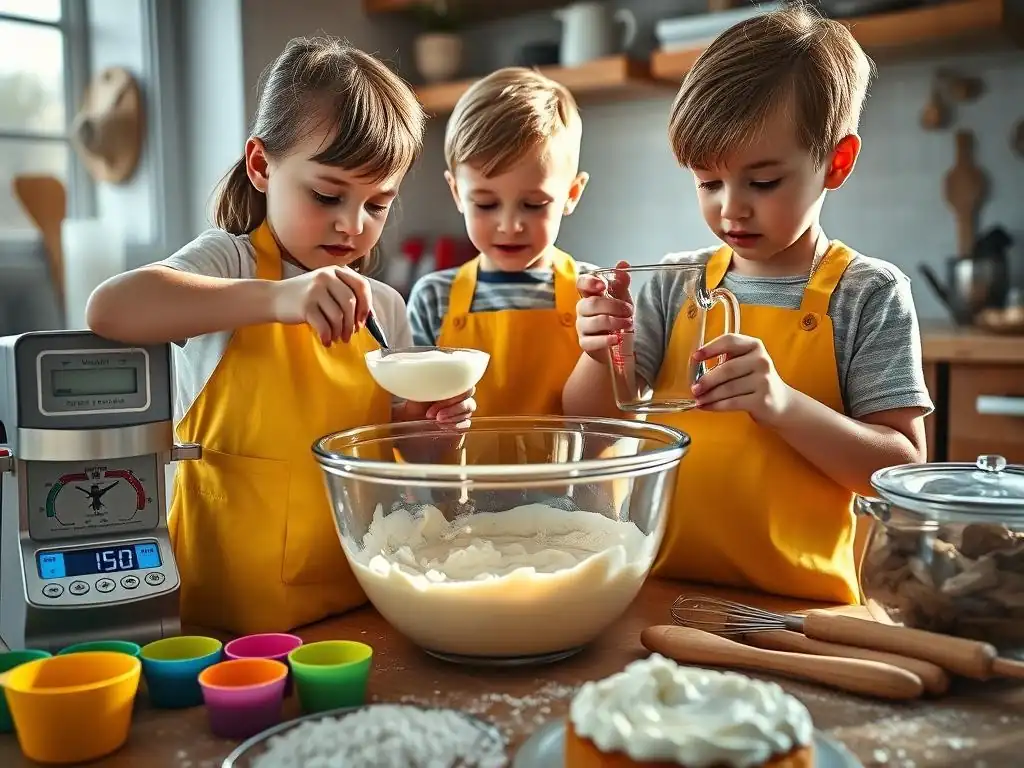
Welcome to BakeWithEase, where baking becomes a joy, not a chore! Ever wondered how to transform your kitchen into a fun and educational baking workshop for your kids? This guide dives deep into the secrets of Kids precise measuring baking techniques, unlocking their potential and building confidence, one delicious recipe at a time. Discover how to make baking a delightful learning experience and create lasting memories – the adventure starts now!
- BakeWithEase: Mastering Precise Baking Measurements for Kids
- Why Accurate Measurement Matters in Kids' Baking
- Setting Up Your Home Baking Workshop for Kids
- Step-by-Step Guide: Teaching Kids Precise Measuring Techniques
- Fun Baking Activities to Reinforce Measuring Skills
- Troubleshooting Common Measuring Mistakes with Kids
- Advanced Measuring Techniques for Young Bakers
- Making Measuring Fun and Engaging for Kids
- Resources for Parents and Educators: Kids Baking Measurement Guides
-
Frequently Asked Questions
- What age range is most suitable for teaching kids precise measuring baking techniques?
- Why is precise measuring so important when baking with kids?
- What are some simple techniques to teach kids about measuring ingredients accurately?
- What ingredients are best to start with when teaching kids precise measuring?
- How can I make learning precise measuring techniques fun and engaging for kids?
- Final Reflection: The Sweet Science of Precision
- Unleash Your Inner Pastry Chef!
BakeWithEase: Mastering Precise Baking Measurements for Kids
Baking with kids is a wonderful way to spend time together, create delicious treats, and introduce valuable life skills. While the joy of mixing and decorating is undeniable, teaching Kids precise measuring baking techniques is perhaps one of the most fundamental skills for baking success. At BakeWithEase, we believe that understanding accurate measurement is the bedrock of reliable baking, turning potential kitchen chaos into consistent triumphs. This guide will walk you through setting up your own home baking workshop and effectively teaching these crucial skills to your young bakers.
Mastering precise measurement isn't just about getting a recipe right; it's about building confidence in the kitchen. When kids learn to measure accurately, they see how following instructions carefully leads to predictable and tasty results. This process encourages patience, attention to detail, and a sense of accomplishment. Our goal is to make learning these techniques enjoyable and accessible, transforming the potentially daunting task of precise measuring into an engaging part of the baking adventure for children.
Why Accurate Measurement Matters in Kids' Baking
Consistent Results: The Key to Baking Success with Children
Achieving consistent results is paramount in baking, especially when working with children who thrive on positive reinforcement. Imagine baking a batch of cookies together: if the measurements are off – say, too much flour or not enough sugar – the cookies might turn out hard, dry, or overly sweet. This can be disappointing for young bakers who were excited about the final product. By teaching Kids precise measuring baking techniques, you equip them with the skills to replicate delicious outcomes every time they follow a recipe.
Consistency builds confidence. When a child accurately measures ingredients and their baked goods turn out just like the picture, or just as they remember from a previous successful attempt, it validates their effort and skill. This positive feedback loop encourages them to continue baking and refining their techniques. For instance, a standard vanilla cake recipe might fail if you use 1/4 cup extra flour, resulting in a dense texture instead of a light, fluffy one. Teaching the proper leveling technique for dry ingredients directly impacts that final texture.
Developing Essential Math Skills Through Baking
Baking is a fantastic, hands-on way to reinforce mathematical concepts for children. Precise measuring inherently involves working with fractions (like 1/2 cup, 1/4 teaspoon), understanding volume and weight, and even basic arithmetic when doubling or halving recipes. Teaching Kids precise measuring baking techniques turns abstract math problems into tangible, real-world applications that they can see and taste.
Consider a recipe that calls for 3/4 cup of sugar. Breaking this down into measuring 1/2 cup and then 1/4 cup, or understanding that it's three of the 1/4 cup measures, directly teaches fraction addition and recognition. Discussing how 1 tablespoon equals 3 teaspoons introduces unit conversion in a practical context.
These aren't just academic exercises; they are skills immediately applied to create something delicious, making the learning process engaging and memorable. For example, measuring 2 cups of flour for a recipe might involve using a 1-cup measure twice, or a 1/2-cup measure four times, reinforcing multiplication and division concepts.
Preventing Baking Disasters: The Importance of Accuracy for Kids
Inaccurate measurements are a leading cause of baking failures. For kids, a failed baking project can be disheartening and potentially discourage future attempts. Teaching Kids precise measuring baking techniques is a proactive step in preventing these common disasters. Understanding why adding too much leavening agent (like baking soda or powder) can cause a cake to collapse, or why too little liquid can make dough impossible to work with, highlights the critical role of accuracy.
Think about bread baking: the ratio of flour to yeast and liquid is crucial. Using even slightly too much yeast (say, an extra 1/4 teaspoon in a recipe calling for 2 teaspoons) can result in an overly yeasty flavor and rapid, uncontrolled rising, potentially leading to a deflated loaf. Conversely, too little yeast might result in a dense, heavy bread. Educating children on the importance of level measurements and using the correct tools for specific ingredients directly mitigates these risks, ensuring a higher success rate and a more positive baking experience.
Setting Up Your Home Baking Workshop for Kids
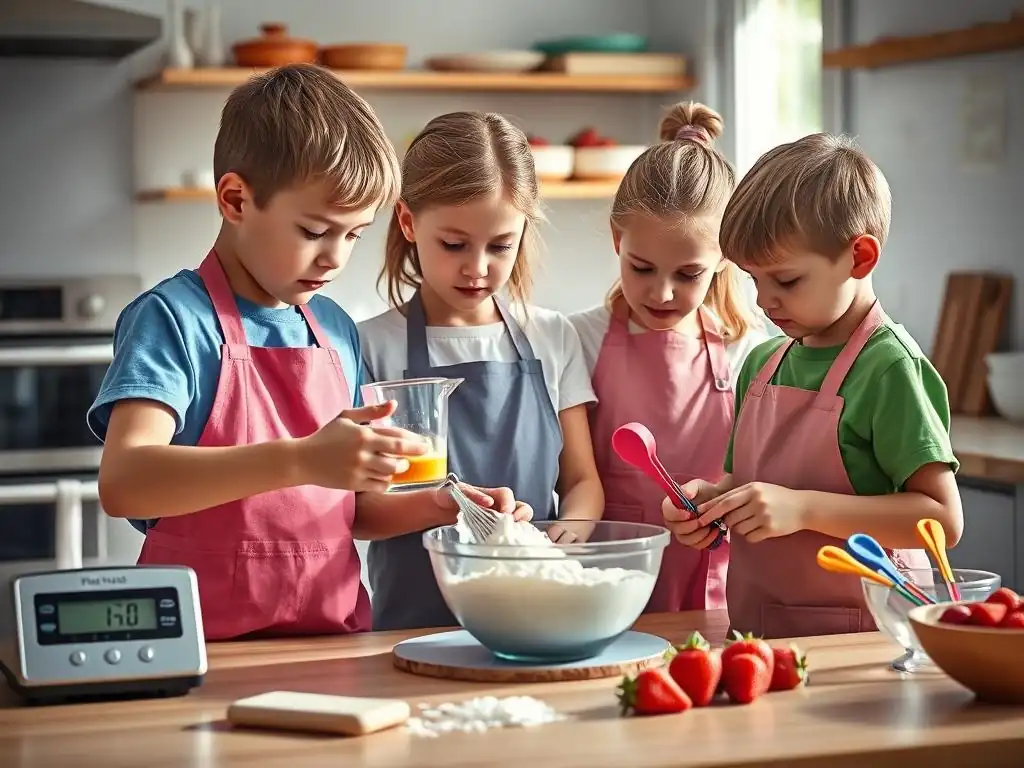
Essential Measuring Tools for Kids' Baking Workshops
Having the right tools makes teaching Kids precise measuring baking techniques much easier and more effective. While a basic set is a good start, understanding the purpose of different tools is key. You'll need a variety of measuring cups and spoons, and ideally, introduce a kitchen scale. These tools are designed for specific types of ingredients and using them correctly is part of the technique itself.
Investing in a set of sturdy, easy-to-clean measuring tools sized appropriately for little hands can make a big difference. Look for cups with clear markings and spoons that are attached to a ring or easy to keep together. Having duplicates of common sizes (like 1/4 cup or 1 teaspoon) can also be helpful when multiple kids are participating or when a recipe calls for the same measure multiple times.
Measuring Cups: Dry vs. Liquid – A Kid-Friendly Explanation
This is a fundamental distinction in teaching Kids precise measuring baking techniques. Dry measuring cups are designed to be filled to the brim and then leveled off, typically made of plastic or metal with a flat rim. Liquid measuring cups, usually made of clear glass or plastic, have a spout for pouring and markings below the rim, allowing you to measure liquids accurately by viewing at eye level.
Explain to kids that dry cups are like "scooping and leveling," while liquid cups are for pouring and checking the line. Use simple analogies: dry cups are for things that can be scooped and piled (like flour or sugar), while liquid cups are for things that pour (like milk or oil).
Show them how to fill a dry cup generously and then use a straight edge (like the back of a knife or a spatula) to sweep off the excess, making it perfectly level. For liquid cups, demonstrate placing the cup on a flat surface and bending down to check the liquid level at eye level against the measurement mark.
Measuring Spoons: Mastering Teaspoons and Tablespoons
Measuring spoons are essential for smaller quantities, particularly leavening agents, spices, and extracts, where precision is critical. Teaching kids to use these small spoons correctly is a vital part of Kids precise measuring baking techniques. Most sets include 1/4, 1/2, and 1 teaspoon, and 1 tablespoon measures.
Show children how to fill the spoon to the top without shaking or tapping it, which can cause ingredients like flour or baking powder to settle and pack down. For dry ingredients like baking powder or salt, demonstrate leveling the spoon using the back of a straight edge, just like with dry measuring cups. For liquids like vanilla extract, simply fill the spoon carefully to the rim. Explain the relationship between teaspoons and tablespoons (1 tablespoon = 3 teaspoons) as a fun math fact.
Kitchen Scale: Introducing Weight Measurements to Children
While volume measurements are common in many home recipes, professional bakers often rely on weight measurements for greater accuracy, especially for ingredients like flour. Introducing a kitchen scale, even a simple digital one, can be a valuable addition to teaching advanced Kids precise measuring baking techniques. Explain that weight is often more consistent than volume because it's not affected by how tightly an ingredient is packed.
Demonstrate placing an empty bowl on the scale and "zeroing" or "tarring" it. Then, show them how to add ingredients directly to the bowl until the desired weight is reached. For example, explain that 1 cup of all-purpose flour can weigh anywhere from 120g to 140g depending on how it's measured by volume, but measuring 125g of flour by weight is always 125g. This introduces the concept of consistency and why many professional recipes use grams or ounces.
Creating a Safe and Organized Baking Space for Kids
A dedicated, safe, and organized workspace is crucial for successful and enjoyable Kids precise measuring baking techniques sessions. Clear counters, accessible tools, and minimized distractions help children focus on the task at hand and reduce the risk of accidents. Designate a specific area in your kitchen, perhaps a cleared section of the counter or a sturdy table, as the "baking zone."
Ensure all necessary ingredients and tools are gathered before you start. This prevents interruptions and keeps the momentum going. Place measuring cups and spoons in a basket or tray within easy reach. Make sure children can safely access the workspace, perhaps using a step stool if needed. Emphasize cleanliness from the start: washing hands before beginning, wiping down spills immediately, and understanding where tools belong after use. A well-organized space makes the measuring process smoother and reinforces good kitchen habits.
Step-by-Step Guide: Teaching Kids Precise Measuring Techniques
Liquid Ingredients: Mastering the Eye-Level Check
Measuring liquids accurately is a key skill in Kids precise measuring baking techniques, particularly for ingredients like milk, water, oil, and extracts. The primary technique involves using a liquid measuring cup and checking the volume at eye level to account for the meniscus (the slight curve at the surface of the liquid).
Demonstration: Showing Kids How to Measure Liquids Accurately
Start by explaining why we use specific cups for liquids (the spout helps with pouring, the markings are designed for accuracy). Pour the liquid into the cup, explaining not to fill it all the way to the rim. Place the cup on a flat, stable surface (like the counter or table).
Then, demonstrate bending down so your eyes are level with the measurement line you are aiming for. Show how the liquid surface curves slightly (the meniscus) and explain that you should read the measurement at the bottom of that curve. Practice with water first, measuring different amounts like 1/2 cup, 1 cup, or 1/4 cup, having the child confirm the measurement by checking at eye level.
Dry Ingredients: The Scoop and Level Method for Kids
This is perhaps the most common technique for dry ingredients like flour, sugar, and cocoa powder when using volume measures. The goal is to fill the cup without compacting the ingredient, then level off the excess. This is a core element of teaching Kids precise measuring baking techniques.
Flour: Understanding the "Spoon and Sweep" Technique
For flour, the "spoon and sweep" method is often recommended for maximum accuracy when using volume cups, as scooping directly from the bag can compact the flour significantly. Explain to kids that compacted flour means you're adding too much to the recipe by weight, even if the volume looks right. Demonstrate using a spoon to lightly spoon the flour into the dry measuring cup until it's overflowing.
Then, show them how to use a straight edge (like a knife or spatula) to sweep across the top of the cup, leveling the flour perfectly. Emphasize not shaking or tapping the cup during this process.
Sugar: Avoiding Overpacking and Ensuring Accurate Measurement
Granulated sugar measures more consistently by volume than flour, but it's still important not to overpack it. For brown sugar, however, the technique is different – it needs to be packed. Teach kids the difference. For granulated sugar, demonstrate scooping or spooning it into the dry measuring cup and simply leveling it off with a straight edge, similar to flour but without the concern of lightly spooning.
For brown sugar, explain that recipes specifically call for "packed brown sugar." Show them how to scoop the brown sugar into the dry measuring cup and press it down firmly with their fingers or the back of a spoon. Continue adding and packing until the sugar is level with the rim of the cup. Explain that you know it's packed correctly if you can invert the cup and the brown sugar holds its shape like a sandcastle. This distinction is a key part of Kids precise measuring baking techniques for different ingredients.
Solid Fats: Precise Measurement Techniques for Butter and Shortening
Measuring solid fats like butter, margarine, or shortening can be tricky using volume cups because they need to be packed to remove air pockets. Teaching kids how to do this accurately is another layer in mastering Kids precise measuring baking techniques.
The Water Displacement Method: A Fun Way to Measure Solid Fats with Kids
For shortening or other solid fats that don't come with measurement markings on the wrapper (like butter sticks often do), the water displacement method is a fun and precise technique. This method relies on the principle that when an object is submerged in water, it displaces an amount of water equal to its own volume.
To demonstrate, start with a liquid measuring cup. Pour in a specific amount of water, say 1/2 cup (4 fl oz). Explain that you want to measure 1/4 cup of shortening. Explain that you will add shortening to the water until the water level rises to the original amount plus the amount of shortening you want to measure. So, if you started with 1/2 cup of water and want to measure 1/4 cup of shortening, you'll add shortening until the water level reaches the 1/2 cup + 1/4 cup = 3/4 cup mark. Have the child add small amounts of shortening to the water-filled cup, pushing it under the water with a spoon or spatula until the water reaches the target line. Drain the water afterward, and you have your precisely measured solid fat. This method is visual, interactive, and teaches a scientific principle alongside Kids precise measuring baking techniques.
Fun Baking Activities to Reinforce Measuring Skills
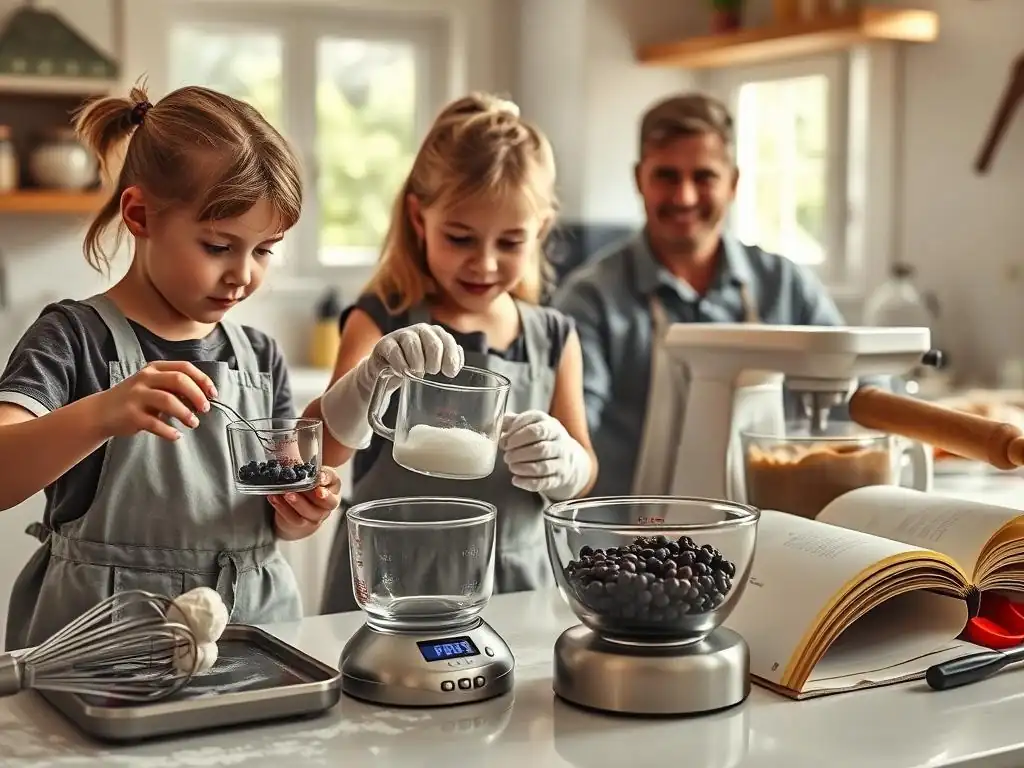
Integrating measuring practice into enjoyable baking projects is the best way to solidify Kids precise measuring baking techniques. Choose recipes that involve multiple measurements and different types of ingredients.
Cupcake Creations: Practicing Ingredient Division and Ratios
Baking cupcakes is an excellent activity for practicing measuring. A standard recipe often involves measuring flour, sugar, leavening, salt (dry), milk, oil, eggs, and extract (liquid/other). Have kids measure each ingredient independently under supervision.
To add complexity and reinforce math skills, try making mini cupcakes alongside standard ones. If the recipe yields 12 standard cupcakes, discuss how many mini cupcakes that might make (often 24-36). Talk about how the same ingredients, measured precisely using Kids precise measuring baking techniques, create different sizes of treats simply by changing the baking vessel and time. You can also discuss ratios, like the ratio of flour to sugar, and how maintaining that ratio is crucial even if you double the batch.
Cookies offer a great opportunity to see how small changes in measurement can affect the final product. Make a basic cookie dough recipe together, emphasizing precise measurement for every ingredient. Then, divide the dough into smaller portions.
With one portion, deliberately make a small, controlled measurement error – for example, adding an extra tablespoon of flour or slightly less sugar. Bake the portions side-by-side and compare the results. Did the batch with extra flour spread less? Was the batch with less sugar tougher? This hands-on experiment visually demonstrates why Kids precise measuring baking techniques are so important for achieving desired textures and flavors.
Bread Baking Basics: Understanding the Importance of Precise Yeast Measurement
Bread baking, while sometimes seen as more advanced, is a powerful lesson in the impact of precise measurement, especially for yeast and flour. The leavening process is highly sensitive to the amount of yeast and the ratio of liquid to flour.
Bake a simple yeast bread or pizza dough. Emphasize the critical step of measuring the yeast accurately, often just a teaspoon or two. Discuss how this small amount of ingredient is responsible for the dough rising.
You can even do a simple experiment: dissolve the precise amount of yeast in warm water with a pinch of sugar (as called for in the recipe) and observe it activate – it should get foamy within 5-10 minutes. Then, try the same with an inaccurate amount of yeast (too little or too much) to see the difference in activation. This highlights the power of precise Kids precise measuring baking techniques for living ingredients like yeast.
Troubleshooting Common Measuring Mistakes with Kids
Even with careful instruction, kids (and adults!) can make measuring mistakes. Learning to identify and correct these errors is part of mastering Kids precise measuring baking techniques and builds problem-solving skills.
Identifying and Correcting Over-Measurement Errors
Over-measurement often occurs with dry ingredients like flour (scooping instead of spooning and leveling) or when kids lose track of how many scoops they've added. Signs of over-measurement in dough or batter might include it being too stiff, dry, or difficult to mix.
If you suspect over-measurement before mixing, gently guide the child to re-measure the ingredient using the correct technique. If the mistake is caught during mixing (e.g., the dough is too dry), you can discuss what might have happened and how to potentially fix it by adding a tiny amount of the liquid ingredient specified in the recipe (e.g., a teaspoon of milk at a time for cookie dough) until the consistency is correct, explaining that this is an adjustment based on a measurement error. This reinforces the original need for precise Kids precise measuring baking techniques.
Under-measurement can happen if kids don't fill the cup or spoon enough, or if they forget an ingredient altogether. Signs might include batter that is too thin, dough that is too sticky, or baked goods that don't rise properly.
Again, catching this before mixing is easiest – simply re-measure the ingredient. If caught during mixing (e.g., batter is too runny), discuss which ingredient might be missing or under-measured (e.g., flour or leavening). You can attempt to carefully add the missing amount, explaining the importance of getting it right the first time. For example, if a cake batter seems too thin, re-measuring the flour and adding a small amount of the difference might help, though it's often harder to correct liquid imbalances once mixed. This troubleshooting reinforces the value of accurate Kids precise measuring baking techniques from the outset.
Addressing Ingredient Substitution Challenges
Sometimes, you might need to substitute ingredients (e.g., using oil instead of melted butter). Discussing how measurements might change during substitution adds another layer to Kids precise measuring baking techniques. Explain that a 1:1 volume substitution isn't always accurate because different ingredients have different densities.
For example, 1 cup of butter might weigh about 227g, while 1 cup of vegetable oil weighs about 218g. While these are close for many recipes, for others, the difference matters. Introduce reliable substitution charts (without providing links here) as a resource and explain that precise measurement is still needed for the substitute ingredient based on its specific properties. This teaches adaptability while reinforcing the core principle of accuracy.
Advanced Measuring Techniques for Young Bakers
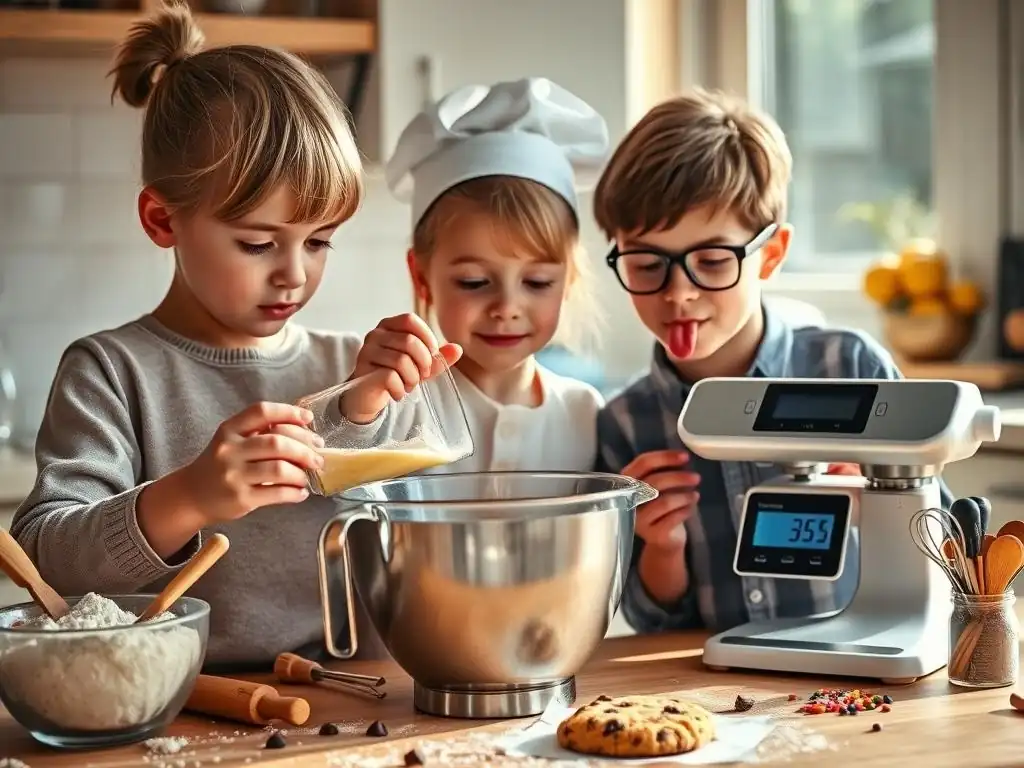
Once kids are comfortable with basic volume and weight measurements, you can introduce more advanced concepts to deepen their understanding of Kids precise measuring baking techniques.
Converting Recipes: Scaling Up or Down for Different Batch Sizes
Scaling recipes is a practical application of fractions and ratios learned during basic measuring. If a recipe makes 12 cookies but you want 24, you need to double all the ingredients. This involves multiplying each measurement by two.
Provide a simple recipe (e.g., for pancakes or muffins) that calls for measures like 1/2 cup flour, 1/4 cup sugar, 1 teaspoon baking powder. Challenge your young baker to write out the ingredient list for a double batch, calculating the new measurements (1 cup flour, 1/2 cup sugar, 2 teaspoons baking powder). Then, have them measure the ingredients for the doubled recipe using their Kids precise measuring baking techniques. This directly connects math skills to practical baking applications.
Understanding Metric vs. Imperial Measurements in Baking
Recipes from different parts of the world or from professional sources often use metric measurements (grams, milliliters) instead of imperial (cups, ounces). Introducing this concept expands a child's baking horizons and reinforces the utility of a kitchen scale.
Show them a recipe that uses both measurements side-by-side or provide a simple conversion chart (again, no links). Explain that measuring by weight (grams) is often considered more accurate than by volume (cups), especially for dry ingredients like flour. Practice measuring the same amount of flour or sugar using both a volume cup and a scale to see how the numbers differ and discuss why weight is more consistent. This deepens their understanding of Kids precise measuring baking techniques across different systems.
Introducing the Concept of Baker's Percentage
Baker's percentage is a system used by many professional bakers where each ingredient is expressed as a percentage of the weight of the flour, which is always 100%. This concept is an excellent way to show the relationship between ingredients and how ratios affect the final product.
Start with a very simple bread or pizza dough recipe using weight measurements (e.g., 500g flour, 350g water, 10g salt, 5g yeast). Calculate the percentages together: water is (350g / 500g) * 100% = 70%; salt is (10g / 500g) * 100% = 2%; yeast is (5g / 500g) * 100% = 1%. Explain that this ratio (100% flour, 70% water, 2% salt, 1% yeast) defines this specific dough.
Discuss how changing a percentage (e.g., increasing water to 75%) would change the dough's texture. This introduces a sophisticated application of Kids precise measuring baking techniques based on ratios and weight.
Making Measuring Fun and Engaging for Kids
Keeping the learning process enjoyable is key to developing a lasting love for baking and reinforcing Kids precise measuring baking techniques. Incorporate games, visual aids, and celebrations of their achievements.
Turning Measurement into a Game: Baking Challenges and Prizes
Gamify the measuring process! Set up "measurement challenges" where kids have to accurately measure specific amounts of different ingredients within a time limit (safely, of course). Use dried beans or rice for practice before moving to real ingredients.
Create a "Baking Bingo" card with squares like "Measure 1/2 cup milk," "Level 1 teaspoon baking powder," "Weigh 100g sugar." Award small, fun prizes or stickers for accurate measurements or completing a line on the bingo card. This turns the potentially tedious task of precise measurement into an exciting competition focused on Kids precise measuring baking techniques.
Using Visual Aids: Charts and Diagrams for Accurate Measurement
Visual learners benefit greatly from charts and diagrams. Create simple posters or laminated cards showing how to properly level dry ingredients, how to read a liquid measuring cup at eye level, or the relationship between teaspoons and tablespoons.
Include pictures of what properly measured ingredients should look like in the cup or spoon. For example, a picture of a leveled cup of flour next to a picture of an over-scooped, mounded cup. These visual cues serve as quick reminders and reinforce the Kids precise measuring baking techniques you've taught.
Celebrating Baking Successes: Encouraging Precise Measurement Habits
Positive reinforcement is incredibly powerful. Celebrate every baking success, big or small, and specifically acknowledge the role of accurate measuring. When the cookies turn out perfectly chewy or the cake rises beautifully, point out that their careful Kids precise measuring baking techniques played a significant part.
Take pictures of their perfectly measured ingredients lined up before mixing. Praise their focus and attention to detail during the measuring steps. Enjoying the delicious results of their accurately measured efforts is the ultimate reward and strongly encourages them to maintain precise habits in future baking adventures.
Resources for Parents and Educators: Kids Baking Measurement Guides
Many resources can support parents and educators in teaching Kids precise measuring baking techniques. Look for kids' cookbooks that include visual guides for measuring, reputable baking websites with detailed technique explanations, and educational materials that connect baking to math and science concepts.
Consider using online videos (without embedding or linking) that demonstrate measuring techniques specifically for children. There are also printable charts available that visually explain volume and weight measurements, equivalent measures (e.g., how many tablespoons are in a cup), and temperature conversions. Utilizing these tools can supplement your hands-on teaching and provide children with additional ways to learn and practice their Kids precise measuring baking techniques.
Frequently Asked Questions
What age range is most suitable for teaching kids precise measuring baking techniques?
The best age range is generally 8 years old and up, as they often have the fine motor skills and understanding of basic math concepts needed. Simpler tasks can be introduced to younger children with close supervision.
Why is precise measuring so important when baking with kids?
Precise measuring ensures consistent results and helps kids understand the science behind baking. It also prevents frustration by avoiding failed recipes due to incorrect proportions.
What are some simple techniques to teach kids about measuring ingredients accurately?
Use leveling tools for dry ingredients and liquid measuring cups at eye level. Teach them to scoop and sweep for flour and to tare the scale for precise weight measurements.
What ingredients are best to start with when teaching kids precise measuring?
Begin with simple recipes like cookies or muffins, which have forgiving ratios and easy-to-measure ingredients like flour, sugar, and butter. Avoid complex recipes with temperamental ingredients.
How can I make learning precise measuring techniques fun and engaging for kids?
Turn it into a game! Use colorful measuring cups and spoons, and let them taste-test the ingredients. Focus on the enjoyment of baking rather than just the precision to keep them motivated.
Final Reflection: The Sweet Science of Precision
The ability to accurately measure ingredients is not just a baking skill; it's a foundational element of scientific thinking and problem-solving, crucial for success in countless areas of life. Mastering precise measuring techniques in the kitchen empowers children with skills that extend far beyond the delicious results of a perfectly risen cake. This is a skill that will serve them well throughout their lives.
The joy of baking, particularly with children, lies not only in the final product but in the process itself. The meticulous nature of measuring, the careful observation of ingredient changes, and the satisfaction of seeing a recipe come to life fosters a deep appreciation for detail and accuracy. The best things in life are the simple things, and baking is one of them.
This quote perfectly encapsulates the enduring appeal of baking, and the importance of teaching children the fundamentals, like precise measuring, to truly appreciate the craft.
Now, consider your own experiences in the kitchen. Have you ever struggled with a recipe because of inaccurate measurements? Remember that feeling of frustration? By teaching children the importance of precision from a young age, we equip them to avoid those frustrations and unlock a world of culinary creativity. Take what you've learned here and apply it – empower the young bakers in your life to embrace the sweet science of precise measuring, and watch them flourish, both in the kitchen and beyond.
Unleash Your Inner Pastry Chef!
Thanks for joining us on this baking adventure! We hope you now feel confident in teaching your kids the importance of precise measuring in the kitchen. Ready to put your newfound knowledge into practice?
- Lead your family in a fun baking project this weekend! Try one of the recipes we mentioned, or get creative and invent your own masterpiece.
- Share your baking triumphs (and even your flour-covered mishaps!) on social media using #BakeWithEaseKids. Let's inspire other families to embrace the joy of baking together.
- Consider creating a personalized "baker's notebook" with your child to record recipes and measuring tips. This is a great way to build lasting memories and reinforce their new skills.
What creative baking project will you and your child tackle next?