
The Best Flour Blends for Artisan Baguette Texture

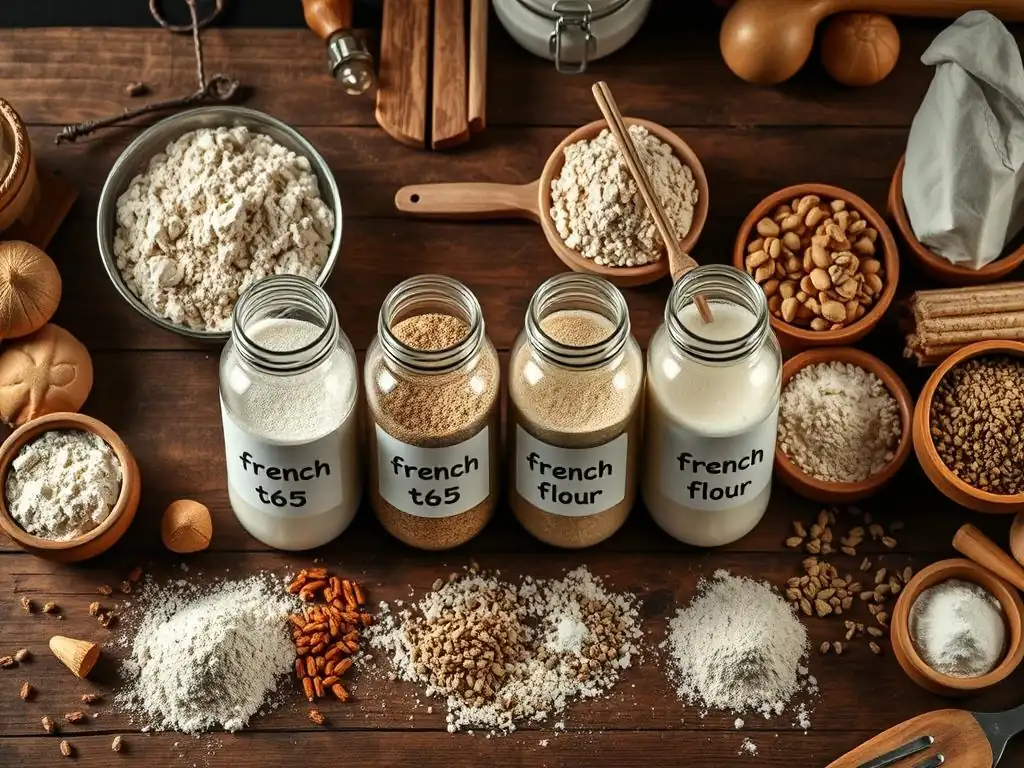
Welcome to BakeWithEase!
Ever wondered what the secret is to that perfect, airy crumb and crisp crust of an artisan baguette? It all starts with the flour. This article dives deep into the world of flour blends, revealing the exact combinations that will elevate your baguette baking from ordinary to extraordinary. Discover the best flour blends for artisan baguette texture and unlock the secrets to crafting loaves that rival your favorite bakery. Ready to bake a baguette that will have everyone asking for your recipe? Let's get started!
- The Best Flour Blends for Artisan Baguette Texture: Bake Like a Pro
- Introduction: Achieving Perfect Baguette Texture with the Right Flour
- Understanding the Key Flour Components for Baguette Baking
- Artisan Baguette Flour Blend Recipe: The Classic French Method
- Exploring Alternative Flour Blends for Unique Baguette Textures
- The Science Behind Flour Blends and Baguette Dough Development
- Troubleshooting Common Issues with Baguette Flour Blends
- Experimenting with Different Flour Combinations for Your Perfect Baguette
- Mastering the Baking Process for Optimal Baguette Results
- Conclusion: Elevate Your Baguette Baking with the Perfect Flour Blend
- Frequently Asked Questions
- Final Reflection: The Flour Power of Artisan Baguette Baking
- Unlock Your Inner Boulanger: Craft the Perfect Baguette
The Best Flour Blends for Artisan Baguette Texture: Bake Like a Pro
Introduction: Achieving Perfect Baguette Texture with the Right Flour
Why Flour Choice Matters for Artisan Baguettes
The quest for the perfect artisan baguette often begins long before you even mix the dough – it starts with the flour. Flour isn't just a generic white powder; it's a complex ingredient whose characteristics profoundly influence the final texture, crust development, and open crumb structure that define a great baguette.
Using the wrong flour can result in a flat, dense loaf with a tough crust, a far cry from the light, airy interior and shatteringly crisp exterior you're aiming for. The protein content, milling process, and even the origin of the wheat all play critical roles in how the dough behaves during mixing, fermentation, shaping, and baking.
For instance, a flour with insufficient protein will struggle to form a strong gluten network, which is essential for trapping the gases produced during fermentation and creating those signature large holes (alveoli) in the crumb. Conversely, a flour that's too strong or doesn't hydrate properly can lead to a dense, chewy texture.
Understanding the subtle differences between flour types and how they interact with water and yeast is the first step towards mastering the artisan baguette flour blend recipe that will elevate your baking from good to exceptional. It's about selecting the right foundation to build upon, ensuring your dough has the inherent strength and extensibility needed for success.
Understanding Flour Selection for Baguettes
Selecting the right flour for artisan baguettes involves considering several key factors beyond just the label. While terms like "bread flour" or "all-purpose" are starting points, looking deeper at protein percentage provides more insight. For traditional baguettes aiming for an open, airy crumb and a chewy yet light texture, a medium to high protein flour, typically ranging from 11% to 13%, is often preferred. This protein level allows for robust gluten development without making the dough overly tough or difficult to handle.
Beyond protein, the ash content, which relates to how much of the wheat kernel (including bran and germ) is included after milling, affects flavor and color. Traditional French flours like Type 55 have a lower ash content, resulting in a whiter crumb, while higher ash flours (like Type 65 or whole wheat) contribute more color, flavor, and nutritional value. Experimenting with different flours and understanding their properties is crucial for developing your ideal artisan baguette flour blend recipe and achieving the specific characteristics you desire in your final loaf.
Understanding the Key Flour Components for Baguette Baking
High-Protein Flour: The Foundation of Baguette Structure
High-protein flour, often labeled as bread flour, is the cornerstone for building the structure of an artisan baguette. With protein content typically ranging from 12% to 14%, this type of flour contains a higher concentration of gluten-forming proteins, primarily gliadin and glutenin.
When these proteins are hydrated with water and manipulated through mixing or kneading, they form a strong, elastic network known as gluten. This network is vital because it provides the dough with the strength and elasticity required to trap the carbon dioxide gas produced by yeast during fermentation, allowing the dough to rise and develop that desirable open, airy crumb structure characteristic of artisan baguettes.
The higher gluten potential in these flours means the dough can withstand longer fermentation periods, which contributes significantly to the flavor development of the baguette. For example, using a high-quality bread flour with 12.7% protein can result in a dough that is both extensible (can be stretched thin) and elastic (snaps back), qualities essential for proper shaping and achieving good oven spring. Without sufficient protein and subsequent gluten development, the dough would collapse, leading to a dense, heavy loaf rather than a light and airy one.
All-Purpose Flour: Balancing Strength and Softness
While high-protein flour provides the necessary structure, all-purpose flour can play a crucial role in balancing the texture of your artisan baguettes. Typically containing between 9% and 11% protein, all-purpose flour offers a more moderate gluten potential compared to bread flour. Including a portion of all-purpose flour in your artisan baguette flour blend recipe can help achieve a crumb that is not overly chewy, providing a slightly softer interior while still maintaining enough structure for a good rise and open crumb.
Using 100% high-protein flour can sometimes result in a baguette with an intensely chewy texture that might be too much for some preferences. Blending in some all-purpose flour, perhaps 10-20% of the total flour weight, can temper this chewiness and contribute to a more tender crumb. This blending technique allows bakers to fine-tune the balance between chewiness and softness, catering to personal preference or specific recipe requirements. It's about finding the sweet spot where you get excellent oven spring and crumb structure without sacrificing tenderness.
Specialty Flours: Adding Complexity and Flavor to Your Baguette
Introducing specialty flours into your artisan baguette flour blend recipe is an excellent way to add layers of flavor, aroma, and unique textural nuances that go beyond the classic white loaf. Flours like whole wheat, rye, or spelt, even in small percentages, can dramatically change the character of your baguette. Whole wheat flour, for instance, includes the bran and germ, contributing nutty flavors, a slightly denser texture, and a darker crumb color. Using 10-15% whole wheat flour can add rustic charm and nutritional value without compromising the open crumb too much.
Rye flour, even in small amounts (say, 5-10%), introduces a distinct tanginess and earthy flavor, along with a slightly stickier dough texture. Spelt flour, an ancient grain, offers a milder, nutty flavor and a more tender gluten structure, making the dough potentially stickier but resulting in a lovely, delicate crumb. These specialty flours contain different types of proteins and enzymes that interact with the dough in unique ways, affecting fermentation speed, hydration needs, and final texture. Experimenting with these additions allows you to create a signature baguette that stands out.
Artisan Baguette Flour Blend Recipe: The Classic French Method
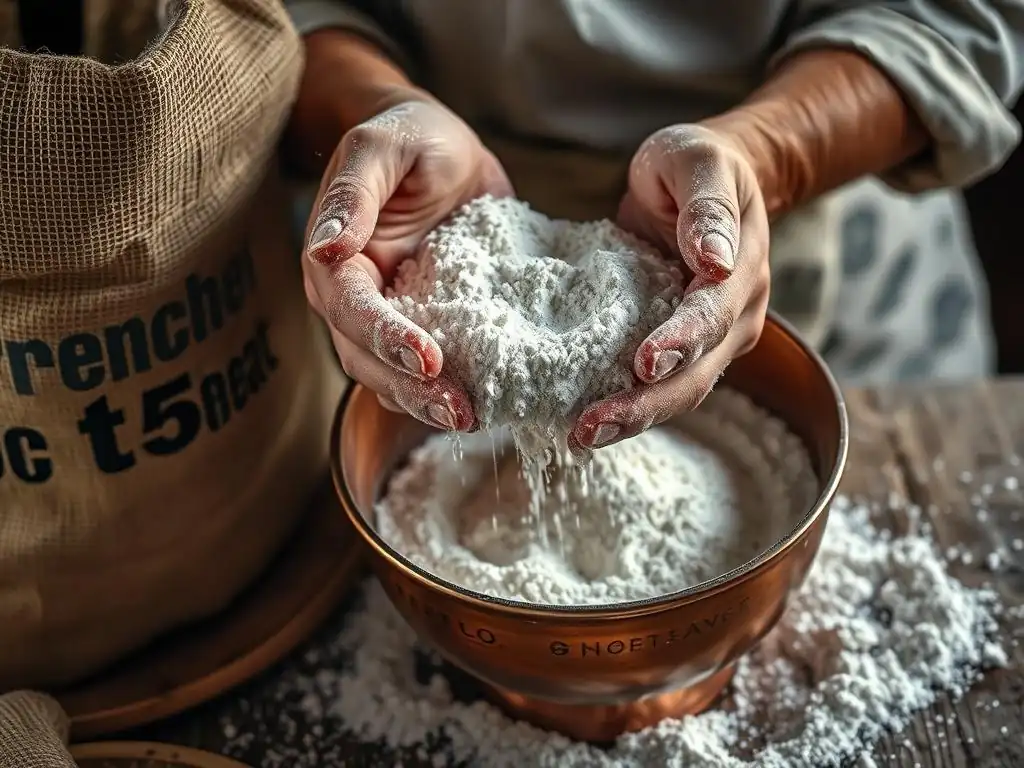
Recipe: Traditional French Baguette Flour Mix
A traditional approach to an artisan baguette flour blend recipe often centers around using a high-quality flour that mimics the characteristics of classic French Type 55 flour. This flour is typically milled from soft wheat varieties and has a protein content around 11-12%, along with a low ash content (around 0.55%).
While finding authentic Type 55 flour outside of France can be challenging, a common approximation for home bakers is to use a good quality unbleached bread flour (11-12.5% protein) as the primary component. Some bakers might even blend this bread flour with a small percentage of lower-protein all-purpose flour to achieve a slightly lower overall protein level and ash content, closer to the Type 55 standard.
A simple yet effective artisan baguette flour blend recipe approximation could involve using 90% unbleached bread flour (around 12% protein) and 10% unbleached all-purpose flour (around 10.5% protein). This blend aims for an overall protein content of approximately 11.8%, providing sufficient strength for structure while allowing for a relatively light and open crumb. The key is using high-quality, unbleached flours that have not been overly processed, preserving their natural enzymes and characteristics essential for good fermentation and crust development.
Achieving the Ideal Hydration Ratio for This Blend
Once you have your chosen artisan baguette flour blend recipe, mastering the hydration ratio is the next critical step. Hydration refers to the ratio of water to flour by weight in your dough. For a traditional baguette made with a blend approximating Type 55 or using medium-protein bread flour, a high hydration level is typically desired to achieve that signature open, airy crumb. Ratios commonly range from 70% to 75% hydration, meaning for every 100 grams of flour, you would use 70 to 75 grams of water.
However, the ideal hydration can vary based on several factors: the specific protein content and absorption capabilities of your chosen flour blend, ambient humidity, and your comfort level handling wet dough. A flour blend with higher protein might be able to handle higher hydration (closer to 75% or even 80%), resulting in a more open crumb, but the dough will be stickier and harder to work with.
Conversely, a slightly lower hydration (70-72%) might be easier for beginners and still yield excellent results, especially if your flour blend is on the lower end of the protein spectrum for bread flour. It's often best to start slightly lower and gradually increase hydration in future bakes as you become more comfortable with the dough's feel.
Exploring Alternative Flour Blends for Unique Baguette Textures
Whole Wheat Flour: Adding Nutty Flavor and Rustic Texture
Incorporating whole wheat flour into your artisan baguette flour blend recipe introduces a delightful nutty flavor and a more rustic texture, deviating from the classic white baguette but creating a loaf equally appealing. Whole wheat flour contains the entire wheat kernel – the bran, germ, and endosperm – which contributes fiber, nutrients, and a complex flavor profile that white flour lacks. Even adding a small percentage, typically 10% to 20% of the total flour weight, can significantly impact the final product.
When using whole wheat flour, be aware that the bran particles can interfere with gluten development, potentially leading to a slightly denser crumb compared to a pure white flour baguette. The germ also contains fats that can affect dough handling and fermentation.
To counteract this, some bakers increase the hydration slightly when adding whole wheat, as the bran absorbs more water. A blend of 80% bread flour and 20% whole wheat flour, for example, requires careful handling but yields a baguette with a beautiful golden-brown crust, a heartier crumb, and a wonderful depth of flavor that pairs exceptionally well with savory toppings.
Rye Flour: Introducing Tang and Complexity to Your Baguette
Adding rye flour to your artisan baguette flour blend recipe is a fantastic way to infuse your loaf with a characteristic tang and earthy, complex flavor profile. Rye flour contains less gluten-forming protein than wheat flour, and its pentosan gums absorb a significant amount of water, resulting in a stickier dough. For baguettes, which rely heavily on a strong gluten network for structure, rye is typically used in relatively small percentages, usually between 5% and 15% of the total flour weight.
Even at these low percentages, rye flour imparts its distinct flavor and can affect the dough's handling. The dough will feel different – less elastic and more like clay. The enzymes in rye are also more active, potentially leading to faster fermentation. A blend of 90% bread flour and 10% medium rye flour, for instance, will produce a baguette with a subtle tang, a slightly tighter but still open crumb structure, and a darker crust. This addition is perfect for those who enjoy the unique characteristics of rye bread but still want the classic baguette shape and crust.
Spelt Flour: A Healthier Option with a Distinctive Taste
Spelt flour, an ancient relative of modern wheat, offers another intriguing option for diversifying your artisan baguette flour blend recipe. It has a unique, slightly sweet, nutty flavor profile and a gluten structure that is more fragile and water-soluble compared to modern wheat. While it contains protein, the gluten developed from spelt is less strong and elastic, which can make dough handling a bit trickier, often resulting in a stickier consistency.
Using spelt flour in your baguette blend, perhaps replacing 15-25% of the bread flour, can yield a loaf with a tender crumb and a delightful, mild flavor. Because of its weaker gluten, spelt dough tends to ferment faster and requires careful handling during shaping to avoid degassing. A blend of 75% bread flour and 25% light spelt flour can create a baguette that is both flavorful and digestible for some individuals sensitive to modern wheat, offering a softer texture and a beautiful golden hue.
The Science Behind Flour Blends and Baguette Dough Development
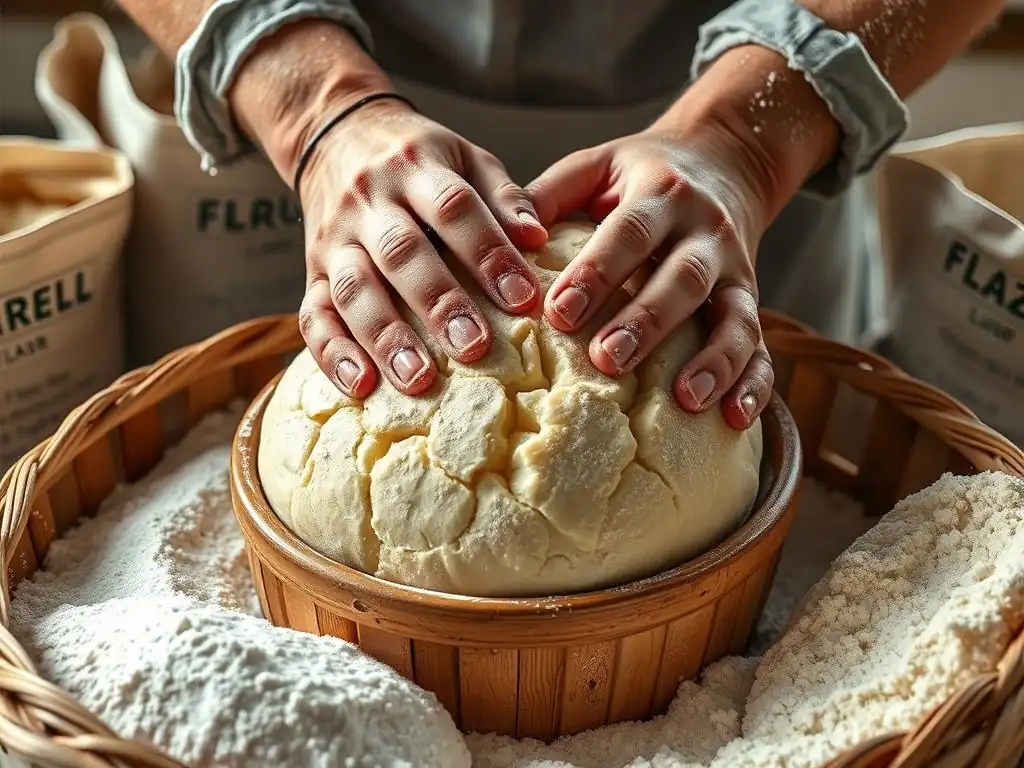
Gluten Development: The Key to Open Crumb Structure
Gluten development is the fundamental process that allows us to create the airy, open crumb structure desired in artisan baguettes. It begins when the two primary proteins found in wheat flour, gliadin and glutenin, come into contact with water. As the dough is mixed, folded, or kneaded, these hydrated proteins link together through disulfide bonds and hydrogen bonds, forming a complex, three-dimensional network known as gluten. This network is both elastic (can stretch and spring back) and extensible (can be stretched without breaking).
The strength and extensibility of the gluten network are directly influenced by the type of flour used (specifically its protein content), the amount of water (hydration), and the mechanical action applied (mixing/kneading). High-protein flours, like bread flour (12-14% protein), have more glutenin and gliadin, allowing for a stronger network capable of trapping large pockets of carbon dioxide gas produced by yeast during fermentation. This trapped gas causes the dough to rise and, during baking, expands rapidly, creating the characteristic large, irregular holes in the baguette crumb. Proper gluten development is non-negotiable for achieving that sought-after open texture.
Autolyse: Improving Hydration and Dough Extensibility
Autolyse is a simple yet powerful technique that significantly improves dough development and is particularly beneficial when working with an artisan baguette flour blend recipe, especially those with higher protein or whole grains. The process involves mixing just the flour and water from the recipe and letting it rest for a period, typically 20 minutes to an hour, before adding the salt and yeast and beginning the main mixing or kneading phase. During this resting period, two primary things happen without any mechanical work.
First, the flour fully hydrates passively. This allows the proteins to begin forming gluten without the stress of kneading, making the dough easier to mix later. Second, enzymatic activity (specifically proteases) naturally present in the flour begins to break down some of the protein structure.
This breakdown, counterintuitively, makes the dough more extensible – easier to stretch and shape later without tearing. For example, an autolyse of 30 minutes when using a 75% hydration bread flour blend will result in a dough that is noticeably smoother, less sticky, and significantly easier to handle compared to mixing all ingredients at once. This improved extensibility is crucial for shaping long, thin baguettes without deflating them.
Bulk Fermentation: Developing Flavor and Strength in Your Baguette Dough
Bulk fermentation, often referred to as the first rise, is a critical stage where your artisan baguette flour blend recipe truly comes to life in terms of flavor and dough structure. This is the period after mixing and initial kneading (and autolyse, if used) when the entire mass of dough is left to ferment as a single unit before being divided and shaped. During bulk fermentation, yeast activity produces carbon dioxide gas, which expands the dough, and alcohol and organic acids, which contribute significantly to the complex flavor profile of an artisan baguette.
Simultaneously, enzymatic processes continue, further breaking down starches into simpler sugars that feed the yeast, and gluten development continues through gentle folding (stretch and folds). A typical bulk fermentation for a baguette dough might last anywhere from 2 to 4 hours at room temperature (around 70-75°F or 21-24°C), or much longer if cold-fermented in the refrigerator (8-24 hours).
During this time, the dough gains volume, becomes stronger and more elastic with periodic folds, and develops the characteristic aroma of fermented dough. Properly managed bulk fermentation is essential for both achieving a well-developed gluten structure and creating the deep, nuanced flavors that distinguish an artisan loaf.
Troubleshooting Common Issues with Baguette Flour Blends
Dense Crumb: Adjusting Protein Levels and Fermentation Times
A dense crumb is one of the most frustrating issues when baking artisan baguettes, often stemming from insufficient gas production and/or a weak gluten structure unable to support the rise. If you're consistently getting a tight, uniform crumb instead of an open, airy one with your artisan baguette flour blend recipe, consider the protein level of your flour. A blend that is too low in protein (below 11%) might simply not have enough potential to build a strong enough gluten network to trap sufficient gas. Try switching to a blend with a higher percentage of bread flour (12-13% protein).
Additionally, fermentation time plays a huge role. A dense crumb can indicate under-fermentation, where the yeast hasn't produced enough gas, or insufficient time for enzymatic activity to properly condition the dough. Ensure your bulk fermentation is long enough, allowing the dough to significantly increase in volume (typically 50-75% increase). Also, ensure your starter or yeast is active and that your dough temperature is within the optimal range (around 75-78°F or 24-26°C) during bulk fermentation if aiming for speed, or allow adequate time for slower, colder fermentation which builds more flavor and strength.
Flat Baguettes: Improving Gluten Development and Shaping Techniques
Flat baguettes that spread sideways instead of rising upwards in the oven are often a sign of a weak dough structure. This weakness can originate from the flour blend itself or issues during dough development and shaping. If your artisan baguette flour blend recipe uses flour with too low protein, the gluten network might not be strong enough to hold its shape, especially during the transition into the hot oven (oven spring). Ensure you are using a flour blend with adequate protein, as discussed earlier.
Beyond the flour, insufficient gluten development during mixing and bulk fermentation is a common culprit. Make sure you are performing enough stretch and folds during the bulk fermentation stage to build tension and strength in the dough. For instance, performing 3-4 sets of folds at 30-minute intervals can significantly improve dough strength. Furthermore, proper shaping is critical.
A baguette needs sufficient surface tension created by tight rolling to provide structure. If the shaping is too loose, the dough will simply flatten out. Practice your shaping technique, ensuring you create a taut skin on the outside of the loaf before proofing.
Over-Proofing: Identifying and Preventing Over-Fermentation
Over-proofing occurs when the dough is allowed to ferment for too long before baking. While fermentation is crucial for flavor, excessive fermentation depletes the dough's available sugars for yeast activity and weakens the gluten structure as enzymes continue to break down proteins. An over-proofed baguette dough will often look very puffy and may even start to deflate slightly.
When poked gently, the indentation will remain without springing back much, or at all. Baking an over-proofed dough typically results in poor oven spring and a pale, lackluster crust because the yeast has exhausted its fuel source and the weakened structure cannot support expansion.
To prevent over-proofing when using your artisan baguette flour blend recipe, learn to judge the dough's readiness by feel rather than just time, as fermentation speed varies with temperature and yeast activity. The poke test is a good indicator: the dough should spring back slowly, leaving a small indentation. If it springs back immediately, it needs more time. If it doesn't spring back at all, it's likely over-proofed. Adjust fermentation times based on your kitchen temperature and the dough's behavior. If you anticipate a delay, consider retarding the proofing in the refrigerator to slow down fermentation.
Experimenting with Different Flour Combinations for Your Perfect Baguette
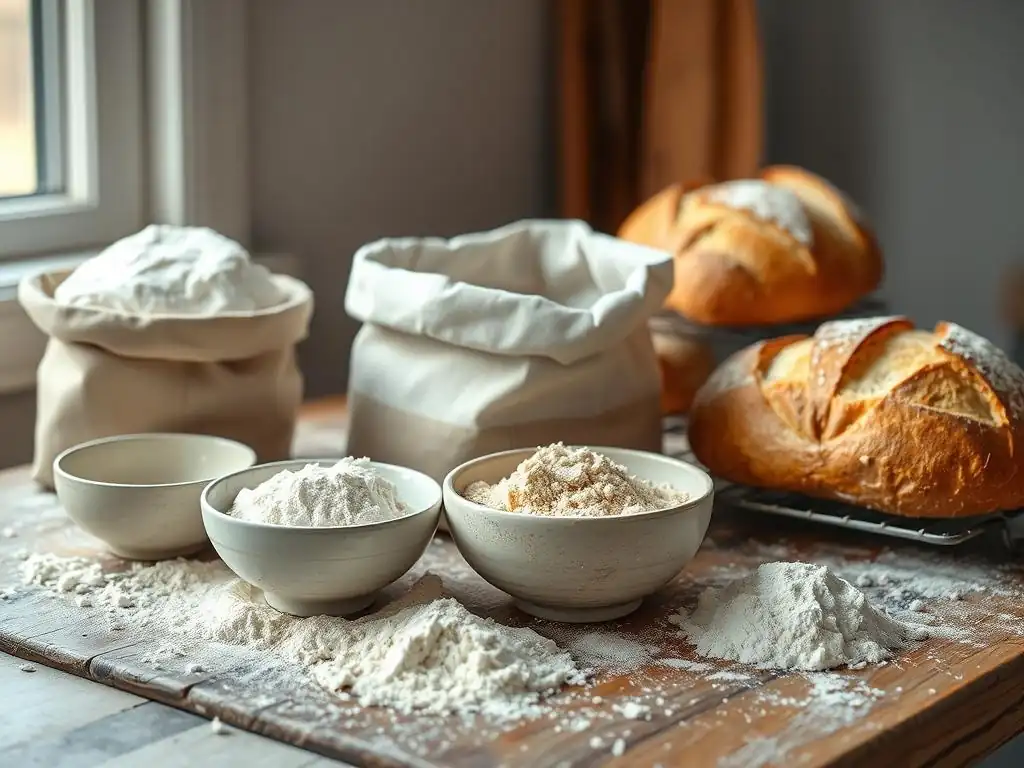
Adjusting High-Protein Flour for Desired Chewiness
The amount of high-protein flour in your artisan baguette flour blend recipe directly influences the chewiness of the final crumb. A higher percentage of strong bread flour (13-14% protein) will result in a more developed gluten network, leading to a chewier texture.
If you find your current baguettes are not chewy enough, increase the proportion of your highest-protein flour. For example, if you're using a blend of 90% 11.5% protein bread flour and 10% 10% protein AP flour, try shifting to 100% of the 11.5% protein bread flour, or even sourcing a bread flour with 12.5-13% protein for a more significant impact on chewiness.
Conversely, if your baguettes are excessively tough or chewy, you might be using flour that is too strong, or too much of it. Consider reducing the percentage of high-protein flour and replacing it with a lower-protein option, such as all-purpose flour (9-11% protein). For example, if using 100% 13% protein bread flour, switch to a blend of 80% 13% protein bread flour and 20% 10.5% protein AP flour. This adjustment will moderate the gluten development, resulting in a less intensely chewy, slightly softer crumb while still maintaining enough strength for a good structure.
Incorporating Rye Flour for Flavor Depth
Adding rye flour to your artisan baguette flour blend recipe is a simple yet effective way to introduce a distinctive tangy flavor and aroma that adds complexity to the classic baguette profile. Rye flour contains phenolic compounds and different enzymatic activity compared to wheat, contributing unique sour notes during fermentation. While it has some protein, it doesn't form the same kind of elastic gluten network as wheat, so it's typically used in smaller proportions for baguettes.
Start by substituting a small percentage of your wheat flour with rye flour, perhaps 5% to 10% of the total flour weight. For instance, if your blend is 500g flour, try replacing 25-50g of the bread flour with rye flour. This amount is usually sufficient to impart a noticeable tang without significantly compromising the open crumb structure that wheat flour provides.
As you become comfortable, you might experiment with slightly higher percentages (up to 15%), but be aware that increasing rye will make the dough stickier and potentially result in a tighter crumb. The flavor contribution from even a small amount of rye is significant and adds a wonderful dimension, especially when paired with sourdough fermentation.
Utilizing a Poolish for Enhanced Flavor and Texture
While not strictly a component of the dry flour blend itself, incorporating a pre-ferment like a poolish (a type of liquid starter made with equal parts flour and water, plus a tiny amount of yeast) into your artisan baguette flour blend recipe significantly enhances both flavor and texture. A poolish is typically made 12-16 hours before the main dough mix, allowing a slow fermentation to develop complex organic acids and alcohols that contribute depth of flavor.
Using a poolish, which often constitutes 20-50% of the total flour in the recipe, means that portion of your main flour blend is pre-fermented. This pre-fermentation not only adds flavor but also helps condition the dough, making it more extensible and easier to achieve an open crumb. For example, if your artisan baguette flour blend recipe uses 500g of flour total, you might make a poolish with 150g of that flour and 150g of water.
When you mix your main dough, you'd then add the remaining 350g of flour, the poolish, and the rest of the water, salt, and yeast. This method is a cornerstone of traditional French baguette making and is highly recommended for superior results.
Mastering the Baking Process for Optimal Baguette Results
Oven Temperature and Steam Injection: Achieving a Crispy Crust
Achieving the signature thin, crispy crust of an artisan baguette requires precise control over oven temperature and, critically, the introduction of steam at the beginning of the bake. Baguettes are typically baked at very high temperatures, often starting around 475-500°F (245-260°C). The initial high heat provides a rapid burst of energy, causing the dough to expand quickly (oven spring) before the crust sets.
Steam injection is vital during the first 10-15 minutes of baking. The steam keeps the surface of the dough moist and flexible, preventing a crust from forming too early. This allows the dough to expand fully during oven spring.
Without steam, the crust would set instantly, restricting expansion and resulting in a denser loaf with a thicker, less crisp crust. Home bakers can create steam by placing a pan of hot water or ice cubes in the bottom of the oven just before loading the bread, or by using a Dutch oven or specialized cloche that traps the dough's own moisture. After the initial steaming period, the steam source is removed, and the temperature may be slightly reduced to allow the crust to dry out and brown beautifully.
Scoring Techniques: Controlling Oven Spring and Baguette Shape
Scoring, or slashing, the surface of your shaped baguette dough just before it goes into the oven is not merely for aesthetics; it's a crucial technique that controls oven spring and influences the final shape and crumb structure. As the dough hits the high heat of the oven, the trapped gases expand rapidly. Scoring provides controlled weak points on the surface, allowing the dough to expand predictably along the slashes rather than bursting erratically elsewhere (called blowouts).
For a classic baguette, multiple diagonal slashes are typically made along the length of the loaf using a sharp blade (like a lame or razor). These slashes should overlap slightly and be made at an angle (around 30-45 degrees) and a depth of about 1/4 to 1/2 inch (0.5-1 cm). The angle is important as it encourages the crust to peel back, creating the desirable "ear" on the edge of the slash. Consistent, clean slashes ensure even expansion and a beautiful final appearance, reflecting the quality of your artisan baguette flour blend recipe and dough development.
Cooling and Storing Your Artisan Baguettes
The baking process isn't truly complete until your artisan baguettes have properly cooled. While the aroma straight from the oven is tempting, slicing into a hot baguette is detrimental to its texture. As the bread cools, moisture from the interior migrates towards the crust, and starches in the crumb finalize their structure. Cutting too early traps this moisture, resulting in a gummy interior. Baguettes should ideally cool completely on a wire rack for at least 30-60 minutes to allow internal moisture to redistribute and the crust to crisp up fully.
Storing baguettes properly is key to maintaining their quality, though their peak is undeniably within hours of baking. Because of their high crust-to-crumb ratio, baguettes stale quickly as moisture evaporates. The best way to store them for short periods (a day) is simply at room temperature, perhaps loosely wrapped in a paper bag to maintain some crust crispness while preventing excessive drying. Avoid airtight plastic bags, which will soften the crust.
For longer storage, baguettes freeze exceptionally well. Allow them to cool completely, then wrap tightly in plastic wrap followed by foil or place in a freezer bag. Reheat frozen baguettes directly in a hot oven (around 350°F or 175°C) for 10-15 minutes until crisp again.
Conclusion: Elevate Your Baguette Baking with the Perfect Flour Blend
Finding Your Signature Artisan Baguette Flour Blend Recipe
Mastering the art of baking artisan baguettes is a rewarding journey, and a significant part of that journey involves discovering the artisan baguette flour blend recipe that works best for you and your desired outcome. We've explored how the type of flour, particularly its protein content, is fundamental to achieving the necessary gluten structure for an open crumb and excellent oven spring. We've also seen how incorporating specialty flours like whole wheat, rye, or spelt can add unique dimensions of flavor and texture, moving beyond the classic white loaf to create something truly personal.
The key takeaway is that there isn't one single "perfect" blend, but rather a spectrum of options depending on the characteristics you prioritize – be it maximum openness, specific flavor notes, or a balance of chewiness and softness. Don't hesitate to experiment with different ratios of bread flour, all-purpose flour, and specialty grains.
Keep detailed notes on your results, paying attention to how each change in your artisan baguette flour blend recipe affects dough hydration, handling, fermentation time, and the final texture and flavor of the baked baguette. This iterative process of testing and adjusting is how you will ultimately find or create your own signature blend that consistently yields the perfect artisan baguettes you dream of.
Frequently Asked Questions
What is the best flour blend for making artisan baguettes?
The best flour blend typically includes a mix of bread flour for strength and all-purpose flour for tenderness, ensuring a perfect artisan baguette texture.
Can I use whole wheat flour in my baguette recipe?
Yes, you can substitute a portion of all-purpose flour with whole wheat flour to add flavor and texture, but it may alter the crust and chewiness of the baguette.
How important is hydration in an artisan baguette?
Hydration is crucial; a higher water content helps develop gluten, leading to a chewy texture and an open crumb structure typical of artisan baguettes.
What techniques can improve my baguette baking?
Using techniques like stretch and fold, maintaining proper fermentation times, and ensuring a hot baking environment can greatly improve your baguette's texture and flavor.
Where can I find simple recipes for artisan baguettes?
You can explore BakeWithEase.com for easy-to-follow recipes and tips tailored for both beginners and experienced bakers looking to master the art of baking artisan baguettes.
Final Reflection: The Flour Power of Artisan Baguette Baking
The pursuit of the perfect artisan baguette is a journey as much as it is a recipe, and the flour blend is the compass guiding our way. Understanding the nuances of different flour types and their impact on gluten development, crumb structure, and overall texture is crucial to achieving that coveted airy interior and crisp, crackling crust. This journey, far from being a niche pursuit, is increasingly relevant in a world that values artisanal craftsmanship and the simple pleasures of freshly baked bread.
The quest for the ideal baguette flour blend reflects a broader cultural shift towards appreciating the provenance and quality of ingredients. We are moving beyond mass-produced goods and embracing the artistry involved in creating something from scratch. This resonates deeply with me, as the process of baking, especially with such a demanding bread as the baguette, is a meditative practice that connects us to both tradition and innovation. Bread is the staff of life,
they say, and I believe that the quality of that staff, the care taken in its creation, directly impacts our experience of it.
Now, armed with a deeper understanding of flour blends and their impact on baguette texture, I invite you to embark on your own baking adventure. Don't be afraid to experiment, to adjust ratios, and to discover your own perfect blend. The journey of perfecting your artisan baguette is a rewarding one, filled with the fragrant aroma of baking bread and the satisfying crunch of a perfectly crafted crust. The most important ingredient, however, is your passion and dedication to the craft. So, gather your ingredients, preheat your oven, and let the baking begin!
Unlock Your Inner Boulanger: Craft the Perfect Baguette
Thanks for joining us on this journey into the world of artisan baguette baking! We hope you've gained valuable insights into flour blends and their impact on texture. Ready to put your new knowledge to the test?
- Bake your dream baguette: Try out one of the flour blends discussed, and let us know how it turns out! We’re eager to see your creations.
- Share your baking journey: Show off your perfectly crusted loaves on social media using #BakeWithEaseBaguettes – let's inspire others!
- Deepen your knowledge: Explore our other articles on bread baking techniques for even more tips and tricks – unlock your full baking potential.
What unique ingredient will you experiment with in your next baguette creation? Let's discuss in the comments below!