
Beyond the Oven: Essential Prep and Cooling Tools for Beginners

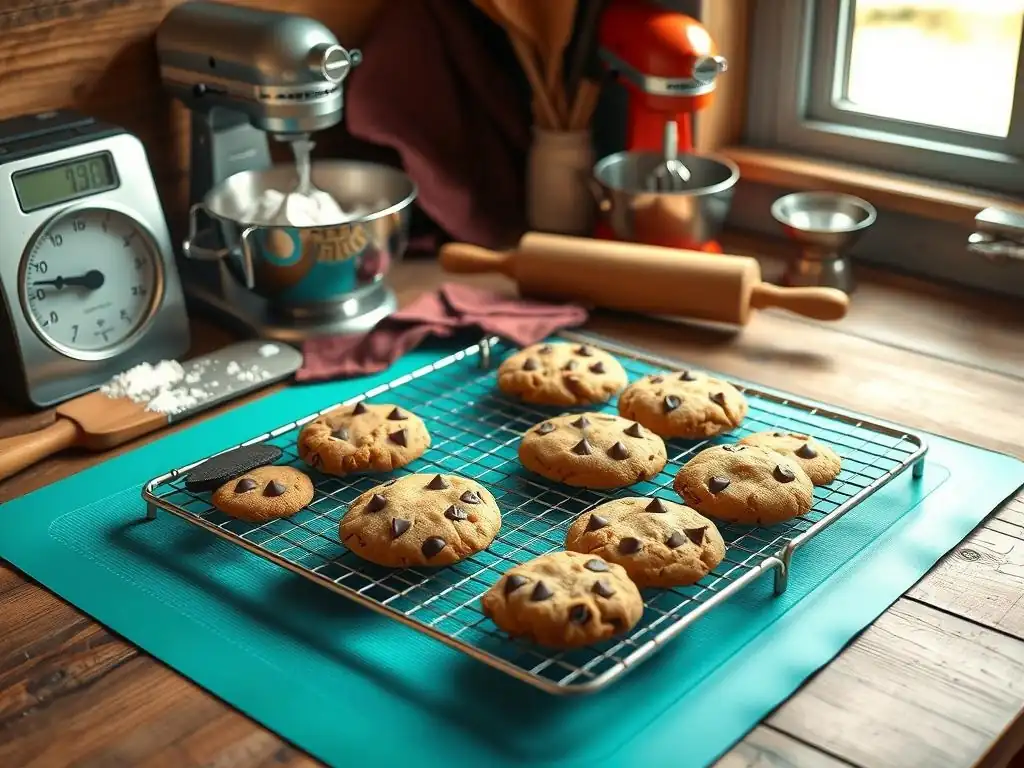
Welcome to BakeWithEase, your guide to unlocking baking brilliance! Ever wondered what lies beyond the oven when mastering your favorite recipes? This article dives into the essential baking tools beginners need, focusing on the prep and cooling equipment often overlooked. Discover how these seemingly simple tools can dramatically impact your baking success and elevate your creations from good to unforgettable. Intrigued? Let's get started!
- Introduction to Essential Baking Tools
- Preparing for Baking: Key Prep Tools
- Cooling Baked Goods: Essential Tools
- Expanding Your Toolkit: Helpful, But Not Mandatory
- Cleaning and Storing Baking Tools: Maintaining Quality
- Conclusion: Building Your Baking Foundation
-
Frequently Asked Questions
- What are the most essential tools a beginner baker needs besides an oven?
- What kind of mixing bowls are best for beginner bakers?
- Why is a cooling rack so important after baking?
- What are some good measuring tools for baking, and why are they important?
- Are there any optional but helpful tools that would make baking easier for beginners?
- Final Reflection: Mastering the Art of Baking, One Tool at a Time
- Unlock Your Baking Potential: Level Up Your Prep Game!
Introduction to Essential Baking Tools
Why Quality Baking Tools Matter
Starting your baking journey is exciting, and having the right gear makes all the difference. Think of it like learning to paint; while you can use your fingers, brushes unlock new techniques and precision. Similarly, the essential baking tools beginners need aren't just conveniences; they are fundamental to achieving consistent, delicious results. Using accurate measuring tools ensures your ingredients are in the correct proportions, preventing common pitfalls like dry cakes or flat cookies.
Furthermore, quality tools improve the baking process itself. A sturdy mixing bowl won't wobble as you beat batter, a sharp scraper helps you portion dough neatly, and a reliable cooling rack prevents soggy bottoms. Investing in durable, well-designed essential baking tools for beginners means they will last longer, perform better, and ultimately make the learning process smoother and more enjoyable. It removes frustration and allows you to focus on honing your technique, which is key for any aspiring baker.
Your Guide to Essential Baking Tools
Navigating the world of baking equipment can seem daunting at first, with countless gadgets and gizmos available. However, you don't need everything right away. This guide focuses on the truly essential baking tools beginners need to get started with confidence. We'll cover the fundamental prep tools that help you measure, mix, and handle ingredients, as well as the crucial tools needed for cooling your baked creations properly.
We'll break down the key features to look for in each tool, discuss common materials and their benefits, and explain why each item is a valuable addition to your kitchen. By the end of this guide, you'll have a clear understanding of the beginner baking tools that form the backbone of a successful baking setup, enabling you to tackle recipes from simple muffins to impressive loaves of bread. Let's build your foundation for baking success!
Preparing for Baking: Key Prep Tools
Mixing Bowls: Glass vs. Stainless Steel
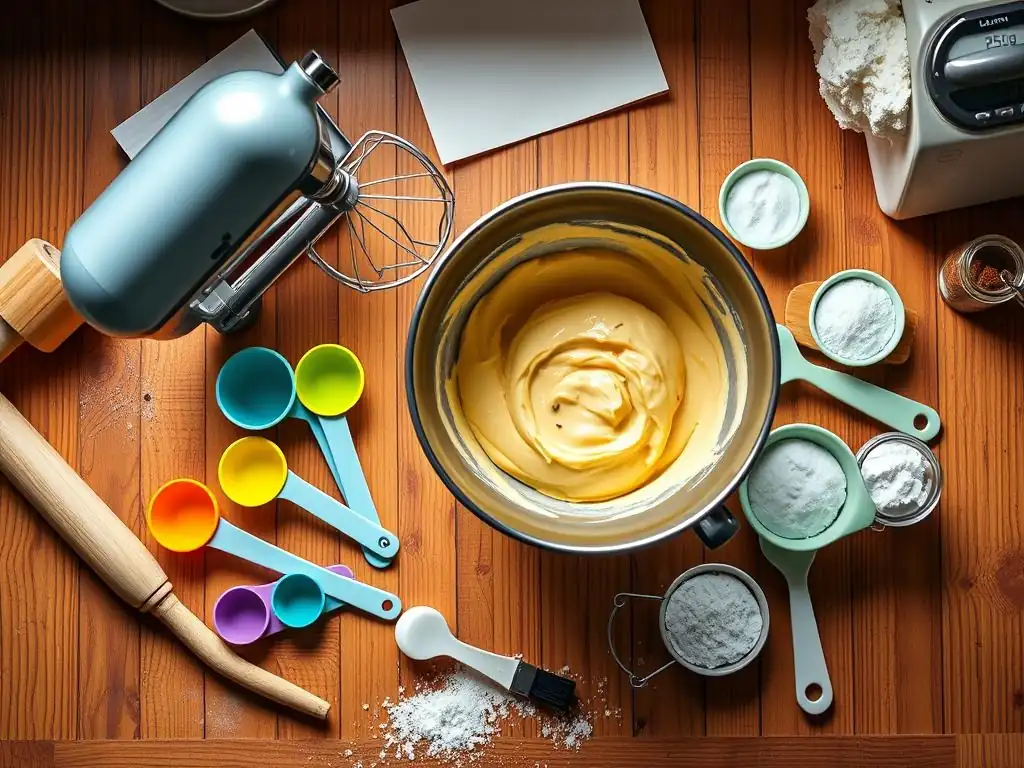
Mixing bowls are arguably the most fundamental of the essential baking tools beginners need. You'll use them for everything from whisking eggs to combining dry ingredients and mixing batters. They come in various materials, with glass and stainless steel being the most popular choices for beginner baking tools.
Glass bowls are often preferred for tasks like melting chocolate over a double boiler because they retain heat well. They are also non-reactive, meaning they won't interact with acidic ingredients like lemon juice or buttermilk, which is important for certain recipes. A set typically includes sizes ranging from small (around 1.5 liters) to large (4-5 liters or more), offering versatility for different batch sizes. While durable, they can break if dropped and are heavier than their metal counterparts.
Stainless steel bowls are lightweight, durable, and virtually unbreakable, making them excellent essential baking tools for beginners who might be a bit clumsy in the kitchen. They cool down quickly, which can be beneficial for tasks like chilling dough. Like glass, they are non-reactive. A common set might include sizes similar to glass bowls, providing options for everything from whisking a single egg white to mixing dough for several dozen cookies. Stainless steel bowls are also easy to clean and stack neatly for storage, making them a practical choice.
Measuring Cups and Spoons: Dry vs. Liquid
Accurate measurement is non-negotiable in baking; it's chemistry! Having proper measuring cups and spoons is among the most critical essential baking tools beginners need. It's important to note the difference between dry and liquid measuring cups.
Dry measuring cups are designed to be leveled off with a straight edge (like a knife or spatula) to ensure precision. They usually come in sets including 1/4 cup, 1/3 cup, 1/2 cup, and 1 cup. Measuring spoons typically come in sets including 1/4 teaspoon, 1/2 teaspoon, 1 teaspoon, and 1 tablespoon. Both should be made of sturdy plastic or metal and have clearly marked measurements that won't fade over time. Using these correctly for dry ingredients like flour, sugar, and baking powder is vital for recipe success.
Liquid measuring cups, on the other hand, are typically clear, have a spout for easy pouring, and feature measurements marked on the side. You should place them on a flat surface and read the measurement at eye level to ensure accuracy. Common sizes include 1 cup, 2 cup, and 4 cup capacities. They are designed for liquids like milk, water, oil, and extracts. Using dry measuring cups for liquids or vice versa can lead to significant inaccuracies, impacting the texture and rise of your baked goods.
Whisks, Spatulas, and Scrapers: For Every Mixing Task
These handheld tools are workhorses in the baking kitchen and are undoubtedly essential baking tools beginners need. Each serves a distinct purpose, contributing to proper mixing and handling of ingredients.
The Importance of a Balloon Whisk
A balloon whisk, with its many thin wires forming a bulbous shape, is perfect for incorporating air into ingredients. This is crucial for tasks like whisking egg whites into stiff peaks for meringues or soufflés, or aerating batters for light cakes and muffins. The design maximizes contact with the mixture, speeding up the process and creating volume.
Silicone Spatulas: Heat Resistance and Versatility
Silicone spatulas are incredibly versatile and a must-have among beginner baking tools. They are heat-resistant (often up to 500°F or 260°C), making them safe to use in hot pans or with warm ingredients. Their flexible yet sturdy heads are perfect for scraping every last bit of batter from a bowl, folding delicate ingredients like whipped cream or egg whites without deflating them, and stirring custards or sauces over heat. A good set will include different sizes and shapes, like a spoon-shaped spatula for scooping and a flat one for scraping.
Flour Sifters: Achieving a Fine Texture
While not strictly mandatory for every recipe, a flour sifter is one of the essential baking tools beginners need if they plan to bake cakes, pastries, or delicate cookies. Sifting flour aerates it, making it lighter and easier to mix into batters without overdeveloping the gluten. This results in a more tender crumb in your baked goods.
Sifting also helps remove any lumps in dry ingredients like flour, cocoa powder, or powdered sugar, ensuring a smooth, lump-free batter or icing. There are various types, from squeeze-handle sifters to crank-style or mesh strainers. Even a simple fine-mesh sieve can serve this purpose effectively, making it a versatile addition to your beginner baking tools.
Rolling Pins: Wood, Marble, or Silicone?
If you plan on making cookies, pies, tarts, or any recipe requiring rolled dough, a rolling pin is an essential item among the essential baking tools beginners need. The material affects its weight and performance.
Choosing the Right Rolling Pin
Traditional wooden rolling pins are popular and come in various styles, including tapered French pins and those with handles and a central cylinder. They are relatively lightweight and affordable. Marble rolling pins are heavier and stay cooler, which is excellent for rolling out flaky doughs like pie crusts, as the coolness helps keep the fat solid.
However, they are heavier and can be more expensive. Silicone-coated rolling pins offer a non-stick surface, making dough less likely to stick, which can be helpful for beginners. Choose a size that feels comfortable in your hands, typically between 12 and 18 inches long.
Parchment Paper and Silicone Mats: Non-Stick Solutions
Preventing sticking is key to successful baking, and parchment paper or silicone baking mats are essential baking tools beginners need for this purpose. They create a non-stick surface on your baking sheets, ensuring cookies slide off easily and preventing cakes from sticking to the bottom of pans.
Parchment paper is disposable and can be cut to fit any pan size. It's heat-resistant and prevents sticking effectively. Silicone baking mats, like Silpat, are reusable alternatives. They provide an excellent non-stick surface, distribute heat evenly, and can withstand very high temperatures. While a larger initial investment, they are durable and can last for hundreds of uses, making them a cost-effective and environmentally friendly choice among your beginner baking tools over time.
Cooling Baked Goods: Essential Tools
Wire Cooling Racks: Promoting Airflow
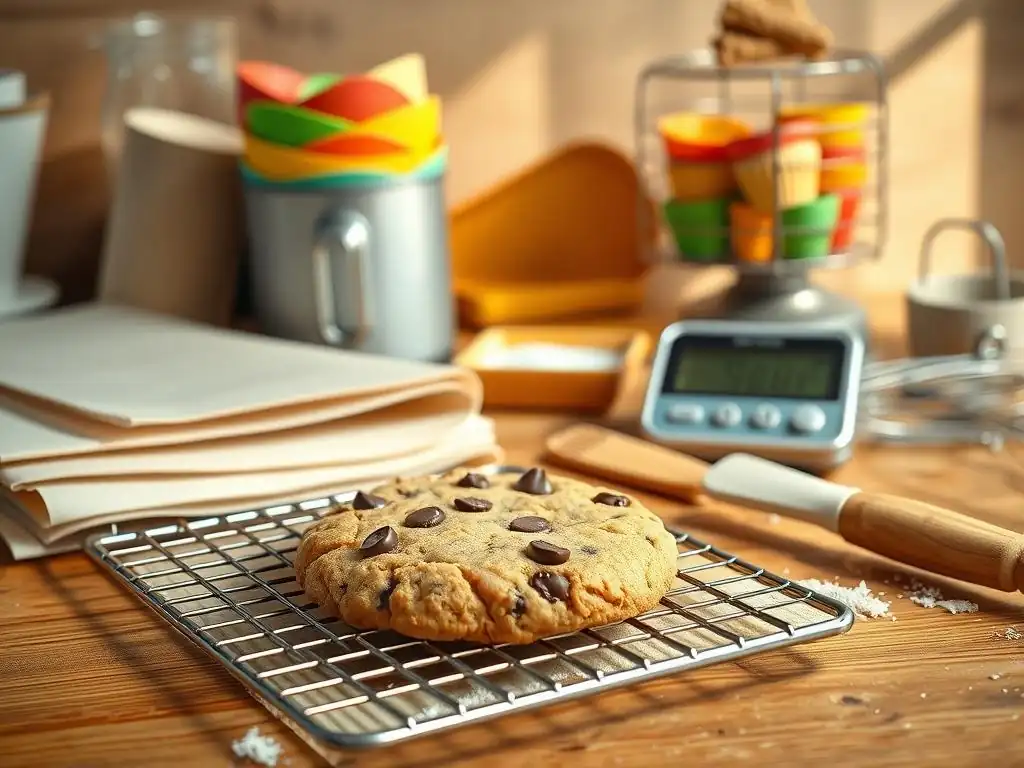
Once your delicious creations come out of the oven, how you cool them is just as important as how you baked them. Wire cooling racks are absolutely essential baking tools beginners need to ensure proper cooling and prevent moisture buildup.
Why Elevating Baked Goods is Important
Placing hot baked goods directly on a solid surface, like a countertop, traps steam underneath. This trapped moisture can make the bottoms of cookies soggy, cause cakes to collapse slightly, or result in uneven cooling. Elevating items on a wire rack allows air to circulate freely around all sides, facilitating even cooling and preventing condensation. This step is crucial for achieving the desired texture and structure in your finished product.
Choosing the Right Cooling Rack Size
Cooling racks come in various sizes and grid patterns. For most beginner baking tools sets, a standard rectangular rack (around 10x16 inches or similar) is sufficient for cooling a batch of cookies or a loaf of bread. Look for racks with a relatively close grid pattern so smaller items like cookies don't fall through. Material-wise, chrome-plated steel or stainless steel are common and durable. Ensure the rack has sturdy feet to elevate it several centimeters above the surface for adequate airflow. Having two or three racks is ideal if you bake multiple batches or different items simultaneously.
Offset Spatulas: Lifting Delicate Items
An offset spatula, also known as a palette knife, is a flat, flexible blade with a handle that is "offset" or angled. This design keeps your hand elevated above the surface you're working on, making it an essential item among the essential baking tools beginners need for handling delicate baked goods.
They are perfect for gently lifting warm cookies from a baking sheet to a cooling rack without breaking them, or for spreading frosting smoothly onto cakes. The offset angle provides leverage and control, allowing you to maneuver under items easily. They come in various sizes; a medium-sized one (around 6-8 inch blade) is a great starting point for your beginner baking tools collection.
Presentation: Cutting and Serving
Once cooled, you'll want to cut and serve your masterpieces. While any knife will cut a cake, specific tools make the process cleaner and presentation more elegant.
Pie Servers and Cake Lifters for Elegant Serving
For pies and cakes, a pie server or cake lifter is a simple but effective tool. A pie server usually has a triangular blade designed to slide under a slice of pie or cake and lift it neatly onto a plate, keeping the slice intact. A cake lifter is a larger, flat tool, often square or round, used to transfer an entire layer of cake or a small cake from one surface to another, or for serving larger wedges. While not strictly essential for baking itself, they are valuable beginner baking tools for serving your creations beautifully.
Expanding Your Toolkit: Helpful, But Not Mandatory
Once you've mastered the basics with your essential baking tools beginners need, you might consider adding a few items that can significantly speed up or simplify certain tasks.
Stand Mixers: For Large Batches and Complex Recipes
A stand mixer is a significant investment but a powerful tool for serious bakers. It handles tasks like creaming butter and sugar, kneading bread dough, and whipping large quantities of egg whites or cream with ease and consistency that hand mixing can't match.
- Handles large batch sizes.
- Provides consistent mixing results.
- Frees up your hands for other tasks.
- Excellent for dense doughs and long mixing times.
Food Processors: For Quick Doughs and Crumbles
Food processors aren't just for savory cooking; they can be excellent beginner baking tools for specific tasks. They are great for cutting cold butter into flour quickly when making pie crusts or scones, creating cookie crumbles for bases, or finely chopping nuts and dried fruit.
- Quickly incorporates cold fats into flour.
- Useful for crumb toppings and bases.
- Speeds up chopping ingredients.
Digital Kitchen Scale: Precision for Consistent Results
While measuring cups are sufficient to start, a digital kitchen scale offers the highest level of accuracy, especially for flour. Weighing ingredients (like 120 grams of flour instead of 1 cup) ensures you use the exact amount specified in a recipe, which is crucial for advanced baking and achieving consistent results every time. Many professional bakers rely solely on weight measurements.
[ ] Consider adding a kitchen scale for increased accuracy. [ ] Explore recipes that use weight measurements.
Cleaning and Storing Baking Tools: Maintaining Quality
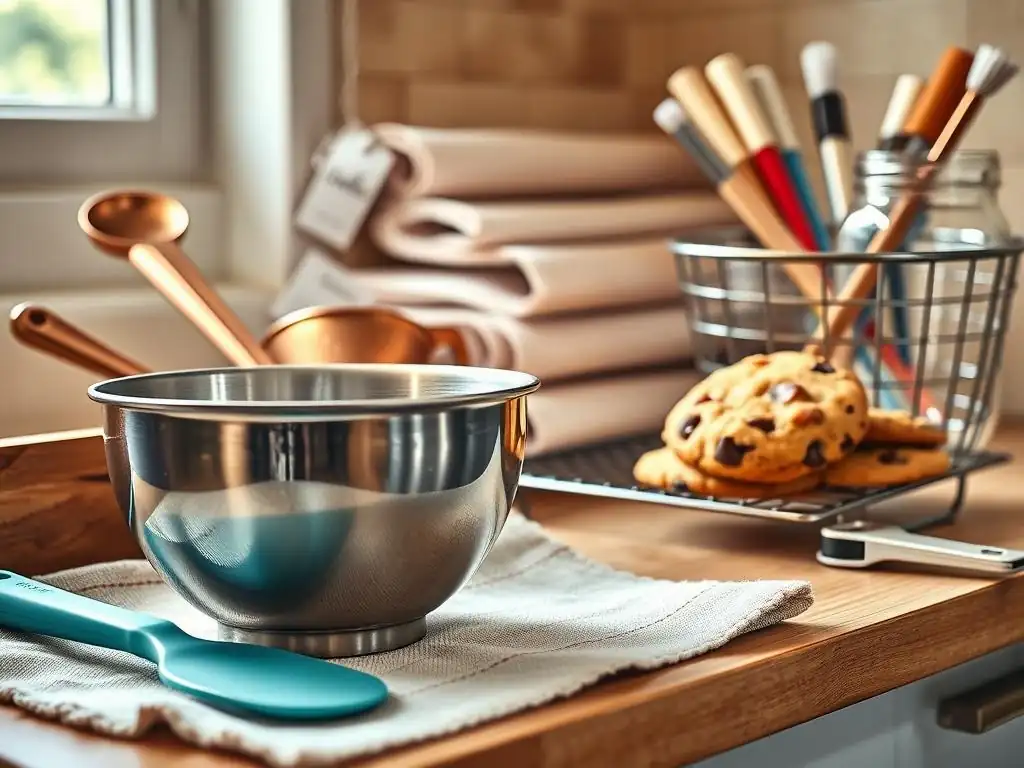
Taking care of your essential baking tools beginners need ensures they last longer and perform well every time you use them. Proper cleaning and storage are key.
Cleaning Methods for Various Materials
Cleaning methods depend on the tool's material. Stainless steel bowls and tools are generally dishwasher safe, though handwashing can prolong their lifespan. Glass bowls are also usually dishwasher safe. Wooden rolling pins should never be soaked; wipe them clean with a damp cloth and dry immediately. Silicone spatulas and mats are typically dishwasher safe or can be easily washed by hand with soap and water. Whisks can sometimes trap batter; soaking them briefly before washing can help. Always check manufacturer instructions if unsure.
Optimal Storage Solutions
Storing your beginner baking tools properly keeps them organized and protected. Hang whisks and spatulas on hooks to save drawer space. Stack mixing bowls inside each other, perhaps with a paper towel or cloth in between to prevent scratching if they are stainless steel. Store rolling pins upright in a utensil crock or horizontally in a drawer. Keep measuring cups and spoons nested together, perhaps held by a ring, so they don't get lost. Store parchment paper in its box or a dedicated spot, and roll up silicone mats or lay them flat.
Conclusion: Building Your Baking Foundation
Confidently Baking with Essential Tools
Starting to bake is an exciting journey, and equipping yourself with the right essential baking tools beginners need is the first step towards success. From accurate measuring cups and versatile mixing bowls to crucial cooling racks and handy spatulas, these fundamental items form the backbone of a functional baking kitchen. They simplify processes, improve accuracy, and ultimately help you achieve delicious results consistently.
Remember, you don't need to buy everything at once. Start with the absolute essentials discussed here and gradually build your collection as your skills and interests grow. With the right beginner baking tools in hand and a little practice, you'll be well on your way to mastering cakes, cookies, breads, and more, enjoying every step of the process. Happy baking!
[Next Steps: Exploring Beginner Baking Recipes]
Frequently Asked Questions
What are the most essential tools a beginner baker needs besides an oven?
Beginner bakers should focus on prep tools like measuring cups/spoons, mixing bowls, and a spatula. Don't forget a cooling rack to prevent soggy bottoms!
What kind of mixing bowls are best for beginner bakers?
Opt for a set of varying sized mixing bowls, including at least one stainless steel bowl for versatility and durability. Glass is also a good option.
Why is a cooling rack so important after baking?
A cooling rack allows air to circulate underneath your baked goods, preventing condensation and ensuring a crisp texture. This is especially important for cookies and cakes.
What are some good measuring tools for baking, and why are they important?
Use both liquid measuring cups (glass or plastic) and dry measuring cups/spoons (metal or plastic). Accurate measurements are crucial for baking success!
Are there any optional but helpful tools that would make baking easier for beginners?
While not essential, a bench scraper for handling dough and a silicone baking mat for easy cleanup can be very beneficial. They add convenience and improve results.
Final Reflection: Mastering the Art of Baking, One Tool at a Time
The pursuit of perfect baked goods isn't just about following a recipe; it's about understanding the essential tools that elevate your baking experience. From the initial mixing to the crucial cooling process, the right equipment significantly impacts the final product's texture, taste, and overall success. This article highlighted the often-overlooked importance of proper preparation and cooling, demonstrating how these stages are just as critical as the baking itself.
The impact of quality baking tools extends far beyond the kitchen; it's a reflection of our dedication to craftsmanship and the joy found in creating something delicious from scratch. This journey of learning, experimenting, and perfecting techniques resonates deeply with the satisfaction of a perfectly risen loaf or a flawlessly crisp cookie. The best things in life are homemade,
a sentiment that rings truer than ever when considering the care and attention that goes into every stage of baking. This article aimed to empower beginners with the knowledge and confidence to embark on this rewarding path.
Now, it's your turn. Consider the tools you already possess and identify any gaps in your baking arsenal. Don't be afraid to experiment with different techniques and find what works best for you. Remember, the journey of becoming a confident baker is a process of learning, adapting, and most importantly, enjoying the entire experience. Embrace the mess, celebrate the successes, and never stop exploring the delicious possibilities that await you in the world of baking.
Unlock Your Baking Potential: Level Up Your Prep Game!
Thanks for joining us on this baking journey! We hope you've discovered some essential tools to make your baking experience smoother and more enjoyable. Now it's time to put that knowledge into action!
- Prioritize your prep: Immediately order your top three must-have tools from the article – don't wait until your next baking project! Think of how much easier your life will be.
- Share your wisdom: Tell your fellow baking enthusiasts about your favorite new tool discovery. What's the one tool you can't live without?
- Experiment and explore: Try a new recipe this week incorporating your new tools. What will you bake first?
What surprising baking hack or tool has changed your baking game? Let's discuss in the comments below!