
Understanding Meringue Types: French, Italian, and Swiss for Pastries

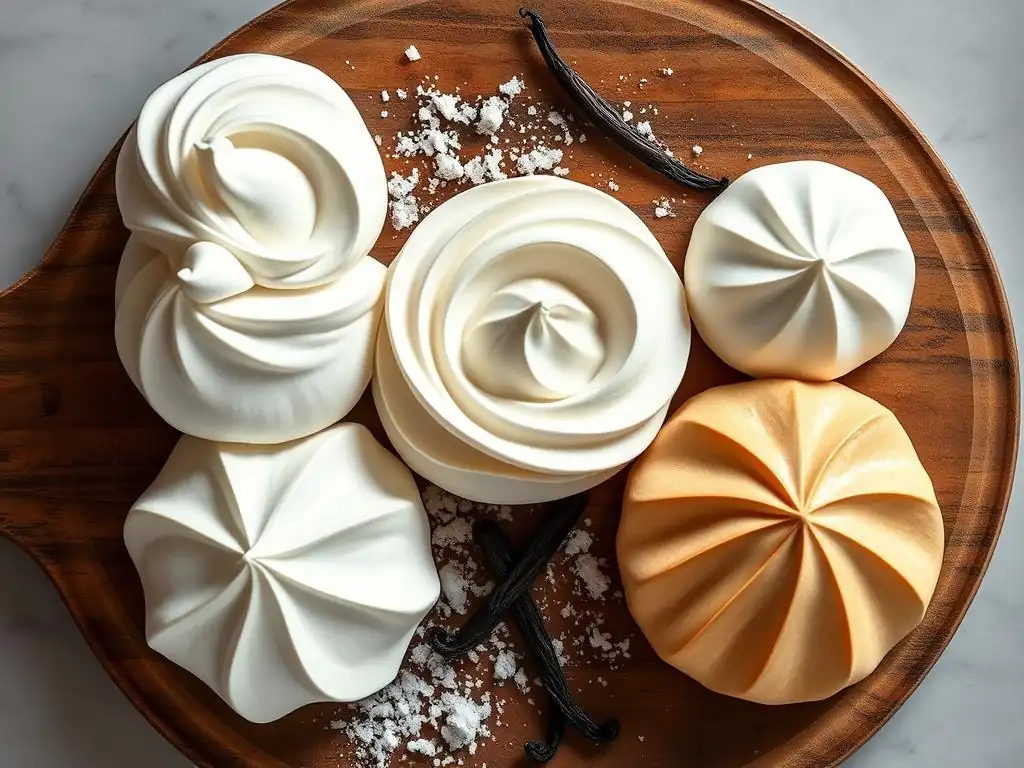
Welcome to BakeWithEase, your guide to the delightful world of baking! Ever wondered why your meringues sometimes collapse? In this article, we're diving deep into meringue types, specifically addressing the secrets to a French meringue stability recipe. Get ready to unlock the key to perfectly airy and stable meringues, and discover how mastering this technique will elevate your pastries to new heights. Intrigued? Let's get baking!
- Introduction to Meringue: A Baker's Essential Guide
- French Meringue: The Classic and Simplest Meringue
- Italian Meringue: The Stable and Silky Option
- Swiss Meringue: The Smooth and Glossy Choice
- Meringue Comparison: French vs. Italian vs. Swiss
- Troubleshooting Meringue: Common Problems and Solutions
- Tips for Perfect Meringue Every Time
- Conclusion: Mastering Meringue for Baking Success
-
Frequently Asked Questions
- What is the key difference that makes a French meringue less stable than other types?
- Why would I choose a French meringue recipe despite its instability?
- What are the biggest challenges when making a French meringue stability recipe?
- Can I improve the stability of a French meringue using any special techniques?
- How does the BakeWithEase French meringue stability recipe differ from other recipes I might find online?
- Final Reflection: The Delicate Art of Meringue Mastery
- Unlock Your Meringue Mastery: Three Simple Steps to Perfect Pies
Introduction to Meringue: A Baker's Essential Guide
Meringue is a foundational element in the world of baking, renowned for its ethereal lightness and delicate sweetness. At its core, meringue is a simple mixture of whipped egg whites and sugar, transformed through aeration into a stable foam. This transformation involves denaturing the proteins in the egg whites through mechanical action (whipping) and stabilizing them with sugar, which absorbs moisture and helps create a strong structure. Understanding the nuances of meringue is crucial for many classic desserts, from airy pavlovas to delicate macarons and silky buttercreams.
The versatility of meringue makes it indispensable in pastry. Depending on the technique used to incorporate the sugar and heat the mixture, different types of meringue emerge, each with unique characteristics in terms of stability, texture, and shine. Mastering these techniques allows bakers to achieve specific results required for various applications, ensuring success whether creating a crisp topping for a pie or a smooth, pipeable frosting for a cake. It's this foundational knowledge that elevates simple ingredients into stunning culinary creations.
What is Meringue and Why It's Important in Baking?
Meringue is essentially a foam made from egg whites and sugar, where air is incorporated into the protein structure of the egg whites. When egg whites are whipped, the mechanical action unravels the protein chains (denaturation), allowing them to bond with each other around air bubbles. Sugar is then added, which helps to stabilize this foam by forming a syrup that reinforces the protein network and prevents the air from escaping. The ratio of sugar to egg white, and the method of sugar incorporation and heating, define the type of meringue and its properties.
Its importance in baking cannot be overstated. Meringue provides lift and structure in many recipes, acting as a leavening agent in dishes like soufflés. It can create crispy, melt-in-your-mouth textures when baked at low temperatures, as seen in meringue cookies or pavlova shells. Furthermore, it forms the base for stable frostings, buttercreams, and dessert toppings that hold their shape beautifully. Without meringue, many beloved pastries and desserts simply wouldn't be possible, highlighting its role as a fundamental building block in the baker's repertoire.
Meringue Uses in Macarons & French Pastries
Meringue is absolutely central to the creation of many iconic French pastries, most notably the macaron. The delicate shells of macarons are fundamentally a baked meringue – typically French or Italian – mixed with almond flour and powdered sugar. The specific technique for incorporating the meringue (the 'macaronage') is critical to achieving the characteristic "foot" and smooth top of a perfect macaron. The type of meringue used significantly impacts the texture, stability, and aging properties of the macaron shell.
Beyond macarons, meringue features prominently in other classic French desserts. Tarte au Citron often features a topping of Italian or Swiss meringue, which is then often lightly torched for a beautiful finish. Vacherin is a dessert composed of layers of baked meringue, ice cream, and fruit. Even simple pastries like Meringue Chantilly (meringue shells filled with whipped cream) rely entirely on the quality and structure of the meringue. Understanding how different meringues perform is key to mastering these elegant confections.
French Meringue: The Classic and Simplest Meringue
French meringue is often considered the simplest and most classic form of meringue. It is made by whipping raw egg whites until soft or stiff peaks form, and then gradually adding granulated or superfine sugar while continuing to whip. This method relies solely on mechanical aeration and the sugar's ability to stabilize the raw protein structure. It's the quickest to prepare but also the least stable of the three main types.
Due to its raw state and relatively lower stability compared to Italian and Swiss methods, French meringue is often used for baked applications where its structure is set by heat. Think meringue cookies baked until crisp, pavlova shells that are crispy on the outside and slightly soft inside, or as a light, quick topping for pies that will be briefly baked or torched. While straightforward, achieving a stable French meringue requires careful technique, particularly regarding the speed of whipping and the gradual addition of sugar.
French Meringue Recipe: Ingredients and Basic Technique
A basic French meringue recipe typically uses a ratio of about 2 parts sugar to 1 part egg white by weight, though this can vary slightly. For instance, a common starting point might be 100 grams of egg whites and 200 grams of granulated or superfine sugar. A pinch of cream of tartar or a few drops of lemon juice (acid) are often added to the egg whites before whipping to help stabilize the foam and achieve greater volume, though they are not strictly essential components of the meringue itself.
The basic technique involves ensuring your mixing bowl and whisk are impeccably clean and grease-free. Begin whipping the egg whites on medium speed until they become foamy and opaque. Gradually increase the speed and begin adding the sugar, a tablespoon or so at a time, allowing each addition to dissolve before adding the next. Continue whipping on high speed until stiff, glossy peaks form and the sugar is completely dissolved – you shouldn't feel grittiness when rubbing a small amount between your fingers. This process usually takes 5-10 minutes depending on the mixer.
French Meringue Stability: Achieving the Right Consistency
Achieving good French meringue stability is key, especially if you're piping shapes or using it in recipes like macarons before baking. The primary factors influencing stability are the amount of sugar, the degree to which it's dissolved, and the extent of whipping. Using a higher ratio of sugar relative to egg whites generally results in a more stable meringue because the sugar helps reinforce the protein network more effectively. Superfine (caster) sugar dissolves more quickly than granulated sugar, reducing the risk of a grainy texture and contributing to better stability.
Proper whipping is equally critical for French meringue stability. The egg whites need to be whipped to stiff peaks, meaning that when the whisk is lifted, the meringue stands straight up without drooping. However, over-whipping can cause the meringue to become dry, granular, and prone to weeping later. The slow, gradual addition of sugar is vital to allow it to dissolve fully into the egg whites, creating a smooth, glossy, and stable foam. A well-executed French meringue stability recipe relies on patience during sugar incorporation and knowing when to stop whipping.
French Meringue Uses: From Pavlova to Simple Frostings
French meringue, despite being the least stable when raw, is incredibly versatile when baked. Its primary application is in desserts where it is baked until crisp, such as classic meringue cookies or "Forgotten Cookies" baked overnight in a cooling oven. Pavlova, a popular dessert in Australia and New Zealand, features a large baked French meringue shell that is crisp on the outside and marshmallowy soft in the center, typically filled with whipped cream and fruit.
It can also be used as a light topping for pies or tarts, like a simple Lemon Meringue Pie, where it is spread or piped onto a warm filling and then baked briefly at a high temperature or torched until golden brown. While not as stable as Italian or Swiss meringue for applications like buttercream that aren't baked, a very stiffly whipped French meringue can sometimes be used as a quick, rustic frosting if applied immediately. The key is understanding its limitations and leveraging its ability to bake into a delightful, crisp texture.
Pros and Cons of Using French Meringue
The main advantage of French meringue is its simplicity and speed of preparation. It requires no cooking or special equipment beyond a mixer, making it the most accessible type for beginner bakers. It bakes into a wonderfully light and crisp texture, perfect for cookies and pavlova bases. The ingredients are also readily available and inexpensive.
However, French meringue has significant drawbacks. It is the least stable when raw, meaning it is prone to deflating or weeping if not used immediately or if exposed to high humidity. Because it contains raw egg whites, there's a food safety consideration unless it's baked thoroughly. It can also be prone to graininess if the sugar isn't fully dissolved, and achieving consistent French meringue stability can be more challenging than with cooked meringues.
Italian Meringue: The Stable and Silky Option
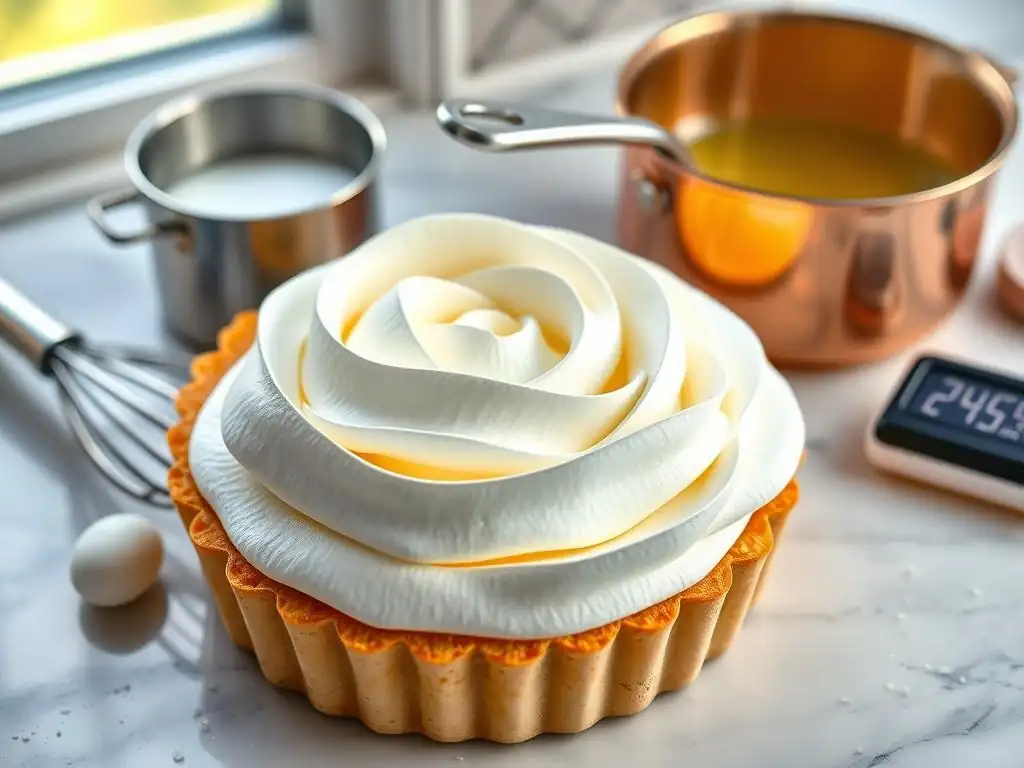
Italian meringue is renowned for its exceptional stability and smooth, satiny texture. Unlike French meringue, which uses raw sugar, Italian meringue is made by whipping egg whites while simultaneously drizzling in a hot sugar syrup that has reached the soft-ball stage (typically 115°C to 121°C, or 240°F to 250°F). The hot syrup cooks the egg whites as it's incorporated, making this meringue safe to consume without further baking.
This cooking process results in a much more stable and dense foam compared to French meringue. The cooked egg proteins provide a stronger structure, and the hot sugar syrup fully dissolves, leading to a remarkably smooth and glossy finish. Italian meringue is often used as a base for buttercreams, as a stable topping for tarts and pies that can be torched without weeping, and as a crucial component in certain types of mousse and nougat.
Italian Meringue Recipe: Hot Sugar Syrup Technique
An Italian meringue recipe typically starts with whipping egg whites to soft peaks. Simultaneously, sugar and water are heated in a saucepan without stirring until the syrup reaches the specified temperature (e.g., 118°C or 244°F for soft-ball stage). A common ratio might be 3 parts sugar to 1 part water by weight for the syrup, combined with 2 parts egg whites by weight. For example, 150g sugar, 50g water, and 100g egg whites.
Once the egg whites reach soft peaks, the hot sugar syrup is carefully and slowly drizzled down the side of the mixing bowl into the whipping egg whites. It's crucial to pour the syrup in a thin, steady stream and avoid letting it hit the whisk directly, which could splatter it onto the sides of the bowl where it would harden. The mixer continues to whip on high speed as the syrup is added, and then continues whipping until the meringue is thick, glossy, and has cooled down significantly, usually taking 8-15 minutes depending on the quantity.
Achieving a Stable Italian Meringue: Key Steps & Tips
Achieving a stable Italian meringue hinges on two main factors: the temperature of the sugar syrup and the continued whipping as it cools. The syrup must reach the correct temperature (soft-ball stage) to ensure it is concentrated enough to properly cook and stabilize the egg whites. If the syrup is too cool, the meringue will be weak and potentially unsafe; if it's too hot, it can scorch the egg whites. Using a reliable candy thermometer is essential for accuracy.
The second critical step is whipping the meringue until it is completely cool. As the hot syrup is incorporated, the meringue heats up. Continued whipping cools it down while simultaneously developing its strong, stable structure. The meringue should become very thick, shiny, and hold stiff, upright peaks. When the bowl feels cool to the touch from the outside, the Italian meringue is ready. This process ensures the egg proteins are fully set and the sugar is integrated into a stable matrix.
Italian Meringue Applications: Buttercream and Tart Toppings
Italian meringue's superior stability and smooth texture make it ideal for applications where the meringue needs to hold its shape and resist weeping. One of its most popular uses is as the base for Italian Meringue Buttercream (IMBC). Butter is gradually whipped into the cooled Italian meringue, resulting in a remarkably light, silky, and stable frosting that is less sweet than American buttercream and holds up well at room temperature for extended periods.
It is also the preferred meringue for topping lemon tarts or other pies that require a stable, pipeable meringue that can be torched to a beautiful golden-brown finish without collapsing or weeping excessively. The hot sugar syrup process effectively denatures the proteins, creating a structure that is much more resilient to moisture and temperature changes than French meringue. This stability also makes it suitable for folding into mousses or making nougat and other confections that require a dense, cooked meringue base.
Italian Meringue's Superior Stability: Why it Matters
The primary reason for Italian meringue's superior stability lies in the cooking process. Heating the sugar syrup to the soft-ball stage and incorporating it into the egg whites effectively cooks the egg proteins. This heat treatment permanently alters the protein structure, creating a much stronger and more rigid network than in raw French meringue. The high concentration of sugar in the hot syrup also plays a significant role, further reinforcing the protein structure and binding moisture.
This enhanced stability matters greatly in professional patisserie and home baking alike. A stable meringue is less likely to deflate when folded into other ingredients, holds piped shapes sharply for decoration, and resists weeping (the separation of liquid from the meringue mass) for longer periods. This makes Italian meringue particularly valuable for frostings, fillings, and structural elements in desserts that need to maintain their appearance and texture over time, or withstand being torched.
Advantages and Disadvantages of Italian Meringue
The main advantages of Italian meringue are its exceptional stability, smooth and glossy texture, and the fact that it is safe to eat raw due to the hot sugar syrup cooking the egg whites. It creates a beautiful, stable frosting base and is perfect for torching on tarts. It is also less sensitive to humidity once made compared to French meringue.
The primary disadvantage is the complexity and potential hazard involved in working with hot sugar syrup. It requires careful temperature monitoring with a candy thermometer and can cause serious burns if handled improperly. The process is also more time-consuming than making French meringue. Additionally, Italian meringue is typically sweeter than French or Swiss meringue due to the high concentration of sugar used in the syrup.
Swiss Meringue: The Smooth and Glossy Choice
Swiss meringue offers a middle ground between the simplicity of French and the complexity of Italian meringue. It is made by gently heating egg whites and sugar together over a double boiler (bain-marie) while whisking constantly, and then removing the mixture from the heat and whipping it until it cools and forms stiff, glossy peaks. This gentle cooking process partially denatures the egg proteins and dissolves the sugar completely before whipping begins.
The result is a meringue that is smoother, silkier, and more stable than French meringue, though generally less stable than Italian meringue. The heating ensures the sugar is fully dissolved, preventing graininess and contributing to a beautiful sheen. Swiss meringue is particularly favored for making Swiss Meringue Buttercream (SMBC), a popular frosting known for its velvety texture and moderate sweetness. It also works well as a topping for pies and tarts that will be torched.
Swiss Meringue Recipe: A Gentle Heating Method
A typical Swiss meringue recipe uses a similar ratio of sugar to egg whites as French meringue, often around 2 parts sugar to 1 part egg white by weight. For example, 100 grams of egg whites and 200 grams of granulated or superfine sugar. The key difference lies in the initial heating step. The egg whites and sugar are combined in a heatproof bowl, often the bowl of a stand mixer, and placed over a saucepan of simmering water (a double boiler).
While over the heat, the mixture is constantly whisked until the sugar is completely dissolved and the mixture reaches a temperature of around 60°C to 70°C (140°F to 160°F). This temperature is sufficient to pasteurize the egg whites (making them safer to eat raw) and ensure the sugar is fully dissolved, but not so hot that it scrambles the eggs.
Once the target temperature is reached and the mixture is no longer grainy when rubbed between your fingers, the bowl is removed from the heat and immediately transferred to a stand mixer to be whipped on high speed until cool, thick, and glossy.
Swiss Meringue Buttercream (SMBC): A Detailed Guide
Swiss Meringue Buttercream (SMBC) is one of the most popular and luxurious frostings, and Swiss meringue is its essential base. Once the Swiss meringue is whipped to stiff, cool peaks, softened butter is gradually added piece by piece while the mixer continues to run on a lower speed. The mixture may look curdled or broken initially, but with continued mixing, it will emulsify into a smooth, creamy, and stable buttercream.
The ratio of butter to meringue varies, but a common starting point is roughly equal parts meringue and butter by weight, or slightly more butter than meringue. For instance, 300g of finished Swiss meringue might be combined with 350-400g of softened, unsalted butter. The resulting buttercream is less sweet than traditional American buttercream, has a wonderfully smooth and silky texture, pipes beautifully, and holds up well at room temperature. It can be flavored with vanilla, chocolate, fruit purees, or extracts.
Swiss Meringue: Achieving Gloss and Volume
The characteristic gloss of Swiss meringue is primarily achieved by the complete dissolution of the sugar during the initial heating phase. When the sugar granules fully dissolve into the egg whites before whipping, they integrate seamlessly into the protein structure as air is incorporated, resulting in a smooth, reflective surface. The gentle heat also helps to slightly relax the egg proteins, allowing them to stretch and incorporate air more effectively during whipping, contributing to good volume.
Whipping the heated mixture until it is completely cool is also crucial for achieving both gloss and volume. As the mixture cools, the protein network tightens and stabilizes around the trapped air bubbles. High-speed whipping during this cooling phase creates a fine, uniform air cell structure that reflects light evenly, enhancing the gloss, while also building the volume and firmness needed for stable peaks. Stopping whipping too early can result in a weaker, less glossy meringue.
Best Uses for Swiss Meringue: Cakes and Decorations

Swiss meringue's smoothness, stability, and beautiful sheen make it excellent for decorating cakes and pastries. Swiss Meringue Buttercream (SMBC) is a top choice for frosting and filling layer cakes due to its pipeable consistency, smooth texture, and ability to hold sharp edges and intricate designs. It provides a stable base for cake decoration and is less prone to melting than some other frostings.
Beyond buttercream, Swiss meringue itself can be used as a topping for tarts or pies, similar to Italian meringue. It pipes beautifully and can be torched to achieve an appealing golden-brown finish, offering good resistance to weeping. While not typically baked into crisp cookies like French meringue (it tends to stay slightly chewy), its stability makes it suitable for folding into mousses or using as a stable base for other light desserts where a cooked, smooth meringue is desired.
Benefits and Drawbacks of Swiss Meringue
A major benefit of Swiss meringue is its smooth, non-grainy texture and beautiful gloss, resulting from the sugar being fully dissolved during heating. It is more stable than French meringue and less prone to weeping, making it better suited for applications that aren't immediately baked. The heating process also pasteurizes the egg whites, making it safe to eat raw. Its balance of stability and relative ease of preparation makes it popular for buttercream.
A drawback is that it requires an extra step involving heating over a double boiler, making it slightly more complex and time-consuming than French meringue. While more stable than French, it is generally considered less robust than Italian meringue, particularly in very humid conditions or for applications requiring maximum structural integrity. It also requires careful temperature control during the heating phase to avoid scrambling the eggs.
Meringue Comparison: French vs. Italian vs. Swiss
Choosing the right meringue depends entirely on the desired outcome for your baked good. Each type offers distinct characteristics in terms of stability, texture, taste, and ease of preparation. Understanding these differences is key to selecting the best meringue for a specific recipe, whether you need a crisp cookie, a stable frosting, or a delicate macaron shell.
French, Italian, and Swiss meringues represent a spectrum of techniques and results. French is the simplest and least stable, ideal for crisp baked goods. Italian is the most complex and most stable, perfect for buttercreams and torched toppings. Swiss sits in the middle, offering good stability and a smooth texture, making it a favorite for buttercream and non-baked applications where raw egg safety is a concern.
Stability Comparison: Which Meringue Holds Up Best?
When comparing stability, Italian meringue is the undisputed leader. The hot sugar syrup cooks the egg whites, creating a strong, resilient protein network that resists deflation and weeping significantly better than the other types. Italian meringue holds piped shapes sharply for hours and is very durable, even suitable for intricate decorations.
Swiss meringue offers good stability, much better than French. The gentle heating and thorough whipping create a structure that holds up well for decorating and is less prone to weeping than French meringue. It's generally stable enough for buttercream and toppings that will be torched. French meringue is the least stable when raw. It's highly susceptible to deflation and weeping, especially in humid environments. Its stability is primarily achieved through baking, which sets its structure.
Texture and Taste Differences: A Side-by-Side Analysis
The texture of the three meringues varies significantly. French meringue, when baked, is typically very crisp and brittle, melting quickly in the mouth. When raw, it's light and airy but can be slightly grainy if the sugar isn't fully dissolved. Italian meringue is known for its incredibly smooth, silky, and glossy texture, both raw and cooked (as in buttercream). It's dense and stable, often described as satiny. Swiss meringue also has a very smooth and glossy texture, similar to Italian, but might be slightly less dense and firm.
In terms of taste, French meringue tends to be the sweetest, as the raw sugar isn't diluted by water in a syrup. Italian meringue is also quite sweet due to the concentrated sugar syrup, but the sweetness is often balanced by its use in buttercreams or as a topping for tart fillings. Swiss meringue, using a similar sugar ratio to French but with the sugar fully dissolved, also has a clean sweetness, often perceived as slightly less intensely sweet than French dueoved to its use in buttercream where butter balances the sugar.
Ease of Preparation: Ranking the Meringue Techniques
Ranking the meringues by ease of preparation, French meringue is undoubtedly the simplest and quickest. It involves just whipping egg whites and adding sugar – no cooking or temperature monitoring required beyond knowing when the peaks are stiff. This makes it the most beginner-friendly option.
Swiss meringue is slightly more complex than French, requiring the extra step of heating the egg whites and sugar over a double boiler to a specific temperature. This adds a bit more time and requires careful attention to avoid scrambling the eggs. Italian meringue is generally considered the most challenging due to the need to make a hot sugar syrup and pour it correctly into the whipping egg whites while monitoring the syrup temperature precisely. Handling hot syrup also presents a safety consideration.
Best Meringue for Macarons: Finding the Perfect Fit
Choosing the best meringue for macarons is a topic of much debate among bakers, and both French and Italian meringues are commonly used, each offering different results. French meringue macarons are often considered more rustic and can be more finicky, being highly sensitive to humidity and mixing technique ("macaronage"). A successful French meringue stability recipe for macarons requires precise whipping and gentle folding to maintain air.
Italian meringue is often favored by professional bakers for macarons because it produces a more stable, reliable batter that is less affected by humidity. Italian meringue macarons tend to have a smoother top and a more consistent "foot". The cooked meringue provides a more robust structure. While Swiss meringue can technically be used, it's less common for macaron shells; its texture and stability profile are generally better suited for fillings or buttercreams rather than the shell itself. Ultimately, the "best" meringue for macarons often comes down to baker preference, desired texture, and consistency needs.
Troubleshooting Meringue: Common Problems and Solutions
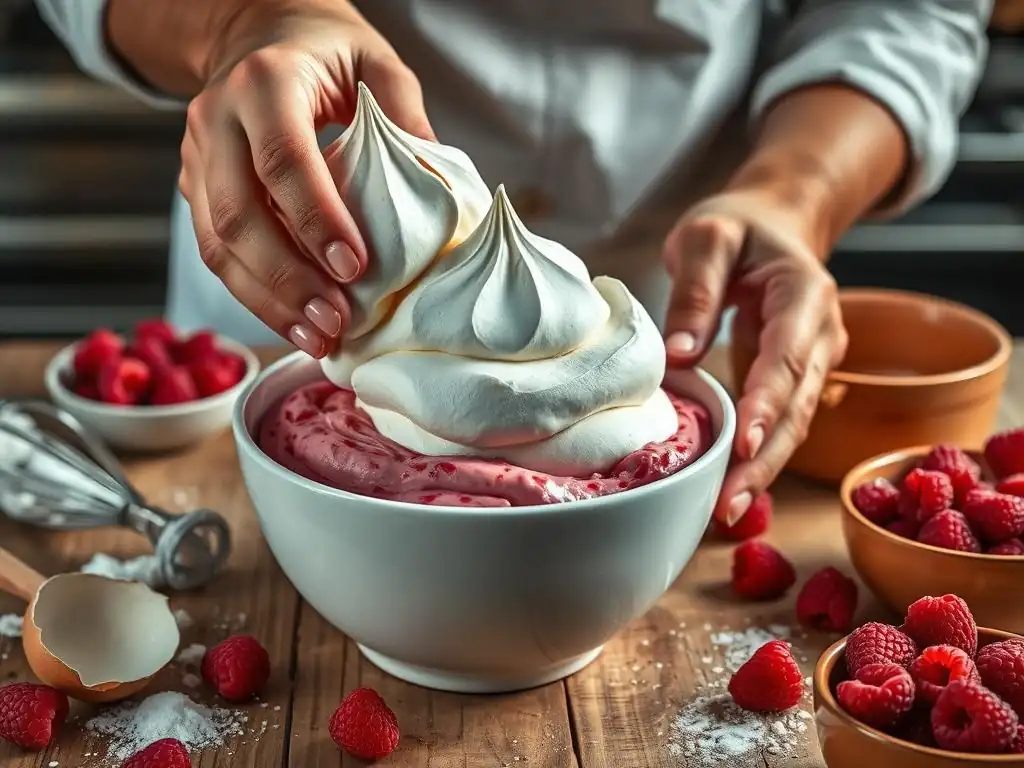
Working with meringue can sometimes present challenges, from a meringue that won't stiffen to one that weeps after standing. Understanding the common pitfalls and how to address them is crucial for consistent success. Many issues stem from factors like temperature, humidity, cleanliness, or improper technique during whipping or cooking.
Fortunately, most meringue problems have identifiable causes and solutions. By paying close attention to details like ensuring equipment is grease-free, using eggs at the right temperature, accurately measuring ingredients, and following the specific heating or whipping instructions for the chosen meringue type, bakers can significantly increase their chances of achieving a perfect result.
Meringue Not Stiff Enough: Causes and Fixes
If your meringue isn't reaching stiff peaks, several factors could be at play. The most common culprit is fat contamination. Even a tiny amount of egg yolk or grease on the bowl or whisk can prevent the egg whites from whipping properly. Ensure all equipment is scrupulously clean and dry. Another cause is insufficient whipping time or speed; meringue needs vigorous whipping to build structure.
Adding the sugar too quickly can also inhibit volume and stiffness, as it can weigh down the egg whites before they've built enough structure. For French and Swiss meringues, ensure the sugar is added gradually. For Italian, make sure the syrup is hot enough and poured slowly. If the meringue is still soft, continue whipping on high speed. If fat contamination is suspected, unfortunately, it's often best to start over. Using eggs at room temperature can also help them whip to greater volume and stiffness.
Weeping Meringue: Preventing and Correcting
Weeping, where liquid separates from the meringue, is a common issue, particularly with French meringue. It occurs when the protein structure isn't strong enough to hold onto the moisture, often because the sugar hasn't fully dissolved or the meringue wasn't whipped to sufficient stiffness. High humidity can also exacerbate weeping by causing the sugar to absorb moisture from the air.
Prevention is key: ensure the sugar is completely dissolved (especially crucial for French and Swiss meringues) and whip the meringue to firm, glossy peaks. For French meringue, use it immediately after whipping. For Italian and Swiss, the cooking process inherently reduces the likelihood of weeping.
While it's difficult to truly 'correct' a weeping meringue, sometimes gently re-whipping it briefly can help reincorporate some liquid, but this is not a guaranteed fix. Using a stabilizer like cream of tartar or a small amount of cornstarch (particularly in baked French meringues) can also help absorb moisture and improve French meringue stability recipe outcomes.
Grainy Meringue: Achieving a Smooth Texture
A grainy meringue is usually a sign that the sugar has not fully dissolved. This is a frequent issue with French meringue, where the sugar is added directly to the raw egg whites. If the sugar granules remain intact, the meringue will have a gritty texture. Using superfine sugar instead of granulated can help, as it dissolves more easily. Adding the sugar very slowly, a tablespoon at a time, while whipping vigorously gives the sugar more time to dissolve.
For Swiss meringue, graininess indicates that the egg white and sugar mixture was not heated long enough or whisked sufficiently over the double boiler to dissolve all the sugar before whipping. Rub a small amount between your fingers to check for grittiness before removing it from the heat. Italian meringue is least prone to graininess because the sugar is dissolved into a syrup before being added, ensuring it's fully integrated into the meringue structure.
Soft Meringue in High Humidity: Adjusting Sugar Ratios
High humidity is a meringue's nemesis, particularly for French meringue. Sugar is hygroscopic, meaning it absorbs moisture from the air. In humid conditions, the sugar in the meringue can draw in excess moisture, weakening the protein structure and leading to softness, stickiness, and weeping. This is why achieving French meringue stability recipe success is harder on a rainy day.
While difficult to completely counteract humidity, using a slightly higher ratio of sugar to egg whites can help, as the increased sugar reinforces the structure. For French meringue destined for baking, adding a small amount of cornstarch (perhaps 1-2 teaspoons per cup of egg whites) can act as a buffer, absorbing excess moisture. For Italian and Swiss meringues, which are more stable, working quickly and storing the finished product appropriately (e.g., in an airtight container or a cool, dry place) is the best defense against humidity's effects.
Tips for Perfect Meringue Every Time
Mastering meringue involves more than just following a recipe; it requires attention to detail and understanding the science behind the process. Simple practices can significantly impact the volume, stability, and texture of your meringue, leading to more consistent and successful results across all three types.
From the quality of your ingredients to the conditions in your kitchen, several factors play a role. By incorporating these tips into your meringue-making routine, you'll be well on your way to creating beautiful, stable, and delicious meringues for all your baking endeavors.
Using Fresh Eggs for Optimal Meringue Volume
The freshness of your eggs can influence how well the whites whip. While older eggs tend to spread more, making them easier to separate, very fresh eggs have thicker, stronger albumen (egg white) that can trap air more effectively, potentially leading to greater volume and a more stable foam. Using eggs at room temperature is also highly recommended.
Room temperature egg whites whip up faster and achieve greater volume than cold egg whites. The proteins are more elastic and can stretch further to incorporate air. To quickly bring eggs to room temperature, place them in a bowl of warm water for 10-15 minutes before separating. Be careful to separate the whites from the yolks meticulously, as even a trace of fat will prevent the whites from whipping properly.
The Importance of a Clean Bowl and Whisk
This cannot be stressed enough: the mixing bowl and whisk must be impeccably clean and absolutely free of any grease or soap residue. Fat is the arch-enemy of meringue. Even a microscopic amount of fat will coat the egg proteins, preventing them from unraveling and bonding to form a stable foam.
Use a clean, dry bowl (metal or glass are preferred over plastic, as plastic can retain grease) and whisk. Wash them thoroughly with hot, soapy water, rinse well, and dry completely. Some bakers even wipe the bowl down with a little lemon juice or vinegar on a paper towel as an extra precaution, though this isn't strictly necessary if the equipment is truly clean. Ensuring a pristine environment for your egg whites is the foundational step for any successful meringue.
Controlling Humidity for Meringue Success
Humidity is a significant challenge for meringue, especially French meringue stability recipe results. On humid days, meringue is more likely to be sticky, soft, and prone to weeping because the sugar absorbs moisture from the air. If possible, avoid making meringue on very rainy or humid days.
If you must bake on a humid day, consider using Italian or Swiss meringue, which are more stable. For French meringue, ensure it is baked or used immediately. Store baked meringues in an airtight container at room temperature once completely cooled; refrigeration can cause them to become sticky due to condensation. Using a small amount of cornstarch in baked meringues can also help mitigate humidity issues.
Infusing Meringue with Citrus Zest for Enhanced Flavor
While classic meringue is flavored with vanilla, you can easily infuse it with other flavors for a delightful twist. Citrus zest is particularly effective because the oils in the zest carry a strong aroma and flavor. For example, finely grated lemon, lime, or orange zest can be gently folded into the finished meringue after it has reached stiff peaks but before baking or using.
The oils in the zest can potentially interfere slightly with stability if added too early or in large quantities, so it's best added at the end. The vibrant flavor of citrus zest pairs wonderfully with the sweetness of meringue and can elevate desserts like lemon meringue pie, tarts, or pavlovas. Experiment with small amounts initially to see how the flavor impacts your specific meringue application.
Conclusion: Mastering Meringue for Baking Success
Understanding the distinct characteristics and techniques behind French, Italian, and Swiss meringues empowers you to choose the perfect type for any baking project. French meringue offers simplicity and a delightful crisp texture when baked. Italian meringue provides unparalleled stability and a silky smoothness, ideal for buttercreams and toppings that need to hold their shape and resist weeping. Swiss meringue strikes a balance, offering good stability, a beautiful gloss, and a smooth texture, making it a versatile choice for frostings and non-baked applications.
Mastering meringue is a journey that involves practice, attention to detail, and learning from occasional setbacks. By focusing on fundamental principles like using clean equipment, incorporating sugar correctly, achieving the right peak consistency, and managing environmental factors like humidity, you can consistently produce high-quality meringue. Whether you're aiming for a delicate macaron shell, a towering lemon meringue pie, or a luscious buttercream, a solid understanding of these three meringue types is your key to baking success.
Choosing the Right Meringue for Your Baking Needs
Selecting the appropriate meringue is crucial for achieving the desired outcome in your recipe. Consider the intended use: Are you baking crisp cookies? French meringue is your best bet. Do you need a stable frosting that holds intricate shapes and can be torched? Italian meringue or Swiss Meringue Buttercream are excellent choices. Are you making macarons? Both French and Italian have their proponents, depending on the desired texture and level of difficulty you're comfortable with.
Also, consider the handling and storage requirements. If the meringue needs to sit for a while before being used or if you live in a humid climate, the greater stability of Italian or Swiss meringue is advantageous. If you need a quick, simple topping for a pie that will be baked immediately, French meringue might suffice. Evaluating the recipe's demands and your own comfort level with each technique will guide your choice.
Further Exploration: Meringue-Based Recipes on BakeWithEase.com
Now that you have a solid understanding of the three main types of meringue, you're ready to put your knowledge into practice! BakeWithEase.com offers a variety of recipes that utilize French, Italian, and Swiss meringues. Explore our collection to find detailed guides for creating classic desserts like French meringue cookies that highlight French meringue stability recipe techniques, learn how to make silky Italian Meringue Buttercream for your cakes, or discover the secrets to perfect Swiss meringue-topped tarts.
Our step-by-step recipes provide clear instructions tailored for home bakers of all levels. You'll find tips on whipping techniques, sugar syrup temperatures, troubleshooting common issues specific to each recipe, and creative ways to flavor and use your meringue. Dive into our Macarons & French Pastries section for detailed macaron recipes using both French and Italian methods, or explore our Pastry and Desserts category for other meringue-based delights. Happy baking!
Frequently Asked Questions
What is the key difference that makes a French meringue less stable than other types?
The main reason for the lower stability is that French meringue is made by simply whisking raw egg whites with sugar. There's no heat involved, which means the egg proteins aren't cooked and can easily collapse.
Why would I choose a French meringue recipe despite its instability?
French meringue is often favored for its simplicity and light, airy texture. It's quick to make and great for recipes where it will be cooked further, like in a baked meringue shell or incorporated into buttercream.
What are the biggest challenges when making a French meringue stability recipe?
Humidity is a major enemy, as it can prevent the meringue from whipping properly. Also, ensuring the egg whites are completely free of yolk is crucial for achieving maximum volume and stability.
Can I improve the stability of a French meringue using any special techniques?
Yes, adding a small amount of cream of tartar can help stabilize the egg whites. Also, gradually adding the sugar in small increments ensures it dissolves properly, contributing to a stronger meringue structure.
How does the BakeWithEase French meringue stability recipe differ from other recipes I might find online?
Our BakeWithEase recipe emphasizes using high-quality ingredients and provides precise measurements. We also include detailed instructions on achieving the correct texture and offer tips for troubleshooting common problems like a weeping meringue.
Final Reflection: The Delicate Art of Meringue Mastery
The pursuit of the perfect meringue, a seemingly simple confection, reveals a surprising depth of culinary science and artistry. Understanding the subtle differences between French, Italian, and Swiss methods isn't just about achieving the right texture; it's about unlocking the potential for a vast range of delectable pastries and desserts. The stability and consistency of your meringue, particularly crucial for French meringue recipes, directly impacts the final product's success.
The journey through these meringue techniques has highlighted not only the importance of precise measurements and careful execution but also the inherent beauty of transformation. Watching a simple mixture of egg whites and sugar morph into a glossy, stiff peak is a testament to the power of chemistry and skill. The art of cooking is more than just following a recipe; it's about understanding the science behind the ingredients and the process.
This quote perfectly encapsulates the experience of mastering meringue, a process that demands both precision and intuition.
Now, consider your own culinary journey. Have you ever attempted a meringue recipe only to be met with disappointment? Perhaps this exploration has given you the knowledge and confidence to try again, armed with a deeper understanding of the nuances involved. I encourage you to experiment, to embrace the challenges, and to discover the joy of creating your own perfect meringue, whether it's the airy lightness of a French meringue or the glossy sheen of an Italian one. The possibilities are as limitless as your imagination.
Unlock Your Meringue Mastery: Three Simple Steps to Perfect Pies
Thanks for joining us on this delicious journey into the world of meringues! We hope you’ve gained a newfound appreciation for the subtle differences between French, Italian, and Swiss methods. Now it’s time to put your knowledge to the test.
- Bake your dream meringue: Choose your favorite meringue type from today’s article and whip up a batch. It’s easier than you think! Don't be afraid to experiment with different flavors and toppings.
- Share your meringue masterpiece: Show off your baking skills! Share a picture of your creation on social media and tag us - we'd love to see your results! Use #BakeWithEaseMeringue.
- Explore our other recipes: Dive deeper into the world of baking with BakeWithEase.com. We have tons of recipes just waiting to be discovered!
Ready to elevate your baking game? What unexpected flavor combination will you try in your next meringue creation?