
Simple Secrets for Spectacular Choux Pastry Results

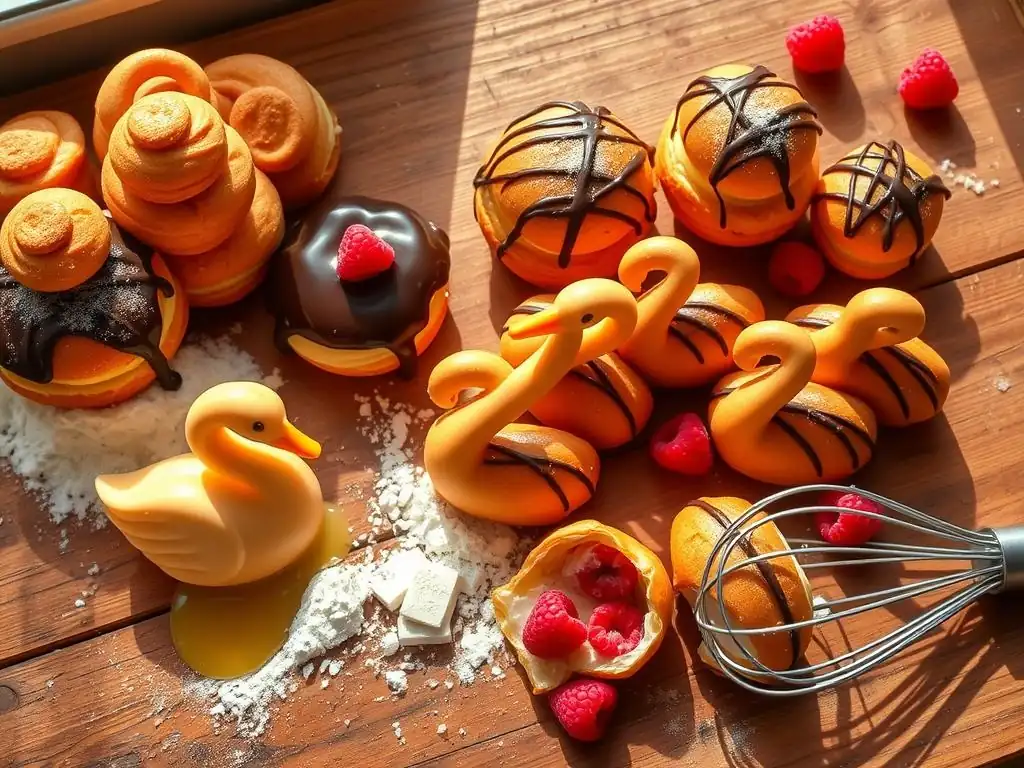
Welcome to BakeWithEase, your partner in creating delectable baked goods! Are you ready to unlock the secrets to perfectly puffed, irresistibly airy treats? This week, we're diving deep into the world of choux pastry, and we're about to reveal a Spectacular choux pastry recipe that will elevate your baking game. Prepare to be amazed at how simple it can be to achieve professional-looking results. Intrigued? Let's get baking!
- BakeWithEase Presents: Mastering the Art of Choux Pastry
- Understanding the Foundations of a Spectacular Choux Pastry Recipe
- The Simple Secrets to Choux Pastry Success
- Step-by-Step Guide to Baking Spectacular Choux Pastry
- Troubleshooting Common Choux Pastry Problems
- Elevating Your Choux Pastry: Creative Fillings and Toppings
- Achieving Spectacular Choux Pastry: Advanced Techniques
- BakeWithEase: Your Journey to Choux Pastry Mastery
- Frequently Asked Questions
- Final Reflection: Mastering the Art of the Perfect Choux
- Unlock Your Inner Pastry Chef: Master Choux Perfection!
BakeWithEase Presents: Mastering the Art of Choux Pastry
Embarking on the journey of making choux pastry might seem daunting at first, but with the right guidance and a few simple secrets, you can consistently achieve spectacular results. Choux pastry, known as pâte à choux in French, is a versatile dough used for everything from light and airy profiteroles and éclairs to savory gougères. Its unique ability to puff up dramatically in the oven creates hollow centers perfect for filling with creams, custards, or even cheese. This guide is designed to demystify the process, helping you bake truly spectacular choux pastry right in your own kitchen.
Mastering choux pastry is a rewarding step for any intermediate baker looking to expand their repertoire. Unlike many other doughs that rely on chemical or yeast leaveners, choux pastry's incredible rise comes purely from steam generated during baking. This reliance on technique rather than leavening agents makes understanding the fundamental principles crucial. We'll walk you through each stage, from selecting the right ingredients to troubleshooting common pitfalls, ensuring your path to a spectacular choux pastry recipe is smooth and successful.
Understanding the Foundations of a Spectacular Choux Pastry Recipe
What is Choux Pastry and Why is it So Special?
Choux pastry is a light dough made with butter, water, flour, and eggs. It's unique because it's twice-cooked: first on the stovetop to form a paste called a panade, and then baked in the oven where steam causes it to puff dramatically. This steam leavening creates a large, hollow cavity inside the pastry, making it ideal for stuffing with sweet or savory fillings. The name "choux" comes from the French word for cabbage, as small piped choux puffs can sometimes resemble miniature cabbages.
The special quality of choux pastry lies in its simplicity of ingredients coupled with a technique that yields incredible lightness and volume. A successful batch depends less on complex components and more on the precise execution of the method – getting the right consistency of the dough, ensuring proper hydration, and baking at the correct temperatures. This makes developing a truly spectacular choux pastry recipe a rewarding challenge for any baker.
Key Ingredients for Perfect Choux: A Baker's Guide
The magic of choux pastry comes from a handful of basic ingredients, but their quality and ratio are paramount. You'll need water (or milk, or a mix), butter, flour, and eggs. The liquid provides the steam, the butter adds richness and helps tenderize, the flour creates the structure, and the eggs emulsify the mixture and contribute to the final texture and lift. Using high-quality butter with a good fat content, typically around 80% or higher, can significantly impact the richness and flakiness.
For the flour, a standard all-purpose flour with a moderate protein content (around 10-12%) is generally recommended. Too high protein can make the dough tough, while too low might not provide enough structure to support the steam lift. Eggs should be large and at room temperature; using cold eggs can shock the dough and make incorporating them smoothly more difficult. The number of eggs can vary slightly depending on their size and the humidity of your kitchen, which is why adding them gradually is key to achieving the perfect consistency for your spectacular choux pastry.
The Simple Secrets to Choux Pastry Success
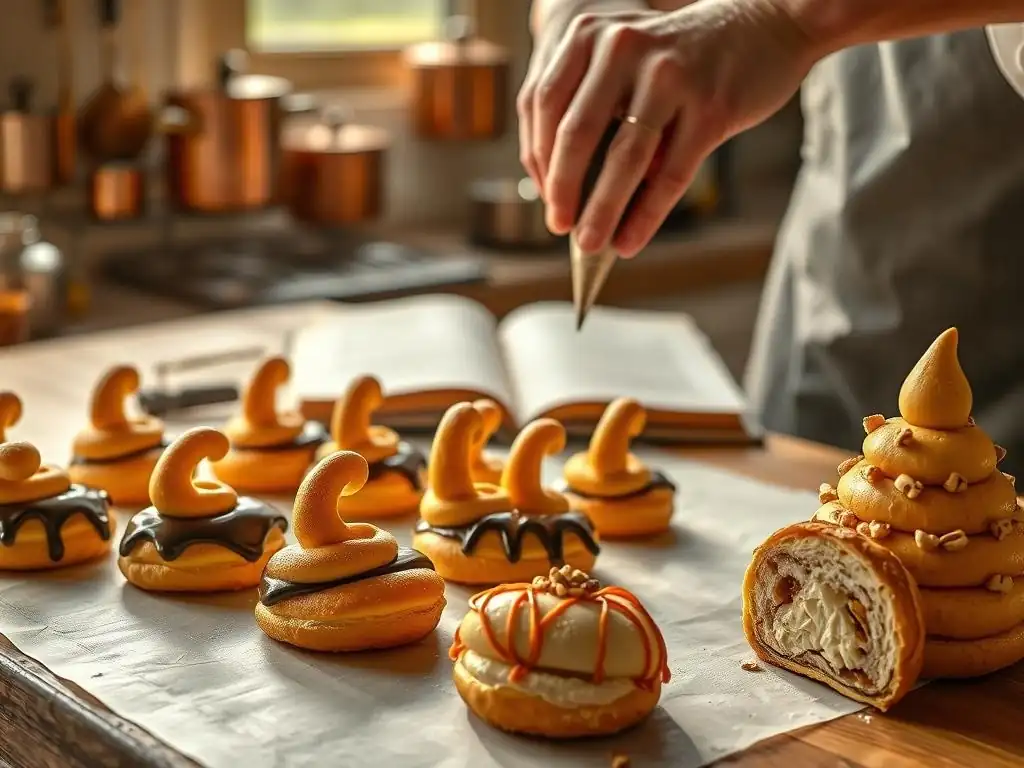
Secret #1: Precise Measurements and Accurate Ratios for Choux
Achieving a spectacular choux pastry recipe hinges significantly on the accuracy of your measurements. Unlike some baking where slight variations are forgiving, choux pastry is quite sensitive to the ratio of liquid, fat, flour, and eggs. A common starting point for a basic recipe is a ratio by weight of approximately 2 parts liquid to 1 part fat and 1 part flour, followed by enough eggs to create the right consistency. For example, a recipe might call for 250g water, 125g butter, and 125g flour.
Using a kitchen scale is highly recommended over volume measurements (like cups) for choux pastry. A cup of flour can weigh differently depending on how it's scooped and leveled, leading to inconsistent results. By weighing ingredients, you ensure the correct balance necessary for the panade to form properly and for the dough to accept the correct amount of eggs, which directly impacts its ability to puff and create that desired hollow interior for a spectacular choux pastry.
Secret #2: Achieving the Perfect Dough Consistency - The Key to Puff
The consistency of your pâte à choux dough after adding the eggs is perhaps the most critical factor determining whether your pastries will puff correctly. The dough should be smooth, glossy, and thick enough to hold its shape when piped, but not so stiff that it tears. A classic test is the "V" test: when you lift some dough with a spoon or spatula, it should fall back into the bowl, forming a soft "V" or triangle shape.
Adding the eggs gradually, one at a time, and fully incorporating each before adding the next is essential. This allows you to control the final consistency. If the dough is too wet, it won't hold its shape and might collapse during baking. If it's too dry, it will be stiff and won't expand properly from the steam, resulting in dense, flat pastries. Finding this sweet spot is a key secret to a truly spectacular choux pastry recipe.
Secret #3: The Importance of Temperature Control During Cooking
Temperature plays a crucial role at two stages: first when cooking the panade on the stovetop, and second during baking. When making the panade, ensuring all the moisture is cooked out of the flour/liquid mixture is vital. You'll know it's ready when the dough pulls away from the sides of the pan and leaves a thin film on the bottom – this usually takes a few minutes of stirring over medium heat after adding the flour.
During baking, the oven temperature is critical for creating steam and setting the structure. Many recipes start with a high temperature (like 400°F or 200°C) for the first 10-15 minutes to generate a rapid burst of steam and encourage maximum puff, then reduce the temperature (to around 350°F or 180°C) to allow the pastries to dry out and crisp up without burning. Opening the oven door too early can cause the pastries to collapse. Proper temperature management throughout is a non-negotiable secret for a spectacular choux pastry.
Step-by-Step Guide to Baking Spectacular Choux Pastry
Step 1: Preparing the Pate a Choux Dough
Combining Water, Butter, and Salt for the Base
The first step in creating your spectacular choux pastry recipe is to combine the liquid (usually water, sometimes milk or a mix), butter, and a pinch of salt in a heavy-bottomed saucepan. Place the pan over medium heat and stir occasionally until the butter is completely melted and the liquid comes to a rolling boil. The salt enhances the flavor, whether you're making sweet or savory choux.
Be careful not to let the mixture boil for too long before adding the flour, as this can cause too much liquid to evaporate, altering the crucial ratio. Once it reaches a full boil, you're ready for the next step.
Incorporating Flour: The Perfect 'Panade'
Remove the pan from the heat and immediately add all the measured flour at once. Stir vigorously with a wooden spoon or heatproof spatula. The mixture will look lumpy at first, but keep stirring until it comes together into a smooth, cohesive ball of dough. This is your panade.
Return the pan to medium heat and continue to cook the panade, stirring and pressing it against the bottom and sides of the pan. This process helps to dry out the dough and gelatinize the starches in the flour. You should cook it for 2-3 minutes, or until it pulls away cleanly from the sides and leaves a thin film on the bottom of the pan. This drying step is crucial for the dough's ability to absorb the eggs correctly and achieve a spectacular choux pastry puff.
Adding Eggs Gradually: Achieving the Right Consistency
Transfer the hot panade to a mixing bowl (or stand mixer fitted with the paddle attachment). Let it cool slightly for a few minutes, stirring it to release steam, so that the eggs don't scramble when added. The temperature should drop to around 140-160°F (60-70°C).
Add the eggs one at a time, beating thoroughly after each addition until fully incorporated and the dough is smooth before adding the next. This is where you assess the consistency. The dough should be smooth, glossy, and fall from the spoon in that characteristic "V" shape. You might not need the full amount of the last egg; add it in increments, checking the consistency each time. Achieving this perfect, slightly sticky but pipeable consistency is key to a spectacular choux pastry recipe.
Step 2: Piping and Shaping Your Choux Pastry Creations
Choosing the Right Piping Tip for Different Shapes
The shape and size of your choux pastry depend on what you're making and the piping tip you use. For classic profiteroles or gougères, a large round tip (like an Ateco 808 or 809) is standard. For éclairs, a large open star tip (like an Ateco 826 or 827) is often preferred as the ridges can help the pastry expand evenly and provide a nice surface for glaze.
Ensure your piping bag is sturdy and filled no more than two-thirds full for easier handling. Having the right tools makes shaping your spectacular choux pastry much simpler and more consistent.
Piping Evenly Sized Choux: Tips and Tricks
Consistency in size is important for even baking. Pipe your dough onto a baking sheet lined with parchment paper or a silicone baking mat. Hold the piping bag perpendicular to the sheet for rounds (like profiteroles) or at a slight angle for logs (like éclairs). Apply even pressure as you pipe.
For rounds, stop squeezing when the desired size is reached and swirl the bag away to break the stream cleanly. For logs, pipe in a steady motion, lifting the bag slightly as you finish the line. Smooth any peaks by gently dabbing them with a wet fingertip or the back of a wet spoon. Piping uniform shapes is a small step that contributes significantly to the professional look of your spectacular choux pastry.
Step 3: Baking for Spectacular Results
Oven Temperature: Finding the Sweet Spot
As mentioned earlier, baking temperature is critical. A common method involves starting at a high temperature, often 400°F (200°C), for the initial phase of baking. This high heat causes the water in the dough to quickly turn to steam, forcing the pastry to puff rapidly. This initial burst of energy is what creates the large, hollow interior.
After about 10-15 minutes, or once the pastries have fully puffed and started to hold their shape, the temperature is typically reduced to around 350°F (180°C). This lower temperature allows the pastries to continue baking through and dry out, developing a firm, crisp shell without burning the exterior. Getting this temperature transition right is a key secret to a spectacular choux pastry recipe that is both airy inside and crisp outside.
The Importance of Steam for Puffing
Steam is the sole leavening agent in choux pastry. When the water in the dough is heated rapidly, it turns into steam, which expands and pushes outwards against the dough's structure, causing it to inflate. This is why starting at a high temperature is effective.
Some bakers even introduce additional steam into the oven during the initial high-heat phase. This can be done by placing a pan of hot water on the bottom rack of the oven when you preheat it, or by spraying the oven walls with water (carefully!) just as you put the pastries in. The added humidity helps keep the pastry surface supple initially, allowing for maximum expansion before the crust sets. This technique is often employed when aiming for truly spectacular choux pastry results.
Avoiding a Soggy Bottom: Tips for a Crispy Crust
A common frustration is choux pastry that looks great but has a soft or soggy bottom. This usually happens because the pastry hasn't dried out sufficiently during baking. After the initial puff, the lower temperature phase is crucial for drying.
Bake the pastries until they are deeply golden brown and feel light when lifted. A pale pastry likely still contains too much moisture. Some bakers even poke a small hole in the side or bottom of each pastry towards the end of baking (in the last 5-10 minutes) to allow steam to escape, promoting a crispier shell.
Once baked, turn the oven off, prop the door open slightly with a wooden spoon, and let the pastries sit in the cooling oven for 10-15 minutes. This slow cooling helps prevent them from deflating and ensures a crisp exterior, essential for a spectacular choux pastry.
Troubleshooting Common Choux Pastry Problems
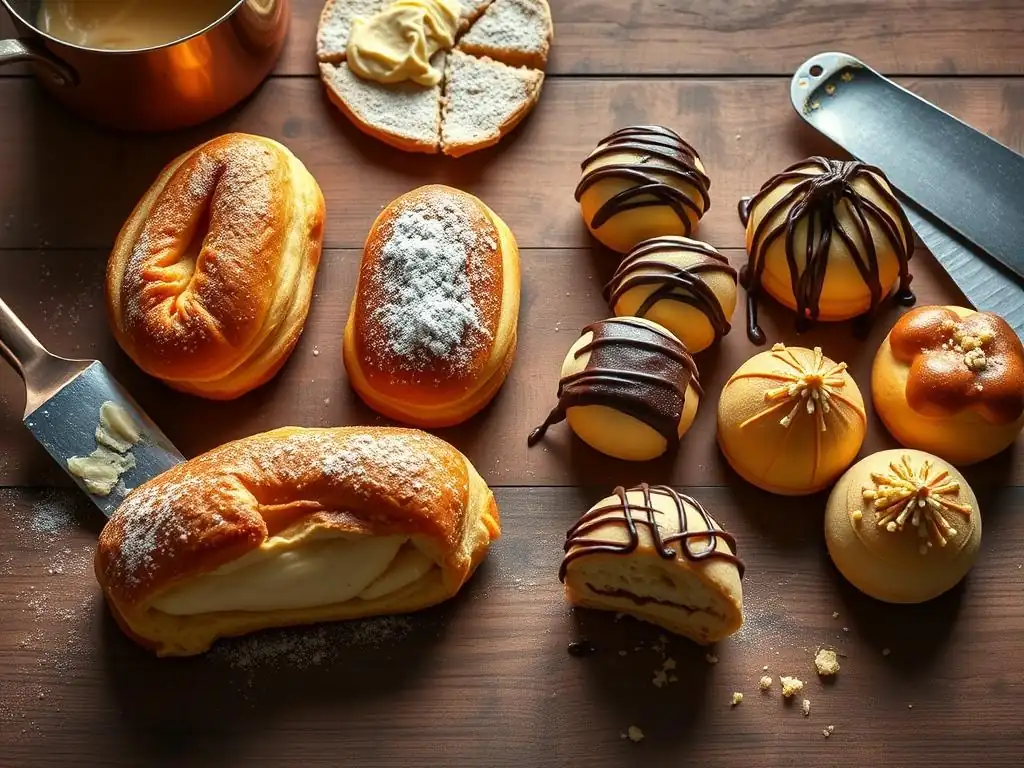
Why is My Choux Pastry Flat?
Flat choux pastry is a common issue and can stem from several factors. One primary cause is the dough consistency being too wet; if there's too much liquid or too many eggs were added, the dough won't be able to support the steam's expansion. Another reason is insufficient cooking of the panade on the stovetop, meaning not enough moisture was driven off before adding the eggs.
Other culprits include opening the oven door too early during baking, which causes a sudden drop in temperature and steam loss, leading to collapse. Also, baking at too low a temperature throughout can prevent the rapid steam generation needed for puff. Ensuring the correct dough consistency and resisting the urge to peek during the crucial initial baking phase are vital for achieving a spectacular choux pastry.
My Choux Pastry is Too Dry: What Went Wrong?
Choux pastry that is too dry or dense can happen if the dough was too stiff from the start – either not enough liquid was used in the panade, the panade was cooked for too long on the stovetop, or not enough eggs were incorporated. The dough needs sufficient moisture to generate steam during baking.
Over-baking or baking at too low a temperature for too long in the second phase can also dry out the pastry excessively, resulting in a hard rather than crisp shell and a thick interior wall instead of a hollow center. Ensuring the panade is cooked just right and the eggs are added until the perfect consistency is reached are key steps to avoid a dry result and secure a spectacular choux pastry texture.
Dealing with a Sticky Choux Pastry Dough
A sticky choux pastry dough, after adding the eggs, is usually a sign that it's too wet. This often means too much liquid was used initially, or too many eggs were added, or the eggs were too large. While you can't easily fix overly wet dough at this stage, it's a clear indicator to adjust for your next batch.
If the dough is only slightly too sticky to pipe cleanly, you might try chilling it briefly, though this isn't a guaranteed fix. The ideal consistency is slightly sticky but holds its shape well when piped. If your dough is consistently too sticky, double-check your ingredient measurements, preferably by weight, and be more cautious when adding the last egg, ensuring you stop as soon as the "V" consistency is achieved for a truly spectacular choux pastry recipe.
Elevating Your Choux Pastry: Creative Fillings and Toppings
Classic Choux Pastry Fillings: Crème Pâtissière and More
Once you've mastered the spectacular choux pastry shell, the fun truly begins with fillings! The most classic filling is crème pâtissière, or pastry cream – a rich custard made with milk, sugar, egg yolks, and flour or cornstarch. It's smooth, creamy, and pairs perfectly with the light choux shell.
Other traditional fillings include whipped cream (often stabilized with a little gelatin or cornstarch), diplomat cream (pastry cream lightened with whipped cream), or even simple chocolate ganache. For savory choux (gougères), fillings can range from cheese sauces to mushroom duxelles or smoked salmon mousse. These classic options provide a wonderful starting point for showcasing your spectacular choux pastry.
Innovative Filling Ideas for a Modern Twist
Beyond the classics, there's a world of innovative fillings to explore. Think fruit curds like lemon or passion fruit, flavored mousses (chocolate, coffee, berry), or even caramel or praline creams. For a more adventurous take, consider fillings like matcha pastry cream, Earl Grey infused ganache, or a spicy chili-chocolate filling.
Savory choux can be filled with anything from goat cheese and roasted red pepper to chicken salad or spinach and feta. The hollow nature of choux pastry makes it a perfect vehicle for carrying bold and exciting flavors. Experimenting with different fillings allows you to put a personal stamp on your spectacular choux pastry creations.
Glazes and Toppings to Enhance Your Choux Creations
A glaze or topping adds both visual appeal and flavor. Éclairs are traditionally topped with a simple chocolate glaze or fondant icing. Profiteroles might be dusted with powdered sugar, drizzled with chocolate sauce, or served with a scoop of ice cream and hot fudge.
For a crisp topping before baking, some bakers add a craquelin layer – a simple mixture of butter, sugar, and flour rolled thin and cut into rounds placed on top of the piped choux dough. This creates a beautiful, crackled, and crunchy cap. Savory gougères are often topped with grated cheese before baking. The right finishing touch elevates your already spectacular choux pastry to a new level.
Achieving Spectacular Choux Pastry: Advanced Techniques
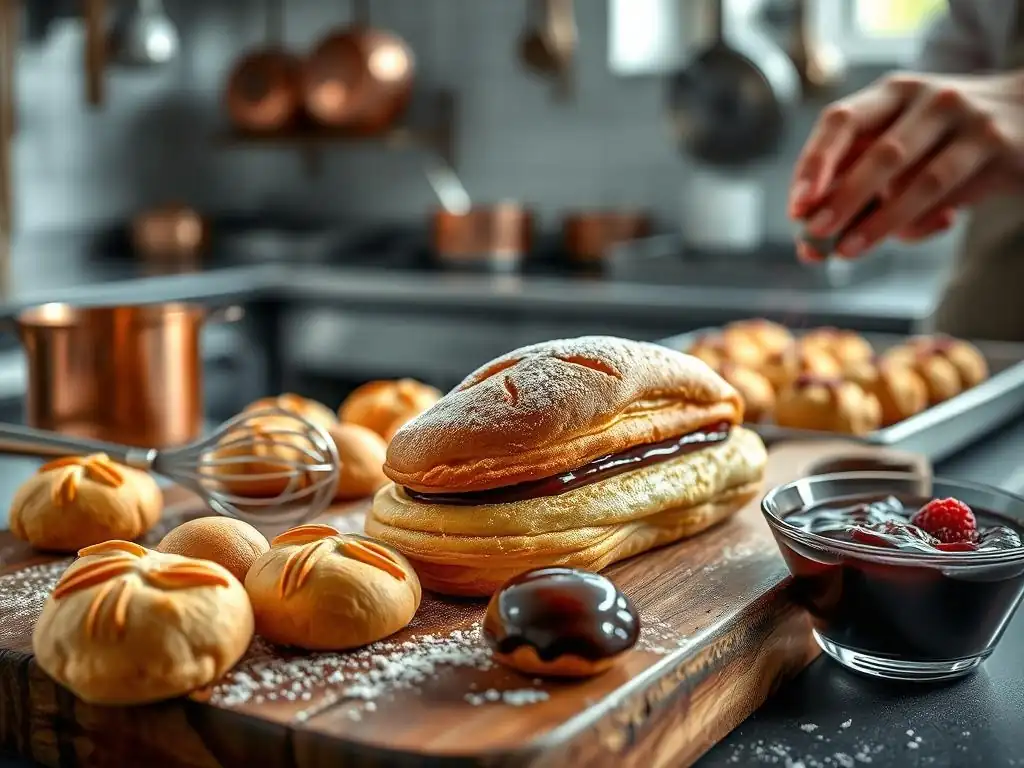
Mastering Éclairs: Tips for Perfect Shape and Filling
Éclairs require careful piping to achieve uniform, straight logs, typically around 4-5 inches long. Using a template drawn on the underside of your parchment paper can help guide you. As mentioned, an open star tip gives a nice texture.
After baking, éclairs are usually filled from the bottom or sides using a piping bag fitted with a long, narrow tip. You can make 2-3 small holes on the underside of each éclair and pipe the filling until the pastry feels heavy and full. Glazing the top is the final step. Perfecting the straight shape and ensuring a generous, smooth filling are key to mastering spectacular choux pastry éclairs.
Profiteroles Perfection: Assembling a Croquembouche
Profiteroles are simply small, round choux puffs. While delicious on their own or served with sauce, they are the building blocks for the impressive French dessert, the Croquembouche. This involves filling profiteroles with crème pâtissière and then assembling them into a cone or pyramid shape, held together with spun sugar or caramel.
Achieving perfection in profiteroles for a Croquembouche means piping uniform, small puffs that bake up light and hollow. The caramel work for assembly requires precision and speed. Mastering this technique is a significant step towards advanced choux pastry artistry and results in a truly spectacular choux pastry centerpiece.
Gougères: Savory Choux Pastry Delights
Gougères are the savory cousins of profiteroles, typically made by incorporating grated cheese (like Gruyère or Comté) into the pâte à choux dough before baking. They are often served as an apéritif.
The process is similar to sweet choux, but the addition of cheese changes the dough slightly. Some recipes also incorporate herbs or spices. They are usually piped as small rounds and baked until puffed and golden brown. The result is a light, cheesy puff that is incredibly addictive. Mastering gougères adds a wonderful savory dimension to your spectacular choux pastry repertoire.
BakeWithEase: Your Journey to Choux Pastry Mastery
Practice Makes Perfect: Refining Your Choux Technique
Like any baking skill, mastering choux pastry takes practice. Don't be discouraged if your first batch isn't perfect. Pay close attention to each step: the consistency of the panade, the amount of eggs added, the piping technique, and especially the baking time and temperature. Keep notes on what worked and what didn't.
Every oven is different, and humidity can affect your dough, so a spectacular choux pastry recipe often involves slight adjustments based on experience. The more you make choux, the better you'll become at recognizing the right textures and consistencies at each stage.
Once you've achieved that perfect puff and crisp shell, it's time to share your spectacular choux pastry creations! Whether filled with classic pastry cream, innovative flavors, or savory delights, homemade choux pastry is always a treat.
Present your éclairs beautifully glazed, stack your profiteroles high, or serve warm gougères straight from the oven. Sharing your delicious results is the final, and perhaps most rewarding, step in your journey to choux pastry mastery with BakeWithEase.
Frequently Asked Questions
How can I ensure my choux pastry puffs up properly?
The key to puffing is high initial heat and not opening the oven door. This allows the steam to build up inside the dough, creating the hollow cavity.
What causes choux pastry to be too flat?
Flat choux pastry usually results from insufficient cooking, leading to a lack of structure. Also, adding too much liquid to the dough can also cause this.
What are the common fillings for choux pastry?
Classic fillings include pastry cream, whipped cream, and even savory options like cheese or meat fillings. Experiment to find your favorite!
Can choux pastry dough be made in advance?
While it's best used fresh, you can store the unbaked dough in the refrigerator for a few hours. Just be sure to bring it to room temperature slightly before piping.
What makes BakeWithEase.com a reliable resource for baking choux pastry?
BakeWithEase.com offers simple, step-by-step recipes and easy-to-follow guides specifically designed to help bakers of all levels achieve spectacular results, even with challenging recipes like choux pastry.
Final Reflection: Mastering the Art of the Perfect Choux
The pursuit of the perfect choux pastry, once a culinary enigma, is now within everyone's reach. This article has demystified the seemingly complex process, revealing that consistent, spectacular results hinge on understanding a few simple, yet crucial, techniques. From the precise ratio of ingredients to the importance of a gentle simmer, mastering these secrets unlocks a world of delicious possibilities.
The journey of creating choux pastry, for me, has been one of both frustration and immense satisfaction. The delicate balance between a crisp exterior and a light, airy interior is a testament to the power of precision and patience. It's a process that mirrors life itself – requiring careful attention to detail and a willingness to learn from both successes and failures. The only way to do great work is to love what you do.
– Steve Jobs. This quote resonates deeply, as the joy of creating something beautiful and delicious, like a perfectly formed choux, is its own reward.
Now, it's your turn. Don't be intimidated by the seemingly complex nature of choux pastry. Armed with the knowledge shared in this article, I invite you to embark on your own culinary adventure. Experiment with different fillings, glazes, and shapes. Embrace the process, learn from your mistakes, and savor the sweet triumph of creating your own spectacular choux pastry creations. The journey is as rewarding as the destination.
Unlock Your Inner Pastry Chef: Master Choux Perfection!
Thanks for taking the time to explore the delightful world of choux pastry with us! We hope you've gained the confidence to create truly spectacular results. Ready to put your new skills to the test?
- Bake your dream choux: Choose your favorite choux recipe (or try a new one!) and get baking. We're confident you'll be amazed at the difference!
- Share your creations: Post pictures of your choux masterpieces on social media and tag us — we love to see your baking journeys!
- Experiment with fillings and toppings: Let your creativity flow! Try unusual fillings or glamorous toppings – the possibilities are endless.
What unique choux pastry flavor combination will you create next? Let's discuss in the comments below!