
Are You Leaving Money on the Table? Pricing Errors to Avoid in Baking


Welcome to BakeWithEase, your trusted guide in the delightful world of baking! Ever wonder if you're truly capturing the value of your delicious creations? Dive in to uncover the common baking pricing mistakes beginners avoid, and learn how to ensure your passion pays off. Read on to discover how to price your baked goods for profit and success!
- Introduction: Maximizing Profit in Your Home Baking Business
- Baking Pricing Mistake #1: Underestimating Ingredient Costs
- Baking Pricing Mistake #2: Ignoring Labor Costs
- Baking Pricing Mistake #3: Failing to Account for Overhead Expenses
- Baking Pricing Mistake #4: Not Researching Competitor Pricing
- Baking Pricing Mistake #5: Discounting Too Frequently or Too Deeply
- Baking Pricing Mistake #6: Ignoring Packaging and Presentation Costs
- Baking Pricing Mistake #7: Not Adjusting Prices for Inflation or Increased Costs
- Baking Pricing Mistake #8: Not Factoring in Waste and Spoilage
- Baking Pricing Mistake #9: Not Considering Different Sales Channels
- Conclusion: Mastering Baking Pricing for a Profitable Business
-
Frequently Asked Questions
- What's the biggest mistake beginners make when pricing their baked goods?
- How can I accurately calculate the cost of my ingredients?
- Beyond ingredients, what other costs should I factor into my baking prices?
- How do I determine a fair price that covers my costs and allows for profit?
- What's the best strategy for dealing with customers who complain about my prices being too high?
- Final Reflection: The Sweet Taste of Profit: Mastering Baking Prices
- Unlock Your Baking Business Potential!
Introduction: Maximizing Profit in Your Home Baking Business
The Importance of Accurate Pricing for Baked Goods
Setting the right price for your delicious baked goods is perhaps one of the most critical steps in turning your passion into a sustainable home business. It's not just about covering the cost of flour and sugar; accurate pricing ensures you're compensating yourself for your time and skill, covering all the hidden costs of operating, and ultimately, building a profitable venture. Many talented bakers unfortunately underprice their products, leading to burnout, financial strain, and the eventual collapse of their business, despite creating wonderful treats. Proper pricing is the bedrock of financial health for any home bakery.
Furthermore, your price communicates value to your customers. Pricing too low can sometimes signal lower quality, while pricing correctly for the market and your costs positions your brand effectively. Customers who appreciate artisanal, homemade baked goods are often willing to pay a fair price for quality ingredients, careful preparation, and beautiful presentation. Understanding how to calculate your true costs and value your work is essential for attracting the right clientele and ensuring your business thrives, not just survives.
Common Baking Pricing Mistakes Beginners Make
New bakers often stumble when it comes to pricing, frequently making several key errors that leave potential profit on the table. One of the most prevalent baking pricing mistakes beginners avoid by gaining knowledge is failing to account for all their costs. This includes not just the obvious ingredients but also labor, overhead, packaging, and even waste. Many simply look at what others charge or guess a price that "feels right," without a solid understanding of their own financial inputs.
Other common pitfalls include undervaluing their own time and expertise, offering excessive discounts that erode margins, and neglecting to research what competitors are charging for similar items in their local market. These baking pricing mistakes beginners avoid through careful calculation and strategic thinking can make the difference between a hobby that occasionally earns money and a truly profitable home baking business. Identifying these mistakes is the first step toward mastering your pricing strategy.
Baking Pricing Mistake #1: Underestimating Ingredient Costs
Accurately Calculating the Cost of Ingredients for Your Baking Recipes
The foundation of profitable baking pricing is knowing exactly how much your raw materials cost. It's not enough to know that a 5lb bag of flour cost $4.50. You need to know the cost of the amount of flour you use in a specific recipe. For example, if a recipe calls for 2 cups of all-purpose flour, and 1 cup typically weighs about 120 grams, you use 240 grams.
If that $4.50 bag of flour contains roughly 2268 grams (5 lbs), the cost per gram is approximately $4.50 / 2268 grams = $0.00198 per gram. So, 240 grams of flour costs about $0.00198 * 240 = $0.475. You must do this calculation for every ingredient in a recipe, from flour and sugar to butter and eggs, based on the unit price of the package you purchased.
Tracking ingredient costs requires a bit of initial effort but is vital. Keep receipts or a simple spreadsheet where you note the purchase price and quantity of everything you buy. Then, when working with a recipe, weigh or measure the ingredients and calculate their specific cost for that batch. While prices fluctuate, having a recent average cost for your core ingredients allows for accurate cost calculation per batch, preventing a major baking pricing mistake beginners avoid.
Beyond the main components like flour and sugar, small-quantity ingredients can significantly impact overall cost but are frequently overlooked. Think about that bottle of pure vanilla extract – while you might only use a teaspoon, a high-quality 4oz bottle costing $15 contains roughly 24 teaspoons, making the cost per teaspoon $15 / 24 = $0.625. This single teaspoon costs more than the 2 cups of flour in the previous example! Spices like cinnamon, nutmeg, or cardamom, food coloring, baking powder, baking soda, and salt also contribute to the final cost, even if used in small amounts.
Garnishes and decorative elements add another layer of cost. Consider the price of fresh berries for a tart ($4 for a small punnet), a drizzle of high-quality chocolate ($6 for an 8oz bar), or specialty sprinkles ($5 for a tiny jar). Even a dusting of powdered sugar or cocoa powder has a cost. meticulously adding these "hidden" costs to your ingredient total ensures you aren't underestimating the true material expense of your baked goods, helping you avoid a key baking pricing mistake beginners avoid.
Tip: Using a Baking Ingredient Cost Calculator
Calculating the cost of every ingredient for every recipe manually can be tedious, especially as your recipe list grows. This is where tools like spreadsheets or dedicated online baking cost calculators become invaluable. A simple spreadsheet can be set up with columns for Ingredient, Unit Purchased (e.g., lb, oz, cup, egg), Cost per Unit Purchased, Quantity Used in Recipe, and Calculated Cost for Recipe. You input your purchase data, and the spreadsheet does the math.
More sophisticated online calculators often allow you to input the cost and size of the package you bought (e.g., 5 lbs flour for $4.50) and then select the units used in your recipe (e.g., 2 cups), automatically converting and calculating the cost. Using such a tool helps streamline the process, reduces mathematical errors, and provides a quick, accurate ingredient cost per batch, making it much easier to prevent this fundamental baking pricing mistake beginners avoid.
Baking Pricing Mistake #2: Ignoring Labor Costs

Valuing Your Time: How to Calculate Your Hourly Rate for Baking
Your time is a valuable resource, and just like any other business owner, you deserve to be paid for it. Ignoring labor costs is one of the most significant baking pricing mistakes beginners avoid as they transition from hobbyist to business owner. To calculate your labor cost, you first need to determine an hourly rate for yourself.
This rate should reflect your skill level, the complexity of the tasks you perform, and what you might reasonably earn for skilled work in your area. While you might start lower, aim for a rate that acknowledges your expertise – perhaps $15, $20, or even $25+ per hour, depending on your experience and the market.
Consider this hourly rate as the cost of your labor, distinct from the profit you hope to make. It ensures that even before profit, you are compensating yourself for the hours you put in. As your skills grow and your business scales, you can revisit and potentially increase this rate. Not assigning value to your time means you are essentially working for free after covering ingredient and overhead costs, which is unsustainable.
Factoring in Preparation, Baking, and Cleanup Time
When calculating labor time for a specific baked good, it's crucial to account for all the time involved, not just the minutes the item spends in the oven. This includes the time spent:
- Reading and preparing the recipe
- Measuring and mixing ingredients
- Decorating or assembling the product
- Active baking time (monitoring, rotating trays)
- Cooling time (often passive, but still part of the process before packaging)
- Packaging the finished product
- Crucially, cleaning up all the dishes, tools, and workspace used.
Use a timer for a few batches of your standard items to get an accurate average time. For example, a batch of 3 dozen standard cupcakes might take 45 minutes for mixing/prep, 25 minutes baking, 30 minutes cooling/decorating, and 30 minutes cleanup. That's a total of 2 hours and 10 minutes of labor per batch.
Let's take the example of baking a batch of 24 chocolate chip cookies. Suppose, after timing yourself, you find that the total time from gathering ingredients to finishing cleanup is 1 hour and 30 minutes (1.5 hours). If you've decided your hourly labor rate is $20 per hour, the labor cost for that single batch of cookies is:
Labor Cost = Hourly Rate * Total Time
Labor Cost = $20/hour * 1.5 hours
Labor Cost = $30
So, $30 of the cost of that batch is attributed to your time. If the batch yields 24 cookies, the labor cost per cookie is $30 / 24 cookies = $1.25 per cookie. This demonstrates how significant labor costs are and why neglecting them is a fundamental baking pricing mistake beginners avoid by doing this calculation. This cost must be recovered in your selling price.
Baking Pricing Mistake #3: Failing to Account for Overhead Expenses
What are Overhead Expenses in a Home Baking Business? (Rent, Utilities, Packaging)
Overhead expenses are the ongoing costs required to run your business that aren't directly tied to producing a specific item. For a home baking business, these can include a portion of your household bills that are used for the business. This might be:
- A percentage of your rent or mortgage (for the space used for baking, storage, or office work)
- Utilities like electricity (running the oven, mixer, lights) and water (for cleaning)
- Internet and phone service
- Insurance (business insurance, if you have it)
- Equipment depreciation (the cost of your mixer, oven, pans wearing out over time)
- Cleaning supplies and ingredients used for cleaning, not baking
- Business licenses, permits, or fees
- Website hosting fees or software subscriptions
- Bulk packaging supplies (boxes, bags, labels purchased in large quantities before being allocated per item)
- Marketing materials or advertising costs
These costs accrue regardless of whether you bake one cake or fifty. Ignoring them is a significant baking pricing mistake beginners avoid by recognizing that running a business involves more than just making the product.
Allocating Overhead Costs to Each Baked Good
Allocating overhead costs precisely to each individual cookie or cake can be tricky, but it's essential to ensure these costs are recovered. A common method is to estimate your total monthly overhead costs. Then, you can divide this total by a reasonable metric, such as the total number of items you expect to produce in a month or the total labor hours spent.
For instance, if your estimated monthly overhead is $200 and you typically produce around 200 items (counting a dozen cookies as one item, a cake as one, etc. ), your overhead cost per item is $200 / 200 items = $1.
Alternatively, if you track labor hours closely, you could divide the total monthly overhead by the total labor hours. If overhead is $200 and you work 50 baking hours a month, the overhead per labor hour is $4. You would then add $4 for every hour spent on a specific product's labor cost. Choose a method that is consistent and makes sense for your business volume.
Example: Overhead Expense Calculation for Your Baking Business
Let's create a simplified example of calculating monthly overhead for a home bakery:
- Portion of Rent/Mortgage: $75
- Portion of Utilities (Electricity/Water): $40
- Internet/Phone Portion: $20
- Equipment Depreciation (estimated): $30
- Cleaning Supplies: $15
- Monthly Software/Website Fees: $20
Total Estimated Monthly Overhead = $75 + $40 + $20 + $30 + $15 + $20 = $200.
Now, let's say, based on past sales or projections, you produce approximately 150 items (batches, cakes, etc.) per month. Using the per-item allocation method:
Overhead Cost per Item = Total Monthly Overhead / Number of Items Produced
Overhead Cost per Item = $200 / 150 items
Overhead Cost per Item ≈ $1.33 per item
This means that for every item you sell, you need to recover about $1.33 just to cover your general business expenses. Adding this layer of cost calculation is vital for avoiding a significant baking pricing mistake beginners avoid.
Baking Pricing Mistake #4: Not Researching Competitor Pricing
Understanding Market Prices for Similar Baked Goods
Knowing what your competitors charge for similar products is crucial for positioning your home baking business in the market. Researching prices helps you understand customer expectations and gauge whether your calculated cost structure allows you to be competitive while remaining profitable.
For instance, if your calculated cost for a dozen standard cupcakes is $18 (ingredients, labor, overhead, packaging), but the going rate for similar quality cupcakes in your area is $25-$30, you have room for a healthy profit margin. Conversely, if the market rate is only $20, you know you need to either find ways to reduce costs or offer a clear value proposition that justifies a potentially higher price.
Market research isn't about copying others' prices directly, but about gaining context. Prices can vary significantly based on geographic location, the type of ingredients used (e.g., organic, gluten-free, premium chocolate), the complexity of the design, and the reputation of the baker. Identify who your direct competitors are – are they other home bakers, local small bakeries, or larger commercial operations?
How to Research Competitor Pricing Effectively
Effective competitor research involves a bit of detective work. Start by looking online: check out local bakery websites, their social media pages (especially posts showing specific items and prices), and online marketplaces where local food vendors sell (like Etsy or specialized local platforms). Visit local farmers markets or craft fairs where home bakers sell and discreetly note prices and product offerings.
If possible, ask friends or family who purchase baked goods locally what they typically pay for items similar to yours. Create a simple spreadsheet to track this information: Competitor Name, Product, Price, Key Features (e.g., size, ingredients, decoration level). This organized approach helps you see trends and identify where your products fit within the existing market landscape.
Finding Your Competitive Advantage: Quality, Uniqueness, and Service
Your research might reveal that your calculated price is higher than some competitors. This isn't necessarily a problem if you can justify it through your competitive advantage. What makes your baked goods special? Is it superior quality ingredients (like imported chocolate or local, organic fruit)? Do you offer unique flavor combinations or highly customized designs that others don't? Is your customer service exceptional, offering personalized consultations or convenient delivery options?
Highlighting these factors allows you to command a potentially higher price point. Customers are often willing to pay more for perceived value, whether that's through taste, aesthetics, exclusivity, or a delightful buying experience. Focusing on your unique selling points helps you avoid the baking pricing mistake beginners avoid of feeling pressured to match the lowest price, which is often unsustainable.
Baking Pricing Mistake #5: Discounting Too Frequently or Too Deeply
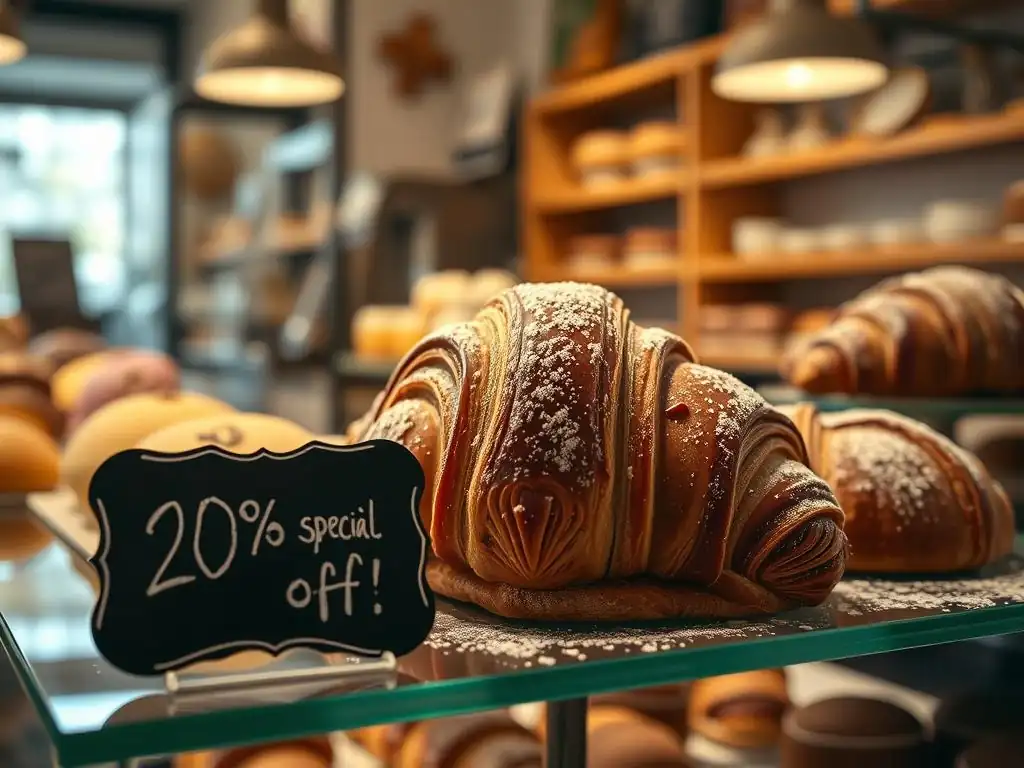
The Dangers of Constant Discounts in Baking
While discounts can seem like an easy way to attract customers, offering them too frequently or too deeply can be detrimental to your home baking business. Every discount directly reduces your profit margin. If your profit margin on a batch of cookies is typically 30%, offering a 20% discount means you're cutting your profit by two-thirds! Constantly running sales trains customers to wait for a discount, devaluing your products at their regular price.
Moreover, perpetual discounting can make your business appear less established or suggest that your regular prices were inflated to begin with. It can erode the perceived value of your artisanal baked goods and make it difficult to return to your standard pricing without pushback from customers. This is a common baking pricing mistake beginners avoid by understanding the long-term impact on profitability and brand image.
Strategic Discounting: When and How to Offer Discounts
Instead of constant sales, use discounts strategically and sparingly. They should have a clear purpose and a defined timeframe. Consider offering a small discount (e.g., 10%) for first-time customers to encourage trials, or a loyalty discount for repeat buyers (e.g., 10% off their fifth order). Seasonal promotions (like holiday specials) or limited-time offers to clear a specific inventory item can also be effective.
When you do offer a discount, calculate its impact on your profit margin beforehand to ensure you are still covering costs and making some profit, even if reduced. Frame the discount positively – for example, "Holiday Special" or "Thank You Offer for Our Loyal Customers." You can offer a percentage off, a fixed dollar amount off, or a bundle deal (e.g., "Buy 5 Cupcakes, Get the 6th Free").
Building Customer Loyalty Without Sacrificing Profit Margin
Building a loyal customer base doesn't have to rely on always offering the lowest price. Focus on creating exceptional value through the quality and taste of your baked goods, unique flavor creations, stunning presentation, and outstanding customer service. A handwritten thank-you note with an order, remembering a customer's favorite flavor, or offering sneak peeks of new menu items can foster loyalty without hitting your bottom line.
Happy customers who feel appreciated and consistently receive high-quality products are more likely to become repeat buyers and recommend you to others, regardless of whether you're offering a discount. Building these relationships is a more sustainable path to long-term success than constantly slashing prices, helping you overcome a key baking pricing mistake beginners avoid.
Baking Pricing Mistake #6: Ignoring Packaging and Presentation Costs
The Impact of Packaging on Perceived Value
Packaging is the first physical interaction a customer has with your baked goods, and it significantly influences perceived value. Attractive, sturdy, and appropriate packaging not only protects your delicate creations during transport but also enhances their visual appeal and communicates the quality and professionalism of your brand. Think about the difference between receiving a beautiful cake in a custom box versus a flimsy, plain one. The packaging sets an expectation before the first bite.
Investing in good packaging can justify a higher price point. It shows you care about the details and ensures the product arrives in perfect condition. Conversely, poor packaging can lead to damaged goods, disappointed customers, and negative reviews, regardless of how delicious the item inside is. Don't let a baking pricing mistake beginners avoid like neglecting packaging costs undermine the value of your hard work.
Calculating Packaging Costs: Boxes, Wrappers, and Labels
Packaging costs need to be factored into the price of each item. This includes everything used to present and protect the final product:
- Cake boxes or cupcake carriers
- Cookie bags or treat wrappers
- Cupcake liners or cases
- Labels with your logo and ingredients
- Ribbons, stickers, or other decorative elements
- Tissue paper or padding used in boxes
Purchase these items in bulk when possible to reduce the per-unit cost. Then, calculate the cost per item. For example, a box designed to hold a dozen cupcakes might cost $3.00 when bought in a pack. The box cost per cupcake is $3.00 / 12 = $0.25. Add the cost of the liner (~$0.05), label (~$0.10), and maybe a sticker (~$0.05). The total packaging cost per cupcake could be around $0.45.
Investing in Appealing and Functional Packaging
While cost is important, don't compromise too much on packaging quality for the sake of saving a few cents. Flimsy boxes that crush easily or bags that don't seal properly can lead to damaged goods and unhappy customers. Find a balance between cost-effectiveness, aesthetic appeal, and functionality.
Explore different types of packaging suitable for your products. Clear containers showcase colorful treats, sturdy boxes protect multi-tiered cakes, and elegant wrapping can elevate a simple cookie. Consider branding your packaging with labels or stickers – it's a simple way to reinforce your business name. Factor the cost of this essential element into your pricing structure to avoid a common baking pricing mistake beginners avoid.
Baking Pricing Mistake #7: Not Adjusting Prices for Inflation or Increased Costs
Monitoring Ingredient and Supply Costs
The cost of ingredients and baking supplies is not static; it fluctuates based on factors like seasonality, weather, global supply chain issues, and economic conditions. Prices for staples like butter, eggs, flour, and sugar can increase significantly over time. Packaging materials, utility costs, and even transportation expenses can also rise. Failing to monitor these changing costs and adjust your prices accordingly is a major baking pricing mistake beginners avoid through regular review.
Make it a practice to review your ingredient cost calculations periodically, perhaps every quarter or at least twice a year. Keep recent receipts or check current prices from your suppliers. Note any substantial increases in the cost of key ingredients or supplies. This vigilance allows you to see how your profit margins are being impacted by external factors.
Implementing Price Increases Strategically
When your costs rise significantly, you must raise your prices to maintain profitability. Delaying this necessary step means absorbing those costs yourself, which eats into your earnings and can threaten the viability of your business. Implementing price increases strategically is key.
Small, incremental price adjustments are generally better received by customers than large, sudden jumps. For example, increasing the price of a cookie by $0.25 might be less jarring than raising a cake price by $10 all at once. Consider raising prices gradually across your menu or implementing the increase first on new items introduced to your lineup. This allows customers to adjust and helps you avoid one of the tough baking pricing mistakes beginners avoid – the fear of raising prices.
Communicating Price Changes to Customers
Transparency with your customers is important, especially when implementing price increases. If the increase is modest and part of a general adjustment, a direct announcement might not be necessary for every single item. However, for more noticeable increases or changes to popular items, consider communicating the change politely.
You can use your social media channels, email list, or a note on your website to explain that due to rising costs of high-quality ingredients, a small price adjustment is necessary to maintain the quality they expect and deserve. Frame it around your commitment to quality. Giving customers a little heads-up, perhaps a week or two in advance, can also help. This open communication helps maintain trust and avoids surprises, navigating a potentially sensitive area that is part of avoiding baking pricing mistakes beginners avoid.
Baking Pricing Mistake #8: Not Factoring in Waste and Spoilage

Minimizing Waste in Your Baking Process
Even with the best planning, some amount of waste and spoilage is inevitable in a baking business. However, implementing strategies to minimize it is crucial for profitability. This includes:
- Precise measuring and scaling of ingredients to avoid errors.
- Proper storage of ingredients (especially perishables like dairy and fruit) to maximize shelf life.
- Careful handling of finished goods to prevent breakage or damage.
- Using scraps or imperfect items creatively (e.g., cake pops from cake trimmings).
- Monitoring inventory levels to avoid over-ordering ingredients with short shelf lives.
While you strive for zero waste, acknowledging that some occurs is part of accurate cost accounting.
Accounting for Unsold or Spoiled Baked Goods
The ingredients, labor, overhead, and packaging costs associated with baked goods that don't sell or spoil before they can be sold represent a loss. This loss needs to be absorbed by the items you do sell. Failing to account for this is a common baking pricing mistake beginners avoid by building a small buffer into their pricing or tracking waste as a percentage of cost.
Estimate a percentage of loss based on your experience. If, on average, 5% of your baked goods don't sell or have to be discarded, then the cost of that 5% needs to be distributed across the 95% that are sold. You can build this into your overall cost calculation – for example, calculate the cost of a batch and then add a small percentage (say, 5-10%) to account for typical loss.
Implementing Inventory Management Strategies
Effective inventory management for finished baked goods is key to minimizing spoilage. For items with a short shelf life, having a clear system for tracking what was baked when and its best-by date is essential. This allows you to prioritize selling older stock or make informed decisions about what to bake based on anticipated demand.
Consider strategies for unsold items: offering a discounted price towards the end of a market day (again, strategically, see Mistake #5), donating to local shelters or food banks (check regulations and liability), or using them for samples (if appropriate and fresh). The goal is to reduce the amount that ends up as a complete loss, mitigating the impact of this often-overlooked baking pricing mistake beginners avoid.
Baking Pricing Mistake #9: Not Considering Different Sales Channels
Adjusting Prices for Online Sales vs. Farmers Markets vs. Wholesale
Where you sell your baked goods significantly impacts your costs and should influence your pricing. Selling online involves costs like website hosting (~$15-$30/month), e-commerce platform fees (e.g., Shopify plans start around $29/month), and payment processing fees (typically around 2.9% + $0.30 per transaction). Selling at a farmers market or event incurs stall fees (~$20-$100+ per day/event) and potential permit costs. Selling wholesale to cafes or shops means selling at a lower price per item (often 50% of the retail price) but in higher volume.
These different cost structures mean the same cookie might need different selling prices depending on the channel to maintain profitability. Selling a cookie for $3 at a farmers market where your main cost is the stall fee is different from selling it online where you have transaction fees and potentially complex shipping costs per order. Understanding the unique costs of each channel is vital for avoiding this baking pricing mistake beginners avoid.
Factoring in Platform Fees and Shipping Costs for Online Orders
Online sales have specific costs that must be meticulously factored in. Beyond website/platform fees, payment processor fees take a cut of every transaction. If an order is $20, a 2.9% + $0.30 fee amounts to $0.58 + $0.30 = $0.88 deducted immediately. Shipping costs are another major factor. These include not just the postage charged by carriers (USPS, UPS, etc.) but also the cost of shipping-specific packaging materials: sturdy boxes, packing peanuts, bubble wrap, insulation liners, and ice packs for perishable items.
You need a strategy for shipping costs: charge a flat rate (ensuring it covers your average shipping cost), use calculated shipping (charging the customer the exact carrier rate), or build a portion of the shipping cost into the product price. Losing money on shipping is a very common baking pricing mistake beginners avoid by accurately calculating all associated costs and choosing a shipping strategy that protects their margin.
Understanding the Cost of Selling at Local Events
Selling at farmers markets, pop-up shops, or local festivals involves costs beyond the stall fee. Consider the time spent traveling to and from the venue, setting up and packing down your display, the cost of display materials (tables, stands, signage), samples you give away, and any temporary permits or licenses required for event selling.
While event selling has costs, it also offers benefits like direct customer interaction, cash sales, and brand visibility. Weigh these factors. Your pricing at an event might be slightly higher than your online price to account for the daily stall fee and setup time, or it might be adjusted based on the impulse-buy nature of the environment. Knowing the full cost of participating in events helps you price appropriately for that specific sales channel, preventing a potential baking pricing mistake beginners avoid.
Conclusion: Mastering Baking Pricing for a Profitable Business
Key Takeaways: Avoiding Common Pricing Errors
Mastering pricing is fundamental to building a successful and sustainable home baking business. The most critical baking pricing mistakes beginners avoid center around underestimating the true cost of their products. This means going beyond just the obvious ingredients to meticulously calculate labor costs (valuing your time! ), allocating a portion of overhead expenses (rent, utilities, etc. ), accounting for packaging and presentation costs, and factoring in potential waste or spoilage.
Additionally, successful bakers avoid the pitfalls of ignoring market realities (competitor pricing), damaging their profitability through excessive or poorly planned discounts, and failing to adjust prices as their own costs increase. Finally, recognizing that different sales channels have different costs and pricing accordingly is essential for maximizing profit across all avenues. Accurate pricing is an ongoing process, not a one-time task.
Resources for Further Learning on Baking Business Finance
Building a profitable baking business involves more than just mastering recipes; it requires understanding the financial side. To further refine your pricing strategies and business acumen, explore resources focused on small business finance. Government small business administration websites (like the SBA in the United States) offer free resources, guides, and sometimes even local mentorship programs.
Consider taking online courses specifically designed for food businesses or small product-based businesses that cover topics like cost accounting, profit margin analysis, and financial planning. Reading books or articles on pricing strategies for handmade goods can provide valuable insights. Don't hesitate to consult with a small business advisor or accountant, even for a single session, to ensure you're setting up your financial systems correctly and truly avoiding the baking pricing mistakes beginners avoid on the path to sweet success.
Frequently Asked Questions
What's the biggest mistake beginners make when pricing their baked goods?
The biggest mistake is often underestimating the cost of ingredients. Many beginners only consider the most obvious items and forget about smaller, but essential, components. This severely impacts profit margins.
How can I accurately calculate the cost of my ingredients?
Track every ingredient used, even small amounts like spices or vanilla extract. Use a spreadsheet to record the purchase price and quantity used per batch to determine the precise cost per item.
Beyond ingredients, what other costs should I factor into my baking prices?
You must account for overhead costs, such as utilities (electricity, gas), rent (if applicable), packaging, and your time. These indirect costs significantly contribute to the overall expense.
How do I determine a fair price that covers my costs and allows for profit?
Research competitor pricing for similar baked goods in your area. Then, calculate your total costs and add a reasonable profit margin (typically 20-30% or higher, depending on your market).
What's the best strategy for dealing with customers who complain about my prices being too high?
Be prepared to explain your pricing transparently, highlighting the quality of your ingredients and the time and effort involved. Offer options like smaller portions or simpler designs to cater to different budgets.
Final Reflection: The Sweet Taste of Profit: Mastering Baking Prices
Understanding your costs and pricing your baked goods correctly isn't just about making a profit; it's about the sustainability of your baking passion. Ignoring the crucial aspects of pricing can lead to financial instability, hindering your ability to grow and share your delicious creations with the world. This means that even the most delicious cake can fail if it's not priced appropriately.
The impact of accurate pricing extends far beyond simple financial gain. It's about valuing your time, skill, and the quality ingredients you use. Proper pricing reflects the dedication and artistry poured into each batch, ensuring that your passion is not only appreciated but also sustainable. As the renowned chef Julia Child once said, Find something you're passionate about and keep tremendously interested in it.
This applies not only to the baking itself, but also to the business side, ensuring your passion can thrive.
So, as you embark on your baking journey, remember the lessons learned here. Don't undervalue your hard work and creativity. Take the time to calculate your costs meticulously, research your market, and confidently price your goods to reflect their true value. You deserve to be compensated fairly for your talent, and your customers deserve to understand the value they are receiving. Embrace the process of learning and refining your pricing strategy, and watch your baking business flourish – both creatively and financially.
Unlock Your Baking Business Potential!
Thanks for taking the time to learn about common pricing pitfalls in the baking world! We hope you gained valuable insights into how to price your delicious creations for profit and satisfaction. Now it's time to put that knowledge into action.
- Calculate your ideal pricing: Use the formulas and strategies discussed in the article to recalculate the price of your most popular items. Don't be afraid to adjust your prices to reflect your true costs and desired profit margin!
- Share this with a fellow baker: Discuss your pricing strategies with a friend or colleague. Getting a fresh perspective can be invaluable!
- Challenge a pricing assumption: Identify one pricing assumption you've always made and consciously challenge it, testing out a different approach for a limited time. What insights do you gain?
Ready to bake your way to greater success? What's the first pricing adjustment you’ll make to your baking business?