
The Skewer Test: How to Tell When Your Cake is Truly Done


Welcome to BakeWithEase, your guide to confident baking! Ever wondered if that perfectly golden cake is truly done? Stop guessing! This week, we dive deep into the secrets of the cake doneness skewer test. Discover how this simple technique can guarantee moist, delicious results every time, and unlock the confidence to conquer any cake recipe. Curious to know the one thing most bakers get wrong? Keep reading!
- Determining Cake Doneness: The Skewer Method
- Introduction to Assessing Cake Doneness
- Performing the Skewer Test: A Detailed Guide
- Troubleshooting Skewer Test Results
- Alternative Cake Doneness Assessment Methods
- Tips for Consistently Perfect Cakes
- Refining Your Cake Baking Skills
- Conclusion: Achieving Consistent Baking Success
-
Frequently Asked Questions
- What exactly is the cake doneness skewer test?
- What are we looking for on the skewer after inserting it into the cake?
- Is the skewer test foolproof for all types of cakes?
- Where specifically should I insert the skewer into the cake?
- What if the skewer comes out clean, but the cake still seems underbaked?
- Final Reflection: Beyond the Skewer: Baking, Patience, and the Sweetness of Success
- Unlock Your Baking Brilliance: Perfect Cakes Every Time!
Determining Cake Doneness: The Skewer Method
Introduction to Assessing Cake Doneness
Why Accurate Doneness Testing is Crucial for Cake Quality
Achieving the perfect cake texture is a baker's ultimate goal, and knowing precisely when your cake is done is paramount. An underbaked cake can be gummy, dense, or even raw in the center, leading to disappointment after all your effort. Conversely, an overbaked cake becomes dry, crumbly, and loses its moist, tender quality, which is often the hallmark of a delicious dessert. Mastering cake doneness testing ensures you consistently pull your cakes from the oven at the peak of perfection.
The difference between a wonderfully moist cake and a dry one can be as little as a few minutes in the oven. Relying solely on the recipe's suggested baking time is often insufficient, as oven temperatures can vary significantly (sometimes by 25°F or more from the thermostat setting), and factors like pan material, batter temperature, and even altitude play a role. Therefore, a reliable method like the cake doneness skewer test is essential for consistent results, preventing wasted ingredients and baking frustration.
Understanding Cake Structure and Moisture: Indicators of Doneness
As a cake bakes, its structure develops through the coagulation of proteins (from eggs and flour) and the gelatinization of starches. Simultaneously, moisture within the batter turns to steam, helping the cake rise and creating air pockets. Doneness is reached when this structure is set enough to support itself and most of the free moisture has evaporated or been absorbed into the cake crumb, but before excessive moisture loss leads to dryness.
Visual cues like golden-brown edges and a cake pulling slightly away from the sides of the pan are initial indicators, but they don't guarantee the center is fully baked. The center is the last part of the cake to cook because heat penetrates from the edges inwards. A proper cake doneness skewer test targets this critical area, providing a direct assessment of the internal state of the cake's structure and moisture level. A skewer inserted into the center will reveal if the batter is still raw and wet, or if the cake has set sufficiently.
Performing the Skewer Test: A Detailed Guide
Preparation: Tools and Timing for Accurate Testing
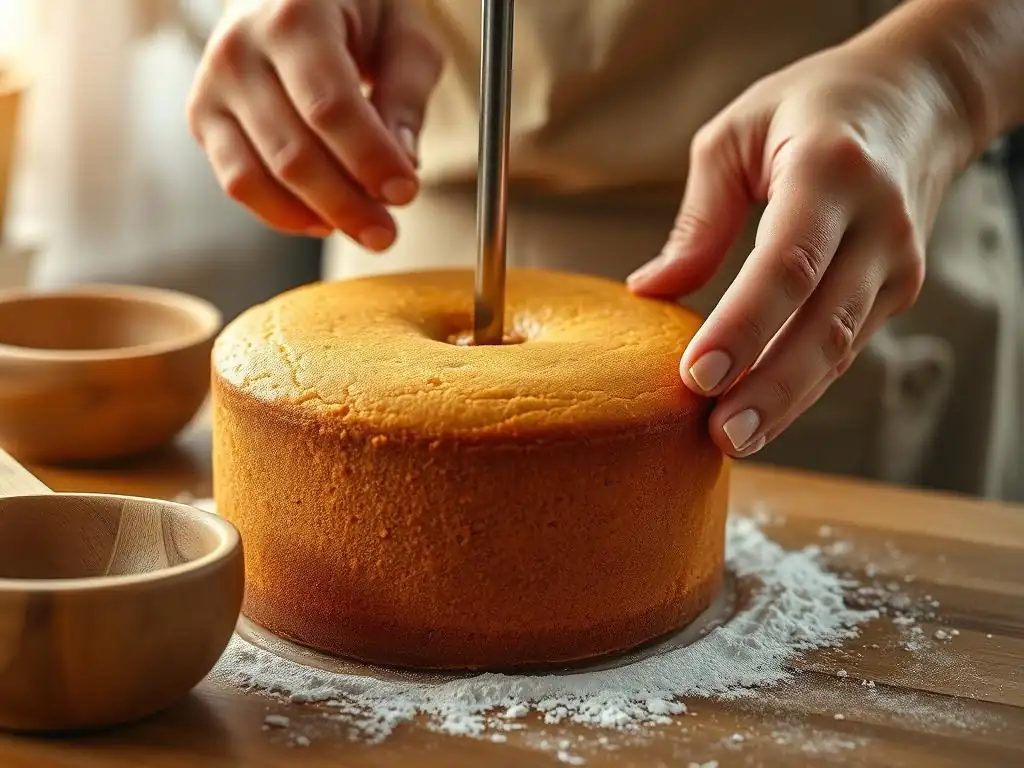
Before you begin the cake doneness skewer test, ensure you have the right tool. While a toothpick is often mentioned, a longer, thin wooden skewer or a thin metal cake tester is often better, especially for deeper cakes, as it can reach the true center without disturbing the cake's structure too much. Have your chosen testing tool ready near the oven. Timing is also crucial; don't test too early.
Most cakes baked at a standard 350°F (175°C) will take at least 25-30 minutes before they are anywhere near done. Begin testing only after the cake has baked for the minimum time specified in the recipe, or when visual cues (like browning edges) suggest it might be close. Testing too early can cause the cake to sink.
When you are ready to perform the test, open the oven door as little as possible and work quickly to avoid a significant temperature drop, which can also cause a cake to fall. Have your skewer poised and ready. It's helpful to have a clean cloth or paper towel nearby to wipe the skewer between tests, ensuring you get an accurate reading each time, especially if you need to test in multiple spots or if you're baking multiple cakes. Remember, the goal of the cake doneness skewer test is a quick, decisive check.
Skewer Insertion: Optimal Placement for Reliable Results
The success of the cake doneness skewer test hinges on inserting the skewer into the correct spot. The last place a cake finishes baking is typically its very center. Avoid inserting the skewer too close to the edges of the pan, as this area will almost always be done before the center, giving you a false positive reading.
Aim for the deepest, thickest part of the cake, which is usually right in the middle. If you have a shaped pan or a cake with an uneven thickness, try to test the area that appears to be the thickest or bulges slightly in the center.
Insert the skewer gently but firmly straight down into the cake, going almost all the way to the bottom of the pan. Be careful not to scrape the very bottom, as residual moisture or melted butter pooled there could give a misleading result. Pull the skewer straight back out immediately. The speed of insertion and removal is important; leaving the skewer in the cake for too long can cause wet batter to stick to it as it cools slightly, giving a false impression of underbaking. A swift in-and-out motion is best for an accurate cake doneness skewer test.
Interpreting a Clean Skewer: Sign of a Fully Baked Cake
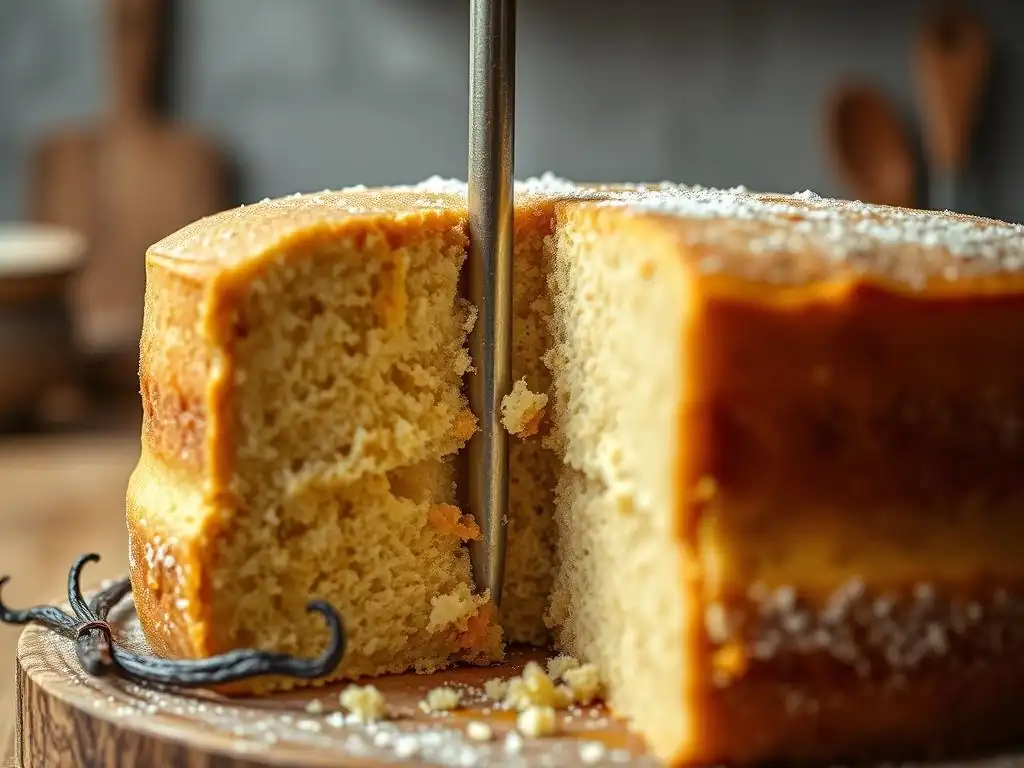
The classic outcome you're looking for when performing the cake doneness skewer test is a "clean" skewer. This means when you pull the skewer out, there should be no wet batter clinging to it. It might have a few dry crumbs attached, or it might come out completely clean, looking just as it did when it went in. This indicates that the cake's internal structure is set and the moisture level is appropriate for a fully baked cake. The heat has penetrated the center, cooked the batter, and the moisture has been properly integrated or evaporated.
A skewer with a few moist crumbs attached is generally also a good sign of doneness, especially for recipes designed to be particularly moist or those containing ingredients like sour cream or oil, which result in a tender, slightly crumbly texture. The key distinction is between moist crumbs (which indicate cooked batter) and wet, sticky batter (which indicates underbaking). If the skewer comes out with just a few non-gooey crumbs, your cake is likely done and ready to be removed from the oven to cool. This is the desired result of the cake doneness skewer test.
Interpreting Batter on the Skewer: Adjusting Baking Time Accordingly
If you pull the skewer out and see wet, sticky batter clinging to it, your cake is not done. This is the most common outcome when testing a cake partway through its baking time. The amount of batter on the skewer tells you roughly how much more time the cake needs. If the skewer is coated in thick, wet batter all the way up, the cake is significantly underbaked and needs considerable more time in the oven.
If there are only a few streaks of wet batter or small pockets of goo on the skewer, the cake is getting close but still needs more time to fully set in the center. When you get a result showing wet batter, simply close the oven door and allow the cake to bake for a few more minutes – typically 3 to 5 minutes for standard cakes. After this additional time, perform the cake doneness skewer test again in the same spot.
Repeat this process in small increments until the skewer comes out clean or with only moist crumbs. Patience here is key to avoid overbaking while ensuring doneness.
Troubleshooting Skewer Test Results
Clean Skewer, Yet Cake Appears Soggy: Potential Causes and Solutions
Occasionally, you might perform the cake doneness skewer test, and the skewer comes out clean, but the cake still looks sunken in the center or feels excessively wet and heavy. This can be confusing, but it often points to issues beyond simple baking time.
One possibility is that the cake was removed from the oven too quickly after passing the skewer test, not allowing residual heat to finish setting the structure slightly as it began cooling. Another cause could be an imbalance in the recipe, perhaps too much liquid or sugar relative to flour and eggs, which can create a structure that sets on the outside but remains unstable and dense inside, even if technically "cooked."
To address this, first ensure your oven temperature is accurate using an oven thermometer; a cake baked at too low a temperature might cook through but lack the structural integrity it needs. If the recipe seems balanced, ensure you are measuring ingredients precisely, especially liquids and sugars.
For a cake that consistently tests clean but feels soggy, try leaving it in the oven for an extra 2-3 minutes after the skewer test is clean, or until the top springs back lightly when gently pressed (another doneness test). Ensure the cake cools properly on a wire rack, as this allows steam to escape and the structure to firm up.
Wet Batter Persists Despite Prolonged Baking: Addressing Oven Issues
If you've been performing the cake doneness skewer test repeatedly, adding 5-10 minutes each time, and the skewer still comes out with wet batter after significantly exceeding the recipe's maximum baking time (e.g., 50 minutes for a cake that should take 30-35 minutes), this strongly indicates an issue with your oven. The most common culprit is an inaccurate oven temperature. If your oven is running significantly cooler than the setting, the cake simply isn't receiving enough heat to cook through in the expected timeframe.
Use an independent oven thermometer to verify your oven's temperature. You might find it's 25°F, 50°F, or even more below the setting.
If this is the case, you'll need to either adjust the thermostat (if your oven allows calibration) or simply set your oven to a higher temperature (e.g., set it to 375°F if you want 350°F and it's consistently 25°F low) to achieve the correct internal temperature for baking. Uneven heating can also be a factor; if one side of the cake is done but the center or other side is not, consider rotating the cake halfway through the baking time in the future.
Testing Cakes with Toppings or Fillings: Modifying the Skewer Technique
Performing the cake doneness skewer test can be slightly trickier with cakes that have specific toppings or fillings, such as a streusel topping, fruit layers, or a distinct filling in the center. The key is to insert the skewer below the topping or away from the filling, aiming for the cake batter itself. For a cake with a streusel topping, insert the skewer through a gap in the topping or gently push the topping aside slightly before inserting the skewer into the cake layer beneath.
If your cake has a fruit layer at the bottom or a filling injected into the center, avoid these areas when testing. Insert the skewer into a part of the cake that contains only batter, typically somewhere between the edge and the center, ensuring you go deep enough to test the main cake structure. For instance, if you have an apple cake with apples on the bottom, test the batter layer above the apples. The principle remains the same: you want the skewer to test the cooked cake batter's doneness, not the consistency of a topping or filling.
Alternative Cake Doneness Assessment Methods
The Toothpick Method: Similarities and Differences to the Skewer Test
The toothpick method is perhaps the most widely known alternative to the cake doneness skewer test, and it is very similar in principle. You insert a clean wooden toothpick into the center of the cake and pull it out. Like the skewer test, if it comes out clean or with a few moist crumbs, the cake is generally considered done. If it has wet batter, it needs more time.
The main difference lies in the tool itself. Toothpicks are shorter and thinner than typical skewers. This makes them ideal for testing smaller cakes, cupcakes, or shallower bakes where a long skewer might hit the bottom too easily or be overkill. However, for deep or large cakes (like Bundt cakes or multi-layer cakes baked in deep pans), a skewer is often necessary to reach the true center effectively. Both methods rely on the same visual cue – the presence or absence of wet batter – making them fundamentally related techniques for assessing cake doneness skewer test results.
The Gentle Touch Method: Assessing Cake Texture and Springiness
Another useful technique, often used in conjunction with the cake doneness skewer test or toothpick test, is the gentle touch method. Once the cake appears visually done (golden edges, slightly pulled away from the pan), gently press the top surface of the cake in the center with your fingertip. Be careful, as it will be hot!
If the cake is done, the surface will feel firm and will spring back slightly when you remove your finger. If your finger leaves a lasting indentation, or the cake feels soft and jiggly underneath the surface, it is likely still underbaked in the center. This method requires a bit of practice to interpret correctly, as different cake types will have slightly different textures. A light and airy sponge might spring back more readily than a dense pound cake. Use this tactile test as a supporting indicator alongside your skewer test for a more confident assessment of cake doneness.
Internal Temperature Measurement: Using a Thermometer for Precision
For the most precise method of determining cake doneness, especially for professional results or complex recipes, using an instant-read thermometer is highly recommended. While less common for home bakers than the cake doneness skewer test, it provides an objective measurement of the cake's internal temperature, which is a direct indicator of doneness.
Insert the thermometer probe into the center of the cake, avoiding the bottom of the pan. Most cakes are considered fully baked when their internal temperature reaches between 200°F and 210°F (93°C to 99°C). This temperature range ensures that the proteins have coagulated and the starches have gelatinized sufficiently throughout the cake. Using a thermometer eliminates the subjective interpretation required by the skewer or touch methods, offering a reliable way to achieve consistent doneness, particularly for cakes where achieving just the right moisture level is critical.
Tips for Consistently Perfect Cakes
Optimizing Oven Temperature: Ensuring Even Heat Distribution
A consistently perfect cake starts with an oven that heats accurately and evenly. As mentioned earlier, oven temperatures can fluctuate. Using an inexpensive oven thermometer is the first step to verifying if your oven is running true to its setting. If it's off by more than 15-20°F, you might need to adjust your baking temperature accordingly or consider recalibrating your oven.
Beyond accuracy, ensure proper air circulation. Avoid overcrowding the oven with multiple pans, as this can block heat flow and lead to uneven baking. If you're baking more than one cake, place them on different racks, ensuring there's space around each pan. If your oven has hot spots (areas that consistently brown faster), you may need to rotate your cakes halfway through the baking time. Consistent oven temperature and even heat distribution are fundamental to achieving reliable cake doneness, making your cake doneness skewer test results more predictable.
Monitoring Visual Cues: Observing Color and Rise During Baking
While the cake doneness skewer test is the most reliable indicator of the internal state, visual cues provide valuable information throughout the baking process. Pay attention to how the cake rises; it should rise evenly and develop a domed or flat top depending on the recipe. Observe the color of the cake's surface; it should turn golden brown, and the edges will appear more deeply colored and may start to pull away slightly from the sides of the pan.
These visual indicators tell you that the outer parts of the cake are setting and browning. They are signals that the cake is progressing well and that it's likely time to start thinking about performing the cake doneness skewer test. If your cake is browning very quickly on the outside but hasn't risen much, your oven might be too hot.
Conversely, if it's pale and hasn't risen after the expected time, the oven might be too cool or the leavening agent is inactive. Using visual cues helps you know when to test, preventing premature testing that can cause the cake to fall.
Adjusting Baking Time Based on Cake Type: Understanding Recipe Variations
Not all cakes bake the same way or in the same amount of time, even at the same temperature. The type of cake batter significantly influences baking time and how the cake doneness skewer test will appear. A light sponge cake made primarily with eggs and flour will cook faster than a dense pound cake rich in butter and sugar. Cakes with added fruits, nuts, or chocolate chips can also take longer due to the extra mass and moisture.
Understanding the typical characteristics of different cake types will help you anticipate baking times and interpret your skewer test results. A lean cake might produce a completely clean skewer, while a moist oil-based cake might consistently show a few moist crumbs even when fully baked. Always use the recipe's suggested baking time as a guideline, but be prepared to adjust based on your oven, pan, and the specific cake batter. Your mastery of the cake doneness skewer test will grow as you bake different types of cakes and learn their unique baking patterns.
Refining Your Cake Baking Skills
Start with Simple Recipes: Building Confidence in Doneness Testing
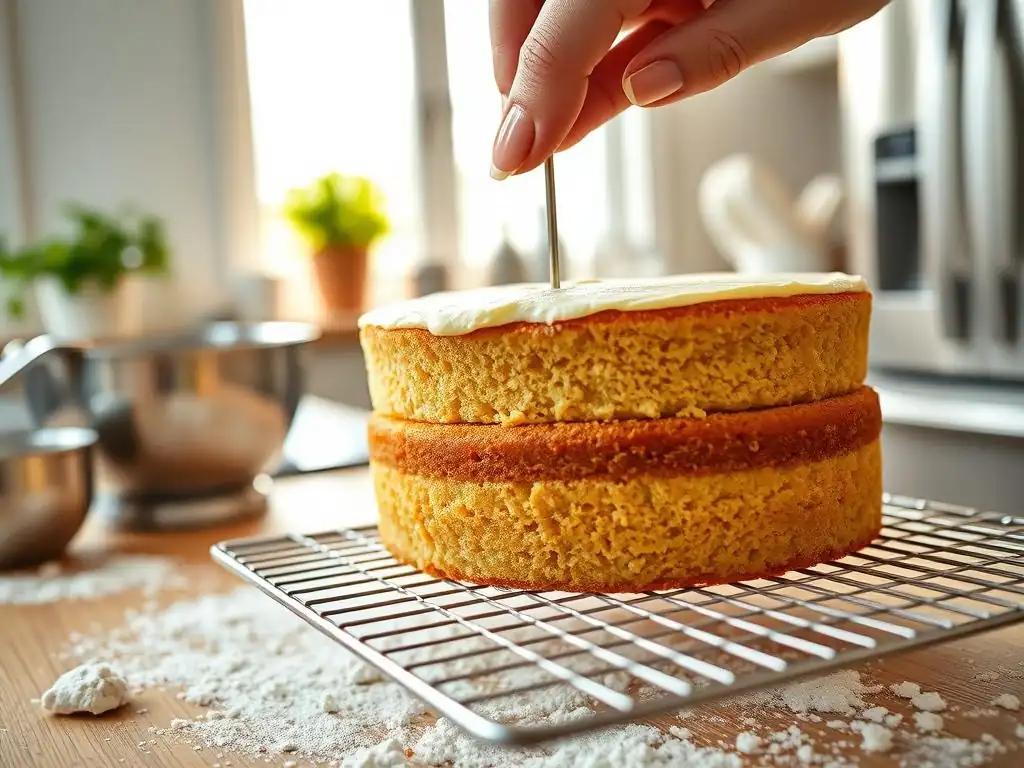
If you're new to baking or struggling with consistently achieving perfect doneness, begin with simple, reliable cake recipes. Standard vanilla or chocolate layer cakes, loaf cakes, or cupcakes are excellent choices. These recipes often have forgiving formulas and predictable baking behaviors, making it easier to practice and interpret the cake doneness skewer test.
As you bake these simpler cakes, pay close attention to the timing, visual cues, and how the skewer test looks at different stages. Test a few minutes before the recipe suggests, note the wet batter, then test again every few minutes, observing how the skewer changes. This hands-on practice builds intuition and confidence in recognizing the signs of a truly done cake, making you more adept at using the cake doneness skewer test for more complex bakes later on.
Experiment with Variations: Applying Techniques to Diverse Cake Recipes
Once you feel confident testing simple cakes, challenge yourself by trying different types of recipes. Bake a dense fruitcake, a delicate génoise, a moist carrot cake, or cupcakes with varying mix-ins. Apply the cake doneness skewer test and other methods (touch, temperature) to these different batters.
You'll learn how a skewer test might look slightly different for a cake with lots of butter (might have a slight buttery sheen) versus one with lots of fruit (might pick up fruit juices). This experimentation helps you understand the nuances of cake doneness across the baking spectrum and refines your ability to apply the cake doneness skewer test effectively regardless of the recipe. Each new cake is an opportunity to deepen your baking knowledge.
Record Keeping: Tracking Baking Times and Environmental Factors
To truly refine your baking skills and achieve consistent results, consider keeping a simple baking journal. For each cake you bake, note the recipe, the pan size and material, the oven temperature used (verified with your thermometer), the actual baking time it took to pass the cake doneness skewer test, and the result of the test (clean, moist crumbs). Also, note any environmental factors like humidity, which can sometimes affect baking time.
Over time, this record-keeping will reveal patterns specific to your oven and your baking environment. You'll start to predict more accurately how long a certain type of cake will take to bake, reducing the need for excessive testing. This data-driven approach, combined with skillful application of the cake doneness skewer test, is a powerful tool for mastering cake baking and ensuring delicious outcomes every time.
Conclusion: Achieving Consistent Baking Success
The Skewer Method: A Reliable Indicator of Cake Doneness
The cake doneness skewer test stands out as a simple, accessible, and highly reliable method for determining when a cake is perfectly baked. By inserting a thin skewer into the center of the cake, you gain direct insight into the internal structure and moisture level, the last areas to finish cooking. A clean skewer, or one with only moist crumbs, indicates that the cake has reached the ideal state of doneness, preventing the disappointment of underbaked or overbaked results.
While visual cues and the gentle touch method offer supporting information, and a thermometer provides objective data, the cake doneness skewer test remains a fundamental technique in the home baker's repertoire. It's a quick check that saves your cake from potential ruin, ensuring the time and effort you put into mixing and preparing your batter result in a beautifully textured, moist, and delicious finished product.
Mastering Doneness Testing: Key to Baking Consistently Delicious Cakes
Achieving consistently delicious cakes is less about luck and more about mastering fundamental techniques, and knowing how to check cake with skewer correctly is at the top of that list. By understanding why the cake doneness skewer test works, practicing its application on various cake types, and using it in conjunction with other assessment methods, you build the skills needed to confidently pull any cake from the oven at its peak.
Embrace the cake doneness skewer test as your trusted guide. Pay attention to what the skewer tells you, adjust baking time accordingly, and learn from each baking experience. With practice and careful observation, you'll develop an intuitive sense for when your cakes are truly done, leading to greater baking success and the joy of sharing consistently perfect, homemade cakes with friends and family.
Frequently Asked Questions
What exactly is the cake doneness skewer test?
The skewer test is a simple and reliable method using a thin skewer (or toothpick) inserted into the center of a cake to check for internal doneness. The skewer is then removed and examined.
What are we looking for on the skewer after inserting it into the cake?
A skewer that comes out clean, or with only a few moist crumbs attached, indicates the cake is done. If it comes out with wet batter, the cake needs more baking time.
Is the skewer test foolproof for all types of cakes?
While very effective, the skewer test might be less reliable for exceptionally moist cakes, like some cheesecakes or pudding cakes. In such cases, other indicators like visual cues (golden brown color, edges pulling away from the pan) are also important.
Where specifically should I insert the skewer into the cake?
Always insert the skewer into the thickest part of the cake, usually the center. This area is the last to bake, providing the most accurate indication of overall doneness.
What if the skewer comes out clean, but the cake still seems underbaked?
If the skewer is clean, but the cake still jiggles excessively or appears pale, it might be slightly underbaked. Consider baking it for a few more minutes, checking again with the skewer.
Final Reflection: Beyond the Skewer: Baking, Patience, and the Sweetness of Success
The humble skewer test, seemingly simple, reveals a profound truth about baking—and about life itself: true mastery comes not just from following instructions, but from understanding the process. The seemingly insignificant act of inserting a toothpick into a cake holds the key to unlocking perfectly baked goods, a testament to the delicate balance between precision and intuition. It's a lesson that extends far beyond the kitchen.
The skewer test, for me, represents more than just a cooking technique; it symbolizes the importance of patience and observation in achieving any goal. It's a reminder that rushing the process often leads to disappointment, while careful attention to detail yields rewarding results. The best things in life are worth waiting for,
a sentiment perfectly encapsulates the essence of this seemingly simple test. The subtle shift from moist crumbs to a clean skewer mirrors the gradual unfolding of success in any endeavor, requiring persistence and a keen eye for detail.
Now, I invite you to consider your own "skewer tests"—those moments in your life where patience and observation are crucial to achieving your goals. Whether it's a challenging project at work, a personal aspiration, or even a complex recipe, remember the lessons learned from the humble skewer. Take your time, observe carefully, and trust the process. The sweetness of success, like a perfectly baked cake, will be well worth the wait.
Unlock Your Baking Brilliance: Perfect Cakes Every Time!
Thanks for taking the time to learn about the skewer test! You're now equipped with a foolproof method to ensure perfectly baked cakes, every single time. Ready to put your new skills to the test?
- Bake a celebratory cake this week, using the skewer test to achieve perfection! Think of the delighted faces around your table.
- Share your baking success (or funny skewer mishaps!) with us on social media using #BakeWithEaseSkewerTest. Let's build a community of confident bakers!
- Try experimenting with different cake recipes – see how the skewer test works across various textures and ingredients.
What delicious creation will you bake first, armed with your new baking superpower?