
The Key to a Stable Whipped Cream Topping That Lasts

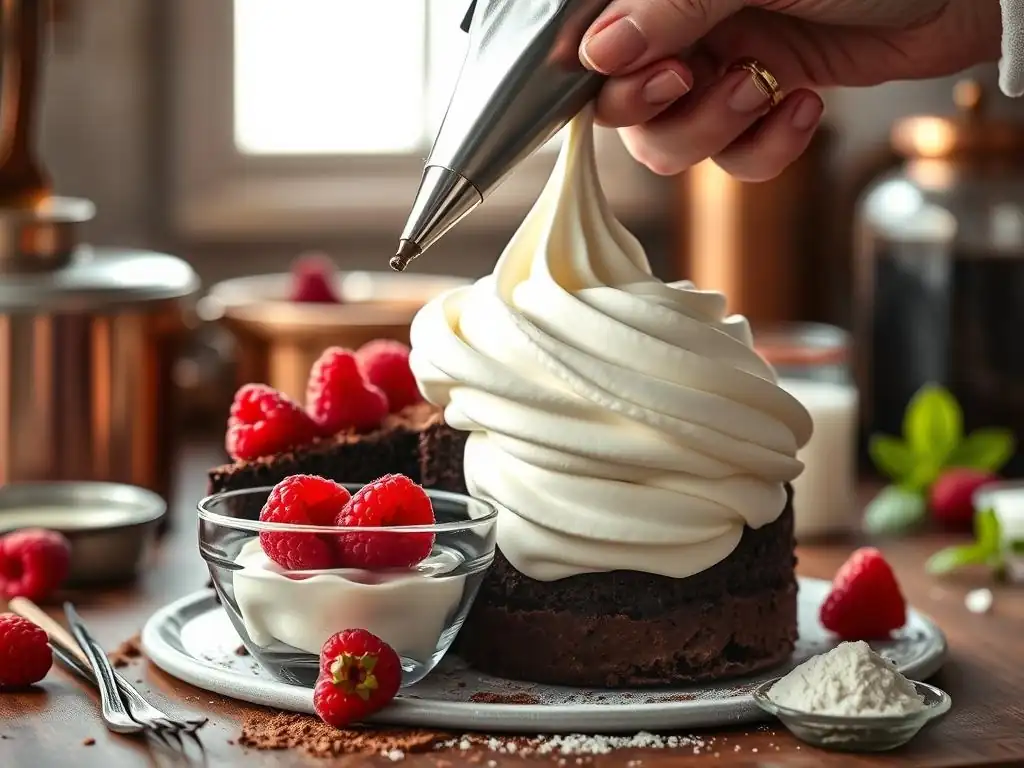
Welcome to BakeWithEase, your trusted guide to baking bliss! Ever dream of creating a flawlessly stable whipped cream topping that holds its shape beautifully, resists melting, and elevates your desserts to professional levels? We reveal the secrets in our article below! Discover essential tips and tricks to achieve the perfect consistency, ensuring your pastries look as amazing as they taste. Dive in and unlock the key to a whipped cream masterpiece!
- The Key to a Stable Whipped Cream Topping That Lasts - BakeWithEase
- Introduction: Achieving Perfectly Stable Whipped Cream for Your Desserts
- Understanding the Science Behind Whipped Cream Stability
- Essential Ingredients for a Lasting Whipped Cream Topping
- Step-by-Step Guide: Mastering the Stable Whipped Cream Recipe
- Troubleshooting Common Whipped Cream Problems
- Tips & Tricks for the Best Stable Whipped Cream Recipe
- Using Stable Whipped Cream in Cream Pies & Custard Tarts
- Conclusion: Enjoy Long-Lasting, Beautiful Whipped Cream Toppings
-
Frequently Asked Questions
- What makes whipped cream unstable and prone to weeping or deflating?
- What is the most important tip for achieving stable whipped cream?
- Can I use stabilizers like gelatin or cornstarch in my whipped cream?
- How long will stable whipped cream last in the refrigerator?
- What are some common mistakes to avoid when making stable whipped cream?
- Final Reflection: The Enduring Delight of a Perfect Peak
- Unlock Your Perfect Whipped Cream: Master the Art of Stability!
The Key to a Stable Whipped Cream Topping That Lasts - BakeWithEase
Introduction: Achieving Perfectly Stable Whipped Cream for Your Desserts
Whipping cream seems simple enough: pour, whisk, and watch it thicken into a cloud of dairy delight. However, anyone who has topped a pie or tart only to see their beautiful creation weep or collapse knows that achieving truly stable whipped cream can be a challenge.
A stable whipped cream topping is the hallmark of many classic desserts, offering a light, airy contrast without deflating before it reaches the table (or after the first slice!). Mastering the art of a stable whipped cream recipe is crucial for stunning and delicious results, especially when making cream pies and custard tarts that need to hold their form.
This guide will walk you through the science, ingredients, and techniques needed to create a stable whipped cream that stands tall and holds its shape for hours, even days, in the refrigerator. We'll cover essential stable whipped cream recipe tips, from selecting the right cream to incorporating stabilizers, ensuring your desserts look and taste fantastic from the first bite to the last. Whether you're topping a luscious chocolate cream pie or a delicate fruit tart, these tips will help you achieve whipped cream perfection.
Understanding the Science Behind Whipped Cream Stability
Why Does Whipped Cream Deflate? Exploring the Causes
Whipped cream's airy structure relies on a delicate balance of air bubbles trapped within a network of fat globules. When you whip cream, mechanical action (like a whisk) breaks down the membranes surrounding the fat globules, allowing them to clump together and form a semi-solid structure that supports the incorporated air. Think of it like building a tiny, airy scaffold.
However, this scaffold is susceptible to collapse. Temperature is a major factor; warmth softens the fat, weakening the structure and causing the air bubbles to escape, leading to deflation and weeping (liquid separating from the solid). Time also plays a role; over time, the fat network can weaken naturally, especially if not properly stabilized, causing the whipped cream to lose volume and become soupy. Understanding these principles is key to developing effective stable whipped cream recipe tips.
The Role of Fat Content in Whipped Cream Structure
The amount of fat in your cream is perhaps the single most important factor in its ability to whip and hold a stable structure. Milk fat globules are the building blocks of the whipped cream network. A higher fat percentage means more of these building blocks are available to create a robust, interconnected structure that can effectively trap air and resist collapse.
Creams with lower fat content, like half-and-half (typically 10-12% fat) or light cream (around 18-30% fat), simply don't have enough fat globules to form a stable network when whipped. They might become slightly frothy but will not hold stiff peaks necessary for a stable topping. Heavy cream or heavy whipping cream, with their higher fat content, are essential for achieving a stable whipped cream that lasts.
Essential Ingredients for a Lasting Whipped Cream Topping
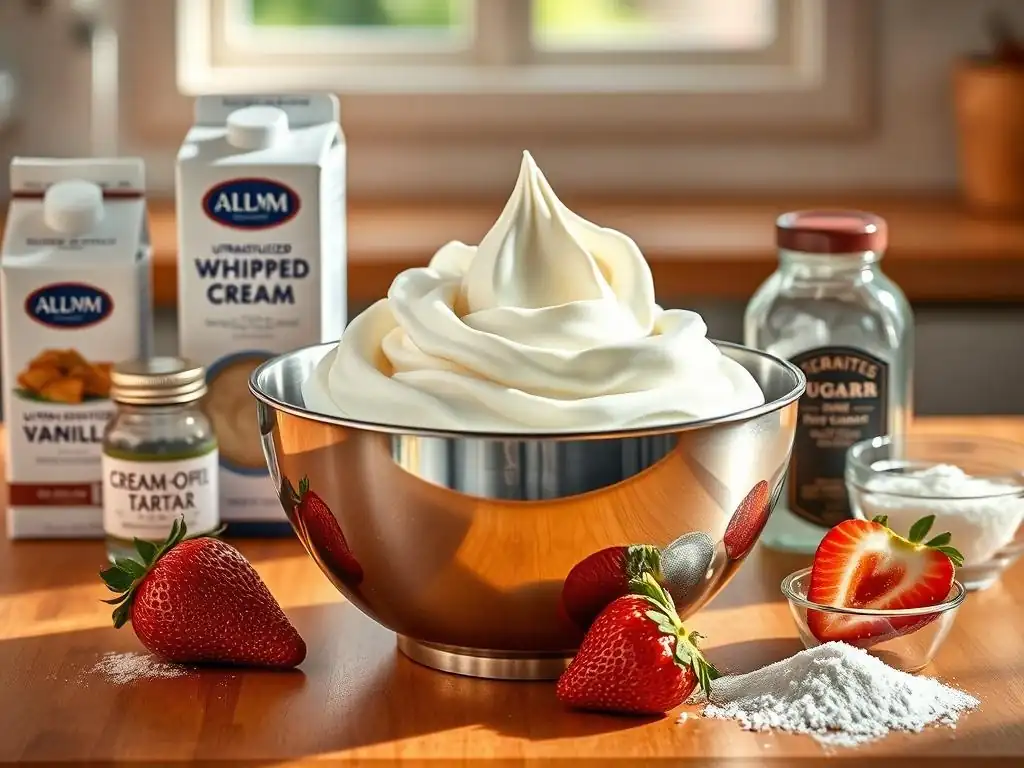
Heavy Cream: Selecting the Right Fat Percentage
For the most stable whipped cream, you must start with heavy cream or heavy whipping cream. In the United States, these terms typically refer to cream containing between 36% and 40% milk fat. This high fat content is critical for forming the strong matrix needed to trap air and maintain structure.
While whipping cream (often 30-36% fat) can also be whipped, heavy cream generally provides a more robust and stable result, making it the preferred choice for recipes where the whipped cream needs to hold its shape for an extended period, such as on pies and tarts. Always check the label to confirm the fat percentage when selecting your cream for the best stable whipped cream recipe.
Stabilizers: Choosing the Best Option for Your Whipped Cream
Even with high-fat cream, adding a stabilizer can significantly improve the longevity and firmness of whipped cream, preventing deflation and weeping. Several common kitchen ingredients can act as effective stabilizers, each offering slightly different properties in terms of texture, flavor, and ease of use. Choosing the right one depends on your specific needs and the desired outcome for your stable whipped cream recipe.
Using a stabilizer is one of the most impactful stable whipped cream recipe tips you can employ, especially when preparing desserts that will be refrigerated or transported. They reinforce the delicate fat structure, helping it resist temperature changes and the effects of time, ensuring your topping remains fluffy and attractive.
Gelatin: A Classic Stabilizer for Firm Whipped Cream
Gelatin is a protein-based stabilizer derived from animal collagen. It's widely used because it creates a very firm and resilient structure when set, making it excellent for preventing whipped cream from weeping and deflating over time. A small amount of gelatin dissolved and bloomed correctly can transform regular whipped cream into a topping that holds sharp peaks for days.
Typically, about 1 teaspoon of unflavored powdered gelatin is sufficient to stabilize 1 to 2 cups of heavy cream. The key is to properly bloom the gelatin in cold liquid (like water or milk) and then gently heat it until dissolved before incorporating it into the partially whipped cream. This method yields a highly stable result, perfect for pies and tarts that need to maintain their shape.
Cornstarch: A Plant-Based Whipped Cream Stabilizer
Cornstarch is a common pantry item that can also serve as a simple, plant-based stabilizer for whipped cream. When mixed with sugar and added to cream, the starch granules absorb liquid and swell, helping to thicken the mixture and provide some resistance against weeping. It's an easy alternative if you prefer not to use gelatin or want a slightly less firm set.
For stabilization, you might use about 1 tablespoon of cornstarch whisked with 2 tablespoons of powdered sugar per cup of heavy cream. This mixture is typically added towards the end of the whipping process. While cornstarch offers decent stability for a few hours or overnight refrigeration, it may not prevent weeping as effectively as gelatin over longer periods, but it's a good option for many applications requiring stable whipped cream recipe tips.
Cream Cheese: Adding Flavor and Stability
Cream cheese isn't just for bagels; it's a fantastic stabilizer that adds both structure and a pleasant tang to whipped cream. Its natural firmness helps the cream hold its shape, while its slight acidity and creamy texture complement many desserts, particularly those with fruit or chocolate flavors.
To use cream cheese as a stabilizer, ensure it's softened to room temperature. You might use anywhere from 2 to 4 ounces of softened cream cheese per cup of heavy cream. It's best to whip the cream cheese until smooth before gradually incorporating the heavy cream and whipping until the desired consistency is reached. This method results in a rich, slightly denser, but very stable whipped cream topping.
Powdered Sugar vs. Granulated Sugar: Which is best for stabilizing whipped cream?
While both granulated and powdered sugar sweeten whipped cream, powdered sugar (also known as confectioners' sugar or icing sugar) offers a slight advantage in terms of stability. Powdered sugar contains a small amount of cornstarch (typically 3-5%) to prevent clumping. This added cornstarch acts as a minor stabilizer, helping to absorb moisture and slightly firm up the whipped cream structure.
Granulated sugar, lacking this starch, can sometimes contribute to weeping over time as its crystals dissolve and release moisture. For the best stable whipped cream recipe, using powdered sugar is generally recommended. It also dissolves more readily into the cream, resulting in a smoother texture compared to granulated sugar, which can sometimes leave a slightly gritty feel.
Step-by-Step Guide: Mastering the Stable Whipped Cream Recipe
Chilling Your Equipment: The First Step to Success
One of the most critical, yet often overlooked, stable whipped cream recipe tips is ensuring your equipment is cold. Cold temperatures help the fat globules in the cream stay firm, making it easier for them to emulsify and form a stable structure when whipped. Warm bowls or whisks can quickly warm the cream, hindering the whipping process and leading to a less stable result.
Place your mixing bowl (preferably metal or glass, as they retain cold better) and whisk attachment (or beaters) in the freezer for at least 15-20 minutes before you plan to whip the cream. A chilled environment is fundamental for achieving stiff peaks and a reliable structure that will last, setting you up for success right from the start.
Whipping Technique: Achieving the Perfect Consistency
Start whipping your chilled heavy cream on medium speed. This allows the fat globules to begin breaking down and aggregating gradually. As the cream thickens, increase the speed to medium-high or high. Keep a close eye on the consistency; it will progress from frothy to soft peaks (where the cream just barely holds a shape) to medium peaks (where peaks hold their shape but the tips curl) to stiff peaks (where peaks stand straight up).
For a stable whipped cream topping, aim for medium to stiff peaks before adding any sugar or stabilizers (unless the stabilizer requires being mixed with sugar first). Over-whipping beyond stiff peaks will result in grainy, curdled cream as the fat separates from the liquid. Stop whipping as soon as stiff peaks are achieved to ensure a smooth, stable texture.
Incorporating Stabilizers: A Detailed Guide
Adding stabilizers at the right time and in the correct manner is essential for achieving the desired stability without negatively impacting the texture. The method depends on the type of stabilizer used. Proper incorporation ensures the stabilizer is evenly distributed and activated, leading to a uniformly stable whipped cream.
Follow the specific instructions for your chosen stabilizer carefully. Adding them too early or too late, or not preparing them properly (like gelatin), can result in lumps, uneven texture, or failure to stabilize the cream effectively. These detailed steps are crucial stable whipped cream recipe tips for a reliable outcome.
How to Bloom Gelatin for Whipped Cream
Blooming gelatin is a simple but necessary step. Sprinkle the required amount of powdered gelatin (e.g., 1 teaspoon) over cold water or milk (e.g., 2 tablespoons) in a small, microwave-safe bowl or saucepan. Let it sit undisturbed for 5-10 minutes; the gelatin will absorb the liquid and swell, becoming jelly-like.
Once bloomed, gently heat the gelatin mixture. If using a microwave, heat in 10-15 second intervals, stirring after each, until it's completely dissolved and clear (do not boil). If using a saucepan, heat gently over low heat, stirring constantly, until dissolved. Let the dissolved gelatin cool slightly to room temperature before slowly drizzling it into your partially whipped cream while the mixer is running on low speed. Whip until stiff peaks form.
Mixing Cornstarch Correctly to Avoid Lumps
To use cornstarch as a stabilizer, it's best to mix it with powdered sugar first. Whisk together the cornstarch (e.g., 1 tablespoon) and powdered sugar (e.g., 2 tablespoons) thoroughly in a small bowl. This helps distribute the cornstarch evenly and prevents it from clumping when added to the cream.
Once your cream has reached soft peaks, gradually add the cornstarch-sugar mixture while whipping on low speed. Increase the speed to medium-high and continue whipping until stiff peaks form. The sugar helps dissolve the cornstarch into the cream, ensuring a smooth texture without grainy lumps, a key stable whipped cream recipe tip for this method.
Blending Cream Cheese for a Smooth Texture
Using cream cheese requires ensuring it is very soft before combining it with the cream. Let the cream cheese sit at room temperature for at least an hour, or gently warm it in the microwave in 10-15 second bursts until pliable. Whip the softened cream cheese in your mixing bowl until it is completely smooth and free of lumps.
With the mixer on low speed, slowly drizzle in the cold heavy cream. Once all the cream is added, increase the speed to medium-high and whip until the mixture reaches stiff peaks. The initial whipping of the cream cheese is vital to prevent lumps in the final whipped cream, resulting in a perfectly smooth and stable topping.
Troubleshooting Common Whipped Cream Problems
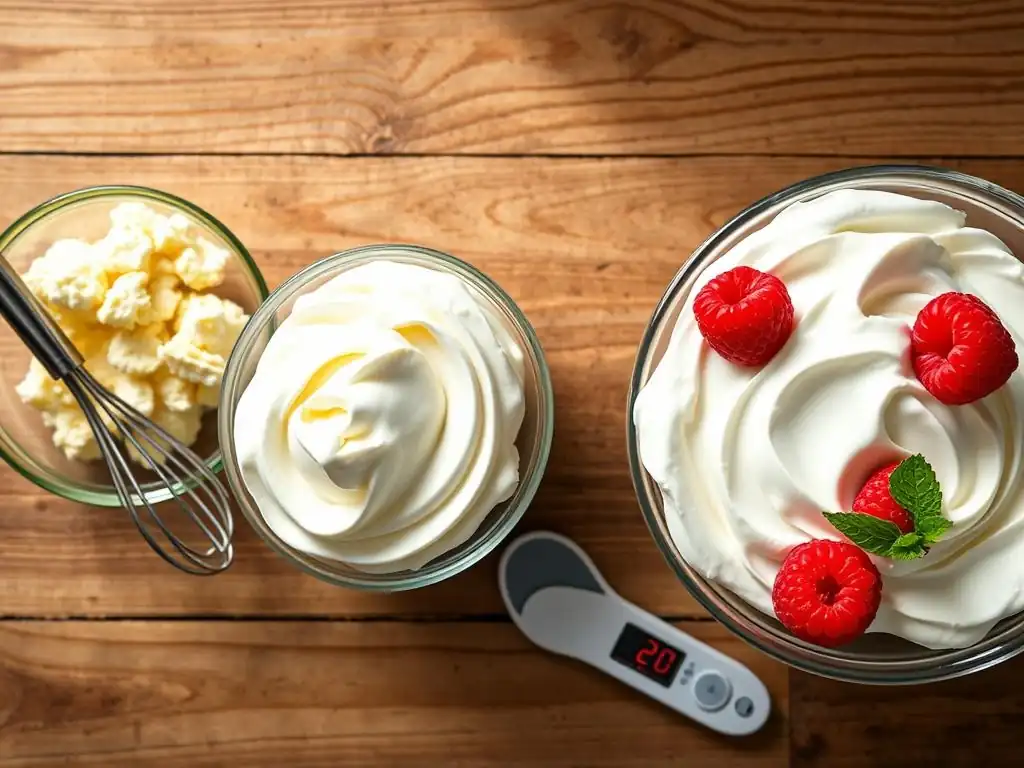
Preventing Grainy Whipped Cream
Grainy whipped cream is almost always a sign of over-whipping. When you whip cream for too long, the fat globules clump together too tightly, squeezing out the liquid and beginning the process of turning into butter. The texture becomes coarse and curdled rather than smooth and airy.
To prevent this, pay close attention while whipping. Stop as soon as stiff peaks form and the cream looks smooth and glossy. If you accidentally over-whip slightly and it just starts to look grainy, you might be able to rescue it by gently stirring in a tablespoon or two of cold, unwhipped heavy cream by hand until it smooths out. However, if it's significantly over-whipped, it's often beyond saving for a smooth topping and might be better used in a cooked application.
Fixing Over-Whipped Cream
As mentioned, significantly over-whipped cream that has become truly grainy or curdled is difficult to fully salvage back into a smooth whipped cream texture suitable for topping a pie. The fat structure has been fundamentally altered.
If you have only slightly over-whipped it and it's just starting to look broken, try gently whisking in a small amount (1-2 tablespoons per cup of original cream) of cold, liquid heavy cream by hand. This can sometimes re-emulsify the mixture and restore a smoother consistency. For major over-whipping where butter is beginning to form, unfortunately, there's no real "fix" to return it to a light, airy whipped state. Consider using it in a recipe where melted butter is needed.
Addressing Soft or Runny Whipped Cream
Soft or runny whipped cream can result from several factors, including insufficient whipping, warm ingredients or equipment, or not using a stabilizer when needed for longevity. If your whipped cream isn't holding its shape, first check if you simply stopped whipping too early.
If it's still cool, continue whipping on medium-high speed until it reaches soft or medium peaks. If you intended to use a stabilizer and haven't yet, this might be your last chance to incorporate it (though it's harder to do smoothly after whipping). If the cream has become warm, chilling it down before attempting to whip further can help, but it may not achieve the same volume or stability as cream whipped cold from the start. For a truly stable whipped cream recipe, starting cold and whipping adequately is key.
Tips & Tricks for the Best Stable Whipped Cream Recipe
Flavoring Your Whipped Cream: Extracts and Zests
While vanilla extract is the classic choice, don't be afraid to experiment with other flavors to complement your dessert. Extracts like almond, peppermint, or coconut can add a delightful twist. Citrus zests, like lemon or orange, can provide a bright, fresh note.
Add extracts or zests towards the end of the whipping process, just before reaching stiff peaks. This ensures they are evenly distributed without interfering with the initial whipping process. For a 2-cup batch of whipped cream, start with about 1 teaspoon of extract or 1-2 teaspoons of zest, adjusting to taste. These small additions enhance the overall flavor profile of your stable whipped cream.
Sweetening Your Whipped Cream: Sugar Alternatives
Beyond powdered sugar, other sweeteners can be used in your stable whipped cream recipe. Maple syrup, honey, or agave can add unique flavors and sweetness, though they also add liquid, which can slightly impact stability if used in large quantities. Liquid sweeteners are best added slowly towards the end of whipping.
Artificial sweeteners or sugar substitutes can also be used. Many granular substitutes can be powdered in a blender or food processor to mimic the texture of powdered sugar, which helps them dissolve smoothly and provides a bit of bulk. Experiment with small amounts first to achieve the desired level of sweetness without compromising texture or stability.
Storing Whipped Cream Properly for Extended Freshness
Proper storage is crucial for maintaining the stability and freshness of your whipped cream, especially if it's stabilized. Transfer leftover whipped cream to an airtight container immediately after use. Exposure to air can cause it to dry out or absorb odors from the refrigerator.
Stabilized whipped cream stored in an airtight container in the refrigerator can typically hold its shape and texture for 2-3 days. Unstabilized whipped cream, even if whipped to stiff peaks, is best used within 24 hours. Always keep whipped cream refrigerated until just before serving to maintain its structure and prevent weeping.
Using Stable Whipped Cream in Cream Pies & Custard Tarts

Perfect Pairings: Lemon Meringue Pie, Chocolate Cream Pie, Fruit Tart
Stable whipped cream is the ideal topping for a variety of pies and tarts where structure and presentation matter. Consider classic pairings like topping a rich Chocolate Cream Pie, adding a cloud to a tangy Lemon Meringue Pie (often alongside the meringue), or garnishing a beautiful Fresh Fruit Tart.
For a Chocolate Cream Pie, a stable whipped cream layer provides a light, airy contrast to the dense pudding filling and helps create a visually appealing, tall topping. On a Fruit Tart, it can be piped decoratively around the edges or used as a base layer beneath the fruit, providing a creamy element that won't collapse under the weight or weep onto the crust. These applications highlight the importance of stable whipped cream recipe tips.
Application Techniques for a Professional Finish
Applying stable whipped cream with care can elevate the look of your desserts. For a rustic look, simply spoon large dollops onto the surface of the pie or tart and create swirls with the back of a spoon.
For a more polished finish, use a piping bag fitted with a decorative tip (like a star tip or a round tip). Fill the bag with the whipped cream and pipe swirls, rosettes, or borders onto the chilled pie or tart. Because the cream is stable, the piped shapes will hold crisply, giving your dessert a professional, bakery-worthy appearance that lasts.
Conclusion: Enjoy Long-Lasting, Beautiful Whipped Cream Toppings
Mastering the stable whipped cream recipe is an invaluable skill for any baker, especially when crafting delicate cream pies and custard tarts. By understanding the science of whipping, selecting high-quality heavy cream, chilling your equipment, employing proper whipping techniques, and utilizing effective stabilizers, you can create whipped cream that not only tastes delicious but also holds its beautiful shape for extended periods.
These stable whipped cream recipe tips provide the foundation for achieving consistently excellent results. No more worries about deflated, weeping toppings ruining your carefully prepared desserts. With a little practice and attention to detail, you'll be able to confidently top your pies and tarts with perfectly stable, luscious whipped cream, ensuring your creations are as stunning to behold as they are delightful to eat.
Frequently Asked Questions
What makes whipped cream unstable and prone to weeping or deflating?
The main reason is the breakdown of air bubbles incorporated during whipping. This can be accelerated by over-whipping, insufficient fat content in the cream, or temperature fluctuations.
What is the most important tip for achieving stable whipped cream?
Using high-fat heavy cream (at least 35% milkfat) is crucial. Also, ensure both the cream and your equipment (bowl and whisk) are thoroughly chilled before whipping.
Can I use stabilizers like gelatin or cornstarch in my whipped cream?
Yes, gelatin and cornstarch are common stabilizers. They help to maintain the structure and prevent weeping. Just be sure to use them sparingly, following a reliable recipe's instructions.
How long will stable whipped cream last in the refrigerator?
With proper stabilization techniques and storage, your whipped cream should last for up to 2-3 days in the refrigerator. Store it in an airtight container to prevent it from absorbing odors.
What are some common mistakes to avoid when making stable whipped cream?
Avoid over-whipping, as this can lead to a grainy texture. Also, don't add acidic ingredients (like lemon juice) directly into the cream before whipping unless the recipe specifically calls for it, as this can destabilize it.
Final Reflection: The Enduring Delight of a Perfect Peak
The pursuit of the perfect whipped cream topping is more than just a culinary quest; it's a testament to the enduring power of simple pleasures. A stable, luscious whipped cream elevates desserts from good to unforgettable, transforming a simple slice of cake into a moment of pure indulgence. This article has explored the science and art behind achieving that perfect peak, highlighting the crucial role of temperature, fat content, and technique. But the implications extend far beyond the kitchen.
The quest for stability, for something that endures and resists the inevitable melting away, resonates deeply with our human experience. We all crave that sense of lasting quality, whether in relationships, careers, or even just a perfectly formed dessert. The best things in life are simple,
a common adage reminds us, and yet achieving that simplicity often requires careful attention to detail, much like mastering the art of whipped cream. This pursuit of perfection, however small it may seem, reflects a larger human desire for stability and beauty in a world that often feels chaotic.
Now, consider your own pursuit of stability in your life. What are the "ingredients" you need to achieve your own perfect "peak"? What seemingly small details, like the temperature of your cream or the precision of your mixing, might be holding you back from achieving your goals? Take a moment to reflect on this, and apply the principles of precision and attention to detail to other areas of your life. You might be surprised at the lasting sweetness you can create.
Unlock Your Perfect Whipped Cream: Master the Art of Stability!
Thanks for joining us on this creamy journey! You've now got the secrets to whipped cream that stays fluffy and delicious for hours. Ready to put your new skills to the test?
- Whip up a batch today! Use our guide to create the most stable, dreamy whipped cream you've ever tasted. Don't forget to experiment with different flavorings!
- Share your whipped cream creations with us on social media – we'd love to see your culinary masterpieces! Use #BakeWithEaseWhippedCream.
- Challenge yourself: try creating a tiered cake featuring your perfectly stable whipped cream. Post a picture and show us your skills!
What decadent dessert will you adorn with your perfectly stable whipped cream?