
Storing Choux Pastry: Keep Those Shells Crisp!

Welcome to BakeWithEase, your partner in creating delicious baked goods! Ever wondered how to keep your delicate creations tasting as good as the day they were made? Dive in to discover our essential crisp choux pastry storage tips and unlock the secrets to preserving that perfect texture. Ready to ensure your choux pastry stays irresistibly crisp? Let's get started!
- Storing Éclairs and Cream Puffs: Maintaining Quality
- Introduction to Éclair and Cream Puff Storage for Optimal Freshness
- Best Methods for Storing Baked Éclairs and Cream Puffs
- Essential Storage Tips: Do's and Don'ts
- Re-crisping Stored Unfilled Shells: Bringing Back the Crunch
- Long-Term Storage: Freezing for Future Use
- Troubleshooting Common Storage Problems
- Beyond Storage: Tips for Perfect Éclairs and Cream Puffs
- Conclusion: Enjoying Fresh, Delicious Éclairs and Cream Puffs Every Time
-
Frequently Asked Questions
- What is the best way to store unfilled choux pastry shells to maintain their crispness?
- How long can I store unfilled choux pastry shells and still expect them to be crisp?
- Can I freeze unfilled choux pastry shells? If so, how?
- What's the best way to refresh frozen choux pastry shells after thawing?
- What should I avoid doing when storing choux pastry shells to prevent them from becoming soggy?
- Final Reflection: The Enduring Quest for the Perfect Crisp Choux
- Unlock the Secrets to Perfectly Crisp Choux!
Storing Éclairs and Cream Puffs: Maintaining Quality
Introduction to Éclair and Cream Puff Storage for Optimal Freshness
Baking beautiful éclairs and airy cream puffs is a rewarding experience. The delicate balance of a crisp exterior and a light, hollow interior is what makes choux pastry so special. However, maintaining that perfect texture after they've cooled from the oven can be a challenge. Proper storage is key to ensuring your hard work doesn't go to waste, preventing those delightful shells from turning sad and soggy. These crisp choux pastry storage tips will help you keep your creations tasting their best.
Whether you plan to fill them immediately or save them for later, knowing the right techniques for storing choux pastry is essential for any baker aiming for quality. We'll explore methods for both unfilled shells and filled pastries, covering everything from short-term storage on your counter to long-term freezing solutions. Mastering these techniques means you can enjoy your delicious choux creations with that satisfying crunch whenever the craving strikes.
Why Proper Storage Matters for Texture and Flavor Retention
The texture of choux pastry is incredibly sensitive to its environment, particularly moisture. Freshly baked shells boast a delicate crispness due to the rapid evaporation of water during the high-heat baking process, which creates steam and puffs them up. Without proper storage, this crispness is quickly lost as the pastry absorbs moisture from the air or from creamy fillings, leading to a soft, chewy, or even soggy texture that detracts significantly from the eating experience.
Beyond texture, incorrect storage can also compromise flavor. Fats in the pastry can absorb off-flavors from the refrigerator, or the pastry can simply taste stale if exposed to air for too long. Effective crisp choux pastry storage tips are designed to protect the pastry from these environmental factors, preserving both its delightful crunch and its fresh, clean flavor profile. This ensures that every bite is as enjoyable as possible, whether eaten hours or days after baking.
Understanding the Enemy: Humidity and Stale Pastry
Humidity is the primary adversary when it comes to maintaining crisp choux pastry. The structure of the baked shell is essentially a network of dried starch and protein. When exposed to moist air, these components readily absorb water molecules, causing the structure to soften and collapse slightly. Think of leaving a cracker out on a rainy day – the same principle applies, albeit in a more complex carbohydrate matrix.
Staling, while related to moisture loss in some baked goods, in choux pastry is more about moisture gain and also changes in the starch structure over time (retrogradation). As the pastry sits, starches within the dough rearrange, contributing to a less desirable texture. Preventing this requires limiting exposure to humidity and, for longer storage, controlling temperature effectively. Implementing sound crisp choux pastry storage tips directly combats these issues.
Best Methods for Storing Baked Éclairs and Cream Puffs
The optimal storage method for choux pastry depends heavily on whether the shells are filled or unfilled, and how long you need to store them. Unfilled shells are much easier to keep crisp, while filled pastries require refrigeration due to the perishable nature of most fillings, which unfortunately introduces moisture challenges. Understanding these differences is crucial for successful storage.
A fundamental principle applies to both types: they must be completely cooled before storage. Warm pastry creates condensation inside any container, which is exactly what you want to avoid. Patience during the cooling phase is a vital first step in any crisp choux pastry storage tips strategy.
Cooling Completely Before Storage: A Crucial First Step
Immediately after baking, choux pastry shells are at their most vulnerable to becoming soggy. They are still releasing internal steam and are warm enough to cause condensation if enclosed. Therefore, cooling them completely on a wire rack is paramount. A wire rack allows air to circulate around the entire surface of the pastry, facilitating the evaporation of residual moisture and preventing the bottom from becoming damp.
Allow shells to cool fully to room temperature. Depending on the size of the shells and the ambient temperature and humidity, this can take anywhere from 30 minutes to over an hour. Do not stack warm shells, as this traps heat and moisture. This cooling step is non-negotiable and forms the foundation of all effective crisp choux pastry storage tips.
Storing Unfilled Shells: Maintaining Crispness
Storing unfilled choux shells is primarily about protecting them from humidity while allowing some minimal air circulation to prevent moisture buildup. The goal is to keep them as dry as possible to preserve that coveted crispness. This requires a different approach than storing standard cakes or cookies.
Leaving them completely exposed to very dry air could make them brittle, but the greater risk is always sogginess from humidity. Therefore, a balance is needed, often achieved through the right container and location. Effective crisp choux pastry storage tips for unfilled shells prioritize low-humidity environments.
Ideal Containers for Unfilled Shell Storage
The best containers for storing unfilled choux pastry shells are those that offer some protection from ambient humidity without being completely airtight, unless you live in a very humid climate. Paper bags are sometimes recommended for very short-term storage (a few hours) as they breathe, but they offer little protection against significant humidity. A container with a loose-fitting lid is often a good compromise.
Alternatively, if using an airtight container, you might place a piece of parchment paper inside and avoid stacking the shells tightly. Some bakers even place a food-safe desiccant packet (like those found in some food packaging) inside the container, though this isn't strictly necessary if the environment is controlled. The key is to limit moisture exposure.
Temperature Considerations for Optimal Crispness
For maintaining crispness, unfilled choux shells are generally best stored at cool room temperature, away from direct sunlight or heat sources. The refrigerator is not ideal for unfilled shells unless your kitchen is extremely hot and humid, as the refrigerator environment is typically quite humid, which can quickly soften the pastry.
Aim for a stable, dry environment, ideally around 65-70°F (18-21°C). Stored correctly in a container with a loose lid or a paper bag in a dry pantry, unfilled shells can retain their crispness for 1-2 days. Beyond that, they may start to lose their texture, though they can often be re-crisped (more on that later). Following these crisp choux pastry storage tips ensures the shells are ready for filling.
Storing Filled Éclairs and Cream Puffs: A Different Approach
Once choux pastry shells are filled, especially with dairy-based creams, mousses, or curds, the storage requirements change dramatically. The filling introduces moisture into the equation, and often requires refrigeration for food safety. This means the battle for crispness becomes significantly harder, and sometimes, a slight softening is unavoidable.
The nature of the filling plays a huge role in how well the pastry holds up. Stabilized pastry creams or ganaches might fare slightly better than simple whipped cream or fresh fruit fillings. Understanding these interactions is key to managing expectations and applying the best crisp choux pastry storage tips for filled items.
Refrigerating Filled Pastries: Considerations and Limitations
Filled éclairs and cream puffs must be stored in the refrigerator if the filling is perishable. They should be placed in an airtight container to protect them from absorbing odors and to prevent the filling from drying out. However, the high humidity inside most refrigerators will inevitably affect the pastry's texture over time.
While refrigeration is necessary for food safety, expect the crispness of the shell to diminish significantly within a few hours. Filled choux pastries are truly best enjoyed within 24 hours of filling and refrigeration. Storing them for longer is possible for safety, but the textural quality will degrade.
The Impact of Fillings on Pastry Texture and Shelf Life
The moisture content and stability of the filling are primary factors influencing the shelf life and texture of filled choux pastry. A very wet filling, like a fruit compote or a loosely whipped cream, will soften the shell much faster than a thick, stable pastry cream or a chocolate ganache. Fillings containing enzymes (like some fresh fruits) can also degrade the pastry structure.
For optimal results, consider using fillings that are relatively low in free moisture and are well-chilled before piping into the cooled shells. Pastries filled with stable ganache or buttercream tend to hold up slightly better against softening than those filled with delicate mousses or pastry cream, though some loss of crispness is almost guaranteed once filled. Adhering to crisp choux pastry storage tips for filled items means acknowledging this trade-off between safety and texture.
Essential Storage Tips: Do's and Don'ts
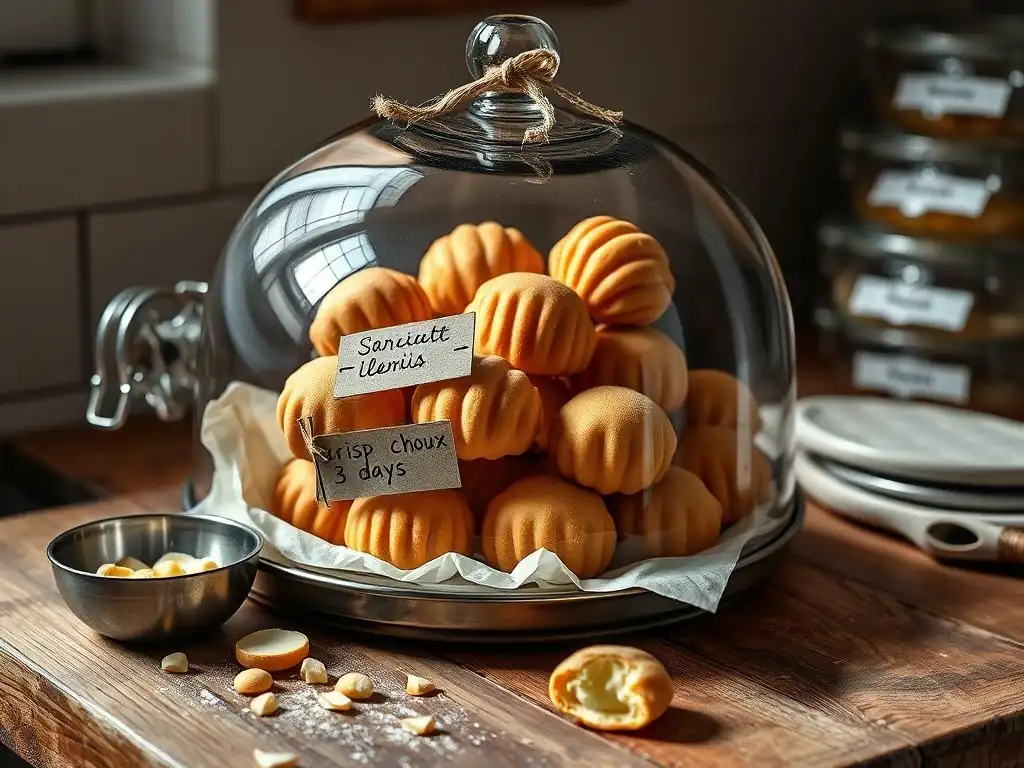
Navigating choux pastry storage can feel tricky, but a few key principles can make a big difference. Following these simple do's and don'ts, incorporating crisp choux pastry storage tips, will help you keep your pastries in the best possible condition.
It's easy to make mistakes, especially when dealing with sensitive textures. By being mindful of humidity, temperature, and the state of your pastry (filled or unfilled), you can significantly improve your storage outcomes.
Do: Use Airtight Containers When Possible
For filled choux pastries requiring refrigeration, an airtight container is essential. It protects the delicate flavors from refrigerator odors and helps maintain a consistent environment around the pastry, preventing the filling from drying out. For unfilled shells, a mostly airtight container (or one with a loose lid) is good in average humidity, offering protection without trapping excessive moisture.
Using quality containers that seal well is a simple yet effective step. Ensure the container is clean and dry before placing the pastries inside. Proper containment is a cornerstone of effective crisp choux pastry storage tips.
Don't: Store Pastries in Humid Environments
Humidity is the arch-nemesis of crisp choux pastry. Avoid storing unfilled shells near sources of steam (like dishwashers or stoves), in damp basements, or simply uncovered on a counter in a humid kitchen. The pastry will act like a sponge, rapidly absorbing moisture from the air.
If you live in a particularly humid climate, consider using a container with a desiccant or storing unfilled shells in a very cool, dry pantry. For filled pastries, while refrigeration is necessary, minimizing the time they spend in the fridge before serving helps preserve texture. Combatting humidity is central to crisp choux pastry storage tips.
Do: Consider Re-crisping Techniques for Unfilled Shells
Even with careful storage, unfilled choux shells might lose some of their initial crispness after a day or two, or if exposed to humidity. Fortunately, they can often be revived! A short stint in a warm oven can work wonders, evaporating any absorbed moisture and bringing back some of that desirable crunch.
This technique is a lifesaver if you've baked shells in advance. Re-crisping is a key component of extending the usability of your unfilled choux pastry and is a valuable trick in your arsenal of crisp choux pastry storage tips.
Don't: Fill Pastries Too Far in Advance
Unless absolutely necessary for logistics, avoid filling choux pastries more than a few hours before serving, especially if you prioritize maximum shell crispness. As discussed, the moisture from the filling will begin to migrate into the shell immediately, starting the softening process.
For best texture, store shells and fillings separately and assemble them closer to serving time. If you must fill in advance, choose a more stable filling and acknowledge that the shells will soften. This is perhaps the most crucial "don't" among crisp choux pastry storage tips if texture is your top priority.
Re-crisping Stored Unfilled Shells: Bringing Back the Crunch
It's a common scenario: you've stored your beautiful choux shells, but they've lost a bit of their initial snap. Don't despair! Re-crisping is a simple process that can significantly improve their texture before filling. This technique works by gently heating the shells to evaporate any moisture they've absorbed from the air.
The key is low heat and patience. You don't want to brown them further, just warm them through to dry them out internally. Incorporating re-crisping into your routine is a smart application of crisp choux pastry storage tips.
Simple Oven Re-crisping Techniques
Preheat your oven to a relatively low temperature, typically around 300-350°F (150-175°C). Place the unfilled choux shells on a baking sheet, ideally lined with parchment paper or a silicone mat. Ensure they are not touching, allowing air to circulate freely around them.
Bake for 5 to 10 minutes, or until they feel firm and crisp again. The exact time will depend on the size of the shells and how much moisture they've absorbed. Listen for a slight hollow sound when tapped lightly. Let them cool completely on the wire rack again before filling. This re-crisping step is a powerful way to reactivate their crunch.
Using a Toaster Oven for Small Batches
For just a few shells, a toaster oven can be a convenient alternative to a full-sized oven. Preheat the toaster oven to the same low temperature range, 300-350°F (150-175°C). Arrange the shells on the toaster oven tray, ensuring they have space.
Monitor them closely, as toaster ovens can heat more intensely and unevenly than conventional ovens. They may only need 3-7 minutes. Again, cool completely on a wire rack afterward. Using a toaster oven is a practical application of crisp choux pastry storage tips for smaller quantities.
Avoiding Soggy Pastries: Common Mistakes to Avoid When Reheating
The primary mistake when re-crisping is using too high a temperature or heating for too long, which can burn the pastry. Another error is trying to re-crisp filled pastries; the filling will just heat up and make the shell even soggier. Re-crisping is strictly for unfilled shells.
Also, ensure the shells are fully cooled after re-crisping before you add the filling. Piping filling into a warm shell will immediately introduce moisture and undo your re-crisping efforts. Patience at each stage is crucial for achieving the desired crisp texture.
Long-Term Storage: Freezing for Future Use
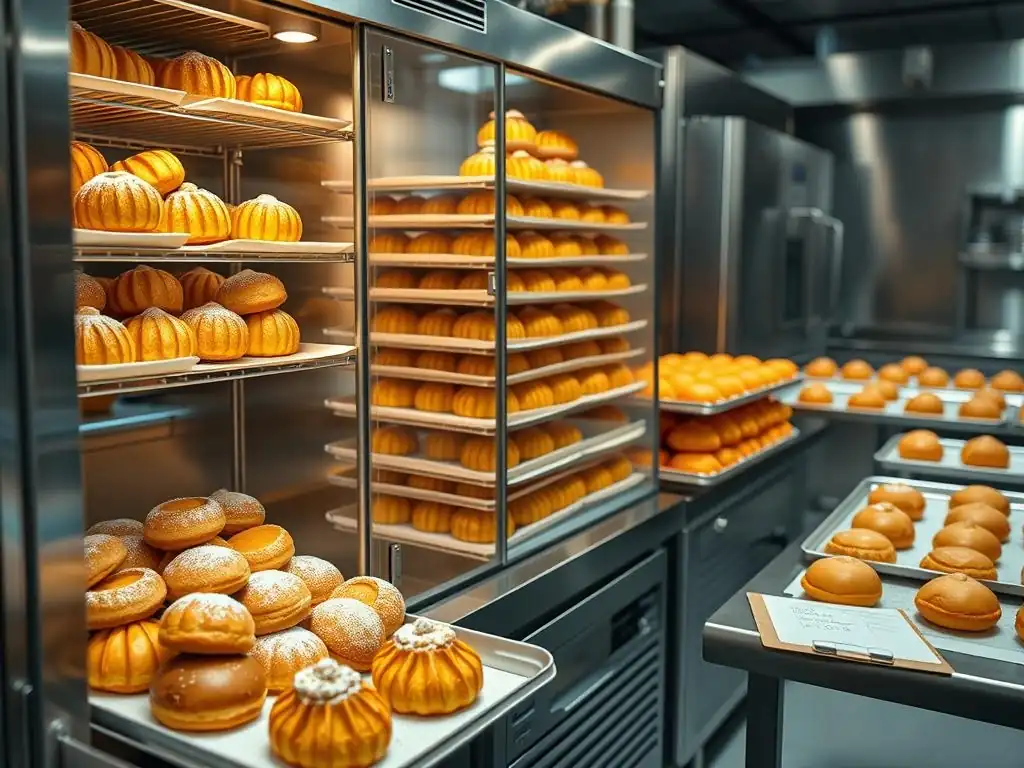
Freezing is an excellent option for storing choux pastry for longer periods, allowing you to bake a large batch of shells and use them as needed. Like re-crisping, freezing is most effective for unfilled shells, preserving their structure much better than freezing filled pastries.
This method is a fantastic time-saver and allows for spontaneous choux pastry creations. Proper preparation before freezing is key to preventing freezer burn and maintaining quality. Freezing is a top-tier strategy in the realm of crisp choux pastry storage tips for maximizing shelf life.
Freezing Unfilled Shells for Extended Shelf Life
Unfilled choux pastry shells freeze exceptionally well. When properly stored, they can last in the freezer for up to 1-2 months without significant loss of quality. This allows for considerable flexibility in your baking schedule.
This method requires careful packaging to protect the delicate shells from the harsh, dry environment of the freezer, which can lead to freezer burn. Freezing is a practical application of crisp choux pastry storage tips for batch baking.
Properly Preparing Shells for Freezing
Ensure the choux shells are completely cooled before freezing. Place them in a single layer on a baking sheet lined with parchment paper. Freeze for about 1-2 hours, or until solid. This step, known as flash freezing, prevents the shells from sticking together when later transferred to a storage container.
Once flash-frozen, transfer the solid shells to a freezer-safe airtight container or a heavy-duty freezer bag. Remove as much air as possible to minimize the risk of freezer burn. Label the container with the date. Stored this way, they are ready for future use.
Thawing Frozen Shells: The Right Way
To thaw frozen choux shells, remove them from the freezer bag or container and place them back on a wire rack. Allow them to thaw at room temperature for about 30-60 minutes. Do not thaw them in the refrigerator, as this can introduce unwanted moisture.
Once thawed, they may have lost some crispness. This is normal and expected. They will benefit greatly from a quick re-crisp in a low oven (300-350°F or 150-175°C) for 5-10 minutes before filling. Thawing and re-crisping is the recommended process for using frozen choux shells.
Freezing Filled Pastries: Recommendations and Limitations Based on Fillings
Freezing filled choux pastries is generally not recommended, as the texture of both the shell and many fillings can degrade significantly upon freezing and thawing. The moisture from the filling will migrate into the shell during freezing and thawing, resulting in a very soggy pastry.
Some fillings, like stable buttercreams or ganaches, might freeze slightly better than dairy-based creams or mousses, but the shell will still suffer. If you must freeze filled pastries, use an airtight container and be prepared for a significant compromise in texture. It's always preferable to freeze shells and fillings separately.
Troubleshooting Common Storage Problems
Even with the best intentions and adherence to crisp choux pastry storage tips, you might encounter issues. Understanding common problems and their causes can help you prevent them in the future and sometimes mitigate them.
Identifying whether the issue is related to humidity, temperature, or the filling itself is the first step in troubleshooting. Don's worry, most problems have straightforward solutions or preventative measures.
Soggy Pastries After Storage: Identifying the Cause and Prevention
Soggy choux pastry is almost always caused by exposure to excess moisture. This can happen if:
- Shells were stored in a humid environment (kitchen counter, refrigerator).
- Shells were not completely cooled before storage.
- Filled pastries were stored for too long, allowing moisture from the filling to soften the shell.
Prevention involves using appropriate storage containers (loose lid for unfilled, airtight for filled), storing in a dry location, ensuring complete cooling, and filling pastries as close to serving time as possible. Re-crisping unfilled shells can often fix this issue.
Loss of Flavor During Storage: Prevention Strategies
Loss of flavor can occur if pastries are stored uncovered in the refrigerator, where they can absorb odors from other foods. Staling can also contribute to a less vibrant flavor.
Prevention involves using airtight containers for filled pastries in the refrigerator. For unfilled shells stored at room temperature, protection from air exposure (like a paper bag or container) helps maintain freshness. Ensure all storage containers are clean and free of residual odors.
Freezer Burn: Prevention and Mitigation
Freezer burn appears as dry, discolored spots on frozen food and occurs when food is exposed to air in the freezer, causing dehydration. For choux shells, this means a dry, brittle texture that won't re-crisp properly.
Prevention is key: always flash freeze shells first, then transfer them to airtight freezer-safe containers or bags, pressing out as much air as possible. Using heavy-duty freezer bags or double-wrapping can add extra protection. Unfortunately, freezer-burned areas cannot be truly fixed, so preventing it is the best approach.
Beyond Storage: Tips for Perfect Éclairs and Cream Puffs
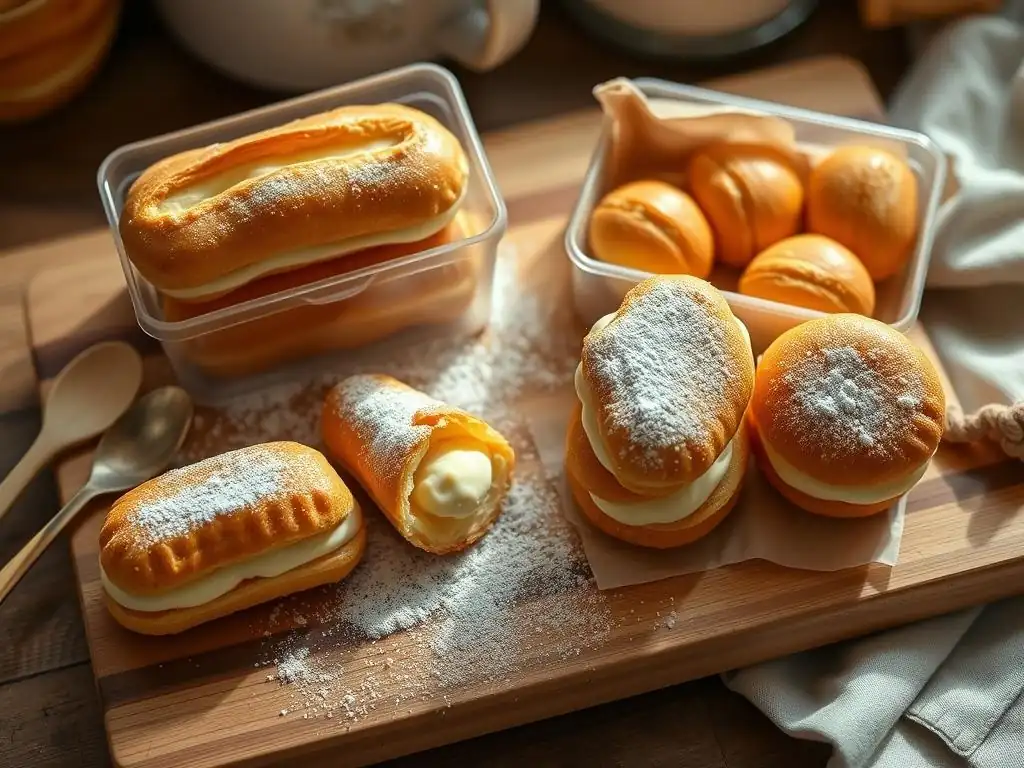
While storage is important, the quality of your choux pastry starts with the recipe and technique. Even the best crisp choux pastry storage tips can't save a poorly made shell. Focusing on fundamentals will yield pastries that are easier to store successfully.
A properly baked choux shell is light, hollow, and sturdy enough to withstand filling and brief storage. Achieving this requires attention to detail at every stage of the baking process.
Perfecting Your Recipe for Optimal Results
Use a reliable choux pastry recipe and follow it precisely. Pay attention to the consistency of the dough after adding the eggs – it should be smooth and glossy, falling slowly from the spoon in a 'v' shape. Too wet dough can lead to flat, soggy pastries.
Ensure you bake the pastries for the correct amount of time at the correct temperatures (often starting high to create steam, then lowering to dry them out) and resist the urge to open the oven door too early, which can cause them to collapse. Proper baking ensures a strong, hollow shell structure that is more resistant to becoming soggy during storage.
Advanced Piping Techniques for Professional-Looking Pastries
While not directly related to storage, achieving uniform size and shape through good piping technique contributes to even baking and cooling, which in turn supports better storage outcomes. Consistent sizes mean all pastries will be ready for storage at the same time after cooling.
Using the correct piping tip (like a large star tip for éclairs or a round tip for cream puffs) and applying even pressure will result in beautifully shaped pastries that bake uniformly. Practice makes perfect, and well-formed pastries are a joy to work with from baking to storage to serving.
Conclusion: Enjoying Fresh, Delicious Éclairs and Cream Puffs Every Time
Mastering the art of choux pastry involves not just baking, but also knowing how to properly store your creations. By understanding the impact of humidity and moisture, choosing the right storage methods for unfilled and filled pastries, and employing smart techniques like re-crisping and freezing, you can ensure your éclairs and cream puffs maintain their delightful texture and flavor.
Remember the key crisp choux pastry storage tips: cool completely, protect from humidity, use appropriate containers, fill close to serving time when possible, and don't hesitate to re-crisp unfilled shells. With practice and attention to these details, you'll be able to enjoy crisp, delicious choux pastry whenever the craving strikes, making every bite a testament to your baking skill.
Frequently Asked Questions
What is the best way to store unfilled choux pastry shells to maintain their crispness?
The best way is to store them in an airtight container at room temperature. Make sure the shells are completely cool before storing to prevent condensation, which will soften them.
How long can I store unfilled choux pastry shells and still expect them to be crisp?
Unfilled choux pastry shells can typically be stored for 1-2 days and still maintain a reasonable level of crispness. After that, they may start to soften.
Can I freeze unfilled choux pastry shells? If so, how?
Yes, you can freeze them! Freeze them individually on a baking sheet before transferring them to a freezer-safe bag or container. This prevents them from sticking together.
What's the best way to refresh frozen choux pastry shells after thawing?
To refresh them, bake the thawed shells in a preheated oven at 350°F (175°C) for 5-7 minutes. This will help to restore their crispness.
What should I avoid doing when storing choux pastry shells to prevent them from becoming soggy?
Avoid storing them in the refrigerator or in a humid environment. Humidity is the enemy of crisp choux pastry! Also, never store them filled.
Final Reflection: The Enduring Quest for the Perfect Crisp Choux
The pursuit of the perfectly crisp choux pastry is a timeless culinary challenge, and its relevance today is undeniable. From the elegant éclair to the whimsical profiterole, the delicate crunch of a well-stored choux shell elevates these pastries from good to unforgettable. Maintaining that crispness, however, remains a hurdle for many home bakers, highlighting the enduring need for practical and effective storage solutions.
The impact of mastering choux pastry storage extends far beyond the individual baker. It speaks to a broader appreciation for culinary precision and the satisfaction derived from achieving a seemingly simple yet technically demanding goal. The delicate balance between texture and taste, the subtle art of preventing sogginess – these are lessons that resonate beyond the kitchen. The details are not the details. They make the design.
– Charles Eames. This quote perfectly encapsulates the importance of paying attention to seemingly minor aspects, like proper storage, to achieve culinary excellence.
Now, consider your own baking journey. Have you experienced the frustration of a once-crisp choux shell losing its charm? I encourage you to take the knowledge gained from this article and apply it to your next baking adventure. Experiment with the different storage techniques, observe the results, and refine your approach. The journey towards mastering choux pastry storage is a continuous process of learning and refinement, a testament to the enduring allure of this classic pastry. Embrace the challenge, and savor the reward of that perfect, satisfying crunch.
Unlock the Secrets to Perfectly Crisp Choux!
Thanks for joining us on this choux pastry journey! We hope you've gained valuable tips to elevate your baking game. Ready to put your newfound knowledge to the test?
- Master the art of choux storage: Experiment with different storage methods (airtight containers, parchment paper, etc.) to discover what keeps your choux perfectly crisp.
- Share your choux creation with our BakeWithEase community! Post a picture and tag us – we'd love to see your amazing results.
- Challenge yourself: Try baking a new choux-based dessert using your improved storage techniques. What will you create?
What's your favorite choux pastry recipe, and what's your go-to storage method? Let's discuss in the comments below!