
The History of Pain au Chocolat: More Than Just Bread and Chocolate

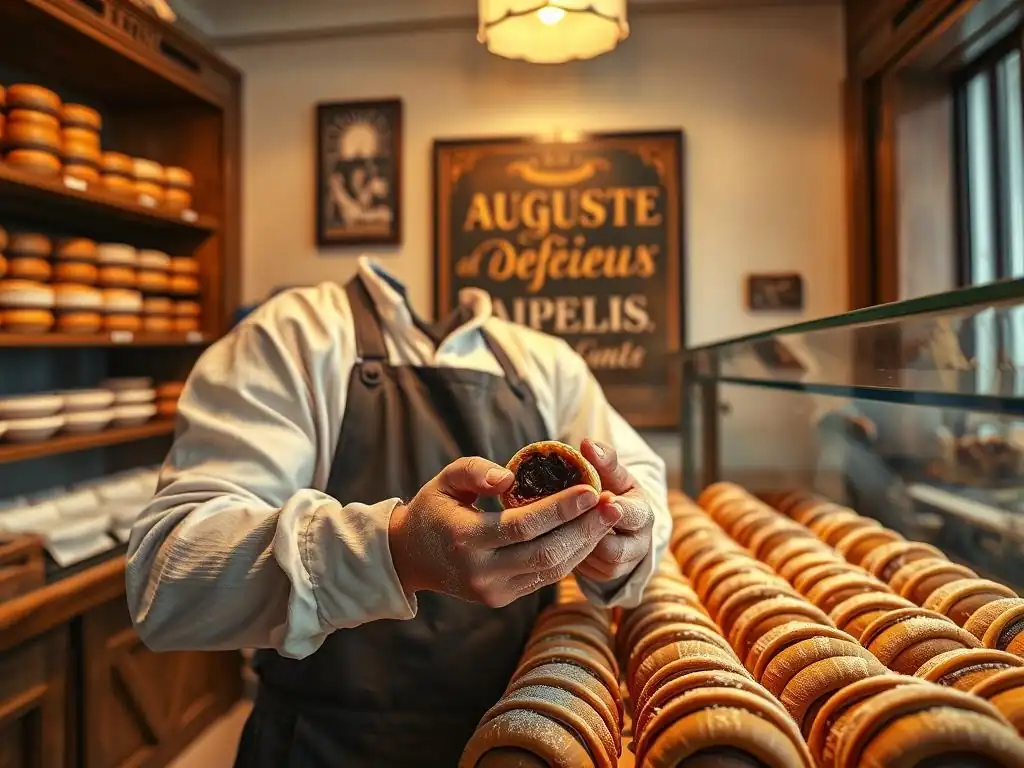
Welcome to BakeWithEase, your partner in creating delicious memories! Ever wondered about the fascinating origins of that flaky, chocolate-filled pastry you adore? Dive into our Pain au Chocolat History Recipe and uncover the surprisingly rich story behind this beloved treat. Prepare to be amazed as we explore its evolution, from humble beginnings to a global sensation, and of course, provide you with an irresistible recipe to bake your own! Intrigued? Let's get baking!
- Unveiling the Pain au Chocolat: A Baker's Journey Through History
- The Pain au Chocolat's Ancestry: From Viennese Kipferl to French Pastry Staple
- The Birth of Pain au Chocolat: A Parisian Bakery Revelation
- Pain au Chocolat vs. Chocolate Croissant: Understanding the Differences
- Pain au Chocolat Through the Years: Evolution of a Classic
- Mastering the Pain au Chocolat Recipe: A Step-by-Step Guide
- The Enduring Appeal of Pain au Chocolat: A Timeless Treat
- Frequently Asked Questions
- Final Reflection: A Sweet History, A Lasting Legacy
- Unleash Your Inner Pâtissier: Bake Your Own History!
Unveiling the Pain au Chocolat: A Baker's Journey Through History
The pain au chocolat, a beloved viennoiserie, holds a special place in the hearts of pastry lovers worldwide. Its flaky layers, rich butter, and molten chocolate center create a symphony of textures and flavors that are instantly recognizable. But this delightful pastry is more than just a simple combination of bread and chocolate; it has a rich history tied deeply to the evolution of baking techniques and cultural exchange between nations. Exploring the pain au chocolat history recipe unveils a fascinating journey from humble beginnings to iconic status.
Understanding the origins of the pain au chocolat involves looking beyond its current form to the historical context of French and Austrian baking traditions. It's a story of innovation, adaptation, and the slow transformation of simple baked goods into the sophisticated pastries we enjoy today. The journey of this particular viennoiserie highlights how culinary ideas travel and evolve, influenced by ingredients, technology, and local tastes, ultimately shaping the history of pain au chocolat itself.
Exploring the Origins of Pain au Chocolat
The true origin of the pain au chocolat is often debated, but it is widely accepted that its roots lie in the introduction of Viennese baking techniques to France in the 19th century. While the exact year and inventor remain somewhat elusive, historical accounts point to a pivotal moment around the 1830s. This period saw Parisian bakers experimenting with richer, leavened doughs, moving beyond the simpler breads that formed the staple of French baking for centuries.
One popular narrative credits August Zang, an Austrian army officer who founded the Boulangerie Viennoise in Paris around 1837, with introducing the kipferl, a crescent-shaped pastry. While Zang's establishment popularized many Viennese pastries, including the ancestor of the croissant, the direct link to adding chocolate inside this pastry isn't definitively attributed solely to him.
It is more likely that French bakers, inspired by these new techniques and doughs, began incorporating local ingredients and adapting the forms, leading to the creation of what we now know as pain au chocolat. This evolution from simple crescent rolls to a filled pastry demonstrates a key step in the pain au chocolat history recipe development.
The Pain au Chocolat's Ancestry: From Viennese Kipferl to French Pastry Staple
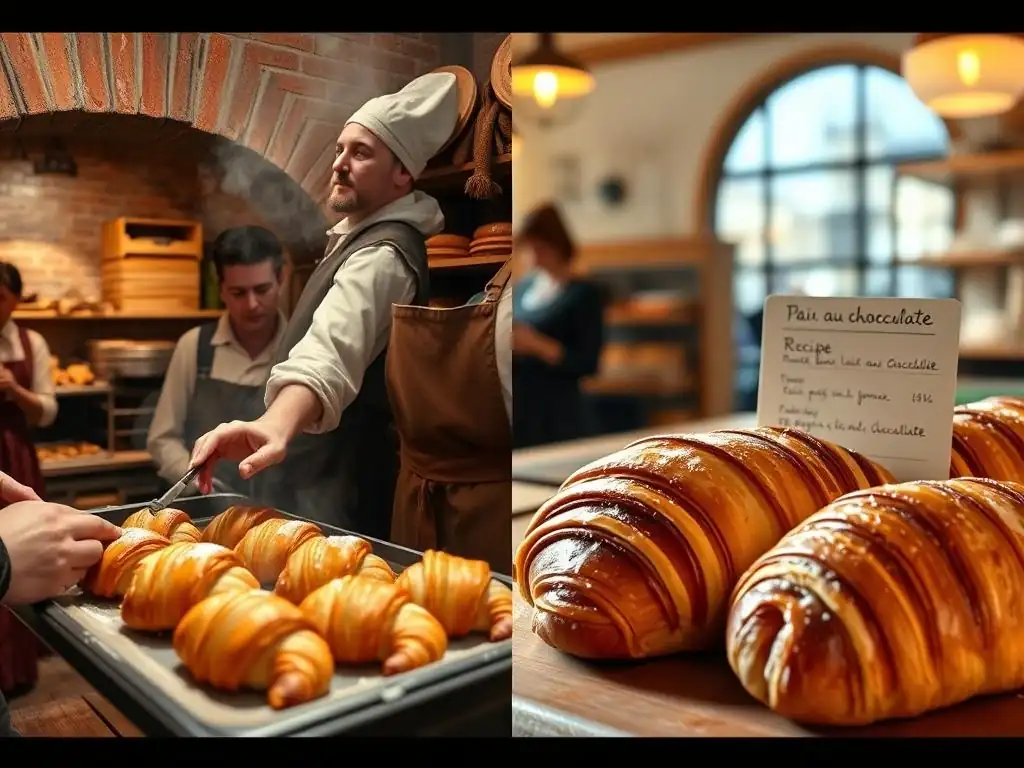
The lineage of the pain au chocolat is closely tied to the kipferl, a traditional Austrian pastry. This crescent-shaped roll, dating back centuries, was typically made from a dense, enriched dough and often contained nuts or seeds. It was a far cry from the light, flaky viennoiseries we associate with modern French baking, but it provided the foundational shape and the concept of an enriched, leavened dough that would prove revolutionary in France.
The journey from the kipferl to the laminated doughs used in modern pain au chocolat and croissants involved significant innovation. French bakers, particularly those influenced by Viennese methods, began to refine the dough-making process. They experimented with incorporating larger amounts of butter and developing the lamination technique – the process of repeatedly folding butter into the dough – which creates the signature flaky layers. This transformation of the basic kipferl dough into a lighter, flakier version was crucial in paving the way for pastries like the pain au chocolat.
The Austrian Connection: The Kipferl and its Influence on French Baking
The kipferl played a significant role in influencing French baking primarily through its shape and the use of enriched dough. Before the 19th century, French bakers primarily focused on lean doughs for breads. The introduction of the kipferl and other Viennese pastries showcased the potential of doughs enriched with butter, milk, and sometimes eggs, resulting in softer, more tender baked goods. This opened up new possibilities for pastry creation.
Historical accounts suggest that the popularity of Viennese pastries in Paris grew rapidly after their introduction. Establishments like the Boulangerie Viennoise became fashionable, and French bakers quickly adopted and adapted the techniques. While the kipferl itself didn't contain chocolate, its crescent shape and enriched dough provided the blueprint upon which the croissant, and subsequently the pain au chocolat, would be developed, marking a clear line in the pain au chocolat history recipe timeline.
How the Viennese Kipferl Made its Way to France
The most widely cited story of the kipferl's arrival in France involves Marie-Antoinette, the Austrian-born queen of France. The legend suggests that she missed the pastries from her homeland and requested that Viennese bakers be brought to France to replicate them. While this romanticized account is popular, historical evidence is sparse and it's more likely that the introduction was a later phenomenon, driven by entrepreneurial bakers like August Zang in the 1830s.
Regardless of the exact courier, the influence was undeniable. Austrian baking techniques, particularly the use of steam ovens (which were advanced for the time) and enriched doughs, captivated French bakers. The exchange of culinary ideas was facilitated by increased travel and communication in the 19th century. French bakers, renowned for their artistry, took these foreign concepts and elevated them, applying their own understanding of dough structure and flavor profiles to create entirely new pastries, including the early forms of pain au chocolat.
The Birth of Pain au Chocolat: A Parisian Bakery Revelation
The transition from the plain kipferl or early croissant to the pain au chocolat involved the simple yet revolutionary idea of adding chocolate inside the pastry. This innovation likely occurred in Parisian bakeries sometime after the Viennese influence took hold and laminated doughs became more common. The availability of chocolate as a more accessible ingredient in the 19th century also played a role.
While the exact bakery or baker who first enclosed chocolate sticks within the dough is unknown, it was a logical progression. As bakers were already making enriched, flaky pastries, adding a sweet filling transformed them into a more indulgent treat. The term "pain au chocolat," literally "bread with chocolate," reflects its humble origins, suggesting it might have initially been closer to a piece of enriched bread wrapped around chocolate before evolving into the sophisticated laminated pastry we know today. This crucial step solidified the pain au chocolat history recipe as distinct.
Early Pain au Chocolat Recipes: A Glimpse into the Past
Early pain au chocolat recipes would have differed significantly from modern ones, primarily in the dough composition and the type of chocolate used. The dough would likely have been less intensely laminated than today's croissant dough, possibly closer to a brioche dough folded with butter. The chocolate would have been simpler, likely unsweetened or minimally sweetened baking chocolate, formed into small batons or pieces.
Imagine a baker in the mid-19th century preparing this pastry: they might start with a richer, yeasted dough, perhaps containing a higher proportion of butter and sugar than standard bread dough. After a period of rest, they would likely incorporate more butter through a simpler folding process than the rigorous 3-fold or 4-fold methods used for modern croissants.
Small pieces or sticks of chocolate would be placed on sections of the dough before rolling and baking. The result would be a pastry that was probably denser and less uniformly flaky than contemporary versions, but still a delightful combination of rich dough and melted chocolate – a fascinating look at the early pain au chocolat history recipe.
Pain au Chocolat vs. Chocolate Croissant: Understanding the Differences
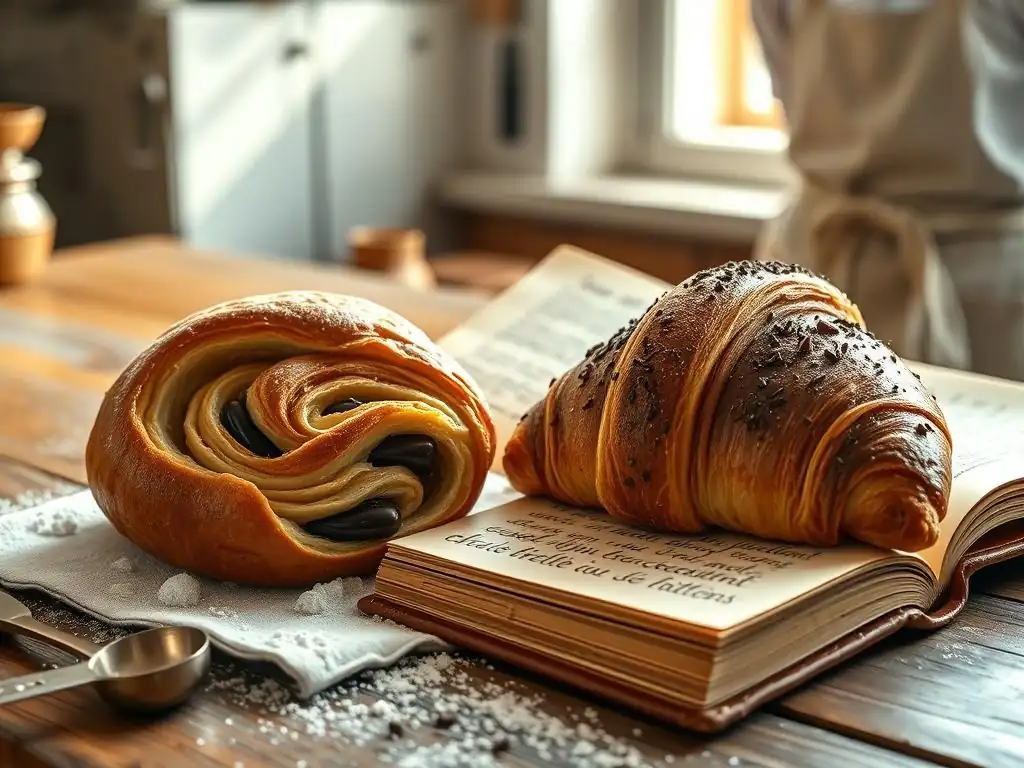
The names "pain au chocolat" and "chocolate croissant" are often used interchangeably, particularly outside of France. However, within France, and among baking purists, the distinction is important, primarily relating to the traditional shape, the type of chocolate, and the dough's specific preparation, although the dough base (laminated yeast dough) is essentially the same as a croissant dough.
The core difference lies in the form and filling. A traditional pain au chocolat is rectangular and contains one or two bars of dark chocolate placed inside before rolling. A "chocolate croissant," if such a term were strictly applied to a variation, might imply a croissant-shaped pastry (crescent) potentially filled differently or with a different type of chocolate, though this term is less standardized and often just a translation used by non-French speakers. The term "pain au chocolat" is the widely accepted name for the rectangular pastry with chocolate bars.
Defining Pain au Chocolat: Shape, Chocolate, and Dough Variations
A classic pain au chocolat is characterized by its rectangular shape, formed by rolling a piece of laminated dough around one or, more commonly, two sticks of dark chocolate. The chocolate is typically a specific type of baking chocolate, often called "bâtons de chocolat" or "chocolate batons," designed to melt nicely but retain some texture within the baked pastry. The dough is a pâte levée feuilletée, the same laminated, yeasted dough used for croissants, consisting of alternating layers of dough and butter, creating hundreds of thin layers that puff up when baked.
While the classic form is rectangular with two chocolate bars, minor variations exist. Some bakeries might use only one chocolate bar, resulting in a slightly different ratio of dough to chocolate. The type of chocolate can also vary slightly, though dark chocolate (often around 50-60% cocoa solids) is standard. The quality of the butter and the precision of the lamination are paramount to achieving the signature flaky texture, a key element in mastering the pain au chocolat history recipe from a technical standpoint.
Decoding the Chocolate Croissant: A Close Relative with its Own Identity
The term "chocolate croissant" is primarily used in English-speaking countries and serves as a direct translation of "pain au chocolat." In France, the term "croissant" refers specifically to the crescent-shaped pastry, which is typically unfilled or occasionally filled after baking with things like almond cream or jam. Therefore, a "chocolate croissant" as a distinct French pastry doesn't really exist; the chocolate-filled, rectangular pastry is always called a pain au chocolat.
The confusion arises because both pastries are made from the same base dough (laminated yeast dough) and share a common ancestry in Viennese baking. However, their shaping and traditional fillings are distinct. The croissant's crescent shape is achieved by rolling a triangular piece of dough, while the pain au chocolat's rectangle is formed by rolling a rectangular piece around chocolate batons. So, while structurally related, they are considered separate pastries in the French culinary tradition, each with its own specific name and form.
Pain au Chocolat Through the Years: Evolution of a Classic
Since its likely inception in the 19th century, the pain au chocolat has evolved, though its core concept remains the same. The primary changes have involved refinements in the dough-making process, improvements in the quality and consistency of ingredients (especially butter and chocolate), and the development of techniques for achieving maximum flakiness. Industrialization brought about more consistent production methods, but artisanal bakeries continue to perfect traditional techniques.
Beyond technique, regional preferences and modern culinary trends have introduced variations. While the classic Parisian pain au chocolat remains the benchmark, different parts of France have developed their own nuances, and contemporary bakers globally experiment with fillings and doughs. This ongoing evolution ensures the pain au chocolat history recipe continues to be written with new interpretations and techniques.
Regional Variations of Pain au Chocolat: Northern vs. Southern France
Perhaps the most famous regional variation of the pain au chocolat is its name. In southwestern France, particularly in the region around Toulouse and Bordeaux, the pastry is commonly referred to as "chocolatine." This linguistic difference is a long-standing, sometimes heated, debate among French speakers. While "pain au chocolat" is understood and used throughout France, "chocolatine" is the preferred term for many in the Southwest.
Beyond the name, subtle differences in technique or preferred chocolate might exist regionally, though these are less standardized than the name difference. Some anecdotal accounts suggest minor variations in sweetness or dough richness depending on the region. However, the fundamental structure – laminated dough wrapped around chocolate bars – remains consistent, making the name the most prominent regional identifier for this beloved pastry. Surveys on the topic often show a clear geographical split, with roughly 60-70% of the country using "pain au chocolat" and the Southwest predominantly using "chocolatine."
Modern Interpretations of Pain au Chocolat: Variations in Chocolate Type and Dough
Contemporary bakers are constantly innovating, and the pain au chocolat is no exception. While the classic dark chocolate baton is standard, modern interpretations might feature different types of chocolate, such as milk chocolate, white chocolate, or even flavored chocolates like orange or caramel. Some bakers experiment with including additional fillings alongside the chocolate, like nuts, fruit preserves, or even savory elements, though these push the boundaries of the traditional definition.
The dough itself can also see modern twists. While the basic laminated dough remains the foundation, variations might include using different flours (e.g., spelt or whole wheat for a nuttier flavor), incorporating sourdough starter for added complexity and texture, or using different types of butter (like cultured butter for a tangier flavor). These modern takes on the pain au chocolat history recipe reflect a global culinary landscape that values both tradition and creative exploration.
Mastering the Pain au Chocolat Recipe: A Step-by-Step Guide
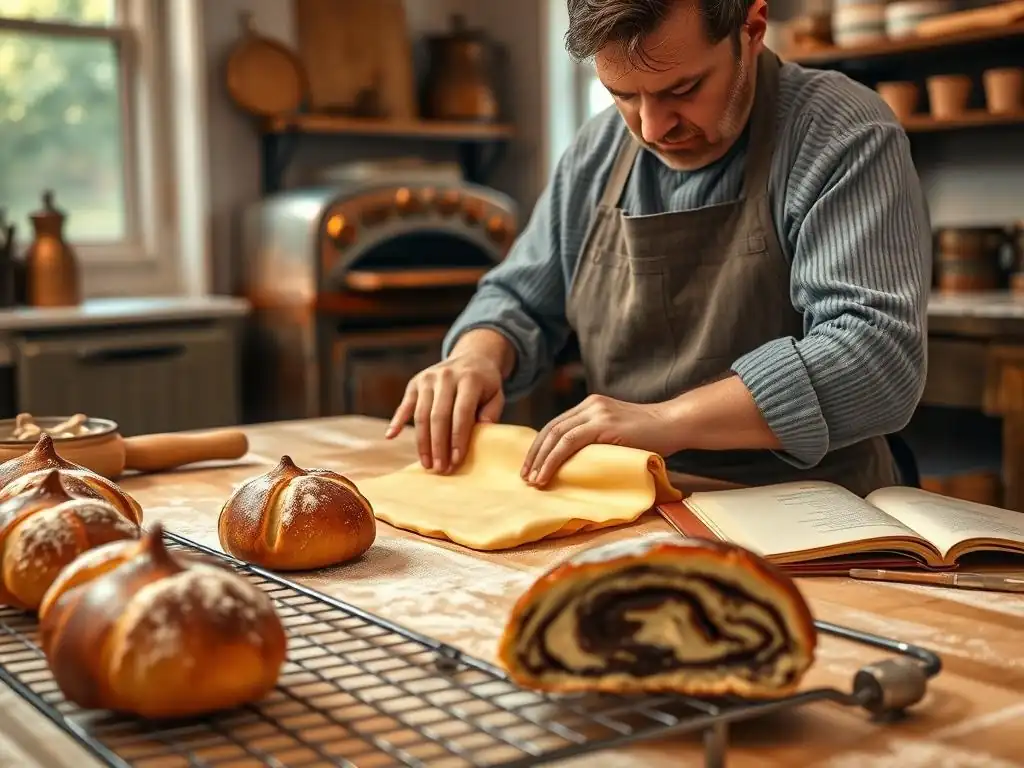
Baking authentic pain au chocolat at home is a rewarding process that requires patience and attention to detail, particularly with the lamination. It's a true test of intermediate baking skills. The pain au chocolat history recipe, in its modern form, relies on creating those delicate, buttery layers that define viennoiseries.
Here's a breakdown of the key steps involved in tackling this classic pastry:
Ingredients for Authentic Pain au Chocolat: Quality Matters
The quality of your ingredients is paramount when making pain au chocolat.
- Flour: Use a good quality bread flour or all-purpose flour with a moderate protein content (around 11-12%). This provides the necessary structure for lamination.
- Butter: High-quality, high-fat butter (ideally European-style with 82% fat content or higher) is essential. It needs to be pliable but cold for lamination. Approximately 250-300 grams of butter are typically needed for every 500 grams of flour in the lamination block.
- Yeast: Instant or active dry yeast is used for leavening.
- Liquid: A mix of milk and water is standard, providing moisture and aiding in browning.
- Sugar: Adds sweetness and helps with fermentation and browning.
- Salt: Balances flavors and controls yeast activity.
- Chocolate: Use bâtons de chocolat (chocolate batons) specifically designed for baking. These are typically semi-sweet or dark chocolate and hold their shape well during baking. You'll need roughly 10-15 grams per pastry.
Preparing the Dough: Lamination and the Key to Flakiness
The heart of the pain au chocolat recipe lies in the lamination process.
- Make the dough: Combine flour, yeast, sugar, salt, and the liquid to form a basic dough. Knead until smooth but not overly developed.
- Rest: Chill the dough thoroughly for several hours, ideally overnight. This is crucial for relaxing the gluten and making it easier to laminate.
- Prepare the butter block: Shape the cold butter into a flat, even rectangle. It should be pliable, not hard.
- Encase the butter: Roll out the dough into a rectangle roughly twice the size of the butter block. Place the butter block on one half of the dough and fold the other half over it, sealing the edges.
- Perform the folds: This is the lamination. Roll the dough-encased butter into a long rectangle. Perform a "fold" by folding one end to the center and the other end over it (a "letter fold" or "triple fold").
- Rest and repeat: Chill the dough again for at least 30-60 minutes. Repeat the rolling and folding process two more times, for a total of three folds. This creates hundreds of thin layers of dough separated by butter. Adequate resting time between folds is critical for the dough to relax and prevent the butter from breaking through the layers.
### Shaping and Filling: Creating the Signature Chocolate Bars

Once the laminated dough is ready, it's time to shape the pain au chocolat.
*   Roll the dough into a large rectangle, typically about 3-4 mm thick.
*   Trim the edges to create clean lines.
*   Cut the dough into smaller rectangles. The size will depend on how many chocolate bars you use and the desired pastry size. A common size might be around 8-10 cm wide by 18-20 cm long for two chocolate bars.
*   Place one chocolate baton along one short edge of the rectangle.
*   Roll the dough over the chocolate baton once.
*   Place the second chocolate baton (if using two) just above the first roll.
*   Continue rolling the dough tightly to enclose both chocolate batons.
*   Place the shaped pastries seam-side down on a baking sheet lined with parchment paper.
- [ ] Roll dough to thickness
- [ ] Trim edges
- [ ] Cut into rectangles
- [ ] Place first chocolate baton
- [ ] Roll dough over baton
- [ ] Place second chocolate baton (optional)
- [ ] Finish rolling to enclose chocolate
- [ ] Place seam-side down on baking sheet
Baking to Perfection: Achieving a Golden-Brown Crust
Proper proofing and baking are the final steps to achieving flaky, golden pain au chocolat.
- Proofing: Allow the shaped pastries to proof (rise) in a warm, humid environment until they are visibly puffy and the layers are starting to separate slightly. This can take 1.5 to 2.5 hours, depending on the temperature. Do not over-proof, or the layers can collapse.
- Egg Wash: Gently brush the tops of the proofed pastries with an egg wash (beaten egg mixed with a little milk or water) for a golden, shiny finish.
- Bake: Bake in a preheated oven, typically around 180-200°C (350-400°F), for 15-20 minutes. The exact temperature and time will vary depending on your oven.
- Check for Doneness: The pastries should be deep golden brown all over, including the sides. The layers should be clearly visible and puffed.
- Cool: Transfer the baked pain au chocolat to a wire rack to cool slightly before serving. They are best enjoyed warm, when the chocolate is still melted.
The Enduring Appeal of Pain au Chocolat: A Timeless Treat
The pain au chocolat has transcended its origins to become a global icon of French baking. Its enduring popularity stems from a perfect combination of textures and flavors: the crisp, shattering layers of the laminated dough, the rich, buttery interior, and the sweet, molten dark chocolate. It's a pastry that feels both sophisticated and comforting, suitable for a quick breakfast or a leisurely afternoon treat.
Its simple yet elegant composition makes it universally appealing. While complex pastries have their place, the pain au chocolat's straightforward combination of high-quality ingredients executed with skillful technique is what makes it a timeless classic. It represents the best of viennoiserie – a celebration of butter, flour, and the magic of lamination, enjoyed by millions every day.
Why Pain au Chocolat Remains a Favorite Pastry
Pain au chocolat remains a favorite for several compelling reasons. Firstly, the contrast in textures is incredibly satisfying – the initial crispness of the exterior giving way to the tender, airy layers within, culminating in the soft, melted chocolate center. Secondly, the flavor profile is perfectly balanced; the slight bitterness of the dark chocolate complements the rich, buttery sweetness of the dough.
Furthermore, the pain au chocolat is deeply embedded in the culture of enjoying pastries as a moment of simple pleasure. Whether bought from a local bakery or baked at home using a detailed pain au chocolat history recipe, it evokes a sense of tradition and indulgence. Its consistent quality, when made well, ensures it lives up to expectations every time, solidifying its status as a beloved staple.
Tips for Baking the Best Pain au Chocolat at Home
Achieving bakery-quality pain au chocolat at home is possible with attention to key details.
- Keep everything cold: This is perhaps the most critical rule for lamination. Your dough, butter, and even your workspace should be kept cool to prevent the butter from melting into the dough layers.
- Use high-quality butter: The flavor and flakiness depend heavily on the butter. Invest in good European-style butter with a high fat content.
- Be patient with resting times: Don't rush the chilling periods between folds. This allows the gluten to relax and prevents the dough from tearing, ensuring even layers.
- Roll evenly: Maintain consistent thickness when rolling the dough during lamination and shaping. Uneven dough leads to uneven baking and puffing.
- Use proper chocolate batons: Standard chocolate chips or chopped chocolate might melt too quickly or burn. Bâtons de chocolat are designed to withstand the baking temperature and melt correctly.
- Don't over-proof: While proofing is necessary for lightness, over-proofing can cause the fat to leak out and the structure to collapse in the oven. The pastry should look puffy, not ready to burst.
- Bake hot and fast: A relatively high initial oven temperature helps the layers puff quickly before the butter melts completely.
Following these tips can help you master the pain au chocolat history recipe and enjoy these delightful pastries fresh from your own oven.
Frequently Asked Questions
What is Pain au Chocolat?
Pain au Chocolat, sometimes called a chocolate croissant, is a French pastry made of laminated dough wrapped around one or two pieces of dark chocolate. It's a popular breakfast and snack item.
Where did Pain au Chocolat originate?
While the exact origins are debated, it's generally believed that Pain au Chocolat evolved from the Austrian kipferl and was popularized in France during the 19th century. It's a relatively modern pastry.
What is the difference between a croissant and Pain au Chocolat?
The main difference is the filling. Both use a similar laminated dough, but a croissant is typically plain, while Pain au Chocolat contains chocolate batons.
Is Pain au Chocolat difficult to make at home?
Making Pain au Chocolat from scratch can be time-consuming because of the lamination process. However, BakeWithEase offers simplified recipes for home bakers.
What are some tips for a successful Pain au Chocolat recipe?
Using high-quality butter is crucial for flavour and flakiness. Also, ensuring the butter stays cold during lamination is essential for creating layers.
Final Reflection: A Sweet History, A Lasting Legacy
The enduring appeal of the pain au chocolat transcends mere culinary delight; it's a testament to the power of simple ingredients, expertly combined, to create a timeless classic. This seemingly humble pastry, born from a confluence of French baking tradition and the rich allure of chocolate, continues to captivate palates worldwide, proving its relevance in a constantly evolving culinary landscape. Its enduring popularity speaks volumes about our collective desire for comfort, tradition, and the simple pleasure of a perfectly crafted treat.
The pain au chocolat's journey, from its humble beginnings to its current global presence, reflects a broader narrative of cultural exchange and culinary innovation. Its evolution mirrors our own societal shifts, adapting to changing tastes and techniques while retaining its core identity. The very act of sharing a pain au chocolat, whether with loved ones or enjoyed in quiet solitude, fosters a sense of connection and shared experience. The simplest things are often the most beautiful.
This sentiment perfectly encapsulates the enduring charm of this iconic pastry, a testament to the power of simplicity and quality.
Consider the next time you bite into a flaky, chocolate-filled pain au chocolat the rich history woven into each layer. Reflect on the journey of this beloved pastry, from its origins to its global impact, and let it inspire you to appreciate the artistry and tradition behind even the simplest pleasures. Perhaps even try your hand at creating your own – the recipe, after all, is just the starting point for your own unique culinary adventure. Embrace the legacy, savor the moment, and let the sweet taste of history linger on your palate.
Unleash Your Inner Pâtissier: Bake Your Own History!
Thanks for exploring the delightful history of pain au chocolat with us! We hope you gained a new appreciation for this classic treat. Ready to take your passion to the next level?
- Bake your own pain au chocolat: Use our easy-to-follow recipe (you can find it on our site – just search for 'pain au chocolat recipe'!) and impress your friends and family with your newfound skills. This is your chance to taste the difference between homemade and store-bought!
- Share your baking journey: Post a picture of your creation on social media using #BakeWithEasePainAuChocolat and let's see your masterpiece. We may even feature your bake on our site!
- Explore our other French pastry recipes: Discover a whole world of deliciousness – from croissants to macarons – and become a true pastry master.
Ready to transform your kitchen into a Parisian patisserie? What’s your favorite part of the pain au chocolat baking process?