
Troubleshooting Sugar Crystals: Can You Save Your Failed Candy?

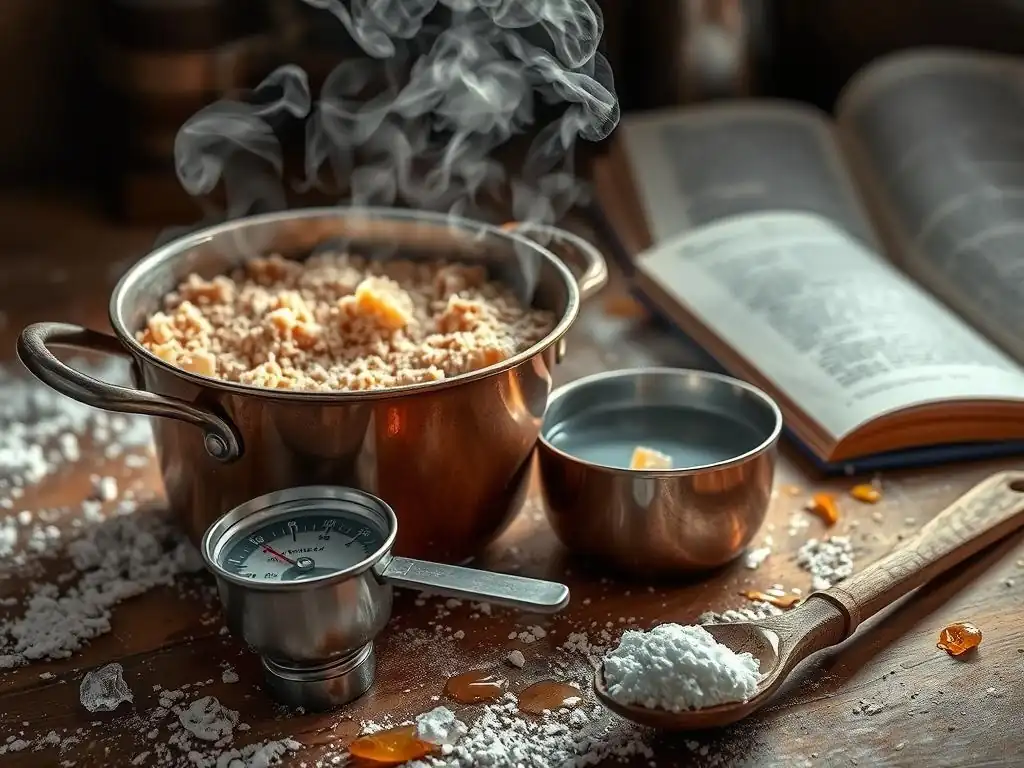
Welcome to BakeWithEase, where we demystify the sweet science of baking! Ever wondered why those pesky sugar crystals stubbornly refuse to dissolve, ruining your perfect candy? This week, we're diving deep into the kitchen chemistry with a Baking Science Deep Dive to explore just that: How to dissolve sugar crystals and, more importantly, what you can do to rescue a batch gone wrong. Get ready to unlock the secrets to smooth, flawless confections!
- Troubleshooting Sugar Crystallization in Candy Making
- Understanding Sugar Crystallization in Candy Making
- Identifying Sugar Crystals in Your Candy
- How to Dissolve Sugar Crystals: Salvaging Your Candy
- Preventing Sugar Crystals: Best Practices for Candy Making
- Techniques for Managing Sugar Crystals
- Rescuing Specific Types of Candy Affected by Sugar Crystals
- Advanced Techniques for Preventing Sugar Crystallization
- Understanding Sugar Types and Their Impact on Crystallization
- Common Questions About Sugar Crystallization and Candy Making
- Conclusion: Mastering Sugar Control in Candy Making
- Frequently Asked Questions
- Final Reflection: The Sweet Science of Second Chances
- Rediscover Your Candy-Making Confidence!
Troubleshooting Sugar Crystallization in Candy Making
Sugar work can feel like magic when everything goes right, but sometimes, instead of smooth, glossy candy, you end up with a grainy, cloudy mess. This unwelcome transformation is often due to sugar crystallization – the process where dissolved sugar molecules decide to link up and form solid crystals. While controlled crystallization is desired in some confections like fudge or fondant, uncontrolled crystallization can ruin the texture of hard candy, caramels, and brittle. Understanding why it happens is the first step to preventing and, thankfully, sometimes fixing it.
Understanding Sugar Crystallization in Candy Making
Sugar, specifically sucrose, is a highly crystalline substance. When you dissolve it in water and heat it, you create a supersaturated solution. As this solution cools, the sugar molecules want to return to their solid state and form crystals. In candy making, our goal is often to manage this natural tendency, either by preventing it entirely or by controlling the size and distribution of the crystals. Uncontrolled crystallization typically results in large, gritty crystals that give candy an undesirable, rough texture.
Factors Influencing Sugar Crystallization
Several factors play a crucial role in whether your sugar syrup will crystallize uncontrollably. The concentration of sugar is paramount; the higher the sugar concentration (meaning less water), the more likely crystallization is to occur as the solution cools.
For instance, a syrup heated to the hard crack stage (around 300-310°F or 149-154°C), which is nearly 99% sugar, is much more prone to crystallization than a soft ball stage syrup (around 235-245°F or 118-121°C). Impurities, even tiny ones like dust or undissolved sugar granules stuck to the side of the pan, can act as "seeds" that trigger rapid, uncontrolled crystal formation throughout the syrup.
Temperature fluctuations during the cooling process can also encourage crystallization. If a hot syrup is disturbed or cools unevenly, it can initiate crystallization. Furthermore, agitation, such as stirring or scraping the sides of the pan after the syrup has reached its target temperature and begun to cool, is a major culprit. Once the syrup is supersaturated and cooling, any movement can cause the sugar molecules to crash out of solution and form crystals. This is why many candy recipes instruct you not to stir after a certain point.
Common Mistakes Leading to Undesired Crystallization
One of the most frequent mistakes is not properly cleaning the sides of the pan during the boiling process. As the sugar syrup boils, tiny sugar crystals can splatter onto the cooler upper walls of the pan. If these crystals fall back into the supersaturated solution, they act as seeds, causing the entire batch to crystallize rapidly and undesirably. Using a wet pastry brush to wash down the sides of the pan early in the boiling process, before the syrup gets too thick, is a simple but critical step to prevent this.
Another common pitfall is stirring the candy syrup while it is cooling, especially for recipes like hard candy or brittle where smooth, non-crystalline texture is desired. Once the syrup is off the heat and cooling, resist the urge to stir or scrape the bottom. Even pouring the syrup too vigorously can sometimes initiate crystallization. Using dirty utensils or a pan with old sugar residue can also introduce unwanted seeds, leading to grainy candy. Ensuring all equipment is sparkling clean is just as important as the ingredients themselves.
Identifying Sugar Crystals in Your Candy
Spotting uncontrolled sugar crystallization early can sometimes mean the difference between a salvageable batch and one destined for the bin. The signs are usually quite evident, affecting both the appearance and texture of your confection. Knowing what to look for helps you understand the problem and explore options for how to dissolve sugar crystals if possible.
Recognizing the Signs of Undesired Crystallization
The most common sign of undesired sugar crystallization is a cloudy or opaque appearance in a candy that should be clear, like hard candy or brittle. Instead of a smooth, glassy look, the candy will look dull and potentially milky. Texturally, the candy will feel gritty or sandy on the tongue. This graininess can range from fine, almost powdery crystals to larger, noticeable lumps. You might also see distinct sugar crystals forming on the surface or sides of the candy as it sets.
For candies that are supposed to be smooth, like caramel or taffy, crystallization manifests as a rough, grainy texture rather than a chewy or smooth bite. In fudge, while crystallization is desired, undesired crystallization means the crystals are too large, resulting in a gritty texture instead of the smooth, melt-in-your-mouth consistency that comes from controlled, fine crystals. Essentially, if your candy isn't the smooth texture it's supposed to be, uncontrolled crystallization is likely the culprit.
Distinguishing Between Desired and Undesired Crystals
It's important to note that not all sugar crystallization is bad! Some candies, like fudge, fondant, and divinity, rely on controlled crystallization for their characteristic soft, slightly crumbly texture. In these cases, the goal is to encourage the formation of many small crystals, typically by cooling the syrup to a specific temperature (often around 110°F or 43°C for fudge) and then stirring or beating it vigorously. This process is often called "seeding" or "working" the candy.
Undesired crystals, on the other hand, are typically large, random, and gritty. They form when crystallization happens prematurely or uncontrollably, often initiated by a seed crystal or disturbance in a syrup intended to remain amorphous (non-crystalline), like hard candy. The key difference lies in crystal size and distribution: desired crystals are uniformly tiny and contribute to a smooth texture (despite being solid crystals), while undesired crystals are larger and result in a distinctly grainy or sandy mouthfeel.
How to Dissolve Sugar Crystals: Salvaging Your Candy
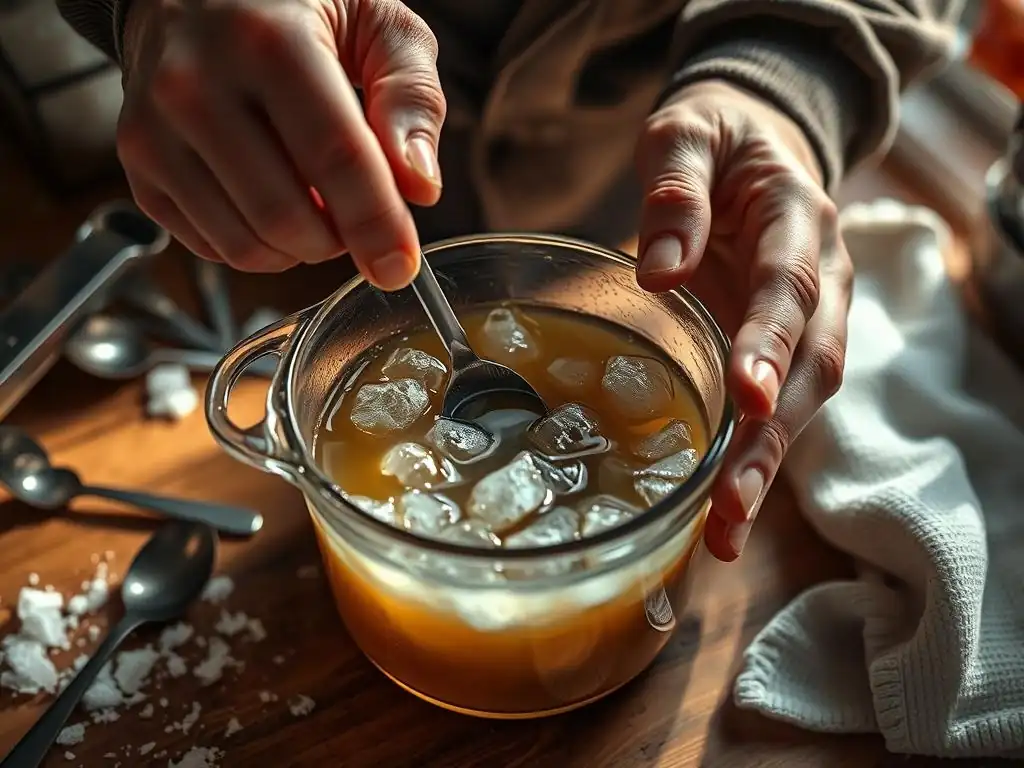
So, you've identified the dreaded graininess. The good news is that in many cases, you can salvage a batch of candy that has crystallized uncontrollably. The process involves essentially resetting the candy syrup by dissolving the unwanted crystals. This is where understanding how to dissolve sugar crystals comes into play, allowing you to potentially rescue your hard work and ingredients.
Step-by-Step Guide to Dissolving Sugar Crystals
To attempt to dissolve sugar crystals in a failed batch of candy, you'll typically need to reheat it. Carefully scrape the crystallized candy back into a clean, heavy-bottomed saucepan. Add a small amount of liquid, usually water, to the pan. The amount needed varies depending on the amount of candy, but a good starting point is about 1/4 to 1/2 cup of water per cup of solidified candy. The water helps to dissolve the sugar crystals and return the mixture to a liquid state.
Heat the mixture gently over low to medium heat, stirring constantly. The goal is to dissolve all the sugar crystals completely. Continue heating and stirring until the mixture is smooth and clear, with no visible graininess or crystals remaining. Once fully dissolved, you can carefully bring the syrup back up to the desired temperature for your specific candy, taking care to prevent new crystallization by washing down the sides of the pan and avoiding stirring while cooling. This process effectively gives the sugar a second chance to form the correct structure.
Essential Tools for Crystal Dissolution
Successfully dissolving sugar crystals requires a few basic but important tools. A clean, heavy-bottomed saucepan is crucial; the heavy bottom helps distribute heat evenly and reduces the risk of scorching the sugar. A heatproof spatula or wooden spoon is needed for stirring the mixture as it reheats and dissolves.
A pastry brush and a small bowl of clean water are essential for washing down the sides of the pan early in the reheating process, just as you would when making fresh candy. This prevents new seed crystals from forming on the edges and falling back into the syrup. Finally, a reliable candy thermometer is necessary to ensure you bring the salvaged syrup back up to the correct temperature for your candy type (e.g., 240°F for soft ball caramels, 300°F for hard candy).
Preventing Sugar Crystals: Best Practices for Candy Making
Prevention is often easier than cure when it comes to sugar crystallization. By implementing a few key strategies from the outset, you can significantly reduce the likelihood of your candy turning grainy. These practices are fundamental to successful candy making and ensure a smooth, desirable texture in your final product.
Key Strategies for Preventing Undesired Crystallization
One of the most effective strategies is to ensure your workspace, equipment, and ingredients are impeccably clean. Any speck of dust, old sugar residue, or even a stray hair can act as a nucleus for crystal growth. Washing down the sides of the pan with a wet pastry brush during the boiling process is non-negotiable for many candy types to prevent splattered sugar from seeding the syrup.
Another crucial technique is to avoid stirring the sugar syrup after it has reached the boiling point and particularly while it is cooling (unless the recipe specifically instructs you to stir for controlled crystallization, like fudge). Agitation provides the perfect opportunity for sugar molecules to align and form crystals. Some recipes even recommend adding a form of "invert sugar," like corn syrup or glucose syrup, which helps inhibit crystallization by breaking down sucrose molecules, a strategy we'll explore further.
The Importance of Sugar Syrup Consistency
The ratio of sugar to water in your initial syrup mixture significantly impacts its susceptibility to crystallization. A higher proportion of water means the sugar takes longer to reach high temperatures and concentrations. While boiling, the water evaporates, concentrating the sugar solution. The goal is to create a supersaturated solution that remains stable as it cools.
If the initial consistency is too thick (not enough water), the sugar may not fully dissolve before boiling, leaving undissolved granules that can seed crystallization. Conversely, too much water simply means a longer cooking time to reach the desired temperature. Achieving the correct initial syrup consistency, as specified in a tested recipe, is fundamental to controlling the final sugar concentration and minimizing the risk of unwanted crystallization.
Temperature Control: A Crucial Factor
Precise temperature control is perhaps the single most important factor in preventing sugar crystallization and achieving the correct candy consistency. Each stage of candy making (thread, soft ball, firm ball, hard ball, soft crack, hard crack) corresponds to a specific temperature range, indicating the sugar concentration. For example, soft ball stage is typically 235-245°F (118-121°C), resulting in about 85% sugar, while hard crack stage is 300-310°F (149-154°C), reaching about 99% sugar.
Heating the syrup too quickly, unevenly, or exceeding the target temperature can make the sugar molecules more prone to crystallizing. Using a reliable candy thermometer is essential – calibrate it by checking the boiling point of water in your location (it's 212°F or 100°C at sea level, but lower at higher altitudes). Monitoring the temperature carefully and removing the syrup from the heat immediately when it reaches the target temperature helps prevent overconcentration and reduces the risk of spontaneous crystallization during cooling.
Techniques for Managing Sugar Crystals
Beyond basic prevention, certain techniques can be employed either to deliberately encourage controlled crystallization (where desired) or to actively inhibit uncontrolled growth. These methods involve understanding the science behind sugar interactions and leveraging specific ingredients or processes.
Using Seeding for Controlled Crystallization (Fudge, Fondant)
For candies like fudge, divinity, and fondant, controlled crystallization is the goal. The desired texture is achieved by forming millions of tiny sugar crystals, which feel smooth on the tongue. This is often accomplished through a technique called "seeding." After the sugar syrup is cooked to the correct temperature (e.g., soft ball stage for fudge) and cooled without stirring to a specific temperature (typically around 110°F or 43°C), it is then agitated vigorously.
This agitation can be done by beating the candy (often by hand or with a stand mixer) or by adding a small amount of pre-crystallized sugar or cooled fudge to the syrup. This "seed" provides a surface for new, tiny crystals to form rapidly and uniformly throughout the mixture as it cools and is worked. The key is cooling the syrup sufficiently before agitation; stirring while too hot encourages larger, gritty crystals, while stirring at the right temperature promotes small ones.
The Role of Acid in Preventing Undesired Crystallization
Adding an acidic ingredient to the sugar syrup is a classic method for preventing uncontrolled crystallization, particularly in hard candies, caramels, and brittle. Acids like lemon juice, vinegar, cream of tartar, or even the acid naturally present in corn syrup, help break down sucrose (a disaccharide) into its component monosaccharides: glucose and fructose. This process is called inversion, and the resulting mixture of glucose and fructose is known as invert sugar.
Glucose and fructose molecules have a different shape than sucrose and interfere with sucrose's ability to link together and form large crystals. Even a small amount of acid can be effective; for example, adding just 1/4 teaspoon of cream of tartar or a tablespoon of lemon juice per cup of sugar can significantly inhibit crystallization. This is why many recipes for non-crystalline candies include one of these acidic ingredients or corn syrup.
Rescuing Specific Types of Candy Affected by Sugar Crystals
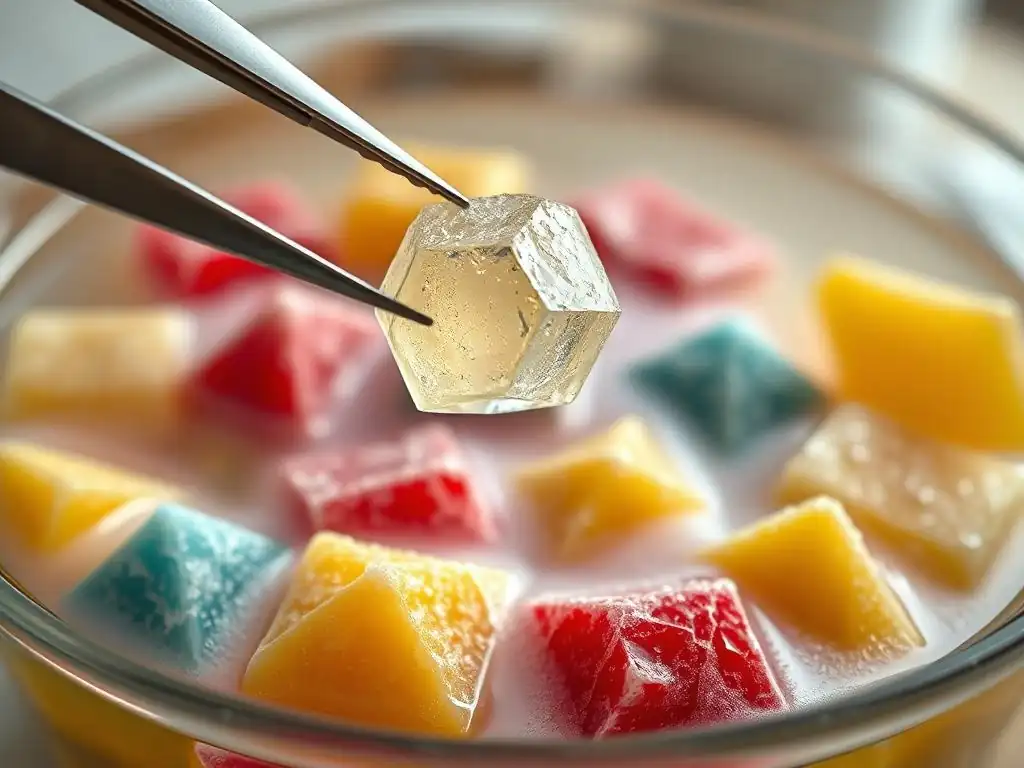
While the general method of how to dissolve sugar crystals involves reheating with water, the success rate and specific approach can vary depending on the type of candy affected. Some candies are more forgiving than others when it comes to salvaging a grainy batch.
Troubleshooting Sugar Crystals in Fudge
Fudge is a common victim of unwanted crystallization, resulting in a gritty texture instead of smooth. If your fudge turns out grainy, you can often salvage it. Scrape the fudge back into a clean saucepan. Add a small amount of liquid, such as water or milk (starting with 1/4 cup per batch is reasonable, adding more if needed), and heat very gently over low heat. Stir constantly until all the sugar crystals are completely dissolved and the mixture is smooth and liquid again.
Once smooth, bring the mixture back up to the soft ball stage (235-245°F or 118-121°C), stirring only until it boils, then wash down the sides of the pan. Cool the syrup without stirring to the appropriate temperature for beating fudge (typically around 110°F or 43°C). Then, beat the fudge vigorously until it thickens and loses its gloss, before pouring it to set. This reheating and re-cooling process allows you to attempt controlled crystallization again.
Fixing Sugar Crystals in Caramel
Caramel, when made correctly, should be smooth and chewy. If your caramel becomes grainy, it's usually due to crystallization. To fix grainy caramel, scrape it into a clean saucepan. Add a small amount of hot water (start with a few tablespoons per batch) or cream. Heat very gently over low heat, stirring constantly. Be patient; it may take some time for the crystals to dissolve back into the mixture.
Continue heating and stirring until the caramel is completely smooth and uniform, with no graininess detectable. Once smooth, you can carefully bring it back up to the desired temperature for your caramel consistency (e.g., 245°F for soft caramels). Be extra cautious heating caramel, as it can burn easily. Once the correct temperature is reached, pour immediately, avoiding scraping the bottom of the pan.
Saving Hard Candy from Sugar Crystallization
Hard candy is one of the most difficult types of candy to rescue once it has crystallized. Because hard candy is cooked to such a high temperature (300-310°F or 149-154°C) and contains very little water, the sugar is highly concentrated. While you can attempt to dissolve sugar crystals by scraping the candy back into a pan and adding water (say, 1/2 cup per cup of candy pieces) and reheating gently until clear, the process is tricky.
Often, reheating hard candy changes its color and flavor. If you successfully dissolve the crystals and reheat it to the hard crack stage, you risk burning the sugar. Sometimes, the best option for grainy hard candy is to repurpose it, perhaps by crushing it for a topping or dissolving it in a liquid for another use, rather than trying to restore it to a clear, smooth hard candy.
Advanced Techniques for Preventing Sugar Crystallization
Beyond the basic methods of cleanliness and avoiding stirring, incorporating specific ingredients can provide a powerful defense against unwanted sugar crystal formation. These techniques leverage the chemical properties of different sugars and acids.
Using Invert Sugar to Inhibit Crystal Growth
One of the most reliable ways to prevent uncontrolled sugar crystallization is by incorporating invert sugar into your recipe. Invert sugar is created when sucrose is broken down into glucose and fructose, typically through hydrolysis caused by heat and/or acid. Commercial ingredients like corn syrup, glucose syrup, and golden syrup are primarily composed of invert sugars or contain a significant amount alongside sucrose.
Adding a small amount of corn syrup (for example, 10-20% of the sugar weight) to your initial sugar and water mixture will significantly inhibit the formation of large sucrose crystals. The presence of glucose and fructose molecules interferes with the ability of sucrose molecules to align and form a crystalline structure. This is why many recipes for smooth, non-crystalline candies like caramels, taffy, and lollipops include corn syrup. It acts as a crystal inhibitor, promoting a smooth, amorphous texture.
Adding Acidic Ingredients
As mentioned earlier, acidic ingredients promote the inversion of sucrose into glucose and fructose, creating invert sugar right in your pan. This is a highly effective method for preventing crystallization. Common acidic additions include:
- Cream of Tartar: A pinch (about 1/8 to 1/4 teaspoon per cup of sugar) is very effective. It's a dry acid that needs to be dissolved in the water with the sugar.
- Lemon Juice or Vinegar: A small amount (like 1 teaspoon to 1 tablespoon per cup of sugar, depending on desired flavor impact) works well. The liquid contributes to the initial water content.
These acids, combined with the heat of boiling, cause the sucrose molecules to split. The resulting mix of sugars is far less likely to crystallize than pure sucrose. This technique is widely used in recipes for hard candies, brittles, and clear glazes to ensure a smooth, non-grainy finish.
Understanding Sugar Types and Their Impact on Crystallization
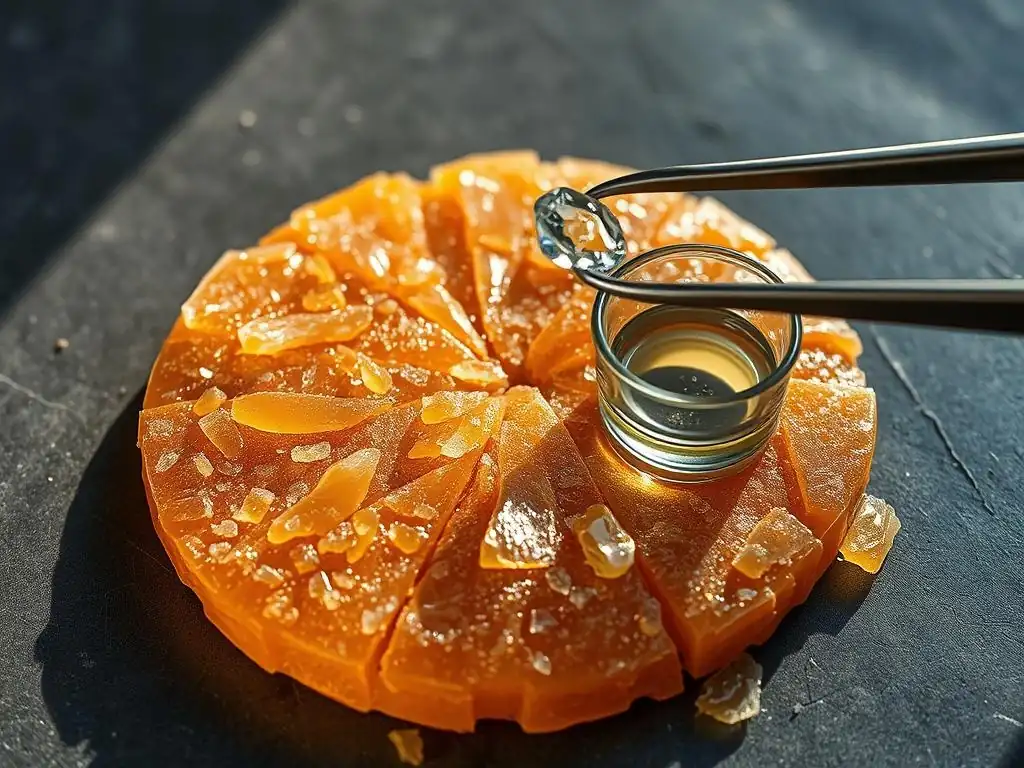
Not all sugars are created equal when it comes to candy making and crystallization. The type of sugar used can significantly influence the final texture and how easily crystals form or are prevented.
The Impact of Different Sugar Varieties
Standard granulated sugar, which is nearly pure sucrose, is the most common sugar used in candy making. It readily forms crystals, which is why controlling crystallization is such a focus when working with it. Finer sugars like superfine or caster sugar dissolve more quickly, which can be beneficial in preventing undissolved seed crystals, but they are still pure sucrose and will crystallize if not managed.
Brown sugar contains molasses, which adds flavor and color. The molasses also contains some invert sugars and other compounds that can interfere with sucrose crystallization to a degree, making some brown sugar candies slightly less prone to graininess than those made with pure white sugar, though crystallization can still occur. Powdered sugar (confectioners' sugar) contains cornstarch to prevent clumping, which inhibits crystallization, making it useful for frostings and fondants where a non-grainy texture is desired, but it's not typically used for boiled candy syrups.
The Role of Invert Sugar
As previously discussed, invert sugar (a mixture of glucose and fructose, often derived from sucrose) plays a critical role in preventing unwanted crystallization. Ingredients like corn syrup, glucose syrup, and golden syrup are examples of readily available sources of invert sugar. When added to a sucrose solution, the glucose and fructose molecules disrupt the structured arrangement of sucrose molecules, making it difficult for them to form large, organized crystals.
Using a portion of invert sugar alongside granulated sugar in recipes designed to be non-crystalline (like hard candy or chewy caramels) provides a built-in safeguard against graininess. It ensures a smoother, more stable texture that is less likely to crystallize over time or with slight temperature changes.
Common Questions About Sugar Crystallization and Candy Making
It's natural to have questions when tackling the science of sugar. Here are some frequently asked questions about crystallization and how to handle it in your candy making adventures.
Can I Re-Cook Candy with Sugar Crystals?
Yes, in many cases, you absolutely can re-cook candy that has developed sugar crystals. This is the primary method for how to dissolve sugar crystals that have formed unintentionally. As detailed in the section "How to Dissolve Sugar Crystals: Salvaging Your Candy," the process involves adding liquid (usually water) back to the crystallized candy and gently reheating it until all the crystals are dissolved and the mixture is clear and smooth again.
Once dissolved, you can then proceed to cook the syrup back to the desired temperature, taking careful steps to prevent new crystallization, such as washing down the sides of the pan and avoiding stirring while cooling. While successful for many candies like fudge, caramel, and some brittles, it can be more challenging for delicate candies or those requiring very high temperatures, where scorching is a risk.
How Does Humidity Affect Sugar Crystallization?
Humidity can indeed affect sugar crystallization, particularly in finished candies. Sugar is hygroscopic, meaning it readily absorbs moisture from the air. In high humidity environments, the surface of candy can absorb moisture, causing some of the sugar to dissolve. When the humidity drops or the candy is moved to a drier environment, this surface sugar can re-crystallize, leading to a cloudy or slightly grainy surface layer.
High humidity during the cooking process itself can also slightly affect the boiling temperature of the sugar syrup, requiring you to cook to a slightly higher temperature to achieve the same sugar concentration as on a dry day. Storing finished candies in airtight containers is essential to protect them from humidity and prevent surface crystallization or stickiness.
Why is My Candy Grainy?
Graininess in candy is almost always caused by unwanted sugar crystallization. This happens when dissolved sugar molecules link together and form solid crystals, often large ones that feel gritty on the tongue. The reasons for this can include:
- Seed Crystals: Introducing tiny sugar crystals (from dirty equipment, splattered sugar on the pan sides, or even dust) into the hot syrup.
- Stirring During Cooling: Disturbing the supersaturated syrup while it cools, which provides nucleation points for crystals.
- Improper Temperature Control: Cooking the syrup too quickly or to too high a temperature can make it more unstable.
- Lack of Inhibitors: Not using acidic ingredients or invert sugars in recipes where a non-crystalline texture is desired.
Essentially, anything that encourages the sugar molecules to form large, uncontrolled crystals will result in grainy candy. Understanding the factors influencing crystallization is key to preventing this common issue.
Conclusion: Mastering Sugar Control in Candy Making
Dealing with sugar crystallization is a fundamental challenge in candy making, but it's one that can be overcome with knowledge and practice. By understanding the science behind why sugar crystallizes, recognizing the signs of unwanted crystals, and knowing how to dissolve sugar crystals when needed, you gain valuable skills. More importantly, implementing preventative measures like meticulous cleanliness, careful temperature control, avoiding unnecessary stirring, and utilizing crystal inhibitors like acid or corn syrup will dramatically increase your success rate. Mastering sugar control allows you to create smooth, delicious candies consistently, turning potential frustrations into sweet triumphs in your kitchen.
Frequently Asked Questions
How do sugar crystals form in candy making?
Sugar crystals form when sugar molecules in a supersaturated solution come together and solidify. This can be triggered by undissolved sugar, dust particles, or even excessive agitation.
What's the best way to prevent sugar crystals from forming in the first place?
Prevention is key! Use a clean pot, ensure all sugar is completely dissolved before boiling, and avoid stirring after the mixture comes to a boil. Adding a small amount of corn syrup or acid (like lemon juice) can also help.
Can I "rescue" candy that has already crystallized?
Sometimes! You can try adding more water and gently reheating the mixture, ensuring all crystals are dissolved. However, success isn't guaranteed, especially with heavily crystallized batches.
Does the type of sugar I use affect crystallization?
Yes, it can. Granulated sugar is most commonly used, but finer sugars dissolve more easily. Brown sugar contains molasses which can affect the sugar-to-water ratio and crystallization.
What role does temperature play in sugar crystallization?
Temperature is crucial. Consistent and accurate temperature control is essential for preventing crystallization. Using a candy thermometer ensures you reach the correct temperature for your desired candy consistency.
Final Reflection: The Sweet Science of Second Chances
The frustrating sight of sugar crystals ruining a perfectly good batch of candy is a universal experience, a culinary conundrum that affects both novice and experienced bakers alike. But understanding the science behind sugar crystallization, as explored in this article, isn't just about rescuing a failed dessert; it's about mastering a fundamental aspect of food chemistry and embracing the possibility of redemption. This knowledge empowers us to approach culinary challenges with confidence and a renewed sense of possibility.
The persistent struggle with sugar crystals highlights the delicate balance required in cooking, a balance that mirrors the complexities of life itself. The seemingly simple act of dissolving sugar reveals a deeper truth: even when things seem irrevocably broken, there's often a path to recovery. The greatest glory in living lies not in never falling, but in rising every time we fall.
This quote, while not directly about candy-making, perfectly encapsulates the spirit of perseverance and problem-solving that this article aims to inspire. The techniques discussed here aren't just about saving a batch of candy; they're about cultivating a mindset of resilience and resourcefulness.
So, the next time you face a pot of stubbornly crystallized sugar, remember the lessons learned here. Don't be discouraged; instead, see it as an opportunity to learn, to experiment, and to ultimately achieve that perfect, smooth, crystal-free confection. You have the power to transform a culinary setback into a sweet success. Embrace the challenge, apply the techniques, and rediscover the joy of creating something delicious, even from seemingly ruined ingredients. The journey, with all its bumps and crystal formations, is just as important as the final result.
Rediscover Your Candy-Making Confidence!
Thanks for joining us on this sweet journey into troubleshooting sugar crystals! We hope you gained valuable insights into preventing and fixing those pesky crystals. Ready to put your new skills to the test?
- Try our Crystal-Free Candy Recipe: We've crafted a special recipe designed to minimize crystal formation, allowing you to achieve perfectly smooth results. Find it in our recipe section!
- Share your candy-making triumphs (and disasters!): Let's build a community of bakers learning and growing together! Join the conversation in the comments.
- Experiment with different sugars and techniques: Explore the world of candy-making with confidence. What new flavor combinations or methods will you try?
What unexpected ingredient or technique might you explore to avoid sugar crystals in your next batch?