
Understanding Baker's Percentages for Viennoiseries

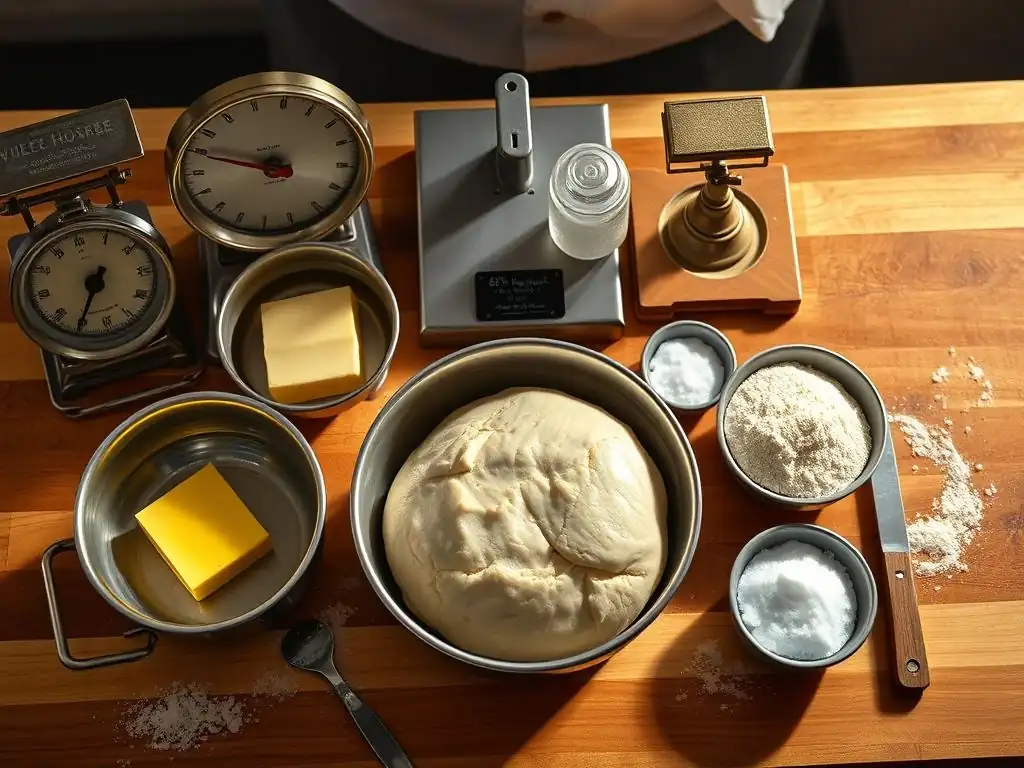
Welcome to BakeWithEase, where unlocking the secrets of exceptional baking becomes a delightful journey. Are you ready to elevate your viennoiseries from simply good to truly extraordinary? Dive in to our comprehensive Baker’s Percentages viennoiseries recipe guide and discover how this powerful technique can revolutionize your pastry making, guaranteeing consistent and delicious results every time. Curious about the perfect croissant? The answer starts here.
- Mastering Baker's Percentages for Viennoiserie: A Comprehensive Guide
- Introduction to Baker's Percentages in Viennoiserie
- Understanding Baker's Percentages: The Core Principles
-
Key Viennoiserie Ingredients and Their Baker's Percentage Ranges
- Flour: Determining Strength and Protein Content
- Water: Impact on Dough Hydration and Texture
- Butter: Influence on Lamination and Flavor
- Sugar: Role in Sweetness, Color, and Moisture
- Yeast: Controlling Fermentation and Volume
- Salt: Enhancing Flavor and Gluten Development
- Eggs: Contribution to Richness, Structure, and Color
- Applying Baker's Percentages to Classic Viennoiserie Recipes
- Tips and Tricks for Successful Viennoiserie Baking with Baker's Percentages
- Advanced Techniques and Baker's Percentages in Viennoiserie
- Baker's Percentages for Viennoiseries: Quick Reference
- Conclusion: Precision and Creativity in Viennoiserie
-
Frequently Asked Questions
- What are baker's percentages, and why are they important for viennoiseries?
- How do baker's percentages help when adapting a viennoiseries recipe?
- Where can I find a beginner-friendly viennoiseries recipe guide that utilizes baker's percentages?
- What are some common challenges bakers face when first using baker's percentages for viennoiseries?
- How do baker's percentages contribute to the overall quality of viennoiseries?
- Final Reflection: Mastering the Art of Viennoiserie Through Baker's Percentages
- Unleash Your Inner Viennoiserie Master!
Mastering Baker's Percentages for Viennoiserie: A Comprehensive Guide
Introduction to Baker's Percentages in Viennoiserie
Why Baker's Percentages Ensure Consistency and Scalability
Baker's percentages offer a universal language for formulating recipes, particularly crucial in the delicate world of viennoiserie. Unlike standard volume measurements, which can vary wildly depending on how ingredients are scooped or packed, baker's percentages rely on weight.
This precision is paramount when working with doughs that require specific hydration levels and fat incorporation for optimal structure and flakiness, such as those used in croissants or pain au chocolat. By defining each ingredient's weight relative to the flour's weight (always 100%), bakers can achieve reproducible results batch after batch, regardless of ingredient density or environmental humidity, which is a significant factor in successful viennoiserie baking.
Moreover, using baker's percentages makes scaling recipes incredibly straightforward. Whether you need to make a small batch for a home weekend project or a large volume for a bakery production run, you simply adjust the total flour weight, and all other ingredient weights fall into place automatically based on their percentages. This eliminates complex calculations and reduces the risk of errors when increasing or decreasing recipe sizes. For anyone serious about mastering viennoiserie, understanding and applying this system is a fundamental step towards achieving consistent quality and making any viennoiseries recipe guide easy to adapt.
Streamlining Viennoiserie Recipes with Baker's Percentages
Adopting baker's percentages fundamentally simplifies the process of understanding and executing complex viennoiserie recipes. Instead of juggling absolute weights that change with every batch size, you work with fixed percentages that represent the ratio of ingredients. This makes it easier to analyze a recipe, compare different formulas (e.g., one croissant recipe versus another), and identify how variations in ingredients like butter, sugar, or hydration might affect the final product's texture and flavor. It provides a clear framework for tweaking recipes to suit personal preferences or specific environmental conditions.
Furthermore, this system facilitates learning and experimentation. Once you understand the typical percentage ranges for key ingredients in a viennoiserie dough – for example, the amount of butter needed for lamination usually falls between 25% and 40% of the flour weight – you can confidently adjust recipes or even begin to formulate your own. This baker's percentages viennoiseries recipe guide approach empowers you to move beyond simply following instructions and truly understand the science behind the bake, leading to more successful and rewarding results in your viennoiserie endeavors.
Understanding Baker's Percentages: The Core Principles
Defining Baker's Percentages and Their Significance
Baker's percentages represent each ingredient's weight as a percentage of the total flour weight in a recipe. The formula is simple: (Weight of Ingredient / Weight of Flour) \* 100% = Ingredient Percentage. This system is critical because flour is the primary structural component of most baked goods, especially yeast-leavened doughs like those used for viennoiserie.
By setting flour as the constant 100%, all other ingredients are measured relative to this base, creating a consistent and scalable relationship between them. This ratio-based system is far more reliable than volume measurements, which are prone to inconsistencies due to variations in ingredient density and measurement technique.
The significance of this system in viennoiserie cannot be overstated. These doughs are often enriched with high amounts of fat, sugar, and eggs, and require precise hydration and fermentation control. Small deviations in ingredient ratios can dramatically impact gluten development, dough handling, lamination quality, and the final product's texture, volume, and flakiness. A slight increase in water percentage, for instance, can make the dough too sticky to handle for lamination, while too little butter can result in a less flaky pastry. Using baker's percentages provides the necessary precision to manage these delicate balances effectively.
Flour as the 100% Base in Viennoiserie Formulas
In the baker's percentage system, the weight of the flour in the recipe is always designated as 100%. This is the foundational principle. If a recipe calls for 500 grams of flour, then 500g represents 100% of the flour component. All other ingredients – water, yeast, salt, sugar, butter, eggs, milk, etc. – are then calculated as a percentage of this 500g flour weight. For example, if the recipe also calls for 290 grams of water, the water percentage is (290g / 500g) \* 100% = 58%. This percentage (58%) is the hydration level of the dough.
This consistent base allows for easy comparison and scaling. If you want to make a double batch using the same formula, you'd start with 1000g of flour (still 100%). The water needed would then be 58% of 1000g, which is 580g. This simple calculation applies to every ingredient in the recipe, maintaining the crucial ratios that define the dough's characteristics. For those using a baker's percentages viennoiseries recipe guide, understanding that flour is the unshakeable 100% is the key to unlocking the system.
Calculating Ingredient Weights from Baker's Percentages
Once you have a recipe expressed in baker's percentages, converting these percentages back into actual ingredient weights for a desired batch size is straightforward. First, decide on the total weight of flour you want to use. This weight represents 100%. Then, for each other ingredient, multiply the flour weight by the ingredient's percentage (expressed as a decimal). For instance, if a recipe calls for 100% flour, 58% water, and 12% sugar, and you want to use 750 grams of flour:
- Flour: 750g (100%)
- Water: 750g \* 0.58 = 435g (58%)
- Sugar: 750g \* 0.12 = 90g (12%)
You would repeat this calculation for every ingredient listed in percentages. This method ensures that the precise ratios defined by the baker's percentages are maintained, guaranteeing that your dough will behave as intended, whether you're making a small test batch or scaling up significantly. This is a fundamental skill embedded in any effective baker's percentages viennoiseries recipe guide, allowing bakers to move seamlessly between formula and execution.
Key Viennoiserie Ingredients and Their Baker's Percentage Ranges
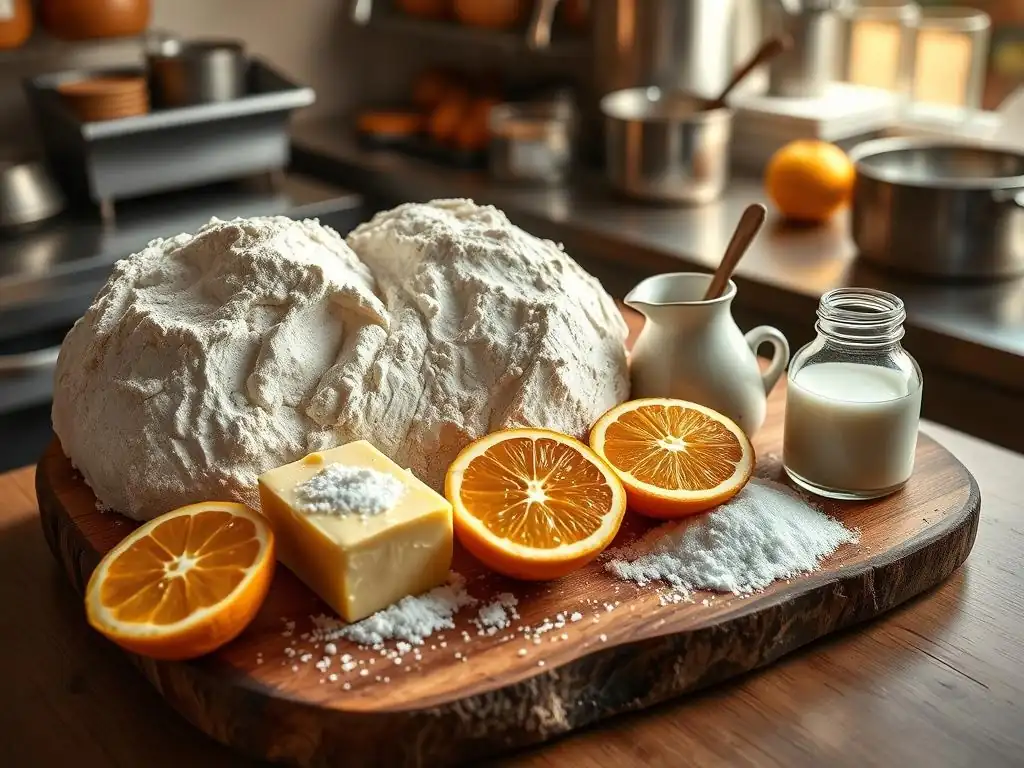
Flour: Determining Strength and Protein Content
Flour, always 100% in baker's percentages, is the structural backbone of viennoiserie. The type of flour used significantly impacts gluten development, which is essential for creating the delicate, airy structure and flaky layers characteristic of these pastries. Most viennoiserie recipes call for bread flour or a blend of bread and all-purpose flour. Bread flour typically has a higher protein content (around 12-14%) compared to all-purpose flour (around 10-12%). This higher protein allows for stronger gluten development, which is necessary to withstand the rigorous process of mixing, resting, and repeated rolling and folding (lamination) without tearing.
Using flour with appropriate protein content is crucial. Too low protein can result in a weak dough that tears during lamination, leading to uneven layers and poor rise. Too high protein might make the dough too elastic and difficult to roll thinly.
A common approach in many baker's percentages viennoiseries recipe guides is to use a mix, perhaps 70% bread flour and 30% all-purpose, to balance strength and extensibility. The specific percentage used for the flour itself is always 100%, but the type of flour chosen at that 100% makes a world of difference to the final pastry's texture and volume.
Water: Impact on Dough Hydration and Texture
Water (or milk, which adds richness and aids browning) is a critical ingredient, typically ranging from 50% to 65% in viennoiserie doughs, relative to the flour weight. This range represents the dough's hydration level. Water activates the gluten in the flour and allows the dough to become pliable and extensible.
The hydration level profoundly affects the dough's texture and handling characteristics. Lower hydration doughs (e.g., 50-55%) are stiffer and easier to handle, especially during initial mixing and shaping, but might result in a slightly denser crumb. Higher hydration doughs (e.g., 60-65%) are stickier but can yield a lighter, more open crumb structure and potentially better oven spring.
Choosing the right hydration percentage depends on the specific recipe, the type of flour used (higher protein flours can absorb more water), and even environmental factors like humidity. A baker's percentages viennoiseries recipe guide often provides a specific percentage, but experienced bakers may adjust slightly based on feel. For example, a classic croissant dough might specify 58% water or milk. This percentage must be weighed accurately, as even a small deviation can significantly alter the dough's consistency and performance during lamination.
Butter: Influence on Lamination and Flavor
Butter plays a dual role in viennoiserie: a portion is often included in the dough itself (typically 5-20%), and a significant amount is used for lamination (often 25-40% or even higher). The butter incorporated into the dough adds richness, tenderness, and flavor. The butter used for lamination, however, is the key to creating the hundreds of thin, flaky layers.
This "lamination butter" is folded and rolled into the dough multiple times, creating alternating layers of dough and fat. During baking, the water in the butter turns to steam, forcing the dough layers apart and creating the characteristic puff and crispness.
The percentage of lamination butter used directly impacts the richness and flakiness of the final product. A higher percentage (e.g., 35-40%) will result in a richer, more open-layered pastry, while a lower percentage (e.g., 25-30%) will produce a pastry with a tighter crumb and less pronounced flakiness. The quality and type of butter (e.g., European-style butter with higher fat content, around 82-84%) are also critical but are not reflected in the percentage itself, only the weight. Mastering the application of the correct percentage of butter is a cornerstone of any effective baker's percentages viennoiseries recipe guide.
Sugar: Role in Sweetness, Color, and Moisture
Sugar is typically present in viennoiserie doughs at percentages ranging from 10% to 20%. While it contributes sweetness, its roles extend far beyond taste. Sugar provides food for the yeast, aiding fermentation and contributing to the dough's rise. It also helps tenderize the dough, contributes to moisture retention, and significantly impacts the crust's color by promoting Maillard reactions and caramelization during baking. A higher sugar percentage will result in a sweeter, softer crumb and a darker, more caramelized crust.
The amount of sugar used is often adjusted based on the specific type of viennoiserie. A plain croissant might use around 10-12% sugar, while a sweeter Danish pastry dough could use 15-20%. Using baker's percentages allows bakers to precisely control this balance of sweetness, fermentation speed, and crust development. Too little sugar can slow fermentation and result in a pale crust, while too much can over-sweeten the pastry and potentially inhibit yeast activity if the concentration is too high, issues easily avoided when following a precise baker's percentages viennoiseries recipe guide.
Yeast: Controlling Fermentation and Volume
Yeast, whether fresh, active dry, or instant dry, is responsible for leavening the dough, producing carbon dioxide that causes it to rise. The percentage of yeast used is typically quite low compared to other ingredients, often ranging from 1% to 4% for fresh yeast, 0.4% to 1.5% for active dry yeast, and 0.3% to 1% for instant dry yeast, relative to the flour weight.
The specific percentage depends on several factors: the desired fermentation time (longer fermentation requires less yeast), the dough's temperature, and the amount of sugar and fat in the dough (high amounts can slow yeast activity, requiring slightly more yeast).
Using baker's percentages for yeast ensures consistent leavening power across batches. For example, if a recipe calls for 2% fresh yeast and you scale the flour from 500g to 1000g, you know to use exactly 20g of fresh yeast (2% of 1000g). This precision is vital for controlling the proofing process, which is a critical stage for developing flavor and achieving the desired volume and structure in viennoiserie. An accurate baker's percentages viennoiseries recipe guide will always provide precise yeast percentages to ensure reliable fermentation outcomes.
Salt: Enhancing Flavor and Gluten Development
Salt is a small but mighty ingredient in viennoiserie, typically used at 1.5% to 2.2% of the flour weight. While it enhances the overall flavor profile of the pastry, balancing the sweetness and richness, salt also plays a crucial role in dough structure. It strengthens the gluten network by tightening it, which helps the dough maintain its shape during mixing, resting, and lamination. Salt also helps control yeast activity, slowing down fermentation slightly to allow for better flavor development over a longer period.
Using the correct percentage of salt is important for both taste and texture. Too little salt results in bland pastry and a slack, difficult-to-handle dough. Too much salt can inhibit yeast activity significantly and make the pastry unpleasantly savory. The typical range of 1.8% to 2% is common in many baker's percentages viennoiseries recipe guides, providing the optimal balance of flavor enhancement and gluten support needed for the delicate process of creating layered pastries.
Eggs: Contribution to Richness, Structure, and Color
Eggs are a common enrichment ingredient in many viennoiserie doughs, adding richness, flavor, and contributing to the dough's structure and the final pastry's color. They are typically used at percentages ranging from 10% to 20% of the flour weight. Eggs contain fat, which tenderizes the crumb, and protein, which adds structure and strength alongside the gluten from the flour. The lecithin in egg yolks also acts as an emulsifier, helping to create a smoother, more cohesive dough.
The percentage of eggs used affects the richness and tenderness of the dough. A higher percentage will result in a more cake-like or brioche-like texture rather than the very open, airy structure of a classic croissant, which might use a lower egg percentage or none at all in the dough (though often used in an egg wash).
For pastries like Danish or enriched pain au chocolat doughs, higher egg percentages are common. Using baker's percentages allows for precise control over this enrichment level, ensuring the dough has the desired handling properties and the final pastry achieves the intended richness and crumb structure, as detailed in a comprehensive baker's percentages viennoiseries recipe guide.
Applying Baker's Percentages to Classic Viennoiserie Recipes
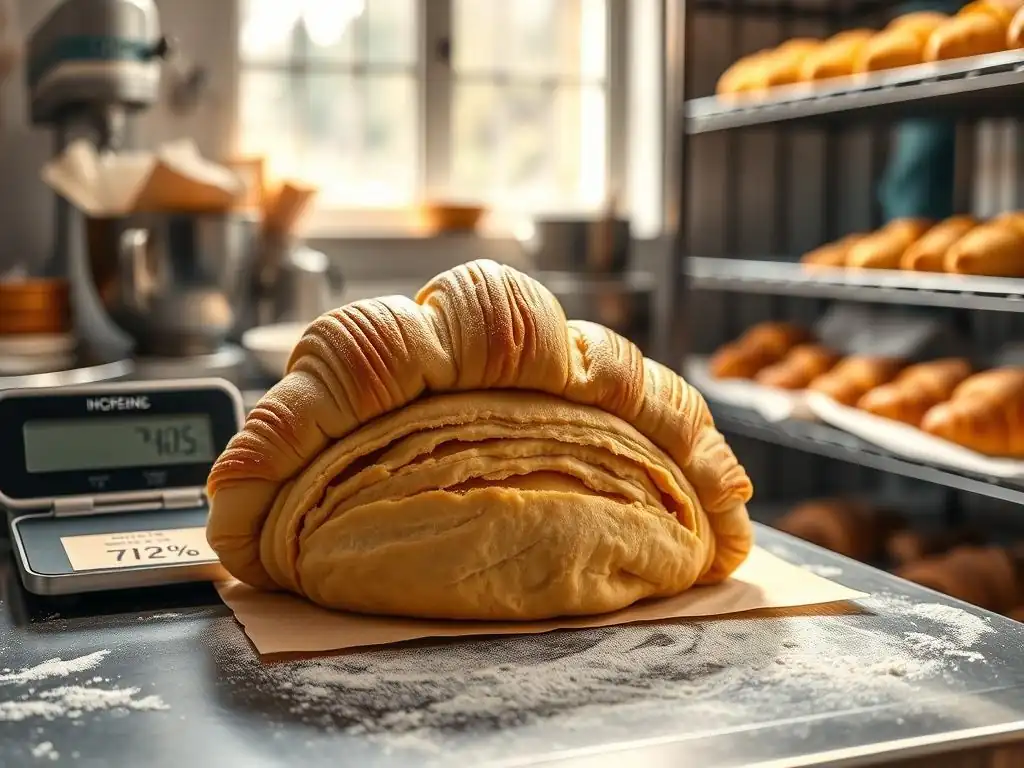
Pain au Chocolat: A Baker's Percentage Breakdown
Let's look at a typical pain au chocolat dough formula using baker's percentages to illustrate their application. A common formula might look like this: Flour (Strong Bread Flour) 100%, Water 55%, Milk 10%, Sugar 15%, Fresh Yeast 4%, Salt 1.8%, Soft Butter (in dough) 12%, Eggs 10%. For the lamination, you might use Lamination Butter at 30% of the flour weight. If you were using 1000g of flour, the ingredient weights would be:
- Flour: 1000g
- Water: 550g
- Milk: 100g
- Sugar: 150g
- Fresh Yeast: 40g
- Salt: 18g
- Soft Butter (in dough): 120g
- Eggs: 100g
- Lamination Butter: 300g
This percentage breakdown clearly shows the relative amounts of each ingredient. The total hydration (water + milk) is 65%, indicating a relatively soft dough. The combined sugar and butter in the dough (15% + 12% = 27%) plus the eggs (10%) show this is an enriched dough compared to a lean bread dough. The 30% lamination butter is a standard amount for good flakiness. This baker's percentages viennoiseries recipe guide approach makes it easy to see the composition at a glance.
Croissant: A Detailed Recipe Analysis Using Baker's Percentages
A classic croissant formula often uses slightly less enrichment in the dough itself compared to pain au chocolat, focusing more on the lamination for richness and flakiness. A sample baker's percentages formula could be: Flour (Bread Flour) 100%, Water 58%, Sugar 10%, Fresh Yeast 3.5%, Salt 2%, Soft Butter (in dough) 8%. The lamination butter percentage is typically higher, often 35% to 40%. Let's use 38% for this example. With 800g of flour:
- Flour: 800g
- Water: 464g (58% of 800g)
- Sugar: 80g (10% of 800g)
- Fresh Yeast: 28g (3.5% of 800g)
- Salt: 16g (2% of 800g)
- Soft Butter (in dough): 64g (8% of 800g)
- Lamination Butter: 304g (38% of 800g)
Analyzing this formula using baker's percentages shows a total dough hydration of 58%, slightly lower than the pain au chocolat example, resulting in a slightly firmer dough often preferred for lamination. The lower sugar and dough butter percentages contribute to a less sweet, less 'cakey' dough, putting more emphasis on the flaky layers created by the generous 38% lamination butter. This detailed look demonstrates how baker's percentages provide a precise blueprint for achieving the distinct characteristics of different viennoiseries.
Danish Pastry: Understanding the Dough's Composition
Danish pastry dough is typically richer than croissant or pain au chocolat dough, often containing higher percentages of sugar, eggs, and sometimes milk or cream. This enrichment contributes to a softer, more tender crumb that is characteristic of Danish pastries. A possible baker's percentages formula for Danish dough might be: Flour (All-Purpose or Blend) 100%, Milk 30%, Water 20%, Sugar 20%, Eggs 20%, Fresh Yeast 3%, Salt 1.5%, Soft Butter (in dough) 15%. The lamination butter percentage is similar to croissants, often around 30-35%. Let's use 32%. For a batch using 600g of flour:
- Flour: 600g
- Milk: 180g (30% of 600g)
- Water: 120g (20% of 600g)
- Sugar: 120g (20% of 600g)
- Eggs: 120g (20% of 600g)
- Fresh Yeast: 18g (3% of 600g)
- Salt: 9g (1.5% of 600g)
- Soft Butter (in dough): 90g (15% of 600g)
- Lamination Butter: 192g (32% of 600g)
Examining these baker's percentages reveals a total hydration of 50% (30% milk + 20% water), but the high percentages of sugar (20%), eggs (20%), and dough butter (15%) create a very rich dough despite the moderate hydration level from liquids. This richness is what gives Danish pastries their unique texture. The 32% lamination butter still provides flakiness, but the rich dough base distinguishes it from croissants. Understanding these percentage differences is key to mastering the variety within viennoiserie using a baker's percentages viennoiseries recipe guide.
Tips and Tricks for Successful Viennoiserie Baking with Baker's Percentages
Scaling Recipes Accurately for Different Batch Sizes
One of the most powerful benefits of using baker's percentages is the ease of scaling recipes up or down while maintaining perfect ingredient ratios. To scale a recipe, first decide on your desired total flour weight. This will be your new 100% base. Then, for every other ingredient listed in the baker's percentages formula, multiply your new total flour weight by the ingredient's percentage (expressed as a decimal). For example, if a formula calls for 100% flour, 60% water, and 15% sugar, and you want to use 1500g of flour instead of the original 500g:
- Original Flour: 500g (100%) -> New Flour: 1500g (100%)
- Original Water: 300g (60%) -> New Water: 1500g \* 0.60 = 900g (60%)
- Original Sugar: 75g (15%) -> New Sugar: 1500g \* 0.15 = 225g (15%)
Repeat this for all ingredients, including leavening and salt, which are crucial for fermentation timing and flavor. Using a digital scale to weigh ingredients precisely is essential for accuracy. This scaling method ensures that whether you make a small batch for home or a large quantity for a gathering, the dough's composition and behavior will remain consistent, leading to predictable results every time you follow a baker's percentages viennoiseries recipe guide.
Adjusting Hydration Based on Environmental Factors
While a baker's percentages formula provides a target hydration level (the percentage of water/liquid), environmental factors like ambient temperature and humidity can affect how much water the flour actually absorbs and how the dough feels. On a very humid day, the flour may have already absorbed some moisture from the air, meaning you might need slightly less liquid than the formula specifies. Conversely, on a dry day, the flour might be drier, requiring a touch more liquid.
Experienced bakers often use the formula's hydration percentage as a starting point but are prepared to make slight adjustments based on the dough's feel during mixing. The goal is to achieve a dough that is pliable and develops gluten properly without being excessively sticky or too stiff.
While a formula might state 58% hydration, you might find yourself adding 57% or 59% of the liquid to get the correct consistency on a given day. This slight adjustment, typically no more than 1-2 percentage points, is easier to manage when you're working with precise weights derived from baker's percentages, ensuring your dough is perfectly conditioned for lamination regardless of the weather.
Addressing Common Issues Through Baker's Percentage Adjustments
Many common issues in viennoiserie baking can be diagnosed and potentially corrected by analyzing or adjusting baker's percentages. For example:
- Dough too sticky: Could be slightly too high hydration. Next time, try reducing the water/liquid percentage by 1-2 points.
- Dough too stiff, hard to roll: Could be too low hydration or insufficient fat in the dough. Consider increasing liquid by 1-2 points or dough butter by 1-3 points.
- Pastries lack flavor: Could be too little salt (aim for 1.8-2%) or insufficient fermentation time (not a percentage issue, but related to yeast percentage and proofing).
- Poor rise/volume: Could be too little yeast (ensure percentage is correct and yeast is active) or insufficient sugar (yeast food), or potentially too much salt inhibiting yeast. Check yeast levels (e.g., 3-4% fresh yeast) and sugar (e.g., 10-15%).
- Pastries are dense, not flaky: Could be issues with lamination technique, but also possibly insufficient lamination butter percentage (aim for 25-40%) or too much flour incorporated during rolling.
By understanding the function of each ingredient's percentage, you gain the knowledge to troubleshoot and fine-tune recipes. A baker's percentages viennoiseries recipe guide not only tells you how to make the pastry but also provides the framework for understanding why it works and how to fix it when it doesn't.
Advanced Techniques and Baker's Percentages in Viennoiserie
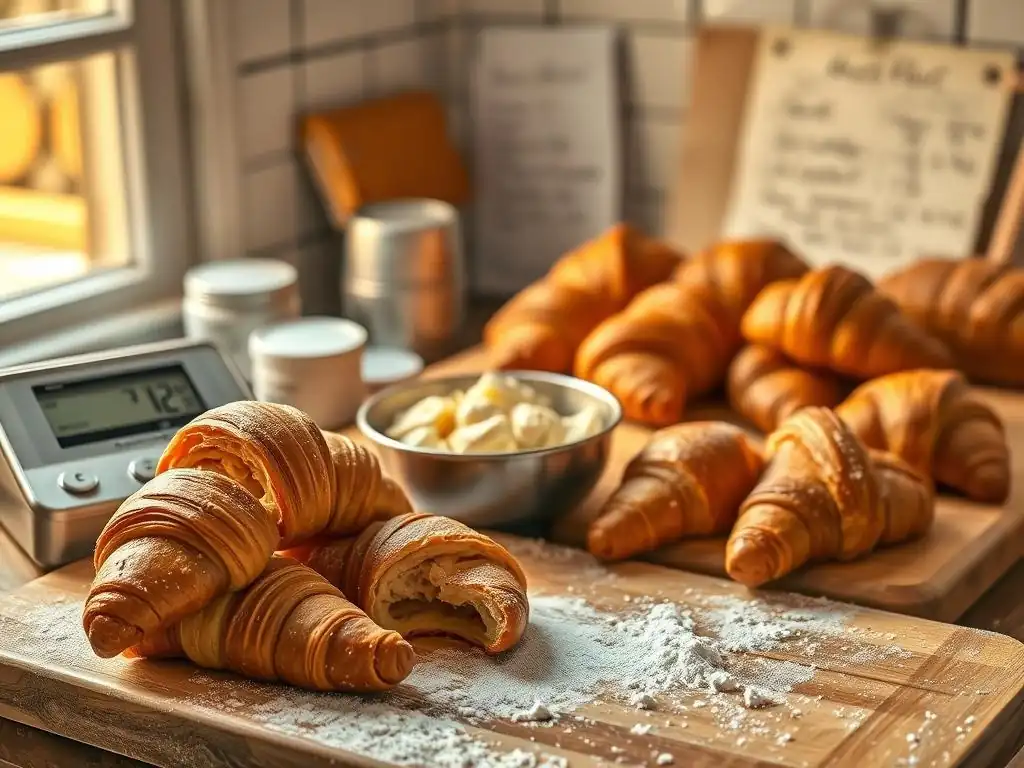
Utilizing Different Flours for Unique Textures and Flavors
While bread flour or a bread/all-purpose blend is standard for viennoiserie due to its gluten strength, experimenting with different flour percentages can introduce unique textures and flavors. For instance, substituting a small percentage (perhaps 5-10%) of whole wheat flour can add nutty notes and some fiber, though it will absorb more water and might slightly affect gluten development. Similarly, incorporating a small percentage of rye flour (say, 3-5%) can add a distinct tangy flavor profile, particularly interesting in Danish doughs.
Using alternative flours requires careful consideration within the baker's percentage framework. Their protein content and absorption rates differ from white flour. If using a significant percentage of whole grain flour, you may need to increase the total hydration percentage by a few points (e.g., 2-5%) to achieve a similar dough consistency, as whole grains absorb more water. While the total flour weight remains 100%, the composition of that 100% flour blend can be varied to achieve desired outcomes, adding another layer of control for advanced bakers following a baker's percentages viennoiseries recipe guide.
Incorporating Preferments for Enhanced Flavor and Structure
Incorporating a preferment (like a poolish, biga, or levain/sourdough starter) into a viennoiserie dough is an advanced technique that significantly enhances flavor complexity and can improve dough structure and shelf life. Preferments are typically a mixture of flour, water, and a small amount of yeast or starter, prepared hours or days in advance to allow fermentation to begin. When using a preferment, a portion of the total flour and water from the main dough formula is 'shifted' into the preferment.
In baker's percentages, the flour and water contributed by the preferment are accounted for in the total flour and water percentages of the final dough formula. For example, if your main dough formula calls for 100% flour and 60% water, and you decide to use a poolish made with 20% of the total flour and 20% of the total water (so, a 100% hydration poolish), your final dough mix would use the remaining 80% of the flour and 40% of the water, plus the fully fermented poolish.
The baker's percentages of the final dough remain the same (100% flour, 60% water), but the method of incorporating those ingredients changes. This technique adds complexity to a baker's percentages viennoiseries recipe guide but offers significant rewards in terms of flavor development.
Exploring Variations in Butter Types and Techniques
The type and handling of the lamination butter are crucial in viennoiserie, and while the baker's percentage specifies the amount, the butter's properties and the technique used are equally vital. High-fat European-style butter (around 82-84% fat) is generally preferred over American-style butter (around 80% fat) because its higher fat content and lower water content create clearer layers during lamination and results in a flakier pastry. Using butter that is too soft or too hard during the folding process can lead to issues like butter bleeding or tearing the dough.
Advanced techniques involve tempering the butter to the correct plasticity, ensuring it is firm but pliable, matching the consistency of the dough. Some bakers might use butter sheets specifically designed for lamination, which have a higher melting point and consistent thickness. While the baker's percentage (e.g., 35%) tells you how much butter to use relative to the flour, mastering viennoiserie also involves understanding which butter to use and how to incorporate it through precise rolling and folding techniques, all built upon the foundation of accurate baker's percentages.
Baker's Percentages for Viennoiseries: Quick Reference
Key Considerations for Formulating Viennoiserie Recipes
When formulating or adapting a viennoiserie recipe using baker's percentages, several key considerations guide the process:
- Flour Type: Decide on the protein level needed for sufficient gluten development (typically bread flour or a blend for strength).
- Hydration: Determine the total liquid percentage (water, milk, eggs), usually 50-65%, balancing dough handling and crumb structure.
- Enrichment: Choose percentages for sugar (10-20%), eggs (0-20%), and butter in the dough (5-20%) based on desired sweetness, richness, and tenderness.
- Leavening: Select the appropriate yeast percentage (e.g., 3-4% fresh, 0.8-1% instant) based on desired fermentation time and conditions.
- Salt: Ensure adequate salt (1.5-2.2%) for flavor and gluten strength.
- Lamination Butter: Select the percentage of lamination butter (25-40%+) based on desired flakiness and richness.
- Total Percentage: Remember the total of all ingredient percentages (excluding lamination butter as it's added later) will always be over 100% because each ingredient is a percentage of the flour weight, not the total dough weight.
By considering these factors within the baker's percentage framework, you can construct a formula tailored to specific viennoiserie types and achieve consistent, high-quality results. This systematic approach is the backbone of any reliable baker's percentages viennoiseries recipe guide.
Typical Baker's Percentage Ranges for Common Viennoiseries
Here are approximate typical baker's percentage ranges for the main dough ingredients in some common viennoiseries (Lamination Butter is additional):
- Classic Croissant Dough:
- Flour: 100%
- Water/Milk: 55-60%
- Sugar: 10-15%
- Yeast (Fresh): 3-4%
- Salt: 1.8-2.2%
- Butter (in dough): 5-10%
- Lamination Butter: 30-40%
- Pain au Chocolat Dough (slightly richer):
- Flour: 100%
- Water/Milk: 55-65% (often includes milk)
- Sugar: 12-18%
- Yeast (Fresh): 3-4%
- Salt: 1.6-2%
- Butter (in dough): 10-15%
- Eggs: 5-10%
- Lamination Butter: 25-35%
- Danish Pastry Dough (most enriched):
- Flour: 100%
- Water/Milk: 50-55% (often includes milk)
- Sugar: 15-20%
- Yeast (Fresh): 3-4%
- Salt: 1.5-1.8%
- Butter (in dough): 12-20%
- Eggs: 15-20%
- Lamination Butter: 30-35%
These ranges provide a starting point. Specific recipes within a comprehensive baker's percentages viennoiseries recipe guide might fall slightly outside these, but they illustrate the general ingredient relationships that define each type of pastry. Using these percentages allows bakers to understand and replicate the fundamental structure and richness of these layered delights.
Conclusion: Precision and Creativity in Viennoiserie
Mastering viennoiserie is a journey that blends technical precision with culinary creativity. Understanding and applying baker's percentages provides the essential foundation of precision needed for consistent success. By measuring ingredients by weight relative to the flour (always 100%), bakers can achieve the precise ratios required for proper gluten development, successful lamination, and optimal flavor. This system simplifies scaling recipes, makes troubleshooting more logical, and provides a clear framework for analyzing and comparing different formulas.
Moving beyond simply following a baker's percentages viennoiseries recipe guide, embracing this system empowers you to become a more intuitive and skilled baker. It allows you to understand the 'why' behind each ingredient's role and percentage, enabling you to confidently adapt recipes, experiment with variations in hydration, enrichment, or flour types, and ultimately develop your own signature pastries. With baker's percentages as your guide, the delicate art of viennoiserie becomes not just achievable, but a rewarding canvas for both technical mastery and delicious innovation.
Frequently Asked Questions
What are baker's percentages, and why are they important for viennoiseries?
Baker's percentages express each ingredient as a percentage of the total flour weight. This allows for easy scaling and consistent results in viennoiseries like croissants and pain au chocolat.
How do baker's percentages help when adapting a viennoiseries recipe?
Using percentages allows you to easily adjust the recipe size without recalculating every ingredient amount. Simply multiply the desired flour weight by each percentage.
Where can I find a beginner-friendly viennoiseries recipe guide that utilizes baker's percentages?
BakeWithEase.com offers a step-by-step guide that explains baker's percentages and provides recipes for classic viennoiseries. Look for the "Understanding Baker's Percentages for Viennoiseries" article.
What are some common challenges bakers face when first using baker's percentages for viennoiseries?
A common challenge is understanding that the flour weight is always 100%. Another is getting accustomed to calculating ingredient weights based on the flour weight.
How do baker's percentages contribute to the overall quality of viennoiseries?
By using baker's percentages, you ensure precise ingredient ratios, which is vital for proper dough development, fermentation, and the characteristic flaky texture of viennoiseries.
Final Reflection: Mastering the Art of Viennoiserie Through Baker's Percentages
Understanding baker's percentages is not merely a technical skill; it's the key to unlocking consistent, high-quality viennoiserie production. This seemingly simple system allows for precise control over the final product, transforming the art of baking from a haphazard endeavor into a repeatable, predictable process. The ability to scale recipes accurately and adapt them to different flours and ingredients is invaluable for both aspiring and experienced bakers.
The impact of baker's percentages extends far beyond the individual baker's kitchen; it represents a fundamental shift in how we approach baking as a craft. It fosters a deeper understanding of the relationships between ingredients, encouraging experimentation and innovation. This systematic approach allows for a level of precision that elevates the entire baking experience. As renowned pastry chef Michel Roux Jr. once said, Baking is a science, but it's also an art. You need to understand the science to master the art.
This perfectly encapsulates the importance of understanding baker's percentages in achieving true mastery of viennoiserie.
Now, it's your turn to embrace this powerful tool. Don't be intimidated by the numbers; instead, see them as a pathway to unlocking your full potential as a baker. Experiment with different formulas, adapt recipes to your preferences, and most importantly, enjoy the journey of creating exquisite viennoiseries with the precision and confidence that baker's percentages provide. The flaky, buttery perfection awaits!
Unleash Your Inner Viennoiserie Master!
Thanks for exploring the world of baker's percentages for viennoiseries! We hope you now feel more confident in creating those flaky, buttery delights. Are you ready to put your new knowledge into practice?
- Bake a masterpiece! Use your newfound understanding to craft your own viennoiserie recipe, whether by adapting classic formulas or inventing something entirely new. This is your opportunity to shine!
- Share your success! Post a photo of your baked creation on social media and tag us — we’d love to see what you’ve made!
- Explore further! Delve deeper into specific viennoiserie techniques by searching for tutorials on lamination — the possibilities are endless!
What delicious viennoiserie will you make first? Let us know in the comments below!