
Decoding Dough: Understanding Gluten's Role in Crumb Structure

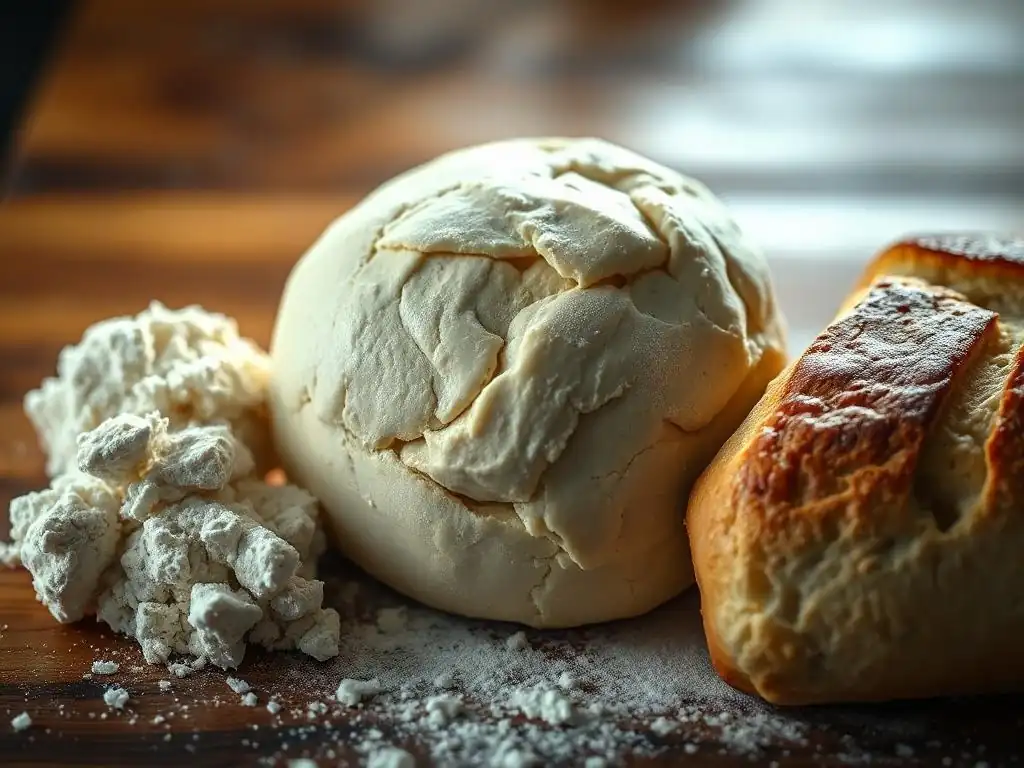
Welcome to BakeWithEase, your trusted guide to unlocking the secrets of the oven! Are you ready to delve into the fascinating world where science meets deliciousness? This week, we're embarking on a Baking Science Deep Dive to explore the crucial role of gluten development in bread texture. Ever wondered what creates that perfect, airy crumb or that satisfying chew in your favorite loaf? Prepare to have your questions answered and your baking game elevated as we uncover the mysteries of gluten! Read on to discover how to achieve the perfect texture, every single time.
- Introduction: The Magic of Gluten in Baking
- The Science of Gluten Development
- Gluten's Impact on Crumb Structure
- Factors Affecting Gluten Development
- Troubleshooting Gluten Development Issues
- Gluten-Free Baking and Crumb Structure Alternatives
- Advanced Gluten Techniques for Expert Bakers
- Conclusion: Mastering Gluten for Baking Perfection
- Frequently Asked Questions
- Final Reflection: The Enduring Mystery of Gluten and the Perfect Crumb
- Unlock Your Baking Potential: Master the Crumb!
Introduction: The Magic of Gluten in Baking
Why Gluten Development Matters for Bread Texture
Gluten development is arguably the single most critical factor in achieving the desired texture in most baked goods, especially bread. It's the foundation upon which the internal structure, or crumb, is built. Without proper gluten development, bread would be dense, heavy, and lack the characteristic airy, open structure many bakers strive for. The elastic network formed by gluten traps the gases produced by yeast or other leavening agents during fermentation and baking, allowing the dough to rise and create a light, porous interior.
Think of it like building a balloon. The gluten network is the flexible skin of the balloon. As gas is pumped in (fermentation/baking), the skin stretches and expands, creating volume. If the skin isn't strong and elastic enough (under-developed gluten), it can't hold the gas, and the balloon won't inflate properly. If it's too tight or brittle (over-developed gluten), it might tear or resist expansion. Mastering gluten development is key to controlling the rise, the size of the air pockets, and ultimately, the overall softness and chewiness of your bread.
BakeWithEase: Your Guide to Understanding Gluten
At BakeWithEase, we believe that understanding the science behind baking makes you a better baker. Gluten might sound intimidating, but it's a natural protein structure that's fascinating to work with once you know its secrets. Our goal is to demystify processes like gluten development and show you exactly how it influences the texture of your bread, from a rustic sourdough boule to a soft sandwich loaf.
We'll walk you through the science of how gluten forms, explore how different techniques impact its development, and provide practical tips for achieving optimal gluten development bread texture in your own kitchen. Whether you're aiming for an open, irregular crumb or a fine, even texture, mastering the manipulation of this protein network is essential, and we're here to guide you every step of the way.
The Science of Gluten Development
What is Gluten and How Does it Form?
Gluten is not present as a ready-made substance in dry flour. Instead, it is formed when two specific proteins found in wheat flour, glutenin and gliadin, come into contact with water. These proteins are relatively inactive in their dry state, but hydration allows them to begin interacting and bonding. The mechanical action of mixing or kneading then facilitates the linking and aligning of these proteins, creating a complex, three-dimensional network.
This network is what we refer to as developed gluten. It's both viscous (sticky) and elastic (stretchy), properties crucial for dough handling and structure. The more these proteins are worked together in the presence of water, the stronger and more extensive the gluten network becomes. This process is fundamental to achieving the desired gluten development bread texture by building the internal scaffolding of the loaf.
Glutenin and Gliadin: The Building Blocks of Gluten
The two primary proteins responsible for gluten formation are glutenin and gliadin. Gliadin is a more globular, sticky protein that contributes viscosity and extensibility to the dough, allowing it to stretch. Glutenin, on the other hand, is a larger, more elastic protein that forms long, complex chains. These glutenin chains give the dough strength and elasticity, enabling it to resist deformation and spring back.
When water is added to flour and mixing begins, the gliadin and glutenin molecules absorb water and start to link together through disulfide bonds. The glutenin molecules form long, interconnected strands, while the gliadin molecules act as a sort of lubricant, allowing the glutenin network to stretch without breaking. The ratio and specific types of glutenin and gliadin in different flours heavily influence the potential for gluten development bread texture. For instance, bread flour has a higher proportion of specific glutenin subunits that form stronger networks.
Hydration and Gluten Formation: The Key to Elasticity
Water is absolutely essential for gluten development. Without sufficient hydration, the gliadin and glutenin proteins cannot properly absorb moisture and interact to form the gluten network. The amount of water in a dough is often expressed as a hydration percentage, calculated as the weight of water divided by the weight of flour (e.g., 700g water / 1000g flour = 70% hydration).
Higher hydration levels (like 70% or 80% in ciabatta or focaccia) generally lead to more extensive and extensible gluten development because the proteins can move and link more freely. However, very high hydration doughs can be challenging to handle precisely because the network is so loose initially. Lower hydration doughs (like 55-60% for some bagels or pasta) result in a tighter, stronger network that requires more mechanical work (kneading) to develop fully. The right hydration is crucial for achieving the optimal gluten development bread texture for a specific type of bread.
Gluten's Impact on Crumb Structure
How Gluten Creates a Network in Dough
As gliadin and glutenin combine with water and are worked, they form a continuous, interconnected web throughout the dough. This network is not a solid mass but rather a flexible, elastic structure made up of long protein strands. Imagine a microscopic mesh or scaffolding. This network is capable of trapping gases, primarily carbon dioxide produced by yeast during fermentation.
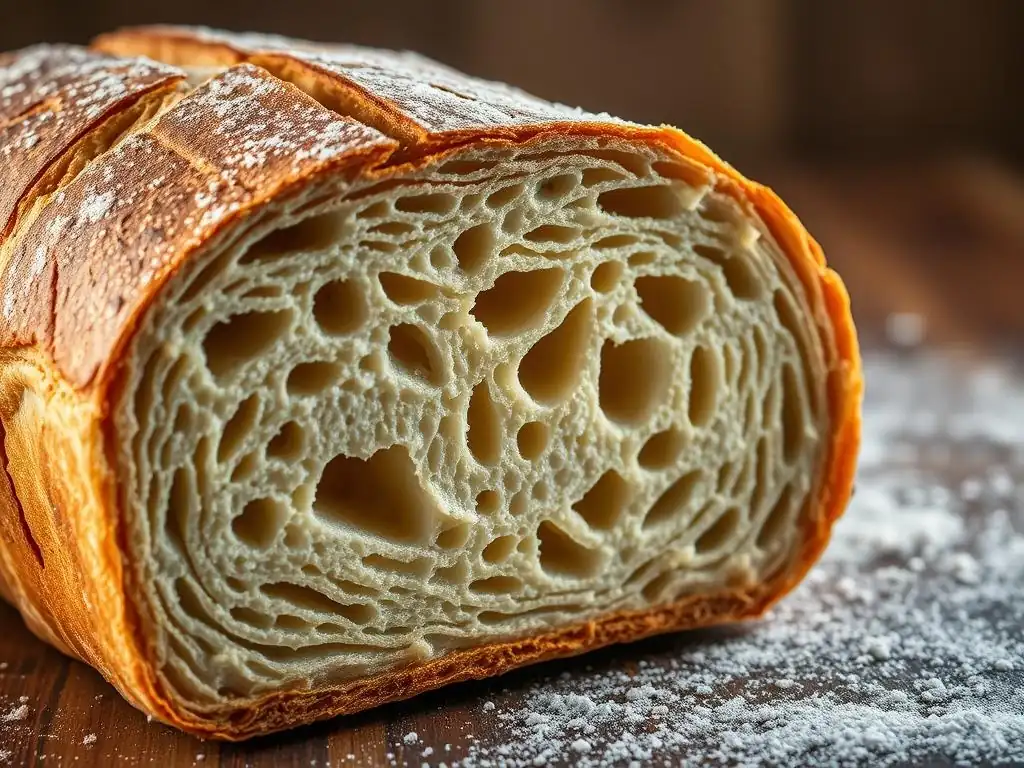
During proving and baking, these trapped gas bubbles expand. The elastic gluten network stretches around the expanding bubbles, allowing the dough volume to increase significantly. This stretching and setting of the gluten network during baking creates the characteristic internal structure of bread – the crumb. The strength, elasticity, and extensibility of the gluten network directly determine the size and distribution of the air pockets within the crumb, fundamentally shaping the final gluten development bread texture.
Gluten Strength and its Affect on Bread Volume
The strength of the gluten network is directly related to its ability to hold gas and support the dough's structure during rising and baking. A strong, well-developed gluten network can trap a large volume of gas, leading to a significant rise and a light, airy loaf. If the gluten is too weak (under-developed), it cannot contain the gas effectively, and the dough will collapse or spread rather than rising upwards, resulting in a dense loaf with poor volume.
Conversely, if the gluten is excessively strong or tight (over-developed), it can resist expansion, leading to a smaller loaf volume and a tough texture. Think of a very tight balloon – it's hard to inflate. The ideal gluten strength allows for optimal expansion while maintaining structural integrity. Achieving this balance is key to maximizing loaf volume and creating the desired gluten development bread texture.
Understanding Different Types of Crumb: Open vs. Closed
The type of crumb structure in bread is a direct result of how the gluten network develops and functions. An "open" crumb, often seen in artisan loaves like ciabatta or sourdough, is characterized by large, irregular air pockets separated by thin walls of baked dough. This is achieved with a highly extensible gluten network, often developed through long fermentation, high hydration, and gentle handling that preserves large gas bubbles.
A "closed" or "even" crumb, typical of sandwich bread or challah, has smaller, more uniform air pockets and a denser texture. This requires a stronger, tighter gluten network that evenly distributes smaller gas bubbles. This is usually achieved through more intensive kneading and sometimes lower hydration. Understanding how to manipulate gluten development bread texture allows bakers to intentionally create either an open or closed crumb structure based on the type of bread desired.
*   Open Crumb:
    *   Large, irregular holes
    *   Thin cell walls
    *   Often achieved with high hydration and gentle handling
    *   Examples: Ciabatta, Sourdough Boule

*   Closed Crumb:
    *   Small, uniform holes
    *   Thicker cell walls
    *   Often achieved with lower hydration and intensive kneading
    *   Examples: Sandwich Bread, Brioche
Factors Affecting Gluten Development
Flour Type and Protein Content: Choosing the Right Flour
The type of flour used is perhaps the most significant factor influencing gluten development, primarily because of its protein content. Different flours contain varying amounts of the gluten-forming proteins, glutenin and gliadin. High-protein flours, like bread flour (typically 12-14% protein), contain more gluten-forming proteins and thus have the potential to develop a stronger, more elastic gluten network, ideal for chewy breads with good volume.
Lower-protein flours, such as cake flour (around 8-10% protein) or pastry flour (around 9-11% protein), have less gluten-forming protein. They develop a weaker, more tender gluten network, which is desirable for cakes, cookies, and pastries where a soft, tender crumb is preferred over chewiness and structure. Using the appropriate flour type is the foundational step in controlling gluten development bread texture.
Mixing Techniques: Kneading and its Impact
Kneading is the physical process that aligns the hydrated gluten proteins and strengthens the network. Whether done by hand or machine, the action of stretching, folding, and pressing the dough helps the glutenin and gliadin molecules link together more effectively. The duration and intensity of kneading directly impact the level of gluten development.
- Intensive kneading (common in commercial baking or for sandwich bread) quickly develops a strong, uniform network, resulting in a smooth, elastic dough.
- Gentle kneading or stretch-and-folds over a longer period (common in artisan bread making) develops gluten more slowly but often results in a more extensible network capable of producing an open crumb.
Insufficient kneading leads to under-developed gluten, resulting in a dense crumb. Excessive kneading can lead to over-developed gluten, making the dough tough and difficult to handle, negatively impacting the final gluten development bread texture.
Water Temperature and its Role in Gluten Hydration
While often overlooked, water temperature plays a role in the rate of gluten hydration and, consequently, development. Warm water (around 90-105°F or 32-40°C) helps activate yeast faster, which is important for fermentation, but it also speeds up the rate at which gluten proteins absorb water and begin to interact. This can lead to faster initial gluten formation.
Using very cold water can slow down gluten development initially, which can be beneficial in long, slow fermentation processes like those used for sourdough or no-knead breads. In these methods, time replaces intensive kneading as the primary driver of gluten development bread texture. The specific temperature isn't as critical as ensuring the proteins have sufficient time and water to hydrate fully.
The Effect of Salt on Gluten Strength
Salt, while crucial for flavor, also impacts gluten development. Salt strengthens the gluten network by tightening it. It helps the protein strands align more efficiently and makes the network less sticky and easier to handle. Dough mixed with salt feels smoother and more elastic than dough mixed without it.
However, adding salt too early, especially directly onto the yeast, can inhibit yeast activity. It's typically added after the initial mixing of flour and water, or sometimes even after a short rest period (autolyse). The presence of salt contributes to a stronger, more controlled gluten development bread texture, helping the loaf hold its shape and achieve good volume.
Troubleshooting Gluten Development Issues
Over-Developed Gluten: Signs and Solutions
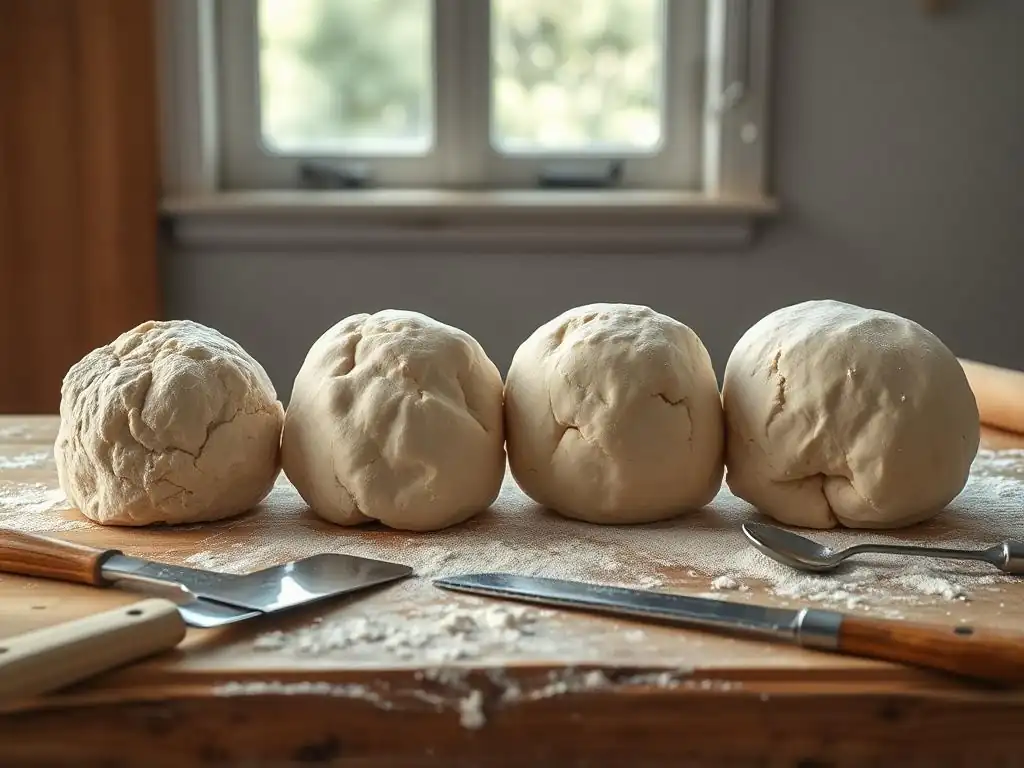
Over-developed gluten occurs when the dough has been kneaded excessively, either for too long or too vigorously. The signs are often obvious: the dough feels very tight and resistant when you try to stretch it. It might tear easily rather than stretching smoothly. It can also appear very wet and sticky, almost like it's breaking down.
If you suspect over-developed gluten, the best remedy is usually rest. Giving the dough a significant rest period (30 minutes to an hour or more) allows the gluten network to relax. This can sometimes help the dough become more extensible again. Unfortunately, severely over-developed dough is difficult to fully salvage, and the resulting bread may have a tough texture and poor volume. Preventing over-development by paying attention to dough feel and using techniques like the windowpane test is key to achieving good gluten development bread texture.
Under-Developed Gluten: Diagnosis and Remedies
Under-developed gluten is more common, especially for new bakers or when using gentle mixing methods. The signs include a dough that feels slack, sticky, and tears easily when stretched, without forming a thin membrane. It lacks elasticity and doesn't hold its shape well. During fermentation, it may spread outwards rather than rising upwards.
The solution for under-developed gluten is more kneading or additional stretch-and-folds. If you're kneading by hand or machine, continue working the dough until it becomes smooth, elastic, and passes the windowpane test. If using a no-knead or low-knead method, incorporate more sets of stretch-and-folds during the initial bulk fermentation period. Proper development is crucial for achieving the desired gluten development bread texture.
Achieving the Perfect Gluten Structure for Different Breads
The "perfect" gluten structure isn't universal; it depends on the type of bread you want to bake.
- For a chewy baguette with an open crumb, you need a strong but very extensible network, often achieved with high-protein flour, moderate hydration (say, 70-75%), and gentle development over a long fermentation.
- For a soft sandwich loaf, you need a strong, tight, and uniform network, typically built with bread flour, moderate hydration (around 60-65%), and intensive kneading.
- For a tender brioche or challah, you use lower protein flour or enrich the dough with fat and eggs (which can inhibit gluten), aiming for moderate gluten development to provide just enough structure without toughness.
Understanding these requirements and adjusting your flour choice, hydration, and mixing technique is how you master gluten development bread texture for any recipe.
Gluten-Free Baking and Crumb Structure Alternatives
Understanding Gluten-Free Flour Blends
Baking without gluten presents unique challenges because you lack the primary protein network responsible for structure and elasticity in traditional wheat bread. Gluten-free flour blends are typically a mix of various flours and starches derived from grains like rice, sorghum, millet, and starches like tapioca, potato, or corn. These individual components do not form a cohesive network like gluten.
The goal of a good gluten-free blend is to mimic some of the properties of wheat flour, providing structure, tenderness, and flavor. However, they inherently lack the elasticity required for trapping gas and creating an airy crumb on their own. Achieving a desirable gluten development bread texture equivalent in gluten-free baking requires alternative approaches to provide binding and structure.
Alternative Binding Agents: Xanthan Gum, Guar Gum, and Psyllium Husk
Since gluten isn't present to provide structure and elasticity, gluten-free baking relies on alternative binding agents. These ingredients absorb water and create a gel-like substance that helps hold the dough together and provides some viscosity and pseudo-elasticity.
Xanthan gumis a common choice, often used in small amounts (around 1/4 to 1/2 teaspoon per cup of flour blend) to provide structure and prevent crumbly textures.Guar gumis similar to xanthan gum but derived from a different source; it's often used in combination with or instead of xanthan.Psyllium husk(whole or powdered) is increasingly popular, especially in gluten-free bread, as it absorbs a significant amount of water and creates a more elastic, dough-like texture that can better mimic the chewiness and structure provided by gluten development bread texture. Using around 10-15% psyllium husk powder relative to the flour weight in high-hydration doughs can dramatically improve the crumb.
Creating a Gluten-Free Crumb Structure: Techniques and Tips
Creating a good crumb in gluten-free bread involves more than just substituting flour and adding a binder. Hydration levels are often higher than in traditional bread doughs because gluten-free flours and binders absorb more water. Gentle mixing is often preferred over intensive kneading, as there's no gluten network to develop. Overmixing can sometimes break down the limited structure provided by binders.
Resting periods are still beneficial, allowing the flours to hydrate fully and the binders to activate. Baking in a loaf pan provides crucial structural support during baking, as the dough is less able to hold its shape compared to wheat dough. Using steam in the oven can also help keep the crust pliable longer, allowing for better oven spring. While you won't achieve the exact same open, airy crumb as a wheat sourdough, thoughtful use of blends, binders, hydration, and baking techniques can result in surprisingly good gluten-free gluten development bread texture alternatives.
Advanced Gluten Techniques for Expert Bakers
Autolyse: Enhancing Gluten Development with Pre-Hydration
Autolyse (pronounced aw-toh-leez) is a technique where flour and water are mixed together and allowed to rest for a period (from 20 minutes to several hours) before adding other ingredients like salt and yeast and beginning the main kneading phase. During this rest, the flour fully hydrates, and enzymatic activity begins to break down some proteins and starches. More importantly, the gluten-forming proteins start to link up on their own without any mechanical work.
This pre-hydration makes the subsequent dough mixing much easier and faster, as significant gluten development has already occurred passively. It also results in a more extensible dough that is easier to handle and shape, contributing to better oven spring and a more open crumb structure. Incorporating autolyse is an effective way to optimize gluten development bread texture with less effort.
Windowpane Test: Assessing Gluten Strength Visually
The windowpane test is a classic method for assessing whether the gluten network in a dough is sufficiently developed. To perform the test, take a small piece of dough (about the size of a golf ball), flatten it slightly, and then gently stretch it outwards using your fingers. Rotate and stretch the dough from the center outwards.
If the dough is well-developed, you should be able to stretch it into a thin, translucent membrane without it tearing easily. You should be able to see light pass through it, like a windowpane. If it tears quickly or feels thick and resistant, it needs more kneading. This visual test is a reliable indicator of whether you've achieved the necessary gluten development bread texture for your intended loaf.
Laminating Dough: Creating Layers and Fine Crumb
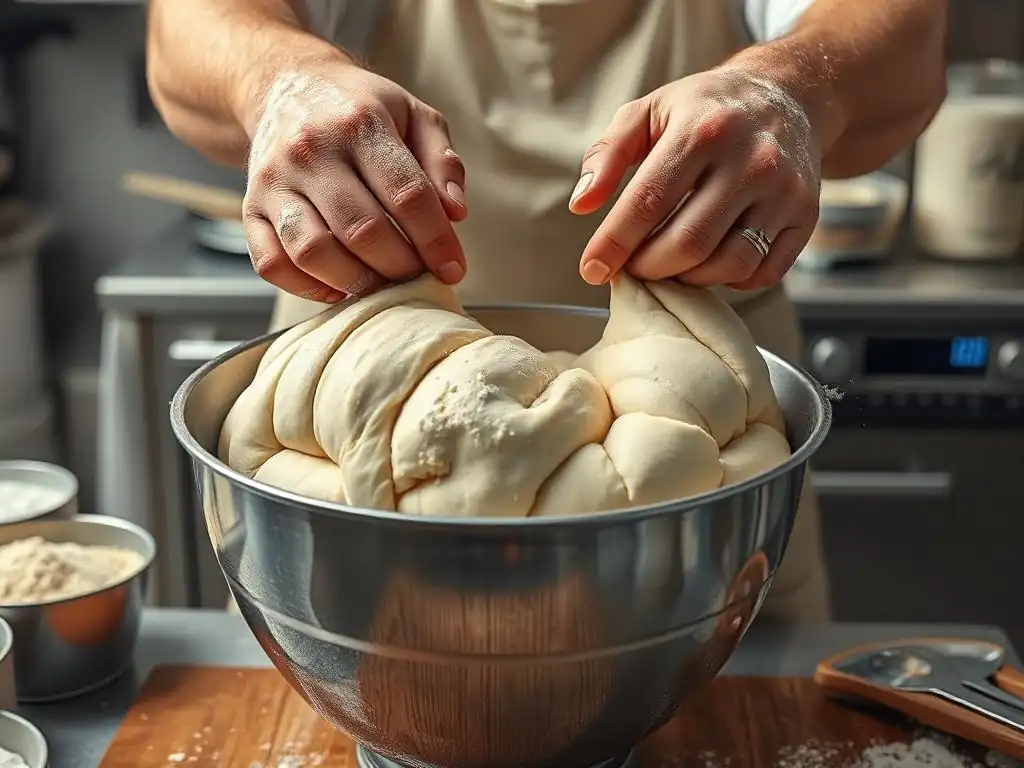
Laminating is a technique where dough is repeatedly folded onto itself like a letter, creating multiple layers. While most famously used for pastries like croissants and puff pastry (where fat is incorporated between layers), it can also be used for bread dough. In bread making, laminating involves stretching a well-developed dough into a large rectangle and then folding it into thirds or quarters. This process aligns the gluten network into distinct layers.
This technique, often used for sourdough or other artisan breads, helps to create a very even, fine crumb structure and can improve oven spring by adding tension and structure to the dough before shaping. It's a more advanced method of manipulating the gluten network to achieve a specific gluten development bread texture.
Conclusion: Mastering Gluten for Baking Perfection
Key Takeaways: Gluten Development and Bread Texture
Understanding gluten development is fundamental to baking successful bread. It's the process by which wheat proteins, gliadin and glutenin, combine with water and are worked to form an elastic network. This network is essential for trapping gases, allowing the dough to rise, and creating the internal structure, or crumb, of the bread.
Key factors influencing gluten development bread texture include the type of flour used (protein content), the amount and temperature of water (hydration), and the mixing or kneading technique applied. Different breads require different levels and types of gluten development – from a tight, uniform network for sandwich loaves to a more extensible network for open-crumb artisan breads. Troubleshooting involves recognizing signs of under or over-development and adjusting your approach. Even in gluten-free baking, alternative binders and techniques are used to mimic some of gluten's structural properties.
BakeWithEase: Continue Your Baking Journey
Mastering gluten development takes practice, but the rewards are immense – consistently producing loaves with the perfect volume, shape, and crumb structure you desire. Experiment with different flours, hydration levels, and mixing techniques, and pay attention to how the dough feels. The more you bake, the more intuitive gluten development bread texture becomes.
At BakeWithEase, we're committed to helping you understand the science and techniques behind great baking. Explore our recipes, guides, and tips to continue honing your skills. With patience and practice, you'll decode the dough and achieve baking perfection in your own kitchen.
Frequently Asked Questions
What is gluten and why is it important in bread baking?
Gluten is a protein complex formed when glutenin and gliadin (found in wheat flour) are hydrated and mixed. It provides structure and elasticity to the dough, crucial for trapping gas and creating the desired texture.
How does kneading affect gluten development?
Kneading aligns and strengthens the gluten strands. This process creates a network that allows the dough to become smooth and elastic, leading to a better crumb structure in the baked bread.
What are some signs of proper gluten development?
A well-developed dough will be smooth, elastic, and slightly tacky. It will also pass the windowpane test – stretching thin enough to see light through it without tearing.
Can you over-knead dough, and what happens if you do?
Yes, over-kneading can break down the gluten structure, leading to a sticky, slack dough. The resulting bread may be dense and tough, rather than light and airy.
What other factors, besides kneading, influence gluten development?
Hydration levels, flour type, and resting time (autolyse) all significantly influence gluten development. Higher protein flours and adequate hydration promote stronger gluten formation.
Final Reflection: The Enduring Mystery of Gluten and the Perfect Crumb
The quest for the perfect loaf is, in essence, a quest to understand gluten. This seemingly simple protein complex holds the key to unlocking bread's incredible textural diversity, from the airy lightness of a brioche to the dense chewiness of a sourdough. Understanding gluten development is not just a baker's pursuit; it's a fundamental aspect of food science with implications for both culinary artistry and nutritional considerations.
The journey through gluten's intricacies has revealed its profound influence on our culinary landscape. From ancient civilizations relying on naturally leavened breads to modern-day artisan bakers meticulously controlling fermentation, gluten has been a constant companion in our relationship with bread. Its impact extends beyond mere texture; it shapes our cultural traditions, our culinary identities, and even our dietary choices. Bread is the staff of life,
a simple phrase that belies the complex history and enduring significance of this staple food, a significance inextricably linked to the protein that gives it its structure.
Now, consider your own relationship with bread. Think about the textures you crave, the aromas that evoke memories, the simple satisfaction of a perfectly crusty loaf. Take this knowledge of gluten development and apply it to your own baking adventures. Experiment with different flours, hydration levels, and fermentation techniques. Embrace the challenge of mastering this complex protein and unlock the potential to create bread that not only nourishes your body but also delights your senses and connects you to a rich culinary heritage. The perfect crumb awaits.
Unlock Your Baking Potential: Master the Crumb!
Thanks for diving deep into the world of gluten and crumb structure! We hope you now have a clearer understanding of how this protein impacts your baking. Ready to put your newfound knowledge to the test?
- Bake a loaf using a new flour blend: Experiment with different gluten percentages to see how it affects your bread's rise and texture. Document your results for future reference!
- Share your baking triumphs (and challenges!): Post a picture of your creation on social media and tag us @BakeWithEase – we'd love to see your masterpiece!
- Explore our advanced baking courses: Deepen your baking knowledge with our expert-led workshops, designed to elevate your skills to a whole new level.
What unique flour blend will you experiment with next, and what delicious results are you hoping to achieve?