
Scoring Sourdough Rye Bread for Maximum Oven Spring

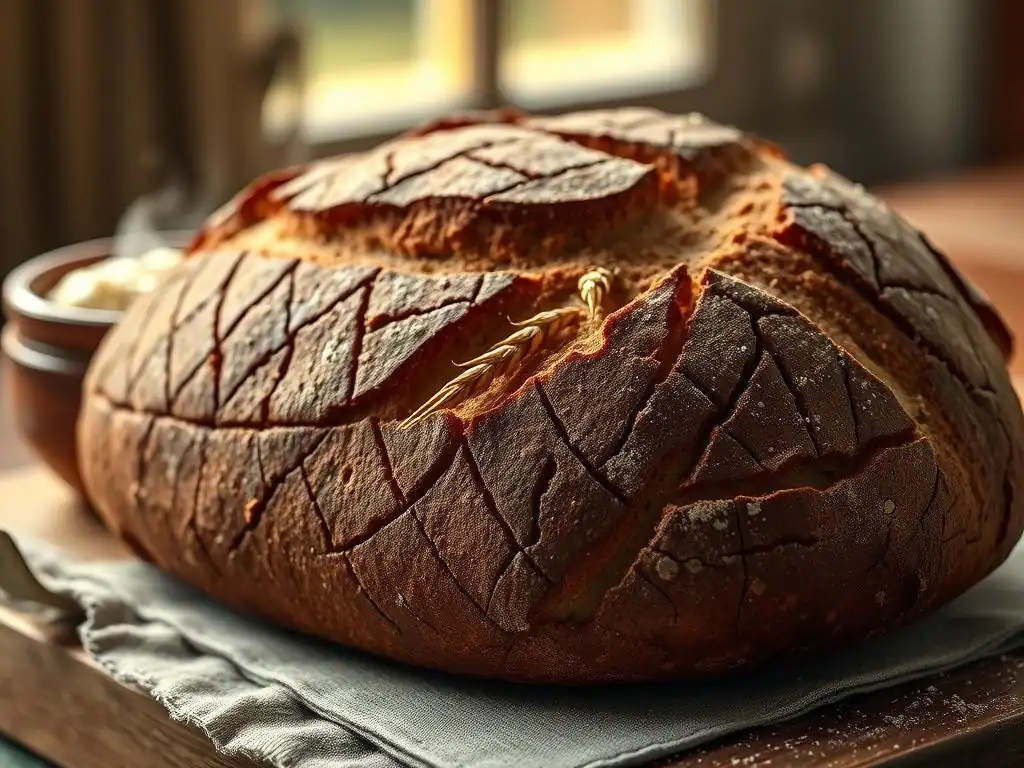
Welcome to BakeWithEase, your companion in the delightful world of baking! Ever wondered how to achieve that perfect oven spring and stunning crust on your sourdough rye? This article delves into the fascinating art of sourdough scoring patterns for rye bread, revealing techniques that will elevate your baking from good to exceptional. Prepare to unlock the secrets hidden within each slash and create loaves that are as beautiful as they are delicious. Intrigued? Let's get scoring!
- Scoring Sourdough Rye Bread for Optimal Oven Spring
- Understanding the Importance of Scoring Rye Sourdough
- Essential Tools for Scoring Rye Sourdough
- Mastering Sourdough Scoring Patterns for Rye: Step-by-Step
- Advanced Rye Sourdough Scoring Techniques
- Troubleshooting Common Scoring Problems in Rye Bread
- Sourdough Rye Scoring Patterns for Visual Appeal and Functionality
- Baking Tips for Optimal Oven Spring After Scoring
- Conclusion: Perfecting Rye Sourdough Scoring
- Frequently Asked Questions
- Final Reflection: Unlocking the Secrets of Rye's Rise
- Unleash Your Rye's Potential: Score for Success!
Scoring Sourdough Rye Bread for Optimal Oven Spring
Understanding the Importance of Scoring Rye Sourdough
Why Score Sourdough Rye Bread? Releasing Pressure and Controlling Expansion
Scoring sourdough rye bread is far more than just an artistic flourish; it's a critical step for achieving a well-baked loaf with excellent structure. As the dough bakes in a hot oven, the moisture within rapidly turns into steam. This steam builds up immense internal pressure, seeking an escape route. If the dough is not intentionally scored, this pressure will find the weakest point in the crust, resulting in uncontrolled ruptures or "blowouts" that can distort the loaf's shape and create an uneven crust.
A well-executed score provides a designated path for this steam to escape. By creating a weak point in the surface before the crust fully sets, you direct the expansion of the loaf. This controlled expansion is what bakers call "oven spring," the final dramatic rise that occurs in the first 10-15 minutes of baking.
Proper sourdough scoring patterns for rye bread ensure that this explosive growth happens predictably, allowing the loaf to achieve maximum volume and develop a beautiful, open crumb structure beneath a crisp crust. Without scoring, the crust hardens too quickly, restricting expansion and potentially leading to a dense loaf.
The Role of Gluten and Starches in Rye Bread Oven Spring
Rye flour differs significantly from wheat flour, primarily in its gluten structure. While wheat contains glutenin and gliadin proteins that form a strong, elastic network when hydrated and kneaded, rye contains lower levels of these proteins, and the gluten network it can form is less robust and elastic. Instead, rye relies heavily on starches and unique carbohydrates called pentosans for its structure and water-holding capacity. These pentosans absorb a large amount of water, contributing to the often sticky nature of rye dough.
During baking, the gelatinization of starches and the properties of pentosans play a crucial role in oven spring, alongside the limited gluten structure. Because the rye network is less elastic, it can be less forgiving of uneven pressure distribution. Precise sourdough scoring patterns for rye are essential to manage the expansion driven by steam and starch gelatinization.
The score must be deep enough to allow for significant expansion but not so deep that it collapses the structure. Understanding the unique characteristics of rye dough – its stickiness, lower elasticity, and reliance on starches – helps inform the best scoring techniques to ensure controlled and effective oven spring.
Achieving Consistent Oven Spring in Your Rye Loaf
Consistent oven spring in sourdough rye bread is the result of several factors working in harmony, with scoring being a key component. Beyond the score itself, the dough's hydration level, the strength of your sourdough starter, adequate bulk fermentation, and proper proofing all contribute to the dough's ability to expand in the oven. A dough that is under-proofed might have excessive vigor and tear unpredictably even with scoring, while an over-proofed dough may lack the strength to achieve significant oven spring regardless of the score.
Temperature is also critical. Baking rye sourdough in a very hot oven, typically starting around 450-500°F (230-260°C), provides the initial burst of heat needed for rapid steam production and oven spring. The score guides this rapid expansion. Achieving consistency involves mastering your specific recipe, understanding your starter's activity, and practicing your timing for fermentation and proofing. Paired with repeatable sourdough scoring patterns for rye, these elements allow you to reliably predict and achieve impressive oven spring with each bake. Paying close attention to the dough's feel and appearance throughout the process is key.
Essential Tools for Scoring Rye Sourdough
Choosing the Right Lame for Rye: Sharpness and Angle
A lame (pronounced "lahm") is a baker's tool specifically designed for scoring bread dough. It typically consists of a handle holding a sharp razor blade. For scoring rye sourdough, sharpness is paramount. A dull blade will drag and tear the sticky rye dough rather than making a clean cut, hindering controlled expansion and resulting in a messy-looking score. Fresh razor blades are highly recommended, and they should be replaced frequently, perhaps after scoring just a few loaves, especially with sticker rye doughs.
The angle at which you hold the lame also significantly impacts the outcome. Holding the blade at a shallow angle, almost parallel to the dough's surface (around 15-30 degrees), is common for creating flaps or "ears" that lift during oven spring, particularly effective on wheat-based doughs.
For rye, where less dramatic ear development might be desired due to the dough's nature, or for specific sourdough scoring patterns for rye like parallel slashes, a slightly steeper angle (closer to 45-60 degrees) can be used to make cleaner, simpler cuts that prioritize steam release and even expansion over ear formation. Experimentation will reveal the best angle for your specific dough and desired pattern.
Alternatives to Lames: Using Serrated and Utility Knives
While a lame is the standard tool, you can still effectively score rye sourdough using other sharp implements. A very sharp utility knife or craft knife with a fresh blade can work well, offering precision and control. The key is again the sharpness; a dull utility blade will suffer the same dragging issues as a dull lame. Ensure the blade is clean and designated for food use if possible.
A sharp serrated knife can also be used, particularly for making rustic cuts. The serrations can help grip the dough's surface, which can be beneficial with sticky rye. However, achieving clean, precise sourdough scoring patterns for rye with a serrated knife can be more challenging than with a straight razor blade. Regardless of the tool used, wetting the blade slightly or dusting the dough surface with flour or rice flour can help prevent sticking, a common issue with high-hydration rye doughs. Always exercise caution when handling extremely sharp blades.
Maintaining Your Scoring Tools for Clean Cuts
Proper maintenance of your scoring tools ensures they remain effective and safe to use. For lames using replaceable razor blades, the primary maintenance is simple: replace the blade often. Razor blades are inexpensive when bought in bulk, and a fresh blade makes a world of difference in achieving clean, effortless cuts on delicate dough. Dispose of old blades safely.
If you are using a non-replaceable blade (like some utility knives) or a serrated knife, ensure they are sharpened regularly. After use, clean any dough residue off the blade immediately. Dough, especially sticky rye dough, can dry and become very hard to remove. Wipe the blade carefully with a damp cloth, then dry it thoroughly to prevent rust. Storing your scoring tools in a safe place where the blade is protected will maintain its edge and prevent accidental cuts. Well-maintained tools are essential for executing clean sourdough scoring patterns for rye.
Mastering Sourdough Scoring Patterns for Rye: Step-by-Step
Single Slash Scoring for Rye Bread: A Beginner's Guide
The single slash is arguably the simplest and most effective sourdough scoring pattern for rye, especially for beginners. It's functional, easy to execute, and reliably directs oven spring. To perform a single slash, dust the top of your proofed rye loaf lightly with flour or rice flour to help prevent sticking. Hold your sharp lame or blade at an angle of about 30-45 degrees relative to the dough's surface.
Make one decisive cut along the length of the loaf, typically slightly off-center. The depth of the cut should be around 1/4 to 1/2 inch (about 0.5 to 1 cm). Aim for a smooth, continuous motion rather than sawing. This single cut creates a clear path for steam, allowing the loaf to expand primarily along that line, resulting in a controlled burst and a classic loaf shape. This pattern is forgiving and highly effective for achieving good oven spring in rye sourdough.
Parallel Scoring: Promoting Even Expansion in Rye Sourdough
Parallel scoring involves making multiple cuts parallel to each other across the surface of the dough. This technique is commonly used for baguettes but can also be adapted for oval or round rye loaves to promote even expansion along the cuts. For a round loaf, you might make several parallel cuts slightly curved to follow the loaf's contour. For an oval loaf, straight parallel cuts along the length are typical.
Using a sharp lame held at a shallow angle (around 15-30 degrees), make several overlapping cuts, each about 1/4 inch (0.5 cm) deep. The cuts should overlap by about 1/4 to 1/3 of their length. The number of cuts will depend on the size of your loaf, but typically ranges from 3 to 7. This method encourages the dough to open up along each score, leading to a broader, flatter expansion compared to a single slash. It's another effective sourdough scoring pattern for rye, distributing the oven spring across multiple points.
The "Leaf" Pattern: Creating a Rustic Effect on Rye
The "leaf" pattern is a popular and visually appealing sourdough scoring pattern for rye, adding a rustic touch to the loaf. It starts with a main central score, similar to the single slash, and then adds smaller, curved cuts branching off from it, resembling the veins of a leaf.
Begin with a central cut along the loaf's length, about 1/4 to 1/2 inch (0.5 to 1 cm) deep. Then, using a sharp blade held at a slightly steeper angle (around 45 degrees), make a series of shorter, curved cuts extending outwards from the central score on both sides. These secondary cuts should be shallower, perhaps 1/8 to 1/4 inch (0.3 to 0.5 cm) deep.
The pattern directs expansion along the main score while the smaller cuts open slightly, enhancing the texture and appearance. This sourdough scoring pattern for rye requires a steady hand but the results are often stunning.
Complex Scoring Patterns for Rye: Experimenting with Design
Once you are comfortable with basic sourdough scoring patterns for rye, you can experiment with more complex designs. These can range from geometric shapes like squares or diamonds to intricate artistic patterns. When attempting complex scores on rye, remember the dough's lower elasticity compared to wheat. Very intricate, shallow cuts might not open as dramatically.
Complex patterns often involve a combination of deeper primary scores to guide major expansion and shallower secondary scores for decorative effect. For example, a "wheat stalk" pattern involves a central deep score with many shallow, angled cuts branching off. When creating complex sourdough scoring patterns for rye, it's crucial that at least some of the cuts are deep enough (1/4 inch or more) to allow for adequate steam release and oven spring. Practice on less critical loaves first, and remember that the primary function of scoring is still to manage expansion, even when aiming for artistic appeal.
Advanced Rye Sourdough Scoring Techniques
Dough Hydration Levels and Scoring Adjustments
The hydration level of your rye sourdough significantly impacts how it behaves during scoring and baking. Higher hydration doughs (e.g., 75% hydration or more) tend to be stickier, softer, and spread out more easily. They require a very sharp blade and often benefit from a light dusting of flour on the surface before scoring to prevent the blade from dragging. Scores on high-hydration rye dough might not need to be as deep, as the dough is already quite fluid and will open readily. Quick, confident cuts are key to avoid deflating the delicate structure.
Lower hydration rye doughs (e.g., 65-70% hydration) are stiffer and hold their shape better. They are generally easier to score cleanly. You can often make deeper cuts (up to 1/2 inch or more) on lower hydration doughs to ensure significant oven spring, as the dough has more structure to support the deeper score without collapsing. Understanding how your specific dough's hydration affects its texture and behavior is crucial for selecting the appropriate depth and angle for your sourdough scoring patterns for rye.
Adjusting Scoring Based on Rye Flour Type (Light, Medium, Dark)
The type of rye flour used also influences the dough's characteristics and how it should be scored. Light rye flour, which has had most of the bran and germ removed, behaves more similarly to wheat flour than darker rye flours, although it still has less gluten. Dough made with light rye might handle slightly deeper or more angled scores, potentially allowing for some modest "ear" development if desired.
Medium and dark rye flours contain more bran and germ, which can interfere with the limited gluten development and contribute to a denser crumb. These flours also contain higher amounts of pentosans. Doughs made with darker rye are often stickier and less elastic. For these doughs, very sharp blades and careful technique are essential. Simpler sourdough scoring patterns for rye, like single slashes or parallel cuts, often work best to ensure reliable steam release. Deep, functional cuts are usually preferred over shallow, decorative ones, as the dough's structure is less likely to support complex, lifting scores.
Scoring with Seeds and Toppings: Preventing Dragging
Many rye sourdough recipes include seeds (like caraway, sunflower, or pumpkin) mixed into the dough or applied as a topping. Scoring a loaf with seeds on the surface presents a unique challenge: preventing the blade from dragging or catching on the seeds. If you plan to score a loaf with a seed topping, apply the seeds after shaping but before the final proof. This allows the seeds to adhere firmly to the dough surface.
When scoring, ensure your blade is exceptionally sharp. You can also try wetting the blade slightly or dusting the surface very lightly with flour, even if seeds are present. For some sourdough scoring patterns for rye with heavy seed toppings, simpler, deeper cuts might be more effective than shallow, intricate ones, as they are less likely to be obstructed by the seeds. Alternatively, you can choose to apply seeds after scoring, pressing them gently into the cut surfaces and the rest of the loaf. This preserves the clean score lines and highlights the openings after baking.
Troubleshooting Common Scoring Problems in Rye Bread
Dough Sticking to the Lame: Using Oil or Water
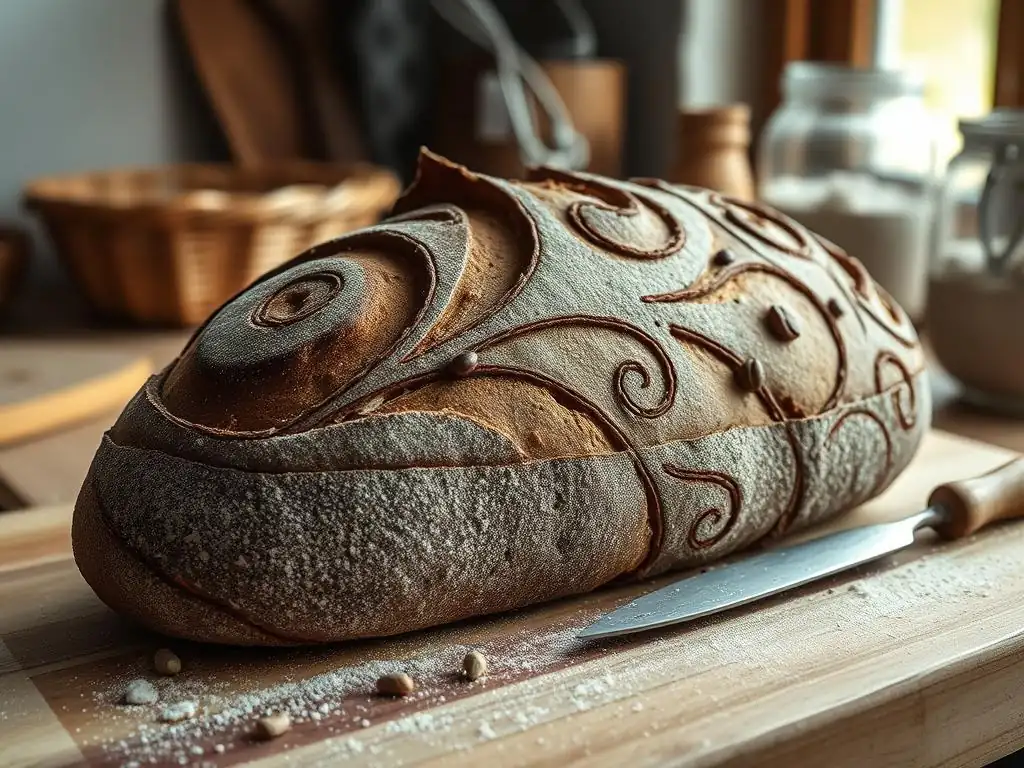
Dough sticking to the lame is a frequent frustration, especially with sticky rye sourdough. This issue leads to jagged, uneven cuts that don't open properly. One simple solution is to lightly oil the blade of your lame or knife before scoring each loaf. A thin layer of neutral oil like vegetable or canola oil helps the blade glide cleanly through the dough.
Another effective method is to dip the blade in water just before each cut. Shake off any excess water so it doesn't pool on the dough. The water creates a temporary non-stick surface. Dusting the surface of the dough with a fine flour like rice flour (which doesn't absorb into the dough as much as wheat flour) can also provide a barrier. Experiment to see which method works best for your specific sourdough scoring patterns for rye and dough hydration level.
Uneven Oven Spring: Addressing Uneven Proofing
Uneven oven spring, where one part of the loaf expands dramatically while another remains flat or bursts unexpectedly, is often a sign of uneven proofing or inconsistent dough structure. If the dough is warmer or more active in one section, that area might expand faster or more vigorously. Similarly, if the dough was not consistently mixed or folded, it might have weak spots.
Ensure your dough proofs evenly by maintaining a consistent temperature throughout the proofing period. If using a proofing basket, make sure the dough is evenly distributed. Uneven scoring depth can also contribute; a score that is too shallow in one area might restrict expansion there, forcing the dough to burst elsewhere. Review your proofing process and scoring technique if you consistently experience uneven oven spring with your sourdough scoring patterns for rye.
Scoring Too Deep or Not Deep Enough: Practice and Observation
Determining the correct depth for scoring comes with practice and observing the results. Scoring too shallowly (e.g., less than 1/4 inch) on a vigorous dough might not provide an adequate escape route for steam, leading to uncontrolled bursting outside of your intended sourdough scoring patterns for rye. The cuts might also simply seal up in the oven without opening.
Conversely, scoring too deeply, especially on a weaker or slightly over-proofed dough, can cause the loaf to collapse or spread excessively in the oven, resulting in a flat loaf with poor structure. A good starting point for most rye sourdoughs is a depth of 1/4 to 1/2 inch (0.5 to 1 cm). Pay attention to how your loaf responds to different depths and adjust in subsequent bakes. Take notes on your process – dough hydration, proofing time, scoring depth – to help you refine your technique.
Dough Exploding Outside of Score: Adjusting Proofing Time
If your rye sourdough consistently bursts in unpredictable places during baking, despite being scored, it's a strong indicator that the dough might be under-proofed. Under-proofed dough has a lot of residual energy and gas production happening rapidly in the oven. If the score isn't sufficient to release this intense pressure, the dough will find the path of least resistance, which might be a thin spot on the side or bottom of the loaf.
To remedy this, try extending your final proofing time slightly. A properly proofed dough will have enough strength to hold its shape but also be relaxed enough to expand predictably along the scores. Observe the dough's condition: it should look well-risen and feel soft and airy but not fragile. Adjusting the proofing time based on the dough's feel and appearance, rather than strictly by the clock, is crucial for preventing blowouts and ensuring your sourdough scoring patterns for rye function as intended.
Sourdough Rye Scoring Patterns for Visual Appeal and Functionality
The Classic Checkered Pattern: Traditional Rye Bread Design
The checkered pattern is a traditional and highly functional sourdough scoring pattern for rye, often seen on dense, round rye loaves. It involves making a series of parallel cuts in one direction across the top of the loaf, and then another series of parallel cuts perpendicular to the first set, creating a grid or checkerboard effect.
Typically, these cuts are made relatively deep, perhaps 1/2 inch (1 cm) or more, especially on heartier, denser rye doughs. The pattern ensures that steam can escape from numerous points across the entire surface of the loaf, promoting even expansion and preventing the dense crumb from being compressed. While simple, this sourdough scoring pattern for rye is visually appealing and very effective for the characteristics of many traditional rye breads.
Spiral Patterns: Adding a Unique Touch to Your Loaf
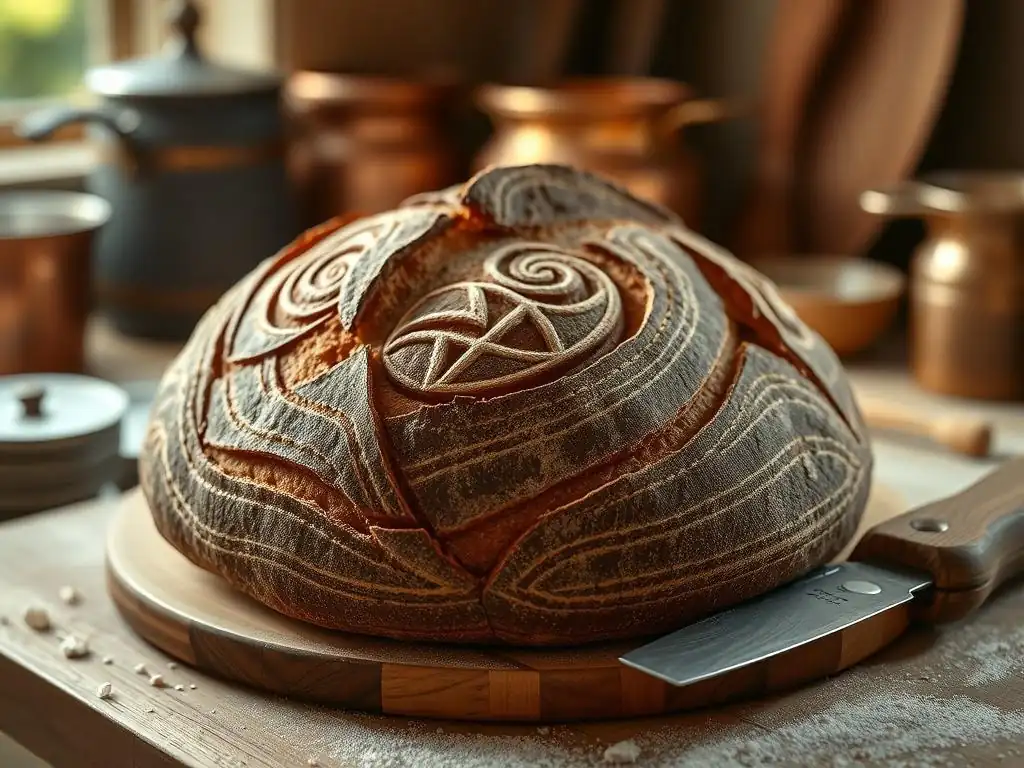
Spiral patterns offer a visually dynamic alternative to linear cuts and can add a unique touch to your rye sourdough. A simple spiral involves making a single continuous cut that starts near the center of a round loaf and circles outwards towards the edge, or vice versa.
Using a sharp lame held at a consistent angle (e.g., 30-45 degrees), begin your cut and slowly rotate the loaf as you guide the blade in a spiral path. The depth should be consistent, around 1/4 to 1/2 inch (0.5 to 1 cm). As the loaf bakes, the spiral cut will open up, creating a beautiful, flowing pattern. This sourdough scoring pattern for rye works well on round loaves and provides a clear path for steam release as the dough expands along the spiral.
Freeform Designs: Expressing Creativity and Individuality
Once you've mastered the basics, freeform sourdough scoring patterns for rye allow you to express your creativity. This could involve drawing abstract shapes, simple images (like a star or a heart), or combining elements from different patterns. The key to successful freeform scoring on rye is to ensure that your artistic cuts also serve the functional purpose of steam release.
Make sure that within your design, there are adequate points or lines that are cut deeply enough (at least 1/4 inch) to allow for proper oven spring. Shallow, decorative lines alone will likely not prevent the dough from bursting elsewhere. Freeform sourdough scoring patterns for rye are best attempted on doughs that you are familiar with, so you have a good understanding of how they will expand. Practice and experimentation are essential when venturing into freeform scoring.
Baking Tips for Optimal Oven Spring After Scoring
The Importance of Steam in Rye Bread Baking: Creating a Moist Environment
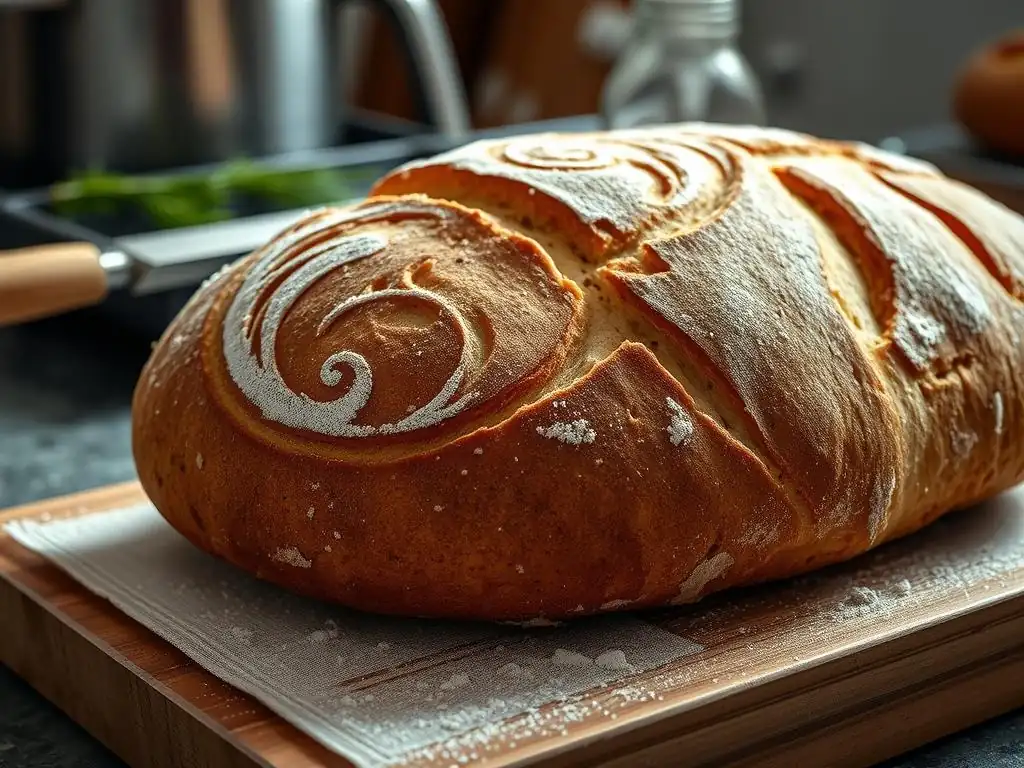
Steam is absolutely critical for achieving optimal oven spring and a beautiful crust on sourdough rye bread. In the initial phase of baking, a moist environment prevents the surface of the dough from hardening too quickly. If the crust sets prematurely, it becomes rigid and restricts the dough's ability to expand, limiting oven spring even if the loaf is perfectly scored.
Steam keeps the crust pliable, allowing the dough to rise and open along the scored lines during the intense heat of the first 10-15 minutes. Common methods for creating steam in a home oven include baking in a Dutch oven or lidded pot, placing a tray of hot water on the bottom rack, or using lava rocks or a cast iron pan preheated and then filled with water. Maintaining high humidity in the oven for the first part of the bake is essential for maximizing the effectiveness of your sourdough scoring patterns for rye.
Achieving the Ideal Baking Temperature: Avoiding Over-Browning
Rye sourdough benefits from baking at a high temperature, particularly at the start, to encourage rapid oven spring. Preheat your oven with your baking vessel (Dutch oven, baking stone, etc.) to a high temperature, typically between 450°F and 500°F (230°C to 260°C). Transfer the scored loaf carefully to the hot surface or vessel.
After the initial period of high heat and steam (usually 15-20 minutes), the temperature is typically reduced to around 400-450°F (200-230°C) for the remainder of the bake. This lower temperature allows the interior of the loaf to cook through without the crust becoming too dark or burning. Finding the ideal temperature balance ensures your loaf achieves maximum volume from the oven spring directed by your sourdough scoring patterns for rye and develops a deep, golden-brown crust without becoming overly dry.
Cooling Your Rye Bread Properly for a Perfect Crust: Preventing Soggy Bottoms
Once your rye sourdough is baked through and has a beautiful crust, proper cooling is the final step to ensure quality. Immediately upon removing the loaf from the oven, transfer it to a wire cooling rack. Cooling on a rack allows air to circulate freely around the entire loaf, preventing steam from condensing on the bottom crust, which can make it soggy.
Resist the urge to cut into the loaf too soon! As the bread cools, residual heat continues to cook the interior, and moisture redistributes throughout the loaf. Cutting into hot bread can result in a gummy texture. For a standard-sized loaf, allow it to cool for at least 2-3 hours, or ideally longer, before slicing. Proper cooling ensures the crust remains crisp, the crumb sets correctly, and the flavors fully develop, showcasing the results of your careful sourdough scoring patterns for rye and baking process.
Conclusion: Perfecting Rye Sourdough Scoring
Scoring sourdough rye bread is a skill that combines artistry with scientific understanding of dough dynamics. By providing controlled points for steam release, sourdough scoring patterns for rye enable the dough to achieve maximum oven spring, resulting in a well-shaped loaf with an open crumb and a beautiful crust. Understanding the unique properties of rye dough – its stickiness, lower gluten, and reliance on starches – is key to selecting the right tools and techniques.
From simple single slashes to more complex designs, each scoring pattern influences the final appearance and expansion of the loaf. Troubleshooting common issues like sticking or uneven spring involves paying attention to dough hydration, proofing, and blade sharpness. Paired with proper baking techniques, including using steam and maintaining correct temperatures, mastering sourdough scoring patterns for rye will elevate your baking from good to truly exceptional, yielding consistently beautiful and delicious loaves.
Continuous Learning and Experimentation with Rye Sourdough Scoring
The journey to perfecting sourdough scoring patterns for rye is one of continuous learning and experimentation. Every loaf is an opportunity to refine your technique. Don't be discouraged by imperfect results; analyze what happened. Was the score too shallow? Did the dough tear elsewhere? Was the blade sharp enough?
Try different scoring patterns on similar doughs to see how they affect the oven spring. Experiment with blade angles and depths. Keep notes on your bakes – the recipe, hydration, proofing time, scoring pattern used, and the outcome. This documentation will help you identify what works well and what needs adjustment. Embrace the process of experimentation with sourdough scoring patterns for rye, and you will steadily improve, gaining confidence and skill with each loaf you bake.
Frequently Asked Questions
What is sourdough scoring and why is it important?
Sourdough scoring is the act of cutting the surface of the dough before baking. This allows the bread to expand predictably during baking (oven spring) and prevents it from bursting randomly.
What are some basic sourdough scoring patterns suitable for rye bread?
Simple patterns like a single slash down the center or parallel lines are good starting points. More complex patterns, such as cross-hatching, can be used as you gain experience.
How does the type of rye flour affect the scoring pattern I should use?
Rye flour can make dough less elastic, so simpler scores are generally better. Too complex a design might cause the loaf to lose structure during baking.
What tool is best for scoring sourdough rye bread?
A lame (pronounced "lahm") is the preferred tool for scoring. However, a sharp knife can also be used carefully.
How deep should I score my sourdough rye loaf?
The depth depends on the pattern, but generally, scores should be about 1/4 to 1/2 inch deep. Deeper scores allow for more expansion, while shallow scores are more subtle.
Final Reflection: Unlocking the Secrets of Rye's Rise
The perfect score on a sourdough rye loaf isn't just about aesthetics; it's the key to unlocking its full potential. A well-executed scoring pattern directly impacts oven spring, that breathtaking expansion that transforms a dense dough into a light, airy masterpiece. Mastering this technique elevates the baking experience from a simple process to a true art form.
The journey of understanding sourdough rye scoring has been a fascinating exploration of both science and artistry. It's a testament to the enduring power of tradition, yet constantly evolving with new techniques and insights. Bread is the staff of life,
they say, and for me, perfecting the score on a rye loaf is a small but significant act of honoring that tradition. The subtle differences in crumb structure, the variations in texture – these are the rewards of careful observation and experimentation.
Now, it's your turn. Don't be afraid to experiment with different scoring patterns, to push the boundaries of what you think is possible. Observe your dough, understand its behavior, and let your creativity guide your knife. Each loaf you bake is a chance to learn, to grow, and to create something truly beautiful and delicious. The journey of mastering sourdough rye scoring is a lifelong pursuit, and the rewards are immeasurable.
Unleash Your Rye's Potential: Score for Success!
Thanks for taking the time to delve into the art of scoring sourdough rye! We hope you gained valuable insights into achieving that perfect oven spring. Now, let's put that knowledge into action.
- Master the Score: Practice your scoring techniques on a few loaves, experimenting with different patterns and depths. Note how each cut affects the final rise. This is key to unlocking your rye's full potential!
- Share Your Success: Show off your beautifully scored loaves on social media – tag us @BakeWithEase so we can admire your baking journey. We'd love to see your results!
- Dive Deeper: Explore other techniques for enhancing your sourdough game; experiment with different flours, hydration levels, or even try creating your own unique score patterns.
What unique scoring pattern will you try on your next sourdough rye loaf?