
Why Your Recipe Needs an Adjustment When Using Liquid Sweeteners

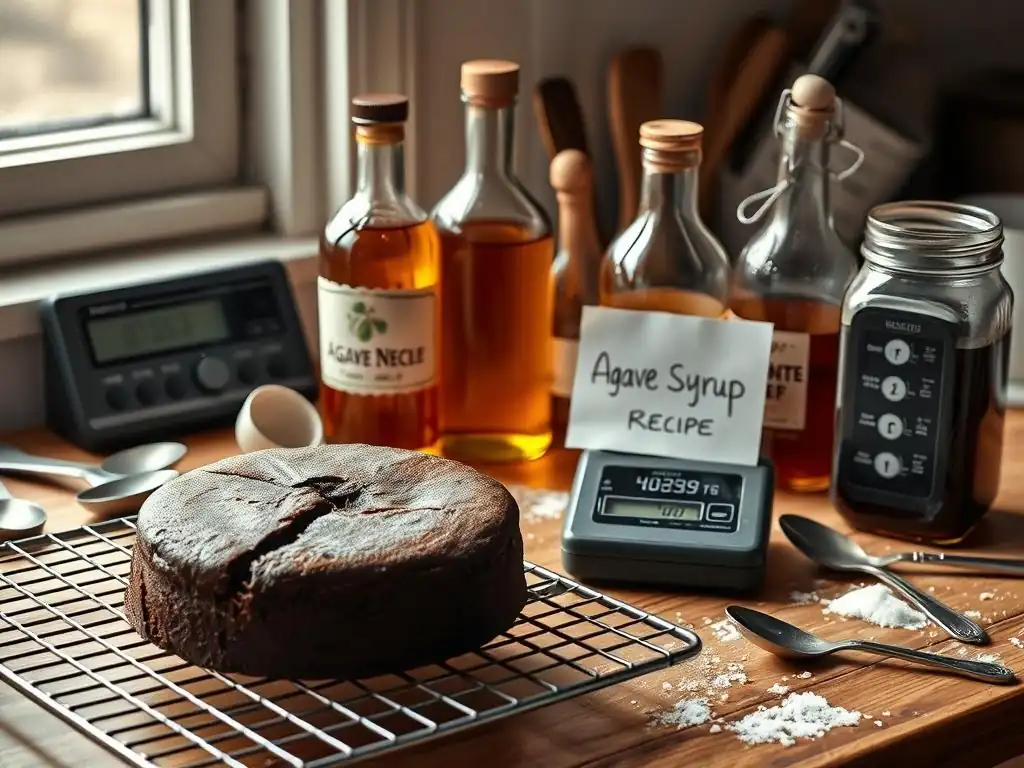
Welcome to BakeWithEase, your trusted companion in the world of baking! Dive into a treasure trove of recipes and techniques designed to elevate your skills, no matter your experience level. Are you curious about how swapping sugar for honey or maple syrup affects the final result? Today, we unravel the secrets of using liquid sweeteners and why your recipe needs an adjustment to guarantee baking perfection. Prepare to discover the nuances of premium baking ingredients and unlock even more delicious possibilities!
- Understanding the Impact of Liquid Sweeteners on Baking
- Liquid Sweeteners Require Adjustments: The Science Behind It
- Common Baking Problems When Ignoring Liquid Sweetener Adjustments
- Making the Right Adjustments: A Step-by-Step Guide for Using Liquid Sweeteners
- Specific Liquid Sweeteners and Their Baking Considerations
- Recommended Baking Tools for Liquid Sweetener Baking
- Recipes Adapted for Liquid Sweeteners
- Troubleshooting Liquid Sweetener Baking: Common Questions Answered
- Conclusion: Mastering the Art of Baking with Liquid Sweeteners
-
Frequently Asked Questions
- Why do liquid sweeteners require adjustments in baking recipes?
- What types of adjustments are typically needed when substituting liquid sweeteners?
- What are some common liquid sweeteners that require recipe adjustments?
- Can substituting liquid sweeteners change the flavor profile of my baked goods?
- Where can I find reliable guidance on making these adjustments correctly?
- Final Reflection: The Sweet Science of Adjustment
- Unlock Baking Bliss: Master Liquid Sweeteners Today!
Understanding the Impact of Liquid Sweeteners on Baking
Switching out granulated sugar for liquid sweeteners like honey, maple syrup, or agave is a popular move for many home bakers, whether for flavor, perceived health benefits, or just to try something new. However, simply swapping cup-for-cup can lead to unexpected and often disappointing results in your baked goods. Unlike dry granulated sugar, liquid sweeteners introduce additional moisture and behave differently when heated, impacting everything from texture and structure to browning and overall sweetness. Understanding these fundamental differences is the first step to successfully integrating liquid sweeteners into your baking repertoire.
The unique properties of these viscous ingredients mean that liquid sweeteners require adjustments to standard recipes. They are not merely a sugar substitute; they are a different type of ingredient entirely. Granulated sugar is primarily sucrose crystals, which provide sweetness and structure, contribute to browning, and help tenderize baked goods by interfering with gluten development.
Liquid sweeteners, while also providing sweetness, bring along water content, varying levels of acidity, and distinct flavor compounds, all of which interact differently with other ingredients during the baking process. Ignoring these differences is a common pitfall, leading to issues like excessive spreading, dense textures, or overly moist centers.
Liquid Sweeteners Require Adjustments: The Science Behind It
The Moisture Factor: How Liquid Sweeteners Affect Hydration
One of the most significant differences between granulated sugar and liquid sweeteners is their water content. Granulated sugar is essentially dry, while honey can contain around 17-18% water, maple syrup typically has about 32-34%, and agave nectar holds roughly 25% water. This added liquid directly impacts the hydration level of your dough or batter. In a typical cookie recipe calling for 1 cup (about 200g) of granulated sugar, substituting with 1 cup of maple syrup (about 310g, containing approximately 100g of water) introduces a substantial amount of extra liquid that wasn't accounted for in the original recipe's hydration balance.
This excess moisture can lead to a variety of problems. It can hinder gluten development, resulting in a weaker structure. It can also prevent the baked good from setting properly, leading to a gummy or soggy texture, especially in the center. For instance, a cake that relies on granulated sugar for its structure and crumb might collapse or become excessively moist and dense when a significant amount of liquid sweetener is substituted without reducing other liquids in the recipe. Liquid sweeteners require adjustments specifically to manage this increased moisture load to achieve the desired texture and crumb structure.
Beyond moisture, liquid sweeteners bring their own unique chemical properties and flavor profiles to the mix. Honey, for example, is naturally acidic, typically having a pH between 3.2 and 4.5. This acidity can interact with leavening agents like baking soda, which is alkaline.
When baking soda is used in a recipe with an acidic ingredient like honey, it produces carbon dioxide gas, contributing to lift. However, if the recipe also contains baking powder (which contains both acid and alkali), the acidity of honey can affect the leavening reaction, potentially leading to excessive lift or a metallic taste if not balanced. Maple syrup also has a slightly acidic pH, usually ranging from 4.5 to 7.0 depending on the grade.
Each liquid sweetener also imparts its own distinct flavor. Honey offers floral or earthy notes depending on its source, maple syrup provides a rich, caramel-like depth, and agave is relatively neutral but can have a subtle sweetness. These flavors aren't just background notes; they become integral to the final taste of the baked good.
Substituting a strongly flavored buckwheat honey for a neutral agave nectar will drastically change the outcome of a delicate vanilla cake. Therefore, when deciding to use liquid sweeteners, consider not only the required structural adjustments but also how their inherent acidity and unique flavors will complement or dominate the other ingredients in your recipe.
Common Baking Problems When Ignoring Liquid Sweetener Adjustments
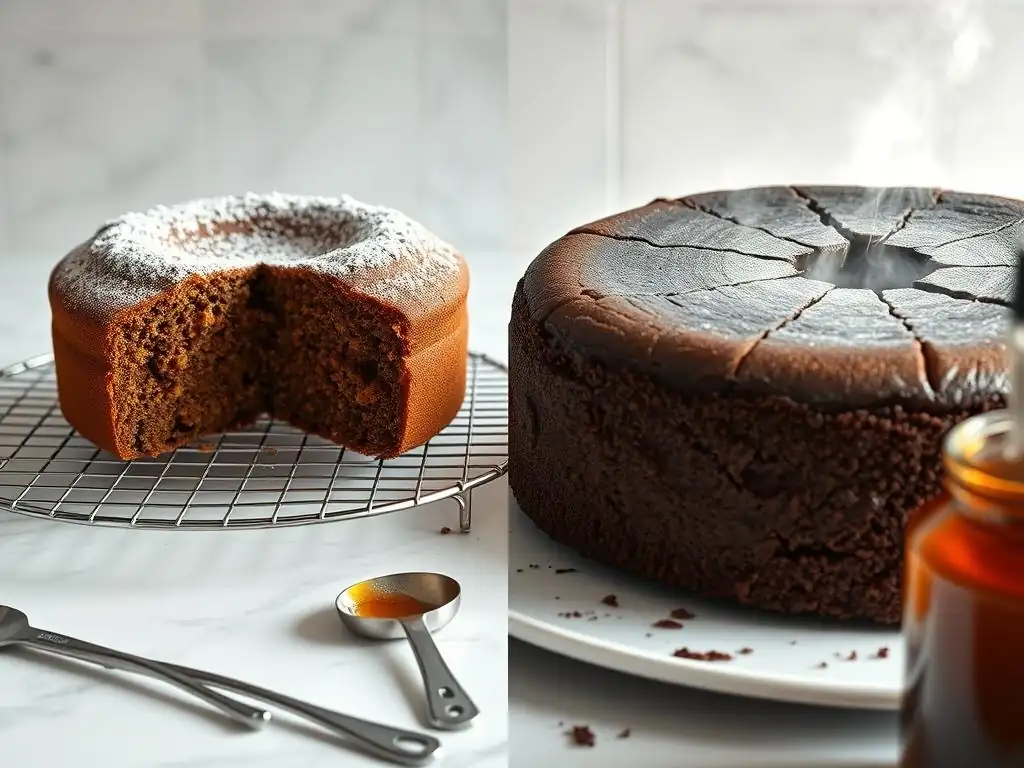
Soggy Bottoms and Underbaked Centers: The Moisture Overload
Failing to adjust for the higher liquid content of sweeteners like honey or maple syrup is a primary culprit behind soggy bottoms and underbaked centers in baked goods. When you substitute a dry ingredient (granulated sugar) with a wet one (liquid sweetener) without compensation, you significantly increase the overall hydration of the batter or dough. This extra moisture takes longer to evaporate during baking. In a cake or muffin, this can mean that the edges are set and browned, but the interior remains wet or gummy, particularly towards the bottom where gravity pulls the excess liquid.
Think about baking a loaf of quick bread. If the original recipe calls for 1 cup of sugar and 1/2 cup of milk, and you substitute the sugar with 1 cup of maple syrup without reducing the milk, your batter now has an additional roughly 1/3 cup of liquid. This excess liquid makes it much harder for the center of the loaf to reach a temperature high enough to fully cook and set before the exterior burns.
The result is often a loaf that looks done on the outside but is dense, heavy, and unpleasantly wet in the middle. This is a classic sign that liquid sweeteners require adjustments to manage moisture.
The extra moisture and different sugar composition of liquid sweeteners also significantly impact the structure of baked goods, often leading to flat cookies and dense cakes. Granulated sugar plays a crucial role in tenderizing baked goods by interfering with the formation of long gluten strands in flour. It competes for water, leaving less available for gluten development, and its crystals physically disrupt the gluten network. Liquid sweeteners, being already dissolved and containing more water, interact differently. The increased water content can actually encourage more gluten development if the batter or dough is mixed vigorously, leading to toughness.
Furthermore, liquid sweeteners don't provide the same bulk and structure that granulated sugar crystals do. In cookies, granulated sugar melts and spreads during baking, contributing to the cookie's final shape and texture. Liquid sweeteners cause more initial spread because of the extra moisture, and without the structure provided by melted sugar crystals, the cookies can become excessively thin and brittle.
In cakes, the lack of crystalline structure and the impact on gluten can result in a finer, sometimes rubbery crumb that is much denser than a cake made with granulated sugar. This demonstrates clearly why liquid sweeteners require adjustments not just for moisture, but also for their structural implications.
Making the Right Adjustments: A Step-by-Step Guide for Using Liquid Sweeteners
Reducing Liquids: Mastering the Moisture Balance
The most critical adjustment when substituting liquid sweeteners for granulated sugar is to reduce other liquids in the recipe to compensate for the added moisture. A general rule of thumb is to reduce the total liquid in the recipe (milk, water, juice, etc.) by about 20% to 30% of the volume of the liquid sweetener used. For instance, if you substitute 1 cup of granulated sugar with 1 cup of honey, which adds roughly 30-40 ml of extra water compared to maple syrup, you might reduce another liquid in the recipe by about 25-30 ml (or approximately 2-3 tablespoons).
It's also common practice to use slightly less liquid sweetener by volume than the granulated sugar it replaces because liquid sweeteners are often sweeter gram-for-gram (though this varies). For example, you might use 2/3 cup to 3/4 cup of liquid sweetener for every 1 cup of granulated sugar. Once you've determined the volume of liquid sweetener you'll use, calculate 20-30% of that volume and subtract it from another liquid ingredient.
For a recipe calling for 1 cup sugar and 1 cup milk, substituting with 3/4 cup maple syrup (approx. 180ml) means you might reduce the milk by about 35-55 ml (2-4 tablespoons), using only roughly 3/4 cup to 7/8 cup milk. This careful balancing act ensures your batter isn't too wet from the outset, a key step as liquid sweeteners require adjustments for moisture.
Lowering Oven Temperature: Preventing Over-Browning
Liquid sweeteners, particularly honey and maple syrup, contain fructose and glucose, which caramelize and brown at lower temperatures than sucrose (the primary sugar in granulated sugar). This means that baked goods made with these sweeteners tend to brown much faster, potentially before the interior is fully cooked. To counteract this, it's often necessary to lower your oven temperature by about 25°F (roughly 15°C) compared to the original recipe.
For example, if a cookie recipe using granulated sugar calls for baking at 350°F (175°C), you would likely bake cookies made with honey or maple syrup at 325°F (160°C). This lower temperature allows the interior of the baked good more time to cook through and set before the exterior becomes excessively dark or burnt. While the baking time might increase slightly at the lower temperature, it significantly reduces the risk of a perfectly browned exterior concealing a raw or gummy center. This simple oven adjustment is crucial because liquid sweeteners require adjustments to their browning properties.
Adding Binding Agents: Improving Texture and Structure
Sometimes, even after adjusting liquids, the texture of baked goods made with liquid sweeteners can be slightly different – perhaps a bit denser or prone to crumbling. Adding a small amount of a binding agent can help improve the structure and texture. Common binding agents include eggs, flax eggs (ground flaxseed mixed with water), or even a tablespoon or two of extra flour.
Eggs provide structure and help emulsify fats and liquids, leading to a more cohesive batter. Flax eggs, made by combining 1 tablespoon of ground flaxseed with 2-3 tablespoons of water and letting it sit for 5-10 minutes until gel-like, serve a similar binding purpose and are excellent for vegan baking. Adding just a touch more flour (perhaps 1-2 tablespoons per cup of liquid sweetener used) can absorb some of the excess moisture and provide additional structure.
For instance, in a muffin recipe, if substituting 1 cup of sugar with liquid sweetener, you might add one extra egg or two tablespoons of flax egg mixture and an extra tablespoon of flour to help achieve a better crumb structure. This extra step reinforces why liquid sweeteners require adjustments beyond just moisture, often needing help to build structure.
Specific Liquid Sweeteners and Their Baking Considerations

Baking with Honey: Flavor, Moisture, and Acidity
Honey is a powerhouse of flavor, ranging from mild acacia to robust buckwheat. When baking with honey, its distinct taste will be prominent, so choose a honey whose flavor profile complements your baked good. It also contains significant moisture (around 17-18%) and is naturally acidic (pH 3.2-4.5). This acidity means it reacts strongly with baking soda, providing lift. If your recipe uses both baking soda and baking powder, the honey's acidity might over-activate the baking soda prematurely or interfere with the double-acting properties of baking powder.
When substituting honey for sugar, use about 2/3 to 3/4 cup of honey for every cup of granulated sugar. Reduce other liquids by about 1/4 cup for every cup of honey used. Because honey causes faster browning, lower the oven temperature by 25°F (15°C). For example, adapting a gingerbread recipe, you might use 3/4 cup of dark, flavorful honey instead of 1 cup of molasses and sugar, reduce the milk by 1/4 cup, and bake at a slightly lower temperature. Remember, successful baking with honey confirms that liquid sweeteners require adjustments tailored to their specific properties.
Baking with Maple Syrup: Choosing the Right Grade and Making Substitutions
Maple syrup offers a warm, caramel-like sweetness that pairs beautifully with nuts, spices, and oats. Different grades of maple syrup have varying intensities of flavor; generally, darker grades have a stronger maple taste. Like honey, maple syrup contains a good amount of water (around 32-34%). It's also slightly less sweet than granulated sugar by volume, so you typically use a similar volume or slightly less, perhaps 3/4 cup for every cup of sugar, depending on desired sweetness.
When substituting with maple syrup, reduce other liquids by approximately 1/3 cup for every cup of maple syrup used. Adjusting the oven temperature down by 25°F (15°C) is also important due to its tendency to brown quickly.
Consider adapting a granola recipe: if it calls for 1/2 cup of sugar and 1/4 cup of oil, you could substitute with 1/2 cup of maple syrup, omit the sugar entirely, and slightly increase the oats or nuts (dry ingredients) to help absorb the extra liquid, baking at a lower temperature for longer to ensure crispness. This highlights how liquid sweeteners require adjustments not just in moisture but also potentially in dry ingredients.
Baking with Agave: Its High Sweetness and Moisture Content
Agave nectar is often touted as a neutral-flavored liquid sweetener, though some varieties can have a distinct taste. It is typically sweeter than granulated sugar by volume, often cited as 1.4 to 1.6 times sweeter. It also has a moderate water content, roughly 25%. Its higher fructose content compared to honey means it can brown even faster than honey or maple syrup.
When substituting with agave, use less volume than granulated sugar – start with about 1/3 to 1/2 cup of agave for every cup of sugar, and adjust to taste. Reduce other liquids by about 1/4 cup for every cup of agave used. Due to its rapid browning, lowering the oven temperature by 25°F (15°C) or even slightly more is crucial, and monitoring baking closely is essential.
For a simple cookie recipe, substituting 1 cup of sugar with 1/2 cup of agave requires reducing another liquid by 1/8 cup and baking at a significantly lower temperature to prevent the edges from burning before the center is cooked. Baking with agave underscores that liquid sweeteners require adjustments based on their unique composition and sweetness index.
Recommended Baking Tools for Liquid Sweetener Baking
Digital Kitchen Scale: Precision for Liquid Measurements
While recipes often provide volume measurements for liquid sweeteners (cups, tablespoons), these can be less precise than measuring by weight, especially given the viscosity of ingredients like honey or maple syrup. Using a digital kitchen scale allows you to measure liquid sweeteners accurately by weight. For example, 1 cup of granulated sugar weighs about 200 grams, while 1 cup of honey weighs closer to 340 grams, and 1 cup of maple syrup is around 310 grams.
If you are adapting a recipe that calls for sugar by weight, you can more accurately substitute by weighing your liquid sweetener, keeping in mind the sweetness index and moisture content. Even when using volume measurements for the liquid sweetener itself, using a scale for other ingredients like flour can help maintain the correct overall ratio of wet to dry ingredients after you've made your liquid adjustments. Precision in measurement is key when liquid sweeteners require adjustments, and a digital scale provides that precision.
Measuring Cups and Spoons: Choosing the Right Set
Even when using a scale for some ingredients, you'll still rely on measuring cups and spoons for liquids and smaller quantities. For liquid sweeteners, it's best to use liquid measuring cups (those with a spout and markings up the side) rather than dry measuring cups (which should be filled to the brim and leveled). Pour the liquid sweetener into the cup placed on a flat surface and read the measurement at eye level.
For sticky sweeteners like honey or maple syrup, lightly coating the inside of the measuring cup or spoon with a neutral oil or non-stick spray before pouring can make them much easier to measure accurately and pour out completely, ensuring you get the full amount needed without waste. Choosing a set of durable, clearly marked measuring cups and spoons will serve you well in all your baking endeavors, especially when tackling recipes where liquid sweeteners require adjustments and precise measurement is paramount.
Recipes Adapted for Liquid Sweeteners
Honey Oat Bread: A Delicious and Healthy Loaf
Adapting a standard quick bread or yeast bread recipe to use honey results in a loaf with a wonderfully tender crumb and a subtle sweetness. For a quick oat bread that originally uses 1/2 cup of granulated sugar, you could substitute with 1/3 cup of honey. If the original recipe calls for 1 cup of milk, you would reduce the milk by about 1-2 tablespoons (roughly 15-30 ml) to account for the honey's moisture.
You would also likely need to lower the oven temperature by 25°F (15°C) and bake for a slightly longer time. The resulting bread will have a lovely golden-brown crust due to the honey's browning properties and a moist, flavorful interior with notes of honey complementing the oats. This type of adaptation showcases how liquid sweeteners require adjustments across multiple parameters – moisture, sweetness level, and baking temperature – to achieve a successful outcome.
Maple Syrup Granola: A Crunchy and Flavorful Breakfast
Granola is an excellent candidate for using liquid sweeteners like maple syrup. A basic granola recipe might call for oats, nuts, seeds, oil, and a sweetener like brown sugar or honey. To adapt a recipe using 1/2 cup of brown sugar and 1/4 cup of liquid sweetener (like honey or maple syrup), you could simply use 3/4 cup of maple syrup as the sole sweetener.
Since maple syrup has more moisture than brown sugar, you might need to bake the granola at a slightly lower temperature (e.g., 300°F or 150°C instead of 325°F or 160°C) for a longer period, stirring more frequently, to ensure it dries out and becomes crisp. The maple syrup provides a richer, more complex flavor than sugar alone. Successfully crispy granola adapted with maple syrup is a testament to how liquid sweeteners require adjustments to achieve the desired texture, in this case, crispness.
Troubleshooting Liquid Sweetener Baking: Common Questions Answered
My Cake is Too Dense: What Did I Do Wrong?
If you've substituted granulated sugar with a liquid sweetener and your cake turned out dense, several factors could be at play, most stemming from insufficient adjustments. The most common cause is not adequately reducing the other liquids in the recipe. The extra moisture from the liquid sweetener adds weight and can prevent the cake from rising properly, leading to a heavy, tight crumb. For example, if you used 1 cup of maple syrup for 1 cup of sugar but didn't reduce the milk or oil, the batter was likely too wet.
Another reason could be related to the impact on gluten development. If the batter was overmixed after adding the flour, the increased water content from the liquid sweetener could have promoted excessive gluten formation, resulting in a tough, dense texture. Ensure you reduce liquids appropriately (by 20-30% of the liquid sweetener volume) and mix the batter gently once the flour is added. Recognizing that liquid sweeteners require adjustments for both moisture and gluten interaction is key to avoiding dense cakes.
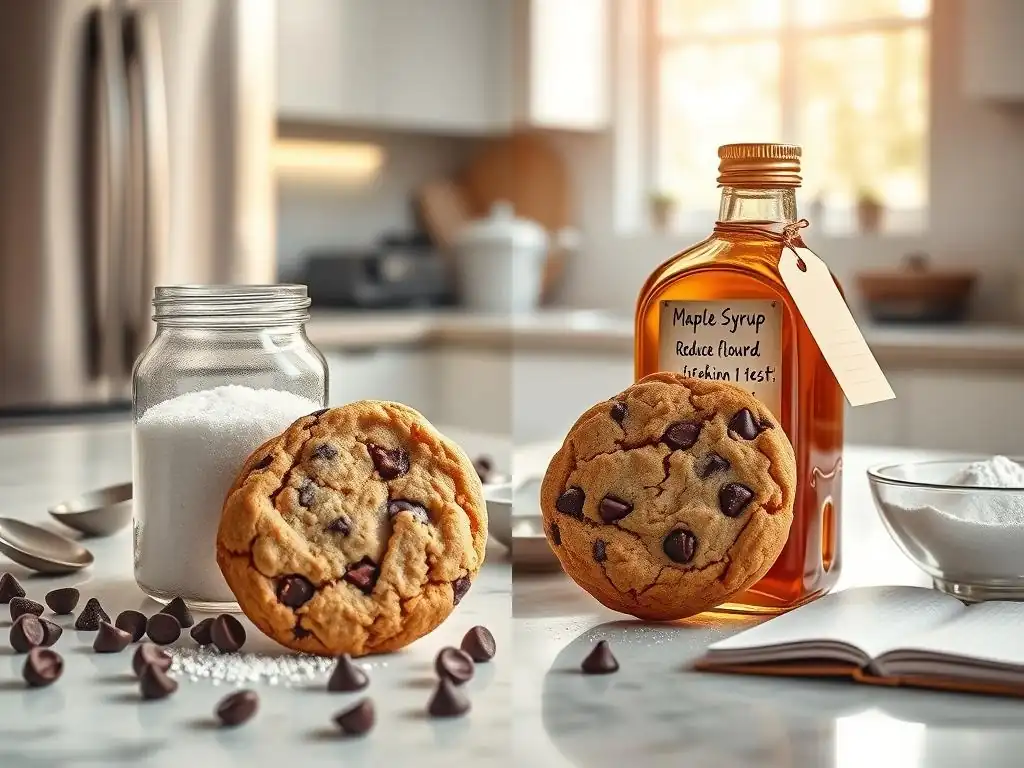
Cookies that spread excessively thin when baked with liquid sweeteners are also a common issue, again largely due to the increased moisture content and the lack of crystalline structure from granulated sugar. The extra liquid causes the dough to be softer and spread more rapidly in the oven before it has a chance to set. For instance, if a standard chocolate chip cookie recipe calls for creaming butter and sugar, substituting liquid sweetener won't create the same aerated structure, and the added moisture softens the dough.
To prevent this, ensure you've reduced other liquids in the recipe. Chilling the cookie dough thoroughly before baking is also highly effective; the cold fat helps the cookies hold their shape longer in the oven.
Additionally, you can try adding a tablespoon or two of extra flour to the dough to absorb some of the excess moisture, or slightly increasing the baking temperature for the first few minutes (before lowering it for browning control) to help the edges set faster. These strategies address the core issue that liquid sweeteners require adjustments to manage their impact on dough consistency and spread.
Conclusion: Mastering the Art of Baking with Liquid Sweeteners
Baking with liquid sweeteners like honey, maple syrup, and agave offers exciting possibilities for flavor and texture, but it's clear that simply swapping them cup-for-cup with granulated sugar is a recipe for disappointment. Liquid sweeteners require adjustments because they introduce significant moisture, possess different sweetness levels, and contain compounds that affect browning and acidity. Ignoring these factors can lead to common problems like soggy centers, dense cakes, and flat cookies.
By understanding the science behind these differences and implementing key adjustments—primarily reducing other liquids, potentially lowering oven temperature, and sometimes adding binding agents—you can successfully incorporate these flavorful ingredients into your baking. Each liquid sweetener has its own nuances, requiring slightly different approaches. With a bit of practice and careful attention to detail, you'll master the art of adapting recipes, unlocking a whole new world of delicious possibilities in your kitchen.
Frequently Asked Questions
Why do liquid sweeteners require adjustments in baking recipes?
Liquid sweeteners add extra moisture to a recipe, which can affect the final texture. This often necessitates reducing other liquids or increasing dry ingredients to maintain the correct consistency of the batter or dough.
What types of adjustments are typically needed when substituting liquid sweeteners?
The most common adjustments are reducing the amount of other liquids in the recipe and potentially adding more dry ingredients like flour. The specific amounts depend on the type of sweetener used and the original recipe.
What are some common liquid sweeteners that require recipe adjustments?
Common liquid sweeteners include honey, maple syrup, molasses, and agave nectar. Each has a different sweetness level and viscosity, impacting the necessary adjustments.
Can substituting liquid sweeteners change the flavor profile of my baked goods?
Yes, different liquid sweeteners have distinct flavors that will influence the final taste. Consider how the flavor of the sweetener will complement the other ingredients in your recipe.
Where can I find reliable guidance on making these adjustments correctly?
BakeWithEase.com offers simple recipes, techniques, and tips for bakers of all levels, including specific guidance on using liquid sweeteners. Look for articles and recipes that specifically address this substitution.
Final Reflection: The Sweet Science of Adjustment
The subtle art of baking, often perceived as precise measurement, is actually a dance of adaptation. Liquid sweeteners, with their varying densities and sweetness levels, demand a keen understanding of their unique properties. Ignoring these differences can lead to disastrous results, transforming a potential masterpiece into a culinary catastrophe. This understanding is not just for professional bakers; it's crucial for anyone who wants to achieve consistently delicious results in their kitchen.
The impact of this seemingly small detail – the choice of sweetener – ripples far beyond the individual recipe. It speaks to a larger cultural shift towards healthier eating and a greater awareness of ingredient nuances. We are moving beyond simple sugar substitutions and into a more sophisticated understanding of how different sweeteners interact with other ingredients. The best recipes are those that allow for improvisation and adaptation, reflecting the unique qualities of the ingredients at hand.
This quote highlights the importance of understanding the fundamental principles of baking, rather than simply following a recipe blindly.
Now, consider your own baking journey. Have you experienced the frustration of a recipe gone wrong, only to realize the sweetener was the culprit? I encourage you to embrace the challenge of understanding liquid sweeteners. Experiment, adjust, and discover the sweet science of achieving baking perfection. The reward? Consistently delicious results and a deeper appreciation for the artistry of baking. Don't just follow recipes; master them.
Unlock Baking Bliss: Master Liquid Sweeteners Today!
Thanks for diving into the world of liquid sweeteners with us! You've now got the knowledge to bake confidently with honey, maple syrup, or agave – achieving perfectly balanced sweetness every time. Ready to put your new skills to the test?
- Bake your favorite recipe, substituting liquid sweetener! Note the changes in texture and taste. Share your results in the comments below – we'd love to hear about your baking journey!
- Explore alternative liquid sweetener options – experiment with different types and discover your new go-to.
- Share this article with your fellow baking enthusiasts – let's spread the baking joy!
What unexpected flavor combinations will you create with your newfound liquid sweetener expertise?