
Moisture Matters: Why Dough Hydration Impacts the Maillard Reaction

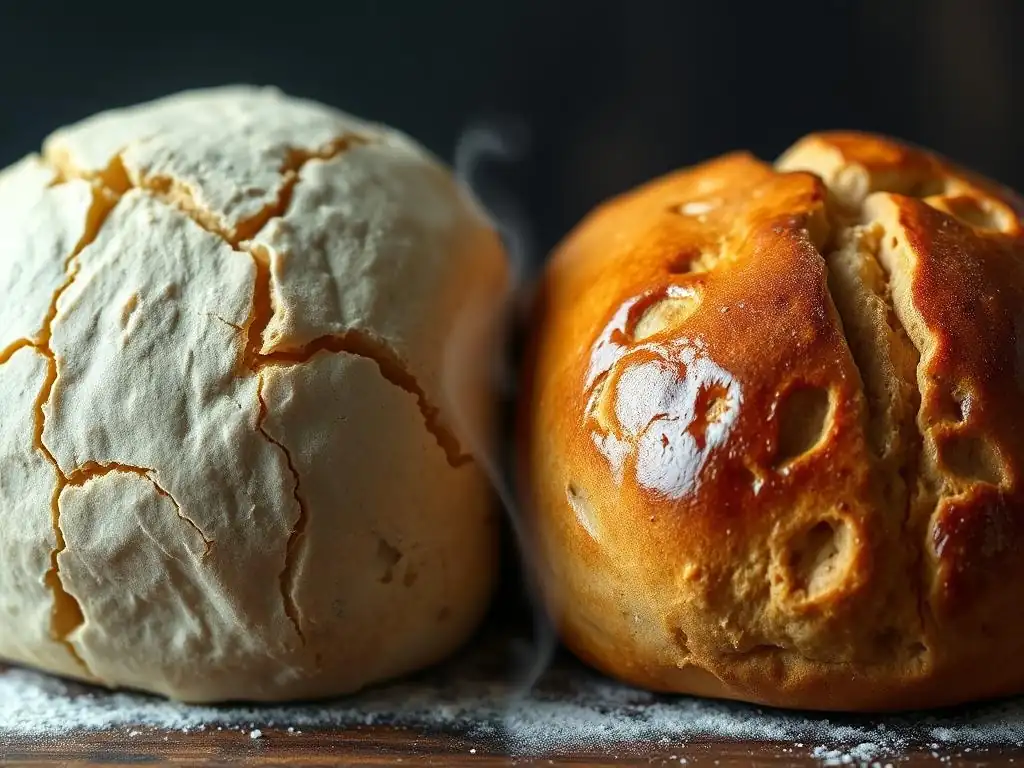
Welcome to BakeWithEase, your guide to unlocking baking brilliance! Ever wondered why some bakes boast a richer, deeper flavor than others? It all comes down to a crucial, often overlooked element: dough hydration. Prepare to delve into a fascinating "Baking Science Deep Dive" as we explore just how dough hydration impacts flavor, and ultimately, the magic of the Maillard reaction. Intrigued? Read on to discover the secrets behind perfectly browned, incredibly flavorful baked goods!
- Understanding the Maillard Reaction in Baking: A Flavor Deep Dive
- Dough Hydration and Its Influence on Baking Chemistry
- The Direct Link: Dough Hydration Impacts Flavor Through Maillard
- Low Hydration Doughs: Maillard Reaction Limitations and Flavor Profiles
- Optimizing Dough Hydration for Maximum Maillard Impact
- Beyond Hydration: Other Factors Affecting the Maillard Reaction in Dough
- Troubleshooting Maillard Issues Related to Hydration
- Experimenting with Hydration: Recipes to Explore the Maillard Effect
- Conclusion: Mastering Dough Hydration for Superior Baking Flavor
-
Frequently Asked Questions
- How does dough hydration impact the Maillard reaction?
- What level of dough hydration is generally recommended for optimal flavor development?
- Can under-hydrated dough negatively impact flavor?
- What role does starch play in dough hydration and flavor?
- Besides the Maillard reaction, what other aspects of baking are affected by dough hydration?
- Final Reflection: The Transformative Power of Hydration in Baking
- Unleash Your Baking Potential Today!
Understanding the Maillard Reaction in Baking: A Flavor Deep Dive
What is the Maillard Reaction and Why Does it Matter for Bakers?
The Maillard reaction is a complex series of chemical reactions that occur when amino acids and reducing sugars react at elevated temperatures. This isn't just any chemical process; it's the powerhouse behind the delicious browning and complex flavors we cherish in countless baked goods, from the deep golden crust of a loaf of bread to the rich caramel notes in a cookie. Without the Maillard reaction, your bread crust would be pale and bland, and your cookies wouldn't have that satisfying depth of flavor. It's truly fundamental to achieving that desirable "baked" taste and aroma.
For bakers, understanding the Maillard reaction is key to controlling the final outcome of their creations. It's responsible for the non-enzymatic browning that happens alongside caramelization (the browning of sugars alone). While caramelization primarily affects sugars, the Maillard reaction creates hundreds of different flavor compounds, contributing nutty, malty, roasted, and even chocolatey notes, depending on the ingredients and conditions. Mastering this reaction allows you to manipulate crust color, aroma, and the intricate flavor profile of your baked goods, making it a vital piece of baking science to grasp.
Key Ingredients for the Maillard Reaction: Reducing Sugars and Amino Acids
The primary players required for the Maillard reaction to occur are reducing sugars and amino acids. Reducing sugars are simple sugars like glucose, fructose, and lactose. Sucrose (table sugar) is not a reducing sugar, but it can break down into glucose and fructose under baking conditions, making it available for the reaction. These sugars provide the carbon atoms needed for the complex flavor molecules to form.
Amino acids are the building blocks of proteins. Different amino acids react with sugars to produce different sets of flavor compounds. For example, the amino acid lysine is particularly reactive in the Maillard process and contributes significantly to desirable crust flavors. Flour naturally contains both starches (which break down into reducing sugars) and proteins (which contain amino acids). Other ingredients like milk (lactose) and added sugars or malt can increase the availability of these crucial reactants, thereby enhancing the potential for the Maillard reaction and, consequently, the flavor development in your dough.
The Role of Heat in Triggering the Maillard Reaction
Heat is the essential energy input that kickstarts and sustains the Maillard reaction. While some slow reactions can occur at room temperature, the significant browning and flavor development associated with baking typically begin when temperatures reach around 140°C (approximately 284°F). As the temperature increases, the rate of the Maillard reaction accelerates dramatically.
In a baking oven, the surface of the dough reaches these temperatures relatively quickly as moisture evaporates. The internal temperature of the dough, however, stays around 100°C (212°F) until most of the water has evaporated, limiting the Maillard reaction to the crust initially. Higher oven temperatures lead to faster surface heating and more intense Maillard browning, potentially producing a thicker, darker crust and stronger flavors.
However, too high a temperature can cause the surface to burn before the interior is cooked, resulting in bitter, acrid flavors instead of desirable ones. Therefore, careful temperature control is crucial for optimizing the Maillard reaction during baking.
Dough Hydration and Its Influence on Baking Chemistry
Defining Dough Hydration: Baker's Percentage and Water's Crucial Role
Dough hydration refers to the amount of water used in a dough recipe relative to the amount of flour. It is most commonly expressed as a baker's percentage, where the weight of the water is divided by the weight of the flour and multiplied by 100. For example, a dough made with 1000 grams of flour and 600 grams of water has a hydration of 60% (600g / 1000g * 100). Hydration levels vary significantly depending on the type of baked good, ranging from low-hydration bagels (around 50-55%) to high-hydration ciabatta or sourdough (often 75-85% or even higher).
Water is not just a passive ingredient; it is the solvent that makes the complex chemistry of baking possible. It hydrates the flour proteins (glutenin and gliadin) to form gluten, dissolves sugars and salts, activates yeast, and plays a critical role in heat transfer during baking. The amount of water available directly influences the dough's consistency, handling properties, and, significantly, the chemical reactions that occur within it, including the Maillard reaction. Understanding how dough hydration impacts flavor starts with recognizing water's fundamental role.
How Dough Hydration Affects Gluten Development and Dough Extensibility
Dough hydration is paramount for proper gluten development. Gluten is formed when the proteins gliadin and glutenin in flour absorb water and are then worked or kneaded. This process allows these proteins to link together, creating an elastic network that gives dough its structure and ability to trap gases produced by yeast or other leaveners.
In a well-hydrated dough (e.g., 70% hydration or more), the gluten proteins can fully absorb water, leading to a more relaxed, extensible, and elastic network. This makes the dough easier to stretch and shape, and allows for a more open crumb structure in the final bake. Conversely, in a low-hydration dough (e.g., 55% hydration), there isn't enough water for the gluten proteins to fully hydrate and form strong, pliable bonds.
This results in a stiffer, less extensible dough that is harder to work with and typically produces a denser crumb structure. The degree of gluten development influenced by hydration also indirectly affects flavor by impacting the dough's ability to rise and the final texture.
Water as a Solvent: Facilitating Chemical Reactions in Dough
One of water's most critical functions in dough is acting as a solvent. Many of the key reactants in baking, including sugars, salts, and amino acids, are water-soluble. For chemical reactions like the Maillard reaction to occur efficiently, these reactants need to be dissolved and able to move freely within the dough matrix to come into contact with each other.
Water dissolves the reducing sugars and amino acids present in the flour and other ingredients, making them mobile. As the dough heats up during baking, this aqueous environment allows these dissolved reactants to migrate towards the surface where temperatures are highest. The presence of sufficient water ensures that there is a ready supply of sugars and amino acids available at the dough's surface to participate in the Maillard reaction as soon as the temperature threshold is met. This solubility and mobility aspect is a core reason why dough hydration impacts flavor development, particularly the flavors generated by browning reactions.
The Direct Link: Dough Hydration Impacts Flavor Through Maillard
Increased Hydration, Enhanced Maillard: Why More Water Can Mean More Flavor
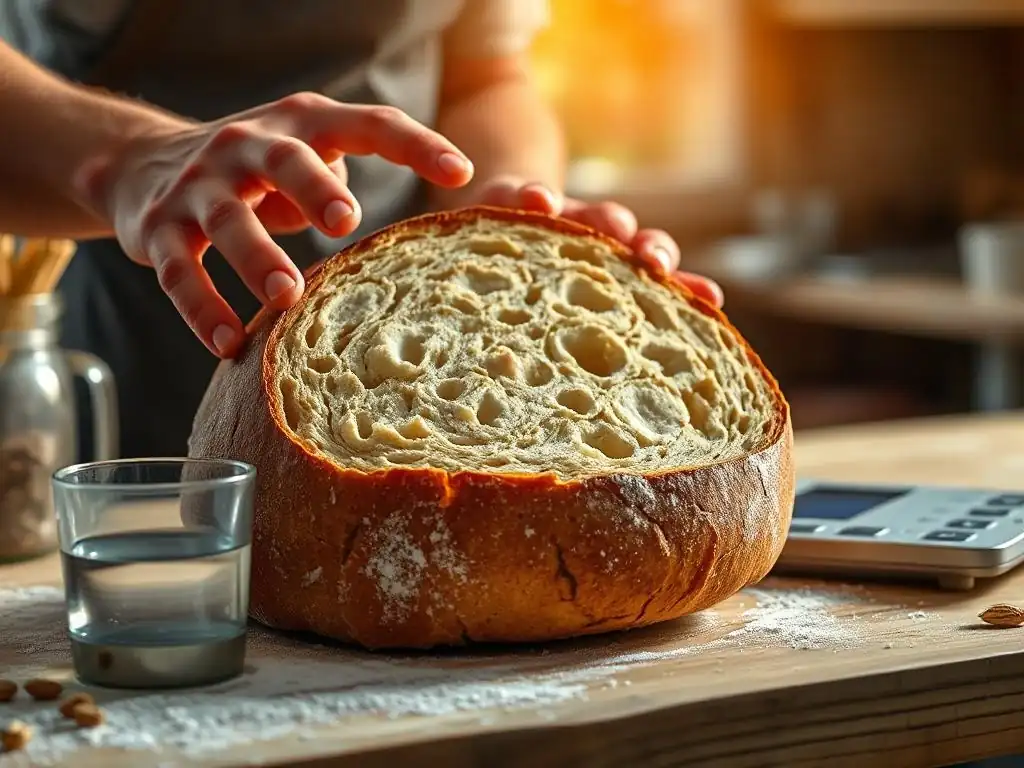
Higher dough hydration levels generally lead to more pronounced Maillard reaction development and, consequently, deeper, more complex flavors in the crust. This isn't simply about having more water; it's about the conditions the water creates. A dough with higher hydration maintains a moist surface for a longer period in the hot oven. This prolonged moisture helps keep the surface temperature from rising too quickly, allowing the Maillard reaction to proceed more gradually and develop a wider range of flavor compounds before potentially burning.
Furthermore, the increased water content facilitates the movement of reducing sugars and amino acids from the interior of the dough to the surface as water evaporates. This constant replenishment of reactants at the hottest zone maximizes the potential for the Maillard reaction to occur vigorously and for a sustained period. This is a key mechanism by which increased dough hydration impacts flavor, contributing significantly to the rich, toasted notes characteristic of well-baked crusts.
Higher Hydration, Better Sugar Distribution and Browning
Water acts as the primary medium for dissolving and distributing ingredients throughout the dough. In a high-hydration dough, sugars (including those produced from starch breakdown) and amino acids are more effectively dissolved and dispersed evenly throughout the matrix. This uniform distribution means that when the dough hits the oven, there's a more consistent availability of reactants across the entire surface.
This leads to more uniform and desirable browning via the Maillard reaction. Instead of patchy or uneven coloration, you get a beautiful, even golden-to-deep brown crust. This uniform browning isn't just aesthetic; it indicates that the Maillard reaction has occurred consistently across the surface, resulting in a more balanced and intense flavor profile throughout the crust. The improved solubility and transport of reactants facilitated by higher hydration directly impact how effectively and evenly the Maillard reaction contributes to flavor.
The Impact of Water on Amino Acid Availability for the Maillard Reaction
Amino acids, while part of proteins, need to be accessible to react with sugars. While proteins themselves are not readily mobile, the individual amino acids released during dough development (through enzymatic action or just being present in the flour) are water-soluble. The level of dough hydration directly influences how well these crucial amino acids can dissolve and migrate.
In a well-hydrated dough, amino acids are more readily dissolved in the continuous water phase and can move freely towards the dough surface where the Maillard reaction is happening. This increased availability of amino acids at the reaction sites enhances the potential for complex flavor formation. Consider a high-hydration sourdough, often around 75-85%.
The ample water allows for significant enzymatic activity (from the starter and flour), potentially releasing more amino acids and sugars, and then facilitates their movement to the crust, leading to a deeply colored, intensely flavored crust. This demonstrates clearly how dough hydration impacts flavor by influencing the availability and mobility of essential reactants.
Low Hydration Doughs: Maillard Reaction Limitations and Flavor Profiles
The Effects of Insufficient Water on Maillard Browning
In low-hydration doughs, such as those used for some crackers, certain types of cookies, or stiff pasta doughs (though pasta is usually boiled, not baked), the limited amount of water significantly restricts the Maillard reaction. With less water, the solubility and mobility of reducing sugars and amino acids are reduced. The reactants are less able to dissolve and move within the dough matrix, particularly towards the surface where temperatures are high enough for significant reaction.
Furthermore, the surface of a low-hydration dough tends to dry out much faster in the oven. While some initial Maillard browning may occur, the rapid loss of surface moisture quickly halts the reaction by removing the necessary aqueous environment and potentially causing the surface temperature to rise too quickly, leading to scorching rather than complex flavor development. The result is often a paler crust with less intense Maillard flavors compared to higher-hydration counterparts baked under similar conditions.
Drier Dough, Different Flavors: Exploring Flavor Compounds in Low-Hydration Bakes
While the Maillard reaction may be less prominent in low-hydration bakes, this doesn't mean they are flavorless. The limited Maillard reaction contributes some browning and flavor, but other reactions and factors play a larger role in their characteristic taste and texture. For instance, the breakdown of starches and fats can contribute to flavor. Also, the texture itself profoundly impacts the perception of flavor; a crisp cracker or a short cookie has a different mouthfeel that interacts with flavor release.
Flavor compounds formed in low-hydration systems might lean more towards simple toasted notes rather than the complex nutty, malty, or roasted aromas found in high-hydration crusts. Think of the difference between a water cracker and a crusty baguette. The cracker's flavor comes more from the toasted flour and perhaps added fats or salts, with minimal Maillard browning. The baguette's flavor is dominated by the intense Maillard reaction in its thin, crisp crust. This contrast highlights how dough hydration impacts flavor by steering the dominance of different chemical pathways during baking.
Strategies for Optimizing Maillard in Low-Hydration Doughs [e.g., Diastatic Malt Powder Addition]
Even with limited water, bakers can employ strategies to encourage more Maillard reaction and enhance flavor in low-hydration doughs. One effective method is the addition of diastatic malt powder. This ingredient contains enzymes, primarily amylase, that break down starch into reducing sugars (like maltose, glucose, and fructose) during mixing and proofing. Increasing the concentration of reducing sugars provides more reactants for the Maillard reaction.
Another strategy is to include ingredients that are rich in reducing sugars or amino acids, such as milk (lactose and proteins), eggs (proteins), or a small amount of honey or molasses (fructose and glucose). Baking at slightly lower temperatures for a longer time can also help, allowing more time for limited moisture to facilitate some reaction before the surface dries out completely.
While these techniques won't replicate the intense Maillard of a high-hydration loaf, they can significantly improve the flavor and browning of drier doughs, demonstrating that even with low dough hydration, impacts flavor can still be enhanced through targeted additions.
Optimizing Dough Hydration for Maximum Maillard Impact
Finding the Sweet Spot: Ideal Hydration Levels for Different Baked Goods
There is no single "ideal" dough hydration level; the optimal amount of water depends entirely on the desired outcome for a specific baked good. Different hydration levels create different dough consistencies, which in turn affect handling, gluten structure, crumb texture, and ultimately, the potential for the Maillard reaction and flavor development.
- Low Hydration (50-60%): Bagels, pretzels, some crackers, stiff pasta doughs. Results in a dense, chewy texture and limited Maillard browning, often requiring boiling before baking for crust formation (bagels, pretzels).
- Medium Hydration (60-70%): Standard sandwich bread, pizza dough, enriched doughs (brioche, challah). Produces a manageable dough, good oven spring, and moderate crust development with noticeable Maillard flavors.
- High Hydration (70-80%+): Ciabatta, sourdough bread, focaccia. Creates a wet, sometimes difficult-to-handle dough, but yields an open, airy crumb and a thin, crisp crust with intense Maillard browning and complex flavors.
Choosing the appropriate hydration level is a fundamental step in controlling how dough hydration impacts flavor and texture in your final product.
Factors Influencing Optimal Dough Hydration [e.g., Flour Protein Content, Ambient Humidity]
Several factors influence how much water flour can absorb and the ideal hydration level for a recipe. The most significant is the flour's protein content. Higher protein flours (like bread flour, typically 12-14% protein) can absorb more water than lower protein flours (like pastry or cake flour, typically 8-10% protein) due to the water-absorbing capacity of gluten-forming proteins. Using a higher hydration with low-protein flour can result in a soupy, unworkable dough.
Ambient humidity also plays a role. On a very humid day, flour may have already absorbed some moisture from the air, meaning you might need slightly less water than on a dry day. Conversely, in a dry climate, flour might be drier, requiring a little more water.
Other factors include the presence of other ingredients like whole grains (which absorb more water), sugar (which competes for water), and fats (which can inhibit water absorption). Experienced bakers learn to adjust hydration slightly based on these variables and the feel of the dough, recognizing that minor changes in dough hydration impacts flavor and texture.
Practical Tips for Controlling Dough Hydration in Your Baking
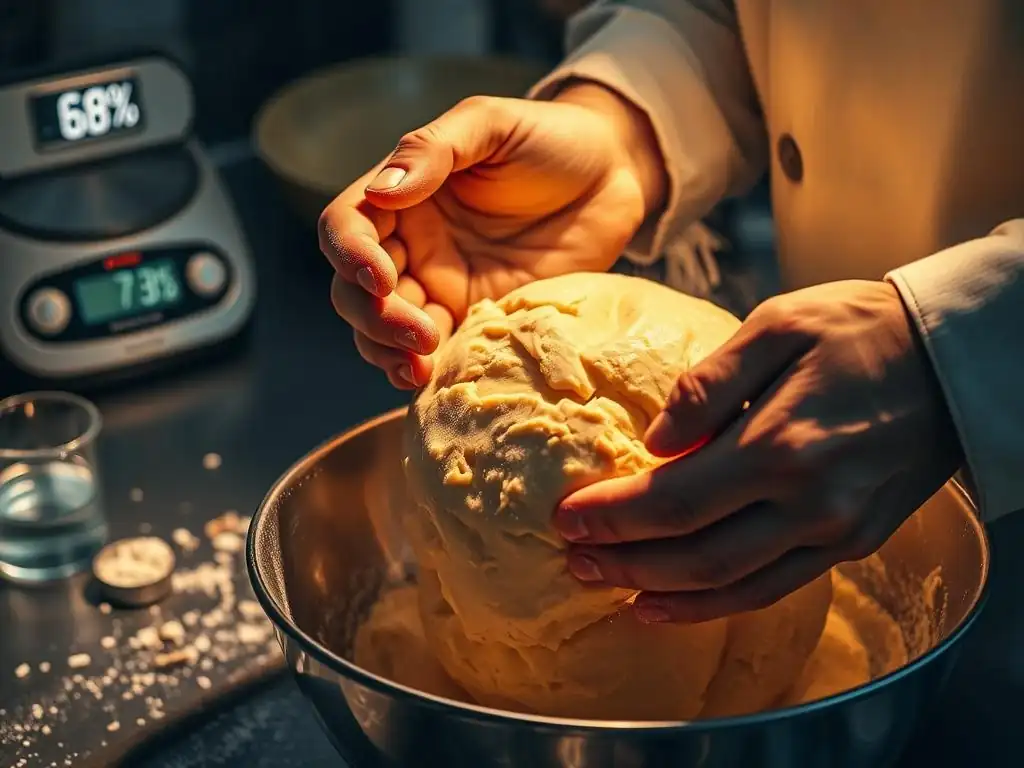
Controlling dough hydration accurately starts with precise measurement. Always weigh your ingredients, especially flour and water, using a digital scale. Volume measurements can be highly inaccurate, particularly for flour, which can be packed differently each time. Using baker's percentages helps standardize recipes regardless of batch size.
When working with a new recipe or flour, it can be helpful to hold back a small amount of water (perhaps 5-10% of the total water) initially. Mix the dough and observe its consistency. If it seems too stiff or dry, gradually add the reserved water until the desired consistency is achieved.
Conversely, if the dough feels too wet, you may need to add a small amount of flour, remembering that this slight adjustment will change your actual hydration percentage. Paying attention to how the dough feels and behaves is key to mastering hydration and optimizing how your dough hydration impacts flavor and texture.
Beyond Hydration: Other Factors Affecting the Maillard Reaction in Dough
The Role of Sugars: Choosing the Right Sweeteners for Maillard
While water is crucial for dissolving sugars, the type and amount of sugar present also significantly influence the Maillard reaction. As mentioned, reducing sugars (glucose, fructose, maltose, lactose) are direct participants. Sucrose (table sugar) must be broken down into glucose and fructose to participate, a process that happens more readily in acidic environments or with enzymatic help.
Adding sugars to dough, even just a small amount, increases the pool of reactants available for the Maillard reaction, leading to more pronounced browning and sweeter, more caramelized flavors in the crust. Different sugars contribute slightly different flavor notes. For example, fructose is more reactive than glucose and can lead to faster browning.
Using ingredients like honey, maple syrup, or brown sugar (which contain fructose and glucose) or milk (lactose) will enhance Maillard browning more readily than using pure sucrose alone. The interaction between added sugars and dough hydration impacts flavor by ensuring these sugars are dissolved and available to react.
pH Levels and Their Impact on Maillard Reaction Rate
The acidity or alkalinity (pH level) of the dough also affects the rate of the Maillard reaction. The reaction proceeds more rapidly in slightly alkaline conditions (higher pH) and is slowed down in acidic conditions (lower pH). Most bread doughs are slightly acidic due to fermentation, especially sourdough, which can have a pH as low as 4.0-4.5.
This acidity is one reason why sourdough crusts, despite often being high hydration and baked at high temperatures, can sometimes appear less intensely browned than commercial yeasted loaves that might have dough conditioners or a slightly higher pH. While the acidity contributes desirable tangy flavors, it slightly inhibits the Maillard reaction rate. Bakers might adjust baking times or temperatures to compensate. Understanding the interplay between pH, hydration, and the Maillard reaction provides greater control over the final crust color and flavor, demonstrating that dough hydration impacts flavor within a complex chemical environment.
Temperature Control: Achieving the Perfect Bake for Flavor Development
Oven temperature is a critical factor in controlling the Maillard reaction. As noted, the reaction begins around 140°C (284°F) and accelerates with increasing heat. Baking at too low a temperature might result in insufficient browning and pale, underdeveloped crust flavor. Conversely, baking at too high a temperature can cause the exterior to brown and potentially burn too quickly before the interior is fully cooked, leading to bitter flavors.
For many crusty breads, bakers use high initial temperatures (e.g., 220-250°C or 425-475°F) often with steam. The steam helps keep the surface moist initially, allowing for maximum oven spring and delaying crust formation slightly, giving the Maillard reaction reactants time to migrate to the surface. Once the steam is released or evaporates, the dry heat rapidly increases the surface temperature, triggering intense Maillard browning and caramelization.
The temperature is often reduced later in the bake to ensure the interior cooks through without burning the crust. Precise temperature management works hand-in-hand with hydration levels to ensure dough hydration impacts flavor development optimally.
Pale Crust and Weak Flavor: Identifying Hydration Problems
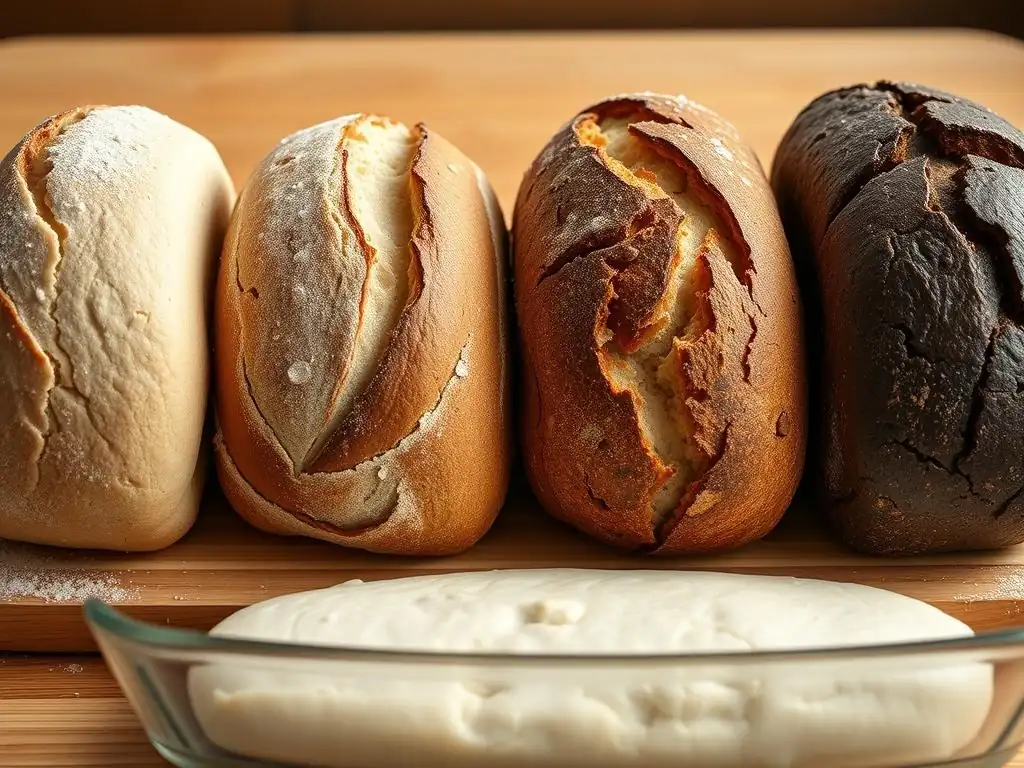
If your baked goods consistently come out with a pale crust and lack the expected rich, toasty flavors, dough hydration could be a contributing factor. A pale crust often indicates insufficient Maillard reaction. While other issues like low oven temperature, short baking time, or lack of available sugars/amino acids are common causes, using too low a hydration level can also be the culprit.
A dough that is too dry limits the solubility and mobility of the necessary reactants (sugars and amino acids). It also causes the surface to dry out too quickly in the oven, curtailing the time window for the Maillard reaction to occur effectively. If your recipe is designed for a higher hydration, but you've used too little water, you'll likely see reduced browning and less developed flavor. Recognizing that insufficient dough hydration impacts flavor by limiting the Maillard reaction is the first step in troubleshooting.
Over-Browning and Burnt Flavors: Avoiding Excessive Maillard
Conversely, if your crust is consistently over-browning or even burning before the interior is done, while high oven temperature or excessive sugar are common causes, hydration can also play a role. Sometimes, very high hydration doughs, especially if baked without sufficient steam or at excessively high temperatures, can develop a thin crust that browns extremely rapidly.
While high hydration generally promotes Maillard, if the surface dries out too quickly or the temperature is too high, the reaction can race past the desirable stage and into producing bitter, burnt compounds. Ensuring adequate steam in the initial phase of baking high-hydration doughs helps prevent premature crusting and over-browning. Adjusting oven temperature or baking time based on the dough's hydration level is crucial to manage the Maillard reaction effectively and prevent undesirable burnt flavors, demonstrating that dough hydration impacts flavor not just in its presence, but also in how it interacts with other baking parameters.
Adjusting Hydration to Achieve Desired Color and Flavor
Once you understand how dough hydration influences the Maillard reaction and flavor development, you can strategically adjust it to achieve your desired results. If you want a thinner, crispier crust with more intense Maillard flavors (like a baguette or ciabatta), increasing hydration is a good approach. This promotes better reactant availability and mobility, leading to more browning potential.
If you prefer a softer crust with less intense browning (like a sandwich loaf), a lower hydration level might be more appropriate. Small adjustments can make a big difference. For instance, increasing the hydration of a standard 65% dough to 70% can noticeably impact the crust's color and flavor depth. Experimenting with hydration levels, while keeping other factors like temperature and time consistent, is an excellent way to directly observe how dough hydration impacts flavor and texture in your specific recipes.
Experimenting with Hydration: Recipes to Explore the Maillard Effect
High-Hydration Sourdough: A Case Study in Maillard Development
High-hydration sourdough bread is a prime example of how significant dough hydration impacts flavor through the Maillard reaction. Typically made with 75-85% hydration (or even higher), the ample water content facilitates maximum gluten development, leading to a very open, airy crumb. More importantly for flavor, the high hydration allows for extensive enzymatic activity during the long fermentation, breaking down starches into reducing sugars and proteins into amino acids.
During baking, the high water content helps keep the crust moist initially, allowing the dough to expand fully. As the water evaporates, the high concentration of available sugars and amino acids at the surface, combined with high baking temperatures (often 230-250°C initially), drives an intense Maillard reaction. This results in the characteristic deeply colored, thick, and shatteringly crisp crust of well-baked sourdough, loaded with complex nutty, roasted, and caramelized flavors – a direct result of optimized Maillard facilitated by high hydration.
Baguettes vs. Ciabatta: Comparing Maillard in Different Hydration Levels
Comparing the crust of a classic French baguette to that of an Italian ciabatta offers another excellent illustration of how dough hydration impacts flavor and texture via the Maillard reaction. Baguettes are typically made with around 70-75% hydration, resulting in a relatively thin, crisp crust and a moderately open crumb. Ciabatta, on the other hand, often uses 75-85% hydration or even higher, creating a very slack, wet dough that bakes into a loaf with an extremely open crumb and a thinner, even crispier crust.
While both benefit greatly from the Maillard reaction, the higher hydration of ciabatta generally leads to a more intense and uniform browning on its thin crust compared to a baguette. The increased water allows for better reactant migration and potentially a slightly longer window for the reaction before the crust fully hardens. Both are delicious, but the subtle differences in crust flavor and texture are significantly influenced by their respective hydration levels and how this impacts the Maillard process.
Pizza Dough: A Recipe Demonstrating the Impact of Hydration on Flavor
Pizza dough provides a relatable example of how adjusting hydration changes the final product, including Maillard flavors. Traditional Neapolitan-style pizza dough often uses a hydration around 58-62%. This results in a dough that is relatively easy to handle and bakes quickly in a very hot oven (450-500°C or 850-930°F) to produce a crust with characteristic charring (blistering) and a balance of crispness and chewiness. The Maillard reaction happens rapidly at these temperatures, contributing to the smoky, roasted flavors of the crust edges.
Increasing the hydration of pizza dough to 65-70% or higher makes the dough stickier but can lead to a lighter, airier crust with larger bubbles and potentially more uniform browning if baked correctly. The increased water content influences gluten development and allows for more steam production within the dough, contributing to oven spring and crust structure.
The higher hydration also impacts the rate and extent of the Maillard reaction, subtly changing the flavor profile of the crust compared to a lower-hydration dough baked in the same oven. Experimenting with different hydration levels for your pizza dough is a delicious way to explore how dough hydration impacts flavor.
Conclusion: Mastering Dough Hydration for Superior Baking Flavor
Dough hydration impacts flavor: Key Takeaways for Every Baker
Understanding the relationship between dough hydration and the Maillard reaction is fundamental to achieving exceptional flavor in your baked goods. The amount of water in your dough isn't just about texture and handling; it directly influences the solubility and mobility of the sugars and amino acids required for the Maillard reaction. Higher hydration generally facilitates a more robust Maillard reaction, leading to deeper color, more complex aromas, and richer flavors in the crust.
Lower hydration limits these reactions, resulting in paler crusts and different flavor profiles where other components might be more prominent. By carefully controlling hydration, you gain a powerful lever to manipulate the Maillard reaction, working in concert with temperature, time, and ingredients to craft the perfect crust color, aroma, and the intricate flavors that make baked goods so appealing. Mastering how dough hydration impacts flavor elevates your baking from following a recipe to truly understanding and controlling the process.
The Future of Maillard Research in Baking
Research into the Maillard reaction in baking continues to evolve, with scientists exploring the precise chemical pathways and the specific flavor compounds produced under different conditions, including varying hydration levels. Advanced analytical techniques are helping to identify the hundreds of volatile and non-volatile compounds that contribute to the aroma and taste of bread crust and other baked goods.
Future research may lead to a more detailed understanding of how different flour types, fermentation methods, and hydration levels specifically influence the formation of desirable flavor molecules. This could potentially lead to new techniques or ingredients designed to optimize flavor development in specific types of baked goods, offering bakers even greater control over the sensory experience of their creations.
Further Resources for Exploring the Science of Baking
To delve deeper into the fascinating world of baking science and the Maillard reaction, consider exploring resources that cover the chemistry and physics of baking. Many excellent books on bread science or pastry science provide detailed explanations of these concepts. Online resources and forums dedicated to the science of baking are also valuable for gaining insights and connecting with other enthusiasts. Understanding the "why" behind baking techniques, like how dough hydration impacts flavor, empowers you to become a more intuitive and successful baker.
Frequently Asked Questions
How does dough hydration impact the Maillard reaction?
The Maillard reaction, responsible for browning and flavor development, is influenced by water content. Higher hydration can initially promote the reaction, but excess moisture can hinder it later in the baking process. It's a delicate balance!
What level of dough hydration is generally recommended for optimal flavor development?
The ideal hydration level varies based on the specific recipe and flour type. Generally, a hydration level between 65% and 80% is a good starting point for many bread doughs to achieve a balance of flavor and texture.
Can under-hydrated dough negatively impact flavor?
Yes, under-hydrated doughs can result in a less developed Maillard reaction, leading to a paler crust and a potentially bland or dry flavor. Insufficient water limits the chemical reactions responsible for flavor.
What role does starch play in dough hydration and flavor?
Starch absorbs water, contributing to dough structure and texture. Its ability to gelatinize during baking is crucial; proper hydration ensures the starch can gelatinize effectively, influencing both texture and flavor release.
Besides the Maillard reaction, what other aspects of baking are affected by dough hydration?
Dough hydration affects gluten development, dough extensibility, and the overall crumb structure. It also influences fermentation speed and activity, which are all critical for flavor development.
Final Reflection: The Transformative Power of Hydration in Baking
Understanding dough hydration isn't just about achieving the right consistency; it's the key to unlocking a symphony of flavor in your baked goods. The Maillard reaction, a complex process responsible for the rich, browned crusts and nuanced flavors we crave, is profoundly influenced by the amount of water present in your dough. This seemingly simple variable holds the power to elevate your baking from good to extraordinary.
The exploration of this topic has profoundly shifted my own approach to baking, moving beyond simple recipes to a deeper understanding of the chemical processes at play. It's a reminder that even the most seemingly insignificant details can have a dramatic impact on the final product. The best bakers are the ones who understand the science behind the art.
This quote, while not directly about hydration, perfectly encapsulates the importance of understanding the underlying principles to truly master any craft. The ongoing influence of this knowledge extends beyond the kitchen, highlighting the interconnectedness of seemingly disparate elements in achieving a desired outcome.
Now, it's your turn. Consider the next loaf you bake, and remember the power of hydration. Experiment with different water percentages, observe the changes in texture and taste, and discover the unique flavor profiles that await. Don't just follow recipes; understand them. Embrace the science, and unlock the full potential of your baking, one perfectly hydrated dough at a time.
Unleash Your Baking Potential Today!
Thank you for diving into the fascinating world of dough hydration and its amazing impact on the Maillard reaction! You've learned how moisture can elevate the flavors and textures of your baked goods. Now, it's time to put that knowledge into action and transform your baking skills.
Here are some steps you can take to make the most of what you've learned:
- Experiment with hydration levels in your favorite recipes to discover the perfect balance for rich flavors and appealing crusts.
- Share your bubbly creations with family and friends, inviting them to enjoy and even help you taste-test your baking breakthroughs!
- Consider joining a local baking community or forum where you can exchange tips, recipes, and your baking progress with fellow enthusiasts.
What innovative techniques will you try to enhance your next bake? Your baking journey awaits!