
The Secret to Flavor Development in Rustic Breads and Ciabatta

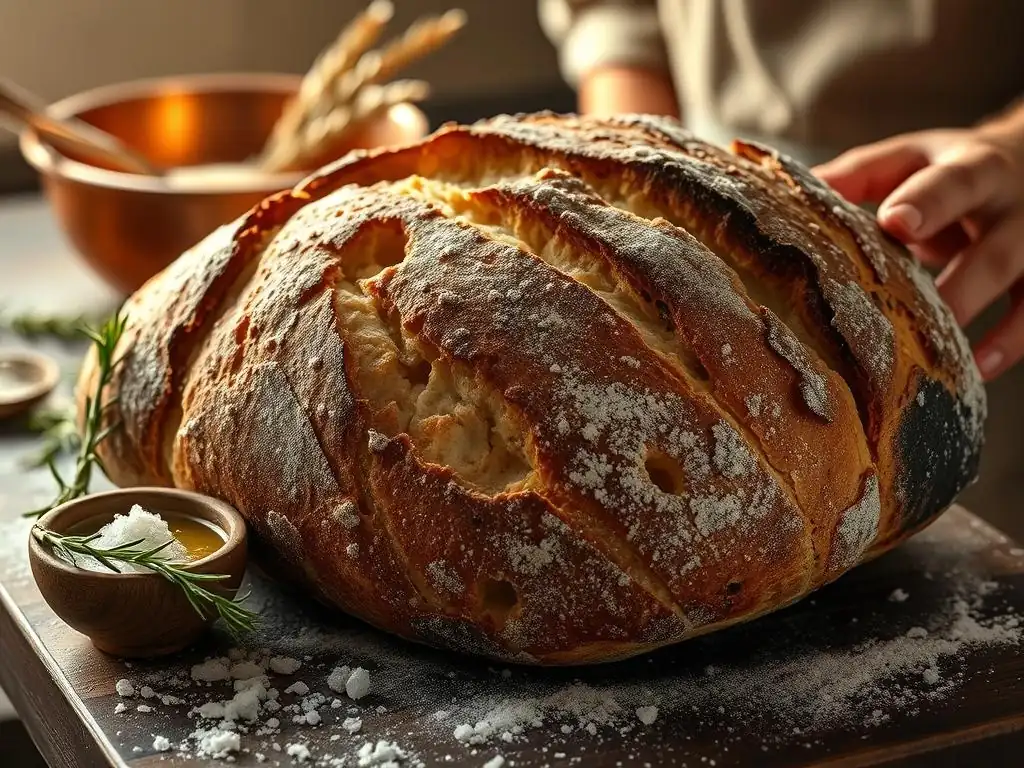
Welcome to BakeWithEase, your passport to the delightful world of baking! Ever wondered how to unlock the deep, nuanced flavors of artisanal bread? This article dives into the secret to flavor development in rustic breads and ciabatta, revealing the techniques that transform simple ingredients into loaves bursting with character. Discover the science and artistry behind that coveted crust and irresistible crumb – and prepare to elevate your bread baking game!
- Flavor Development in Artisan Breads: Techniques and Best Practices
- Understanding Flavor Development in Artisan Breads
- Key Factors Influencing Artisan Bread Flavor
- Mastering Fermentation for Superior Flavor
- Techniques for Maximizing Flavor Potential
- Troubleshooting Flavor Imbalances
- Artisan Bread Recipes and Flavor Profiles
- Conclusion: Achieving Flavorful Artisan Bread
-
Frequently Asked Questions
- How does BakeWithEase define "rustic bread"?
- What is the primary method BakeWithEase recommends for enhancing flavor in rustic breads?
- What role does hydration play in rustic bread flavor development, according to BakeWithEase?
- Does BakeWithEase suggest any specific ingredients to improve rustic bread flavor?
- Where can I find detailed recipes and instructions for rustic bread baking on BakeWithEase?
- Final Reflection: Unearthing the Soul of Rustic Bread
- Unleash Your Inner Baker: Craft the Perfect Crust
Flavor Development in Artisan Breads: Techniques and Best Practices
Understanding Flavor Development in Artisan Breads
Factors Contributing to Complex Flavors in Artisan Breads
The intricate tapestry of flavors found in exceptional rustic breads and ciabatta is not a happy accident, but the result of carefully managed biological and chemical processes. At its core, rustic bread flavor development hinges on the transformation of simple ingredients – flour, water, salt, and yeast (or sourdough) – into a symphony of complex compounds.
Key contributors include enzymatic activity breaking down starches into sugars, the production of organic acids (especially in sourdough), and the Maillard reaction during baking. The longer dough ferments, for example, typically over 12-24 hours, the more time these enzymes and microbes have to perform their magic, unlocking deeper, more nuanced flavors than a quick 2-hour rise.
Beyond fermentation, the type of flour used plays a significant role. Whole grain flours, like whole wheat or rye commonly found in rustic loaves, contain bran and germ which contribute earthy, nutty, and sometimes slightly bitter notes not present in refined white flour.
The hydration level of the dough also impacts flavor; higher hydration doughs, typical of ciabatta (often 70-85% hydration), can lead to a more open crumb structure which affects how flavor is perceived, and can also influence fermentation characteristics. Finally, the baking process itself, particularly achieving a well-caramelized crust, adds a layer of toasted, sweet, and sometimes bitter notes that are fundamental to the overall flavor profile of a well-made rustic bread.
Importance of Flavor Development in Artisan Bread Making
Flavor is arguably the most crucial aspect of artisan bread. While texture, crust, and appearance are important, it's the depth and complexity of taste that truly distinguishes a memorable loaf. For rustic bread flavor development, the focus is often on achieving a balance of earthy, nutty, sweet, and sometimes tangy notes that reflect the quality of ingredients and the care taken during the process. A bread with poor flavor, even if visually perfect, fails to deliver on the promise of artisan quality.
Investing time and attention in developing flavor is what elevates home baking from simply producing edible bread to crafting loaves that rival those from professional bakeries. It's the difference between a generic white loaf and a rustic boule with a crackling crust, a creamy interior, and layers of subtle taste. Mastering the techniques for rustic bread flavor development allows bakers to understand why certain methods are used and how they impact the final product, enabling them to troubleshoot issues and consistently bake delicious bread. It empowers bakers to move beyond following recipes blindly and truly understand the craft.
Key Factors Influencing Artisan Bread Flavor
Flour Selection and its Impact on Flavor
Choosing Flour for Optimal Flavor
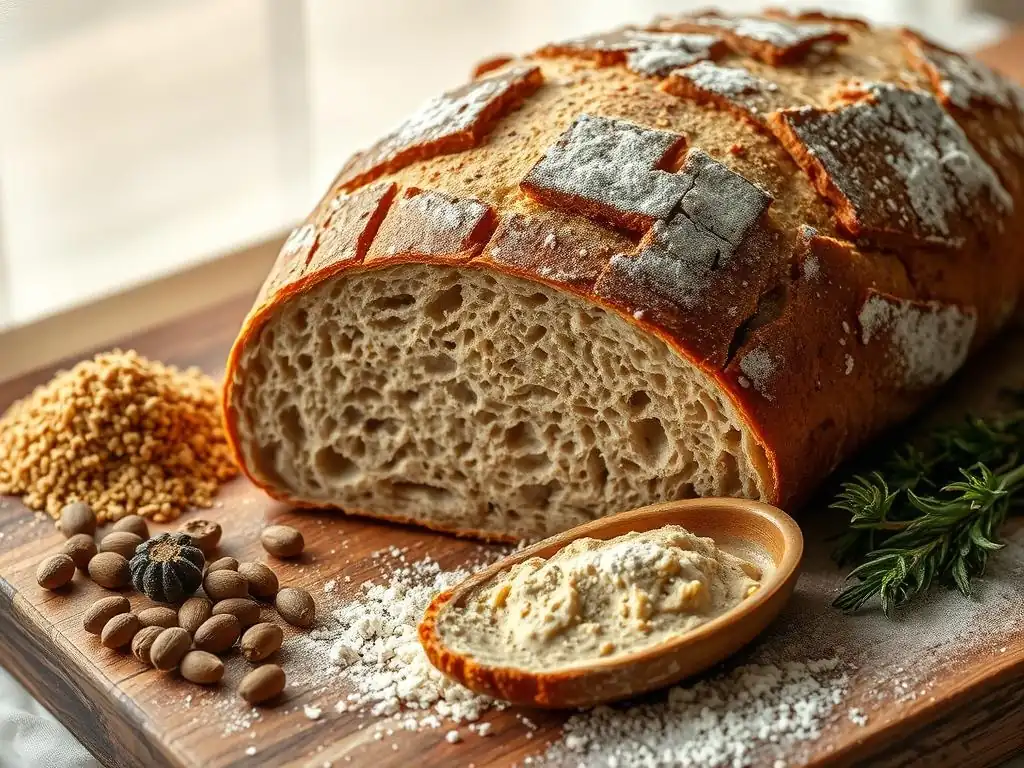
The foundation of any great bread is the flour, and its selection is paramount for optimal rustic bread flavor development. Different flours bring distinct characteristics to the dough and the final baked loaf. For many rustic breads, a blend of strong white bread flour (typically 11-13% protein) with whole grain flours like whole wheat, rye, or spelt is common.
Whole wheat flour, containing the bran and germ, contributes significant flavor – often described as nutty, earthy, or slightly sweet. Rye flour, even in small percentages (say, 10-20% of the total flour), imparts a tangy, slightly sour, and robust flavor profile due to its unique enzymatic activity and composition.
Consider a simple white rustic loaf versus one with 20% rye flour. The white loaf might have a clean, wheaty flavor, enhanced by fermentation. The loaf with rye, however, will have a deeper, more complex taste, potentially with hints of spice or tang, even before considering fermentation differences. Using stone-ground flours can also impact flavor, as the milling process might retain more of the bran and germ particles, contributing to a more pronounced, rustic taste compared to roller-milled flours. Experimenting with different flour combinations is a key step in tailoring rustic bread flavor development to your preference.
Influence of Protein Content on Flavor
While protein content is often discussed in relation to gluten development and structure, it also indirectly influences flavor. Higher protein flours (like bread flour, 12-13% protein) develop strong gluten networks, allowing doughs to hold structure during long fermentation and achieve good oven spring. This robust structure contributes to a desirable open crumb in breads like ciabatta, which affects mouthfeel and how flavor compounds are released and perceived. Lower protein flours (like pastry flour, 8-9% protein) would result in a tighter crumb and potentially less complex flavor development due to weaker structure and different enzymatic activity.
However, it's not just about the amount of protein, but also the type of protein and the presence of other components in the flour. Whole grain flours, despite sometimes having similar total protein percentages to white bread flour, behave differently due to the presence of bran and germ, which can interfere with gluten development but contribute significantly to flavor.
For developing flavor in rustic bread, a balance is often sought: enough strong flour for structure, combined with flavorful whole grains to add complexity. A common blend for a rustic country loaf might be 80% strong white bread flour and 20% whole wheat or rye.
Water Quality and its Role in Flavor
Hydration's Effect on Flavor Development
The amount of water used, known as hydration, profoundly impacts the final flavor profile of bread, particularly in high-hydration doughs like ciabatta (often 75-85% hydration). Higher hydration allows for more enzymatic activity during fermentation, as enzymes and microbes function more effectively in a wetter environment. This leads to a greater breakdown of starches into simpler sugars, which are then consumed by yeast (producing CO2 and alcohol) and bacteria (producing organic acids). These processes are central to rustic bread flavor development.
Moreover, higher hydration doughs tend to produce breads with a more open, airy crumb structure. While not a flavor compound itself, the texture of the crumb significantly affects the perception of flavor. An open, moist crumb allows the flavors to be more readily released and appreciated compared to a dense, tight crumb. Achieving the right hydration for a rustic loaf or ciabatta is therefore crucial not just for texture, but for maximizing the potential for complex flavor development through fermentation.
Impact of Water Minerals on Taste
The quality of water, specifically its mineral content (hardness or softness), can subtly influence bread flavor and fermentation. Hard water, containing minerals like calcium and magnesium, can strengthen the gluten network, which is generally beneficial for structure, especially in lean doughs like rustic bread. These minerals can also slightly buffer the dough, potentially slowing down the production of acidic compounds during fermentation, leading to a less tangy flavor profile compared to bread made with soft water.
Soft water, lacking significant minerals, can result in a weaker gluten structure, sometimes requiring adjustments in kneading or flour type. While it doesn't contribute minerals to fermentation directly, its neutrality allows the flavors from the flour and fermentation to come through more prominently. Extremely chlorinated water can inhibit yeast activity, negatively impacting both rise and flavor development.
For most home bakers, tap water is perfectly adequate, but understanding that water quality plays a subtle role can be helpful, particularly if troubleshooting inconsistent results in rustic bread flavor development. Using filtered water is a simple way to ensure a neutral base.
Salt's Crucial Role in Flavor and Fermentation
Salt's Influence on Flavor and Gluten Structure
Salt is a non-negotiable ingredient in bread making, playing a vital role in both flavor and dough structure. From a flavor perspective, salt doesn't just make the bread taste "salty"; it enhances and balances the other flavors present, particularly the sweetness from caramelized crust and the complex notes from fermentation. Without salt (typically 1.8-2.2% of the flour weight), bread tastes bland and flat. It brings out the inherent wheat flavor and the nuances developed during rustic bread flavor development.
Structurally, salt tightens the gluten network by attracting water away from the protein strands, making the dough stronger and more elastic. This control is essential for managing high-hydration doughs like ciabatta. Salt also regulates yeast activity, slowing down fermentation. This slower pace is often desirable in artisan baking, allowing for longer fermentation times which, as discussed, are key to developing complex flavors. Adding salt too early (e.g., during autolyse) or too late can negatively impact gluten development and fermentation speed, ultimately affecting the final flavor and texture.
Salt Types and their Flavor Contributions
While the primary function of salt is the same regardless of type (sodium chloride), different salts can subtly affect the flavor and appearance of bread. Fine sea salt or kosher salt are preferred by many bakers. Fine sea salt dissolves quickly and is free from anti-caking agents, offering a clean, pure saltiness that lets the other flavors shine. Kosher salt (flaked or coarse crystal) also dissolves well, though its volume-to-weight ratio differs from fine salt, so weighing is crucial.
Avoid using iodized table salt if possible, as the iodine can sometimes impart a slight off-flavor and anti-caking agents might interfere with fermentation, though typically minimally at standard bread percentages. Finishing salts, like flaky sea salt sprinkled on top before baking, provide a burst of salinity and a pleasant textural crunch on the crust, enhancing the overall eating experience of a rustic loaf. The type of salt used is a small detail, but for maximizing rustic bread flavor development, a clean-tasting salt is recommended.
Mastering Fermentation for Superior Flavor
The Advantages of Extended Fermentation
Cold Fermentation Techniques for Flavor Enhancement
Extended fermentation, particularly cold fermentation in the refrigerator, is a powerhouse technique for rustic bread flavor development. Chilling the dough significantly slows down yeast activity, reducing the rate of CO2 production. However, enzymatic activity (like amylase breaking down starch into sugar) and bacterial activity (in sourdough or even commercial yeast doughs) continue at a slower pace. This extended time allows for the accumulation of more complex flavor compounds, including organic acids, alcohols, and esters, which contribute depth and nuance not achievable in a rapid, warm fermentation.
A typical cold fermentation might last anywhere from 12 to 72 hours or even longer, depending on the recipe and desired outcome. For a rustic boule or ciabatta, a minimum of 18-24 hours in the fridge at around 4°C (39°F) can dramatically improve flavor compared to a same-day bake. The dough develops a pleasant tang and a richer, more developed wheat flavor. Cold fermentation also makes high-hydration doughs easier to handle after chilling, aiding in shaping before baking. This technique is indispensable for achieving true artisan quality in rustic breads.
Bulk Fermentation vs. Proofing: Flavor Implications
Fermentation occurs in two primary stages: bulk fermentation (the first rise, usually in a large container) and proofing (the final rise after shaping). Both contribute to rustic bread flavor development, but they serve different primary purposes. Bulk fermentation is where the majority of flavor development happens. During this stage, the yeast and bacteria are actively working throughout the entire dough mass, breaking down starches, producing acids, and building complex flavors. Techniques like stretching and folding during bulk fermentation help strengthen the dough but also redistribute the microbes, ensuring even flavor development.
Proofing, on the other hand, is primarily focused on gas production and leavening the shaped loaf before baking. While some flavor development continues during proofing, especially if it's a long, cold proof, the most significant flavor compounds are generated during the bulk stage. If bulk fermentation is cut short, no amount of proofing will compensate for the lack of flavor development. Therefore, allowing sufficient time for bulk fermentation, often until the dough has increased significantly in volume (e.g., 50-100% depending on the recipe and temperature), is critical for maximizing flavor potential in rustic breads and ciabatta.
Harnessing Sourdough Fermentation for Depth of Flavor
Maintaining a Vibrant Sourdough Starter
Sourdough fermentation is perhaps the pinnacle of rustic bread flavor development, relying on a symbiotic culture of wild yeast and lactic acid bacteria (LAB). The key to consistent flavor is maintaining a healthy, vibrant starter. A starter is a living ecosystem, typically a mixture of flour and water, that requires regular feeding to keep the microbes active and balanced. Feeding frequency depends on storage temperature: a starter kept at room temperature (around 20-24°C / 68-75°F) usually needs daily feeding, while one stored in the refrigerator (around 4°C / 39°F) can be fed weekly.
A healthy starter should double or triple in volume within a few hours of feeding at room temperature, show lots of bubbles, and have a pleasant, slightly tangy aroma – not overly sour or unpleasant. The ratio of flour, water, and starter used for feeding (e.g., 1:1:1 or 1:2:2 by weight) influences the balance of yeast and bacteria and thus the flavor profile it will impart to the bread. Using a starter at its peak activity (usually a few hours after feeding) ensures vigorous leavening and contributes the desired tangy complexity to the rustic bread flavor development.
Flavor Differences: Sourdough vs. Commercial Yeast
The flavor profile of sourdough bread is distinctly different from bread made solely with commercial yeast, and it's central to the unique taste of many rustic loaves. Commercial yeast (Saccharomyces cerevisiae) primarily produces carbon dioxide for leavening and alcohol, contributing a relatively simple, clean, yeasty flavor. Sourdough, however, involves both wild yeast and a diverse population of LAB, primarily Lactobacillus species. These bacteria produce lactic acid and acetic acid as byproducts of fermenting sugars.
Lactic acid contributes a milder, often described as "yogurty" or "creamy," tang. Acetic acid provides a sharper, more "vinegary" tang, which is more volatile and evaporates slightly during baking. The balance between these acids, influenced by the starter's hydration, feeding schedule, and fermentation temperature/time, creates the complex, layered tanginess characteristic of sourdough rustic bread flavor development. A colder, longer fermentation tends to favor acetic acid production, resulting in a tangier loaf, while warmer, shorter fermentation might yield a milder, more lactic flavor. This complexity is why sourdough is so prized in artisan baking.
Pre-Ferments: Poolish and Biga for Enhanced Complexity
Poolish: Enhancing Flavor and Texture
A poolish is a type of pre-ferment, essentially a mixture of equal parts flour and water by weight (100% hydration) with a small amount of yeast, allowed to ferment for several hours before being added to the final dough. Typically, a poolish might ferment for 12-16 hours at room temperature or longer if refrigerated. The high hydration of a poolish encourages significant enzymatic activity and yeast multiplication, leading to the production of various flavor compounds, including alcohol and esters.
When incorporated into the final dough for a rustic loaf or ciabatta, the poolish contributes a pleasant, slightly sweet, and complex flavor. It also helps to improve the dough's extensibility, leading to a more open crumb structure. Using a poolish is an excellent way to enhance rustic bread flavor development and texture, offering some of the benefits of extended fermentation without committing the entire dough to a long, potentially less predictable, bulk ferment. It's a common technique in ciabatta recipes for achieving its characteristic airy texture and flavorful crumb.
Biga: Adding Depth and Character
A biga is another type of pre-ferment, similar to a poolish but with a much lower hydration, typically ranging from 50-65%. Like a poolish, it contains flour, water, and a small amount of yeast, and is fermented for a period before being added to the main dough. A biga is a stiff, firm dough, often fermented for 8-16 hours at room temperature or longer in the refrigerator. The lower hydration results in slower enzymatic action compared to a poolish, but it still allows for significant flavor development over time.
When a biga is added to the final dough, it contributes a different kind of flavor complexity than a poolish – often described as nutty or slightly sweet, and it adds strength and structure to the dough. This makes it particularly useful for rustic breads and ciabatta where a strong gluten network is needed to support an open crumb.
The slower, more controlled fermentation of a biga contributes deep, stable flavors that integrate well into the final loaf, enhancing the overall rustic bread flavor development. Many classic ciabatta recipes utilize a biga to achieve their unique texture and robust flavor.
Techniques for Maximizing Flavor Potential
Autolyse: Maximizing Hydration and Flavor
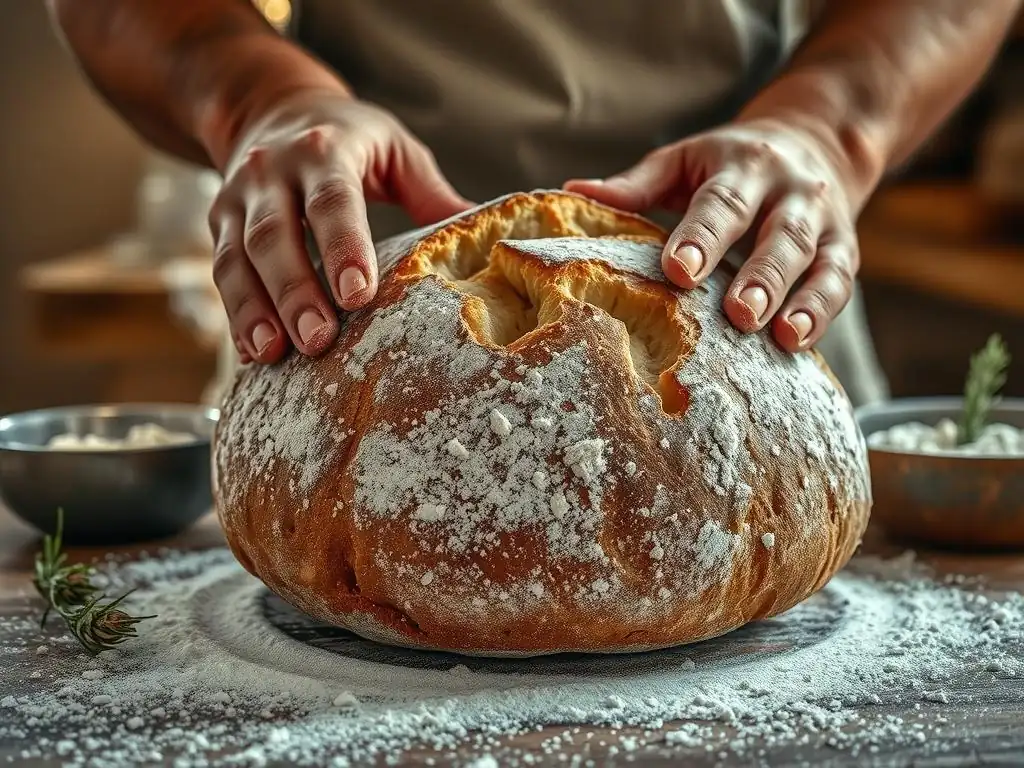
Autolyse is a simple technique that involves mixing only the flour and water from a recipe and letting the mixture rest for 20 minutes to an hour or more before adding the salt and yeast/starter. During this rest period, the flour fully hydrates, and enzymatic activity (specifically proteases and amylases) begins. Proteases start breaking down proteins, making the dough more extensible and easier to knead, while amylases convert starches into sugars, providing more food for the yeast/bacteria during subsequent fermentation.
While autolyse primarily benefits dough handling and gluten development, making it easier to achieve a desirable crumb structure in rustic breads and ciabatta, it also contributes subtly to flavor. The increased enzymatic activity during the rest can lead to the production of more simple sugars, which contribute to better caramelization of the crust during baking, adding sweet, toasty flavor notes. Furthermore, a well-developed gluten network and open crumb achieved partly through autolyse allow for better perception of the flavors developed during fermentation. It's a valuable step for enhancing both the texture and rustic bread flavor development.
Baking Techniques for Optimal Crust and Flavor
Steam Injection: Achieving a Crispy Crust and Complex Flavor
Baking with steam is crucial for achieving the characteristic crispy crust and maximizing flavor in rustic breads and ciabatta. When dough is first placed in a hot oven, the sudden heat causes rapid expansion (oven spring). Steam in the oven atmosphere keeps the surface of the dough moist and elastic for the first 10-15 minutes of baking. This prevents a hard crust from forming too early, allowing the loaf to expand fully and achieve maximum volume.
Beyond structure, steam plays a vital role in flavor. A moist crust surface allows for better gelatinization of starches, which contributes to a thinner, crisper crust. More importantly, it delays the formation of the crust, allowing the internal temperature of the loaf to rise more slowly.
This extended period before the crust hardens allows enzymatic activity within the dough to continue for a little longer, potentially contributing to more complex flavors. Once the steam is released and the crust begins to form, the moist surface facilitates the Maillard reaction and caramelization, leading to a darker, more flavorful crust, essential for overall rustic bread flavor development.
Temperature and Time: Refining Flavor Through Baking
Baking temperature and time are critical factors in the final rustic bread flavor development. Most rustic loaves and ciabatta are baked at high temperatures, typically between 220°C and 250°C (430°F and 480°F). High heat encourages rapid oven spring and promotes vigorous Maillard reactions and caramelization on the crust. The intense heat transforms sugars and amino acids into hundreds of flavor compounds, creating the desirable complex, slightly bitter, and sweet notes of a well-baked crust.
Baking time is also important. Baking for too short a time can result in a pale crust with underdeveloped flavor and a potentially gummy interior. Baking for too long can lead to a burnt crust and dry crumb.
The goal is to bake until the crust is deeply golden brown (or even darker for some traditional rustic styles like pain de campagne) and the internal temperature reaches around 96-100°C (205-210°F). A longer bake at a slightly lower temperature after the initial high-heat phase can help dry out the crust, making it crispier, and ensure the interior is fully cooked, contributing to better texture and perceived flavor. Proper baking time and temperature are the final steps in locking in all the rustic bread flavor development achieved during fermentation.
The Maillard Reaction: Flavor Development Through Browning
The Maillard reaction is a complex series of chemical reactions that occur when amino acids and reducing sugars are present together and heated, typically above 140°C (285°F). This reaction is responsible for the browning of food and the creation of thousands of new flavor and aroma compounds. In bread baking, the Maillard reaction happens most prominently on the crust during baking, contributing the rich, savory, sweet, and sometimes bitter notes that are characteristic of a well-baked rustic loaf.
The sugars available for the Maillard reaction come from the flour itself, particularly the simple sugars produced by enzymatic breakdown of starches during fermentation. A longer, slower fermentation (like cold fermentation or sourdough) produces more of these simple sugars, leading to more intense Maillard reactions and thus more flavorful crust development. The darker the crust, generally the more extensive the Maillard reaction and caramelization have been, resulting in a deeper, more complex flavor profile. Achieving a beautiful, dark, blistered crust is therefore not just about aesthetics; it's fundamental to maximizing rustic bread flavor development.
Troubleshooting Flavor Imbalances
Addressing Common Flavor Issues
Enhancing Bland Bread: Tips and Adjustments
If your rustic bread tastes bland, lacking depth and complexity, the most likely culprit is insufficient flavor development during fermentation.
- Increase Fermentation Time: Try extending your bulk fermentation, especially if baking at room temperature. Aim for the dough to increase significantly in volume (e.g., 75-100%).
- Implement Cold Fermentation: If you're not already doing it, introduce a cold fermentation step in the refrigerator for at least 12-24 hours after bulk fermentation. This is arguably the most effective way to improve rustic bread flavor development.
- Use a Pre-Ferment: Adding a poolish or biga to your recipe will introduce more developed flavors from a longer, separate fermentation.
- Incorporate Whole Grains: Even adding just 10-20% whole wheat or rye flour can dramatically enhance the flavor profile compared to 100% white flour.
- Check Salt Level: Ensure you are using the correct amount of salt, typically 1.8-2.2% of the total flour weight. Too little salt makes bread taste flat.
Reducing Acidity in Overly Sour Bread
If your sourdough rustic bread is too sour, the acidity levels from the lactic acid bacteria are too high, often due to fermentation conditions.
- Adjust Fermentation Temperature: Warmer fermentation temperatures (above 24°C / 75°F) tend to favor lactic acid production (milder tang), while colder temperatures (below 18°C / 65°F) can favor acetic acid production (sharper tang). If your bread is too sharp/vinegary, try fermenting the bulk dough at a slightly warmer room temperature, or shortening the cold fermentation time.
- Modify Starter Feeding: The hydration and feeding schedule of your starter impact its acidity. A stiffer starter (lower hydration, e.g., 60-70%) tends to produce more acetic acid. A more liquid starter (higher hydration, e.g., 100%) tends to favor lactic acid. Try using a 100% hydration starter and feeding it regularly so you're using it at its peak (when it's bubbly and just starting to fall), not when it's overly acidic.
- Shorten Fermentation Time: If you're doing a very long fermentation, particularly bulk fermentation, try reducing the time slightly once you see sufficient volume increase.
- Use a Younger Starter: Baking with a starter that was fed more recently (e.g., 4-6 hours after feeding at room temp) rather than one that has peaked and fallen significantly might result in a milder tang.
Artisan Bread Recipes and Flavor Profiles
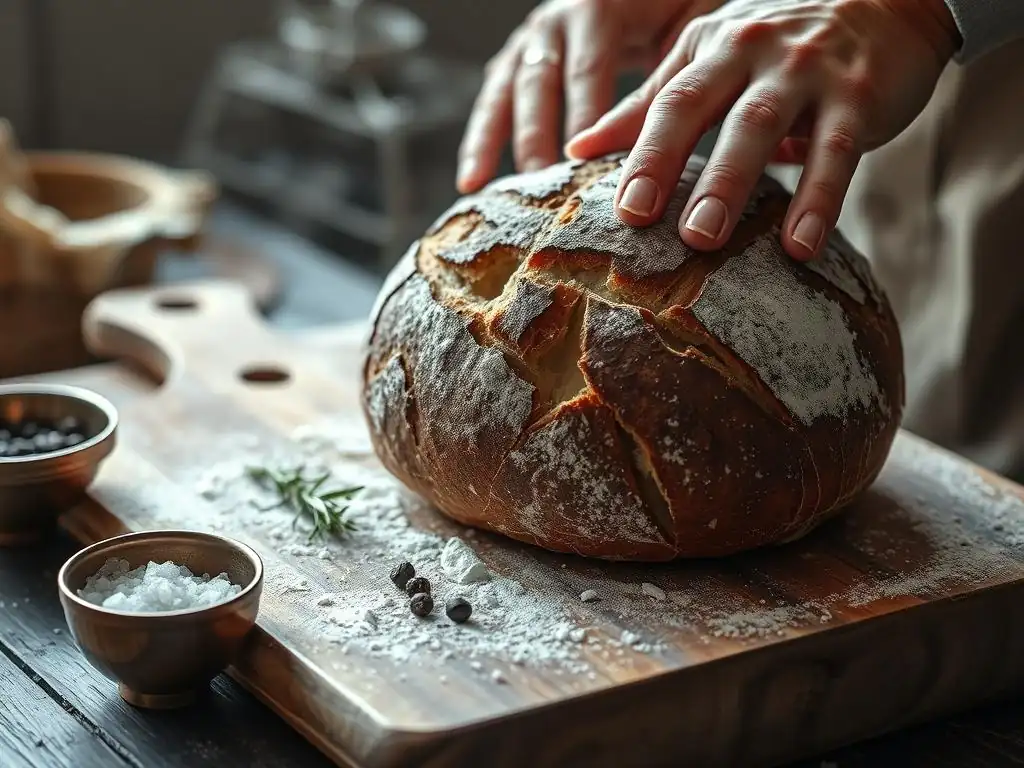
[Recipe: Country Loaf with Rye Flour and Long Fermentation]
Conclusion: Achieving Flavorful Artisan Bread
Key Takeaways for Flavor Development
Mastering rustic bread flavor development is an exciting journey that transforms basic ingredients into complex, delicious loaves. Several key factors are paramount:
- Flour Choice: Blending different flours, especially incorporating whole grains like rye or whole wheat, adds inherent flavor complexity.
- Extended Fermentation: Allowing dough to ferment for longer periods, particularly through cold fermentation (12-72 hours), is crucial for developing nuanced flavors through enzymatic and microbial activity.
- Sourdough & Pre-Ferments: Utilizing a vibrant sourdough starter or incorporating a poolish or biga introduces desirable tangy, sweet, and nutty notes.
- Proper Hydration: High hydration, typical of ciabatta and many rustic loaves, promotes enzymatic activity and contributes to an open crumb that enhances flavor perception.
- Salt Balance: Using the correct percentage of salt (1.8-2.2%) is essential for enhancing existing flavors and controlling fermentation.
- Effective Baking: Baking with steam and achieving a well-caramelized crust through the Maillard reaction adds critical layers of toasted, sweet, and savory flavors.
Here are some tasks to focus on for better flavor:
- [ ] Experiment with different flour blends.
- [ ] Implement a cold fermentation step in your process.
- [ ] Try adding a poolish or biga to a recipe.
- [ ] Pay attention to your sourdough starter's health and activity.
- [ ] Ensure you are baking with sufficient steam.
- [ ] Aim for a darker, more caramelized crust.
Encouraging Experimentation with Flavors
The beauty of rustic bread flavor development lies in the endless possibilities for experimentation. Once you understand the principles – how fermentation time, temperature, hydration, flour type, and baking methods impact taste – you can begin to tweak recipes and develop your own signature loaves. Don't be afraid to try adding a small percentage of a different flour, extending a cold proof by another 12 hours, or adjusting your baking temperature slightly.
Think about the flavor profiles you enjoy in commercial artisan breads and try to reverse-engineer how they might have been achieved. Was it very tangy (longer, colder sourdough)? Slightly sweet and nutty (poolish or biga)? Earthy (whole wheat or rye)? Each bake is an opportunity to learn and refine your process. Embrace the journey of developing flavor in rustic bread; with practice and attention to these key factors, you'll be baking loaves that are not only beautiful but truly delicious.
Frequently Asked Questions
How does BakeWithEase define "rustic bread"?
Rustic bread, according to BakeWithEase, refers to breads like sourdough and ciabatta, characterized by their complex flavor profiles and artisanal baking techniques. They are often made with minimal ingredients.
What is the primary method BakeWithEase recommends for enhancing flavor in rustic breads?
BakeWithEase emphasizes the importance of a long, slow fermentation process. This allows enzymes to break down complex carbohydrates, creating more flavorful byproducts and improved texture.
What role does hydration play in rustic bread flavor development, according to BakeWithEase?
Higher hydration doughs, as discussed on BakeWithEase, contribute to a more open crumb structure and a greater depth of flavor. The extra water enhances enzymatic activity during fermentation.
Does BakeWithEase suggest any specific ingredients to improve rustic bread flavor?
While basic ingredients are key, BakeWithEase might recommend adding a small amount of whole wheat flour or a pre-ferment (like a poolish or biga). These additions can significantly boost the bread's flavor complexity.
Where can I find detailed recipes and instructions for rustic bread baking on BakeWithEase?
BakeWithEase provides step-by-step guides and easy-to-find recipes for various rustic breads. Look for sections dedicated to sourdough, ciabatta, and other artisan bread styles on their website.
Final Reflection: Unearthing the Soul of Rustic Bread
The pursuit of exceptional flavor in rustic breads and ciabatta isn't merely a culinary quest; it's a journey into the heart of baking itself. Understanding the intricate interplay of fermentation, hydration, and flour selection is crucial in crafting loaves that transcend mere sustenance and become truly memorable experiences. This knowledge, once considered the exclusive domain of master bakers, is now accessible to all who are willing to explore the fascinating science behind the art.
The impact of this understanding extends far beyond the kitchen table. It connects us to a rich history of bread making, a tradition passed down through generations, each baker adding their own nuance and interpretation. Bread is the staff of life,
a simple phrase, yet it encapsulates the profound significance of bread in human culture and its enduring power to nourish both body and soul. The quest for superior flavor in rustic breads reflects this deep-seated connection, a desire to honor the craft and elevate the everyday.
Now, consider your own baking journey. What techniques have you mastered? What flavors resonate most deeply with you? I encourage you to experiment, to embrace the imperfections, and to savor the process of discovery. Each loaf you bake, whether perfectly risen or slightly flawed, represents a step further on your path to understanding the soul of rustic bread. The journey itself is the reward, and the flavors you unlock will be uniquely yours.
Unleash Your Inner Baker: Craft the Perfect Crust
Thanks for taking the time to explore the art of rustic bread baking! We hope you gained valuable insights into flavor development. Now it's time to put your newfound knowledge into practice.
- Bake your own masterpiece! Try out one of the recipes mentioned in the article – or even better, experiment with your own variations based on what you’ve learned. Note down your adjustments for future baking adventures.
- Share your baking journey! Post a picture of your beautiful rustic loaf on social media using #BakeWithEase and tag us – we’d love to see your creations!
- Dive deeper into sourdough! Explore our other articles on sourdough starters and advanced techniques to unlock even more flavor in your bread.
What unique ingredient will you experiment with in your next rustic bread creation?