
Your Sourdough Rye Baking Equipment Checklist

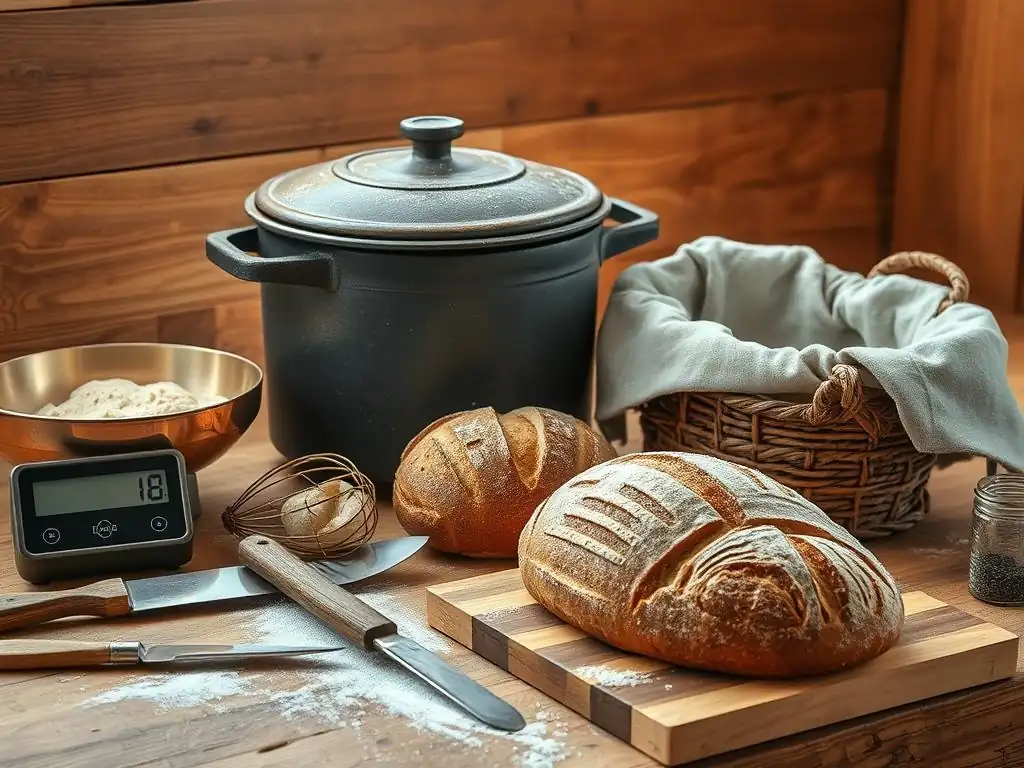
Welcome to BakeWithEase, your guide to unlocking the secrets of delicious baking! Are you ready to embark on a journey into the flavorful world of sourdough rye? Before you begin, ensure you have the right tools. Our comprehensive checklist reveals the essential sourdough rye baking equipment needed to achieve bakery-quality results in your own kitchen. Curious about what makes the difference? Let's dive in and discover the must-have items for a successful sourdough rye bake!
- Your Sourdough Rye Baking Equipment Checklist for BakeWithEase
- Essential Sourdough Rye Baking Equipment: A Comprehensive Guide
- Mixing and Measuring Tools for Sourdough Rye
- Fermentation Equipment for Perfect Sourdough Rye
- Baking Tools for Your Sourdough Rye
- Optional, but Helpful, Rye Baking Equipment
- Maintaining Your Sourdough Rye Baking Equipment
- Building Your Sourdough Rye Baking Equipment Kit: A Summary
-
Frequently Asked Questions
- What are the essential pieces of equipment for sourdough rye baking?
- Is special equipment really necessary for sourdough rye, or can I use substitutes?
- What size dutch oven is best for baking sourdough rye loaves?
- Where can I find affordable sourdough rye baking equipment?
- What type of material is best for a sourdough rye proofing basket?
- Final Reflection: The Joy of Sourdough Rye, One Tool at a Time
- Unleash Your Inner Rye Baker!
Your Sourdough Rye Baking Equipment Checklist for BakeWithEase
Essential Sourdough Rye Baking Equipment: A Comprehensive Guide
Embarking on the journey of baking sourdough rye bread is incredibly rewarding, resulting in loaves with deep flavor and a unique texture. To achieve consistent success with your rye sourdough creations, having the right tools is just as important as having a lively starter.
This comprehensive guide will walk you through the essential sourdough rye baking equipment you'll need, from the initial mixing stages all the way to achieving that perfect, crackling crust. We'll explore how each piece of equipment plays a vital role in handling the unique properties of rye flour and sourdough fermentation, ensuring your baking experience is smooth and enjoyable.
Building your collection of sourdough rye baking equipment doesn't have to happen overnight. You can start with the basics and add more specialized tools as your skills and passion grow. The key is understanding why each item is beneficial and how it contributes to the final quality of your rye bread. Whether you're aiming for a light and airy loaf or a dense, traditional pumpernickel, the right tools make the process significantly easier and the results more predictable. Let's dive into the specific pieces of equipment that will become your best friends in the kitchen when baking sourdough rye.
Mixing and Measuring Tools for Sourdough Rye
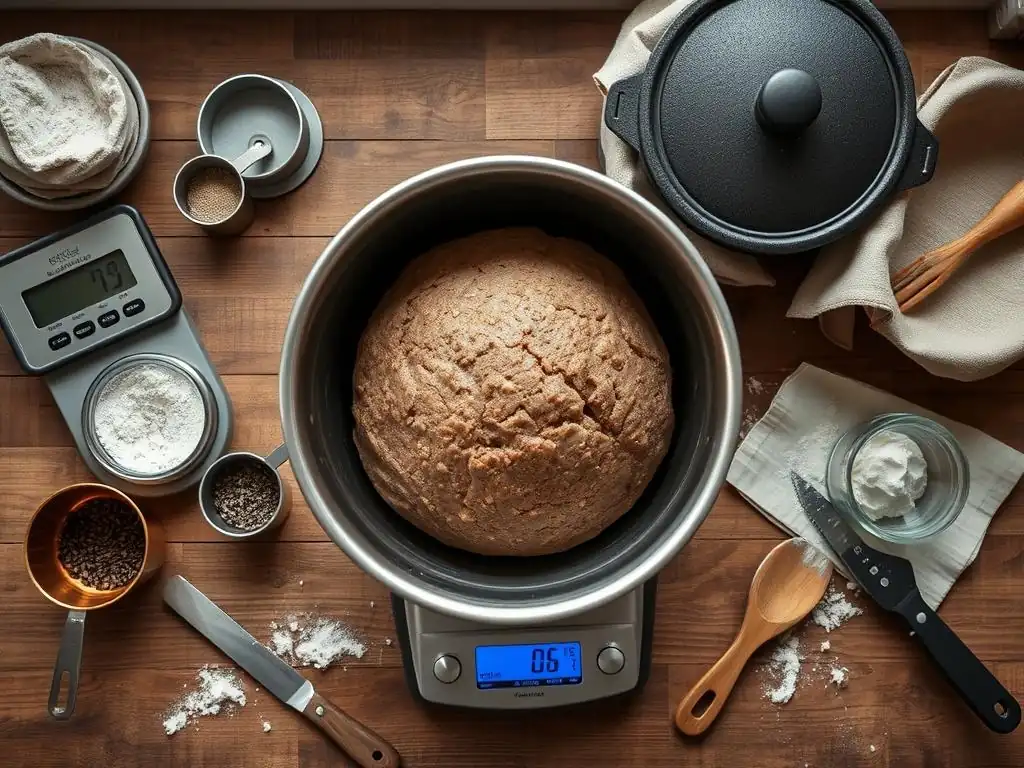
The foundation of any great loaf begins with precise measurement and thorough mixing. Rye flour behaves differently than wheat flour; it's lower in gluten and can be stickier. Having the right tools here ensures your dough develops correctly and is easy to handle from the start. Accurate measurements are especially critical in sourdough baking, where ratios greatly influence fermentation activity and final structure.
Selecting appropriate mixing vessels and tools designed for dough ensures you can work the dough effectively without it sticking excessively or being difficult to combine. The initial hydration of rye flour can be slow, so efficient mixing helps distribute moisture evenly. Let's look at the specific tools that make this crucial first step a breeze when working with rye sourdough.
Precise Measuring Cups and Spoons for Rye Bread Baking
While many sourdough bakers swear by weight (and we'll get to that! ), having a reliable set of measuring cups and spoons is still valuable, especially for smaller quantities of ingredients like salt, yeast (if using a hybrid recipe), or inclusions like caraway seeds. A standard set typically includes cups ranging from 1/4 cup to 1 cup and spoons from 1/4 teaspoon to 1 tablespoon. Look for sets made from sturdy materials like stainless steel or durable plastic, ensuring they are easy to clean and resistant to staining or odors.
Using these tools accurately is key. For dry ingredients measured by volume, like flour (though weighing is preferred), gently spoon the ingredient into the cup and level it off with a straight edge without packing it down. For liquids, place the cup on a flat surface and read the measurement at eye level. Precise measurements are part of the essential sourdough rye baking equipment because even small variations can impact the hydration level and the success of your rye bread.
Mixing Bowls: Choosing the Right Size for Your Rye Sourdough
You'll need sturdy mixing bowls that are large enough to accommodate your dough as it's mixed and undergoes its initial bulk fermentation. For a standard 1kg (about 2.2 lbs) loaf, a bowl with a capacity of at least 4 to 6 quarts is recommended. This size allows ample space for mixing ingredients without spills and provides room for the dough to expand during its first rise. Materials like glass, stainless steel, or ceramic are all good choices. Stainless steel is lightweight and durable, while glass allows you to see the dough's development.
Having a couple of different-sized bowls can be helpful. A smaller bowl might be used for activating a small amount of starter or mixing a pre-ferment, while a larger one is essential for the main dough batch. When working with sticky rye dough, choosing a bowl with smooth sides can make scraping down and handling the dough easier. This is a fundamental piece of sourdough rye baking equipment that you'll use every time you bake.
Dough Whisk vs. Danish Dough Whisk: Which is Best for Rye?
A regular balloon whisk can be used for initial mixing of wet and dry ingredients, but a Danish dough whisk is specifically designed for combining doughs, especially those that are wet or sticky, like many rye sourdoughs. Its unique looped design cuts through the flour and water mixture efficiently, bringing it together quickly without overworking it initially and minimizing the dough sticking to the whisk itself. This makes incorporating the rye flour and water into your starter much less messy.
For working with rye dough, which often has lower hydration or is simply stickier due to the nature of the flour, a Danish dough whisk can significantly improve the ease of mixing compared to a spoon or even just your hands initially. It helps create a shaggy mass quickly before you move on to any kneading or folding steps. While not strictly essential if you're happy to get your hands messy, it's a piece of sourdough rye baking equipment that many bakers find invaluable for its efficiency and ease of cleaning.
Kitchen Scale: Accurate Weighing for Consistent Sourdough Rye
This is arguably the most important piece of measuring sourdough rye baking equipment you can own. Baking, especially sourdough, is a science, and measuring ingredients by weight is far more accurate than by volume. Flour density can vary greatly depending on how it's stored or scooped, leading to inconsistent results if measured in cups. A digital kitchen scale allows you to measure flour, water, starter, and salt precisely in grams or ounces.
Most reliable kitchen scales measure in increments of 1 gram, which is sufficient for home baking. Some offer even finer precision (0.1g), which can be useful for very small amounts like yeast or baking soda in hybrid recipes, but 1g accuracy is generally fine for the main components of your sourdough rye. Using a scale ensures that the hydration percentage and ingredient ratios are exactly as intended by the recipe, leading to repeatable, successful loaves every time. Investing in a good kitchen scale is a game-changer for consistent rye bread baking.
Fermentation Equipment for Perfect Sourdough Rye
Fermentation is the heart of sourdough baking, and providing the right environment for your rye dough to rise and develop flavor is critical. This stage requires tools that help shape the dough, manage its stickiness, and maintain a stable temperature and humidity. Rye doughs can be less structured than wheat doughs, making tools that aid in shaping and proofing particularly helpful.
Proper fermentation equipment supports the dough's structure as it expands and prevents it from spreading out too much, especially with the lower gluten content of rye. It also protects the dough surface from drying out and helps create the desired final shape for baking. Let's explore the essential items for this crucial phase of your sourdough rye journey.
Banneton Baskets: Shaping Your Rye Loaf
Banneton baskets, also known as proofing baskets, are used for the final rise (proofing) of your shaped sourdough rye dough. They provide support to the dough, helping it hold its shape as it expands, which is particularly useful for the often softer or stickier doughs made with rye. The basket also leaves attractive patterns on the surface of the dough, which become part of the crust. They are typically made from cane (often called rattan) or wood pulp.
Before placing your dough in a banneton, it's crucial to flour it well, especially when working with sticky rye dough, to prevent sticking. Rice flour is often recommended as it's less likely to be absorbed by the dough. You can dust the basket generously with rice flour using your hands or a small sieve. After proofing, the dough is gently inverted from the banneton onto your baking surface. Using a banneton is a key step in preparing your dough for baking and is considered essential sourdough rye baking equipment for achieving a well-shaped loaf.
Round Banneton vs. Oval Banneton for Rye Sourdough
The choice between a round and an oval banneton primarily comes down to personal preference and the desired shape of your final loaf. A round banneton (often 8 or 9 inches in diameter) is perfect for creating boules, which are round loaves. This shape is classic and results in a loaf that slices well for sandwiches or toast. An 8-inch round banneton typically holds dough for a loaf weighing between 500g and 1kg.
An oval banneton (often 10 or 12 inches long) is used for batards, which are elongated loaves. Batards can be easier to slice for certain purposes and fit differently on baking surfaces. A 10-inch oval banneton might hold dough for a loaf of similar weight, around 500g to 1kg. Both shapes function identically in supporting the dough during proofing; the choice is purely aesthetic or practical based on how you plan to use or bake the bread. Many bakers start with one of each to have versatility in their sourdough rye baking equipment.
Dough Scraper: Handling Sticky Rye Dough
A dough scraper is a simple yet incredibly versatile tool, especially when working with sticky doughs like those made with significant amounts of rye flour. It comes in two main forms: a bench scraper (rigid, often metal or sturdy plastic, with a straight edge) and a bowl scraper (flexible plastic or silicone, curved). A bench scraper is invaluable for dividing dough, lifting it from a work surface, and cleaning up sticky residue.
The flexible bowl scraper is excellent for getting every last bit of dough out of the mixing bowl and for gently folding or manipulating the dough during bulk fermentation. When dealing with rye dough that tends to stick to everything, a good bench scraper allows you to cleanly lift and shape the dough on your counter, while a bowl scraper helps you manage it within the bowl without tearing. Both types are inexpensive but highly effective pieces of sourdough rye baking equipment.
Proofing Containers: Creating the Ideal Environment
During the bulk fermentation stage (the first rise after mixing), your sourdough rye dough needs a container where it can double or more in size without drying out. Food-grade plastic containers with airtight lids are popular because they are lightweight, easy to clean, and allow you to mark the initial volume of the dough to easily track its rise. Glass bowls covered with plastic wrap or a damp towel also work well.
The key is to choose a container large enough to allow for significant expansion – at least double the dough's initial volume, ideally more. Sealing the container prevents the dough surface from forming a dry skin, which can inhibit oven spring. Some bakers prefer clear containers to visually monitor the dough's activity (seeing bubbles form and the volume increase). Providing a consistent, draft-free environment in a suitable container is crucial for successful fermentation of your sourdough rye.
Baking Tools for Your Sourdough Rye
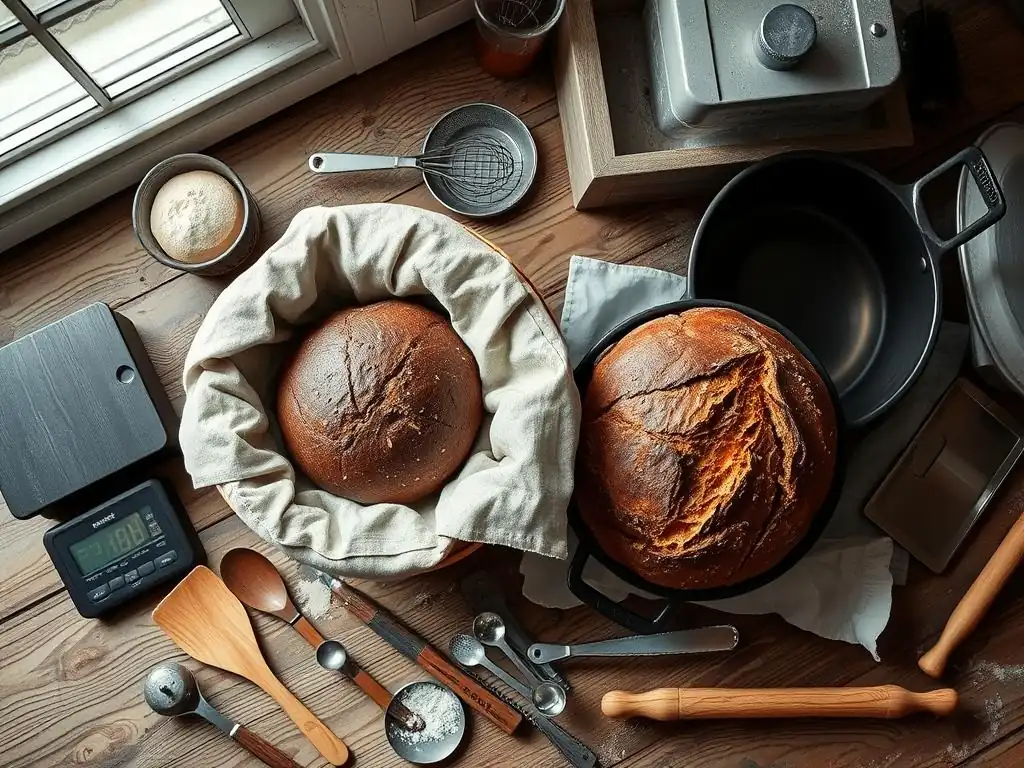
The moment of truth arrives when your perfectly proofed sourdough rye loaf is ready for the oven. The right baking setup is essential for achieving that desired crispy crust, well-risen crumb, and overall beautiful finish. Rye doughs can benefit from specific baking environments to ensure even heat distribution and optimal oven spring.
These tools create the intense heat and steam necessary for the initial phase of baking, where the crust sets and the loaf expands. Without the right equipment, your rye bread might lack the characteristic crust or fail to rise properly. Let's look at the crucial tools that transform dough into delicious bread.
Dutch Oven: Achieving Crusty Rye Bread
A Dutch oven is a favorite tool for baking sourdough bread, and it works exceptionally well for rye loaves. Baking in a preheated Dutch oven creates a steamy environment around the dough during the crucial first part of the bake. This steam keeps the crust soft, allowing the dough to expand fully (oven spring) before the crust sets. Once the lid is removed, the dry heat finishes the bake, creating a thick, crackling crust. Cast iron Dutch ovens retain heat incredibly well, providing consistent temperatures.
For many home bakers, a 5-quart or 6-quart cast iron Dutch oven is the ideal size, accommodating most standard loaf sizes (like a 1kg dough). Ensure the lid fits snugly to trap steam effectively. While preheating the Dutch oven is standard practice for achieving a great crust, always handle it with extreme caution due to the high temperatures (often 450-500°F or 230-260°C). A good quality Dutch oven is a significant piece of sourdough rye baking equipment that can dramatically improve the outcome of your loaves.
Choosing the Right Size Dutch Oven for Rye Sourdough
Selecting the appropriate size Dutch oven is important to ensure your loaf fits comfortably and has enough space to expand without hitting the sides or lid. For most home bakers making loaves from recipes using 500g to 1000g of flour, a round or oval Dutch oven with a capacity of 5 to 7 quarts is usually sufficient. A 5.5-quart round Dutch oven is a very common and versatile size that works well for boules.
If you prefer baking batards (oval loaves), an oval Dutch oven of similar capacity (around 6 or 7 quarts) might be a better fit. Ensure the length of your proofed loaf will fit within the base of the pot. The depth should also be sufficient to allow the dough to rise without touching the lid during the initial steam phase. Choosing the right size ensures optimal heat transfer and steam retention, contributing to a perfect crust on your sourdough rye.
Baking Stone or Baking Steel: Alternatives to a Dutch Oven
If you don't have a Dutch oven, or prefer a different baking method, a baking stone or baking steel placed on a rack in your oven can be excellent alternatives. Both absorb and retain heat extremely well, providing a super hot surface for the dough to bake on, which helps create a good crust and promotes oven spring from the bottom up. A baking steel heats up faster and retains heat more efficiently than a stone, but both work effectively.
To use a stone or steel, you typically preheat it in the oven at a high temperature for at least 30-60 minutes. You then transfer your proofed dough onto the hot surface. To mimic the steamy environment of a Dutch oven, you'll need to add steam to your oven. This can be done by placing a tray of hot water or ice cubes on a rack below the stone/steel just before loading the bread. While requiring an extra step for steam, a baking stone or steel is a viable part of your sourdough rye baking equipment setup.
Bread Lame: Scoring Your Rye Loaf for Optimal Expansion
A bread lame (pronounced "lahm") is a tool used to score or slash the surface of the dough just before baking. Scoring serves several important purposes: it controls where the loaf expands during oven spring, prevents uncontrolled cracking, and allows steam to escape, which helps with crust development. For rye doughs, which can sometimes crack unpredictably due to their structure, controlled scoring is particularly beneficial.
Lames typically consist of a handle holding a razor blade. The sharp blade allows for clean, quick cuts that don't tear the delicate surface of the proofed dough. Different scoring patterns can be used for aesthetic appeal, but functionally, scoring ensures the loaf bakes evenly and achieves maximum volume. Mastering the use of a lame is a step towards more professional-looking and better-baked sourdough rye loaves.
Oven Thermometer: Monitoring Baking Temperatures
Relying solely on your oven's built-in thermostat can be misleading, as oven temperatures can fluctuate significantly and often aren't calibrated accurately. An inexpensive oven thermometer placed inside your oven provides a true reading of the internal temperature. This is crucial for baking sourdough rye, as precise temperatures are needed for optimal oven spring and crust development.
Preheating your oven to the correct temperature (often 450-500°F or 230-260°C for sourdough) and maintaining that temperature throughout the bake is vital. An oven thermometer allows you to verify that your oven is truly at the temperature specified in the recipe. Consistent heat ensures even baking and prevents issues like burnt bottoms or pale crusts. Adding an oven thermometer to your sourdough rye baking equipment ensures you're baking at the right conditions.
Optional, but Helpful, Rye Baking Equipment
While the tools listed above cover the essentials, a few other pieces of equipment can make the process of baking sourdough rye even easier, more efficient, or more enjoyable. These are not strictly necessary to produce a good loaf, but they offer conveniences that many bakers appreciate, especially when baking frequently or larger batches.
Consider these items as upgrades or additions to your core sourdough rye baking equipment kit. They can save you time, reduce physical effort, or help you achieve specific results that might be harder to get with just the basics.
Stand Mixer: Easing the Kneading Process
While many sourdough rye doughs require minimal or no intense kneading due to the lower gluten content of rye, some recipes or preferences might call for mechanical mixing or development. A stand mixer fitted with a dough hook can take the physical effort out of mixing and developing dough, especially for larger batches or higher hydration doughs that are very sticky.
If you plan to bake a lot of sourdough rye bread, or have physical limitations that make hand mixing difficult, a stand mixer can be a worthwhile investment. Look for a model with enough power to handle stiff doughs and a bowl capacity suitable for your typical batch size (often 5-quart or larger). While traditionalists might prefer hand mixing, a stand mixer is a valuable piece of sourdough rye baking equipment for convenience.
Cooling Rack: Preventing Soggy Crusts
Once your beautiful sourdough rye loaf comes out of the oven, it needs to cool completely before slicing. Placing a hot loaf directly on a solid surface traps steam underneath, leading to a soggy bottom crust. A wire cooling rack allows air to circulate around the entire loaf, enabling steam to escape and ensuring the crust remains crispy all around.
A sturdy cooling rack is essential for the final step of the baking process. Choose one that is large enough to hold your loaves and made of a material that won't rust. Allowing your bread to cool properly on a rack is crucial for the texture and quality of the final crumb. It's a simple but vital piece of sourdough rye baking equipment.
Bread Knife: Slicing Your Finished Rye Sourdough
After putting in all the effort to bake a perfect sourdough rye loaf, you don't want to ruin it with a poor slice. A good quality serrated bread knife is designed to cut through the hard crust and dense crumb of sourdough bread cleanly without crushing or tearing the loaf. The serrations grip the crust and saw through it efficiently.
Look for a bread knife with a long blade (10 inches or more is ideal for larger loaves) and a comfortable handle. A sharp serrated knife makes slicing your finished rye sourdough a pleasure, allowing you to enjoy the fruits of your labor in neat, even slices. It's the final piece of sourdough rye baking equipment you'll use before enjoying your creation.
Maintaining Your Sourdough Rye Baking Equipment
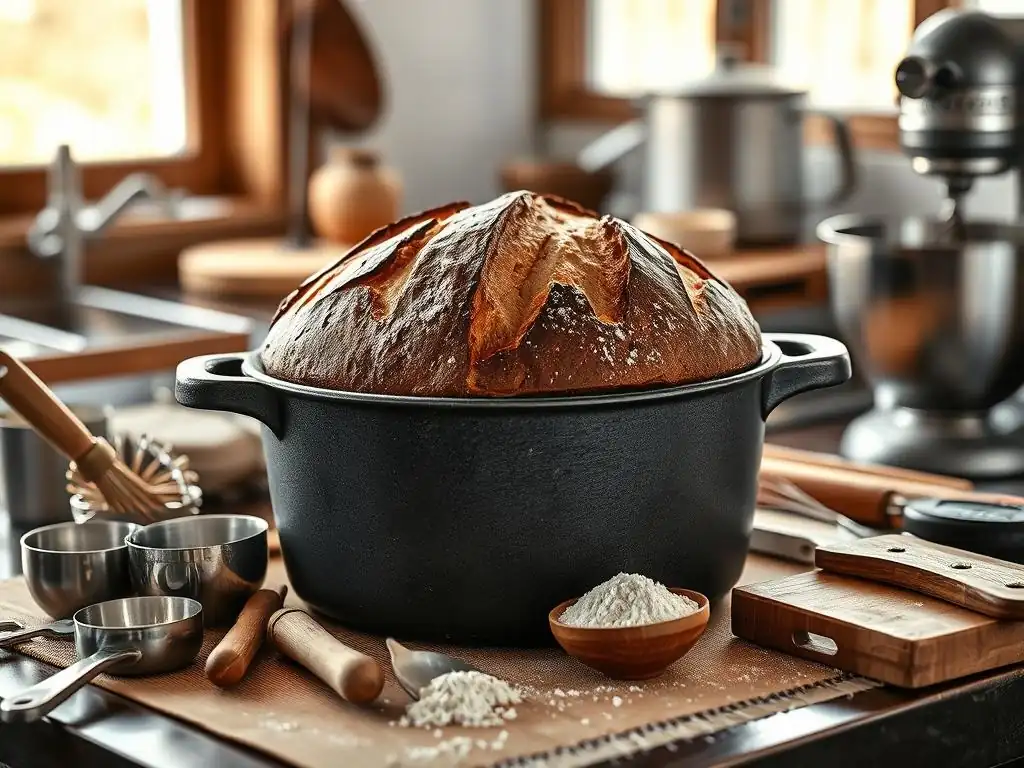
Proper care and maintenance of your sourdough rye baking equipment will ensure longevity and optimal performance. Keeping your tools clean and stored correctly prevents rust, damage, and bacterial growth, ensuring they are ready for your next bake. Each type of material requires specific care.
Taking a few moments after each bake to clean and store your equipment properly will protect your investment and make your baking process smoother. This is especially true for items like bannetons and cast iron, which require specific cleaning methods.
Cleaning Your Banneton Basket
Cleaning a banneton basket is relatively simple but important to prevent mold growth. After using, let the basket dry completely at room temperature. Once dry, use a stiff brush (a pastry brush or a dedicated banneton brush) to brush out any excess flour. Do not wash cane bannetons with water unless absolutely necessary, as moisture can encourage mold. If washing is needed due to sticky dough, use minimal cool water and no soap, then dry thoroughly in a warm, airy place or even a slightly warm oven (turned off).
Ensure the basket is bone dry before storing it in a well-ventilated area. Proper cleaning after each use ensures your banneton remains hygienic and ready for your next batch of sourdough rye dough, preventing any off-flavors or issues with proofing.
Caring for Your Dutch Oven
Caring for a cast iron Dutch oven, especially one used for baking at high temperatures, involves cleaning and often re-seasoning. After baking, let the Dutch oven cool completely. Scrape out any stuck-on bits with a plastic scraper. For stubborn residue, you can use hot water and a stiff brush or chainmail scrubber (avoid soap if it's a seasoned cast iron, as it can strip the seasoning). Dry the Dutch oven immediately and thoroughly after washing to prevent rust.
Once dry, apply a very thin layer of cooking oil (like vegetable or flaxseed oil) to the interior surface. Wipe off any excess oil, then place the Dutch oven in a warm oven (around 350°F or 175°C) for about an hour and let it cool in the oven. This re-seasoning step helps maintain the non-stick surface and protects against rust, keeping your Dutch oven in top condition for baking many more loaves of sourdough rye.
Proper Storage of Your Rye Bread Baking Tools
Storing your sourdough rye baking equipment correctly helps keep it organized, clean, and in good condition. Measuring cups and spoons can be nested or kept in a drawer organizer. Mixing bowls should be washed and dried thoroughly before stacking. Your kitchen scale should be kept clean and dry, away from excessive heat or moisture.
Bannetons should be stored in a dry, well-ventilated place – never in a sealed plastic bag, which can trap moisture. Your Dutch oven should be stored clean and seasoned; placing a paper towel between the pot and lid can help prevent moisture buildup and rust. Keeping your tools clean and stored properly ensures they are ready for your next baking session and prolongs their lifespan.
Building Your Sourdough Rye Baking Equipment Kit: A Summary
Building your collection of sourdough rye baking equipment is a journey that enhances your baking skills and the quality of your loaves. We've covered the essential tools for measuring, mixing, fermenting, and baking, as well as some helpful optional items and tips for maintenance.
Consider this checklist as you gather your tools:
- [ ] Kitchen Scale (digital, accurate to 1g)
- [ ] Measuring Cups and Spoons
- [ ] Mixing Bowls (at least 4-6 quart)
- [ ] Danish Dough Whisk (highly recommended for rye)
- [ ] Bench Scraper and Bowl Scraper
- [ ] Proofing Container(s) with lid
- [ ] Banneton Basket(s) (round or oval, appropriate size)
- [ ] Dutch Oven (5-7 quart) OR Baking Stone/Steel + Steam setup
- [ ] Bread Lame
- [ ] Oven Thermometer
- [ ] Cooling Rack
- [ ] Serrated Bread Knife
Having the right sourdough rye baking equipment makes the process more manageable and increases your chances of baking consistently delicious rye bread. Start with the essentials and build your kit over time, enjoying each step of the sourdough rye baking process!
Frequently Asked Questions
What are the essential pieces of equipment for sourdough rye baking?
You'll need a dutch oven or baking stone for creating steam, a proofing basket (banneton) for shaping, and a dough scraper for handling sticky dough. Accuracy is key, so a digital kitchen scale is also a must.
Is special equipment really necessary for sourdough rye, or can I use substitutes?
While not strictly necessary, proper equipment significantly impacts results. For example, the banneton helps the dough hold its shape during its final proof, and a dutch oven simulates a professional oven's steam.
What size dutch oven is best for baking sourdough rye loaves?
A 5-6 quart dutch oven is generally recommended. This size provides enough room for the loaf to expand and develop a good crust without being cramped.
Where can I find affordable sourdough rye baking equipment?
Look for sales at kitchen supply stores, both online and in person. Also, consider checking second-hand stores or online marketplaces for used equipment in good condition.
What type of material is best for a sourdough rye proofing basket?
Natural materials like cane or wicker are ideal for bannetons. These materials help regulate moisture and prevent the dough from sticking too much during the proofing process.
Final Reflection: The Joy of Sourdough Rye, One Tool at a Time
The pursuit of the perfect sourdough rye loaf is a journey, not a destination, and the right equipment is your trusty compass. This journey, while demanding precision, offers unparalleled satisfaction. The aroma of freshly baked rye, its complex flavors, and the undeniable pride in crafting something so delicious from simple ingredients – these are rewards that far outweigh the initial investment in tools.
The impact of sourdough baking, and specifically rye, extends beyond the kitchen table. It's a connection to a rich history of bread making, a mindful practice that slows us down in our fast-paced world, and a testament to the transformative power of simple ingredients. Bread is the staff of life,
they say, and in the case of sourdough rye, it's a staff crafted with care, patience, and the right tools. The process itself becomes a meditation, a rhythm of mixing, kneading, and proofing that connects us to something larger than ourselves.
Now, consider your own baking journey. What tools resonate with you? Which ones are essential, and which are merely nice-to-haves? Don't be afraid to experiment, to find your own rhythm and your own perfect loaf. The equipment checklist is a guide, but your intuition and passion are the true drivers of success. Embrace the process, learn from each bake, and savor the delicious rewards of your labor. The perfect sourdough rye awaits.
Unleash Your Inner Rye Baker!
Thanks for diving into the world of sourdough rye with us! We hope you now feel equipped to tackle this delicious and rewarding bread. Ready to transform your kitchen into a rye haven?
- Bake your first loaf: Use the tips and techniques outlined in the article to craft your own perfect sourdough rye. Don't be afraid to experiment!
- Share your creation: Snap a picture of your beautiful loaf and share it on social media – tag us, we'd love to see it! Use #BakeWithEaseRye.
- Join our community: Head over to our forums (we'll add a link here soon) and share your baking journey, ask questions, and connect with other passionate rye bakers.
What unique ingredient will you experiment with in your next sourdough rye loaf?