
Simple Struffoli Recipe: Italy's Honey Balls

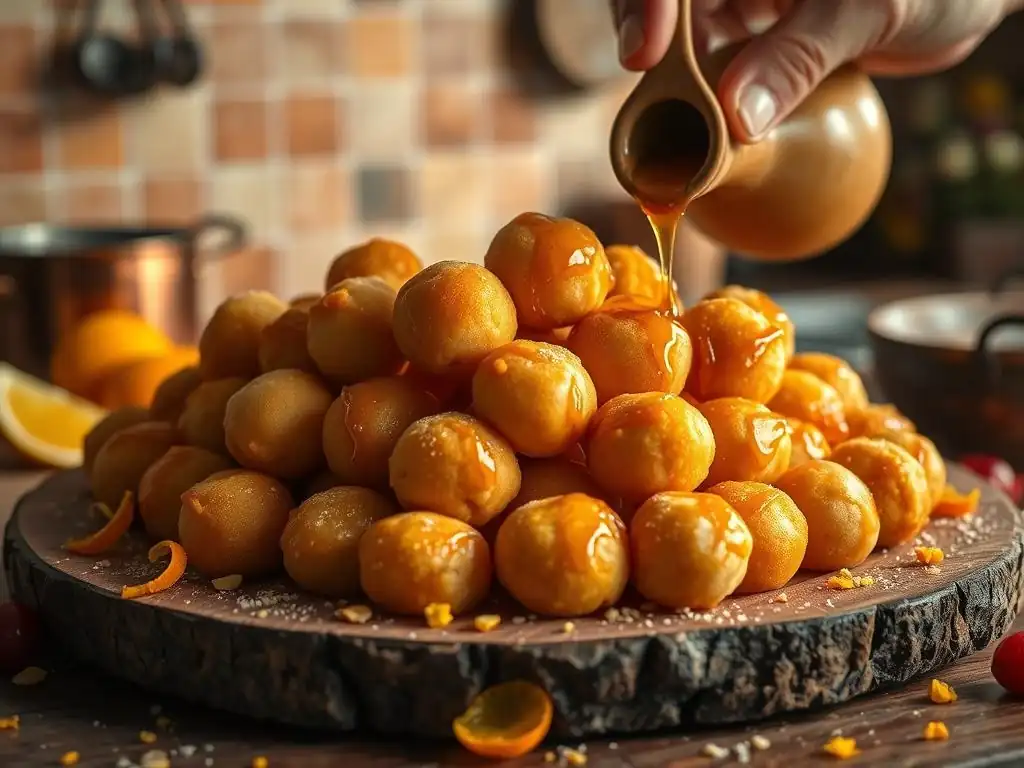
Welcome to BakeWithEase, your trusted guide to baking bliss! Ever dreamed of creating authentic Italian desserts at home? Then you're in the right place. Discover the secrets behind Italy's Honey Balls with our easy honey struffoli recipe, a delightful treat perfect for any celebration. Curious to uncover the surprisingly simple steps to crafting these golden, honey-drenched morsels? Let's get baking!
- Discover the Magic of Struffoli: An Easy Honey Balls Recipe from Italy
- What is Struffoli? Exploring Italy's Sweet Tradition
- BakeWithEase's Simple Struffoli Recipe: A Step-by-Step Guide
- Making the Struffoli Dough: A Baker's Guide
- Shaping and Frying the Struffoli: Achieving Golden Perfection
- The Honey Coating: Sweetening Your Struffoli
- Garnishing and Serving Your Homemade Struffoli
- Tips for Perfect Struffoli Every Time: BakeWithEase's Expert Advice
- Alternative Struffoli Variations: Explore New Flavors
- Mastering Italian Baking Traditions with BakeWithEase
- Frequently Asked Questions
- Final Reflection: The Enduring Sweetness of Tradition
- Unleash Your Inner Pastry Chef: Make Delicious Struffoli Today!
Discover the Magic of Struffoli: An Easy Honey Balls Recipe from Italy
Step into the delightful world of Italian Christmas traditions with struffoli, those irresistible little balls of dough fried to golden perfection and coated in a sweet, sticky honey syrup. Often adorned with colorful sprinkles and candied fruit, struffoli are more than just a dessert; they are a symbol of abundance and celebration, particularly cherished during the festive season.
This easy honey struffoli recipe is perfect for bakers of all levels, offering a simple yet rewarding way to bring a taste of Italy into your home. Get ready to create a beautiful, edible centerpiece that’s as fun to make as it is to share.
Struffoli, sometimes called honey balls, are a staple in many Italian households, especially around Christmastime. Their miniature size and sweet, gooey coating make them utterly addictive. While they might look intricate, the process is surprisingly straightforward, involving basic dough preparation, frying, and a simple honey glaze. Our BakeWithEase guide will walk you through each step, ensuring your first attempt at this easy honey struffoli recipe is a resounding success. Prepare yourself for the wonderful aroma of honey and orange zest filling your kitchen!
What is Struffoli? Exploring Italy's Sweet Tradition
Struffoli are small, deep-fried balls of dough, similar in texture to choux pastry or a very light donut hole, that are then tumbled in a warm honey syrup. The finished product is typically piled high into a festive mound or ring, often resembling a beehive or a Christmas wreath, and decorated with vibrant sprinkles, tiny sugar pearls, and pieces of candied citrus peel or fruit. While popular throughout Italy, struffoli are most strongly associated with the region of Campania, particularly the city of Naples, where they hold deep cultural significance.
The charm of struffoli lies not just in their delicious taste – a delightful contrast of soft dough and sweet, aromatic honey – but also in the communal aspect of their preparation and sharing. Making struffoli is often a family affair, with generations gathering in the kitchen to roll and cut the tiny dough balls. This tradition reinforces the sense of togetherness and celebration that is so central to the holiday season. Mastering this easy honey struffoli recipe allows you to participate in this heartwarming custom.
A Brief History of Struffoli: Naples and Christmas Celebrations
The origins of struffoli are believed to date back to ancient Greece, where similar fried dough sweets known as loukoumades were common. These were likely introduced to Southern Italy by Greek colonists centuries ago. Over time, the recipe evolved, particularly in Naples, becoming the distinct sweet treat we know today. Historical texts from the Kingdom of Naples mention struffoli as a popular festive dessert, enjoyed by both commoners and nobility during special occasions.
By the 18th and 19th centuries, struffoli had become firmly entrenched as a quintessential Christmas pastry in Naples. They were prepared in large batches to be shared with family, friends, and neighbors throughout the holiday season, from the Feast of the Immaculate Conception on December 8th through Epiphany on January 6th. The richness of the ingredients – eggs, flour, sugar, and honey – made them a special indulgence reserved for festive times, symbolizing prosperity and sweetness for the coming year. The tradition of making and gifting struffoli remains strong in Naples and among Italian communities worldwide.
Why Struffoli are a Must-Try Italian Christmas Treat
Struffoli embodies the spirit of Italian Christmas baking with its festive appearance and heartwarming tradition. Unlike many complex holiday desserts, this easy honey struffoli recipe is approachable for home bakers, requiring simple ingredients and techniques. The process of rolling and frying the tiny dough balls can even be a fun activity to involve the whole family, creating lasting holiday memories in the kitchen.
Beyond the ease of preparation, the taste and texture are simply enchanting. The small, light dough balls provide a perfect vehicle for the aromatic honey glaze, often infused with citrus zest or spices like cinnamon. The vibrant decorations add a playful touch, making struffoli visually stunning on any holiday table. They offer a unique texture experience – soft interior, slight chewiness from the honey, and a delightful crunch from sprinkles or nuts. Including this easy honey struffoli recipe in your holiday repertoire is a wonderful way to celebrate Italian culture and enjoy a truly delightful sweet.
BakeWithEase's Simple Struffoli Recipe: A Step-by-Step Guide
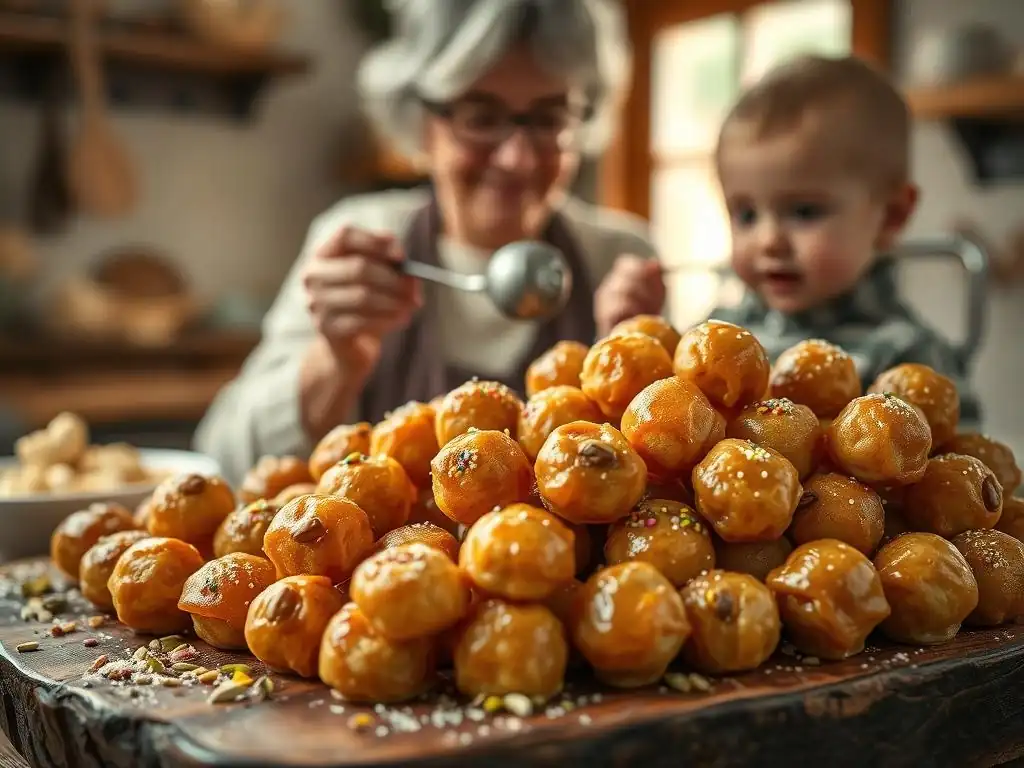
Making struffoli from scratch might sound intimidating, but our BakeWithEase guide breaks it down into manageable steps, proving just how easy this honey struffoli recipe can be. We focus on clear instructions and helpful tips to ensure your batch of honey balls turns out perfectly golden, sweet, and ready for decorating. Follow along, and you'll be enjoying this traditional Italian delicacy in no time.
Our goal is to demystify Italian baking traditions and make them accessible to everyone. This easy honey struffoli recipe is designed with the home baker in mind, minimizing complexity while maximizing flavor and fun. We'll cover everything from selecting the right ingredients to achieving that perfect honey coating and beautiful presentation.
Gathering Your Ingredients for Homemade Struffoli
Successful baking starts with having all your ingredients measured and ready. For this easy honey struffoli recipe, you'll need standard pantry staples. Using fresh, quality ingredients will make a difference in the final taste and texture of your honey balls. Take a moment to gather everything before you begin mixing the dough.
Having your ingredients prepped, sometimes called "mise en place," makes the baking process much smoother and prevents last-minute rushes. This step is crucial for any recipe, especially when working with dough and hot oil, as it allows you to focus on the technique at each stage.
Essential Ingredients for Perfect Honey Balls
To make a generous batch of these delightful honey balls, you will need:
- 2 ½ cups (about 300g) all-purpose flour
- 3 large eggs, at room temperature
- 3 tablespoons granulated sugar
- 2 tablespoons unsalted butter, softened
- 1 teaspoon lemon zest or orange zest (from about 1/2 a fruit)
- Pinch of salt
- Neutral frying oil (such as vegetable, canola, or sunflower oil) - you'll need enough to fill your pot about 2-3 inches deep
- 1 cup (about 340g) good-quality honey (acacia or wildflower honey works well)
- 1 tablespoon water or orange juice
- Optional garnishes: nonpareil sprinkles, colorful jimmies, candied orange peel, chopped toasted almonds, silver dragees
These quantities are designed for an easy honey struffoli recipe that yields enough to share, typically serving 8-10 people generously as a dessert or festive snack. Adjust quantities proportionally if you need a larger or smaller batch.
Equipment Needed for Easy Struffoli Preparation
Having the right tools on hand will make the process of creating your easy honey struffoli much more efficient and enjoyable. You don't need specialized equipment, just standard kitchen items.
Here's a list of essential equipment:
- Large mixing bowl
- Fork or whisk
- Measuring cups and spoons
- Clean work surface or pastry board
- Sharp knife or pastry wheel
- Large, heavy-bottomed pot or deep fryer for frying
- Slotted spoon or spider
- Paper towels or wire rack for draining
- Large saucepan for heating honey
- Another large bowl for coating the struffoli
- Serving platter or cone mold
Using a heavy-bottomed pot helps maintain a consistent oil temperature, which is key for evenly fried struffoli. A spider is particularly useful for scooping out the small, delicate honey balls from the hot oil.
Making the Struffoli Dough: A Baker's Guide
The dough for struffoli is relatively simple, similar to a pasta dough but enriched with sugar and butter. It should be firm but pliable, easy to roll out without being too sticky. Follow these steps carefully to achieve the correct consistency for your easy honey struffoli recipe.
The quality of your dough directly impacts the final texture of the fried honey balls. Too wet, and they might absorb too much oil; too dry, and they could be tough. Pay attention to the feel of the dough as you mix and knead.
Step 1: Combining Dry Ingredients for Struffoli
In your large mixing bowl, measure out the 2 ½ cups of all-purpose flour. Add the 3 tablespoons of granulated sugar and the pinch of salt. Use a whisk or a fork to combine these dry ingredients thoroughly. This helps distribute the sugar and salt evenly throughout the flour, ensuring consistent flavor in every bite of your honey balls.
Creating a small well in the center of the dry ingredients before adding the wet ones is a common technique that helps incorporate everything smoothly. This prevents liquids from splashing out and makes mixing easier.
Step 2: Incorporating Wet Ingredients for a Smooth Dough
In the well you made in the dry ingredients, crack the 3 large eggs. Add the 2 tablespoons of softened unsalted butter and the 1 teaspoon of lemon or orange zest. Begin to incorporate the wet ingredients into the dry using a fork, starting from the center and gradually drawing in the flour from the sides. Continue mixing until a shaggy dough starts to form.
Ensure your butter is truly softened, not melted, as this will affect the dough's texture. Room temperature eggs also incorporate more easily into the mixture, creating a smoother dough.
Step 3: Kneading the Dough to the Right Consistency
Once the dough is shaggy, turn it out onto a clean, lightly floured work surface. Begin kneading the dough by hand. Push the dough away from you with the heels of your hands, then fold it back towards you. Rotate the dough and repeat. Knead for about 8-10 minutes, or until the dough becomes smooth, elastic, and no longer sticky. It should feel firm but spring back slowly when poked.
Proper kneading develops the gluten in the flour, which gives the struffoli their structure. Avoid adding too much extra flour during kneading, as this can make the dough tough. A little bit of flour is okay if the dough is sticking excessively.
Step 4: Resting the Dough: 30 Minutes, Room Temperature
After kneading, shape the dough into a ball. Cover the dough tightly with plastic wrap or place it in a bowl covered with a damp cloth. Let the dough rest at room temperature for at least 30 minutes. This resting period is crucial.
Resting allows the gluten to relax, making the dough much easier to roll out thinly in the next step. It also helps hydrate the flour more evenly, resulting in a tenderer final product. Skipping this step will make shaping the tiny honey balls much more difficult.
Shaping and Frying the Struffoli: Achieving Golden Perfection
This is arguably the most enjoyable part for many – transforming the dough into hundreds of tiny balls and watching them puff up in the hot oil. Patience and attention to detail here will result in beautifully golden, crispy struffoli ready for their honey bath.
Working in batches is key during the frying stage to maintain a consistent oil temperature and prevent overcrowding, which can lead to uneven cooking.
Step 5: Rolling and Cutting the Dough into Tiny Balls
Unwrap the rested dough. Divide it into 4-6 smaller portions for easier handling. Take one portion and roll it out on a lightly floured surface into a thin rope, about ¼ inch (about 0.6 cm) in diameter. Aim for consistency in thickness so the struffoli cook evenly. Using a sharp knife or a fluted pastry wheel, cut the rope into tiny pieces, roughly ¼ inch (about 0.6 cm) in size. Don't worry about them being perfectly round; irregular shapes are part of their rustic charm.
As you cut the pieces, you can gently separate them with your fingers to prevent sticking. Some bakers roll the tiny pieces between their palms to make them rounder, but this is optional for this easy honey struffoli recipe. Place the cut pieces on a baking sheet lined with parchment paper or a clean towel, ensuring they don't touch too much, while you prepare the oil.
Step 6: Frying the Struffoli: Temperature and Timing
Heat the neutral frying oil in your large, heavy-bottomed pot over medium-high heat. You need enough oil to submerge the struffoli completely, typically 2-3 inches deep. Use a kitchen thermometer to monitor the oil temperature; the ideal temperature for frying struffoli is between 350°F and 360°F (175°C - 180°C). If the oil is too hot, the struffoli will burn on the outside before cooking through. If it's too cool, they will absorb excess oil and become greasy.
Carefully add a small batch of struffoli to the hot oil using your slotted spoon or spider. Do not overcrowd the pot, as this will lower the oil temperature and result in soggy honey balls. Fry for about 2-3 minutes, stirring gently with the slotted spoon to ensure they cook and brown evenly on all sides.
Achieving the Perfect Golden-Brown Color: Tips and Tricks
The struffoli are ready when they are puffed up and have turned a beautiful golden-brown color. This happens relatively quickly, so stay attentive. The exact frying time will depend on the size of your struffoli and the oil temperature.
Once they reach the desired color, immediately remove them from the oil using the slotted spoon or spider, allowing excess oil to drip back into the pot. Transfer the fried struffoli to a plate or baking sheet lined with paper towels to drain any remaining oil. Fry the remaining dough in batches, ensuring the oil returns to the correct temperature between batches. Properly fried struffoli should be light and airy inside, with a slightly crisp exterior.
The Honey Coating: Sweetening Your Struffoli
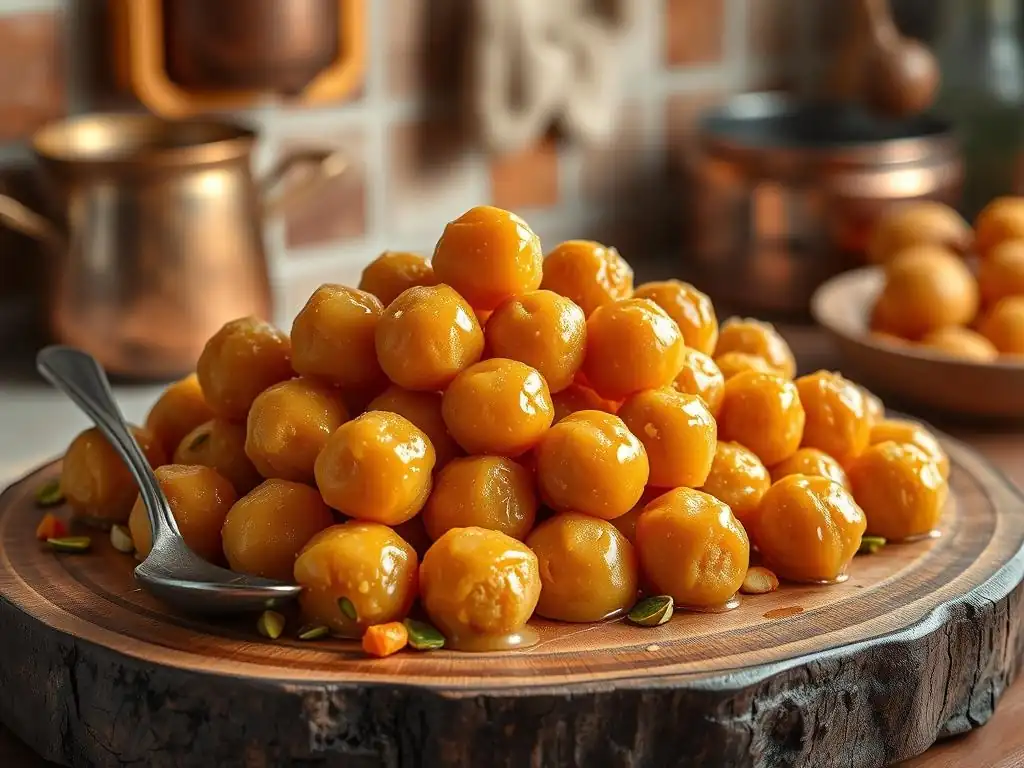
The honey coating is what transforms the plain fried dough balls into the iconic, sticky-sweet struffoli. A good quality honey is essential here, providing the primary flavor. Infusing the honey with citrus zest adds a wonderful aromatic layer that complements the sweetness.
Working quickly while the honey syrup is warm is important for achieving an even coating on all the honey balls.
Step 7: Preparing the Honey Syrup: Acacia Honey and Orange Zest
In a large saucepan, gently heat the 1 cup of honey over medium heat. Add the 1 tablespoon of water or orange juice and the zest from ½ an orange or lemon. Stir occasionally until the honey is fluid and warm, but not boiling vigorously. The goal is to make the honey runny enough to coat the struffoli easily. The citrus zest will infuse its aroma into the warm honey, adding brightness.
Acacia honey is often preferred for struffoli due to its mild flavor and light color, which doesn't overpower the delicate taste of the dough. However, any good-quality wildflower or even clover honey will work well for this easy honey struffoli recipe. You can also add a tiny pinch of cinnamon or ground cloves to the honey for a warmer spice note, if desired.
Step 8: Coating the Fried Struffoli in Honey
Once the honey syrup is warm and fluid, carefully add the fried struffoli to the saucepan with the honey. Using a large spoon or spatula, gently fold the struffoli into the warm honey, ensuring each little ball is thoroughly coated. Work relatively quickly before the honey cools and becomes too thick.
Make sure all the struffoli get dunked and coated evenly. The warm honey will adhere nicely to the porous surface of the fried dough.
Ensuring Even Coating: Techniques for Success
To ensure every struffolo is coated in that sweet, sticky goodness, use a large spoon or spatula to gently toss and stir the mixture in the saucepan. You can also transfer the fried struffoli and warm honey to a very large bowl and gently stir them together there. The goal is to separate any clumps that might have formed during frying and ensure the honey reaches every surface.
Continue stirring for a minute or two until you see that most of the honey has adhered to the struffoli. Be gentle to avoid breaking the delicate honey balls. Once coated, they are ready for garnishing and shaping.
Garnishing and Serving Your Homemade Struffoli
The final touch for struffoli is the decoration, which adds festive color and texture. This is another step where creativity and family participation can shine. The traditional presentation is a festive mound or ring.
Get creative with your garnishes! This is where the struffoli truly come alive and become a visual feast.
Step 9: Adding Festive Garnishes: Sprinkles, Candied Fruit, and More
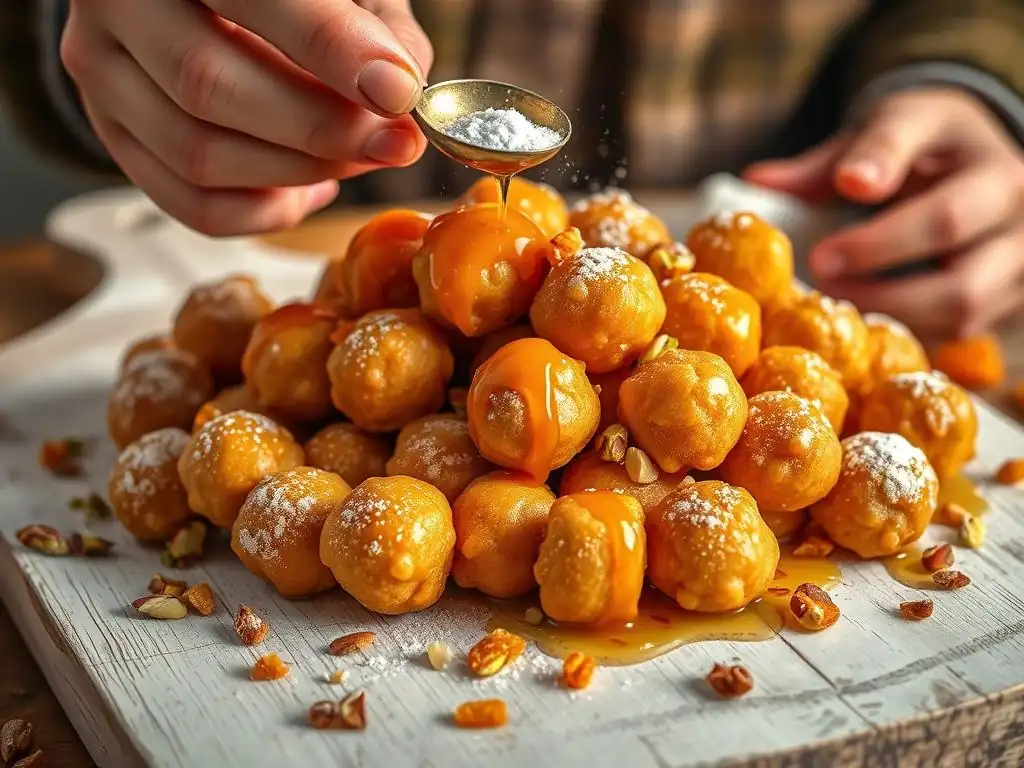
While the honey-coated struffoli are still warm and sticky, transfer them to your serving platter or mold. Immediately scatter your desired garnishes over the top. Popular choices include colorful nonpareil sprinkles, longer jimmies, small pieces of candied orange peel, red and green candied cherries, or chopped toasted almonds.
The warmth of the honey helps the garnishes stick. You can be generous with the sprinkles and candied fruit to create a truly festive look. For a more rustic touch, simply sprinkle with toasted sesame seeds or chopped nuts.
Serving Suggestions for Struffoli: Traditional Cone or Modern Platter
Traditionally, struffoli are arranged in a conical shape, sometimes around a central object like a bottle (removed before serving) or a glass, to resemble a beehive (symbolizing sweetness and abundance) or a Christmas tree. This mound is then heavily decorated.
Alternatively, you can arrange the honey balls on a flat platter in a ring shape like a wreath, or simply pile them decoratively in a large bowl. For individual servings, you can place small clusters in decorative cups or paper liners. Allow the struffoli to cool completely before serving, as the honey will set slightly, making them easier to handle. They are delicious enjoyed with a cup of coffee or dessert wine.
Tips for Perfect Struffoli Every Time: BakeWithEase's Expert Advice
Even with an easy honey struffoli recipe, a few tips can help you achieve bakery-quality results. Pay attention to these details, and your honey balls will be the star of your holiday table.
These expert tips address common challenges and help you prevent issues before they arise, ensuring your easy honey struffoli recipe is a success.
Troubleshooting Common Struffoli Problems
- Struffoli are too oily: This usually happens if the frying oil wasn't hot enough (below 350°F / 175°C) or if the pot was overcrowded. Ensure the oil is at the correct temperature and fry in small batches. Also, make sure you drain them well on paper towels immediately after frying.
- Struffoli are hard or tough: This could be due to over-kneading the dough, adding too much extra flour during kneading or rolling, or not resting the dough long enough. Ensure you knead just until smooth and elastic and allow the full 30-minute rest.
- Honey coating isn't sticking: The struffoli might have cooled too much before being added to the honey, or the honey wasn't warm enough. Reheat the honey gently if needed and coat the struffoli while they are still warm (freshly fried) and the honey is warm and fluid.
- Struffoli stuck together: This can happen if you don't separate the cut pieces before frying or if you overcrowd the fryer. Gently separate the dough pieces as you cut them and fry in small batches.
Storing Your Struffoli to Maintain Freshness
Struffoli are best enjoyed within a few days of being made, as the honey coating can start to crystallize over time. Store cooled struffoli in an airtight container at room temperature. Layering them with parchment paper can help prevent them from sticking together excessively.
Avoid refrigerating struffoli, as this can make them hard. If stored properly, they should remain delicious for 3-4 days. For longer storage, you can freeze the uncoated fried struffoli in a single layer on a baking sheet until solid, then transfer them to a freezer-safe bag or container for up to 1 month. Thaw at room temperature and then coat with warm honey just before serving.
Alternative Struffoli Variations: Explore New Flavors
While the classic easy honey struffoli recipe is a beloved tradition, you can easily customize it with different flavorings in the dough or the honey syrup. Experimenting with variations allows you to put your own spin on this classic Italian treat.
These simple additions can transform the flavor profile of your easy honey struffoli, offering delightful new experiences for your taste buds.
Lemon-Infused Struffoli Recipe: A Zesty Twist
For a brighter, more aromatic struffoli, increase the amount of citrus zest in the dough to 2 teaspoons, using lemon zest for a tangy note. You can also add a splash of limoncello or fresh lemon juice (about 1 teaspoon) to the honey syrup along with the water.
This variation provides a refreshing contrast to the sweetness of the honey, making the struffoli feel a bit lighter. The lemon aroma is particularly lovely during the holiday season.
Cinnamon-Spiced Honey Balls: A Warm Delight
Add ½ teaspoon of ground cinnamon to the dry ingredients when mixing the dough for a warm, comforting spice flavor. You can also add ½ teaspoon of cinnamon and a pinch of ground cloves to the honey syrup while it's heating.
These cinnamon-spiced honey balls are perfect for a cozy winter treat, pairing wonderfully with coffee or hot chocolate. The spices enhance the richness of the honey.
Struffoli with Toasted Almonds: A Nutty Crunch
Incorporate finely chopped toasted almonds (about ¼ cup) into the dough during the kneading process for added texture. Alternatively, toast about ½ cup of slivered or chopped almonds and stir them into the warm honey syrup along with the fried struffoli just before coating.
Adding nuts provides a delightful crunch that contrasts with the soft dough and sticky honey. Toasted almonds bring a wonderful nutty aroma and flavor that complements the sweetness.
Mastering Italian Baking Traditions with BakeWithEase
This easy honey struffoli recipe is just one example of the many wonderful Italian baking traditions you can explore. Italian pastries and breads are renowned for their simplicity, quality ingredients, and incredible flavor.
BakeWithEase is your partner in discovering the joy of baking, whether you're tackling a classic like struffoli or trying something entirely new. We aim to provide clear, easy-to-follow recipes that empower you in the kitchen.
More Easy Italian Dessert Recipes to Explore
If you enjoyed making this easy honey struffoli recipe, you might want to try other approachable Italian desserts. Consider trying your hand at:
- Cantucci (Biscotti): Twice-baked almond cookies, perfect for dipping in Vin Santo.
- Tiramisu: A classic no-bake dessert layering coffee-soaked ladyfingers and a rich mascarpone cream.
- Panna Cotta: A simple, elegant cooked cream dessert often served with fruit sauce.
- Amaretti Cookies: Small, crisp cookies made with almond flour.
These recipes offer a taste of Italy using straightforward techniques and readily available ingredients, just like our easy honey struffoli recipe.
We love seeing what you bake! After you've made your batch of struffoli using this easy honey struffoli recipe, share your photos and experiences with the BakeWithEase community. Baking is more fun when shared.
Connect with us and other home bakers to ask questions, get tips, and celebrate your successes in the kitchen. Your beautiful struffoli creations could inspire others to try this delightful Italian tradition!
Frequently Asked Questions
What is struffoli and where does it come from?
Struffoli are small, deep-fried balls of dough, traditionally drizzled with honey and decorated with sprinkles. They're a traditional Neapolitan dessert popular in Italy, especially during Christmas.
Is this struffoli recipe truly easy to follow?
Yes! This recipe from BakeWithEase focuses on simple steps and readily available ingredients. We aim to make struffoli accessible for bakers of all skill levels.
What kind of honey is best to use for this struffoli recipe?
A good quality liquid honey, like acacia or wildflower, is recommended for the best flavor and texture. Avoid overly strong or flavored honeys that might overpower the dough.
Can I make struffoli ahead of time?
Yes, you can! The struffoli can be fried and stored in an airtight container. However, it's best to add the honey and sprinkles just before serving to prevent them from becoming soggy.
What if I don't have sprinkles? Are there any other decorations I can use?
Absolutely! Consider using candied citrus peel, chopped nuts, or even a dusting of powdered sugar. Get creative and use whatever you have on hand to personalize your struffoli.
Final Reflection: The Enduring Sweetness of Tradition
The simple act of making struffoli, these tiny honey-drenched balls of fried dough, connects us to a rich culinary heritage, a heritage that remains surprisingly relevant in our fast-paced modern world. In a time of instant gratification and pre-packaged treats, the process of creating something delicious from scratch offers a powerful antidote to the pressures of daily life. The satisfying aroma of frying dough and the sweet, honeyed scent filling your kitchen become a tangible reminder of slower rhythms and simpler pleasures.
The enduring appeal of struffoli lies not just in its delicious taste, but in its ability to bridge generations and cultures. It's a recipe passed down through families, a tradition shared during festive gatherings, a testament to the power of food to connect us to our past and to each other. Food is symbolic of love when words are inadequate.
- Alan D. Wolfelt. This quote perfectly encapsulates the emotional resonance of sharing a dish like struffoli, imbued with history and affection. The simple act of making it, and sharing it, becomes a powerful act of connection.
This year, as you gather with loved ones, consider making your own batch of struffoli. Don't be intimidated by the seemingly long list of ingredients; embrace the process. Let the rhythmic rolling of the dough, the satisfying sizzle in the pan, and the sweet, sticky coating become a meditative experience. Let the simple act of making struffoli remind you of the enduring power of tradition and the sweetness of connection. You might be surprised by the joy it brings, not just to your taste buds, but to your heart.
Unleash Your Inner Pastry Chef: Make Delicious Struffoli Today!
Thanks for joining us on this sweet journey into the world of Struffoli! We hope you've gained a newfound appreciation for this delightful Italian treat and feel confident in tackling the recipe. Now it's time to get baking!
- Master the art of Struffoli: Dive into the kitchen and create your own batch of these honey-glazed delights. The recipe is easier than you think!
- Share your Struffoli creation: Snap a picture of your finished masterpiece and share it with your friends and family on social media – tag us @BakeWithEase if you're feeling extra generous!
- Explore other BakeWithEase recipes: Discover more delicious and easy-to-follow recipes on our website. We have a whole world of baking adventures waiting for you!
Ready to roll up your sleeves and experience the joy of homemade Struffoli? What unique twist will you add to your very own recipe?