
Unlock Artisan Bread: Essential Equipment Every Home Baker Needs

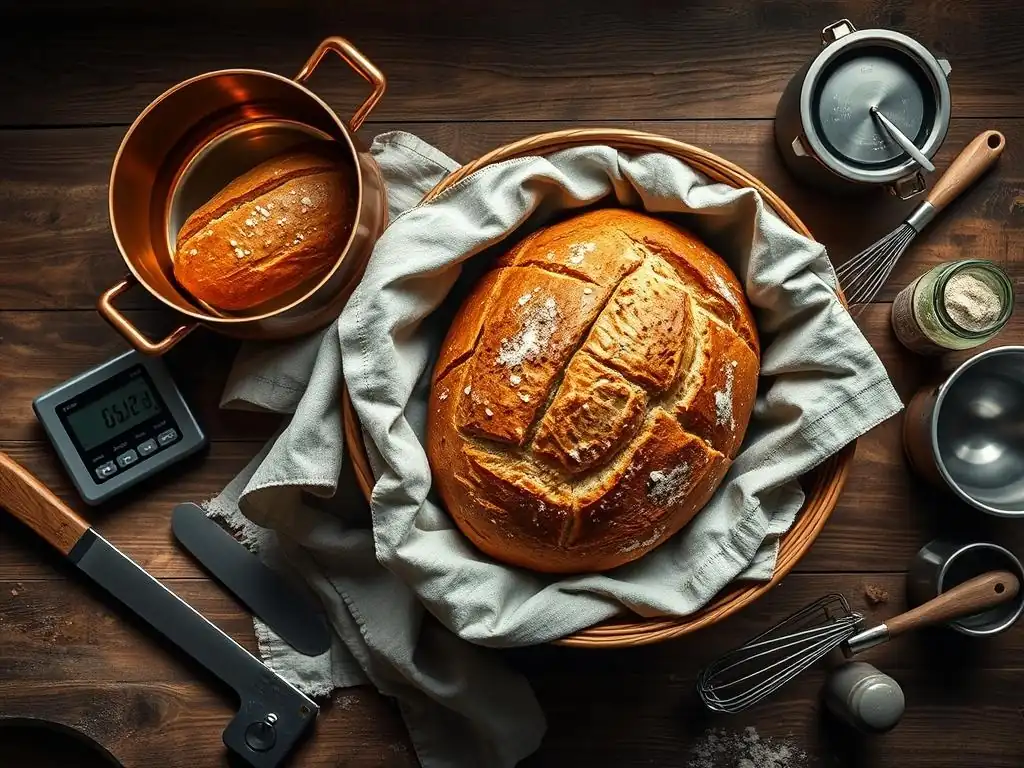
Welcome to BakeWithEase, where the joy of baking is made simple and accessible! Ever wondered if you have the right tools to unlock the secrets of perfectly crusty, flavorful artisan bread at home? This guide dives deep into the world of artisan bread baking equipment, revealing the essential items that will transform your baking journey, regardless of your experience level. Discover what you need to elevate your loaves from ordinary to extraordinary, and let's get baking!
- Mastering Artisan Bread: The Right Baking Equipment is Key
- Must-Have Artisan Bread Baking Equipment: Your Starter Kit
- Shaping Your Masterpiece: Banneton Baskets and Dough Scoring Tools
- Baking Perfection: Dutch Ovens and Baking Stones
- Beyond the Basics: Advanced Equipment for Artisan Bread Enthusiasts
- Maximizing Your Artisan Bread Baking Experience: Tips and Tricks
- Conclusion: Embrace the Art of Artisan Bread Baking with the Right Tools
-
Frequently Asked Questions
- What are the essential tools for starting artisan bread baking at home?
- Why is a kitchen scale so important in artisan bread baking?
- Can I bake artisan bread without a Dutch oven or baking stone?
- What type of flour is best for artisan bread baking?
- How important is a proofing basket (banneton) for artisan bread?
- Final Reflection: The Humble Tools of Artisan Breadmaking
- Unleash Your Inner Baker: Craft Your Perfect Loaf!
Mastering Artisan Bread: The Right Baking Equipment is Key
Achieving Bakery-Quality Loaves at Home: A Guide to Essential Tools
Embarking on the journey of baking true artisan bread at home can be incredibly rewarding. The aroma filling your kitchen, the satisfaction of a perfectly golden crust, and the joy of a soft, airy interior are unparalleled. While passion and technique are fundamental, having the right artisan bread baking equipment is equally crucial for consistently achieving bakery-quality results. Think of your tools as extensions of your hands, enabling precise measurements, optimal dough development, controlled shaping, and the ideal baking environment needed to transform simple ingredients into a masterpiece.
Investing in quality artisan bread baking equipment isn't just about accumulating gadgets; it's about acquiring tools that empower you to execute techniques effectively. From accurately weighing your flour and water – a critical step often overlooked by those accustomed to volume measurements – to providing the necessary structure during proofing and creating the perfect steamy environment in the oven, each piece of equipment plays a vital role. With the proper setup, you can overcome common challenges like flat loaves, tough crusts, or inconsistent crumb structure, paving the way for beautiful, delicious bread every time you bake.
Must-Have Artisan Bread Baking Equipment: Your Starter Kit
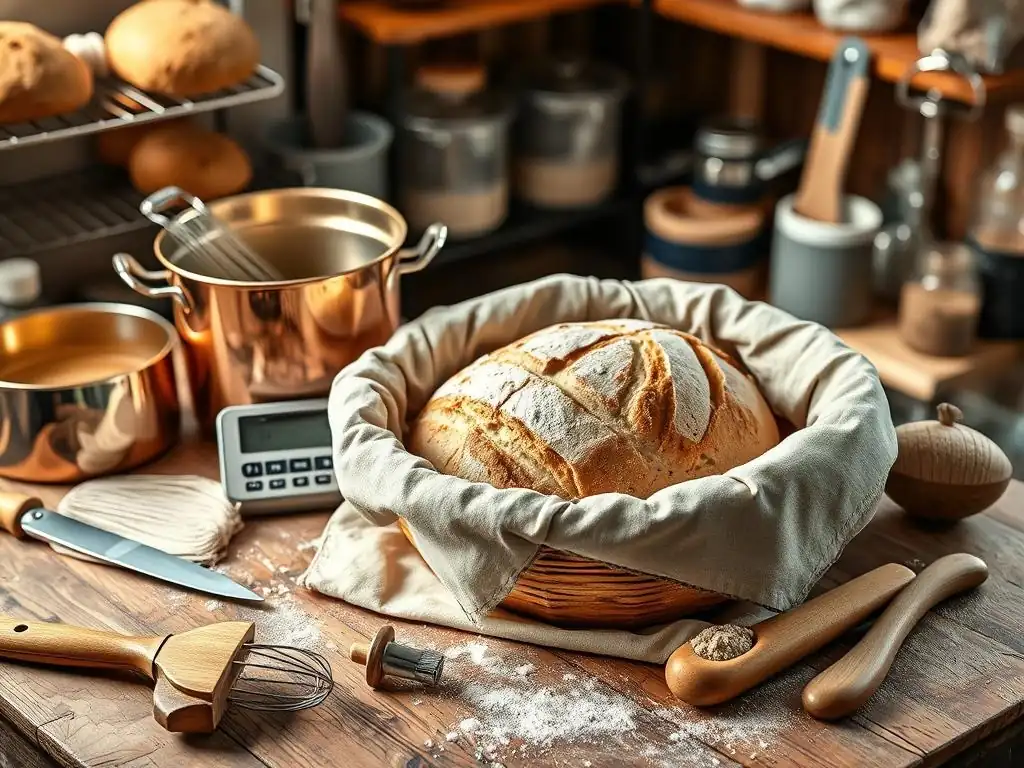
The Foundation: High-Quality Baking Scales for Accurate Measurements
Precision is paramount in artisan bread baking, especially when dealing with hydration levels and salt content. Unlike conventional baking where cup measurements might suffice, the subtle variations in density of flour and the exact ratios of water to flour (hydration) significantly impact the final dough structure and outcome. A difference of just 20-30 grams of water in a standard 500g flour recipe can dramatically change the dough's consistency, affecting everything from mixing and shaping to the final texture and rise. This is where accurate artisan bread baking equipment like a digital scale becomes indispensable.
A reliable digital scale, such as the Escali Primo Digital Kitchen Scale, offers accuracy typically down to 1 gram. This level of precision ensures that your ingredient ratios are exact, leading to more predictable and consistent results bake after bake. For instance, maintaining a consistent 70% hydration means weighing exactly 350 grams of water for 500 grams of flour.
An alternative like the Ozeri ZK14-S Pronto Digital Multifunction Kitchen and Food Scale also provides similar accuracy and often includes features like a tare function, allowing you to zero out the weight of your container and measure ingredients directly into it, streamlining the process. Having a precise scale is arguably the most fundamental piece of artisan bread baking equipment you can own.
Essential Mixing Tools: From Dough Whisk to Stand Mixer
Proper dough development is key to achieving the desired open crumb structure and chewy texture characteristic of artisan bread. This development involves building a strong gluten network through mixing and kneading. The tools you use can significantly influence this process, depending on the dough's hydration and the batch size. For high-hydration doughs, which can be quite sticky, a Danish Dough Whisk is a fantastic piece of artisan bread baking equipment. Its unique design allows you to incorporate wet and dry ingredients quickly and efficiently with minimal sticking, providing a gentler initial mix before hand kneading or machine mixing.
For larger batches or stiffer doughs, a powerful stand mixer like the KitchenAid Professional 600 Series can be a game-changer. Equipped with a dough hook, it can handle dense doughs that would be strenuous to knead by hand, developing the gluten structure through mechanical action. This allows for consistent kneading over longer periods without fatigue, which is essential for certain recipes.
However, don't underestimate the value of hand mixing; it allows you to truly feel the dough's development, understand its texture, and make subtle adjustments. For smaller batches or when you want a more intimate connection with your dough, hand mixing is a traditional and highly effective method requiring no specialized artisan bread baking equipment beyond your own two hands and a sturdy bowl.
Shaping Your Masterpiece: Banneton Baskets and Dough Scoring Tools
Banneton Baskets: Achieving Perfect Crust and Shape
Once your dough has gone through its bulk fermentation, it needs a final proofing period before baking. Banneton baskets are classic pieces of artisan bread baking equipment used specifically for this stage. Made typically from rattan or cane, these baskets hold the dough, providing structure and helping it maintain its shape as it proofs. The material also wicks away a small amount of moisture from the surface of the dough, contributing to a drier exterior which promotes a better crust formation and helps prevent the dough from sticking to the basket when inverted.
Banneton baskets come in various shapes and sizes, most commonly round (for boules) and oval (for batards). A standard 9-inch round banneton is suitable for doughs made with 500-700 grams of flour, yielding a classic round loaf. An 11-inch oval banneton is perfect for a loaf shaped like a football, typically also using 500-700 grams of flour.
To use, generously flour the basket with rice flour (which is less absorbent than wheat flour and helps prevent sticking), place your shaped dough seam-side up, and let it proof. After proofing, simply invert the basket onto your baking surface, and the dough should release cleanly, ready for scoring. Proper cleaning involves letting it dry thoroughly and brushing out excess flour.
Dough Scoring Tools: Lamé and Bread Knives
Scoring, or making intentional cuts on the surface of the dough just before baking, is a critical step in artisan bread making. It serves multiple purposes: it allows the dough to expand in a controlled manner during oven spring, preventing blowouts; it creates beautiful patterns on the crust; and it influences the final shape and height of the loaf.
The best tool for this is a lamé (pronounced "lahm"), essentially a razor blade holder designed for cutting dough. A well-known example is the Wire Monkey Ufo Lame, which uses a standard double-edged razor blade held securely for precise, clean cuts.
The sharpness of the blade is key to a clean score that allows the dough to open up properly. A dull blade will drag the dough, resulting in messy cuts and inhibited expansion.
While a lamé is the preferred tool for most artisan doughs, especially those with higher hydration, a very sharp serrated bread knife can also be used, particularly for softer or enriched doughs where a razor blade might catch. Practicing different scoring patterns is part of the art; a simple single slash down the length of a batard or a cross on a boule are functional cuts, while more intricate designs can turn your loaf into a work of edible art.
Baking Perfection: Dutch Ovens and Baking Stones
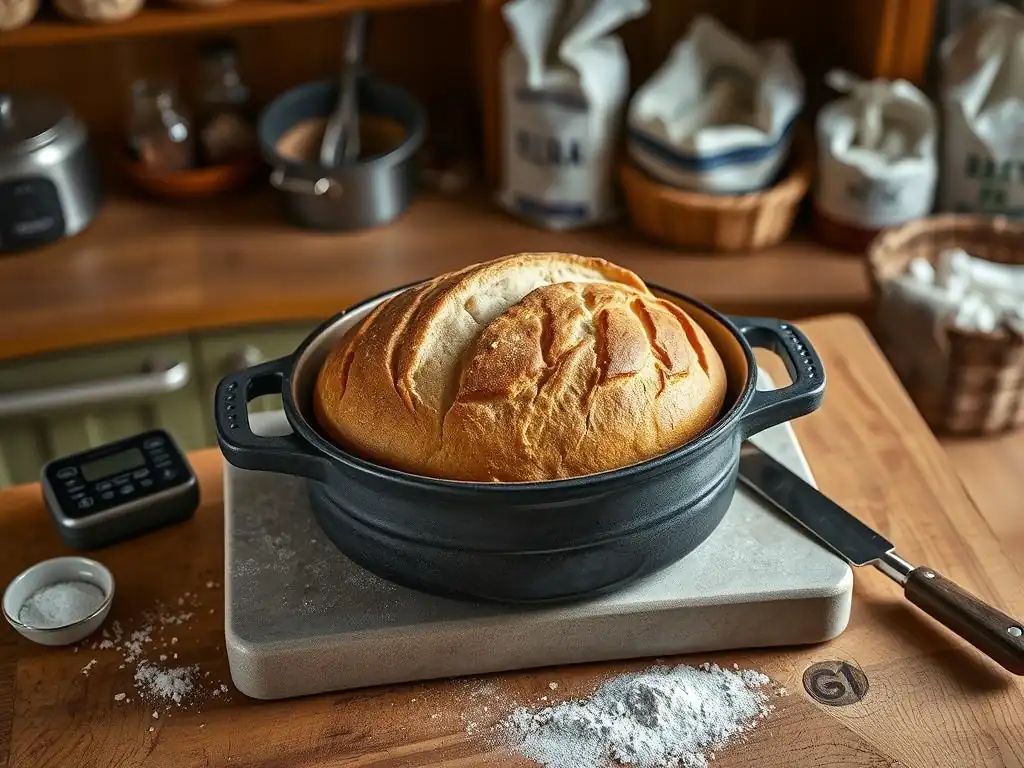
Dutch Ovens: Creating a Steamy Baking Environment
One of the secrets to achieving that coveted thin, crispy crust and maximum oven spring in artisan bread is creating a steamy environment during the initial phase of baking. This steam keeps the surface of the dough moist, allowing it to expand fully before the crust sets. A Dutch oven is an exceptional piece of artisan bread baking equipment for replicating a professional baker's steam-injected oven right in your home kitchen. When preheated to a high temperature (often 450-500°F or 230-260°C), the enclosed space traps the moisture released by the dough itself as it bakes, providing the necessary steam.
Enameled cast iron Dutch ovens, like the Lodge Enameled Cast Iron Dutch Oven, are popular because they heat evenly, retain heat exceptionally well, and the enamel coating makes them relatively non-stick and easy to clean. They are versatile and can be used for many other cooking tasks.
Standard cast iron Dutch ovens, such as the Lodge Cast Iron Dutch Oven, offer similar excellent heat retention and can often be a more affordable option, though they require seasoning and may be slightly harder to clean. Both types effectively mimic the steam environment needed for optimal crust development and oven spring in artisan bread.
Baking Stones: Achieving a Crispy Crust
While Dutch ovens excel at providing steam and overall even heat, a baking stone or steel is another essential piece of artisan bread baking equipment for achieving a perfectly crispy bottom crust. Placed in your oven and preheated for a significant amount of time (typically 45-60 minutes or more), the stone or steel absorbs and radiates intense heat. When the dough is placed directly onto this hot surface, it receives an immediate burst of heat from below, causing rapid expansion and ensuring the bottom of the loaf bakes thoroughly and develops a satisfyingly crispy texture.
Cordierite baking stones, like the Old Stone Oven Round Pizza Stone, are durable and less prone to thermal shock cracking than some other materials, making them a reliable choice. They effectively transfer heat to the base of the loaf, promoting a good crust.
While baking stones provide excellent radiant heat, using them alone requires creating steam within the oven by other means, such as placing a tray of hot water on a rack below the stone. Many home bakers achieve excellent results by combining techniques, perhaps starting the bake in a Dutch oven for steam and oven spring, then transferring the loaf directly onto a preheated stone or steel for the final browning and crisping of the bottom crust.
Beyond the Basics: Advanced Equipment for Artisan Bread Enthusiasts
Dough Proofing Box: Precise Temperature and Humidity Control
Consistency is key in baking, and the proofing stage is where temperature and humidity play a significant role. Yeast activity is highly sensitive to these conditions, and fluctuations can lead to inconsistent rise, structure, and flavor development. For home bakers seeking maximum control and reliability, especially in varying kitchen environments, a dough proofing box is a valuable piece of advanced artisan bread baking equipment. These units provide a stable, controlled environment for fermentation and proofing.
A product like the Brod & Taylor Folding Proofer is an excellent example, offering precise temperature control (usually within a degree or two) and the ability to create a humid environment (by adding a tray of water). This allows you to proof dough at ideal temperatures, whether you're working with sourdough starters that prefer cooler, longer fermentation or commercial yeast that benefits from warmer proofing. Achieving consistent proofing temperatures, for instance, maintaining 75°F (24°C) for a specific rise duration, can dramatically improve the predictability and quality of your artisan loaves, regardless of the season or your home's ambient temperature.
Pizza Peel: Safe and Efficient Bread Transfer
Transferring delicate, proofed dough onto a screaming hot baking stone or into a preheated Dutch oven requires a tool that is both safe and efficient. This is where a pizza peel, a flat paddle with a handle, becomes essential artisan bread baking equipment. Trying to slide dough onto a hot surface by hand is difficult and dangerous, risking burns and potentially deforming your carefully proofed loaf. A peel allows you to gently slide the dough from your counter or proofing surface onto the hot stone or into the pot.
Wooden pizza peels, such as the Checkered Chef Pizza Peel, are often preferred by home bakers because their porous surface holds flour well, which helps prevent the dough from sticking. They are typically lightweight and easy to maneuver.
Metal pizza peels, like the Rösle Pizza Peel, tend to be thinner at the edge, making it slightly easier to slide under the dough, and are generally more durable and easier to clean. Regardless of material, the technique involves dusting the peel generously with flour (or cornmeal/semolina) before placing the dough on it, ensuring a smooth transfer with a quick, confident slide.
Maximizing Your Artisan Bread Baking Experience: Tips and Tricks
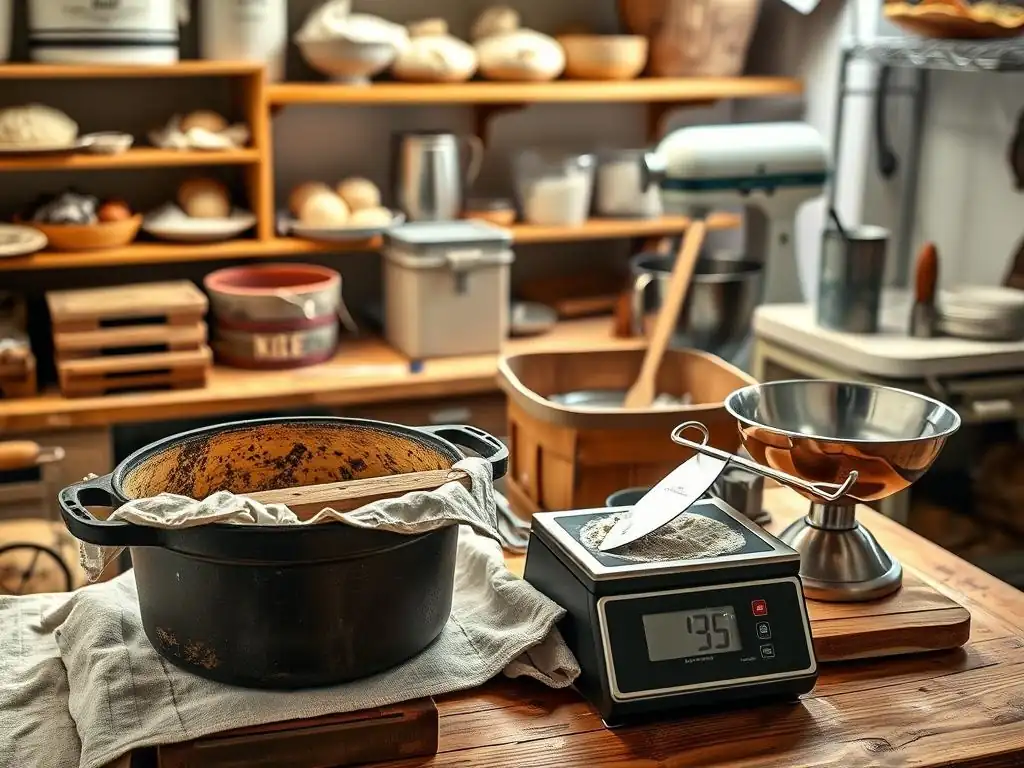
Investing in Quality: Choosing durable and reliable equipment
When building your collection of artisan bread baking equipment, prioritizing quality over quantity is a wise approach. Durable tools might have a higher upfront cost, but they perform better, last longer, and can withstand the rigors of frequent baking. A sturdy stand mixer, a well-made Dutch oven from a reputable brand, or a high-quality digital scale that maintains accuracy over time are investments that pay off in consistent results and saved frustration. Researching reviews and choosing equipment known for reliability will enhance your baking journey significantly.
Cleaning and Maintenance: Extending the life of your baking tools
Proper care is essential for maintaining the performance and longevity of your artisan bread baking equipment. For example, banneton baskets should be allowed to dry completely after use and brushed clean – never washed with soap and water, which can damage the cane and affect future bakes. Cast iron Dutch ovens require seasoning to prevent rust, while enameled ones need gentle cleaning to avoid chipping the enamel. Keeping your digital scale free from spills and storing your lamé blades safely are simple steps that ensure your tools are ready and effective whenever inspiration strikes to bake artisan bread.
Recipe Adaptations: Adjusting recipes for different equipment
Understanding how your artisan bread baking equipment influences the process allows you to adapt recipes effectively. For instance, a high-hydration dough that might be difficult to knead by hand is easily managed in a stand mixer. If a recipe calls for baking on a stone but you're using a Dutch oven, you'll likely need to adjust baking times and temperatures, particularly the initial covered period to trap steam.
Similarly, proofing times might need slight adjustments based on the precise environment provided by a proofing box versus ambient room temperature. Becoming familiar with your tools helps you make informed choices to achieve the best possible loaf.
Conclusion: Embrace the Art of Artisan Bread Baking with the Right Tools
Frequently Asked Questions
What are the essential tools for starting artisan bread baking at home?
The essential tools include a dutch oven or baking stone, a proofing basket (banneton), a dough scraper, and a kitchen scale. These will help you create professional-quality results from your home oven.
Why is a kitchen scale so important in artisan bread baking?
A kitchen scale ensures accurate measurements of ingredients, which is crucial for consistent and repeatable results in artisan bread baking. It's far more precise than using measuring cups.
Can I bake artisan bread without a Dutch oven or baking stone?
While it's possible, a Dutch oven or baking stone helps create the necessary steam for a crispy crust and proper oven spring. Alternatives are to use steam in your oven.
What type of flour is best for artisan bread baking?
Bread flour, with its higher protein content, is generally recommended. It provides the gluten structure needed for a chewy texture and well-risen loaf.
How important is a proofing basket (banneton) for artisan bread?
A banneton helps the dough maintain its shape during the final proofing stage. It also adds an attractive pattern to the crust when the bread is baked.
Final Reflection: The Humble Tools of Artisan Breadmaking
The pursuit of perfect artisan bread is not just about flour and water; it's about the tools that empower us to unlock its potential. The right equipment isn't a luxury, but a crucial ingredient in achieving that satisfying crust and airy crumb we all crave. This journey through essential artisan bread baking equipment highlights the profound impact even seemingly simple tools can have on the final product.
The influence of quality equipment extends far beyond the technical aspects of baking. It fosters a deeper connection with the process itself, transforming a simple act of cooking into a mindful and rewarding experience. The best bread is made with love, and the right tools help you express that love.
This isn't just a sentiment; it's a reflection of the satisfaction derived from using well-crafted tools to create something beautiful and delicious. The tactile experience of kneading dough in a sturdy bowl, the precise control offered by a reliable Dutch oven, these are the elements that elevate baking from a task to an art.
Now, consider your own baking journey. What tools do you already possess? Which ones are missing from your arsenal? I encourage you to reflect on your current equipment and identify areas where an upgrade might enhance your baking experience. Don't be afraid to invest in quality; the joy of crafting exceptional artisan bread is a reward in itself. Embrace the process, experiment with different techniques, and let the tools guide you towards creating your own masterpiece.
Unleash Your Inner Baker: Craft Your Perfect Loaf!
Thanks for joining us on this journey into the world of artisan bread! We hope you now feel empowered with the knowledge to elevate your baking game. Ready to get started?
- Invest in your dream bread-making equipment: Think about which piece of equipment from our list excites you most – and treat yourself! It's an investment in delicious homemade bread for years to come.
- Share your baking triumphs (and challenges!): We'd love to see your baking creations. Share photos on social media using #BakeWithEaseArtisan.
- Challenge a friend to a bread-baking duel: It's a fun way to practice your new skills and discover new techniques!
So, which essential piece of equipment will you acquire first to begin your artisan bread journey?