
The Role of Temperature in Controlling Sugar Crystals

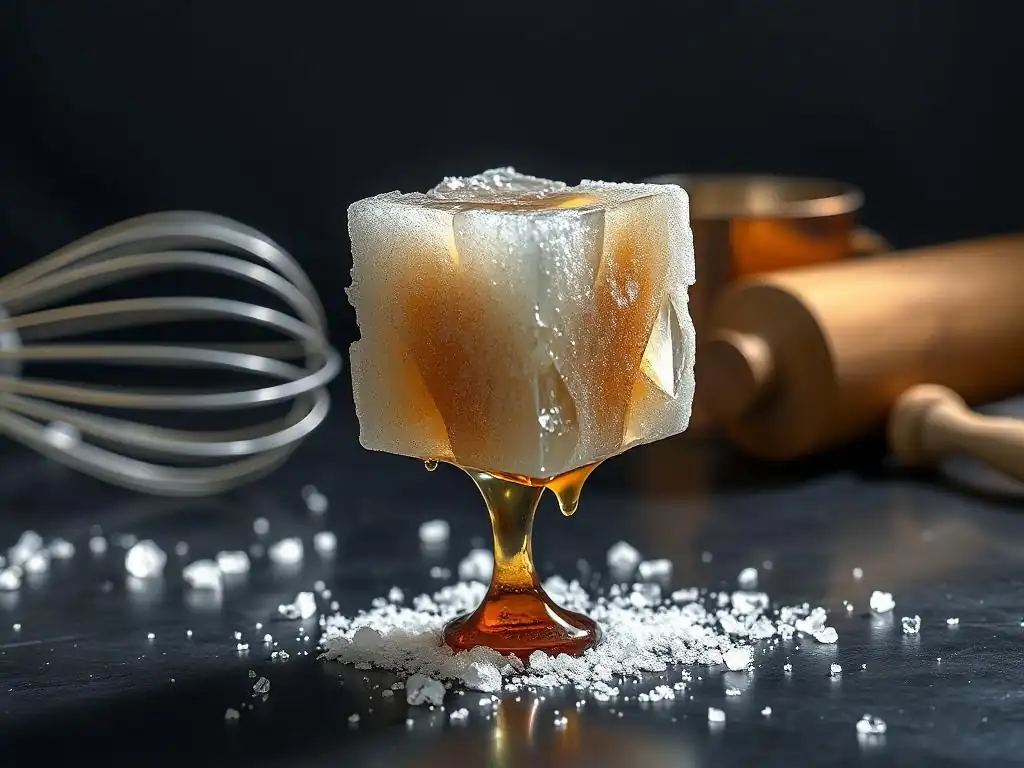
Welcome to BakeWithEase, your guide to confident and delicious baking! Ever wondered why some of your creations turn out perfectly smooth while others end up with a gritty texture? Today, we're diving deep into a fascinating, often overlooked aspect of baking science: the crucial role of temperature in controlling sugar crystal formation baking. Discover how understanding this key principle can unlock a whole new level of precision in your baking and prevent unwanted textures. Intrigued? Let's get started!
- The Role of Temperature in Controlling Sugar Crystals for Baking Excellence
- Introduction to Sugar Crystal Formation in Baking: A Comprehensive Guide
- How Temperature Influences Sugar Crystal Formation
- Temperature's Impact on Different Types of Sugar Crystals
- Practical Tips for Temperature Control in Sugar Work
- Advanced Techniques: Mastering Temperature for Complex Sugar Structures
- Common Temperature-Related Mistakes in Sugar Work and How to Avoid Them
- Temperature Charts and Guidelines for Various Sugar Confections
- Case Studies: Temperature Control in Famous Baking Recipes
- Conclusion: Mastering Temperature for Sugar Crystal Perfection in Baking
-
Frequently Asked Questions
- What exactly is sugar crystal formation in baking, and why is it important to control?
- How does temperature specifically influence sugar crystal formation during baking?
- What are some common baking scenarios where controlling sugar crystal formation is crucial?
- What are some practical tips BakeWithEase recommends for preventing unwanted sugar crystal formation?
- What happens if I don't control sugar crystal formation, and how can I fix it if it's already happened?
- Final Reflection: The Sweet Science of Sugar Crystal Control
- Unlock Perfectly Formed Sugar Crystals: It's Easier Than You Think!
The Role of Temperature in Controlling Sugar Crystals for Baking Excellence
Introduction to Sugar Crystal Formation in Baking: A Comprehensive Guide
Understanding Crystallization: Setting the Stage for Perfect Baking
Crystallization is a fundamental process in baking, especially when working with sugar. At its core, it's the transition of sugar molecules from a disordered state (dissolved in liquid) to a highly ordered, solid structure – the sugar crystal. This process is driven by a solution becoming supersaturated, meaning it holds more dissolved sugar than it normally could at a given temperature.
As this supersaturated solution cools or water evaporates, the sugar molecules start to find each other and link up, forming the repeating lattice structure of a crystal. The goal in many confections is to control this sugar crystal formation baking process, either encouraging it (like in rock candy) or inhibiting it (like in smooth caramel or fudge).
The size and quantity of these crystals dramatically impact the texture and appearance of sugar-based treats. Large, irregular crystals result in a grainy texture, which is undesirable in things like fudge, fondant, or caramel. Conversely, small, uniform crystals can create a smooth, creamy mouthfeel. Understanding how to manipulate the conditions that affect this sugar crystal formation baking is crucial for achieving consistent, high-quality results in your kitchen. Think about the difference between a gritty homemade candy and a perfectly smooth store-bought one – often, that difference comes down to controlling crystallization.
Why Temperature Matters in Sugar Crystal Control
Temperature is arguably the most critical factor in managing sugar crystal formation in baking. It influences sugar solubility, the rate of water evaporation, and the speed at which crystals can form and grow. Heating sugar in water increases its solubility dramatically; you can dissolve far more sugar in hot water than in cold. As this solution cools, it becomes supersaturated, setting the stage for crystallization. The rate at which it cools, and the temperature at which agitation occurs, directly affects how many crystals form and how large they become.
Furthermore, temperature dictates the concentration of the sugar solution as water evaporates during boiling. Higher temperatures mean more water has boiled off, resulting in a more concentrated, and thus more supersaturated, solution when cooled. This concentration is key to achieving different stages of sugar work, from thread to hard crack, each defined by a specific temperature range and its corresponding sugar concentration. Mastering temperature control is essential for anyone looking to elevate their sugar work and prevent unwanted sugar crystal formation baking issues like graininess or seizing.
How Temperature Influences Sugar Crystal Formation
The Science Behind Sugar Solubility and Temperature
Sugar solubility is directly proportional to temperature – the hotter the water, the more sugar it can dissolve. For instance, at room temperature (around 20°C or 68°F), about 200 grams of sucrose can dissolve in 100 mL of water. However, if you heat the water to boiling (100°C or 212°F), you can dissolve over 475 grams of sugar in the same amount of water. This fundamental principle explains why you heat sugar and liquid together when making syrups, caramels, or candies; it allows you to create a much higher concentration of sugar than would be possible at lower temperatures.
This super-solubility at high temperatures is the first step in controlling sugar crystal formation baking. By dissolving a large amount of sugar, you create the potential for a highly supersaturated solution upon cooling. The degree of supersaturation is the driving force behind crystallization. A highly supersaturated solution is very unstable, and even a tiny disturbance (like a stray sugar crystal or dust particle) can trigger rapid and extensive crystal formation. Understanding this relationship is the foundation for predicting and controlling the behavior of sugar solutions.
Impact of Heat on Sugar Dissolution and Supersaturation
Applying heat to a sugar-water mixture serves two primary purposes related to crystallization control: ensuring complete dissolution and concentrating the solution through evaporation. Initially, gentle heating helps dissolve all the sugar granules. Undissolved granules act as 'seed' crystals, which can prematurely trigger crystallization in the cooling process, leading to a grainy texture. Boiling the solution then causes water to evaporate, increasing the ratio of sugar to water. The longer and hotter you boil, the more water evaporates and the higher the sugar concentration becomes.
As the solution cools from its high boiling temperature, it enters a supersaturated state. The level of supersaturation depends on the initial concentration achieved through boiling and the rate of cooling. A solution boiled to 160°C (320°F) for hard candy will be much more supersaturated upon cooling than one boiled only to 112°C (234°F) for fudge. This difference in supersaturation potential directly influences the propensity for sugar crystal formation baking and the methods needed to control it during cooling and handling.
Cooling Rates and Their Effect on Sugar Crystal Size
The rate at which a supersaturated sugar solution cools significantly impacts the size and number of crystals that form. Rapid cooling, such as pouring hot sugar syrup onto a cool surface (like marble or a silicone mat) or placing the pot in an ice bath, tends to create many small crystals. This is because rapid cooling quickly increases the degree of supersaturation throughout the solution, providing many opportunities for nucleation (the initial formation of tiny crystal seeds) simultaneously. These many nuclei then grow into small crystals.
Conversely, slow cooling allows the supersaturation to increase more gradually. This gives existing small nuclei more time to grow into larger crystals, often resulting in fewer, but larger, crystals. For confections where a smooth texture is paramount (like fudge or fondant), controlling the cooling rate to encourage the formation of many small crystals (or prevent large ones) is essential. For example, fudge is typically allowed to cool undisturbed to a specific temperature (around 43-50°C or 110-122°F) before stirring begins, which promotes the formation of fine crystals upon agitation at that specific, cooler temperature.
Temperature's Impact on Different Types of Sugar Crystals
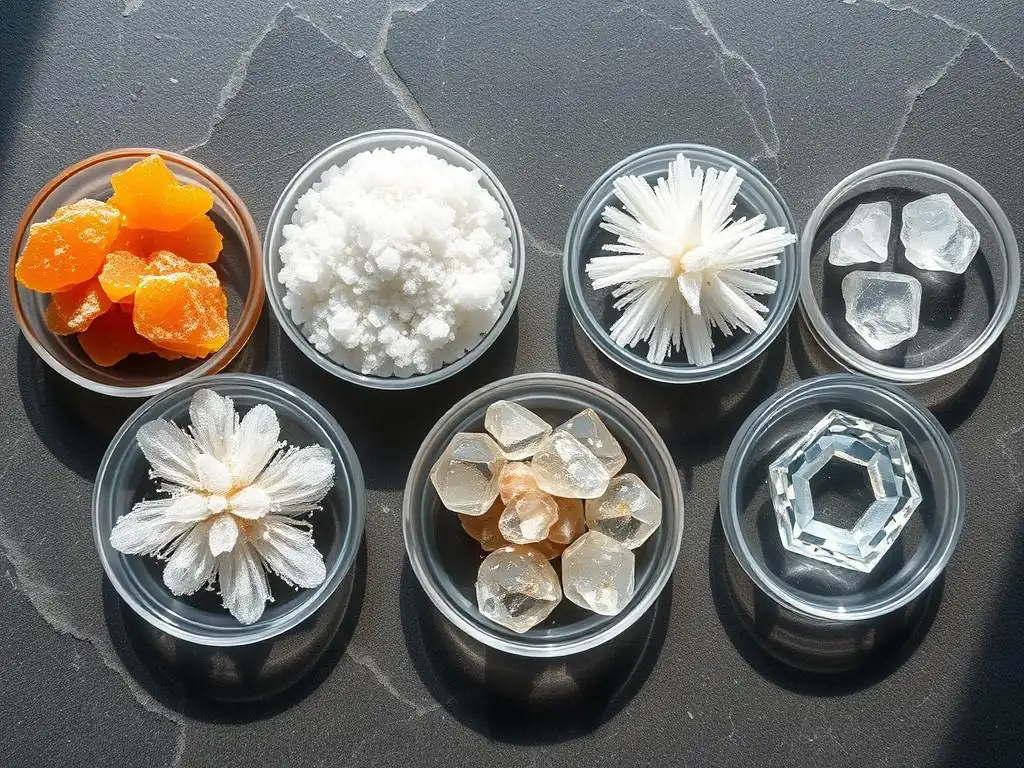
Controlling Crystal Size in Fondant: Temperature Precision
Smooth, pliable fondant relies on having sugar crystals that are incredibly small – almost microcrystalline – so they don't feel grainy on the tongue. Achieving this texture is highly dependent on temperature control during its creation. When making poured fondant, a sugar syrup is typically boiled to a specific temperature, often around 115-118°C (239-244°F), which corresponds to the soft-ball stage. Boiling to this exact temperature is crucial; too low, and it won't set properly; too high, and the sugar concentration will be too high, leading to potential issues with texture or even scorching.
After boiling, the syrup is cooled rapidly and without disturbance to a specific, lower temperature, typically between 40-60°C (104-140°F). This cooling step is critical. Cooling too slowly or stirring while hot can initiate the formation of large, undesirable crystals.
Once cooled to the target temperature range, the mixture is vigorously agitated (often by kneading or beating). Stirring at this cooler temperature, within the optimal supersaturation range, forces the formation of a multitude of tiny crystals simultaneously, resulting in the smooth, creamy texture characteristic of good poured fondant. The temperature at which agitation begins is just as important as the boiling temperature.
Temperature Guidelines for Achieving Smooth Caramel
Creating smooth, non-grainy caramel requires careful temperature management to prevent unwanted sugar crystal formation baking. Unlike fondant where small crystals are desired, classic smooth caramel aims to prevent crystallization altogether. This is often achieved by starting with a dissolved sugar solution, boiling it to a high temperature to achieve the desired color and flavor through caramelization, and avoiding any 'seed' crystals or disturbances during cooling that could trigger crystallization. Caramelization itself is a complex chemical process that occurs when sugar is heated to high temperatures, typically starting around 160°C (320°F) and proceeding rapidly as the temperature increases.
For a rich, dark caramel, the sugar is often heated to between 170-180°C (338-356°F). At these high temperatures, most of the water has evaporated, and the sugar is undergoing significant chemical changes that contribute to flavor and color.
Preventing crystallization at this stage involves techniques like washing down the sides of the pan with a wet pastry brush during boiling to dissolve any stray crystals and, most importantly, avoiding stirring the hot syrup once it reaches the desired temperature until other ingredients (like cream or butter) are added. Any agitation while the pure, highly concentrated sugar syrup is cooling can easily initiate rapid sugar crystal formation baking, resulting in a grainy or seized caramel.
Sugar Crystals in Candies: Temperature's Crucial Role
Temperature is the defining characteristic of different candy types, as it directly correlates to the final sugar concentration and thus the texture. The various "candy stages" – thread, soft ball, firm ball, hard ball, soft crack, hard crack – are all defined by specific temperature ranges achieved by boiling a sugar solution.
For example, reaching 112-115°C (234-240°F) results in the soft-ball stage, yielding candies like fudge or nougat where small, controlled crystals are desired for a creamy texture. Pushing the temperature higher, to 149-154°C (300-310°F), reaches the hard-crack stage, creating hard candies like lollipops or brittle where crystallization is largely avoided to maintain a clear, glassy structure.
Controlling sugar crystal formation baking in candies depends entirely on the target temperature. For crystalline candies (like fudge, fondant, or divinity), boiling to the correct soft-ball or firm-ball temperature is followed by controlled cooling and specific agitation techniques to manage crystal size. For non-crystalline or amorphous candies (like hard candy, caramel, or taffy), reaching the hard-crack or firm-crack stages requires boiling to very high temperatures to minimize residual water, and techniques are employed to prevent crystallization during cooling and handling, often involving the addition of interfering agents like corn syrup or cream of tartar which disrupt crystal formation.
Preventing Graininess: Temperature Management in Fudge Making
Grainy fudge is a common baking disappointment, and it's almost always a result of uncontrolled sugar crystal formation baking. Fudge is a crystalline candy, meaning its texture relies on having a large number of very small sugar crystals evenly distributed throughout the mass. Large crystals lead to that unpleasant gritty texture. To achieve smooth fudge, the sugar syrup is boiled to the soft-ball stage, typically between 112-115°C (234-240°F). Boiling to the precise temperature is the first step; under-boiling means the final sugar concentration isn't high enough for the correct texture, while over-boiling can lead to a harder, drier fudge.
The crucial temperature management step in fudge making occurs after boiling. The hot syrup is typically poured onto a heatproof surface or left in the pan to cool undisturbed to a significantly lower temperature, usually around 43-50°C (110-122°F). Cooling without stirring is vital because stirring while the solution is too hot and highly supersaturated will cause large, uncontrolled crystals to form rapidly.
Once cooled to the target temperature range, the fudge is then vigorously beaten or stirred. Agitating the mass at this cooler, less dramatically supersaturated temperature promotes the formation of many fine, uniform crystals, resulting in the desired smooth, creamy texture.
Practical Tips for Temperature Control in Sugar Work
Using a Candy Thermometer for Accurate Temperature Readings
Precise temperature measurement is non-negotiable for successful sugar work and controlling sugar crystal formation baking. Relying on visual cues alone is unreliable, as slight temperature variations can mean the difference between a perfect soft ball and a hard crack, or between smooth fudge and grainy disaster. A reliable candy thermometer is an essential tool.
There are several types: clip-on thermometers that attach to the side of the pan, digital probes, and infrared thermometers. For boiling sugar syrups, a clip-on thermometer is often easiest, ensuring the bulb or sensor is fully submerged in the syrup but not touching the bottom of the pan, which can give a false high reading.
Before using any candy thermometer, it's wise to calibrate it. Water boils at 100°C (212°F) at sea level, but this temperature decreases with altitude. To calibrate, bring a pot of water to a rolling boil and insert the thermometer. Note the temperature reading.
The difference between 100°C (or 212°F) and your thermometer's reading is the adjustment you need to make to your recipes. For example, if water boils at 98°C (208°F) at your altitude, you should subtract 2°C (4°F) from the target temperatures given in recipes. This simple calibration step ensures your temperature readings are accurate for your specific kitchen conditions, significantly improving your control over sugar crystal formation baking.
Adjusting Recipe Temperatures Based on Environmental Humidity
Environmental factors, particularly humidity, can subtly affect sugar work and sugar crystal formation baking. Sugar is hygroscopic, meaning it readily absorbs moisture from the air. In high humidity, sugar syrups may not reach their target temperatures as quickly because the air is already saturated with moisture, slowing down evaporation. More importantly, finished candies and confections that rely on a specific moisture content (defined by the boiling temperature) can absorb moisture from the air, becoming sticky or altering their texture.
While complex adjustments are usually unnecessary for home baking, being aware of humidity can help troubleshoot. In very high humidity, you might find you need to boil your sugar syrup just slightly higher (perhaps 1-2°C or 2-4°F) than the recipe specifies to compensate for the increased atmospheric moisture and ensure the final product sets correctly. Conversely, in very dry conditions, you might boil slightly lower.
For crystalline candies like fudge, high humidity can make it harder to achieve the correct texture because the crystals might absorb moisture and become soft. Keeping your kitchen as dry as possible when making sugar confections can help improve results.
One frustrating temperature-related issue in sugar work is seizing, which is a rapid, uncontrolled sugar crystal formation baking that turns a smooth syrup or caramel into a solid, grainy mass. This often happens when making caramel or other non-crystalline sugar products. Seizing is typically triggered by introducing a single, rogue sugar crystal or impurity into a hot, highly supersaturated solution. This 'seed' crystal provides a surface for the dissolved sugar molecules to rapidly crystallize upon, causing a chain reaction throughout the mixture.
Preventing seizing relies heavily on temperature control and cleanliness. Ensure all sugar is fully dissolved before the syrup comes to a boil. Once boiling, avoid stirring pure sugar syrup, as this can splash tiny sugar particles onto the cool sides of the pan, where they crystallize and can fall back into the syrup.
Washing down the sides of the pan with a wet pastry brush during the initial boiling phase can dissolve any clinging crystals. If seizing occurs, sometimes adding a small amount of hot liquid (like water or cream, depending on the recipe) and gently reheating can redissolve the crystals, but this doesn't always work and can alter the final consistency. Maintaining high heat and avoiding contamination are key preventative measures.
Advanced Techniques: Mastering Temperature for Complex Sugar Structures
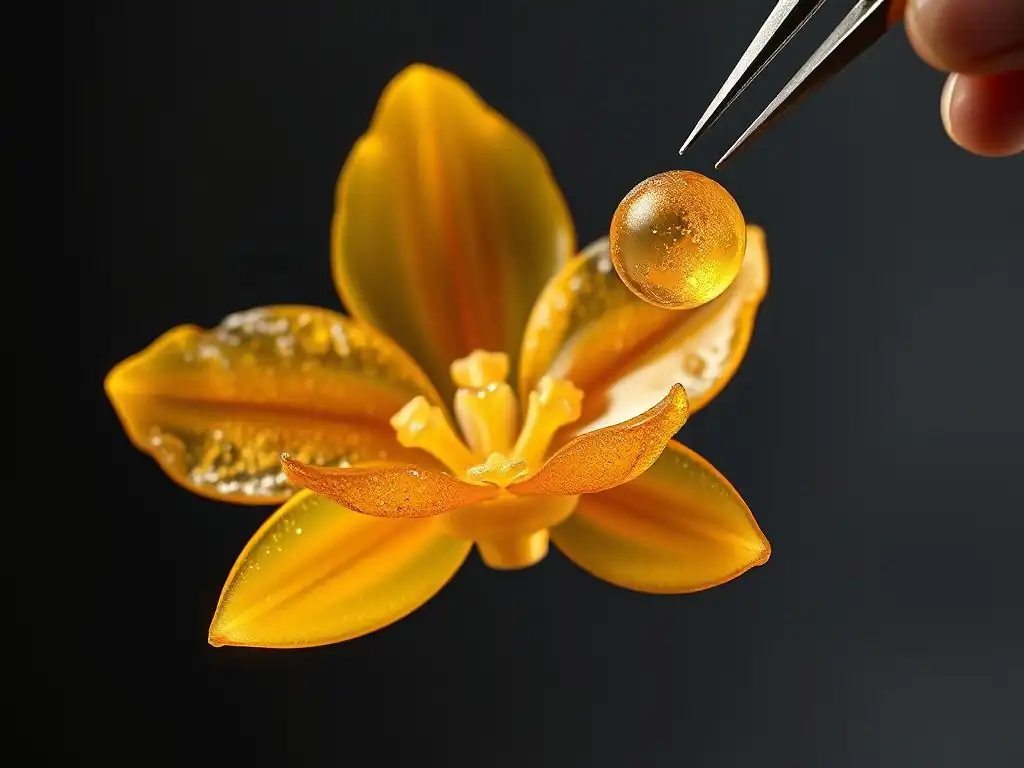
Temperature Cycling for Specific Crystal Textures: Rock Candy
Creating large, distinct sugar crystals, like those found in rock candy, is an example of deliberately encouraging sugar crystal formation baking through controlled temperature manipulation. Unlike fondant or fudge where small crystals are desired, rock candy requires the growth of large, singular crystals. This is achieved by creating a highly supersaturated sugar solution, typically by dissolving sugar in hot water until no more can be dissolved (often a 2:1 sugar-to-water ratio or higher, boiled briefly to ensure saturation).
The critical step is the cooling and subsequent temperature maintenance. The hot, saturated solution is cooled relatively slowly to room temperature. Then, a 'seed' (like a string or stick dipped in sugar) is introduced. The solution is then kept at a constant temperature, usually room temperature, over several days or weeks.
Maintaining a steady temperature prevents rapid cooling that would create many small crystals. Instead, the stable, supersaturated environment allows sugar molecules to slowly and steadily deposit onto the seed crystal, causing it to grow larger over time. Slight temperature fluctuations can sometimes encourage growth, but dramatic swings can cause unwanted nucleation.
Controlling Temperature Gradients for Layered Sugar Effects: Lollipops
While lollipops are primarily amorphous (non-crystalline) hard candies, achieving certain visual effects, like clear layers or embedded items, involves careful temperature control during the pouring and setting process. The sugar syrup for lollipops is boiled to the hard-crack stage, around 149-154°C (300-310°F), to ensure minimal water content and prevent sugar crystal formation baking. At this temperature, the syrup is extremely hot and fluid. Pouring it into molds requires speed and precision before it cools and hardens.
Creating layered effects involves pouring different colors or flavors of the hot syrup sequentially into the mold. Each layer must be poured while the previous one is still hot enough to meld slightly but cool enough to maintain its distinct color and prevent mixing. This requires managing the temperature of the syrup being poured and the cooling rate in the mold.
Adding inclusions like edible glitter or sprinkles also happens at a specific temperature window – hot enough for them to adhere and be encapsulated, but cool enough that they don't dissolve or burn. Precise pouring temperature and rapid, even cooling in the mold are essential for achieving clear, well-defined structures without unwanted crystallization or distortion.
Sous Vide Applications in Sugar Crystallization: Precise Temperature Control
Sous vide, a cooking method using precisely controlled water temperature, offers unique possibilities for managing sugar crystal formation baking, particularly for temperature-sensitive crystalline confections like fudge or nougat. While not traditional, this method allows for extremely accurate temperature maintenance during the crucial cooling and setting phases. For example, after boiling a fudge syrup to the soft-ball stage, the mixture could potentially be transferred to a container and placed in a sous vide bath held at the ideal temperature for controlled cooling (e.g., 45°C or 113°F).
Maintaining the mixture precisely within this target temperature range using sous vide before agitation ensures optimal conditions for forming very fine, uniform crystals when stirring eventually occurs. This level of precision is difficult to achieve with passive cooling methods, where the temperature drops unevenly. While perhaps overly technical for a simple batch of fudge, this illustrates how advanced temperature control techniques can be applied to manipulate the crystallization process with a high degree of accuracy, potentially leading to exceptionally smooth and consistent textures in crystalline sugar confections.
Overheating Sugar: The Risks of Burning and Inversion
Overheating sugar syrup is a common mistake with significant consequences for sugar crystal formation baking and flavor. Boiling sugar past its target temperature, especially into the caramelization range (above 160°C or 320°F), risks burning the sugar, resulting in a bitter, acrid taste that can ruin your confection. Burnt sugar is irreversible. Furthermore, prolonged heating, even below the burning point, can cause sucrose molecules to break down into glucose and fructose (a process called inversion), especially if an acid (like lemon juice or cream of tartar) is present.
While inversion is sometimes deliberately used (e.g., in hard candy to prevent crystallization), excessive inversion due to overheating or over-boiling can lead to a sticky, hygroscopic product that doesn't set properly and absorbs moisture from the air. Always use a thermometer and watch it closely as the syrup approaches the target temperature. Sugar temperature rises rapidly at higher concentrations, so remove the pan from the heat immediately once the desired temperature is reached to stop the cooking process.
Underheating Sugar: Issues with Dissolution and Crystal Formation
Underheating sugar syrup can lead to insufficient water evaporation, resulting in a lower-than-intended sugar concentration. For crystalline candies like fudge or fondant, this means the final product may be too soft, fail to set properly, or have an incorrect texture because the supersaturation level upon cooling isn't high enough to drive the desired sugar crystal formation baking. For non-crystalline candies like hard candy, underheating means too much water remains, preventing the sugar from reaching the hard-crack stage and resulting in a chewy or sticky candy that doesn't harden properly.
Additionally, if the initial heating phase isn't sufficient to fully dissolve all the sugar granules, these undissolved particles will act as seeds for premature crystallization during cooling. This is a primary cause of graininess in many sugar confections. Ensure the sugar is completely dissolved over low heat before bringing the syrup to a boil. You shouldn't feel any grit when rubbing a drop of the syrup between your fingers (carefully, it's hot!). Always boil to the exact temperature specified in the recipe using a calibrated thermometer.
Inconsistent Temperature Control: Achieving Uniform Results
Inconsistent temperature control throughout the sugar working process can lead to uneven textures and unpredictable sugar crystal formation baking. Allowing the syrup temperature to fluctuate significantly during boiling (e.g., by constantly adjusting the heat or using an uneven heat source) can affect the rate of water evaporation and the final concentration. More critically, inconsistent cooling rates or stirring at the wrong temperature during the setting phase of crystalline candies like fudge or fondant will result in uneven crystal sizes, leading to a partially smooth, partially grainy texture.
For example, if you start stirring fudge while some parts of the mass are still too hot, those sections will develop larger crystals than the sections that have cooled properly. Using a heavy-bottomed pan helps distribute heat more evenly during boiling.
During cooling, try to cool the entire batch uniformly – spreading it on a cool surface for rapid cooling, or allowing it to cool undisturbed in a single mass for slower cooling, ensures the entire batch reaches the target stirring temperature simultaneously. Consistency in temperature management at every step is key to achieving uniform texture and perfect sugar crystal formation baking.
Temperature Charts and Guidelines for Various Sugar Confections
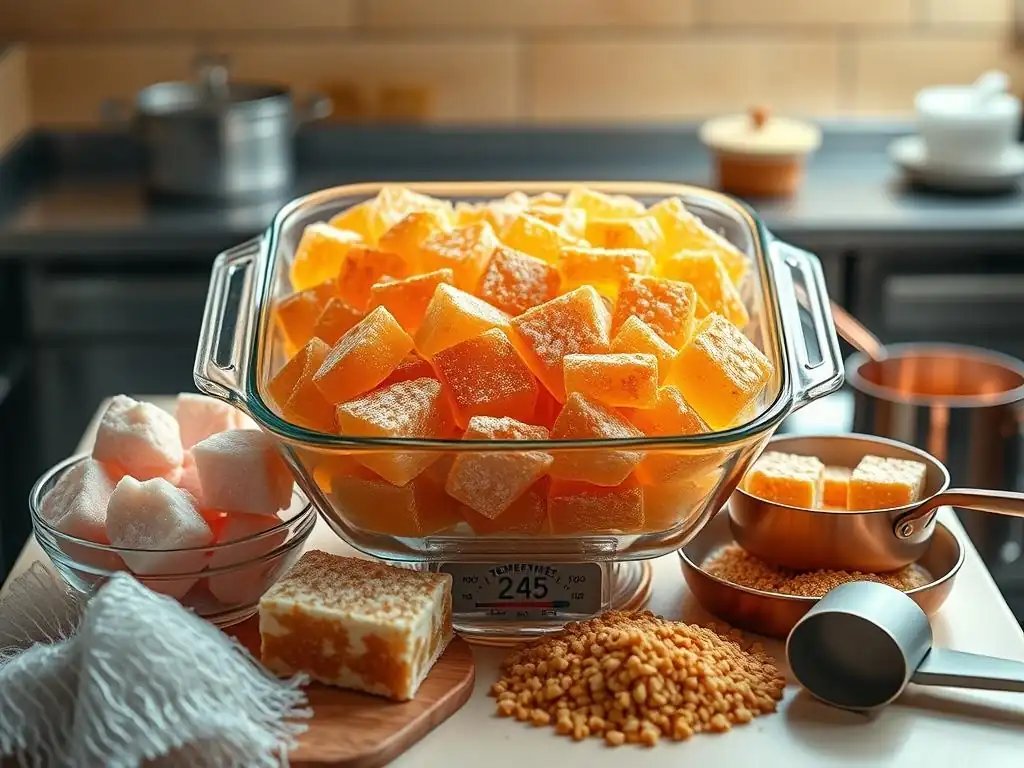
Recommended Temperatures for Caramelization
Caramelization is the process of heating sugar until it turns brown and develops complex flavors. It's a non-crystalline transformation, and temperature directly dictates the color and flavor profile. The process begins around 160°C (320°F), but significant browning and flavor development occur at higher temperatures.
- Light Caramel: 160-165°C (320-329°F) - Pale golden color, delicate flavor.
- Medium Caramel: 170-175°C (338-347°F) - Rich amber color, pronounced caramel flavor.
- Dark Caramel: 175-180°C (347-356°F) - Deep reddish-brown color, intense, slightly bitter notes.
Exceeding 180°C (356°F) risks burning. Reaching these temperatures requires boiling away most of the water, typically starting with a sugar syrup.
Optimal Temperatures for Making Hard Candy
Hard candy, like lollipops or brittle, is an amorphous sugar product where crystallization is prevented to maintain a clear, glassy texture. This requires boiling the sugar syrup to a very high temperature to minimize residual water.
- Soft Crack Stage: 132-143°C (270-290°F) - Sugar is pliable when cooled, but breaks easily. Used for some taffies or butterscotch.
- Hard Crack Stage: 149-154°C (300-310°F) - Sugar is brittle and breaks cleanly when cooled. Ideal for lollipops, brittles, and spun sugar.
Boiling to these high temperatures ensures the sugar concentration is so high that there isn't enough water or molecular mobility for sugar crystal formation baking to occur readily upon cooling, especially when interfering agents like corn syrup are used.
Temperature Ranges for Creating Fudge and Fondant
Fudge and poured fondant are crystalline confections whose texture depends on controlling the size of sugar crystals. This is achieved by boiling to specific "ball" stages, then cooling and agitating at a precise lower temperature.
- Soft Ball Stage: 112-115°C (234-240°F) - A drop of syrup forms a soft, pliable ball when dropped into cold water. This is the target temperature for fudge, divinity, and poured fondant syrup before cooling.
- Firm Ball Stage: 118-120°C (244-248°F) - A drop forms a firm but still pliable ball. Used for caramels (though classic smooth caramel prevents crystallization) and some nougats.
After boiling to the soft-ball stage, fudge and fondant syrups are cooled undisturbed to a specific lower temperature range (typically 43-50°C or 110-122°F for fudge, and 40-60°C or 104-140°F for fondant) before agitation begins to initiate controlled sugar crystal formation baking and achieve a smooth texture.
Case Studies: Temperature Control in Famous Baking Recipes
Analyzing the Temperature Profile of a Classic Crème brûlée
Crème brûlée is a classic dessert featuring a smooth, set custard base topped with a crisp layer of caramelized sugar. While the custard itself isn't primarily about sugar crystallization, the final step – creating the brûlée top – is a direct application of temperature control for sugar transformation. Granulated sugar is sprinkled evenly over the chilled custard surface. A torch or broiler is then used to apply intense heat directly to the sugar.
The goal is to quickly heat the sugar past its melting point (around 186°C or 367°F for sucrose) and into the caramelization range (above 160°C or 320°F) without significantly heating the underlying custard. The dry sugar granules melt into a liquid, then quickly undergo caramelization as the temperature rises further, forming a hard, glassy, amorphous layer upon cooling.
Precise, high heat applied for a short duration prevents the sugar from burning and minimizes heat transfer to the custard, which would cause it to curdle or melt. This rapid melting and caramelization process, followed by quick cooling, prevents sugar crystal formation baking in the topping, ensuring a smooth, non-grainy glass-like crust.
Temperature's Role in Achieving the Perfect Macaron Foot
The distinctive 'foot' (pied) of a macaron is largely dependent on the precise temperature of the oven and the conditions under which the meringue shell bakes. While the macaron batter contains sugar (often in the form of powdered sugar and granulated sugar used in a meringue), the foot's formation isn't about sugar crystal formation baking in the final shell itself. Instead, it relates to how the sugar interacts with moisture and heat during baking. The batter, once piped, is often left to rest (macaronage) to form a slight skin.
During baking, the heat from the oven causes the moisture in the macaron base to turn to steam. This steam lifts the top crust of the macaron, which has set due to the initial heat, creating the hollow foot. The sugar in the base melts and forms a layer that helps define the foot's structure and prevents the steam from escaping unevenly.
An oven temperature that is too low won't generate enough steam to lift the foot properly, while an oven that is too hot can cause the shells to crack, brown too quickly, or rise unevenly. Typical baking temperatures for macarons range from 140-160°C (285-320°F), with convection heat often used for even circulation. Achieving the perfect foot is a delicate balance of batter consistency, resting time, and crucially, precise oven temperature and even heat distribution.
Understanding Temperature Control in Angel Food Cake
Angel food cake is a fat-free cake relying on whipped egg whites for its structure and leavening. Sugar plays a critical role not only in sweetness but also in stabilizing the egg white foam and contributing to the cake's tender crumb and crust. Granulated sugar is typically gradually whipped into the egg whites after they've reached soft peaks. The sugar dissolves in the moisture of the egg whites, and its presence helps to strengthen the protein network of the foam, preventing it from collapsing. Powdered sugar is often folded in later, contributing to tenderness.
During baking, the oven temperature, typically around 175-190°C (350-375°F), causes the air bubbles in the meringue to expand and the egg proteins to coagulate, setting the cake's structure. The sugar melts and contributes to the browning of the crust through Maillard reactions and caramelization on the surface.
The sugar also helps to keep the interior moist and tender by interfering with protein coagulation to some extent. While sugar crystal formation baking isn't relevant here, the temperature at which the sugar is incorporated (room temperature egg whites dissolve sugar more easily) and the precise oven temperature and baking time are crucial for achieving the cake's characteristic light, airy texture and delicate crust without drying it out or causing it to collapse.
Conclusion: Mastering Temperature for Sugar Crystal Perfection in Baking
Achieving Consistent Results Through Precise Temperature Management
Controlling sugar crystal formation baking is fundamental to success in a wide range of confections, from smooth fudges and creamy caramels to clear hard candies and perfectly set fondants. As we've explored, temperature is the single most influential factor in this process.
It dictates how much sugar dissolves, how concentrated the syrup becomes through evaporation, the degree of supersaturation upon cooling, and ultimately, the size and quantity of sugar crystals that form. Whether you aim to prevent crystals entirely (like in hard candy or smooth caramel) or to encourage the formation of many tiny ones (like in fudge or fondant), precise temperature control at every stage – from dissolving the sugar to boiling, cooling, and agitating – is absolutely critical.
Using a calibrated candy thermometer is non-negotiable for accuracy. Understanding how altitude affects boiling points and making necessary adjustments ensures your sugar syrup reaches the correct concentration regardless of your location. Paying attention to cooling rates and the temperature at which you agitate crystalline confections directly impacts the final texture, preventing dreaded graininess. By mastering temperature, you gain the power to reliably produce sugar-based treats with the desired texture and appearance, transforming unpredictable results into consistent baking excellence.
Elevating Your Baking Skills with Temperature Control Knowledge
Moving beyond simply following recipes and truly understanding the 'why' behind temperature recommendations in sugar work is a powerful way to elevate your baking skills. Knowing how temperature affects sugar crystal formation baking allows you to troubleshoot problems effectively (like why your fudge is grainy or your caramel seized) and even adapt recipes or create your own. This knowledge empowers you to confidently tackle more complex sugar techniques and achieve professional-level results in your home kitchen.
From pulling taffy at the perfect temperature to achieve chewiness, to cooling fondant syrup just right before kneading for ultimate smoothness, temperature is your key lever of control. Embrace your candy thermometer, pay attention to the subtle cues of your sugar syrup as it heats and cools, and practice applying precise temperature management. This focused approach will not only improve your sugar confections but also deepen your overall understanding of baking science, making you a more skilled and confident baker capable of mastering even the trickiest sweet challenges.
Frequently Asked Questions
What exactly is sugar crystal formation in baking, and why is it important to control?
Sugar crystal formation, or crystallization, is when sugar molecules clump together, forming visible, solid structures in your baked goods. Controlling it is important to achieve the desired texture and appearance.
How does temperature specifically influence sugar crystal formation during baking?
Temperature affects the solubility of sugar. Higher temperatures allow more sugar to dissolve, while cooling promotes crystal formation if the solution becomes supersaturated.
What are some common baking scenarios where controlling sugar crystal formation is crucial?
Examples include making caramel, candies, or even certain types of frosting. In these cases, unwanted crystals can lead to a grainy or undesirable texture.
What are some practical tips BakeWithEase recommends for preventing unwanted sugar crystal formation?
Tips include using clean equipment, adding an acid like lemon juice or cream of tartar, and avoiding agitation during the cooking process. These help disrupt crystal growth.
What happens if I don't control sugar crystal formation, and how can I fix it if it's already happened?
Uncontrolled crystallization can lead to a grainy texture. Sometimes, adding more liquid and gently reheating can redissolve the crystals, but it's not always guaranteed.
Final Reflection: The Sweet Science of Sugar Crystal Control
Understanding the precise role of temperature in sugar crystal formation is not merely a niche scientific pursuit; it's the key to unlocking consistent baking success. Mastering this delicate dance between heat and sugar unlocks a world of perfectly textured confections, from smooth fondants to perfectly formed rock candy. The implications extend far beyond the home kitchen, impacting industrial confectionery production and even scientific advancements in crystallography.
The journey through the intricacies of sugar crystal formation has been a fascinating exploration of the interplay between chemistry and culinary art. The subtle shifts in temperature, the precise timing of cooling, and the influence of other ingredients all contribute to the final outcome. The art of baking is a science, and the science of baking is an art.
This quote perfectly encapsulates the delicate balance we've explored, highlighting the need for both meticulous understanding and creative intuition. The impact of this knowledge ripples through generations of bakers, shaping techniques and inspiring innovation in the sweet world we all enjoy.
Now, it's your turn. Consider the next time you bake – whether it's a simple cookie or an elaborate cake. Remember the power of temperature, the subtle shifts that can transform a grainy mess into a smooth, crystalline delight. Experiment, observe, and refine your technique. By understanding the science behind the sweetness, you'll not only improve your baking but also deepen your appreciation for the intricate beauty of the culinary arts. Embrace the challenge, and unlock the secrets of perfectly formed sugar crystals!
Unlock Perfectly Formed Sugar Crystals: It's Easier Than You Think!
Thanks for taking the time to delve into the fascinating world of sugar crystal formation! We hope you now feel more confident in controlling the texture of your baked goods. Ready to put your newfound knowledge into practice?
- Experiment with different temperatures: Try adjusting your recipe's cooling process by just a few degrees to see the impact on crystal size. Note the subtle differences! This is the best way to master this skill.
- Share your baking triumphs (and even your "oops" moments!) on our community forum. Let's learn from each other!
- Challenge yourself: Try a new recipe that requires precise temperature control, like fondant or rock candy. What amazing results will you create?
So, what temperature adjustments will you try in your next baking adventure?