
Why Patience is Key When Baking Sourdough Rye

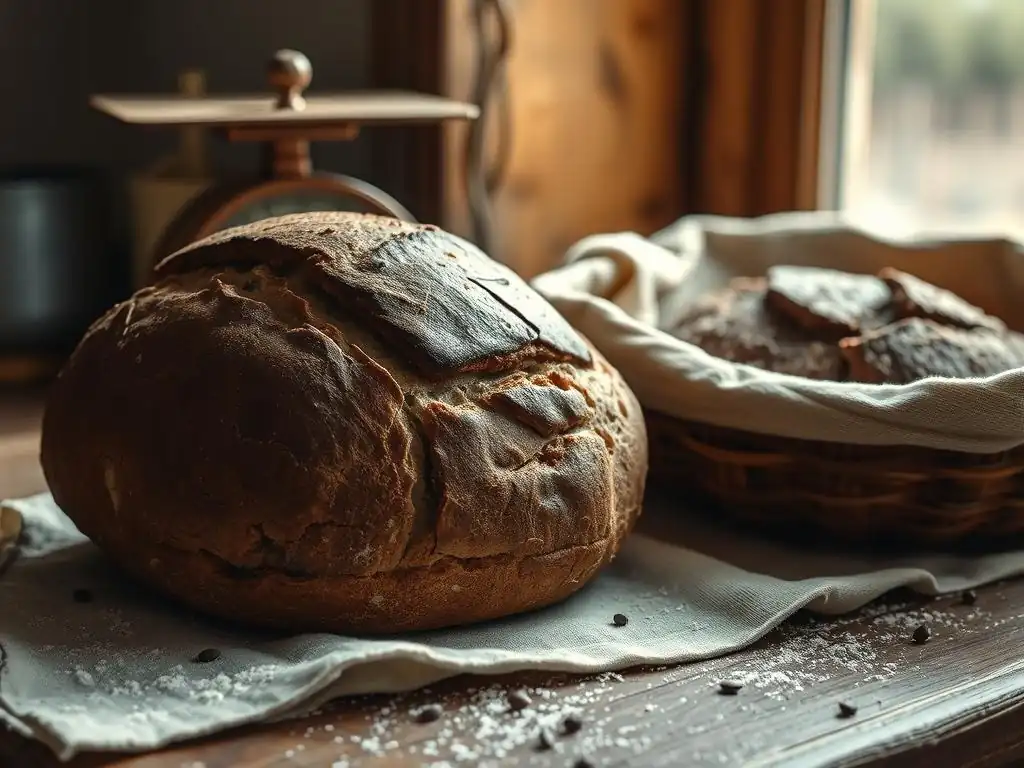
Welcome to BakeWithEase, your kitchen companion for all things baking! Ever wondered why some sourdough rye bread comes out perfect, while others fall flat? This week, we're diving deep into the secret ingredient that often gets overlooked: Patience. Discover why taking your time is absolutely crucial to achieving that coveted tangy flavor and perfect crumb in your sourdough rye, and how rushing the process can lead to baking mishaps. Prepare to unlock the secrets to Patience baking sourdough rye bread and elevate your loaves from good to unforgettable!
- Introduction: The Art of Sourdough Rye and the Virtue of Patience
- Understanding the Importance of Patience in Sourdough Rye Baking
- The Stages Where Patience is Crucial in Sourdough Rye Bread Baking
- Common Mistakes Caused by Impatience When Baking Sourdough Rye
- Tips for Cultivating Patience While Baking Sourdough Rye Bread
- Troubleshooting Sourdough Rye Baking with Patience
- Conclusion: Embrace Patience, Embrace Delicious Sourdough Rye
-
Frequently Asked Questions
- What makes patience so important when baking sourdough rye bread?
- How long should I typically allow for bulk fermentation when baking sourdough rye?
- What happens if I don't proof my sourdough rye bread long enough?
- Can I over-proof sourdough rye bread, and what are the signs?
- What are some tips for developing patience when baking sourdough rye?
- Final Reflection: The Rewarding Patience of Sourdough Rye
- Unlock Your Sourdough Rye Secrets!
Introduction: The Art of Sourdough Rye and the Virtue of Patience
BakeWithEase.com: Your Guide to Perfect Sourdough Rye Bread
Welcome to BakeWithEase.com, your trusted companion on the journey to mastering home baking. We understand that baking, especially with sourdough, can seem daunting at first. That's why we focus on breaking down complex processes into simple, manageable steps, offering easy-to-follow recipes and practical tips for bakers at every level. Whether you're just starting out or aiming to perfect specific techniques, our goal is to make baking accessible, enjoyable, and rewarding.
At BakeWithEase, we believe that great bread is born not just from quality ingredients and technique, but also from understanding the process. This is particularly true when it comes to sourdough rye bread, a loaf celebrated for its deep, complex flavor and hearty texture. Our guides are designed to help you navigate the unique challenges and nuances of working with rye, ensuring that your efforts result in delicious, satisfying bread every time you bake.
Understanding the Importance of Patience in Sourdough Rye Baking
Why Rushing the Process Ruins Your Sourdough Rye
Baking sourdough rye is a biological process driven by microbial activity – the wild yeast and bacteria in your starter. Rushing any step interrupts this delicate balance, leading to a host of problems in the final loaf. Insufficient time for fermentation means the dough won't develop enough gas to rise properly, resulting in a dense, heavy crumb. Furthermore, the complex flavors characteristic of sourdough rye, which develop over many hours as acids and other compounds form, simply won't have a chance to emerge.
Trying to speed up sourdough rye baking often leads to underdeveloped gluten (even though rye has less gluten, what's there still needs time to structure), poor hydration, and a lack of structural integrity. You might end up with a loaf that's flat, gummy, or lacks that signature tangy depth. True patience baking sourdough rye allows the natural processes to unfold at their own pace, dictated by temperature and the starter's activity, not by a hurried schedule.
The Unique Characteristics of Rye Flour and Their Impact on Baking Time
Rye flour differs significantly from wheat flour, primarily in its lower gluten content and higher levels of pentosans (water-soluble fibers). While wheat gluten forms a strong, elastic network that traps gas effectively, rye's gluten is weaker and less functional for structure. The pentosans in rye absorb large amounts of water, contributing to rye dough's characteristic stickiness and density, but they don't form an elastic network in the same way gluten does.
These unique properties mean that rye dough handles differently and ferments somewhat differently than wheat. Rye fermentation relies more on the activity of lactic acid bacteria, which contribute significantly to flavor, and less on the gluten network for structure. Because the structure is less elastic, rye dough is more susceptible to collapse if over-handled or over-proofed. This requires a more observant and patient approach, as visual cues might be less dramatic, and timings need to be adapted based on the dough's feel and subtle changes, reinforcing the need for patience baking sourdough rye.
The Stages Where Patience is Crucial in Sourdough Rye Bread Baking

Stage 1: Cultivating Your Rye Sourdough Starter
Why Patience is Vital for a Strong and Active Rye Starter
Cultivating a sourdough starter from scratch is arguably the first and most fundamental lesson in patience for any sourdough baker, especially with rye. It involves simply mixing rye flour and water and waiting for the naturally occurring wild yeast and bacteria in the environment and flour to colonize and multiply. This biological process takes time – typically anywhere from 7 to 14 days, sometimes even longer, depending on ambient temperature and environmental factors.
During this initial period, you'll feed your starter regularly (often daily), discarding a portion before each feeding. There will be days with little activity, followed by bursts of bubbles, then possibly a lull again. It's a dynamic ecosystem establishing itself. Using a starter before it is consistently active and mature – meaning it reliably doubles or triples in volume within a predictable timeframe after feeding, like 4-6 hours at room temperature – will result in weak leavening and poor flavor development in your bread. Patience is non-negotiable here; you are literally waiting for life to flourish.
Recognizing the Signs of a Healthy Rye Sourdough Starter
A healthy, active rye sourdough starter exhibits several key signs. Visually, you'll see consistent bubbling throughout the mixture, not just on the surface. After feeding, it should show significant volume increase, ideally doubling or even tripling within a few hours at warm room temperature (around 75°F or 24°C). The texture will become light and spongy, and it will have a pleasant, tangy aroma, sometimes described as slightly acidic or yogurty, but not sharp like nail polish remover.
- Consistent bubbling throughout
- Reliable volume increase (doubling/tripling) after feeding
- Light, airy, spongy texture
- Pleasant, tangy aroma
- Passes the float test (a small dollop floats in water), though this isn't always 100% reliable for rye
Maintaining these signs requires ongoing patience through consistent, timely feeding. A neglected starter weakens over time, losing its leavening power and flavor potential.
Stage 2: The Autolyse: A Patient Approach to Rye Hydration
Maximizing Water Absorption for a Better Rye Dough
The autolyse is a simple yet powerful technique that involves mixing just the flour and water from a recipe and letting them rest before adding the starter and salt. This resting period, typically ranging from 20 minutes to an hour for rye, allows the flour particles to fully and evenly absorb the water. This is particularly beneficial for rye flour's pentosans, which take time to hydrate.
Proper hydration during the autolyse kickstarts enzymatic activity in the flour, which helps break down starches and proteins. This process makes the dough more extensible and easier to handle later in the mixing stage. For rye, which can be notoriously sticky and less pliable than wheat, maximizing water absorption upfront through patience in this resting phase leads to a more workable dough and potentially a better crumb structure.
The Benefits of a Longer Autolyse in Rye Baking
While a short autolyse is beneficial, some bakers practice a longer autolyse for rye, sometimes up to a couple of hours, especially with recipes containing a high percentage of rye. This extended rest can further improve dough extensibility and allow for more thorough hydration. It requires only patience – you mix two ingredients and walk away.
However, it's worth noting that an excessively long autolyse, particularly in very warm conditions, can sometimes lead to excessive enzymatic activity that might start to degrade the dough structure. The optimal duration depends on the specific flour and ambient temperature. Experimentation, guided by patience and observation of how the dough feels after the rest, is key to finding what works best for your rye baking.
Stage 3: Bulk Fermentation: Time is Your Ally in Sourdough Rye
Understanding Rye's Fermentation Process
Bulk fermentation, the first rise after mixing in the starter and salt, is where the magic of sourdough truly unfolds. The wild yeast produces carbon dioxide gas, causing the dough to rise, while the lactic acid bacteria produce organic acids that develop the characteristic sourdough flavor and improve the bread's keeping qualities. Rye ferments differently than wheat; it may not show as dramatic a volume increase because the limited gluten network struggles to trap large gas bubbles.
The speed of bulk fermentation is heavily influenced by temperature. At a warm room temperature (around 75°F or 24°C), bulk fermentation might take 4-6 hours. In a cooler environment (say, 68°F or 20°C), it could easily take 8-12 hours or even longer. This variation underscores why simply following a recipe's time estimate without observing the dough is risky. Patience baking sourdough rye means understanding that the dough dictates the timeline.
Observing Visual Cues for Optimal Bulk Fermentation of Rye
Since rye dough doesn't always double in volume like wheat, you need to look for other cues to determine when bulk fermentation is complete. The dough should show a noticeable increase in volume, perhaps 30-50%. The surface might appear puffier, and you might see small bubbles forming on the top or sides. The dough should feel lighter and more aerated than when you started, and it should smell pleasantly fermented, tangy, and yeasty.
Relying solely on a timer can easily lead to under or over-fermentation because environmental conditions vary. Learning to read these visual and tactile cues takes practice and patience. It's about developing an intuition for the dough's readiness, which comes from careful observation over multiple baking sessions.
Stage 4: Shaping and Proofing: Gentle Hands and a Patient Wait
The Delicate Nature of Rye Dough and Shaping Techniques
After bulk fermentation, the next steps are shaping and proofing. Rye dough, being stickier and less elastic due to its lower gluten content, requires a gentler touch during shaping compared to wheat dough. Aggressive handling can easily tear the weak gluten network that has developed, leading to a dense crumb.
Shaping techniques for rye often involve minimal handling – simple folds or carefully coaxing the dough into its desired form (boule or batard) using a bench scraper and perhaps wet hands to manage stickiness. The goal is to create some surface tension without degassing the dough excessively or damaging its structure. This requires patience and a light touch, allowing the dough to cooperate rather than forcing it.
Achieving the Perfect Proof in Sourdough Rye: Signs to Look For
Proofing, the final rise before baking, is another stage where patience is paramount. Like bulk fermentation, rye dough may not show a dramatic doubling during proofing. Instead, look for a significant increase in volume (perhaps 30-40%) and a puffy appearance. The dough should feel airy and delicate. The "poke test" is a helpful indicator: gently poke the dough with a floured finger; if the indentation slowly springs back only partially, the dough is likely perfectly proofed. If it springs back immediately, it needs more time (under-proofed). If it stays completely indented, it's likely over-proofed.
The proofing time varies wildly depending on temperature – it could be 1-3 hours at warm room temperature or 12-24 hours (or more) in the refrigerator for a slower, flavor-developing proof. Rushing this stage or failing to monitor the dough's readiness (instead of just the clock) is a common cause of baking failures. Patience in observing the poke test and volume increase is critical.
Stage 5: Baking: The Final Test of Patience and Skill
Oven Spring and the Importance of a Properly Preheated Oven
Baking is the grand finale, and even here, patience is required. Oven spring, the rapid expansion of the loaf in the first 10-15 minutes of baking, is crucial for a good crumb structure. This burst of growth requires intense, initial heat and the presence of steam. A properly preheated oven is non-negotiable. This means preheating your oven to a high temperature (often 450-500°F or 230-260°C) for at least 30-60 minutes, allowing heat to fully saturate your baking vessel (like a Dutch oven) or baking stone.
Introducing steam during the initial phase of baking keeps the crust soft and pliable, allowing the dough maximum opportunity to expand before the crust sets. Waiting for your oven and baking vessel to reach and stabilize at the target temperature requires patience, but it directly impacts the quality of your oven spring and the final texture of your loaf.
Recognizing When Your Sourdough Rye is Fully Baked
Pulling your sourdough rye loaf out of the oven too early is another act of impatience that compromises quality. A fully baked rye loaf should have a deep, dark brown crust – don't be afraid of color! It indicates good caramelization and flavor development. Tapping the bottom of the loaf should produce a hollow sound. The most reliable test, however, is internal temperature. A fully baked loaf will register between 200-210°F (93-99°C) when a thermometer is inserted into the center.
Finally, and perhaps the most challenging test of patience: cooling. Once baked, the loaf must cool completely on a wire rack before slicing. This allows steam to escape, the internal structure to set, and moisture to redistribute evenly throughout the crumb. Cutting into a hot rye loaf will result in a gummy, unpleasant texture. For a large loaf, this can take 2-4 hours. This final wait is essential for achieving the proper texture and flavor.
Common Mistakes Caused by Impatience When Baking Sourdough Rye
Over-Proofing: The Result of Rushing the Proofing Stage
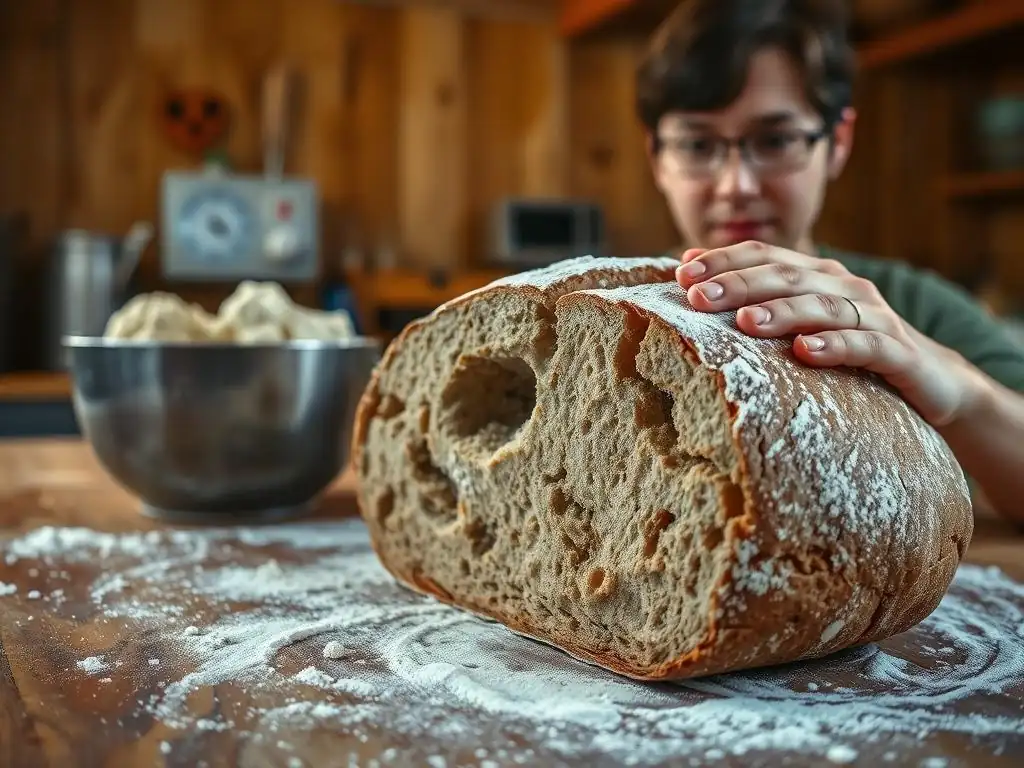
Over-proofing occurs when the dough ferments for too long during the final rise. Instead of stopping at its peak readiness, impatience (often combined with misjudgment) leads bakers to let it go too far, perhaps thinking "more rise is better." The gluten structure, already weaker in rye, stretches beyond its capacity and begins to break down.
The signs of over-proofing include a dough that looks significantly expanded but also potentially spread out or deflated, and the poke test leaves an indentation that doesn't spring back at all. Baking an over-proofed loaf typically results in poor oven spring, a flat or dense loaf, and sometimes an overly sour flavor because the bacteria have produced excessive acid.
Under-Proofing: Insufficient Time for Fermentation
Under-proofing is the opposite problem – the dough hasn't had enough time for the yeast to produce sufficient gas or for flavor development to occur. This is a classic outcome of impatience, trying to stick to a rigid timeline rather than observing the dough's actual readiness. Perhaps the room was cooler than expected, or the starter wasn't quite as active, but the baker didn't adjust the fermentation time.
An under-proofed loaf will have poor oven spring (it might crack aggressively or appear dense and heavy), a tight, often gummy crumb, and a less developed flavor. The poke test will show an indentation that springs back immediately. Patience baking sourdough rye means waiting until the dough shows the signs of readiness, even if it takes longer than anticipated.
Improper Hydration Due to Skipping or Shortening the Autolyse
Skipping or significantly shortening the autolyse is an act of impatience that affects the dough from the very beginning. Without this resting period, the flour doesn't have adequate time to fully absorb the water before the starter and salt are introduced. This can make the dough stiffer and harder to mix smoothly.
The consequence is often a less uniformly hydrated dough, which can lead to a denser or uneven crumb structure in the final bread. While not as catastrophic as severe over or under-proofing, it's a subtle but important step where a little patience yields a more manageable dough and potentially a better loaf texture.
Tips for Cultivating Patience While Baking Sourdough Rye Bread
Planning Ahead: Schedule Time for Each Stage of the Process
One of the best ways to cultivate patience baking sourdough rye bread is to plan your bake. Look at the typical duration for each stage – building levain (4-12 hours), autolyse (20-60 minutes), mixing, bulk fermentation (4-12+ hours), shaping, proofing (1-24+ hours), baking (30-60 minutes), cooling (2-4 hours). Map out a realistic timeline, perhaps starting the process the day before you plan to bake.
Consider using refrigeration for a long, slow proof, which conveniently fits into a busy schedule and enhances flavor. Knowing roughly how long each step might take helps set expectations and reduces the urge to rush.
Focusing on the Process: Enjoying the Journey of Baking
Shift your mindset from solely focusing on the final loaf to appreciating the process itself. Baking sourdough rye is a craft that unfolds over time. Engage with the dough – feel its texture change, observe its subtle growth, enjoy the developing aroma.
Think of the waiting periods as opportunities, not obstacles. Use the downtime during bulk fermentation or proofing to do other things – read a book, catch up on chores, spend time with family. The dough is working for you while you live your life. This perspective makes patience feel less like waiting and more like collaborating with natural forces.
Utilizing Visual Aids and Timers: Keeping Track of Progress
To help manage the timeline without becoming enslaved by it, use tools. A clear container with volume markings or a rubber band placed at the dough's starting level is invaluable for tracking bulk fermentation progress. Timers are useful for reminding you when a stage might be nearing completion or when it's time for the next step (like adding salt after the autolyse).
- Use a clear container or band to mark dough level for bulk fermentation.
- Set timers as reminders, not strict endpoints.
- Keep a baking journal to track times, temperatures, and observations.
Remember, timers are guides to prompt observation, not replacements for reading the dough's cues. Patience involves using these tools wisely to stay on track while remaining responsive to the dough's needs.
Troubleshooting Sourdough Rye Baking with Patience
What to do if your Rye Dough is Too Sticky
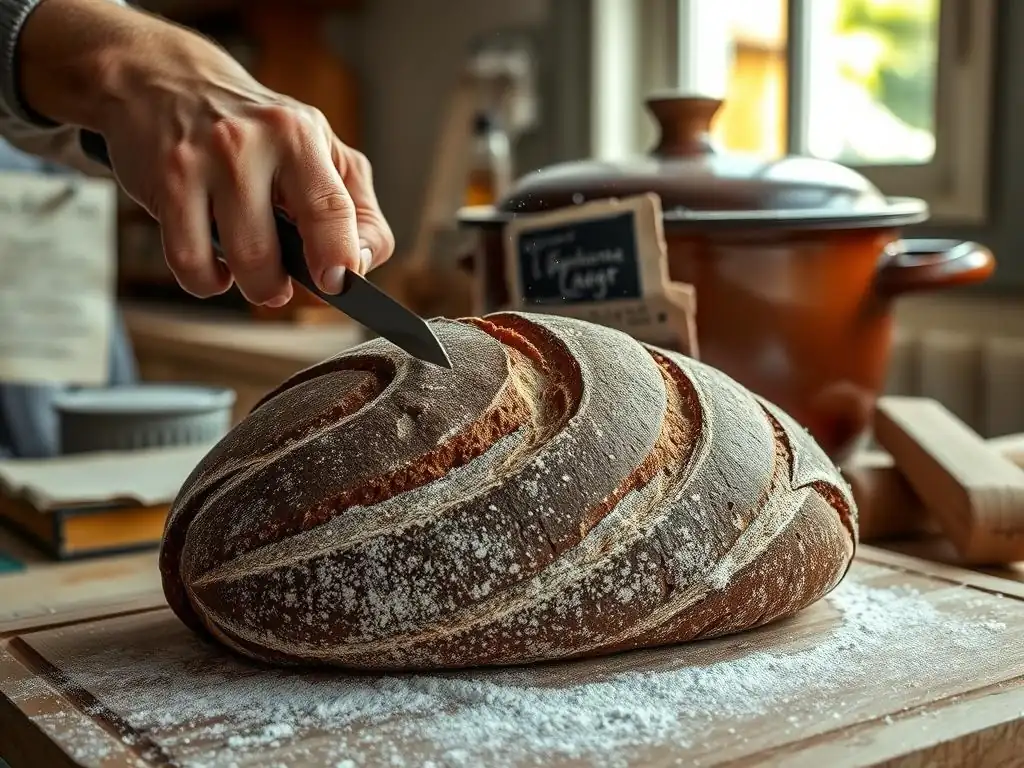
Rye dough is inherently stickier than wheat dough due to its composition. If your dough feels excessively sticky and difficult to handle, resist the immediate urge to add large amounts of extra flour, which can make the loaf dense and dry. Instead, use a bench scraper to help with manipulation on a lightly floured or wet surface. Keep your hands wet while handling the dough during shaping.
If the dough seems impossible to work with, give it a short rest (10-15 minutes) covered on the counter. This allows the dough to relax and the hydration to equalize slightly, often making it more manageable. Patience in letting the dough rest can save you from adding unnecessary flour.
Addressing a Dense and Gummy Sourdough Rye Bread
A dense, gummy crumb is a common issue in rye baking, often pointing back to insufficient fermentation or improper cooling. Review your process: Did your starter seem active? Did the dough show sufficient signs of bulk fermentation and proofing (volume increase, poke test)? Was the loaf fully baked (checked internal temperature)?
If fermentation seemed adequate, the issue might be insufficient baking or, most commonly, cutting the loaf before it has cooled completely. Ensure your oven temperature is accurate and bake until the internal temperature is 200-210°F (93-99°C). Then, exercise the final act of patience: let it cool on a wire rack for several hours until it reaches room temperature before slicing.
Recovering from Over-Proofing: A Patient Approach to Salvaging Your Dough
If you find your dough has gone significantly past its peak proof – perhaps it's spread out or looks deflated – don't despair immediately. While you won't get a perfect, lofty loaf, a patient approach can often salvage it. Gently reshape the dough with minimal handling and consider baking it almost immediately, or giving it a very short final proof (maybe 15-30 minutes) if it still has some structure.
Even a less-than-perfect loaf is a valuable learning experience. Analyze what happened – did you misjudge the timing or temperature? Use this information to adjust your process next time. Patience in troubleshooting and learning from mistakes is just as important as patience during the rise.
Conclusion: Embrace Patience, Embrace Delicious Sourdough Rye
Mastering Sourdough Rye Baking: A Journey Worth Taking
Baking sourdough rye bread is a deeply rewarding endeavor that teaches valuable lessons, not least among them the virtue of patience. From nurturing a vibrant starter over days or weeks to allowing the dough the many hours it needs for fermentation, proofing, and even cooling, each stage demands a willingness to wait and observe.
The incredible depth of flavor, the satisfyingly chewy crust, and the unique texture of a well-made sourdough rye loaf are direct results of respecting the time required for these natural processes to unfold. Embrace the slowness, learn to read the dough, and trust that your patience will be richly rewarded.
BakeWithEase: Continuing Your Baking Education
At BakeWithEase.com, we are dedicated to helping you master the art of baking, including the nuanced world of sourdough rye. We offer detailed recipes, guides, and troubleshooting tips designed to support you at every stage of your baking journey. The principles of patience baking sourdough rye bread are woven into our approach, encouraging you to develop the skills and intuition needed for consistent success.
We invite you to explore our resources for more sourdough rye recipes, tips on starter maintenance, and guides to understanding fermentation. Continue practicing, continue learning, and most importantly, continue baking with ease and, yes, with plenty of patience.
Frequently Asked Questions
What makes patience so important when baking sourdough rye bread?
Patience is crucial because sourdough rye relies on slow fermentation for its characteristic flavor and texture. Rushing the process can result in a dense, sour bread lacking depth.
How long should I typically allow for bulk fermentation when baking sourdough rye?
Bulk fermentation times vary, but generally, expect anywhere from 3-6 hours at room temperature. Watch the dough, not the clock, and look for signs of significant volume increase and bubbles.
What happens if I don't proof my sourdough rye bread long enough?
Insufficient proofing leads to a tight, underdeveloped crumb and a flat loaf. The bread may also be overly dense and lack the desired sour flavor.
Can I over-proof sourdough rye bread, and what are the signs?
Yes, over-proofing results in a deflated loaf with a gummy texture. You might also notice a strong, unpleasant sour smell and a weakened gluten structure.
What are some tips for developing patience when baking sourdough rye?
Plan ahead and allocate sufficient time for each stage of the process. Embrace the slowness and use the extra time to observe your dough and learn its nuances.
Final Reflection: The Rewarding Patience of Sourdough Rye
The art of baking sourdough rye bread isn't just about following a recipe; it's a testament to the power of patience in achieving something truly exceptional. The long fermentation times, the careful monitoring of the starter, and the delicate balance of ingredients all demand a level of attentiveness that transcends mere culinary skill. This process mirrors life itself, where the most rewarding achievements often require sustained effort and unwavering belief.
The influence of sourdough baking, particularly with rye, extends beyond the kitchen. It's a practice that encourages mindfulness and a deep connection with the natural world. The rhythmic rise and fall of the dough, the subtle shifts in aroma, and the satisfying crust that emerges from the oven all speak to a slower, more deliberate way of life, often lost in our fast-paced modern world. Patience is not passive resignation, nor is it failing to act because of fear; it is the capacity to accept what is, and in the process, to discover what will be.
This quote beautifully encapsulates the essence of sourdough baking, and indeed, the rewards of patience in any endeavor.
Now, consider your own life. Where else can you cultivate this same patient approach? What seemingly insurmountable challenges might yield to a more deliberate, mindful process? I invite you to reflect on the lessons learned here, not just about baking, but about the transformative power of patience itself. Embrace the slow rise, savor the process, and discover the profound satisfaction that awaits when you allow time to work its magic. The perfectly crafted loaf of sourdough rye is a testament to this truth, and so too can be your own life's greatest achievements.
Unlock Your Sourdough Rye Secrets!
Thanks for taking the time to explore the world of sourdough rye with us! We hope you've gained a deeper understanding of the patience and precision it requires. Now it's time to put your newfound knowledge into practice.
- Bake your own perfect sourdough rye loaf! Use the techniques discussed in the article to create a loaf you’ll be proud of. Experiment with different hydration levels and fermentation times to discover your ideal bake.
- Share your sourdough journey! Post a picture of your creation on social media and tag us – we’d love to see your results and maybe even feature you!
- Explore other BakeWithEase recipes! Discover new baking adventures by browsing our collection of easy-to-follow recipes.
What unique flavor profile will you create in your next sourdough rye attempt?