
AgarAgar Flakes vs. Powder: Which to Use for Your Baked Creations?

Welcome to BakeWithEase, your haven for baking brilliance! Ever wondered about the secret ingredient that can transform your desserts? We're diving deep into the world of plant-based gelling agents in our latest exploration of Advanced Baking Techniques. Get ready to unravel the mystery of AgarAgar Flakes vs. Powder and discover which one will elevate your baked creations to the next level. Are you ready to unlock the secrets to perfect texture and set? Read on to find out!
- AgarAgar Flakes vs. Powder: Choosing the Right One for Your Baking Needs
- AgarAgar Flakes vs. Powder: A Detailed Comparison for Baking Applications
- AgarAgar Flakes vs. Powder: Setting Strength and Texture in Baked Goods
- When to Use AgarAgar Flakes vs. Powder in Your Baking Projects
- Troubleshooting AgarAgar in Baking: Common Issues and Solutions
- Tips and Tricks for Baking with AgarAgar (Flakes and Powder)
- Conclusion: AgarAgar Flakes or Powder – Which is Best for Your Recipes?
- Frequently Asked Questions
- Final Reflection: Unlocking the Agar-Agar Advantage in Your Baking
- Unlock Your Baking Potential: Mastering Agar-Agar
AgarAgar Flakes vs. Powder: Choosing the Right One for Your Baking Needs
Understanding AgarAgar: A Vegan Gelatin Alternative for Bakers
Agar-agar, often simply called agar, is a fascinating ingredient that has gained popularity in the baking world, particularly among those seeking vegan alternatives to traditional gelatin. Derived from red algae, primarily from the Gelidium and Gracilaria species, this natural hydrocolloid forms a gel when hydrated and heated, making it an excellent thickener and gelling agent. Its ability to create a firm, stable gel at room temperature, even in warm climates where gelatin might melt, makes it a reliable tool for various desserts.
Unlike gelatin, which is protein-based and derived from animal collagen, agar-agar is composed mainly of polysaccharides, specifically agarobiose. This structural difference accounts for many of the practical differences bakers observe when using agar-agar flakes vs powder. Its neutral taste and odorless nature ensure that it doesn't interfere with the flavors of delicate baked goods like cheesecakes, panna cottas, or fruit tarts. Furthermore, agar-agar sets much faster than gelatin and requires no refrigeration to solidify once cooled, though chilling can help speed up the process.
What is AgarAgar? Exploring its Origins and Properties
Agar-agar has a rich history, first discovered in Japan in the 17th century. Its name comes from the Malay word for the red algae from which it is extracted. Traditionally used in Asian cuisine for centuries, it was introduced to the Western world later and found applications in both the food industry and scientific laboratories (as a culture medium). It is produced through a process involving boiling the algae, purifying the resulting gel, and then drying and processing it into various forms, most commonly flakes or powder.
The key property of agar-agar that makes it invaluable in baking is its high gelling strength. It can set liquids at very low concentrations, often requiring less material than gelatin to achieve a similar firmness. A notable characteristic is its high melting point compared to gelatin; agar-agar gels typically melt at temperatures around 85°C (185°F), whereas gelatin melts near body temperature, around 35°C (95°F). This thermal stability means desserts set with agar-agar are much more heat-resistant, a significant advantage in warmer environments or for dishes that need to hold their shape outside of refrigeration for periods.
AgarAgar vs. Gelatin: Key Differences for Baking
When comparing agar-agar vs. gelatin for baking, several fundamental differences impact their application. Gelatin creates a soft, wobbly, melt-in-your-mouth texture that is elastic and thermo-reversible (it melts when heated and re-sets when cooled). It also requires blooming in cold liquid before being dissolved in warm liquid, and it sets as it cools, typically needing refrigeration for several hours to achieve full firmness. Gelatin is commonly measured in "bloom" strength, indicating its gelling power.
Agar-agar, on the other hand, produces a firmer, slightly more brittle gel with a clean break. It is not thermo-reversible in the same way as gelatin; once set, it requires heating to a much higher temperature to re-melt, and it will set again upon cooling, but repeated melting and setting can weaken the gel. Agar-agar needs to be boiled for a few minutes to fully dissolve and activate its gelling properties, unlike gelatin which dissolves in warm water.
The setting time for agar-agar is also much faster, often within 30-60 minutes at room temperature. These distinct properties mean that while agar-agar is a great vegan substitute, it doesn't replicate the exact texture of gelatin, and recipes often need adjustment to achieve the desired result when substituting one for the other.
AgarAgar Flakes vs. Powder: A Detailed Comparison for Baking Applications
AgarAgar Flakes: Characteristics, Uses, and Tips for Baking
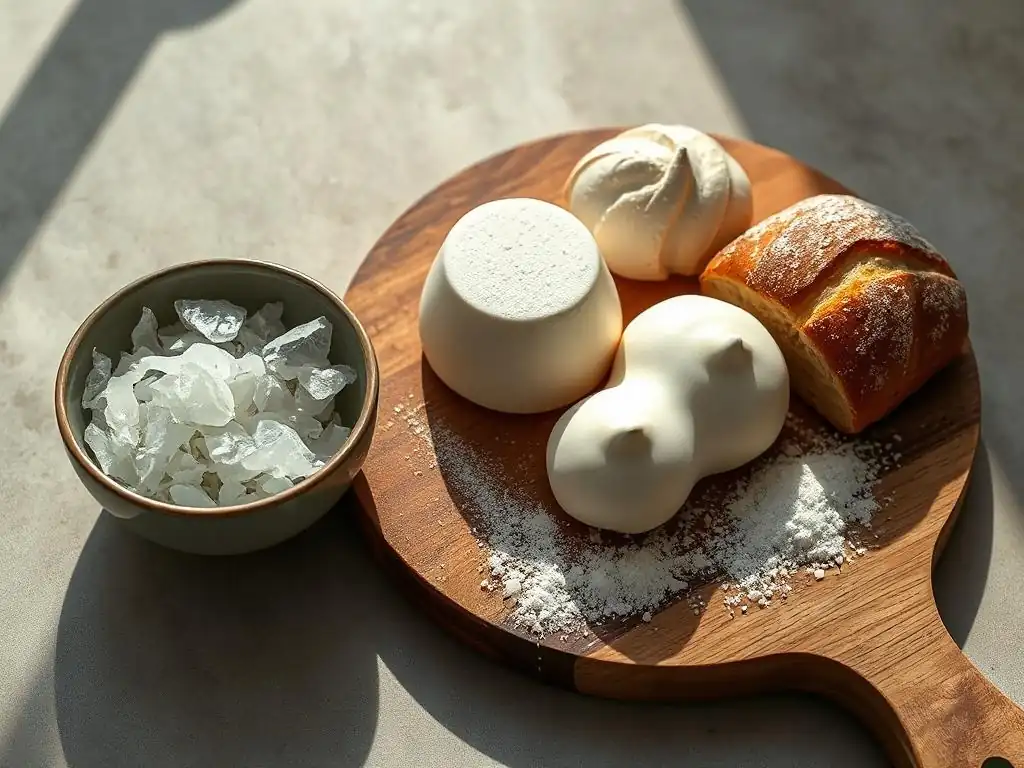
Agar-agar flakes are a common form of this gelling agent, appearing as light, airy flakes that resemble dried seaweed particles (which is essentially what they are!). This form is less processed than the powder, often requiring a longer time and a more vigorous boil to fully dissolve.
Because they are less dense, a larger volume of flakes is needed compared to the powder to achieve the same gelling strength. Flakes might be preferred by some bakers for their more natural appearance or if precision isn't absolutely critical, offering a slightly less potent gelling power per unit volume than the powder.
Using agar-agar flakes successfully in baking requires careful attention to dissolution. If not fully dissolved, the resulting gel can be grainy or uneven. They are often used in traditional Asian desserts like anko (sweet red bean paste) or various jellies.
While they can be used in Western baking for dishes like fruit tarts or vegan panna cotta, it's crucial to ensure they are completely incorporated into the liquid base through adequate boiling. A common ratio guideline suggests that 1 tablespoon of agar-agar flakes can set about 1 cup (240ml) of liquid, though this can vary based on the liquid's acidity and desired firmness.
How to Properly Prepare AgarAgar Flakes for Baking
Proper preparation is key when working with agar-agar flakes to avoid a grainy texture. The flakes must first be added to the liquid you intend to gel. It's generally recommended to use the specified amount of flakes for your recipe and add them to a cold or room-temperature liquid in a saucepan. Allow the flakes to soak for about 5-10 minutes before heating; this helps them begin to absorb moisture, though it's not strictly "blooming" like gelatin.
After the brief soak, bring the mixture to a rolling boil over medium heat, stirring constantly. It's essential to maintain a boil for at least 5-7 minutes, sometimes up to 10 minutes, to ensure the flakes completely dissolve. You should not see any visible flakes remaining when you lift the spoon. Once dissolved, remove from heat, stir in any flavorings or additions, and pour into your mold or dish immediately, as it will begin to set relatively quickly as it cools.
Best Baking Recipes Using AgarAgar Flakes
Agar-agar flakes are excellent for creating firm, stable gels perfect for fruit jellies, aspics, or layered desserts where distinct, solid layers are desired. Consider using them for:
- Vegan Panna Cotta: While powder gives a smoother texture, flakes can work if thoroughly dissolved, resulting in a firm set that holds its shape well. Use about 1.5 tablespoons of flakes per 2 cups of liquid for a firm set.
- Fruit Jellies/Terrines: Layering different colored fruit juices set with agar-agar flakes creates visually stunning and stable desserts. A ratio of 1 tablespoon flakes to 1 cup juice works well for a firm jelly.
- Firm Pie Fillings: For fruit pies that require a very stable filling, agar-agar flakes can be used as a thickener. Ensure the flakes are boiled with a portion of the fruit juice before combining with the fruit.
Using agaragar flakes vs powder in these recipes will result in a slightly different final texture, often firmer and less smooth than with powder, but still perfectly functional if prepared correctly.
Agar-agar powder is the most refined form available to home bakers. It is a fine, white powder that dissolves more readily and has a much higher gelling strength than the flakes. Because it is concentrated, you need significantly less powder than flakes to achieve the same level of setting. This makes it easier to measure precisely and often leads to a smoother, more consistent gel texture, which is often preferred in delicate baked goods like vegan cheesecakes or mousses.
The strength of agar-agar powder can vary between brands, but generally, it is considered about four times stronger than agar-agar flakes. This means that if a recipe calls for 4 tablespoons of flakes, you would typically substitute with only 1 tablespoon of powder. Its quick dissolution and high setting power make it a versatile ingredient for thickening sauces, stabilizing vegan creams, or creating firm dessert gels that can withstand room temperature.
How to Properly Prepare AgarAgar Powder for Baking
Preparing agar-agar powder is similar to flakes but requires less boiling time due to its finer consistency and higher solubility. Start by whisking the measured amount of agar-agar powder into the cold or room-temperature liquid in a saucepan. This helps disperse the powder and prevents clumps.
Bring the mixture to a boil over medium heat, stirring continuously. Once it reaches a boil, reduce the heat slightly and simmer for about 1-2 minutes, stirring to ensure complete dissolution. Unlike flakes, the powder dissolves quite quickly once boiling. You should see no grainy particles. Remove from heat, add other ingredients, and pour immediately, as it will begin to set as soon as it cools below its setting temperature, which is typically around 40-45°C (104-113°F).
Best Baking Recipes Using AgarAgar Powder
Agar-agar powder is ideal for recipes where a smooth texture and reliable, firm set are paramount. It excels in:
- Vegan Cheesecakes: Agar-agar powder provides the structure needed to set cashew or tofu-based vegan cheesecakes without baking. Use about 1 teaspoon of powder per 1.5 - 2 cups of filling for a firm, sliceable cake.
- Vegan Panna Cotta/Mousses: For a smoother, more delicate texture than flakes might yield, powder is preferred. Start with about 3/4 teaspoon of powder per cup (240ml) of liquid for a soft, spoonable set, adjusting based on desired firmness.
- Fruit Tarts and Glazes: Agar-agar powder can create clear, stable glazes for fruit tarts or set fruit fillings firmly. Use a small amount (e.g., 1/2 teaspoon per cup) boiled with juice for a glaze or slightly more for a firm filling.
Choosing agar-agar powder vs flakes often comes down to the desired texture and ease of use, with powder offering more predictability and a smoother finish.
AgarAgar Flakes vs. Powder: Setting Strength and Texture in Baked Goods
Achieving the Perfect Set: Comparing AgarAgar Flakes and Powder Ratios
The primary difference when comparing agaragar flakes vs powder lies in their gelling strength and the resulting set. As a general rule of thumb, agar-agar powder is approximately four times stronger than agar-agar flakes by weight. This means you'll need about 1/4 the amount of powder compared to flakes in a recipe. For instance, if a recipe calls for 4 tablespoons of agar-agar flakes to set a liter of liquid, you would likely only need 1 tablespoon of agar-agar powder for the same quantity of liquid to achieve a similar level of firmness.
However, these ratios are approximate and can vary depending on the brand, the specific type of agar-agar used, and the acidity of the liquid being set. Acidic ingredients like citrus juice or vinegars can slightly weaken agar-agar's gelling power, requiring a touch more agent. Conversely, ingredients high in calcium might enhance the set. Always start with a recommended ratio (like 1 tsp powder or 1 tbsp flakes per cup of liquid, adjusting for desired firmness) and test a small amount if possible, or note the results for future adjustments.
Texture Variations: How Flakes and Powder Affect Baking Results
Beyond just setting strength, the form of agar-agar significantly impacts the final texture of your baked goods. Agar-agar powder, when properly dissolved, typically yields a smooth, uniform gel. This is because the fine particles dissolve completely and evenly distribute throughout the liquid, creating a consistent network that solidifies into a homogeneous texture. This smooth finish is often desirable in creamy desserts like vegan cheesecakes, panna cotta, or soft jellies where a silky mouthfeel is preferred.
Agar-agar flakes, being larger and less refined, can sometimes result in a slightly less smooth or even a subtly grainy texture if not boiled for a sufficient duration to ensure complete dissolution. Even when fully dissolved, the resulting gel can feel slightly firmer and more brittle than that produced by powder at an equivalent setting strength. This "clean break" texture is characteristic of agar-agar and is more pronounced when using flakes compared to the smoother set from powder. Understanding these texture differences is key when deciding whether to use agaragar flakes vs powder for a specific baking application.
When to Use AgarAgar Flakes vs. Powder in Your Baking Projects
AgarAgar Flakes: Ideal Baking Scenarios and Applications
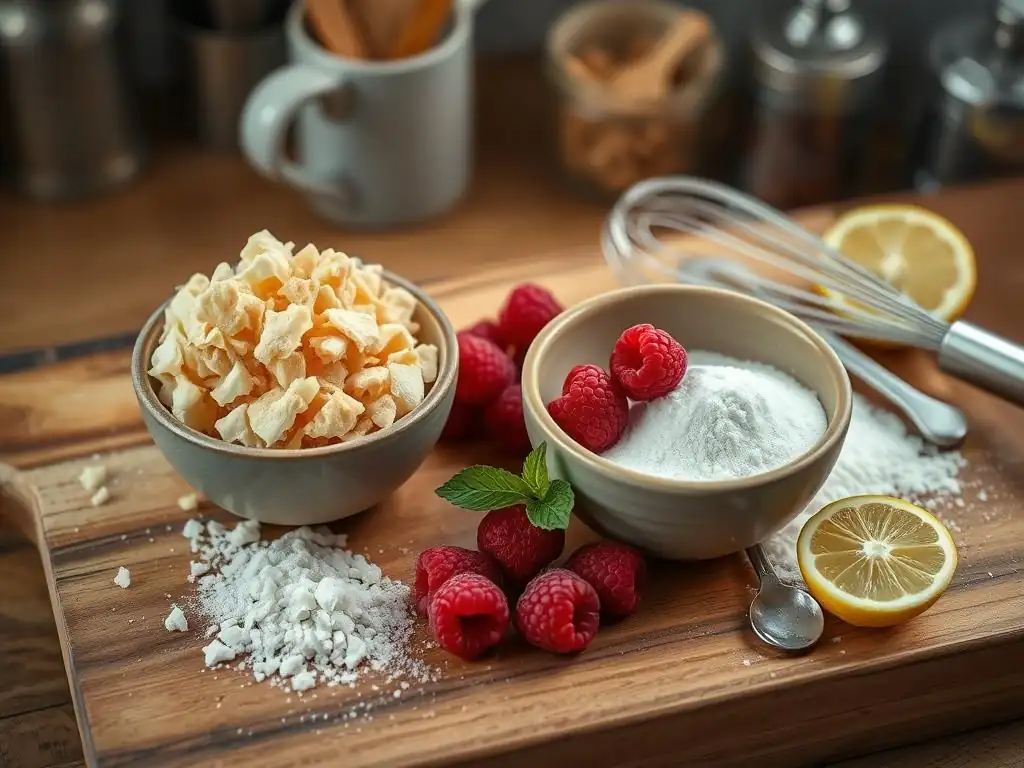
Agar-agar flakes are often a good choice for bakers who prefer ingredients that are less processed or for applications where a slightly firmer, more traditional agar-agar texture is desired. They are particularly well-suited for recipes where the liquid base is boiled for an extended period anyway, allowing ample time for the flakes to fully dissolve without extra effort. Their larger size makes them easy to measure, though precision in gelling strength might be slightly less consistent compared to powder due to variations in flake size and density.
Consider using agar-agar flakes for making firm fruit gels that need to be unmolded and hold their shape perfectly, such as in layered fruit terrines or decorative aspics. They can also be used in vegan jelly candies, though powder might be preferred for a smoother chew. If you are adapting a traditional Asian recipe that specifically calls for flakes, sticking to that form is often the best approach to achieve the intended texture. Always remember to give them adequate boiling time – typically 5-10 minutes – to ensure no grainy texture results.
Agar-agar powder is the more versatile and generally preferred form for most modern baking applications, especially in Western-style desserts. Its high concentration and rapid dissolution make it easier to work with and more reliable for consistent results. Powder allows for more precise measurement, which is crucial when you need to achieve a specific level of firmness, from a delicate wobble in a panna cotta to a firm sliceable cheesecake.
Use agar-agar powder when you need a smooth, creamy texture in your vegan desserts, such as vegan mousses, no-bake cheesecakes, or creamy fillings for tarts. It's also excellent for thickening sauces or stabilizing whipped vegan creams, as it can be dissolved quickly and incorporated without requiring prolonged boiling of the entire mixture.
For recipes where the liquid volume is small or sensitive to over-boiling, the quick dissolution time of powder (1-2 minutes boil) is a significant advantage over flakes, which require longer. The decision between agaragar flakes vs powder often favors powder for its convenience, consistency, and ability to create smoother textures.
Troubleshooting AgarAgar in Baking: Common Issues and Solutions
Problems with AgarAgar Flakes: Incomplete Dissolution, Grainy Texture
One of the most common issues when working with agar-agar flakes is incomplete dissolution, which leads to a grainy or gritty texture in the final product. This typically happens when the flakes haven't been boiled for long enough or at a high enough temperature to fully break down and release their gelling agents. Unlike gelatin, which just needs warmth, agar requires a rolling boil to activate.
To troubleshoot incomplete dissolution with flakes:
- Increase Boiling Time: Ensure you are boiling the mixture containing the flakes for the recommended 5-10 minutes at a strong boil, stirring frequently. Don't just simmer; it needs active boiling.
- Adjust Liquid Volume: If your liquid is evaporating too much during a long boil, start with slightly more liquid than your recipe calls for, or add a splash more water/plant milk during the boiling process if it becomes too thick too quickly.
- Consider Acidity: Highly acidic liquids (like lemon juice or cranberry juice) can sometimes interfere with gelling. If using very acidic ingredients, you might need to increase the amount of flakes slightly or reduce the proportion of acidic liquid, adding it after the agar has boiled with a neutral liquid base.
Problems with AgarAgar Powder: Over-Setting, Weeping
While agar-agar powder is easier to dissolve, common problems include over-setting (resulting in a rubbery texture) or weeping (where the gel expels liquid). Over-setting usually occurs due to using too much powder for the amount of liquid or boiling the mixture for too long, concentrating the agar-agar. Weeping can happen if the agar gel is subjected to freeze-thaw cycles or sometimes if the concentration isn't quite right, leading to syneresis.
To troubleshoot issues with agar-agar powder:
- Accurate Measurement: Always measure agar-agar powder precisely. Using slightly too much can drastically change the texture from smooth to rubbery. Remember the general 1:4 ratio difference when substituting for flakes.
- Boil Just Enough: Boil the mixture for just 1-2 minutes after it reaches a boil. Prolonged boiling isn't necessary for dissolution and can lead to over-concentration.
- Adjust for Acidity/Fat: While less affected than gelatin, very acidic liquids might require a tiny bit more powder, and high-fat liquids (like coconut cream) might require slightly less. Test your recipe with a small batch if unsure.
- Avoid Freezing: Agar-agar gels do not freeze well; the structure breaks down, leading to significant weeping upon thawing. Avoid freezing desserts set with agar-agar.
Comparing agaragar flakes vs powder for troubleshooting, issues with flakes often relate to dissolution, while issues with powder are more commonly about getting the concentration just right for the desired set.
Tips and Tricks for Baking with AgarAgar (Flakes and Powder)
Mastering AgarAgar: Achieving Consistent Results
Achieving consistent results with both agar-agar flakes vs powder involves understanding their properties and how they interact with other ingredients. Always dissolve agar-agar in cold or room-temperature liquid before heating to prevent clumping. Ensure the mixture comes to a full, rolling boil and is maintained for the required time (1-2 minutes for powder, 5-10 minutes for flakes) to guarantee complete dissolution.
If you're unsure about the gelling strength of a new brand or how a specific recipe will set, perform a quick test: after boiling, take a teaspoon of the mixture and place it in the freezer for a minute. It should set rapidly, giving you an indication of the final firmness.
Remember that agar-agar sets as it cools below its setting point (around 40-45°C / 104-113°F), which is much higher than gelatin. This means you need to work relatively quickly once the mixture is boiled and slightly cooled, pouring it into your molds or dishes before it starts to set in the pot.
If it sets prematurely, you can gently reheat it to re-melt, but try to avoid doing this repeatedly, as it can slightly weaken the gel over time. For delicate layers, allow the first layer to set partially (until firm to the touch but not fully hardened) before pouring the next layer gently over a spoon to prevent breaking the surface.
Storing AgarAgar Flakes and Powder for Optimal Use
Proper storage is essential to maintain the gelling strength and quality of both agar-agar flakes and powder. Both forms are hygroscopic, meaning they can absorb moisture from the air, which can potentially reduce their effectiveness or lead to clumping over time. Therefore, it's crucial to store agar-agar in an airtight container.
Keep the container in a cool, dry place, away from direct sunlight and humidity. A pantry or cupboard shelf is ideal. Avoid storing it near sources of heat or moisture, like above a stove or near a sink. When stored correctly, agar-agar has a very long shelf life, often retaining its potency for several years. Before using older agar-agar, check for any signs of moisture damage or clumping that can't be broken up easily. If you're concerned about its strength, you can always perform a quick test gel with a small amount before committing it to your main recipe.
Conclusion: AgarAgar Flakes or Powder – Which is Best for Your Recipes?
Making the Right Choice for Your Baking Style and Recipes
Deciding whether to use agar-agar flakes vs powder ultimately depends on your specific baking needs, the desired texture of your final product, and your comfort level with each form. Agar-agar powder offers convenience, reliability, and typically results in a smoother gel. It's easier to measure accurately for consistent results and dissolves faster, making it ideal for quick recipes or those where prolonged boiling is undesirable. For smooth vegan cheesecakes, creamy mousses, or delicate panna cotta, powder is often the preferred choice.
Agar-agar flakes, while requiring a longer boiling time and potentially yielding a slightly less smooth texture, are a valid option, particularly if you prefer a less processed ingredient or are working with traditional recipes that call for flakes. They are great for creating very firm, stable gels that hold their shape, like in fruit terrines.
While you can often substitute one form for the other using the approximate 1:4 powder-to-flake ratio, be mindful that the final texture might differ. Experimenting with both agaragar flakes vs powder in different recipes will help you discover which form best suits your baking style and helps you achieve your desired delicious, plant-based creations.
Frequently Asked Questions
What is agar-agar and why is it used in baking?
Agar-agar is a vegetarian gelatin alternative derived from seaweed. It's used in baking as a thickening and gelling agent, providing structure to desserts and pastries.
What are the key differences between agar-agar flakes and powder?
The main difference lies in their texture and concentration. Agar-agar powder is more concentrated and dissolves faster, while flakes need to be soaked and simmered longer.
Which form of agar-agar is best for beginners?
Generally, agar-agar powder is recommended for beginners. It's easier to measure accurately and dissolves more consistently, leading to more predictable results.
Can I substitute agar-agar flakes for powder (or vice-versa) in a recipe?
Yes, with adjustments. You'll need to adjust the quantity; usually, you'll need less powder than flakes to achieve the same gelling effect. Refer to conversion charts or experiment carefully.
How should agar-agar be stored to maintain its effectiveness?
Agar-agar, whether in flakes or powder form, should be stored in an airtight container in a cool, dry place, away from direct sunlight and moisture. This prevents clumping and degradation.
Final Reflection: Unlocking the Agar-Agar Advantage in Your Baking
The choice between agar-agar flakes and powder isn't just a matter of convenience; it's a key to unlocking the full potential of your baked creations. The subtle differences in texture and gelling properties, as explored throughout this article, directly impact the final outcome, influencing everything from the smoothness of a mousse to the firmness of a jelly. Understanding these nuances is crucial for any baker aiming for consistent, high-quality results.
This exploration into the world of agar-agar has been a fascinating journey, highlighting the often-overlooked importance of ingredient selection. The subtle yet significant differences between flakes and powder underscore the power of detail in baking. It's a reminder that even seemingly minor choices can dramatically affect the final product. The details are not the details. They make the design.
- Charles Eames. This quote perfectly encapsulates the essence of this article's findings: the seemingly small difference between flakes and powder is, in fact, a crucial detail that elevates the baking experience.
Now, consider your own baking journey. Which type of agar-agar have you used in the past? Have you noticed any differences in your results? I encourage you to experiment! Try both flakes and powder in your next recipe, paying close attention to the texture and setting time. By understanding the unique properties of each, you'll gain a deeper appreciation for this versatile ingredient and elevate your baking to a whole new level. Embrace the challenge, explore the possibilities, and discover the perfect agar-agar for your culinary masterpiece.
Unlock Your Baking Potential: Mastering Agar-Agar
Thanks for taking the time to explore the world of agar-agar with us! You now have the knowledge to choose the perfect form for your next baking masterpiece. Ready to put your newfound expertise to the test?
- Experiment with a new recipe: Try substituting agar-agar flakes or powder (depending on your preference!) into your favorite recipe. See how it transforms the texture! This is your chance to create something truly unique.
- Share your agar-agar adventures: Show us your creations! Share your baking successes (and even your experiments!) on social media using #BakeWithEaseAgar. We love seeing what our community creates.
- Dive deeper into agar-agar applications: Explore other culinary uses for agar-agar beyond baking. What other exciting possibilities can you imagine?
What innovative agar-agar creation will you bake next?