
Preventing Curdling in Sauces and Batters: The Emulsification Secret Weapon

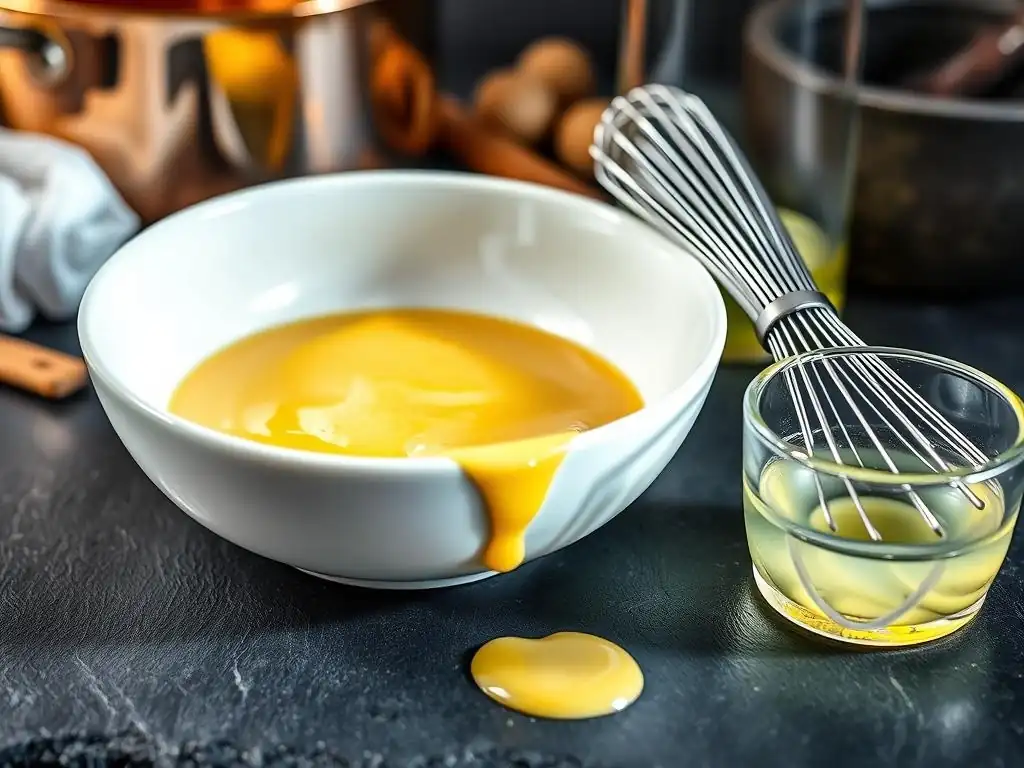
Welcome to BakeWithEase, your partner in conquering the kitchen! Ever wondered why your perfectly crafted sauce suddenly curdles, or your batter turns unexpectedly lumpy? Dive into our Baking Science Deep Dive and unlock the secret weapon: emulsification. Discover how mastering this key technique can prevent curdling and elevate your baking from frustrating to fabulous. Intrigued? Let's explore the science behind smooth sauces and perfect batters!
- Introduction: Understanding Curdling and Emulsification in Cooking
- The Role of Emulsifiers in Preventing Sauce and Batter Curdling
- Emulsification Techniques to Prevent Curdling: A Step-by-Step Guide
- Specific Scenarios: Preventing Curdling in Common Sauces and Batters
- Troubleshooting: Common Emulsification Problems and Solutions
- Advanced Emulsification Techniques for Cooking
- Emulsification Prevent Sauce Curdling: Best Practices and Tips
- Conclusion: Mastering Emulsification for Consistently Smooth Results
-
Frequently Asked Questions
- What is emulsification and why is it important in preventing sauce curdling?
- What are some common causes of sauce curdling that emulsification can help prevent?
- How does emulsification work to stabilize a sauce or batter?
- What are some common emulsifiers used in baking and sauce-making?
- What are some tips for ensuring proper emulsification to prevent curdling when baking or cooking?
- Final Reflection: Mastering Emulsification: A Culinary Journey Beyond Curdling
- Unlock Smoother Sauces & Batters: Master the Emulsion!
Introduction: Understanding Curdling and Emulsification in Cooking
Why Sauces and Batters Curdle: The Science Behind Separation
Curdling is a common frustration in the kitchen, often turning smooth sauces into grainy, separated messes. At its core, curdling happens because certain ingredients that naturally resist mixing, like fat and water, lose their ability to stay together. This separation is a breakdown of what should be a stable mixture.
Take, for example, a simple milk-based sauce heated too quickly; the proteins in the milk (primarily casein) can coagulate and clump together when exposed to high heat, especially if an acidic ingredient is added. This clumping expels the water, leading to a visibly curdled texture. Similarly, in some batters, if fats and liquids aren't properly combined, you can see oily spots or a heavy, dense texture rather than a light, airy one.
The scientific reason for this separation lies in the molecular properties of the ingredients. Fats are hydrophobic, meaning they repel water. Water is hydrophilic, attracting other water molecules but repelling fats. In a stable sauce or batter, these opposing forces are somehow bridged, creating a smooth, homogeneous mixture.
When conditions change – perhaps due to excessive heat, adding an acidic component too quickly, or insufficient mixing – this delicate balance is disrupted. The fat molecules cluster together, and the water molecules do the same, leading to the visible separation we call curdling. Understanding this basic principle is the first step in mastering how to prevent it.
Emulsification: The Key to Preventing Curdling and Achieving Smooth Textures
Emulsification is the culinary magic that allows ingredients that don't naturally mix, like oil and water, to form a stable, smooth blend. It's the process of dispersing tiny droplets of one liquid throughout another liquid in which it is normally immiscible. Think of mayonnaise, a classic example where oil is suspended within a water-based medium (like vinegar or lemon juice) thanks to the help of an emulsifier. This creates a thick, smooth, and stable sauce. Without emulsification, the oil and water would quickly separate into distinct layers.
Achieving proper emulsification is the most effective way to prevent sauce curdling and ensure wonderfully smooth textures in everything from rich gravies to delicate pastry creams and even certain cake batters. By incorporating an emulsifying agent and using the correct technique, you create a stable structure where fat and water molecules are held together, resisting the forces that cause them to separate under stress like temperature changes or the addition of other ingredients. Mastering this technique transforms potentially unstable mixtures into consistent, desirable culinary outcomes.
ChefMaster's Guide to Mastering Emulsification Techniques
Welcome to the ChefMaster's guide, your roadmap to mastering the art and science of emulsification. This journey will take you from understanding the fundamental principles of why ingredients separate to applying specific techniques that ensure smooth, professional results every time. We'll delve into the role of various emulsifiers, both natural and added, and explore how their unique properties contribute to stable mixtures. You'll learn about the critical factors like temperature control and mixing methods that make or break an emulsion, providing you with the knowledge to tackle even the most challenging sauces and batters.
Our goal is to equip you with the skills to confidently approach recipes that require emulsification, eliminating the fear of curdling. We'll provide practical, step-by-step guidance applicable to everyday cooking and baking scenarios. By the end of this guide, you'll not only understand the "why" behind successful emulsification but also the "how," allowing you to consistently produce silky sauces, stable dressings, and perfectly textured baked goods. Let's unlock the secrets to preventing curdling and elevating your culinary creations.
The Role of Emulsifiers in Preventing Sauce and Batter Curdling
What are Emulsifiers? Defining Their Function in Cooking
Emulsifiers are special molecules that act as mediators between two immiscible liquids, such as oil and water. These molecules have a unique structure: one part is hydrophilic (water-attracting), and the other part is hydrophobic (fat-attracting). When an emulsifier is added to a mixture of oil and water, the hydrophilic end anchors itself in the water phase, while the hydrophobic end embeds itself in the oil phase. This creates a bridge between the two liquids, allowing tiny droplets of one phase to be dispersed and suspended within the other phase, rather than separating.
In cooking, emulsifiers are crucial for creating stable emulsions that prevent sauce curdling and batter separation. They work by forming a protective layer around the dispersed droplets, preventing them from coalescing back together. For instance, in a vinaigrette, mustard acts as an emulsifier, helping the oil and vinegar stay mixed longer than they would on their own. Without these agents, the mixture would quickly revert to its natural state of separation, with the lighter oil floating on top of the heavier water-based liquid. Understanding this function is fundamental to selecting and using the right emulsifier for your recipe.
Natural Emulsifiers: Egg Yolks, Mustard, and Their Curdling Prevention Power
Nature provides several excellent emulsifiers commonly used in the kitchen. Egg yolks are perhaps the most powerful and versatile natural emulsifier, primarily due to their high content of lecithin. Lecithin is a phospholipid with both hydrophilic and hydrophobic properties, making it highly effective at binding fats and liquids together. A single egg yolk, weighing roughly 18-20 grams, contains about 10-15% lecithin by weight, making it capable of emulsifying a significant amount of fat, as seen in rich Hollandaise or mayonnaise.
Mustard is another effective natural emulsifier, often used in salad dressings. While it contains some protein and carbohydrates that contribute to stability, its emulsifying power is largely attributed to mucilage, a gelatinous substance that swells in water and helps to coat oil droplets. Even a small amount, like a teaspoon of Dijon mustard in a cup of vinaigrette, can significantly improve the stability and prevent the oil and vinegar from quickly separating. These natural ingredients offer accessible and effective ways to prevent sauce curdling and create smooth, appealing textures.
Understanding the Hydrophilic and Hydrophobic Properties of Emulsifiers
The ability of an emulsifier to prevent sauce curdling hinges entirely on its dual nature: being simultaneously attracted to water (hydrophilic) and repelled by water (hydrophobic, and thus attracted to fat). Imagine an emulsifier molecule as a tiny stick, with one end loving water and the other end loving oil. When you whisk oil into a water-based liquid containing an emulsifier, these molecules position themselves at the interface between the oil and water droplets.
The hydrophilic end dips into the water phase, while the hydrophobic end dissolves into the oil droplet. This arrangement creates a stable barrier around each dispersed oil droplet, preventing them from merging with other oil droplets. Essentially, the emulsifier molecules form a bridge, linking the oil phase and the water phase together in a stable, dispersed state. This molecular shield is what allows an emulsion to remain smooth and prevents the fat and water from separating, thereby preventing emulsification prevent sauce curdling issues.
Emulsification Techniques to Prevent Curdling: A Step-by-Step Guide
Creating Stable Emulsions: The Correct Order of Ingredient Addition
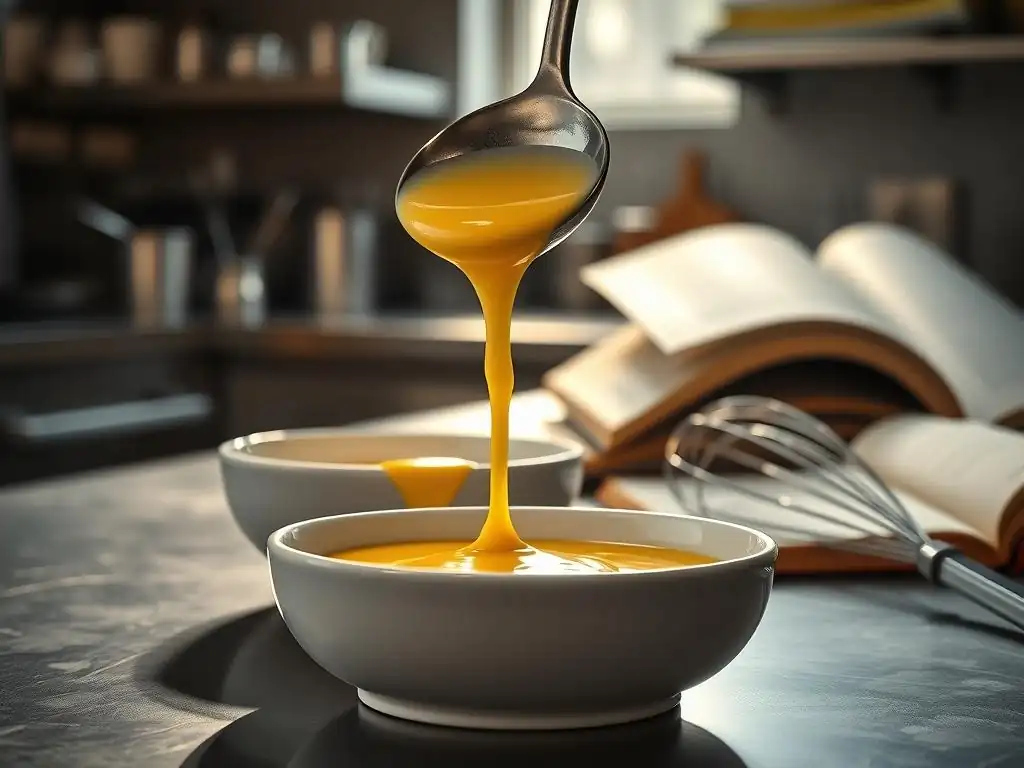
The order in which ingredients are added is paramount to creating stable emulsions and preventing sauce curdling. Generally, you start with the continuous phase (often the water-based liquid) and the emulsifier, if it's not already part of the continuous phase (like egg yolks). The dispersed phase, usually the fat or oil, is then added very slowly in a thin, steady stream while continuously mixing vigorously. This gradual addition allows the emulsifier molecules time to surround and stabilize the tiny droplets of the dispersed phase as they are introduced.
Adding the dispersed phase too quickly overwhelms the emulsifier's capacity to coat the droplets, leading to coalescence and separation – the dreaded curdling. For example, when making mayonnaise, adding oil drop by drop at the beginning, then in a slow stream once the emulsion starts to form, is crucial. Attempting to pour in a large amount of oil at once will almost certainly result in a broken, curdled mixture. Following this principle of slow, steady addition of the dispersed phase into the continuous phase with constant agitation is key to a successful emulsion.
Temperature Control: Maintaining the Right Temperature for Emulsification
Temperature plays a critical role in the success and stability of emulsions, directly impacting the potential for sauce or batter curdling. For many emulsions involving fats, having the fat at a liquid state is necessary.
For instance, when emulsifying butter into egg yolks for Hollandaise, the clarified butter needs to be warm enough to be liquid (above its melting point, typically around 90-95°F or 32-35°C) but not so hot that it cooks the egg yolks (~160°F or 71°C). The egg yolks themselves also emulsify more effectively when slightly warm, perhaps around room temperature or slightly warmer, as their viscosity is lower, allowing for better dispersion.
Conversely, extreme temperatures can break an emulsion. Overheating a finished cream sauce can cause the proteins to curdle. Freezing can also destabilize many emulsions as ice crystals disrupt the structure. Maintaining ingredients and the mixture within appropriate temperature ranges for the specific type of emulsion you are creating is vital. For example, when incorporating melted chocolate (a fat) into a liquid, ensuring both are around the same lukewarm temperature helps prevent the chocolate from seizing or the mixture from curdling.
Mixing Methods: Achieving Proper Emulsification Through Technique
The method and intensity of mixing are crucial for breaking down the dispersed phase into tiny droplets and distributing them evenly throughout the continuous phase, thus achieving a stable emulsion and preventing sauce curdling. Whisking by hand is effective for many emulsions, like vinaigrettes or smaller batches of Hollandaise, requiring consistent, vigorous motion to shear the fat into small droplets. The speed of whisking helps determine the fineness of the emulsion; faster whisking generally produces smaller droplets and a more stable emulsion.
For larger volumes or more stable emulsions, mechanical mixers or blenders are often preferred. Immersion blenders, in particular, provide high-shear mixing, creating very fine oil droplets that are less likely to coalesce. Using an immersion blender in a narrow container allows the mixture to be pulled through the blade repeatedly, maximizing the emulsifying action. For batters, creaming butter and sugar incorporates air and starts the emulsification process, and subsequent mixing steps, like adding eggs and alternating dry and wet ingredients, are done at moderate speeds to maintain the emulsion without developing too much gluten.
Specific Scenarios: Preventing Curdling in Common Sauces and Batters
Preventing Curdling in Hollandaise Sauce: The Butter Emulsification Challenge
Hollandaise sauce is a prime example of a challenging emulsion, notorious for its tendency to curdle. It's essentially an emulsion of clarified butter into egg yolks, stabilized by the lecithin in the yolks. The challenge lies in incorporating a large amount of fat (clarified butter) into a relatively small amount of liquid (egg yolks, maybe a splash of lemon juice). A typical ratio might be one egg yolk to 4-6 ounces (or about 1/2 to 3/4 cup) of clarified butter. The key to success is temperature control and slow, steady addition of the butter.
The egg yolks are usually gently heated over a double boiler to a warm temperature (around 140-150°F or 60-65°C) to increase their emulsifying power and viscosity, but not so hot that they cook and curdle. The clarified butter is then whisked in very slowly, drop by drop initially, while continuously whisking the yolks vigorously. As the emulsion begins to form and thicken, the butter can be added in a thin stream.
If the butter is added too quickly or is too hot, it will overwhelm the yolks' emulsifying capacity, leading to separation and curdling. Patience and consistent whisking are paramount to prevent sauce curdling in this classic sauce.
Stabilizing Mayonnaise: Mastering Oil and Egg Yolk Emulsification
Mayonnaise is another classic emulsion, where a large volume of oil is suspended in a small amount of water-based liquid (like lemon juice or vinegar) using egg yolks as the primary emulsifier. A typical ratio is about 1 cup of oil to 1 large egg yolk. The stability of mayonnaise relies heavily on the lecithin in the egg yolks and the technique used to incorporate the oil. Adding the oil too quickly is the most common cause of a broken or curdled mayonnaise.
To successfully make mayonnaise and prevent curdling, begin by whisking the egg yolk(s) with the acid (lemon juice or vinegar) and any seasonings. Then, add the oil extremely slowly at the start – literally drop by drop – while whisking continuously and vigorously.
Once a stable, thickened base emulsion has formed (after about 1/4 cup of oil has been incorporated), the oil can be added in a very thin, steady stream, still whisking constantly. The goal is to ensure that the oil droplets are broken down into very small sizes and coated by the emulsifier as they are introduced, preventing them from coalescing and separating.
Avoiding Curdling in Cream-Based Sauces: Using a Roux or Cornstarch Slurry
Cream-based sauces, like Béchamel or Alfredo, can curdle when heated, especially if acidic ingredients are added or if they are boiled too vigorously. This curdling is often due to the milk proteins clumping under heat. To prevent this and ensure a smooth sauce, thickening agents like a roux (a cooked mixture of equal parts fat and flour) or a cornstarch slurry (cornstarch mixed with a cold liquid) are commonly used. These starches act as stabilizers.
When flour in a roux or cornstarch in a slurry is heated with the liquid, the starch granules swell and absorb water, thickening the sauce. More importantly, the swollen starch granules also help to keep the milk proteins dispersed throughout the liquid, physically preventing them from clumping together and separating.
For instance, in a Béchamel, the roux coats the flour particles with fat, helping them disperse smoothly into the milk without clumping, and the cooked starch then stabilizes the milk proteins. Adding a cornstarch slurry to a simmering sauce thickens it and provides a similar stabilizing effect, significantly reducing the likelihood of the sauce curdling.
Emulsification in Cake Batters: Preventing Separation and Achieving a Fine Crumb
While not a sauce in the traditional sense, cake batters also rely on emulsification for proper texture and structure, preventing separation and contributing to a fine, even crumb. In many butter-based cakes (like pound cake or butter cake), the process begins by creaming softened butter and sugar together. This step not only incorporates air but also starts to create an emulsion base, as the sugar crystals help to break down the fat.
Eggs are then added, one at a time, and beaten in. The lecithin in the egg yolks acts as a powerful emulsifier, helping to bind the fat (butter) and the liquid (from the eggs) together into a smooth, homogenous mixture.
If the eggs are added too quickly or if the butter is too cold or melted, the mixture can look curdled or separated. This indicates a broken emulsion where the fat and liquid are not properly integrated. To prevent this, ensure your butter is properly softened and your eggs are at room temperature.
When adding dry and wet ingredients alternately after the egg stage, mixing on low speed just until combined helps maintain the emulsion. A well-emulsified cake batter will be smooth and cohesive, leading to a cake with a tender texture and a consistent crumb, preventing the issues associated with separated batters.
Troubleshooting: Common Emulsification Problems and Solutions
Identifying a Broken Emulsion: Recognizing Signs of Curdling
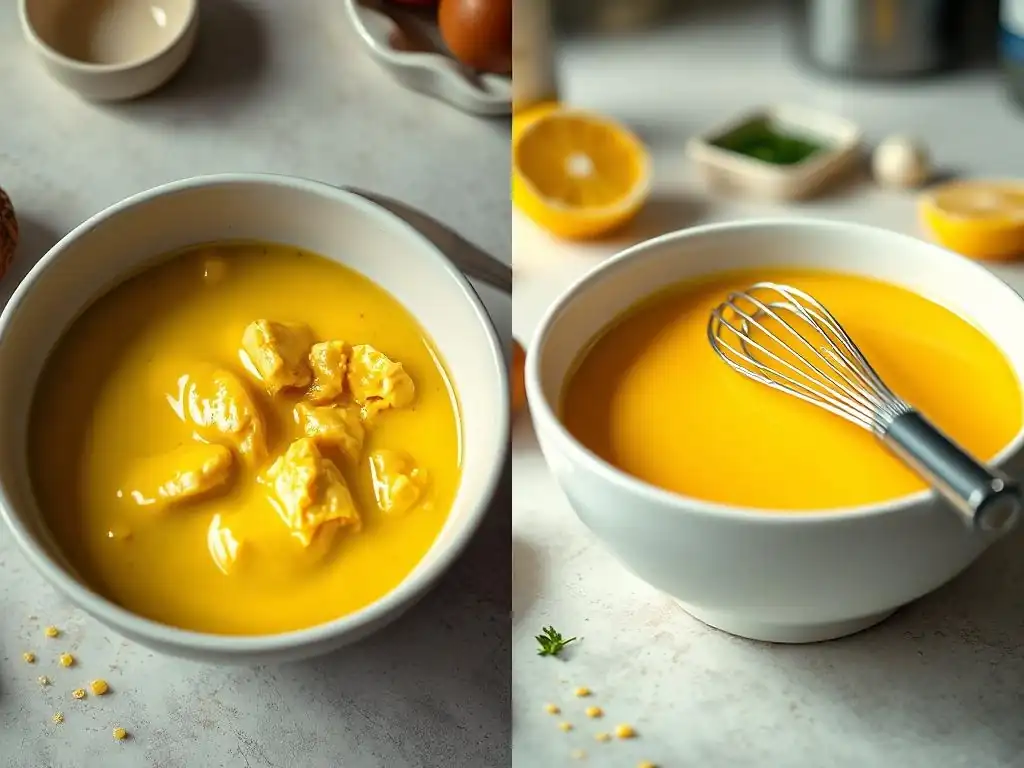
Recognizing a broken emulsion is the first step towards fixing it. The most obvious sign of curdling is the visible separation of the mixture into its constituent parts – typically, a fatty or oily layer pooling on top or separating from a watery or thinner liquid base. In a sauce, this might look like greasy droplets floating in a thin liquid, or a thick sauce suddenly becoming watery with clumps of solids.
For example, a broken Hollandaise sauce will look like a greasy mess with separated liquid rather than a thick, smooth sauce. Mayonnaise that has curdled will appear oily and loose instead of creamy and stable. In a cake batter, a broken emulsion might present as a lumpy, greasy mixture rather than a smooth, cohesive batter. The texture will be visibly uneven, and stirring won't easily bring it back together. Prompt identification allows you to apply rescue techniques before the mixture is unsalvageable.
Rescue Techniques: How to Fix a Curdled Sauce or Batter
Fortunately, many broken emulsions can be rescued with the right technique. For a broken Hollandaise or mayonnaise, you can often fix it by starting a new small emulsion base and slowly incorporating the broken mixture into it. Whisk a fresh egg yolk with a teaspoon of hot water or the acid used in the original recipe in a clean bowl. Once slightly thickened, very slowly whisk the broken sauce, a teaspoon at a time, into this new base. The fresh emulsifier in the new yolk can help re-emulsify the fat droplets from the broken sauce.
Alternatively, for some sauces, adding a small amount of warm liquid (like water or broth) or a fresh emulsifier (like a tiny bit more mustard or a liaison of egg yolk and cream) while whisking vigorously can sometimes bring it back together. For curdled cream sauces, sometimes gentle reheating while whisking or adding a small amount of cold butter or cream can help. The key is often to reintroduce the separated components slowly into a stable base or with added emulsifying power while providing sufficient agitation.
Common Mistakes to Avoid When Emulsifying
Several common mistakes can lead to emulsification problems and cause sauces or batters to curdle. One of the most frequent errors is adding the fat (like oil or melted butter) too quickly to the liquid phase, especially at the beginning of the process. This overwhelms the emulsifier's ability to coat the fat droplets, leading to coalescence and separation. Patience is crucial; add fat very slowly, especially initially, while whisking constantly.
Incorrect temperature is another common pitfall. Using ingredients that are too cold can make emulsification difficult (e.g., cold butter in a cream sauce, cold eggs in a batter). Conversely, overheating an emulsion or the ingredients can cause it to break (e.g., boiling a cream sauce, adding scorching hot butter to egg yolks). Insufficient mixing is also a problem; if you don't whisk or blend vigorously enough, the fat droplets won't be broken down into small enough sizes to remain dispersed. Finally, using dirty equipment with residual grease can interfere with the emulsifier's ability to bind to the fat.
Advanced Emulsification Techniques for Cooking
Using Stabilizers: Xanthan Gum and its Application in Sauces
Beyond traditional emulsifiers, hydrocolloids like xanthan gum can act as powerful stabilizers, significantly enhancing the stability of emulsions and preventing sauce curdling, even in challenging scenarios. Xanthan gum is a polysaccharide that creates a gel-like network in liquids, dramatically increasing viscosity at very low concentrations. This increased viscosity helps to physically suspend the dispersed fat droplets, preventing them from settling out or coalescing.
Using xanthan gum requires very small amounts; typically, concentrations range from 0.1% to 0.5% by weight of the total liquid. For example, in a cup (about 240g) of sauce, you might use only 0.24 to 1.2 grams of xanthan gum. It is often dispersed in a small amount of oil or whisked into the liquid very vigorously or blended to prevent clumping. Its ability to stabilize emulsions is particularly useful in dressings, gluten-free baking where traditional starches aren't used, or in sauces that might undergo significant temperature fluctuations or long holding times.
High-Shear Emulsification: Achieving Ultra-Fine Emulsions with Immersion Blenders
The fineness of the dispersed droplets significantly impacts the stability of an emulsion; smaller droplets are less likely to coalesce. Achieving these ultra-fine droplets often requires high-shear mixing, which is where tools like immersion blenders excel. Compared to whisking by hand, which breaks down fat into relatively larger droplets, an immersion blender's rapidly rotating blades create intense shear forces.
When using an immersion blender, especially in a narrow container that fits the blender head snugly, the mixture is drawn up and forced through the blades repeatedly. This action fractures the fat into incredibly small droplets, often measured in micrometers. These tiny droplets have a much larger surface area relative to their volume, making it easier for emulsifier molecules to coat them effectively. This results in incredibly stable and smooth emulsions, perfect for tasks like making quick mayonnaise or stable vinaigrettes that resist separation for extended periods, providing a robust way to prevent sauce curdling.
Emulsification with Different Types of Fats: Comparing Butter, Oil, and Cream
The type of fat used in an emulsion can influence the technique required and the final result. Liquid oils, like vegetable or olive oil, are the easiest fats to emulsify because they are already in a dispersed state at room temperature. They require a good emulsifier and sufficient mechanical action to break them into small droplets within the continuous phase.
Solid fats, like butter, require melting before they can be emulsified. However, melted butter contains water and milk solids in addition to fat, which can sometimes interfere with certain emulsions (like Hollandaise, where clarified butter is preferred to remove these elements). Cream, which is itself an emulsion of fat in water, can be used to add richness and contribute to stability in sauces.
Its existing emulsified structure and protein content can help prevent curdling when added to hot liquids, provided it's not boiled aggressively or exposed to strong acids without a stabilizer like starch. Understanding the properties of your fat source is key to successful emulsification prevent sauce curdling outcomes.
Emulsification Prevent Sauce Curdling: Best Practices and Tips
Measuring Ingredients Accurately for Optimal Emulsification
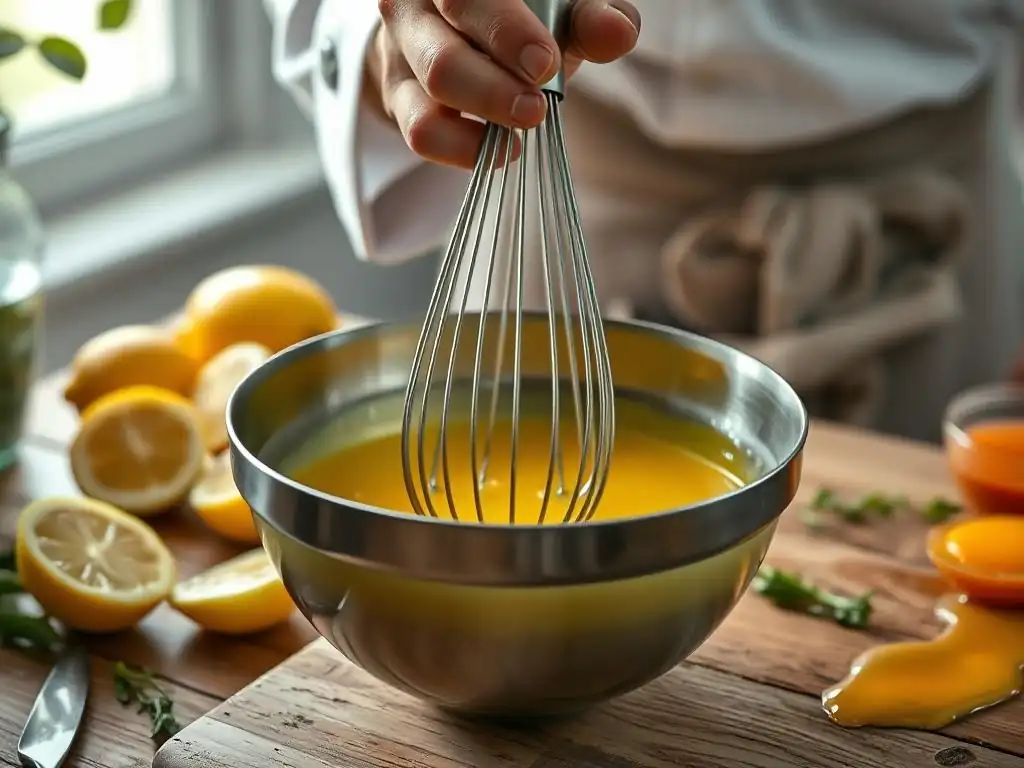
Precision in measuring ingredients is paramount when aiming for stable emulsions and wanting to prevent sauce curdling. The ratio of the dispersed phase (usually fat) to the continuous phase (liquid) and the amount of emulsifier are critical. Too much fat for the amount of emulsifier available can lead to a broken emulsion. Recipes for sensitive emulsions like Hollandaise or mayonnaise often specify ratios by volume or even weight for consistency.
For instance, a standard mayonnaise ratio might call for 1 large egg yolk per cup of oil. Deviating significantly from this ratio without adjusting technique or adding more emulsifier will likely result in failure. While some recipes are more forgiving, achieving consistently smooth results, especially in complex sauces or batters, relies on getting the proportions right. Using measuring cups and spoons accurately, or even a kitchen scale for critical components, is a best practice for reliable emulsification prevent sauce curdling success.
The Importance of Fresh Ingredients in Emulsification
The freshness of your ingredients, particularly natural emulsifiers like egg yolks, can impact the success and stability of your emulsions. As eggs age, the quality of their components, including lecithin, can degrade slightly. While older eggs can still be used, very fresh eggs, with their robust yolks, often provide superior emulsifying power.
Similarly, the quality of fats and other liquids matters. Stale or rancid oils can introduce off-flavors and may not emulsify as effectively. Using fresh milk, cream, or other liquids ensures the proteins and other components that might contribute to stability are in their best condition. Starting with high-quality, fresh ingredients gives you the best foundation for creating stable emulsions and successfully preventing sauce curdling.
Maintaining Equipment Cleanliness for Stable Emulsions
Ensuring your equipment is spotlessly clean is a simple yet crucial step in preventing emulsification failures and avoiding sauce curdling. Any residual grease or soap film on bowls, whisks, or blender parts can interfere with the emulsifier's ability to bind to the fat and water molecules. Fat residues, especially, can act as 'seeds' for coalescence, encouraging the dispersed fat droplets to clump together rather than staying suspended.
Before starting an emulsion, wash all your equipment thoroughly with hot, soapy water and rinse it completely. Drying the equipment thoroughly is also important, as excess water can dilute the mixture and affect the ratios, potentially hindering emulsification. A clean environment and clean tools provide the best chance for the emulsifier to perform its job effectively, leading to smooth, stable sauces and batters.
Conclusion: Mastering Emulsification for Consistently Smooth Results
Recap: Key Takeaways on Preventing Curdling Through Emulsification
Emulsification is the fundamental principle behind preventing curdling in countless sauces and batters, transforming immiscible ingredients into stable, smooth mixtures. We've seen how understanding the science of why fats and liquids separate and the role of emulsifiers like egg yolks and starches is crucial. Mastering techniques like slow, steady addition of the dispersed phase, precise temperature control, and using appropriate mixing methods are essential skills. Whether tackling a delicate Hollandaise or stabilizing a cream sauce with a roux, applying these principles is key to success.
Identifying a broken emulsion early allows for rescue attempts, and avoiding common pitfalls like adding fat too quickly or using incorrect temperatures significantly increases your chances of success. Incorporating stabilizers like xanthan gum and utilizing high-shear mixing can further enhance emulsion stability. Ultimately, paying attention to ingredient ratios, freshness, and equipment cleanliness are best practices that contribute to consistently smooth and appealing culinary results.
ChefMaster's Resources for Further Emulsification Exploration
Embarking on the journey to master emulsification prevent sauce curdling is a rewarding endeavor that opens up a world of culinary possibilities. For those eager to deepen their understanding and practice these techniques, BakeWithEase.com offers a wealth of resources. Explore our detailed recipe guides that specifically highlight emulsification steps in various sauces and batters. Dive into our "Baking Science Deep Dive" section for more in-depth explanations of the chemical processes at play.
Look for articles focusing on specific challenges, such as "Perfecting Pastry Cream: Avoiding Lumps and Curdles" or "The Science of Buttercream: Creating Stable Frostings." Our collection of videos and step-by-step photo tutorials provide visual guidance to reinforce the techniques discussed here. Continuous learning and practice using these resources will hone your skills and build confidence in tackling any recipe requiring emulsification.
Achieving Cooking Excellence Through Emulsification Mastery.
Mastering emulsification is more than just preventing sauce curdling; it's about achieving a level of culinary excellence where texture is as important as flavor. Smooth, stable sauces cling beautifully to pasta or vegetables, rich dressings elevate simple salads, and well-emulsified batters yield cakes with delightful textures. The ability to create and maintain stable emulsions is a hallmark of skilled cooking and baking.
By diligently applying the principles and techniques outlined in this guide, you will consistently produce professional-quality results in your own kitchen. The fear of a broken sauce or a separated batter will diminish, replaced by the confidence that comes with understanding and controlling the science of your ingredients. Embrace the power of emulsification, and watch as your dishes transform, showcasing your mastery in creating consistently smooth, stable, and delicious culinary creations.
Frequently Asked Questions
What is emulsification and why is it important in preventing sauce curdling?
Emulsification is the process of combining two liquids that don't normally mix, like oil and water. It's crucial because it stabilizes sauces and batters, preventing them from separating or curdling when heated.
What are some common causes of sauce curdling that emulsification can help prevent?
Sauce curdling often happens due to rapid temperature changes or the separation of fats and liquids. Emulsification helps maintain a stable mixture, minimizing the risk of curdling from these factors.
How does emulsification work to stabilize a sauce or batter?
Emulsification involves dispersing one liquid as tiny droplets within another, using an emulsifier (like egg yolks or mustard). This creates a stable and homogeneous mixture, resisting separation and preventing curdling.
What are some common emulsifiers used in baking and sauce-making?
Common emulsifiers include egg yolks, mustard, honey, and even cornstarch. These ingredients help to bind the water-based and fat-based components of a recipe, creating a stable emulsion.
What are some tips for ensuring proper emulsification to prevent curdling when baking or cooking?
Add liquids slowly and gradually while whisking vigorously. Ensure ingredients are at similar temperatures and avoid overheating sauces or batters after emulsification has occurred to maintain a stable emulsion.
Final Reflection: Mastering Emulsification: A Culinary Journey Beyond Curdling
Understanding emulsification is no longer a niche culinary skill; it's the key to unlocking consistently smooth, delicious sauces and batters. The ability to prevent curdling transforms amateur cooking into confident culinary artistry, impacting everything from everyday meals to sophisticated dishes. This knowledge empowers home cooks and professional chefs alike to achieve culinary excellence.
The impact of mastering emulsification extends far beyond simply avoiding lumpy sauces. It represents a deeper understanding of food science and its practical application. It's about transforming frustration into satisfaction, and elevating the everyday act of cooking into a creative process. As renowned chef Jacques Pépin once said, Cooking is at its best when it's simple, honest, and delicious.
Understanding emulsification allows us to achieve that simplicity and honesty, resulting in consistently delicious outcomes.
Now, consider your own cooking. Think about the sauces and batters you've struggled with in the past. Imagine the confidence you'll gain by applying the principles of emulsification to your next culinary creation. Experiment with different techniques, explore the science behind the process, and most importantly, enjoy the journey of mastering this essential culinary skill. The smooth, delicious results will be their own reward.
Unlock Smoother Sauces & Batters: Master the Emulsion!
Thanks for diving into the world of emulsion and discovering the secrets to preventing curdling in your sauces and batters! You've now got the knowledge to create flawlessly smooth and delicious recipes. Ready to put your newfound skills to the test?
- Craft your dream sauce: Try making one of the recipes mentioned in the article, focusing on the emulsion techniques you’ve learned. Experiment with different ingredients and see what amazing flavors you can create!
- Share your culinary triumphs: Show off your perfectly emulsified creations on social media! Use #BakeWithEaseEmulsion and tag us—we'd love to see your results.
- Challenge a friend: Share this article with a fellow cooking enthusiast and see if they can master the emulsion technique as well. Let's spread the smooth sauce love!
What incredible sauce or batter masterpiece will you create next?