
Is High Altitude Ruining Your Bakes? Find Out Why.

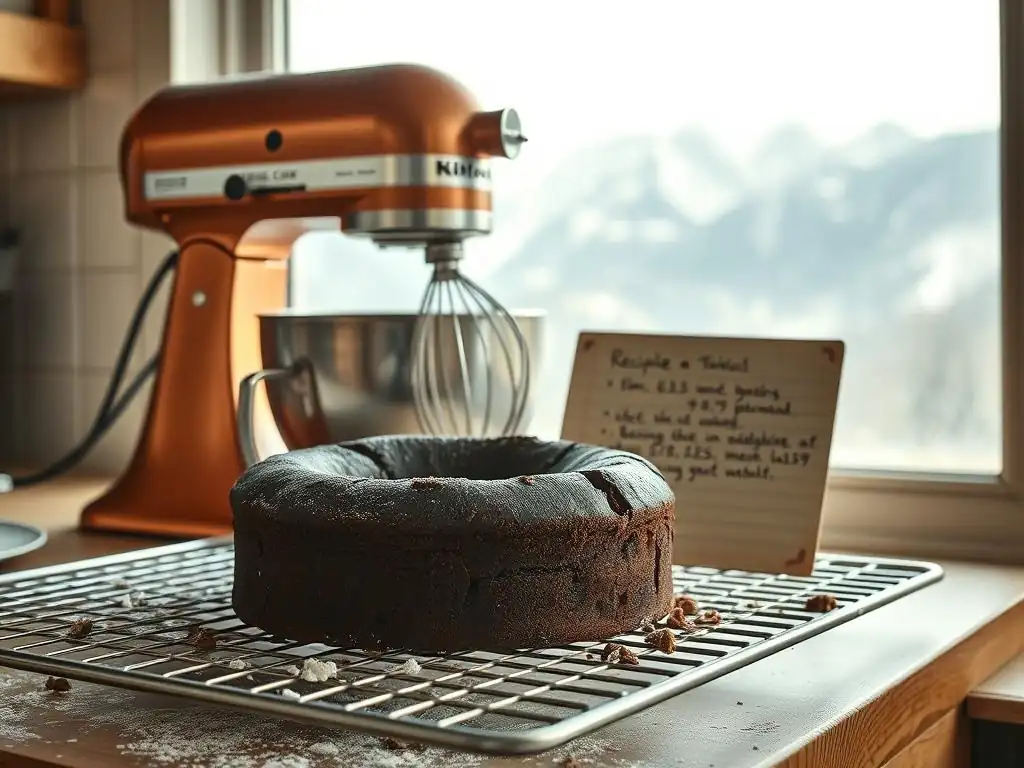
Welcome to BakeWithEase, your friendly guide to conquering the delicious world of baking! Ever wondered why your cakes sink or your cookies spread thin? It might just be your altitude! This article dives deep into high altitude baking tips, revealing the secrets to achieving perfectly risen and textured bakes, no matter how high you are. Prepare to unlock the science and transform your baking experience – let's get started!
- Is High Altitude Ruining Your Bakes? Find Out Why. - BakeWithEase.com
- Understanding High Altitude Baking Challenges
- Common High Altitude Baking Problems and Solutions
-
Essential High Altitude Baking Tips and Techniques
- Reducing Sugar in High Altitude Recipes: BakeWithEase Recommendations
- Increasing Liquid in High Altitude Recipes: A Simple Guide
- Strengthening Flour for High Altitude Baking: Achieving Perfect Structure
- Adjusting Oven Temperature for High Altitude Baking
- Shortening Baking Time at High Altitudes: Preventing Over-Baking
- Specific High Altitude Baking Adjustments for Different Recipes
- High Altitude Baking Ingredients: What to Watch Out For
- High Altitude Baking Checklist: Ensuring Success
- Advanced High Altitude Baking Techniques
- High Altitude Baking: Mastering the Art with BakeWithEase
-
Frequently Asked Questions
- What exactly is high altitude baking and why is it important?
- What are the common problems bakers face at high altitude?
- What are some general adjustments I can make to my recipes for high altitude?
- How does high altitude affect the gluten development in bread?
- Where can I find specific high altitude adjustments for different types of baked goods?
- Final Reflection: Scaling the Heights of Baking Success
- Unlock Your High-Altitude Baking Secrets!
Is High Altitude Ruining Your Bakes? Find Out Why. - BakeWithEase.com
Understanding High Altitude Baking Challenges
The Science Behind Baking at High Altitudes: BakeWithEase Explains
Baking at high altitudes presents a unique set of challenges rooted in basic physics. As you ascend to higher elevations, the atmospheric pressure decreases. This lower pressure has two primary effects that significantly impact your baking: gases expand more readily, and liquids evaporate faster and boil at a lower temperature.
Imagine leavening agents like baking soda or baking powder producing carbon dioxide gas; at sea level, the surrounding air pressure helps contain this gas within your batter or dough, allowing it to rise gradually and evenly. At 5,000 feet above sea level, the pressure is roughly 12.2 psi compared to 14.7 psi at sea level, meaning there's less external force resisting the expansion of these gases. This causes your baked goods to rise much faster and higher than intended before the structure is set.
Compounding this, water boils at a lower temperature at higher altitudes. At sea level, water boils at 212°F (100°C), but at 5,000 feet, it boils around 202°F (94°C), and at 7,500 feet, it's closer to 198°F (92°C). This means moisture evaporates more quickly from your baked goods during the baking process.
The lower boiling point also affects how starches and proteins set; the internal temperature of your bake won't reach the same high temperature as at sea level before moisture turns to steam, potentially leading to a weaker structure. Understanding these fundamental scientific principles is key to applying effective high altitude baking tips and adjustments.
Why Your Baking Recipes Fail at High Altitudes
Recipes developed at sea level often fail at higher elevations because they are formulated for different atmospheric conditions. The delicate balance of ingredients and processes optimized for sea level is disrupted. The rapid expansion of leavening gases, unchecked by sufficient atmospheric pressure, can cause cakes to dome excessively and then collapse in the center, or breads to overproof and then fall. This happens because the structure (provided by flour and eggs) hasn't had enough time to set before the gas expansion becomes too much for it to support.
Furthermore, the increased rate of moisture evaporation due to the lower boiling point leads to dry, crumbly textures. Think of a cake baked at 7,000 feet using a sea-level recipe; it might rise beautifully initially but then dry out quickly and potentially collapse as it cools. Cookies might spread too much because the fats melt faster and the structure sets slower in the lower-temperature steam environment.
Eggs, which provide structure and richness, also behave differently. These combined factors explain why a recipe that's perfect at sea level might result in a disaster at high altitude, highlighting the necessity of specific high altitude baking tips and adjustments.
Common High Altitude Baking Problems and Solutions
Dry Cakes and Muffins: High Altitude Baking Adjustments
One of the most common complaints when baking cakes and muffins at high altitudes is their tendency to turn out dry and sometimes dense. This dryness is primarily due to the faster evaporation of liquid during the baking process, a direct result of water boiling at a lower temperature. The batter loses moisture more quickly than the structure has time to fully set, leaving you with a less tender crumb. For instance, a standard vanilla cupcake recipe perfect at sea level might yield dry, almost tough results when baked at 6,000 feet without modification.
Effective high altitude baking tips for combating dryness include increasing liquid and sometimes fat, while potentially decreasing sugar. You might need to add 2-4 tablespoons of extra liquid (like milk, water, or buttermilk) per cup of liquid called for in the original recipe. Some bakers also find adding an extra tablespoon or two of butter or oil helps retain moisture.
Reducing sugar by 1-3 tablespoons per cup can also help, as sugar retains moisture, and too much can contribute to a weak structure at high altitudes. These adjustments help compensate for the increased evaporation and ensure a moister, more tender crumb.
Excessive spreading is a frequent issue with cookies baked at high altitudes. This happens for a few reasons: the rapid leavening can cause the dough to rise and spread too quickly before the structure sets, the lower boiling point means the water in the dough turns to steam at a lower temperature, affecting how fats melt and how proteins and starches set, and the faster evaporation can alter the dough's consistency. A chocolate chip cookie recipe that yields perfectly chewy cookies at sea level might result in thin, crispy, over-spread discs at 5,000 feet.
To prevent flat cookies, several high altitude baking tips can be employed. One common adjustment is to slightly increase the amount of flour, perhaps by 1-2 tablespoons per cup, to strengthen the dough's structure. Reducing chemical leaveners (baking soda/powder) by 10-25% is crucial to slow down the rapid rise.
You might also slightly decrease sugar by a tablespoon or two per cup, as sugar contributes to spread. Chilling the dough thoroughly before baking helps solidify the fats, allowing the cookies to hold their shape longer before spreading. Experimenting with a combination of these adjustments is key to achieving the desired cookie texture at elevation.
Collapsed Bread: Mastering Bread Baking at High Altitudes
Bread baking at high altitudes presents challenges related to yeast activity and structural support. Yeast ferments faster at lower atmospheric pressure, causing the dough to rise much more rapidly. If the dough overproofs before baking, the gluten structure can become weak and unable to support the expanded gases, leading to collapse during or after baking. Additionally, the faster evaporation can dry out the crust prematurely, hindering oven spring and potentially resulting in a dense crumb. A beautiful loaf proofed perfectly at sea level might collapse in the oven or have a heavy, dense texture when baked at 8,000 feet.
Mastering bread baking at high altitudes involves several specific high altitude baking tips. The most important is managing fermentation. Reducing the amount of yeast by 10-25% is often necessary, or alternatively, using cooler liquids and cooler proofing temperatures to slow down yeast activity. The proofing time itself will likely be shorter; watch the dough, not the clock.
Increasing the amount of liquid slightly (1-2 tablespoons per cup of liquid) can help prevent the dough from drying out. Some bakers also find adding a bit more flour (1-2 tablespoons per cup) or vital wheat gluten (1-2 teaspoons per cup of flour) strengthens the dough's structure. Punching down the dough more than once during the bulk fermentation can also help redistribute the yeast and strengthen the gluten.
Essential High Altitude Baking Tips and Techniques
Reducing Sugar in High Altitude Recipes: BakeWithEase Recommendations
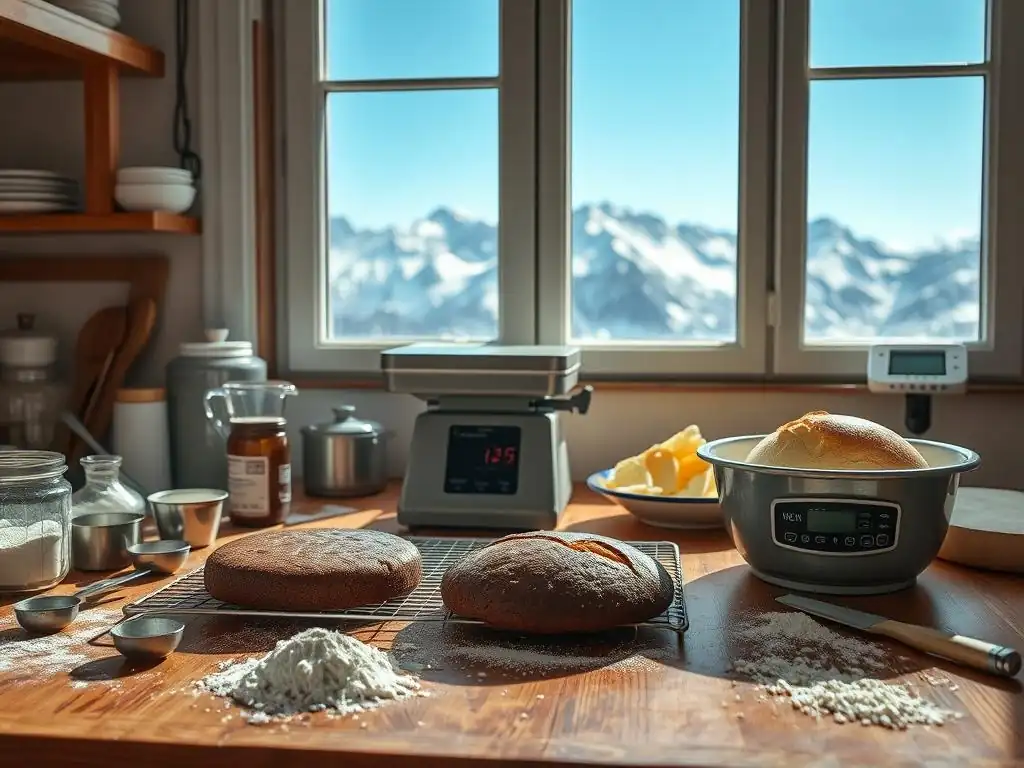
Reducing sugar is one of the key high altitude baking tips often recommended. Sugar contributes to tenderness and moisture retention in baked goods, but at high altitudes, too much sugar can weaken the structure, especially when combined with rapid leavening. A cake with too much sugar at altitude might collapse or have a gummy texture. As a general guideline, BakeWithEase recommends reducing the sugar called for in sea-level recipes by 1 to 3 tablespoons per cup. For instance, if a recipe calls for 1 cup of sugar, start by trying 3/4 cup plus 1 tablespoon.
The exact amount of sugar reduction will depend on your specific altitude and the recipe. At moderate altitudes (around 3,000-5,000 feet), a reduction of 1-2 tablespoons per cup might suffice. At higher altitudes (above 7,000 feet), you might need to reduce it by the full 3 tablespoons or even slightly more for very sweet items. It's a balance; too little sugar affects flavor, browning, and moisture. Start with a small reduction and adjust in subsequent bakes based on your results. This adjustment, combined with others, helps create a more stable structure capable of supporting the faster rise at elevation.
Increasing Liquid in High Altitude Recipes: A Simple Guide
Increasing the liquid content is another fundamental adjustment among high altitude baking tips, crucial for combating the faster evaporation rate. As mentioned earlier, water boils at a lower temperature at high altitudes, causing moisture to escape from your baked goods more quickly during baking. This leads to dry, dense, or crumbly results. Adding extra liquid helps ensure there is enough moisture present throughout the baking process to produce a tender, moist crumb.
A simple guide for increasing liquid is to add 2 to 4 tablespoons of extra liquid (milk, water, buttermilk, etc.) per cup of liquid called for in the original sea-level recipe. If a cake recipe calls for 1 cup of milk, you might add an extra 1/4 cup (4 tablespoons) at higher altitudes. For recipes measured by weight, this translates to roughly adding 30-60 grams of liquid per 240 grams called for.
The amount needed will vary depending on the altitude and the recipe's original moisture level. Start with the lower end of the range and increase if your baked goods are still dry. This adjustment is vital for maintaining moisture and achieving a pleasant texture.
Strengthening Flour for High Altitude Baking: Achieving Perfect Structure
At high altitudes, the reduced atmospheric pressure puts more stress on the structure of your baked goods as gases expand more rapidly. The protein network (gluten) in flour is responsible for providing this structure. Sometimes, simply using the amount of flour specified in a sea-level recipe isn't enough to build a framework strong enough to support the faster rise at elevation. This can lead to cakes collapsing, breads falling, or cookies spreading excessively.
To achieve perfect structure, one effective high altitude baking tip is to subtly increase the flour content or enhance its strength. A common adjustment is to add 1 to 2 tablespoons of extra flour per cup called for in the recipe. For instance, if a recipe uses 2 cups of flour, try using 2 cups plus 2-4 tablespoons.
Alternatively, for recipes where a stronger gluten network is desired (like yeast breads), adding 1-2 teaspoons of vital wheat gluten per cup of flour can significantly improve structure. These adjustments help create a more robust framework capable of withstanding the unique pressures of high altitude baking.
Adjusting Oven Temperature for High Altitude Baking
Adjusting the oven temperature is a critical, though sometimes debated, high altitude baking tip. The rationale is that a slightly higher temperature helps set the structure of the baked good more quickly before the rapidly expanding gases cause collapse. It can also help with browning, which might be slower due to the lower internal temperature achieved (related to the lower boiling point of water).
Many high altitude baking guides recommend increasing the oven temperature by 15-25°F (about 8-14°C) compared to the temperature specified in the sea-level recipe. If a cake recipe calls for 350°F (175°C), you might bake it at 365°F or 375°F (185-190°C). However, increasing the temperature too much can lead to a tough crust or burned edges before the inside is cooked.
It's essential to monitor your bake closely. Some bakers find that not adjusting the temperature but simply reducing the baking time works better, especially for delicate items. Experimentation with your specific oven and altitude is key to finding the optimal temperature adjustment.
Shortening Baking Time at High Altitudes: Preventing Over-Baking
Because liquids evaporate faster and baked goods tend to rise more quickly at high altitudes, they often require a shorter baking time compared to sea-level recipes. Over-baking at altitude is very easy to do and will exacerbate issues like dryness. Even with adjusted ingredients and temperature, the overall time needed to cook through might be less.
A practical high altitude baking tip is to start checking for doneness 5 to 10 minutes earlier than the time specified in the original recipe. If a cake typically bakes for 30-35 minutes at sea level, start checking it with a toothpick at 20-25 minutes. For cookies, check for set edges a few minutes before the minimum time.
Using visual cues (like golden brown edges, a toothpick coming out clean) and internal temperature (for breads and some cakes) is more reliable than relying solely on the clock. Reducing baking time helps prevent dryness and ensures your baked goods are cooked just right.
Specific High Altitude Baking Adjustments for Different Recipes
High Altitude Cake Baking: Achieving Light and Fluffy Results
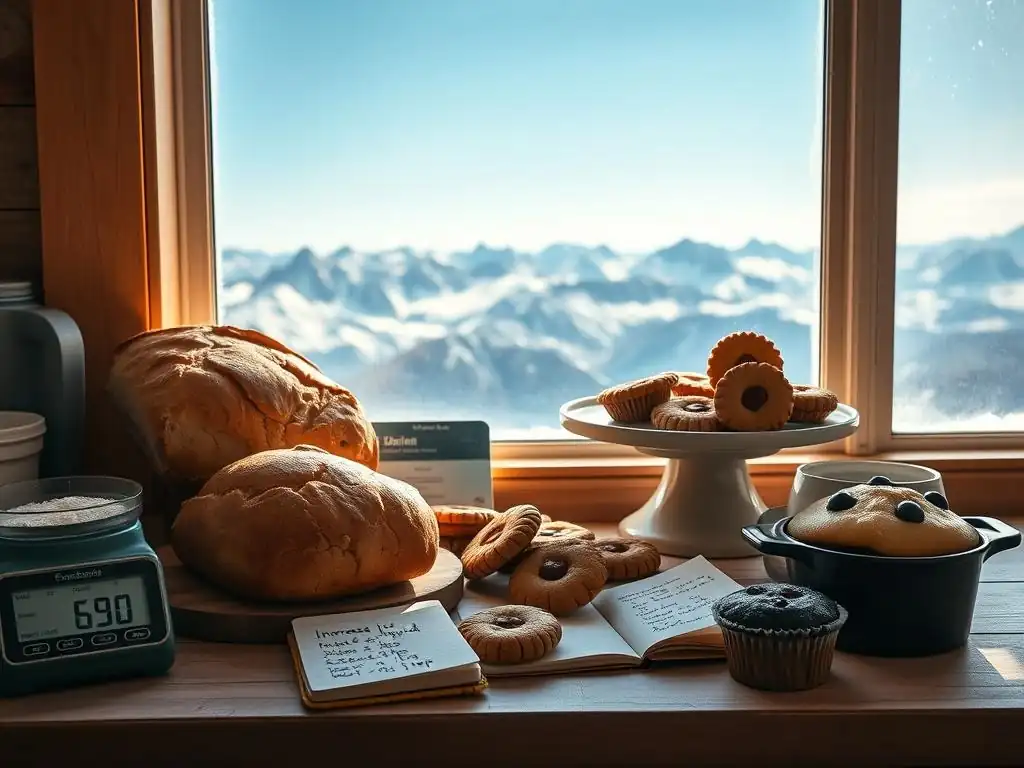
Achieving light and fluffy cakes at high altitudes requires a combination of adjustments to manage leavening and moisture while strengthening structure. The rapid rise caused by lower pressure can lead to cakes that dome excessively and then fall, resulting in a dense or collapsed center. Faster moisture evaporation contributes to a dry crumb.
Key high altitude baking tips for cakes involve reducing leavening agents (baking powder/soda) by 10-25%, reducing sugar by 1-3 tablespoons per cup, and increasing liquid by 2-4 tablespoons per cup. Adding an extra egg or egg yolk can also strengthen the structure and add richness. Some bakers also add 1-2 tablespoons of extra flour per cup.
Baking at a slightly increased temperature (15-25°F) for a shorter duration can help set the structure faster. For instance, a standard yellow cake recipe at 7,000 feet might require a 15% reduction in baking powder, 2 tablespoons less sugar per cup, 3 tablespoons more milk per cup, and baking at 365°F instead of 350°F, checking for doneness several minutes early.
High Altitude Bread Baking: Perfecting Your Dough
Perfecting bread dough at high altitudes focuses on controlling the accelerated yeast activity and strengthening the gluten structure. Yeast ferments more quickly in lower pressure, leading to potential overproofing and collapse. Dryness is also a concern, affecting crust development and crumb texture.
Essential high altitude baking tips for bread include reducing yeast by 10-25% or using cooler liquids and proofing temperatures to slow fermentation. Proofing times will be shorter, so rely on visual cues (doubled in size, springs back slowly when poked) rather than the clock. Increase liquid slightly (1-2 tablespoons per cup) to combat dryness.
Adding vital wheat gluten (1-2 teaspoons per cup of flour) or slightly increasing flour amount can strengthen the dough. For example, a sourdough bread recipe at 5,000 feet might need a shorter bulk fermentation time (perhaps 1-2 hours less) and a slightly wetter dough achieved by adding a few extra tablespoons of water per loaf.
Preventing excessive spreading is the primary goal when baking cookies at high altitudes. This is linked to faster leavening, faster fat melting, and slower structural setting due to the lower boiling point.
Effective high altitude baking tips for cookies involve reducing chemical leavening (baking soda/powder) by 10-25%, slightly increasing flour by 1-2 tablespoons per cup to strengthen the dough, and potentially reducing sugar by 1-2 tablespoons per cup. Using solid fats (like butter or shortening) chilled thoroughly helps maintain shape.
Baking at a slightly higher temperature (15-25°F) for a shorter time can help set the edges faster. For instance, a classic sugar cookie recipe at 6,000 feet might require reducing baking powder by 1/4 teaspoon per teaspoon called for, adding 2 tablespoons more flour per cup, and baking at 375°F instead of 350°F for 8-10 minutes instead of 10-12.
High Altitude Muffin Baking: Avoiding Dryness
Similar to cakes, muffins baked at high altitudes often suffer from dryness due to rapid moisture evaporation. The quick bread nature of muffins means they rely heavily on chemical leaveners, which also act faster at altitude.
High altitude baking tips for muffins focus on retaining moisture and controlling leavening. Increase liquid by 2-4 tablespoons per cup of liquid called for. Reduce baking powder/soda by 10-25%. Slightly decrease sugar (1-2 tablespoons per cup) to help with structure.
Adding extra fruit or yogurt can also boost moisture. Baking at a slightly higher temperature (15-25°F) can help set the structure quickly, but be careful not to overbake. A blueberry muffin recipe at 7,500 feet might need an extra 1/4 cup of milk per batch, a slight reduction in baking powder, and a baking time that's 5 minutes shorter than at sea level.
High Altitude Baking Ingredients: What to Watch Out For
The Impact of Altitude on Baking Powder and Baking Soda
Baking powder and baking soda are chemical leaveners that produce carbon dioxide gas when they react with liquid and/or heat. At high altitudes, the lower atmospheric pressure offers less resistance to this gas expansion, causing them to act more quickly and forcefully than at sea level. This can lead to an initial rapid rise followed by collapse if the structure isn't strong enough.
Consequently, one of the most common and important high altitude baking tips is to reduce the amount of baking powder and baking soda called for in a recipe. A typical reduction ranges from 10% to 25% of the original amount. For example, if a recipe calls for 1 teaspoon of baking powder, you might use 3/4 teaspoon at moderate altitudes or even 1/2 teaspoon at very high altitudes. Too much leavening can also impart a metallic or bitter aftertaste. Finding the right balance is crucial for preventing over-expansion and collapse.
Flour Considerations for High Altitude Baking
Flour provides the structural framework for baked goods through its protein content (gluten). At high altitudes, this structure needs to be stronger to support the faster rise and counter the tendency to collapse. While simply using the same amount of flour as a sea-level recipe might not be sufficient, drastically increasing it can lead to a dry or tough product.
As part of your high altitude baking tips, consider slightly increasing the flour amount by 1-2 tablespoons per cup called for in the recipe, especially for cakes and cookies. For yeast breads, where gluten development is key, adding vital wheat gluten (1-2 teaspoons per cup of flour) can significantly enhance the dough's strength and elasticity, helping it withstand the rapid proofing and support the final loaf structure. Using bread flour instead of all-purpose flour in yeast recipes can also provide a stronger base.
Liquid Choices for Optimal High Altitude Results
The choice and amount of liquid are vital in high altitude baking due to the increased rate of evaporation. Liquids hydrate the dry ingredients, activate leaveners, and contribute to the overall moisture and texture of the finished product. Using the same amount of liquid as a sea-level recipe will almost certainly result in a dry bake.
As highlighted in essential high altitude baking tips, increasing the liquid content is necessary. You'll typically need to add 2-4 tablespoons of extra liquid per cup specified in the original recipe. The type of liquid matters less than the overall volume, though using richer liquids like milk or buttermilk can add tenderness compared to water. Ensure the added liquid is the same type as the primary liquid in the recipe for consistency in flavor and chemistry. Proper hydration is key to achieving a moist and tender crumb at elevation.
High Altitude Baking Checklist: Ensuring Success
Step-by-Step Guide to High Altitude Baking Adjustments
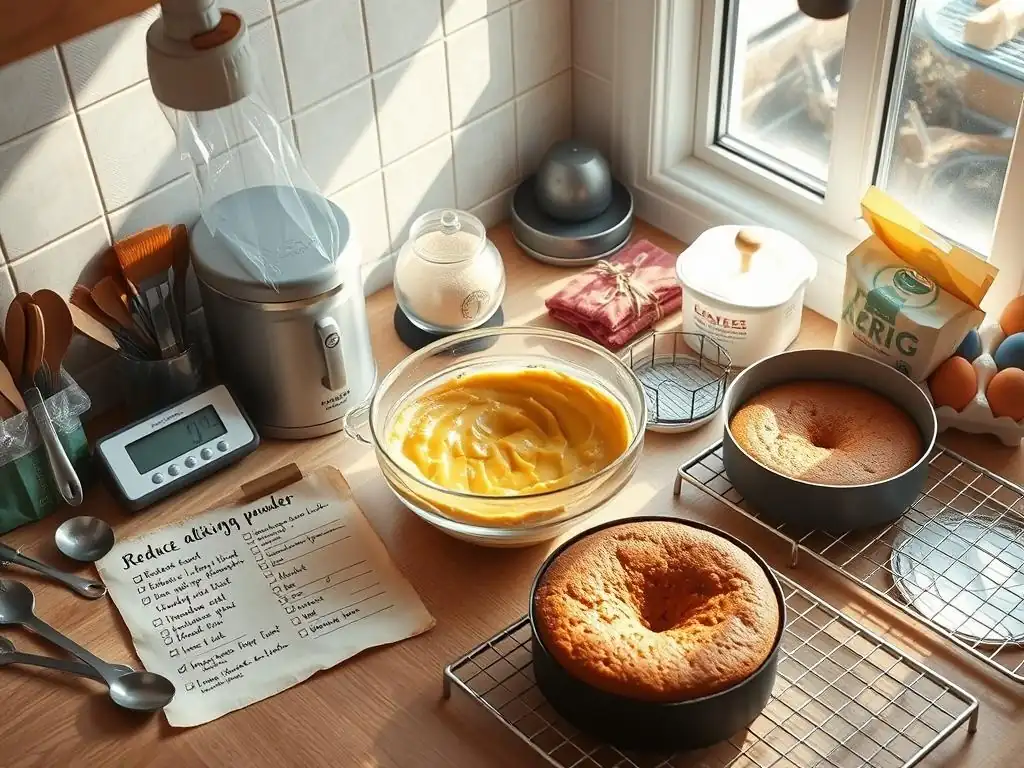
Approaching high altitude baking can feel daunting, but a systematic approach helps. Here is a step-by-step guide incorporating key high altitude baking tips:
- [ ] Evaluate the original recipe: Note the amounts of flour, sugar, liquid, and leavening.
- [ ] Determine your altitude: Know how high you are above sea level (e.g., 3,000 ft, 5,000 ft, 7,000 ft). This influences the degree of adjustment needed.
- [ ] Reduce leavening: Decrease baking powder/soda by 10-25%.
- [ ] Reduce sugar: Decrease sugar by 1-3 tablespoons per cup.
- [ ] Increase liquid: Increase liquid by 2-4 tablespoons per cup.
- [ ] Increase flour/strengthen structure: Optionally, add 1-2 tablespoons flour per cup, or vital wheat gluten for bread.
- [ ] Adjust oven temperature: Optionally, increase temperature by 15-25°F.
- [ ] Shorten baking time: Start checking for doneness 5-10 minutes early.
- [ ] Monitor results: Note how your adjustments affected the bake for future refinement.
This checklist provides a starting point for applying high altitude baking tips to your favorite recipes.
Troubleshooting Your High Altitude Baking: Common Mistakes and How to Fix Them
Even with adjustments, you might encounter issues. Troubleshooting is part of mastering high altitude baking.
- Problem: Cake collapsed in the center.
- Likely Cause: Too much leavening, too much sugar, or not enough structural support.
- Fix: Reduce leavening and sugar further. Increase flour slightly or add an extra egg. Ensure you aren't overmixing, which can weaken gluten.
- Problem: Baked goods are dry and crumbly.
- Likely Cause: Not enough liquid, over-baking, or too much flour.
- Fix: Increase liquid further. Reduce baking time and/or oven temperature slightly. Double-check flour measurement.
- Problem: Cookies spread excessively.
- Likely Cause: Too much leavening, too much sugar, or not enough flour/fat structure.
- Fix: Reduce leavening and sugar further. Increase flour slightly. Ensure butter/fat is cold and consider chilling dough longer.
- Problem: Bread overproofed and fell.
- Likely Cause: Yeast activity too fast, proofing too long.
- Fix: Reduce yeast amount. Use cooler water. Shorten proofing time and rely on visual cues. Consider adding vital wheat gluten.
Troubleshooting based on these common issues, combined with applying general high altitude baking tips, will help you refine your approach.
Advanced High Altitude Baking Techniques
Experimenting with Ingredients: Fine-Tuning Your High Altitude Recipes
Once you've mastered the basic high altitude baking tips like adjusting leavening, sugar, liquid, and flour, you can move on to fine-tuning by experimenting further with ingredients. Altitude affects different ingredients in subtle ways, and the optimal balance can vary greatly between recipes and even between kitchens at the same elevation. For example, some bakers find that using a higher protein flour provides sufficient structure without needing to add vital wheat gluten in certain recipes. Others might experiment with different types of fats (like a blend of butter and shortening) to control spread in cookies.
Consider how ingredients interact. Reducing sugar might affect browning, so you might slightly increase the baking temperature or add a touch of molasses or brown sugar for color. If increasing liquid makes a batter too thin, you might need to add a bit more flour to compensate, or vice versa.
Keeping detailed notes of your adjustments and results is crucial for this phase. For instance, trying a cake recipe with a 15% leavening reduction and 3 tbsp liquid increase, then the next time trying a 20% leavening reduction and 4 tbsp liquid increase, helps you pinpoint the ideal balance for that specific recipe at your altitude.
Adapting Sea-Level Recipes for High Altitude Baking: The BakeWithEase Method
Adapting sea-level recipes for high altitude baking is a skill that improves with practice, and the BakeWithEase method emphasizes understanding the why behind the adjustments. Instead of blindly following a chart, learn how lower pressure affects expansion and evaporation. This empowers you to make informed decisions. Our method involves starting with the core high altitude baking tips: reduce leavening and sugar, increase liquid and potentially flour.
Begin by making moderate adjustments based on your altitude (e.g., using the lower end of the suggested ranges for moderate altitudes, the higher end for very high altitudes). Bake the recipe and carefully evaluate the results. Is it dry? Increase liquid next time. Did it collapse? Decrease leavening and/or sugar further, or increase flour/add vital wheat gluten.
Did cookies spread? Reduce leavening/sugar, increase flour, chill dough. It's an iterative process. For a complex recipe like a layered cake, you might focus on getting the cake layers right first before tackling the frosting or filling. The BakeWithEase method encourages patience, observation, and systematic testing to successfully translate any sea-level recipe to your high-altitude kitchen.
High Altitude Baking: Mastering the Art with BakeWithEase
Frequently Asked Questions
What exactly is high altitude baking and why is it important?
High altitude baking refers to baking at elevations above 3,000 feet. At these altitudes, lower air pressure affects leavening and moisture evaporation, requiring adjustments to recipes.
What are the common problems bakers face at high altitude?
Common problems include cakes that collapse in the center, breads that rise too quickly and then fall, and cookies that spread too thin. This is often due to rapid evaporation of moisture and weaker gluten structure.
What are some general adjustments I can make to my recipes for high altitude?
Generally, you'll need to reduce the amount of leavening (baking powder/soda), increase the liquid, and possibly increase the oven temperature slightly. These adjustments help balance the rise and prevent collapse.
How does high altitude affect the gluten development in bread?
At higher altitudes, gluten develops faster due to faster evaporation of moisture. This can lead to a tougher bread if not addressed. You might need to reduce kneading time or add more liquid to counteract this.
Where can I find specific high altitude adjustments for different types of baked goods?
BakeWithEase.com offers detailed guides and adjusted recipes for various baked goods, including pastries, breads, cakes, and cookies. Search for the specific item you're baking plus "high altitude" on our site.
Final Reflection: Scaling the Heights of Baking Success
The challenges of high-altitude baking are real, impacting not just the texture and rise of our cakes, but also our confidence in the kitchen. Many dismiss high-altitude baking as an insurmountable hurdle, but understanding the science behind the changes in air pressure and humidity unlocks a world of delicious possibilities. This isn't just about perfectly risen cakes; it's about mastering a unique set of baking conditions and embracing the creativity required to adapt.
High-altitude baking has taught me the importance of precision and patience, qualities that extend far beyond the kitchen. It's a constant reminder that seemingly small adjustments can yield significant results. The struggle to achieve that perfect crumb, that ideal texture, mirrors the challenges we face in other aspects of life. As Julia Child wisely said, Find something you're passionate about and keep tremendously interested in it.
This passion for baking, even with its high-altitude hurdles, has fueled my own perseverance and problem-solving skills.
Now, it's your turn. Don't let the thin air deflate your baking dreams! Experiment with the adjustments outlined in this article, embrace the learning process, and discover the joy of creating delicious treats, regardless of your elevation. The next time you face a baking challenge, remember the lessons learned here – precision, adaptation, and a dash of perseverance can take you to new heights, both literally and figuratively.
Unlock Your High-Altitude Baking Secrets!
Thanks for joining us on this baking adventure! We hope you now have a clearer understanding of the challenges—and triumphs—of baking at high altitude. Ready to take your skills to the next level?
- Master your high-altitude baking: Start experimenting with the adjusted recipes we discussed and discover the joy of perfectly risen cakes and fluffy cookies, even at higher elevations! Try one new recipe this week!
- Share your high-altitude baking experiences: Tell us about your successes (and even your mishaps!) in the comments below. Let's build a supportive community of high-altitude bakers!
- Explore our other resources: Dive deeper into the science of high-altitude baking with our comprehensive guide (coming soon! ).
What’s your biggest high-altitude baking challenge, and what are you most excited to try next?