
InstantRead Thermometer Hacks: Nail the Perfect Candy Stage

Welcome to BakeWithEase, where simplifying the art of baking is our passion! Ever wondered how to consistently achieve perfect candy thermometer readings for flawless caramels and fudges? Unlock the secrets to nailing the perfect candy stage with our expert tips and hacks. Dive in and discover how to elevate your confections from good to gourmet!
- Mastering Candy Making with Your Thermometer: Achieve Perfect Results
- Understanding Temperature's Role in Candy Making Success
- Choosing the Right Thermometer for Candy Making
- Mastering Candy Thermometer Techniques
- Troubleshooting Candy Making Problems with Your Thermometer
- Achieving Specific Candy Stages with Your Thermometer
- Cleaning and Maintaining Your Candy Thermometer
- Advanced Candy Making Techniques
- Conclusion: The Key to Perfect Candy is Precise Temperature Control
-
Frequently Asked Questions
- What is the most important reason to use a candy thermometer when making candy?
- What are some common mistakes people make when using a candy thermometer?
- How do I calibrate my candy thermometer for accurate readings?
- What are some signs that my candy is at the correct stage even without a thermometer?
- Where can I find the best candy recipes for practicing my candy thermometer skills?
- Final Reflection: Mastering the Sweet Science of Candy Making
- Unlock Your Candy-Making Mastery!
Mastering Candy Making with Your Thermometer: Achieve Perfect Results
Creating delicious homemade candy might seem daunting, but with the right tools and techniques, it's incredibly rewarding. One of the most critical tools in any candy maker's arsenal is a reliable thermometer, especially an instant-read one. Getting the perfect candy thermometer readings is the secret handshake to achieving those delightful textures, from chewy caramels to brittle lollipops. This guide will walk you through everything you need to know to use your thermometer like a pro and nail every candy stage.
Understanding Temperature's Role in Candy Making Success
Candy making is essentially a science experiment involving sugar and heat. As sugar heats up, water evaporates, and the sugar syrup becomes more concentrated. The temperature directly corresponds to the amount of water remaining and the structure the sugar molecules form upon cooling. Even a few degrees difference can mean the difference between a soft, pliable caramel and a hard, glassy toffee. Achieving perfect candy thermometer readings is paramount for consistent results.
The Importance of Accurate Temperature Readings
Precision is non-negotiable in candy making. Unlike baking bread or cakes where there's often a bit of wiggle room, candy relies on hitting very specific temperature points. For example, reaching 240°F (115°C) is typically the soft ball stage, ideal for fudge. If your thermometer reads even slightly off, you might undercook the syrup, resulting in a runny fudge, or overcook it, leading to a grainy texture. Accurate temperature monitoring ensures the sugar concentration is exactly right for the desired outcome.
Moreover, accurate readings are crucial for safety. Sugar syrups get extremely hot, reaching temperatures well over the boiling point of water. Knowing the exact temperature helps you anticipate the syrup's behavior and handle it safely. Relying on visual cues alone can be misleading because color changes can happen quickly, especially at high temperatures. A precise reading provides an objective measurement, guaranteeing you've reached the target temperature for the desired texture and stability.
Sugar Stages and Their Corresponding Temperatures
As sugar syrup heats, it passes through distinct stages, each defined by a specific temperature range and characterized by how a small amount cools in cold water. Understanding these stages is fundamental to using your thermometer effectively for perfect candy thermometer readings. Here are the primary stages:
| Stage | Temperature Range | Description | Example Candies |
|---|---|---|---|
| Thread | 230-233°F (110-111°C) | Forms fine threads in cold water | Syrups, Fondant (start) |
| Soft Ball | 234-240°F (112-115°C) | Forms a soft, pliable ball | Fudge, Fondant, Penuche |
| Firm Ball | 244-248°F (118-120°C) | Forms a firm but still pliable ball | Caramels, Nougat |
| Hard Ball | 250-266°F (121-130°C) | Forms a hard, but still malleable ball | Divinity, Marshmallows |
| Soft Crack | 270-290°F (132-143°C) | Separates into hard but not brittle threads | Taffy, Butterscotch |
| Hard Crack | 300-310°F (149-154°C) | Separates into hard, brittle threads | Brittle, Lollipops |
| Caramel | 320-350°F (160-177°C) | Sugar turns golden to dark brown and liquid | Caramel Sauce, Pralines |
Hitting these specific temperature ranges with reliable perfect candy thermometer readings ensures you achieve the intended texture and consistency for your recipe. For instance, if you're aiming for chewy caramels (Firm Ball, 244-248°F), underheating to the Soft Ball stage will result in a much softer, possibly runny, candy.
Choosing the Right Thermometer for Candy Making
Not all thermometers are created equal, especially when dealing with the high temperatures required for candy making. Selecting the appropriate tool is the first step towards consistently getting perfect candy thermometer readings. A good candy thermometer is designed to withstand high heat and provide accurate measurements in liquid sugar syrups.
Essential Features for a Candy Thermometer
When choosing a thermometer for candy making, look for specific features that enhance accuracy and usability. Firstly, it must have a temperature range that extends well beyond the Hard Crack stage, ideally up to 350°F (177°C) or higher, to handle everything from fudge to brittle. Secondly, a clip or holder is crucial for attaching the thermometer securely to the side of your pot, preventing the probe from touching the bottom, which can give a false, higher reading.
Durability and ease of reading are also key. The probe should be long enough to reach deep into the syrup without your hand being too close to the hot liquid. Clear markings or a large digital display make it easy to monitor the temperature as it rises. Some thermometers also feature adjustable markers that you can set to your target temperature, providing a quick visual cue as the syrup approaches the desired stage for perfect candy thermometer readings.
Digital vs. Analog Thermometers
The choice between digital and analog candy thermometers often comes down to speed and preference. Analog thermometers, typically glass tubes with a bulb, are traditional and don't require batteries. They provide a continuous reading as the temperature slowly rises. However, they can be fragile and sometimes slower to register changes compared to digital options. Getting a precise reading might require careful observation of the liquid level in the tube.
Digital instant-read thermometers, on the other hand, offer rapid temperature updates, often within seconds. They usually have a clear digital display, making it easy to see the exact temperature. Many digital models are also more durable and easier to clean. While they require batteries, their speed and precision can be a significant advantage for achieving perfect candy thermometer readings quickly and confidently, especially as the syrup approaches critical temperature stages where things happen fast.
Mastering Candy Thermometer Techniques
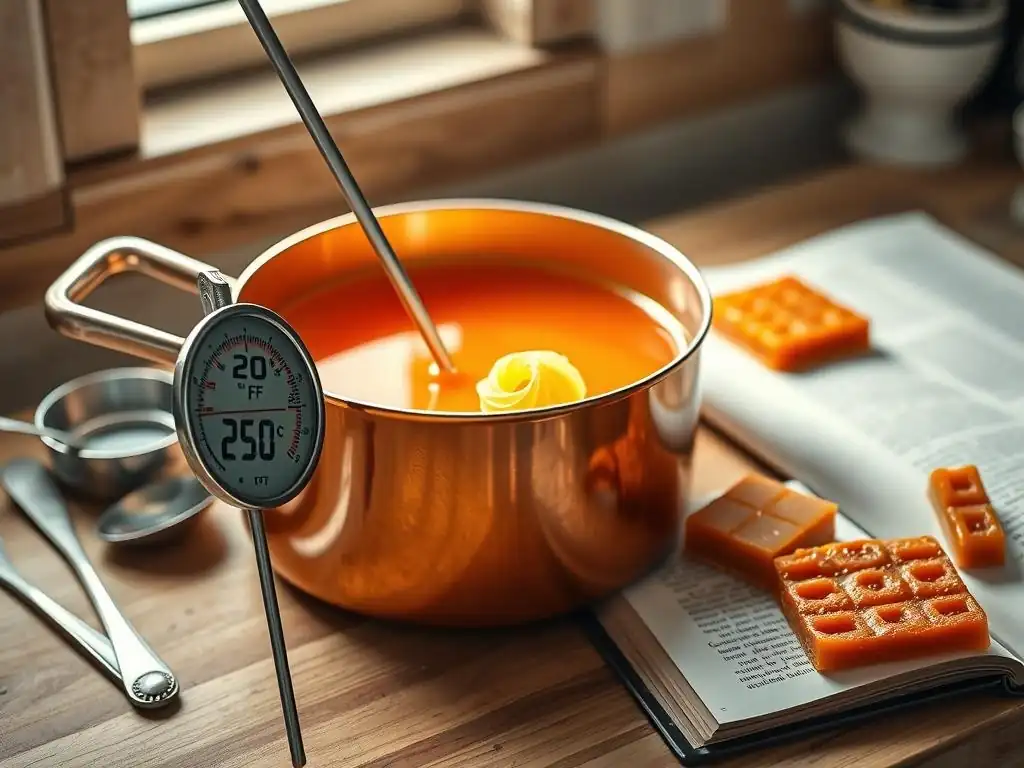
Having the right thermometer is only half the battle; using it correctly is equally important for achieving perfect candy thermometer readings and successful candy. Proper technique ensures your readings are accurate and helps you monitor the temperature effectively throughout the cooking process.
Optimal Thermometer Placement for Accurate Readings
Correct placement is critical to avoid misleading temperature data. Always attach your candy thermometer to the side of the pot using its clip. Ensure the tip of the thermometer is submerged in the sugar syrup but does not touch the bottom of the pot. The bottom of the pot is directly heated and will be hotter than the syrup itself, leading to an artificially high reading.
Aim to have the probe submerged deep enough to be fully surrounded by the syrup, typically at least 2-3 inches, depending on the thermometer's design and the amount of syrup. This ensures it's measuring the temperature of the bulk of the liquid, providing a true indication of the syrup's stage. Adjust the clip as the syrup level changes due to evaporation during cooking to maintain proper submersion without touching the bottom.
Avoiding Common Thermometer Reading Errors
Several common mistakes can lead to inaccurate perfect candy thermometer readings. One major error is not having enough syrup in the pot for the thermometer to register properly. If the syrup level is too low, the probe might not be adequately submerged, or it might touch the bottom easily. Always use a pot size appropriate for the amount of candy you're making to ensure sufficient depth.
Another error is stirring the syrup while taking a reading, especially near the final stages. While initial stirring is necessary to dissolve sugar, constant stirring as the temperature rises can introduce air bubbles and potentially cause crystallization issues. Take readings when the syrup is relatively still. Also, avoid letting the thermometer probe touch the sides of the pot, as the edges can also be hotter than the center. Ensure the thermometer is suspended freely within the syrup.
Calibrating Your Thermometer for Accuracy
Even the best thermometers can become inaccurate over time or might need calibration depending on your location. Calibrating your thermometer is a simple process that ensures its readings are correct, guaranteeing perfect candy thermometer readings for your recipes.
The Boiling Water Test for Calibration
The most common method for calibrating a candy thermometer is the boiling water test. Water boils at a specific temperature at sea level: 212°F or 100°C.
- Bring a pot of water to a rolling boil.
- Carefully place the thermometer probe into the boiling water, ensuring it doesn't touch the bottom or sides.
- Allow the temperature to stabilize for a minute or two.
- Note the temperature reading.
If your thermometer reads exactly 212°F (100°C), it's calibrated correctly for sea level. If it reads slightly higher or lower, note the difference. For example, if it reads 210°F, it's reading 2°F low. You'll need to add this difference to all the target temperatures in your candy recipes. Conversely, if it reads 214°F, it's reading 2°F high, and you'll subtract 2°F from your target temperatures. Perform this test periodically, especially if you haven't used the thermometer in a while or suspect inaccurate readings.
Adjusting for Altitude When Calibrating
Altitude significantly affects the boiling point of water. For every 500 feet above sea level, the boiling point of water decreases by approximately 1°F (about 0.5°C). This means your perfect candy thermometer readings need to be adjusted based on your elevation.
For instance, at 5,000 feet above sea level, water boils at roughly 202°F (about 94°C) instead of 212°F. Your thermometer, even if perfectly calibrated at sea level, will read 202°F in boiling water at this altitude. This lower boiling point also means all the candy stages will be reached at lower temperatures. The Soft Ball stage (normally 234-240°F) will occur about 10°F lower at this altitude. You can find charts online that show boiling point adjustments for various altitudes. Always calibrate your thermometer at your location's boiling point and adjust your recipe's target temperatures accordingly to ensure perfect candy thermometer readings for your specific environment.
Troubleshooting Candy Making Problems with Your Thermometer
Even with a calibrated thermometer and good technique, problems can sometimes arise. Understanding how your thermometer helps diagnose these issues is key to getting back on track and achieving perfect candy thermometer readings for your desired outcome.
Temperature and Sugar Crystallization Issues
Crystallization is a common frustration in candy making, resulting in a grainy texture instead of a smooth one. While factors like stirring at the wrong time or impurities can cause crystallization, temperature plays a role too. If the syrup cools too much during the cooking process, undissolved sugar crystals can act as seeds for crystallization.
Your thermometer helps prevent this by allowing you to maintain a steady, increasing temperature. If you notice the temperature stalling or dropping unexpectedly (perhaps due to adding a cooler ingredient), you can gently increase the heat to keep the syrup moving towards the target temperature. Monitoring the temperature closely with perfect candy thermometer readings helps you avoid those temperature dips that can trigger unwanted sugar crystal formation.
Identifying Burnt Sugar Through Temperature Monitoring
Burnt sugar has a distinct, unpleasant bitter taste and smell. While color is a visual indicator (dark brown or black), temperature is the definitive sign that sugar has burned. The caramel stage typically goes up to 350°F (177°C). Beyond this, especially towards 360°F (182°C) and higher, sugar begins to carbonize and burn rapidly.
Your thermometer provides a crucial warning system. If your thermometer reads above the typical caramel range and continues to climb rapidly, you are likely burning the sugar. This is especially important when making dark caramels or brittle, which require high temperatures. Precise perfect candy thermometer readings allow you to pull the syrup off the heat just as it hits the desired caramel color and temperature, preventing it from tipping over into burnt territory.
Temperature Issues Preventing Candy from Reaching the Correct Stage
Sometimes, your candy syrup just won't reach the target temperature for the desired stage, or it takes an excessively long time. This is often a temperature-related issue, and your thermometer helps confirm it. Possible causes include the heat source being too low, using a pot that's too large (spreading the heat too thin), or adding too much liquid that needs to evaporate.
If your perfect candy thermometer readings show the temperature rising very slowly or stalling significantly below your target (e.g., stuck at 200°F for a long time), it indicates that water is still evaporating, but the heat input isn't sufficient to raise the sugar concentration quickly. Check your stove's heat setting and ensure it's appropriate. Using the thermometer to track the temperature rise rate can help you identify if your heat source is adequate or if you need to adjust it.
Achieving Specific Candy Stages with Your Thermometer
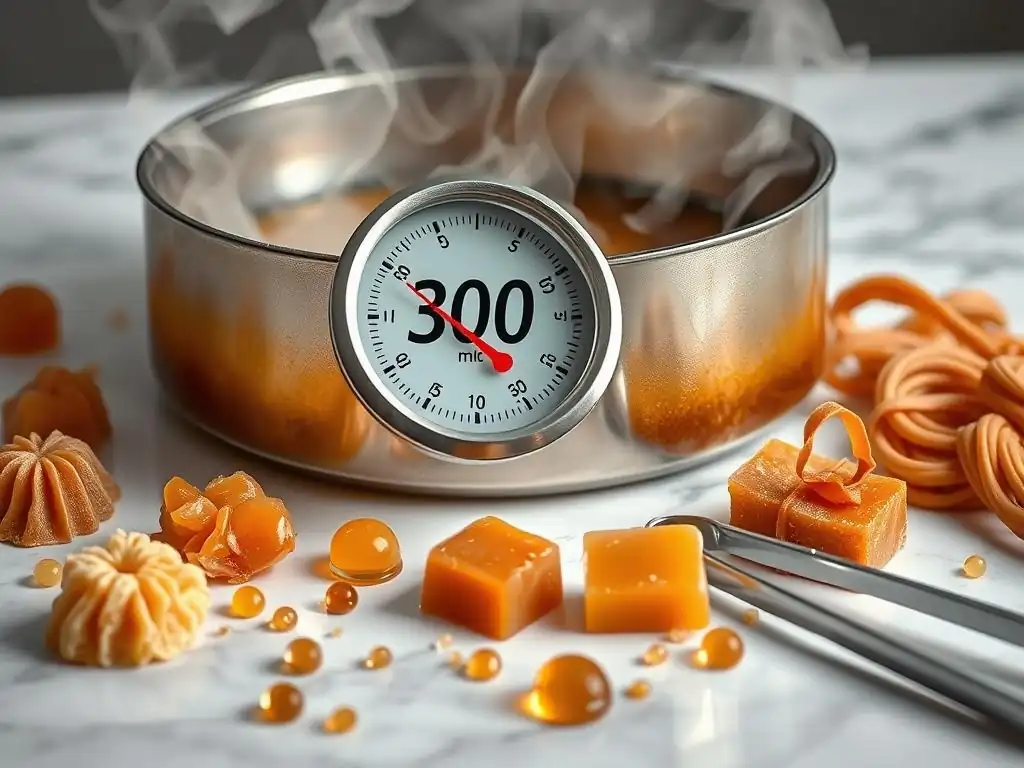
Each candy stage is defined by a specific temperature range, and hitting these ranges is key to replicating classic candy textures. Your thermometer is your guide to navigating these stages and achieving perfect candy thermometer readings for your desired outcome.
Soft Ball Stage: Fudge and Fondant
The Soft Ball stage occurs between 234°F and 240°F (112-115°C). At this temperature, a small amount of syrup dropped into cold water forms a soft, pliable ball that can be easily flattened between your fingers. This stage has a relatively high moisture content compared to harder stages.
This temperature range is ideal for candies like fudge and fondant. The higher moisture keeps the texture soft and creamy after cooling. When making fudge, for example, boiling the sugar syrup to precisely 237°F (114°C) and then cooling and beating it correctly will result in that classic smooth, soft texture. Missing this target by even a few degrees can make the fudge too hard or too soft. Your thermometer ensures you hit this critical range for perfect candy thermometer readings specific to soft candies.
Firm Ball Stage: Caramels and Nougat
Moving up the temperature scale, the Firm Ball stage is reached between 244°F and 248°F (118-120°C). At this stage, a drop of syrup in cold water forms a ball that is firm but still somewhat pliable, offering more resistance than a soft ball.
This stage is perfect for creating chewy caramels and nougat. The lower moisture content compared to the soft ball stage results in a firmer chew once cooled. For example, many caramel recipes call for cooking the syrup to 245°F (118°C). Achieving this precise temperature with perfect candy thermometer readings is essential for that signature chewy texture. If you go much higher, you risk entering the Hard Ball stage, resulting in a tougher, less desirable caramel texture.
Hard Crack Stage: Brittle and Lollipops
The Hard Crack stage is one of the highest temperature stages, ranging from 300°F to 310°F (149-154°C). At this point, nearly all the water has evaporated, and a drop of syrup in cold water immediately hardens into brittle, easily breakable threads or shards.
This stage is used for making hard candies like brittle, lollipops, and toffee. The extremely low moisture content creates a hard, glassy texture upon cooling. When making peanut brittle, you might cook the sugar syrup to 305°F (151°C) before adding nuts and pouring. Hitting this temperature exactly with perfect candy thermometer readings is paramount; even a few degrees lower will result in a chewy, sticky candy rather than a crisp, brittle one. Going too high risks burning the sugar.
Cleaning and Maintaining Your Candy Thermometer
Proper care of your candy thermometer ensures its longevity and continued accuracy. Cleaning it promptly after use is crucial, as hardened sugar can be difficult to remove and might damage the probe or sensor, affecting future perfect candy thermometer readings.
Proper Cleaning Procedures
Cleaning a candy thermometer usually involves soaking it in hot water to dissolve the hardened sugar. For analog thermometers, simply submerge the lower part of the probe in a glass or pot of hot water immediately after use. Let it soak for 10-15 minutes, or until the sugar dissolves. Then, wipe it clean with a soft cloth and dry thoroughly. Avoid immersing the entire analog thermometer (especially the top where the scale is) unless it's specifically designed for full immersion.
For digital thermometers, check the manufacturer's instructions. Many have probes that can be wiped clean or rinsed, but the digital display unit often cannot be submerged. Wipe the probe carefully with a damp cloth after sugar has dissolved from soaking, and dry it completely. Never use abrasive cleaners or scrub pads, as these can scratch the probe or the display. Ensure all sugar residue is removed, as even small amounts can interfere with future perfect candy thermometer readings.
Storage Recommendations
Storing your candy thermometer correctly protects it from damage and keeps it ready for your next candy-making adventure. Analog glass thermometers are fragile and should be stored carefully to prevent breakage. Many come with a protective sleeve or case; use it. Store it vertically or horizontally in a drawer where it won't be jostled or have heavy items placed on it.
Digital thermometers are generally more robust but still require care. Ensure the probe is clean and dry before storing. If it came with a protective cap for the probe, use it. Store it in a drawer or container where it won't be bent or crushed. Keeping it in a dedicated spot prevents it from getting lost or damaged among other kitchen gadgets. Proper storage helps maintain the accuracy needed for consistent perfect candy thermometer readings.
Advanced Candy Making Techniques
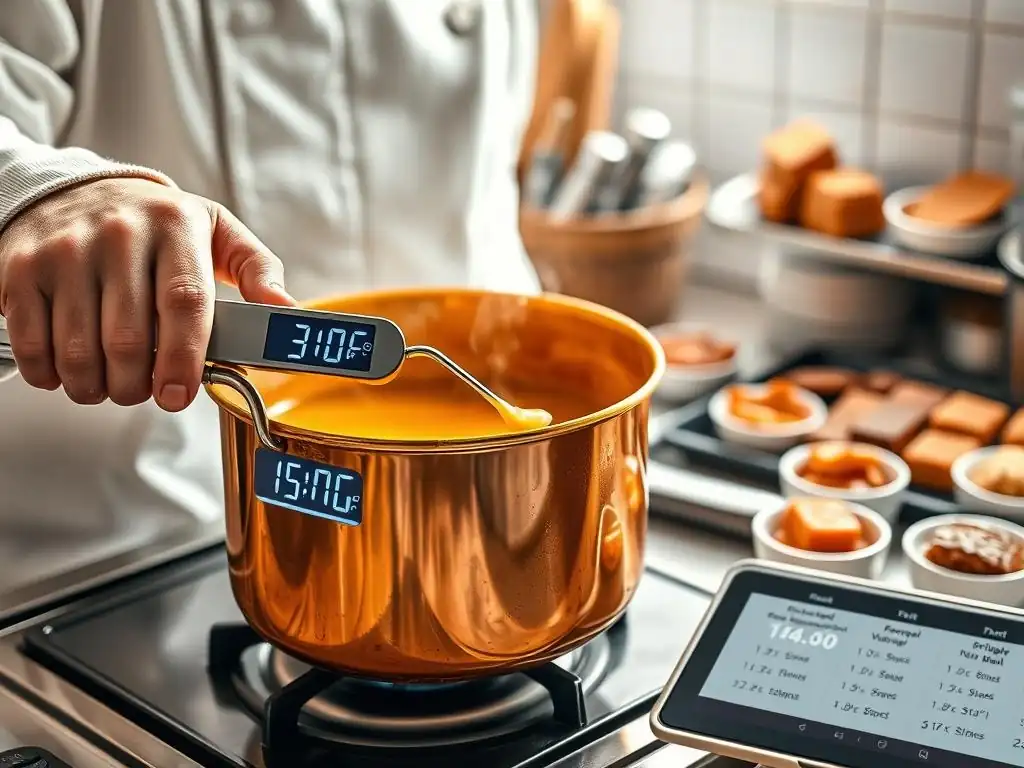
Once you've mastered the basics of using your thermometer for perfect candy thermometer readings, you might explore advanced techniques to further refine your candy-making skills and ensure even greater consistency, especially for larger batches or complex recipes.
Using Multiple Thermometers for Accuracy
For critical recipes or large quantities of syrup, using two calibrated thermometers can provide an extra layer of assurance for perfect candy thermometer readings. Place the thermometers in different spots in the pot (ensuring neither touches the bottom or sides), perhaps slightly offset from each other. This allows you to compare the readings and confirm that the temperature is consistent throughout the syrup.
If the readings differ significantly (more than 1-2°F), it might indicate uneven heating, especially if your burner is smaller than your pot. Using multiple thermometers helps you identify potential hot or cool spots and adjust your heat or stirring accordingly. This technique is particularly useful when approaching the Hard Crack or Caramel stages where temperature rises rapidly and precision is paramount.
Managing Temperature Fluctuations
Temperature fluctuations can occur due to drafts, adding ingredients, or uneven heat distribution from your stove. While your thermometer shows the current temperature, understanding how to manage these fluctuations is an advanced skill. For instance, adding cold nuts or butter late in the process will cause a significant temperature drop. Your thermometer will show this, and you'll need to carefully bring the syrup back up to the target temperature without burning it.
Using a heavy-bottomed pot helps distribute heat more evenly and minimizes rapid fluctuations. Monitoring your perfect candy thermometer readings continuously allows you to anticipate how adding ingredients will affect the temperature and adjust your heat source proactively. Learning to maintain a steady temperature rise, especially during the critical final stages, is key to preventing issues like crystallization or burning.
Conclusion: The Key to Perfect Candy is Precise Temperature Control
Mastering candy making boils down to understanding and controlling the temperature of your sugar syrup. Your instant-read or candy thermometer is the indispensable tool for this, providing the objective data needed to navigate the various sugar stages. By learning how to take perfect candy thermometer readings, choosing the right thermometer, calibrating it correctly, avoiding common errors, and understanding how temperature affects different candy types, you unlock the secret to consistent, delicious results. Don't be afraid to experiment and practice; with your thermometer as your guide, you'll be creating perfect batches of your favorite candies in no time.
Frequently Asked Questions
What is the most important reason to use a candy thermometer when making candy?
Using a candy thermometer ensures you reach the precise temperature needed for the desired candy stage, preventing undercooked or burnt results. Without it, achieving the correct sugar concentration is almost impossible.
What are some common mistakes people make when using a candy thermometer?
Common mistakes include not calibrating the thermometer, allowing it to touch the bottom of the pot, and not ensuring the bulb is fully submerged in the candy mixture.
How do I calibrate my candy thermometer for accurate readings?
You can calibrate by placing it in boiling water; it should read 212°F (100°C) at sea level. If it doesn't, note the difference and adjust your target temperatures accordingly, or adjust the calibration screw if there is one.
What are some signs that my candy is at the correct stage even without a thermometer?
While a thermometer is best, visual cues like the mixture's color, thickness, and how it behaves in cold water ("cold water test") can help. However, these are less reliable than precise temperature readings.
Where can I find the best candy recipes for practicing my candy thermometer skills?
BakeWithEase.com offers a wide variety of simple and detailed candy recipes, including step-by-step guides to help you master the art of candy making with confidence.
Final Reflection: Mastering the Sweet Science of Candy Making
The quest for the perfect candy thermometer reading isn't just about achieving the ideal texture; it's about unlocking a deeper understanding of the transformative power of heat and sugar. Achieving consistent, accurate readings translates directly to consistent, delicious results, elevating your candy-making from a hit-or-miss affair to a precise and repeatable art. This precision allows for exploration and innovation, opening up a world of possibilities beyond simple recipes.
The impact of understanding candy temperatures extends far beyond the kitchen. It's a microcosm of the importance of precise measurement and observation in any field, from scientific research to engineering. The subtle shifts in texture and color that accompany each degree change highlight the delicate balance required to achieve mastery. The difference between nearly right and exactly right is everything.
– This quote, while not directly about candy making, perfectly encapsulates the importance of precision in achieving perfection.
Now, it's your turn. Consider how this newfound knowledge about accurate candy thermometer readings can be applied to other areas of your life. Perhaps it's about paying closer attention to detail in your work, or approaching challenges with a more meticulous and scientific approach. Embrace the spirit of experimentation, and don't be afraid to adjust your methods based on your observations. The journey to mastering the perfect candy, and indeed, the perfect anything, is a journey of continuous learning and refinement. So, grab your thermometer, your favorite recipe, and embark on your own sweet adventure!
Unlock Your Candy-Making Mastery!
Thanks for diving into the world of perfect candy with us! We hope you now feel confident in using your instant-read thermometer to achieve candy-making success. Ready to put your new skills to the test?
- Craft your dream candy: Try out one of the recipes mentioned, paying close attention to the temperature guidelines. Remember, precision is key!
- Share your sweet creations: Show off your perfectly textured treats on social media using #BakeWithEaseCandy. We'd love to see your results!
- Explore more baking techniques: Dive into our other articles on BakeWithEase.com for more expert tips and tricks.
What delicious candy creation will you tackle first? Let us know in the comments!