
Temperature Troubles: How Oven Heat Affects Your Cake

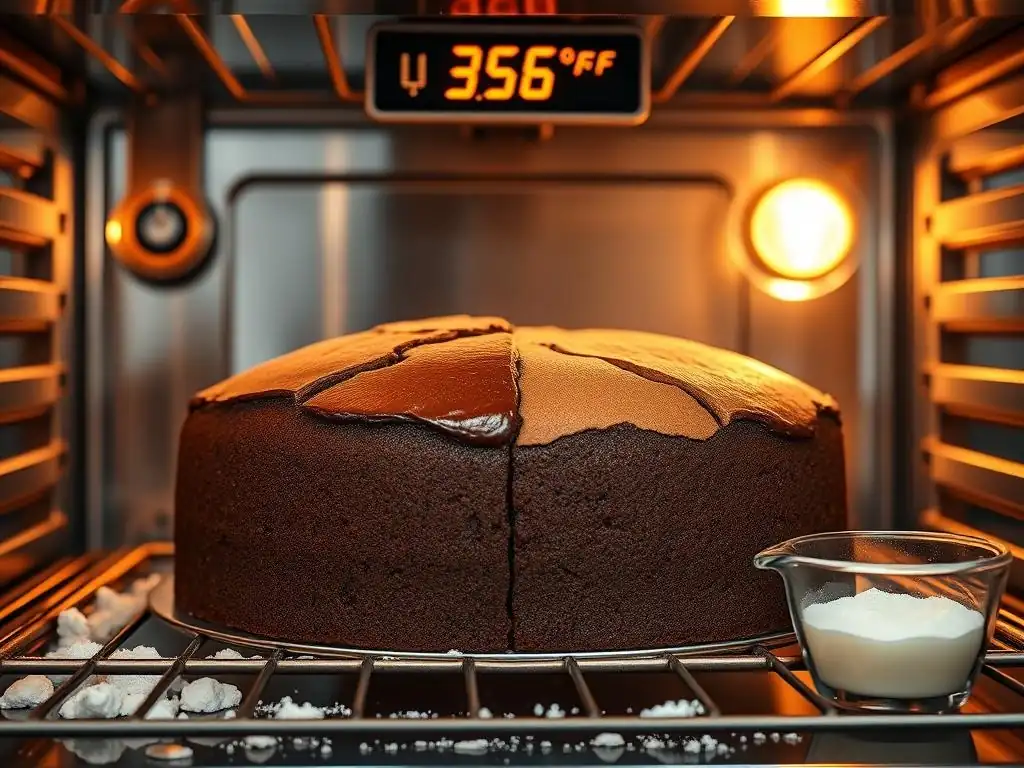
Welcome to BakeWithEase, your kitchen companion for conquering any baking challenge! Ever wondered why your cake rises unevenly or has a gummy center? The secret often lies in a seemingly simple factor: oven temperature. Dive into "Temperature Troubles: How Oven Heat Affects Your Cake" and discover how mastering oven temperature baking cakes can transform your baking from frustrating to flawless. Prepare to unlock the science behind perfect cakes and never suffer another baking mishap again!
- Mastering Oven Temperature: The Key to Baking Perfect Cakes
- Understanding Oven Temperature's Impact on Cake Baking
- Common Cake Problems Caused by Incorrect Oven Temperature
- Identifying and Addressing Oven Temperature Issues
- Solutions for Consistent Oven Temperature
- Troubleshooting Specific Cake Types and Oven Temperatures
- Mastering Oven Temperature for Baking Success
-
Frequently Asked Questions
- How does oven temperature specifically affect the rise of a cake?
- What are some common signs that my oven temperature is inaccurate when baking cakes?
- What is the ideal oven temperature range for baking most cakes?
- How can I accurately check if my oven's temperature is correct?
- What steps can I take to troubleshoot oven temperature issues when baking cakes?
- Final Reflection: The Sweet Science of Perfect Cakes
- Unlock Your Baking Potential: Perfect Cakes Every Time!
Mastering Oven Temperature: The Key to Baking Perfect Cakes
Baking a cake can feel like a magical transformation – simple ingredients turn into a delightful treat. But sometimes, that magic doesn't quite happen, and often, the culprit is something as fundamental as oven temperature baking cakes. Getting the heat just right is more than a suggestion in a recipe; it's a critical factor that dictates the success or failure of your bake. Understanding how your oven's temperature affects your cake is the first step towards consistently wonderful results.
Understanding Oven Temperature's Impact on Cake Baking
The oven isn't just a hot box; it's where complex chemical and physical reactions occur simultaneously to transform liquid batter into a solid, airy cake. These reactions, including the activation of leavening agents (like baking powder or soda), the coagulation of egg proteins, and the gelatinization of starches, are all highly dependent on the heat supplied by the oven.
The Importance of Accurate Oven Temperature for Consistent Results
Imagine following a recipe that calls for baking at 350°F (175°C) for 30 minutes. If your oven is actually running at 325°F (160°C), the cake will take longer to bake, potentially affecting its rise and texture. Conversely, if it's running hot at 375°F (190°C), the outside might burn before the inside is cooked through. Accurate oven temperature baking cakes ensures that the chemical processes happen at the intended rate, leading to predictable outcomes every time you bake that specific recipe.
Consistency is the hallmark of a skilled baker, and achieving it starts with a reliable heat source. When your oven temperature is spot-on, the cake batter rises evenly, the structure sets correctly, and the crust develops the perfect color and texture. This reliability allows you to troubleshoot other variables, like ingredient measurements or mixing technique, with confidence, knowing your oven isn't introducing unexpected issues into the oven temperature baking cakes equation.
Why Oven Temperature Fluctuations Affect Cake Texture and Rise
Oven temperature fluctuations, even relatively small ones, can disrupt the delicate balance of the baking process. When the temperature dips, leavening gases might escape before the cake structure sets, leading to a dense or sunken cake. A sudden spike in temperature can cause the outside of the cake to set too quickly, trapping steam inside and potentially leading to a cracked or excessively domed top as the interior continues to expand.
These temperature swings directly impact the cake's texture. For instance, if the temperature is too low for too long, the starches might not gelatinize properly, resulting in a gummy texture. If it's too high, the proteins in the eggs might coagulate too rapidly, leading to a dry or tough crumb. Maintaining a steady oven temperature baking cakes is crucial for allowing the batter to transition smoothly through its stages of transformation, from liquid to a perfectly textured solid.
Common Cake Problems Caused by Incorrect Oven Temperature
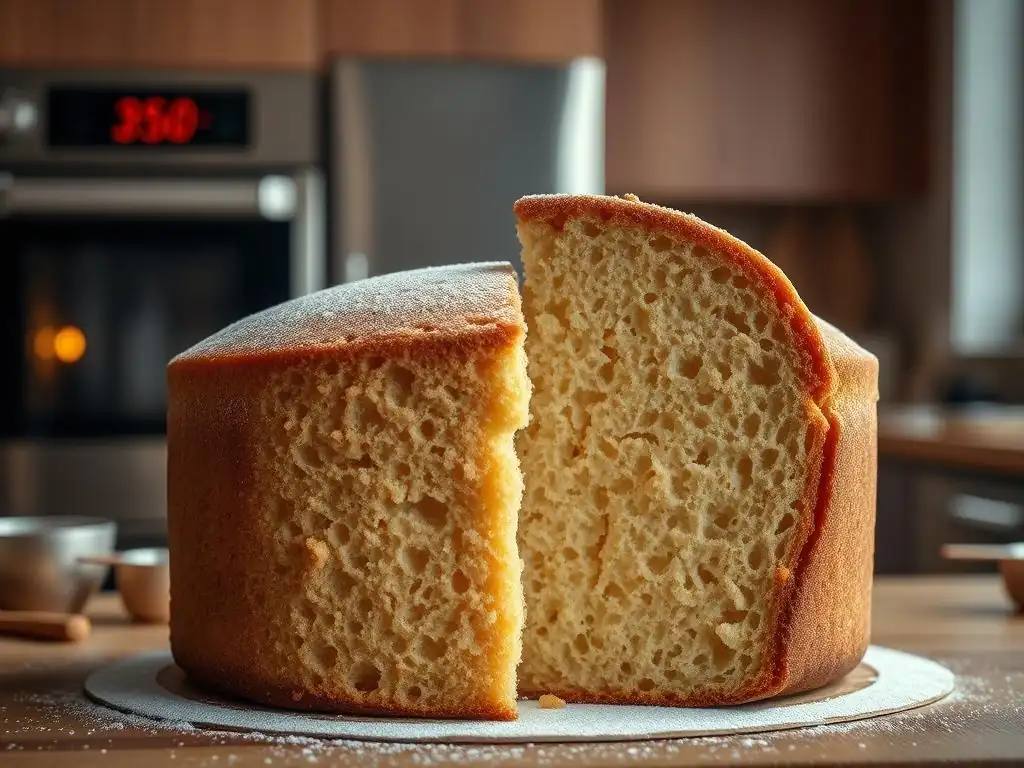
Many common cake woes can be traced back to an oven that isn't heating correctly or consistently. Recognizing these signs is key to diagnosing and fixing the problem.
Cake Problems with Oven Too Hot:
When your oven is running hotter than the recipe specifies, the baking process is significantly accelerated, often with undesirable results.
Dry Cake: Moisture Loss Due to High Heat
Excessively high temperatures cause water within the cake batter to evaporate much faster than intended. While some moisture loss is necessary for the cake structure to set, too much results in a dry, crumbly cake that lacks tenderness.
For example, baking a standard vanilla cake designed for 350°F (175°C) in an oven that's actually at 400°F (200°C) can reduce its moisture content significantly. The rapid heat penetrates quickly, forcing liquid to turn to steam and escape before the cake's internal structure is fully formed to retain it. This leads to a noticeable lack of moistness compared to a cake baked at the correct, lower temperature.
Domed or Cracked Cake Tops: Rapid Expansion from Excessive Heat
When the oven temperature is too high, the outer edges and top of the cake bake and set very quickly, forming a crust. However, the inside of the cake is still relatively cool and the leavening agents are just starting to produce gases. As the interior heats up and expands rapidly, it pushes against the already-set crust.
This pressure causes the center of the cake to rise dramatically higher than the edges, creating a dome. If the pressure is too great, or the crust sets too rigidly, the top layer will crack to release the expanding gases, resulting in an unsightly split across the surface. A cake baked at the correct oven temperature baking cakes allows for a more gradual, even rise across the entire surface.
Over-browning: Maillard Reaction Accelerated by High Temperature
The appealing golden-brown color of a cake crust is primarily the result of the Maillard reaction (between amino acids and sugars) and caramelization (of sugars). Both of these processes are accelerated by heat.
When the oven is too hot, these reactions happen too quickly. The outside of the cake can become excessively dark, sometimes even burnt, while the inside is still undercooked. This leads to a cake with an unpleasantly tough or bitter crust and a potentially raw center. Achieving the perfect balance of internal doneness and external color relies heavily on baking at the precise temperature specified by the recipe for oven temperature baking cakes.
An oven that isn't hot enough presents a different set of challenges, primarily related to insufficient setting and development.
Dense and Soggy Cakes: Under-baking and Insufficient Structure
If the oven temperature is too low, the cake bakes too slowly. The leavening agents might initially activate, but the heat isn't sufficient to set the cake's structure (the network of proteins and starches) before the leavening gases dissipate.
This results in a cake that remains heavy and moist in the center, lacking the light, airy crumb characteristic of a well-baked cake. The structure doesn't have enough heat to firm up, leaving the cake dense and potentially gummy or soggy, especially towards the bottom. Baking a cake at 300°F (150°C) when it requires 350°F (175°C) is a common cause of this issue.
Cake Sinking in the Middle: Inadequate Leavening and Support
Low oven temperature means the cake rises slowly, and the structure takes too long to set. The leavening agents might produce gases, but without sufficient heat to coagulate the proteins and gelatinize the starches, the fragile structure cannot support the rise.
Once the leavening action stops or slows down, the center of the cake, which is the last part to cook, collapses because there isn't a strong enough framework to hold it up. This often happens towards the end of baking or shortly after the cake is removed from the oven, leaving a noticeable depression in the middle. Proper oven temperature baking cakes ensures the structure sets as the cake rises.
Pale Cake: Limited Caramelization and Flavor Development
Just as high heat accelerates browning, low heat slows it down significantly. The Maillard reaction and caramelization require certain temperature thresholds to occur effectively.
In a cool oven, these processes might not reach their full potential, resulting in a cake with a pale crust that lacks the depth of flavor contributed by these reactions. The visual appeal is diminished, and the taste can be less complex or developed than intended. While some cakes are meant to be pale (like angel food cake), most standard butter or oil-based cakes benefit from the flavor notes developed by proper browning, which is dependent on the correct oven temperature baking cakes.
Identifying and Addressing Oven Temperature Issues
Understanding the symptoms is the first step; the next is diagnosing and fixing the problem with your oven's temperature.
Calibrating Your Oven for Accurate Baking
Oven thermostats can drift over time, leading to significant discrepancies between the temperature you set and the actual temperature inside.
How to Check Your Oven Temperature with an Oven Thermometer
The most reliable way to check your oven's accuracy is with a simple, inexpensive oven thermometer. Place it on the middle rack in the center of the oven. Preheat your oven to a standard baking temperature, like 350°F (175°C). Once the oven indicates it's preheated, wait another 20-30 minutes for the temperature inside to stabilize. Then, check the reading on the oven thermometer.
Observe the thermometer periodically over the next 30 minutes to see if the temperature fluctuates significantly. Note the average temperature the thermometer reads compared to what your oven's display shows. For example, if your oven says 350°F, but the thermometer consistently reads 325°F, your oven is running 25°F too cold.
Adjusting Your Oven's Calibration Settings
Many modern electric and gas ovens have a hidden calibration setting that allows you to adjust the oven's thermostat to match the reading from your independent oven thermometer. This process typically involves accessing a special menu (often by pressing and holding certain buttons like 'Bake' and 'Temp' or 'Start') and then entering the degree difference you observed.
Consult your oven's user manual for specific instructions on how to access and use the calibration feature. Common calibration ranges allow adjustments of up to plus or minus 35°F (about 20°C). Making this adjustment based on your thermometer's reading is the most effective way to ensure accurate oven temperature baking cakes in the future.
Factors Affecting Oven Temperature
Beyond the thermostat, several other factors can influence the actual temperature and heat distribution inside your oven.
Oven Placement and Hot Spots
Ovens rarely heat perfectly evenly. They often have "hot spots" and "cold spots" due to the location of the heating elements (usually bottom and/or top) and how air circulates. Older ovens or those with exposed heating elements can be more prone to significant temperature variations.
You can identify hot spots by arranging slices of white bread or cookies evenly across a large baking sheet and observing which ones brown faster. Typically, the back corners or areas directly above/below elements might be hotter. Understanding your oven's quirks helps you rotate pans or adjust placement for more even oven temperature baking cakes.
Using the Correct Rack Position for Even Baking
For most cakes, the middle rack position is ideal. This placement ensures that the cake is equidistant from the top and bottom heating elements, allowing for the most even heat distribution around the pan.
Baking on the top rack can lead to the top of the cake browning too quickly or burning before the inside is done, especially if the top element is active. Baking on the bottom rack can result in a burnt or overly dark bottom crust while the top remains pale and undercooked. Using the recommended rack position significantly contributes to achieving the correct oven temperature baking cakes profile for your batter.
The Impact of Opening the Oven Door During Baking
Every time you open the oven door, a significant amount of heat escapes, and cooler air rushes in. This can cause the internal oven temperature to drop by as much as 25-50°F (around 15-30°C) in a matter of seconds, depending on the oven and how long the door is open.
This sudden temperature drop is particularly detrimental during the early stages of baking when the cake is still rising and its structure is fragile. The cooler air can cause the cake to deflate or sink. It's best to resist the urge to check on your cake frequently and only open the door when necessary, ideally after the cake has set and is nearing the end of its estimated baking time. Peeking through the oven window is always preferable.
Solutions for Consistent Oven Temperature
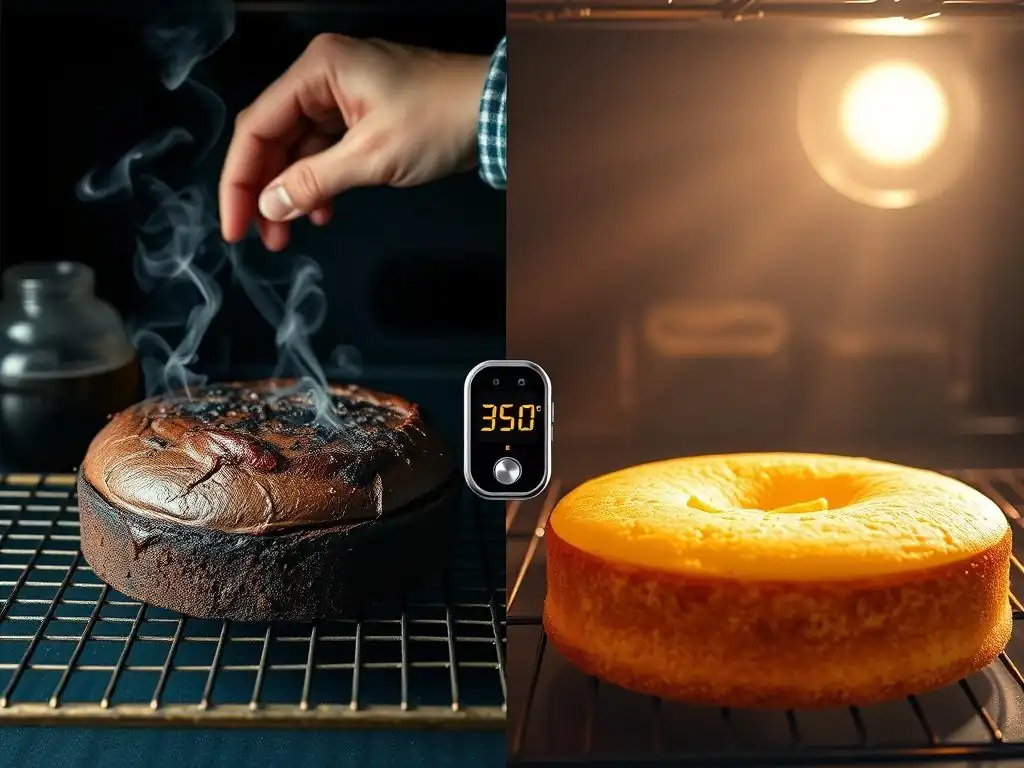
Once you've identified potential issues, implementing solutions helps ensure your oven maintains the steady heat required for successful cake baking.
Baking with an Oven Thermometer: A Baker's Essential Tool
Even after calibrating your oven, keeping an independent oven thermometer inside is highly recommended. It acts as a constant monitor, showing you the actual temperature inside the oven throughout the baking process.
Watching the thermometer allows you to see if your oven cycles significantly above or below the set temperature. This real-time feedback is invaluable. If you notice large swings, you can adjust your baking time accordingly or even slightly adjust the oven dial if your oven doesn't have digital calibration. Using an oven thermometer eliminates guesswork and is one of the simplest ways to improve your oven temperature baking cakes consistency.
Tips for Maintaining Consistent Heat
Beyond calibration and monitoring, several practices help keep the oven environment stable.
Preheating Your Oven Thoroughly
Most recipes specify preheating the oven. However, simply waiting for the preheat indicator light or beep isn't always enough. The oven needs time for the heat to saturate the oven walls, racks, and door, not just the air.
For best results, preheat your oven for at least 15-20 minutes after it signals that it has reached the set temperature, especially for cakes. This ensures the internal environment is truly at the target temperature, providing consistent heat from the moment you place the cake inside. This thorough preheating is vital for achieving the correct oven temperature baking cakes from start to finish.
Avoiding Overcrowding the Oven
Placing too many items in the oven at once can block airflow and heat circulation, creating cold spots and leading to uneven baking. Each pan needs space around it for the hot air to move freely.
When baking cakes, it's generally best to bake one or two layers at a time, depending on your oven's size. Ensure there's at least an inch or two of space between pans and between the pans and the oven walls. If you must bake multiple pans, consider rotating them halfway through the baking time to promote even cooking.
Using Convection Settings
If your oven has a convection setting (which uses a fan to circulate hot air), it can be excellent for promoting more even heat distribution and reducing hot spots. Convection heat can also speed up baking and create a slightly crisper crust.
When using convection for cakes, you often need to adjust the temperature or baking time. A common guideline is to reduce the oven temperature by 25°F (about 15°C) or reduce the baking time by 10-15%. Experimentation is key when using convection for oven temperature baking cakes, as it can vary by oven and recipe.
Troubleshooting Specific Cake Types and Oven Temperatures
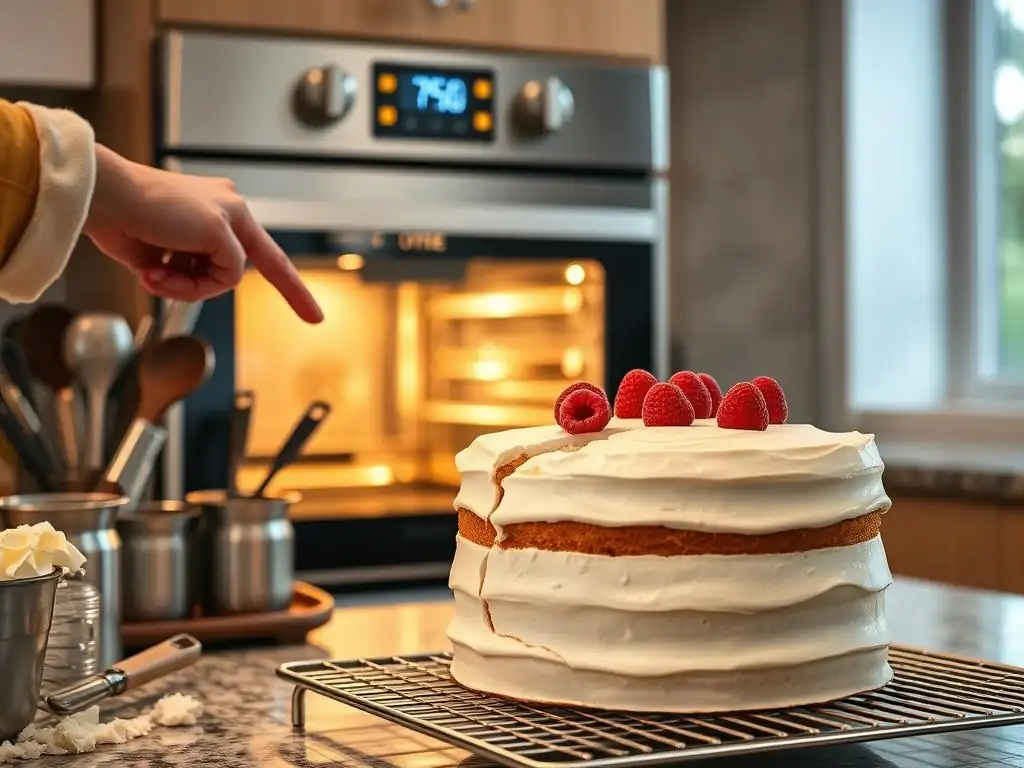
Different types of cakes have different structural needs and thus benefit from specific temperature approaches.
Adjusting Baking Times for Different Cake Recipes
Recipe baking times are always estimates. Factors like the actual oven temperature, the material and color of your cake pan (dark pans absorb more heat), the temperature of your batter, and even the humidity in your kitchen can affect how long a cake needs to bake.
It's crucial to start checking for doneness at the earlier end of the suggested baking time and be prepared to bake longer if needed. Relying solely on time without considering visual cues or doneness tests can easily lead to under- or over-baked cakes, even if the oven temperature is correct. Mastering oven temperature baking cakes also means mastering when to check for doneness.
Sponge Cakes: Temperature and Delicate Structure
Sponge cakes, which rely heavily on the aeration from whipped eggs (like whisked whole eggs or separated yolks and whites) for their rise and structure, require moderate, consistent temperatures. Temperatures typically range from 325°F to 350°F (160°C to 175°C).
Too high a temperature can cause the delicate egg foam structure to rise too quickly and then collapse, resulting in a dense cake. Too low a temperature might not provide enough heat to set the structure before the air bubbles escape, also leading to density or a rubbery texture. The gentle, even heat at these temperatures allows the sponge to rise gradually and set properly.
Cheesecakes: Achieving a Smooth Texture with Controlled Heat
Cheesecakes are essentially baked custards, and like all custards, they are sensitive to high heat, which can cause them to curdle, crack, or become tough. They require very gentle, consistent heat, often in the range of 300°F to 325°F (150°C to 160°C).
Many cheesecake recipes call for baking in a water bath (bain-marie) to provide even, moist heat and insulate the cheesecake from the direct oven heat. This technique, combined with a low oven temperature, ensures the custard sets slowly and smoothly from the edges to the center, preventing cracks and ensuring a creamy texture. This is a prime example of how specific oven temperature baking cakes techniques are tailored to the cake type.
Flourless Cakes: Temperature and Binding Ingredients
Flourless cakes, such as dense chocolate tortes or some nut-based cakes, rely on ingredients like eggs, butter, and melted chocolate for structure rather than flour. Their baking temperatures can vary more widely depending on the specific ingredients.
Some flourless cakes might start at a higher temperature, around 350-375°F (175-190°C), to quickly set the edges and create a slight crust, then potentially finish with residual heat or at a reduced temperature to cook the center without drying it out. Others might bake low and slow like cheesecakes. Understanding the role of the binding ingredients helps determine the appropriate oven temperature baking cakes strategy for these unique desserts.
Mastering Oven Temperature for Baking Success
Putting it all together means being attentive to your oven and learning the signs that your cake is perfectly baked.
Oven Temperature and Cake Doneness: Visual Cues
While time and temperature are guides, visual cues are the most reliable indicators of whether your cake is done, assuming your oven temperature has been correct. A properly baked cake will typically pull away slightly from the sides of the pan.
The surface should look set and feel springy when gently pressed in the center (be careful not to press too hard, especially on delicate cakes). The color should be golden brown for most vanilla or butter cakes, though this varies significantly for chocolate or dark-colored batters. These visual signs develop correctly only when the cake has been exposed to the appropriate oven temperature baking cakes for the right amount of time.
The Toothpick Test and Other Doneness Indicators
The classic toothpick test is a widely used method. Insert a toothpick or a thin wooden skewer into the center of the cake. For most cakes, it should come out with a few moist crumbs attached, but no wet batter. If it comes out clean, the cake might be slightly overbaked; if it comes out with wet batter, it needs more time.
Other indicators include gently pressing the top center of the cake – if it springs back, it's likely done. For more precise bakers, an instant-read thermometer inserted into the center of the cake can provide a definitive answer; standard cakes are usually done when the internal temperature reaches 200-210°F (93-99°C). These tests work best when the oven temperature baking cakes has been consistent.
Final Thoughts: Achieving Baking Perfection Through Oven Control
Mastering oven temperature is arguably one of the most impactful skills you can develop as a baker. It's the silent partner in every successful cake, influencing everything from the rise and texture to the color and flavor. While recipes provide a roadmap, understanding your oven's actual temperature and how it behaves is key to navigating that map effectively.
By using an oven thermometer, calibrating your oven if possible, understanding heat distribution, and practicing good oven habits like thorough preheating and avoiding frequent door opening, you take control of a variable that often frustrates bakers. Paying attention to oven temperature baking cakes transforms guesswork into confidence, leading to consistently delicious results that you and everyone who enjoys your baking will appreciate. Happy baking!
Frequently Asked Questions
How does oven temperature specifically affect the rise of a cake?
Incorrect oven temperature can drastically impact cake rise. Too low, and the cake may not rise sufficiently or become dense. Too high, and the cake can rise too quickly, creating a dome and potentially sinking in the middle.
What are some common signs that my oven temperature is inaccurate when baking cakes?
Common signs include a cake that is burnt on the outside but raw in the middle, a cake that has a significant dome, or a cake that doesn't rise properly and remains flat. These indicate the oven isn't holding the correct temperature.
What is the ideal oven temperature range for baking most cakes?
While it varies by recipe, most cakes bake best between 325°F (160°C) and 375°F (190°C). Paying attention to the recipe is key, but this range provides a good starting point.
How can I accurately check if my oven's temperature is correct?
Using an oven thermometer is the best way to verify the accuracy of your oven's temperature. Place it in the oven and compare the reading to the set temperature.
What steps can I take to troubleshoot oven temperature issues when baking cakes?
First, verify your oven's accuracy with a thermometer. If it's off, consider calibrating your oven or adjusting the baking time. Ensure your oven is preheated completely before baking.
Final Reflection: The Sweet Science of Perfect Cakes
Understanding oven temperature is not merely a technicality; it's the cornerstone of baking success, the difference between a magnificent masterpiece and a culinary catastrophe. This article has explored the nuanced relationship between oven heat and cake baking, highlighting the critical role of accurate temperature measurement, preheating techniques, and the impact of variations in oven performance. Mastering these elements is key to unlocking the potential of your baking, transforming a simple recipe into a truly exceptional experience.
The quest for the perfect cake transcends mere culinary skill; it's a journey into the heart of precision and patience. The subtle shifts in texture, color, and even flavor, all dictated by the seemingly insignificant degrees of oven temperature, underscore the delicate balance required in baking. This pursuit resonates with a deeper human desire for control and mastery over our environment, a desire reflected in countless culinary traditions across cultures. Baking is at once a science and an art; it requires precision and creativity.
This quote, though not specifically about oven temperature, perfectly encapsulates the essence of successful cake baking, a process where understanding the science unlocks the creative potential.
Now, consider your own baking experiences. Have you ever encountered a cake that was too dry, too dense, or simply lacked that perfect lift? Perhaps the answer lies in the temperature of your oven.
I encourage you to take what you've learned here and apply it to your next baking adventure. Experiment with your oven's temperature, meticulously measure, and observe the results. With practice and attention to detail, you'll not only improve your baking skills but also gain a deeper appreciation for the intricate dance between heat, time, and ingredients that transforms simple flour, sugar, and eggs into a delicious and satisfying cake.
Unlock Your Baking Potential: Perfect Cakes Every Time!
Thanks for taking the time to learn about how oven temperature impacts your cake's success! You've now got the knowledge to avoid those common baking pitfalls. Ready to put your new skills to the test?
- Bake the perfect cake: Try out one of your favorite recipes, paying close attention to oven temperature and preheating time. Note any differences in your results!
- Share your baking triumphs (or challenges!): Let us know how your next cake turned out in the comments below – we’d love to hear from you!
- Explore our other baking guides for more tips and tricks to elevate your baking game.
What innovative techniques will you use to achieve baking perfection in your next creation?