
Simple Tips for Baking Muffins That Rise


Welcome to BakeWithEase, your kitchen companion for unlocking baking brilliance! Ever wondered how to achieve those perfectly risen baking muffins that look as good as they taste? This guide dives into simple, yet effective techniques that will transform your muffin game. Curious to know the secrets? Let's get started and explore the art of achieving that coveted muffin top!
- Simple Tips for Baking Muffins That Rise | BakeWithEase
- Introduction: Achieve Perfectly Risen Baking Muffins with Ease
- Understanding the Science Behind Muffin Rise
- Essential Ingredients for High-Rising Muffins
- Simple Tips and Techniques for Baking Muffins That Rise
- Troubleshooting Common Muffin Baking Problems
- Recipe Enhancement for Extra Lift
- Storing Your Perfectly Risen Muffins
- Conclusion: Enjoy Your Beautifully Risen Muffins
-
Frequently Asked Questions
- How important is the temperature of my ingredients for perfectly risen muffins?
- What role does over-mixing play in achieving a good muffin rise?
- Can the type of flour used affect the rise of my muffins?
- What is the impact of oven temperature on muffin rise?
- Why is it important to fill muffin cups properly for optimal rise?
- Final Reflection: The Sweet Science of a Perfectly Risen Muffin
- Unlock Fluffy Perfection: Your Next Muffin Masterpiece Awaits!
Simple Tips for Baking Muffins That Rise | BakeWithEase
Introduction: Achieve Perfectly Risen Baking Muffins with Ease
Welcome to BakeWithEase, your ultimate guide to mastering the art of baking! There's something incredibly satisfying about pulling a batch of beautifully domed, perfectly risen baking muffins from the oven. Whether you're aiming for classic blueberry or decadent chocolate chip, achieving that desirable height and fluffy texture can sometimes feel like a baking mystery. But fear not! With a few simple tips and a little understanding of the baking process, you can consistently bake muffins that rise high and look as good as they taste.
BakeWithEase: Your Guide to Muffin Mastery
At BakeWithEase, we believe that successful baking should be accessible and enjoyable for everyone, regardless of skill level. Muffins are a fantastic starting point for beginner bakers, offering quick rewards and versatile flavor options. Our mission is to demystify the science behind perfectly risen baking muffins and equip you with the practical techniques needed to bake with confidence. From choosing the right ingredients to mastering mixing and baking temperatures, we'll walk you through the essential steps to elevate your muffin game.
Understanding the Science Behind Muffin Rise
Achieving a great rise in muffins isn't just about luck; it's about understanding the fundamental reactions happening within your batter. Two key players are primarily responsible for helping your muffins ascend to their peak height: leavening agents and the structure provided by gluten. When these elements work together correctly, the result is a light, airy, and perfectly risen muffin.
The Role of Leavening Agents in Muffin Baking
Leavening agents are the unsung heroes of baking, creating gases that expand when heated, causing the batter to rise. In most muffin recipes, you'll encounter baking powder, baking soda, or a combination of both. Baking powder is a complete leavener, containing both an acid and a base, and is often double-acting, meaning it produces gas initially when mixed with liquid and again when exposed to heat in the oven.
Baking soda, on the other hand, is a single-acting leavener (sodium bicarbonate) that requires an acidic ingredient (like buttermilk, yogurt, or brown sugar) to activate and produce carbon dioxide gas. A typical muffin recipe might use 1 to 2 teaspoons of baking powder per cup of flour, or a smaller amount of baking soda paired with an acid, to ensure sufficient lift. These agents create the air pockets that give perfectly risen baking muffins their light texture.
The reaction of these leavening agents is time-sensitive and temperature-dependent. Once the wet and dry ingredients are combined, the leavening begins to work. The initial mix starts the chemical reaction, but the significant expansion happens in the hot oven.
As the temperature increases, the gases produced by the leaveners expand rapidly, pushing the batter upwards. This is why getting the muffins into a preheated oven quickly after mixing is crucial – you want to capture as much of that leavening power as possible during the bake. Ensuring your leavening agents are fresh is paramount; old baking powder or soda can lose their potency, leading to flat, disappointing results despite following other steps correctly.
Gluten Development and Its Impact on Muffin Height
Gluten is a protein network formed when flour (specifically the proteins glutenin and gliadin) is mixed with liquid and agitated. In bread baking, extensive gluten development is desired to create a strong, elastic structure that can hold its shape and trap large amounts of gas, resulting in a chewy texture. However, for tender muffins with a soft crumb, minimal gluten development is key. Overmixing muffin batter encourages excessive gluten formation, which creates a tough, rubbery texture and can actually hinder the rise.
When the gluten network becomes too strong, it resists the expansion caused by the leavening gases. Instead of allowing the batter to rise freely into a light, airy dome, the strong gluten strands constrain the upward movement, resulting in a dense, flat, or peaked muffin rather than a beautifully rounded one.
The goal with muffins is to mix just enough to hydrate the dry ingredients and distribute the leaveners and inclusions (like berries or chocolate chips), leaving the batter lumpy. This minimal mixing prevents over-development of gluten, allowing the leavening gases to expand effectively and contribute to those perfectly risen baking muffins.
Essential Ingredients for High-Rising Muffins

While technique is important, the quality and condition of your ingredients play a foundational role in achieving perfectly risen baking muffins. Using the right type of flour and ensuring your leavening agents are fresh are non-negotiable steps. Furthermore, paying attention to the temperature of certain ingredients can significantly impact the outcome of your muffin bake, affecting everything from texture to rise.
The Importance of Fresh Baking Powder and Baking Soda
Leavening agents are not pantry staples that last indefinitely. Baking powder, especially, can lose its effectiveness over time, typically within 6 to 12 months of being opened. Baking soda also degrades, though often more slowly if kept dry. Using expired leaveners is one of the most common reasons for muffins failing to rise properly.
The chemical reactions that produce the necessary carbon dioxide gas simply won't occur with enough vigor if the active compounds have degraded. You can easily test your leaveners: drop a teaspoon of baking powder into a small bowl of hot water – it should bubble vigorously. To test baking soda, add a teaspoon to a small amount of vinegar or lemon juice – it should also fizz immediately. If either test yields little to no reaction, it's time to replace your leavener.
Relying on fresh leavening agents ensures that you have the maximum potential for gas production within your batter. This robust leavening power is essential for overcoming the weight of the batter and any inclusions, providing the strong lift needed to create those desirable domes. Think of fresh leaveners as the engine that drives the rise; without a strong engine, even the best-built car won't go far. Always check the expiration date on your containers and perform a quick freshness test if you're unsure. This simple step can make a dramatic difference in achieving perfectly risen baking muffins.
Choosing the Right Flour for Optimal Muffin Texture and Rise
For most standard muffin recipes, all-purpose flour is the go-to choice, and for good reason. It contains a moderate amount of protein (typically 10-12%), which allows for some gluten development to provide structure, but not so much that the muffins become tough with minimal mixing.
Using flours with significantly lower protein content, like cake flour (around 7-9% protein), can result in a very tender crumb but might lack the structural integrity needed for a high dome, potentially leading to flatter muffins. On the other hand, using high-protein flours like bread flour (12-14% protein) will promote excessive gluten development, even with careful mixing, resulting in dense, tough muffins that don't achieve a light rise.
Beyond the type, how you measure your flour is critical. Incorrect measurement, particularly scooping flour directly from the bag with your measuring cup, can compact the flour, adding significantly more than intended (sometimes 20-25% more by weight). This excess flour throws off the balance of the recipe, leading to a drier batter and inhibiting the leavening agents' ability to lift the heavier mixture.
Always use the spoon-and-level method: gently spoon flour into your measuring cup until it overflows, then level off the excess with a straight edge. This ensures a more accurate measurement and contributes to the correct batter consistency for perfectly risen baking muffins.
Why Room Temperature Ingredients Matter for Muffin Success
The temperature of your ingredients, particularly eggs and dairy (like milk or buttermilk), has a significant impact on the final texture and rise of your muffins. Cold ingredients are less likely to emulsify properly with the fats in the batter, leading to a less smooth and potentially uneven mixture. More importantly, cold ingredients can actually slow down the chemical reactions of your leavening agents. Baking soda and baking powder react more efficiently when the ingredients are closer to room temperature, typically between 68-72°F (20-22°C).
Bringing ingredients like eggs and milk to room temperature allows them to disperse more evenly throughout the batter, creating a more consistent structure. Room temperature fats, like softened butter (if used in creaming methods, though many muffin recipes use oil), also incorporate better. Using cold ingredients can result in a stiffer batter that is harder for the leavening gases to lift.
Plan ahead and take your refrigerated ingredients out about 30-60 minutes before you plan to start mixing. This simple step helps ensure that your leavening agents can work optimally from the moment they are combined, contributing to a better rise and a more tender crumb in your perfectly risen baking muffins.
Simple Tips and Techniques for Baking Muffins That Rise
Mastering a few key techniques can make all the difference between flat muffins and beautifully domed, perfectly risen baking muffins. These aren't complicated steps, but they require attention to detail during the mixing and baking process. By focusing on accurate measurements, gentle handling of the batter, proper filling of muffin cups, and precise temperature control, you'll significantly increase your chances of achieving that coveted bakery-style dome.
Tip 1: Properly Measure Your Ingredients for Muffin Perfection
Accuracy in baking isn't just about following a recipe; it's about executing each measurement correctly. As mentioned earlier, using the spoon-and-level method for flour is crucial. Incorrectly measured dry ingredients, especially flour, can drastically alter the batter consistency, making it too dry or too wet. Too much flour results in a dense, heavy batter that leavening agents struggle to lift, leading to short, heavy muffins. Too little flour can make the batter too thin, resulting in flat, spread-out muffins.
For liquid ingredients like milk, buttermilk, or oil, use clear liquid measuring cups placed on a flat surface and read the measurement at eye level. Don't hold the cup up in the air, as this can lead to inaccurate readings due to parallax error. Measuring sugar, baking powder, and baking soda should be done using dry measuring cups and spoons, also leveled off. Precision in these measurements ensures the correct balance between wet and dry ingredients and the proper ratio of leavening agents, setting the stage for perfectly risen baking muffins.
Tip 2: Don't Overmix the Muffin Batter
This is perhaps the most frequently cited rule for successful muffin baking, and for good reason. Muffin batter should be mixed minimally, just until the dry ingredients are incorporated into the wet ingredients. This typically means stirring by hand with a spoon or spatula until you no longer see streaks of dry flour. The batter should look lumpy and rustic, not smooth and uniform like cake batter. This usually takes no more than 10-15 gentle stirs after adding the dry ingredients.
Why Overmixing Leads to Flat Muffins
Overmixing develops the gluten in the flour excessively. As you stir, the gluten proteins link together, forming elastic strands. While this is desirable for chewy bread, it's detrimental to tender muffins. A strong gluten network restricts the batter's ability to expand freely when the leavening gases activate in the oven.
Instead of rising upwards into a light dome, the batter becomes tough and resistant, resulting in a flat top or, in some cases, a peaked top with a dense, rubbery interior texture. Overmixing also pops the air bubbles created by the initial reaction of the leaveners, reducing the potential for lift. Aim for a lumpy batter; lumps are good!
Tip 3: Fill Muffin Cups Correctly for Even Rising
How much batter you put into each muffin cup significantly impacts the shape and height of your perfectly risen baking muffins. The general rule of thumb is to fill muffin cups about two-thirds to three-quarters full. This allows enough room for the batter to expand dramatically during baking without overflowing the cup. Using an ice cream scoop or a portion scoop is an excellent way to ensure consistent amounts of batter in each cup, leading to uniformly sized and risen muffins.
How Much Batter to Use in Each Muffin Cup
Filling the cups too little (say, only halfway) will result in smaller muffins that don't rise much above the rim of the pan. They might bake faster but will lack the characteristic dome.
Overfilling the cups (filling them to the very top or overflowing) can cause the batter to spill over the sides of the tin as it rises, creating a messy bake and often resulting in muffins with large, uneven "mushrooms" of baked batter rather than a smooth, rounded dome. Filling each cup approximately 2/3 to 3/4 full provides the ideal amount of batter to achieve a good balance of structure and upward expansion, resulting in those appealing, perfectly risen baking muffins.
Tip 4: Bake Muffins at the Correct Temperature
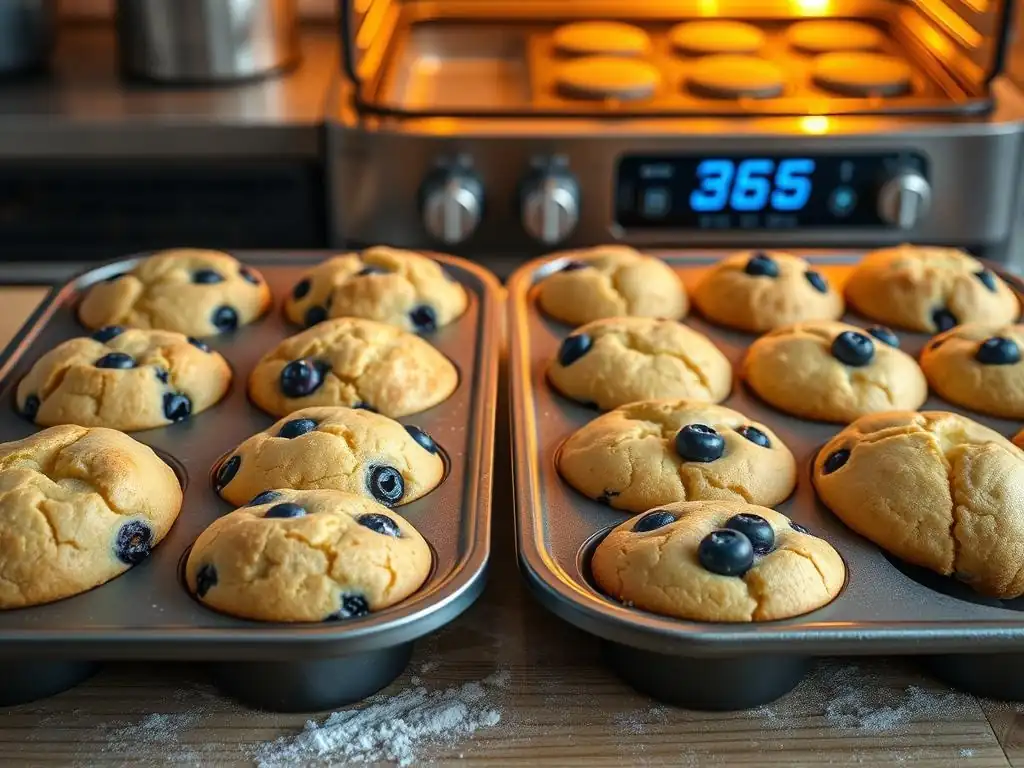
Oven temperature is a critical factor in achieving a high rise and proper texture. Many recipes for high-rising muffins call for starting the bake at a higher temperature for the first few minutes, then reducing the temperature for the remainder of the baking time. A common strategy is to bake at 400-425°F (200-220°C) for the initial 5-7 minutes, then drop the temperature to 350-375°F (175-190°C) for the remaining 10-15 minutes.
Finding the Sweet Spot for Muffin Baking Temperature
The initial burst of high heat provides a powerful boost to the leavening agents, causing them to react rapidly and produce a quick, strong rise. This high temperature helps set the structure of the muffin quickly, encouraging it to rise upwards rather than spread outwards. After this initial lift is established, reducing the temperature allows the inside of the muffin to bake through evenly without the outside burning or becoming too dry.
This dual-temperature method is highly effective for creating tall, perfectly risen baking muffins with a beautiful dome and a moist interior. Ensure your oven is accurately calibrated; an oven thermometer can help verify the actual temperature inside your oven.
Tip 5: Avoid Opening the Oven Door During Baking
It can be tempting to peek at your muffins as they bake, especially when you're hoping for that perfect rise. However, opening the oven door, particularly in the first two-thirds of the baking time, can cause a significant drop in temperature inside the oven. Ovens lose a considerable amount of heat quickly when the door is opened, sometimes dropping by 50°F (about 10°C) or more.
Maintaining Consistent Oven Temperature for Muffin Rise
A sudden drop in temperature can interrupt the leavening process and cause the muffins to collapse slightly or stop rising prematurely. The structure hasn't fully set yet, and the cooler air can shock the developing crumb. Rely on your oven light and window to check on their progress. Only open the door towards the end of the baking time (e.g., in the last 5 minutes) to check for doneness using a toothpick. Maintaining a consistent, hot environment is key to allowing the leavening to work effectively and set the structure for perfectly risen baking muffins.
Troubleshooting Common Muffin Baking Problems
Even with the best intentions and freshest ingredients, muffins can sometimes present challenges. Understanding the potential causes of common issues like flat tops, dense textures, or dryness can help you diagnose what went wrong and improve your results next time. Don's despair if your first batch isn't perfect; baking is a learning process!
My Muffins Didn't Rise: Possible Causes and Solutions
If your muffins came out flat or with minimal rise, several factors could be the culprit. The most common is using expired or inactive baking powder or baking soda. As discussed, test your leaveners for freshness. Another frequent issue is overmixing the batter, which develops too much gluten and restricts the rise. Remember to mix only until just combined.
Incorrect oven temperature, particularly an oven that is too cool or fluctuating, can also inhibit proper leavening expansion. Verify your oven temperature with an oven thermometer. Finally, underfilling the muffin cups won't provide enough batter volume to build a significant dome. Aim to fill cups 2/3 to 3/4 full for optimal height and perfectly risen baking muffins.
My Muffins are Dense: How to Fix It
Dense muffins are often a result of overmixing the batter, leading to excessive gluten development and a tough, heavy crumb. Ensure you are mixing only until the dry ingredients disappear, leaving the batter lumpy. Another cause of density can be too much flour, often due to incorrect measuring (scooping instead of spooning and leveling). Accurately measure your flour using the spoon-and-level method.
Using ingredients that are too cold can also result in a less cohesive batter, potentially leading to a denser texture. Bring eggs and dairy to room temperature before mixing. Finally, insufficient leavening (either using too little or using inactive leaveners) means there isn't enough gas production to create a light, airy structure. Double-check your leavener measurements and freshness.
My Muffins are Dry: Tips for Moist and Fluffy Muffins
Dry muffins can be caused by several factors, primarily related to overbaking or an imbalanced recipe. Overbaking is a major culprit; baking muffins for too long at too high a temperature can cook out the moisture. Check for doneness using a toothpick inserted into the center – it should come out with a few moist crumbs attached, not completely clean. Another cause is too much flour, which absorbs excess moisture.
Ensure accurate flour measurement using the spoon-and-level method. The ratio of wet to dry ingredients is also important; if the recipe is inherently dry, you might need to slightly increase the liquid or fat (like oil or melted butter) next time, keeping the overall balance in mind. Using room temperature ingredients helps distribute moisture and fat more evenly, contributing to a tender, moist crumb.
Recipe Enhancement for Extra Lift

While following a solid base recipe and employing proper technique is essential, a couple of clever additions and tools can further enhance the rise and overall quality of your muffins, helping you achieve truly spectacular, perfectly risen baking muffins with a beautiful dome.
Adding Acidic Ingredients for a Better Rise (Buttermilk, Lemon Juice)
If your recipe calls for baking soda, incorporating an acidic ingredient is necessary for it to activate and produce carbon dioxide gas. Common acidic ingredients include buttermilk, yogurt, sour cream, molasses, brown sugar, vinegar, and lemon juice. Using an acidic liquid like buttermilk instead of regular milk in a recipe containing baking soda creates a more vigorous reaction, resulting in extra lift and a tender crumb.
For example, substituting 1 cup of regular milk with 1 cup of buttermilk (often with a slight reduction in baking powder if the original recipe used both) can provide a noticeable boost in rise. The acid reacts with the baking soda the moment they are combined, creating bubbles that contribute to the initial lift and texture. This is particularly effective in recipes aiming for a light, airy result and can give your perfectly risen baking muffins an added boost.
The Secret of Using Baking Strips for Even Rising
Baking strips are a simple but effective tool for achieving taller, more evenly domed muffins and cakes. These fabric strips, soaked in water and wrapped around the outside of the muffin tin, insulate the metal pan. When the tin is placed in the hot oven, the edges of the muffins heat up more slowly because of the insulation.
This prevents the edges from setting and solidifying too quickly. With the edges staying softer for longer, the batter in the center of the muffin cup has more time to catch up and rise upwards along with the rest of the batter. This leads to a more uniform rise across the entire muffin top, resulting in a higher, more rounded dome rather than a muffin that sets quickly at the edges and then struggles to rise in the middle.
You can purchase commercial baking strips or make your own using old towels or fabric strips soaked in water. Using them is a great technique for consistently achieving perfectly risen baking muffins with a professional-looking dome.
Storing Your Perfectly Risen Muffins
Once you've successfully baked a batch of beautiful, perfectly risen baking muffins, you'll want to keep them fresh and delicious for as long as possible. Proper storage helps maintain their tender texture and prevents them from drying out or becoming stale too quickly.
Keeping Muffins Fresh and Delicious
Allow your muffins to cool completely on a wire rack before storing them. Storing warm muffins in an airtight container will trap steam, making them soggy. Once fully cooled, store the muffins in an airtight container at room temperature. To help absorb excess moisture and prevent the tops from becoming sticky or soggy, you can place a paper towel on the bottom of the container and another on top of the muffins before sealing the lid.
Avoid refrigerating muffins, as this can actually dry them out and negatively impact their texture. Muffins are generally best enjoyed within 2-3 days when stored properly at room temperature. For longer storage, cooled muffins can be frozen in a single layer on a baking sheet until firm, then transferred to a freezer-safe bag or container for up to 2-3 months. Thaw at room temperature before serving.
Conclusion: Enjoy Your Beautifully Risen Muffins
Achieving perfectly risen baking muffins is well within your reach! By understanding the basic science of leavening and gluten, using fresh, properly measured ingredients at the right temperature, and employing simple techniques like minimal mixing, correct filling, and strategic oven temperature control, you can consistently bake muffins with impressive height and wonderful texture. Don't be discouraged by initial attempts; every batch is a learning opportunity.
BakeWithEase: Continuing Your Baking Journey
At BakeWithEase, we're here to support you on your baking adventures. From troubleshooting common issues to exploring new flavor combinations and techniques, our goal is to make baking accessible and rewarding. Apply these simple tips for baking muffins that rise, and you'll be pulling beautifully domed treats from your oven in no time. Keep practicing, keep experimenting, and most importantly, keep enjoying the process of creating delicious baked goods. Happy baking!
Frequently Asked Questions
How important is the temperature of my ingredients for perfectly risen muffins?
Using room temperature ingredients is crucial. This allows for proper emulsification, creating air pockets that lead to a lighter and taller muffin.
What role does over-mixing play in achieving a good muffin rise?
Over-mixing develops the gluten, resulting in a tough and dense muffin with poor rise. Mix just until the dry ingredients are moistened.
Can the type of flour used affect the rise of my muffins?
Yes, the type of flour is important. All-purpose flour works well, but avoid using bread flour, which has a higher protein content and can lead to a tougher, less risen muffin.
What is the impact of oven temperature on muffin rise?
A hot oven is key for a good initial rise. Starting with a higher temperature (around 400°F) creates steam that helps the muffins puff up quickly.
Why is it important to fill muffin cups properly for optimal rise?
Filling the muffin cups correctly is important. Overfilling can cause muffins to spill over, while underfilling may result in flat, underdeveloped muffins. Aim for about two-thirds full.
Final Reflection: The Sweet Science of a Perfectly Risen Muffin
The quest for the perfectly risen muffin is more than just a baking challenge; it's a testament to the power of understanding basic principles. A seemingly simple task, muffin baking reveals the intricate dance between ingredients, technique, and timing. Mastering this dance unlocks not just fluffy, delightful muffins, but a deeper appreciation for the culinary arts.
The impact of a perfectly risen muffin extends far beyond the individual enjoyment of a delicious treat. It represents a connection to tradition, a sense of accomplishment, and a shared experience across cultures. Baking, in its simplest form, is a fundamental human activity, and the success of a recipe like this can be incredibly rewarding. Baking is at once child's play and adult joy. And love, of course.
- This sentiment perfectly captures the emotional resonance of successfully baking a perfect muffin, a small act that can bring immense satisfaction.
Now, I invite you to consider your own baking journey. What have you learned from this exploration of muffin-making? Perhaps you've discovered a new appreciation for precise measurements, or maybe you've found a renewed sense of confidence in your culinary abilities. Whatever your takeaway, remember that the pursuit of perfection, even in something as seemingly simple as a muffin, is a rewarding endeavor. So, dust off your mixing bowls, gather your ingredients, and embark on your own baking adventure. The perfectly risen muffin awaits!
Unlock Fluffy Perfection: Your Next Muffin Masterpiece Awaits!
Thanks for joining us on this baking adventure! We hope you now feel confident in creating those perfectly risen muffins you've always dreamed of. Ready to take your baking to the next level?
- Bake a batch of your favorite recipe, using the tips you've just learned! See the difference firsthand.
- Share your muffin masterpieces on social media – use #BakeWithEase to inspire others! Let's build a community of fluffy muffin lovers.
- Try a new muffin recipe this week, and see how these simple techniques can elevate any batter.
So, what exciting muffin flavor will you create next? Let us know in the comments below!