
Bake Healthy Whole Grain Rye Bread Easily

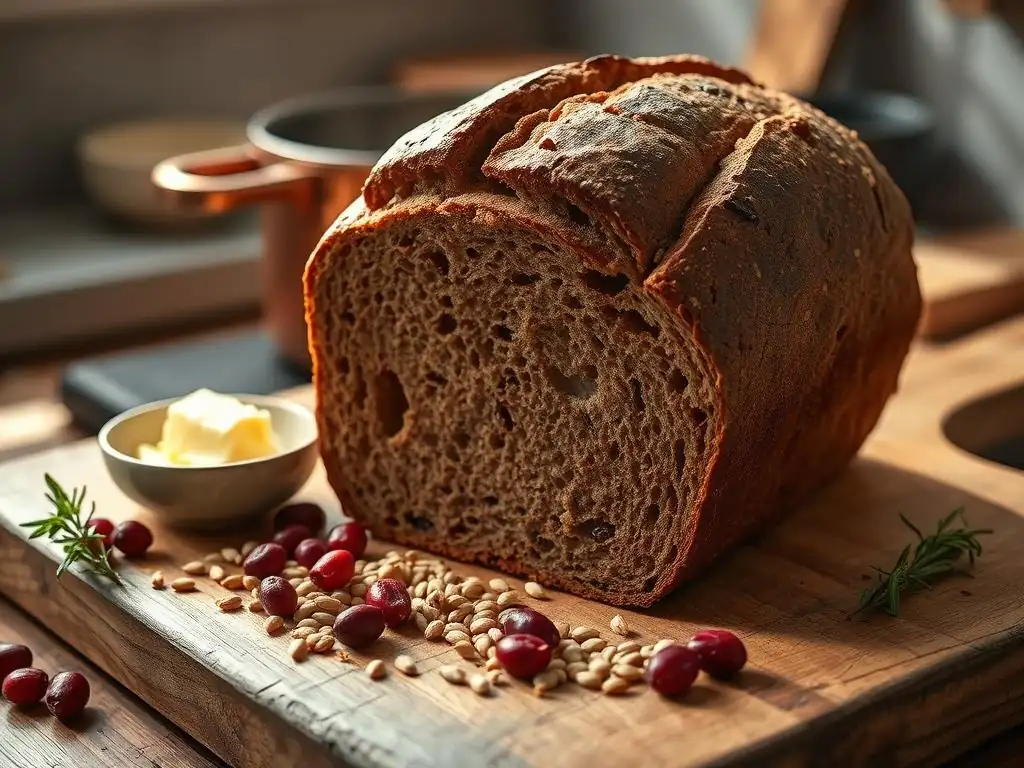
Welcome to BakeWithEase, your kitchen companion on a journey to baking bliss! Ever dreamt of the rich, satisfying aroma of homemade rye bread filling your home? Prepare to be amazed at just how simple it can be. We're diving into the secrets of crafting an easy whole grain rye bread that's both delicious and nutritious. Curious to see how we achieve that perfect crust and chewy interior without complicated techniques? Let's get baking!
- Baking Authentic German Rye Bread at Home
- Introduction: The Art of Baking Authentic German Rye Bread
- Understanding Rye Flour: The Foundation of German Rye Bread
-
Authentic German Rye Bread Recipe: A Detailed Guide
- Ingredients for a Traditional German Rye Loaf
- Essential Equipment for Baking German Rye Bread
- Step 1: Preparing the Sourdough Starter (Rye Sourdough)
- Step 2: Mixing the Dough - Incorporating Sourdough and Rye Flour
- Step 3: Bulk Fermentation - Developing the Complex Flavors
- Step 4: Shaping the Loaf - Traditional German Rye Bread Shapes
- Step 5: Proofing the Dough - Achieving the Right Rise
- Step 6: Baking the Bread - Creating a Crispy Crust and Dense Crumb
- Step 7: Cooling and Resting - Allowing the Flavors to Mature
- Tips and Tricks for Perfecting Your German Rye Bread
- Variations on the Traditional German Rye Bread Recipe
- German Rye Bread: A Nutritious and Flavorful Staple
- Conclusion: Embracing the Tradition of German Rye Bread Baking
-
Frequently Asked Questions
- What makes this rye bread recipe "easy"?
- Is this recipe suitable for beginners who have never baked bread before?
- Can I substitute other types of flour for the whole grain rye flour?
- How long does it take to make this whole grain rye bread from start to finish?
- What are some tips for ensuring a successful loaf of whole grain rye bread?
- Final Reflection: The Enduring Appeal of Simple, Wholesome Baking
- Unleash Your Inner Baker: Bake Delicious Rye Today!
Baking Authentic German Rye Bread at Home
Introduction: The Art of Baking Authentic German Rye Bread
Why Bake Your Own German Rye Bread? A Flavorful and Traditional Choice
Baking your own authentic German rye bread is a rewarding experience that connects you to centuries of tradition. Unlike many commercially produced loaves, homemade German rye bread offers a depth of flavor and a unique texture that is truly unparalleled. The complex, slightly tangy notes developed through natural fermentation, combined with the earthy richness of rye flour, create a bread that is both satisfying and incredibly versatile. It's more than just food; it's a piece of culinary history you can create in your own kitchen.
Taking on the challenge of baking this specific type of bread also allows you to control every ingredient, ensuring a wholesome and delicious result. You can select high-quality rye flour and tailor the bake to your preference, whether you desire a deeply caramelized crust or a slightly softer crumb. Mastering the process of making this easy whole grain rye bread provides a sense of accomplishment and fills your home with an inviting aroma that store-bought bread simply cannot replicate. It's a journey into traditional baking that yields a truly exceptional loaf.
A Comprehensive Guide to Baking German Rye Bread
Embarking on the journey to bake authentic German rye bread requires understanding a few key principles distinct from baking wheat bread. This guide aims to demystify the process, breaking it down into manageable steps suitable even for those relatively new to baking with rye. We will cover everything from understanding the unique properties of rye flour to managing fermentation and achieving that signature dense crumb and hearty crust.
From activating your rye sourdough starter to the final cooling phase, each stage plays a crucial role in developing the bread's characteristic flavor and structure. While traditional German rye bread might seem complex, focusing on technique and patience will lead to success. By following this comprehensive approach, baking easy whole grain rye bread becomes an achievable goal, allowing you to consistently produce delicious, traditional loaves right from your oven.
Understanding Rye Flour: The Foundation of German Rye Bread
The Role of Rye Flour in Achieving the Characteristic Texture and Flavor
Rye flour is fundamentally different from wheat flour, and understanding these differences is key to successful rye bread baking. Rye contains less gluten-forming protein than wheat. Instead, it is rich in pentosans, complex carbohydrates that absorb significant amounts of water and become gel-like. This is why rye doughs are often stickier and denser than wheat doughs and don't develop the same elastic network. The pentosans contribute significantly to rye bread's characteristic dense, moist crumb and hearty texture.
Furthermore, rye flour contains enzymes that remain active during mixing and fermentation, breaking down starch into sugars. This process influences the bread's flavor profile, contributing to its natural sweetness and providing food for the sourdough starter. The combination of limited gluten development, high water absorption by pentosans, and enzymatic activity is what gives authentic German rye bread its unique structure and the deep, complex flavors that are its hallmark. Mastering the handling of this unique flour is central to baking easy whole grain rye bread.
Different Types of Rye Flour for German Rye Bread [Rye Flour Types 997, 1150, 1800 Explained]
German rye flour types are classified by their ash content, which indicates the mineral content and, broadly, how much of the outer layers of the grain are included. Higher numbers correspond to higher ash content and darker flour, meaning more of the bran and germ are present.
- Rye Flour Type 997 (Roggenmehl Type 997): This is a medium rye flour, comparable to a light or medium rye in other systems. It has an ash content around 0.997%. It contains some bran and germ, contributing more flavor and color than lighter flours, but is still relatively fine. It's often used in mixed rye and wheat breads (Roggenmischbrot) or lighter pure rye loaves.
- Rye Flour Type 1150 (Roggenmehl Type 1150): A darker rye flour with an ash content around 1.15%. This is a common standard for many traditional German rye breads. It contains more of the outer layers than Type 997, resulting in a darker color, stronger flavor, and higher nutritional value. It's excellent for achieving that classic hearty rye bread character.
- Rye Flour Type 1800 (Roggenbackschrot Type 1800): This isn't strictly a flour but a coarse meal or chop (Schrot) with an ash content around 1.8%. It's essentially the whole rye grain coarsely milled. This type is used in very dark, dense breads like Pumpernickel, often requiring long baking times at lower temperatures or even steaming. Using this type contributes significant texture, color, and intense rye flavor.
Choosing the right type of rye flour, or a blend, is crucial for achieving the desired outcome when baking your easy whole grain rye bread.
Sourcing High-Quality Rye Flour for Optimal Results
The quality of your rye flour directly impacts the success and flavor of your German rye bread. Look for freshly milled, organic rye flour whenever possible. Reputable online suppliers specializing in baking ingredients or local health food stores with a good bulk section are often good sources. Buying from suppliers with a high turnover ensures the flour hasn't been sitting on shelves for too long, which can affect its performance and flavor.
Consider seeking out stone-ground rye flour. Stone milling typically processes the grain at lower temperatures, preserving more of the natural oils, enzymes, and nutrients, which can lead to a more flavorful and nutritious loaf. While finding specific German Type numbers (like 997, 1150, or 1800) outside of Germany might require specialized suppliers, understanding their characteristics allows you to choose comparable light, medium, or dark rye flours available locally. Investing in good quality flour is a fundamental step towards baking truly authentic and easy whole grain rye bread.
Authentic German Rye Bread Recipe: A Detailed Guide
Ingredients for a Traditional German Rye Loaf
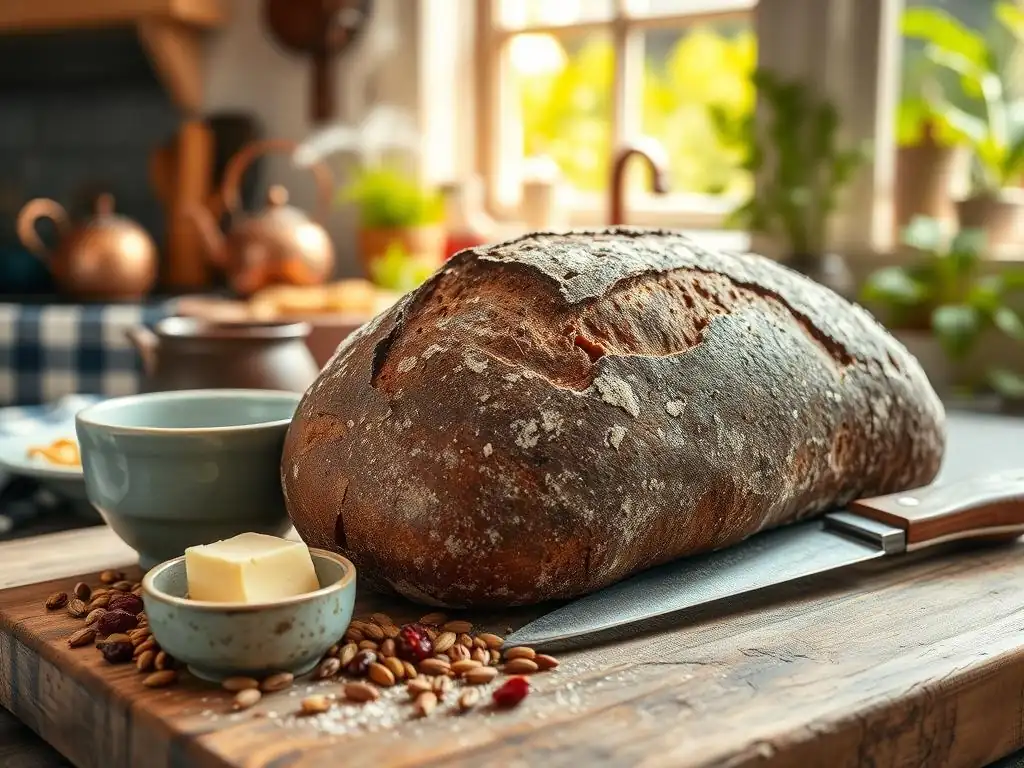
Creating an authentic German rye loaf typically involves a few key ingredients, with the quality of each being paramount. The primary component is, of course, rye flour, often a mix of different types or a specific type like 1150 for a classic loaf. Water is crucial, and the hydration level in rye doughs is often higher than in wheat doughs due to the pentosans' ability to absorb water.
The leavening agent is traditionally a rye sourdough starter, sometimes referred to as roggen sauerteig. This starter provides both lift and the characteristic tangy flavor. Salt is essential for flavor balance and controlling fermentation. Optional but traditional additions can include caraway seeds, fennel seeds, or coriander seeds, which add aromatic depth and are very common in German rye bread.
Essential Equipment for Baking German Rye Bread
Having the right tools can significantly simplify the process and improve the outcome when baking German rye bread. A sturdy mixing bowl, preferably non-reactive, is needed for combining ingredients. A dough scraper is invaluable for handling the sticky rye dough, as it's often too wet to handle easily by hand. Accurate kitchen scales are essential for measuring ingredients by weight, which is far more precise than volume measurements, especially with flour.
For baking, a Dutch oven or a baking stone with a steam setup (like a tray of hot water or ice cubes) is highly recommended. Rye bread benefits greatly from a moist, hot environment in the initial stages of baking to develop a good crust. You'll also need proofing baskets (bannetons), ideally lined with linen, to help the dough hold its shape during proofing. A sharp lame or razor blade is useful for scoring the loaf before baking, helping control expansion.
Step 1: Preparing the Sourdough Starter (Rye Sourdough)
The foundation of authentic German rye bread is a robust rye sourdough starter. If you don't have one, you'll need to cultivate one using rye flour and water, which typically takes about 7-10 days, feeding it daily. Once established, ensuring your starter is active and vigorous is crucial before baking. This involves feeding it with fresh rye flour and water, often in equal parts by weight, about 4-12 hours before mixing the dough, depending on the temperature.
A healthy rye starter should show significant activity: doubling or tripling in size, becoming bubbly, and smelling pleasantly tangy. Using a "ripe" starter at its peak activity ensures proper leavening and contributes the desired sourness to the bread. The hydration level of your starter (the ratio of water to flour) is also important and should be consistent with the recipe you follow, often 100% hydration (equal weight of flour and water) for rye starters.
Step 2: Mixing the Dough - Incorporating Sourdough and Rye Flour
Mixing rye dough is different from mixing wheat dough. Because rye has less gluten, extensive kneading is not required or even beneficial; it can make the dough gummy. The process typically involves combining the ripe rye sourdough starter with water and then adding the rye flour and salt, along with any optional seeds. The goal is simply to hydrate the flour fully and evenly distribute the ingredients.
Often, a stand mixer with a paddle attachment or even just a sturdy spoon is used for mixing, as the dough is usually very sticky. Mixing until just combined and uniform is sufficient. Overmixing can damage the limited structure provided by the pentosans. The resulting dough will be thick and sticky, more like a batter or paste than a traditional elastic wheat dough.
Step 3: Bulk Fermentation - Developing the Complex Flavors
Bulk fermentation, also known as the first rise, is a critical phase where the sourdough starter works to leaven the dough and develop complex flavors. Unlike wheat doughs that might double in size, rye doughs typically don't show dramatic visual expansion during this stage. Instead, the focus is on microbial activity that produces organic acids, contributing to the bread's characteristic tang and improving its structure.
The duration of bulk fermentation varies depending on the temperature and the activity of the starter, but it often ranges from 1 to 3 hours at room temperature. Some traditional methods use longer fermentation times or involve temperature control to manage sourness. You might see some bubbling or a slight increase in volume, but the key indicators are often subtle changes in texture and aroma.
Step 4: Shaping the Loaf - Traditional German Rye Bread Shapes
Shaping rye dough requires a different approach due to its stickiness and lack of gluten structure. Traditional German rye breads are often shaped into simple rounds or oblongs. Because the dough doesn't have strong surface tension like wheat dough, shaping is more about coaxing the mass into a desired form rather than building tension.
A common technique involves using wet hands or a wet dough scraper to handle the dough. The shaped loaf is then placed seam-side up into a well-floured proofing basket. The basket supports the wet dough during proofing, helping it maintain its shape. Flour made from rice is often used for dusting the basket as it doesn't absorb moisture from the dough as readily as wheat flour, preventing sticking.
Step 5: Proofing the Dough - Achieving the Right Rise
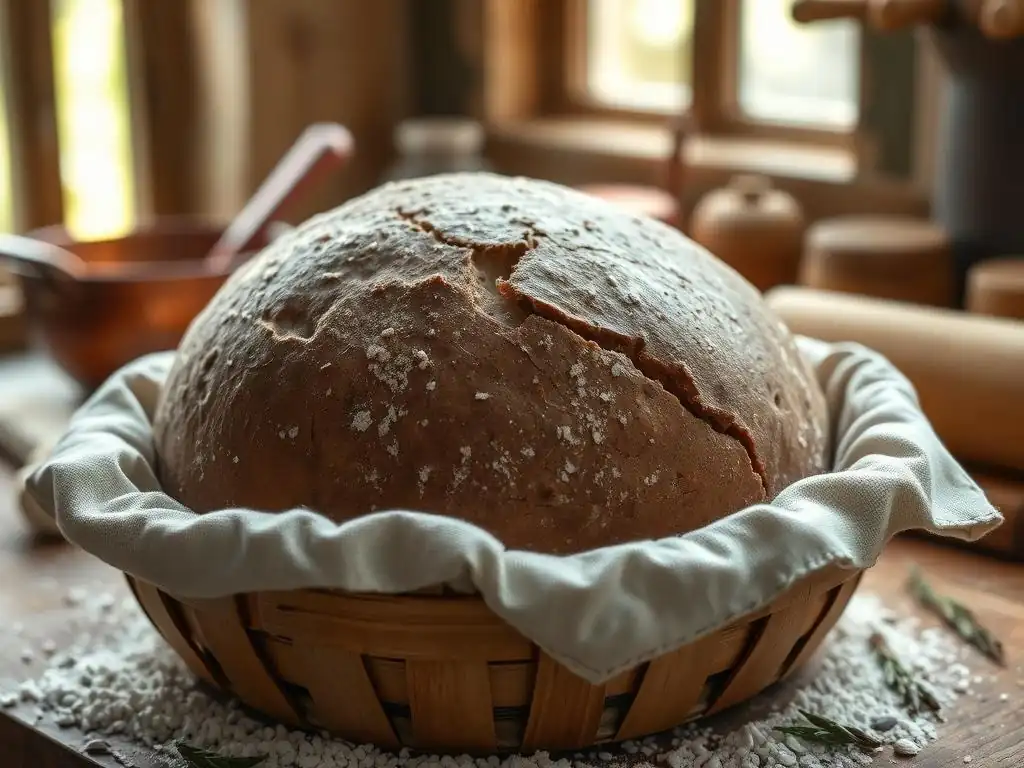
Proofing (or final fermentation) is the stage where the shaped loaf undergoes its final rise before baking. Similar to bulk fermentation, rye dough doesn't expand as much as wheat dough during proofing. The duration can vary significantly, from 1 to 2 hours at room temperature to much longer periods (8-16 hours) in the refrigerator, which further develops flavor and makes the dough easier to handle.
Determining when a rye loaf is perfectly proofed can be tricky. A common test is the "poke test," where a lightly floured finger is gently pressed into the dough. If the indentation springs back very slowly or only partially, the dough is likely ready. If it springs back quickly, it needs more time. Over-proofing can lead to a collapsed loaf during baking, while under-proofing results in a very dense, heavy bread.
Step 6: Baking the Bread - Creating a Crispy Crust and Dense Crumb
Baking German rye bread typically starts at a high temperature with steam, then the temperature is reduced. The initial high heat (around 220-250°C or 430-480°F) provides oven spring, while steam keeps the crust pliable, allowing the loaf to expand and contributing to a crisp crust. After the initial phase (often 15-20 minutes), the steam is released, and the temperature is lowered (to around 180-200°C or 350-390°F) to allow the interior to bake through without the crust burning.
Rye breads often require longer baking times than wheat breads due to their density and high moisture content. A standard loaf might bake for 60-90 minutes, sometimes even longer for very large or dense loaves like Pumpernickel. The bread is done when it has a deep brown crust and sounds hollow when tapped on the bottom. An internal temperature of 95-100°C (205-212°F) is a reliable indicator of doneness.
Step 7: Cooling and Resting - Allowing the Flavors to Mature
Perhaps the most crucial, and often overlooked, step in baking authentic German rye bread is the extensive cooling and resting period. Freshly baked rye bread is still undergoing chemical processes within the crumb. Cutting into it too early can result in a gummy texture and underdeveloped flavor.
Traditional rye loaves should rest for a minimum of 12-24 hours, or even longer, at room temperature before slicing. During this time, moisture redistributes evenly throughout the loaf, the crumb structure stabilizes, and the complex flavors developed during fermentation continue to mature and deepen. While it requires patience, allowing your easy whole grain rye bread to rest properly is essential for achieving the perfect texture and the fullest, most authentic flavor.
Tips and Tricks for Perfecting Your German Rye Bread
Troubleshooting Common Issues [Dense Crumb, Sourness, Crust Issues]
Baking rye bread can present unique challenges compared to wheat bread, but common issues are usually solvable. A dense crumb is frequent; this can result from insufficient proofing (either bulk or final), an inactive starter, or insufficient hydration for the type of flour used. Ensure your starter is vigorous, allow adequate fermentation time (even if visible rise is minimal), and check that your dough hydration is appropriate – pure rye doughs often need 80-90%+ hydration relative to the flour weight.
Excessive sourness or lack thereof relates directly to your sourdough starter and fermentation times/temperatures. A very active starter and shorter, warmer fermentation can lead to less sourness, while a slower, cooler fermentation (especially cold proofing) enhances acidity. If your bread is too sour, try a shorter proof or warmer bulk fermentation. If not sour enough, extend proofing or use a less recently fed starter. Crust issues, like a hard, thick crust or lack of browning, often stem from insufficient steam during the initial bake or incorrect oven temperature. Ensure you create a steamy environment and preheat your oven thoroughly.
Enhancing Flavor and Aroma [Adding Caraway, Fennel, Coriander]
Beyond the natural flavors developed by the rye flour and sourdough, traditional German rye bread often features aromatic seeds that complement its earthy profile. Caraway seeds are perhaps the most iconic addition, lending a distinct, slightly peppery, anise-like flavor that pairs wonderfully with rye. They can be added whole to the dough during mixing.
Fennel seeds offer a milder, sweeter anise flavor, while coriander seeds provide a warm, citrusy note. A blend of these seeds (often referred to as "bread spice" or "Brotgewürz" in German) can be used. Typically, seeds are added at a rate of 1-2% of the total flour weight, though this can be adjusted to personal preference. Toasting the seeds lightly before adding them to the dough can enhance their aromatic compounds and deepen their flavor contribution to your easy whole grain rye bread.
Storing and Preserving Your Homemade German Rye Bread
Proper storage is key to keeping your homemade German rye bread fresh and delicious for as long as possible. Because of its dense structure and higher moisture content compared to wheat bread, rye bread tends to stay fresh longer. Once completely cooled (remembering that 12-24 hour rest! ), store the loaf at room temperature.
The best way to store it is wrapped in a clean linen towel or placed in a paper bread bag, then stored in a bread box. This allows the bread to breathe while preventing it from drying out too quickly. Avoid plastic bags at room temperature, as they can trap moisture and cause the crust to soften and potentially encourage mold growth.
For longer storage, slices or portions of the fully cooled bread can be tightly wrapped (e.g., in plastic wrap then foil or a freezer bag) and frozen for up to 2-3 months. Thaw at room temperature or toast slices directly from frozen.
Variations on the Traditional German Rye Bread Recipe
Pumpernickel: Baking a Dark and Intense Rye Bread
Pumpernickel is a distinct type of German rye bread characterized by its very dark color, dense, moist crumb, and deep, slightly sweet flavor. It is traditionally made using coarsely ground whole rye (Rye Type 1800 or Backschrot) and a rye sourdough starter. What sets Pumpernickel apart is its unique baking process: it is typically baked for a very long time, often 16-24 hours, at a low temperature (around 100-120°C or 210-250°F), sometimes in a sealed container or using steam throughout the process.
This low-and-slow baking method, sometimes described as "baking" or "steaming," allows complex sugars to develop through the Maillard reaction and caramelization, contributing to the bread's dark color and signature sweet-and-sour flavor profile. Authentic Westphalian Pumpernickel, in particular, follows this extended baking method, resulting in a bread that is incredibly dense and flavorful, a true testament to traditional rye baking.
Roggenmischbrot: Combining Rye and Wheat for a Balanced Flavor
Roggenmischbrot, meaning "rye mixed bread," is a very popular category of bread in Germany that combines rye and wheat flours. These breads offer a balance between the hearty flavor and dense crumb of rye and the lighter texture and better rise provided by wheat gluten. The ratio of rye to wheat flour can vary significantly, from mostly rye with a little wheat (e.g., 80% rye, 20% wheat) to mostly wheat with a smaller proportion of rye (e.g., 50% rye, 50% wheat, or even less rye).
The inclusion of wheat flour makes the dough easier to handle and results in a loaf with a slightly more open crumb structure and a higher rise than pure rye bread. Roggenmischbrot often uses a combination of rye sourdough and commercial yeast for leavening, providing a good rise and a balanced flavor profile that is less intensely sour than pure sourdough rye. This variation offers a more approachable entry point for those new to baking rye, making it an easy whole grain rye bread to try.
Sonnenblumenbrot: Adding Sunflower Seeds for Texture and Nutty Flavor
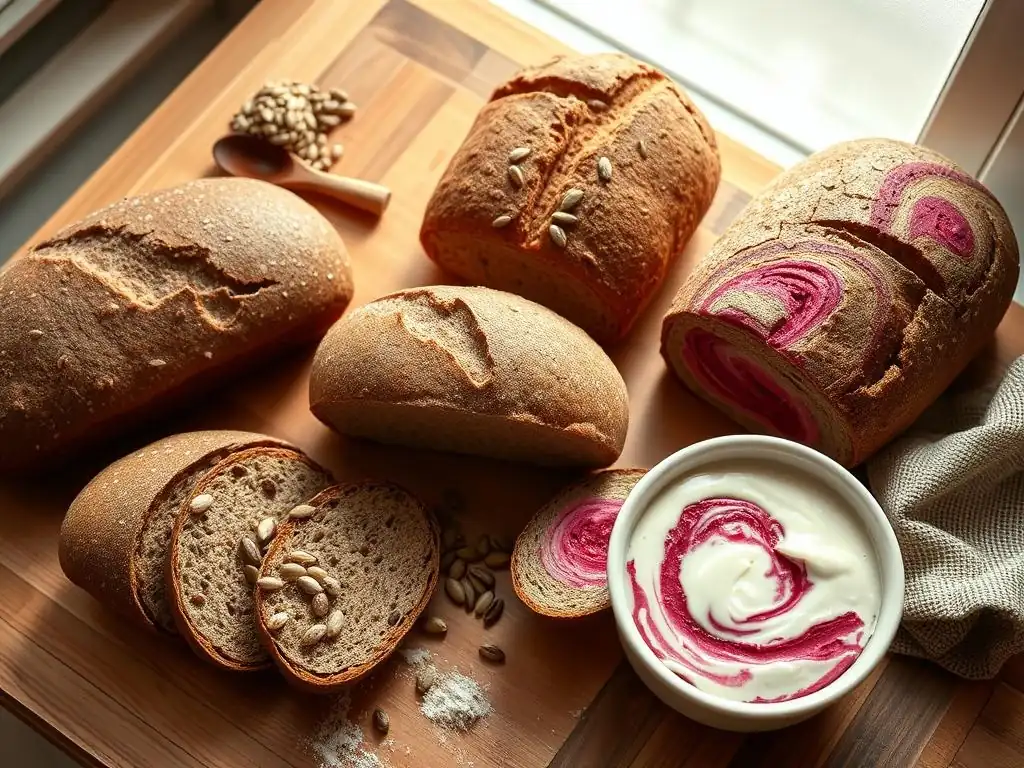
Sonnenblumenbrot, or "sunflower seed bread," is another popular German bread variation that incorporates sunflower seeds into the dough. While Sonnenblumenbrot can be made with various flour blends, it frequently includes a significant proportion of rye flour, often as a Roggenmischbrot. The addition of sunflower seeds contributes a pleasant nutty flavor and a delightful textural contrast to the dense crumb of the rye base.
Sunflower seeds can be added whole to the dough, sometimes after being soaked to prevent them from absorbing too much moisture from the bread during baking. They are often visible on the crust as well, adding to the visual appeal. The healthy fats and crunch of the sunflower seeds complement the earthy flavor of the rye beautifully, making this variation a nutritious and flavorful choice that highlights how versatile baking easy whole grain rye bread can be.
German Rye Bread: A Nutritious and Flavorful Staple
Health Benefits of German Rye Bread
German rye bread, especially varieties made with whole or coarse rye flour (like Types 1150 or 1800), is renowned for its significant health benefits, particularly when compared to refined wheat breads. Rye is an excellent source of dietary fiber, often containing significantly more fiber per slice than standard white wheat bread, potentially twice as much or more depending on the specific loaf. This high fiber content aids digestion, helps regulate blood sugar levels (giving it a lower glycemic index), and contributes to feelings of fullness, which can be beneficial for weight management.
Beyond fiber, whole grain rye bread provides a good source of various vitamins and minerals, including B vitamins, magnesium, phosphorus, and zinc. The fermentation process in sourdough rye bread can also improve the bioavailability of these nutrients and may be easier for some people to digest compared to yeast-leavened wheat bread. Incorporating easy whole grain rye bread into your diet is a delicious way to boost your intake of essential nutrients and fiber.
Serving Suggestions: Pairing Your Freshly Baked German Rye Loaf
The hearty flavor and dense texture of homemade German rye bread make it a perfect companion for a variety of foods. Its robust profile stands up well to strong flavors. It is traditionally served thinly sliced and buttered, often topped with savory ingredients.
Consider pairing it with:
- Cured meats like ham or salami
- Smoked fish, such as salmon or herring
- Strong cheeses, like aged cheddar or Gouda
- Pickled vegetables or sauerkraut
- Hard-boiled eggs
- Cream cheese and chives
It also makes an excellent base for open-faced sandwiches or can be served simply with soup or salad. The slightly tangy flavor of your easy whole grain rye bread provides a wonderful contrast to rich or creamy toppings, making it a versatile staple for any meal.
Conclusion: Embracing the Tradition of German Rye Bread Baking
The Joy of Baking and Sharing Homemade German Rye Bread
Baking authentic German rye bread at home is a deeply satisfying endeavor. From the initial nurturing of the sourdough starter to the final, patient waiting period as the loaf cools, each step is part of a rewarding process. The aroma that fills your kitchen as it bakes is incomparable, a warm, earthy scent that promises a truly wholesome and flavorful result.
Sharing a loaf of your homemade easy whole grain rye bread with friends and family brings a special kind of joy. It's more than just offering food; it's sharing the culmination of your effort, patience, and connection to a rich baking tradition. The appreciation for the unique texture and deep flavor of a well-made rye loaf is universal, making it a wonderful gift or centerpiece for any meal. Embracing the art of German rye bread baking allows you to create something truly special and share that delicious experience with others.
Frequently Asked Questions
What makes this rye bread recipe "easy"?
This recipe focuses on simplified steps and easy-to-find ingredients, making it accessible even for beginner bakers. We avoid complex techniques often associated with rye bread.
Is this recipe suitable for beginners who have never baked bread before?
Yes! The instructions are clear and step-by-step, with tips to guide you through each stage of the baking process. We focus on basic techniques.
Can I substitute other types of flour for the whole grain rye flour?
While you can substitute, using whole grain rye flour is crucial for the flavor and texture profile of rye bread. Replacing it entirely will significantly change the outcome.
How long does it take to make this whole grain rye bread from start to finish?
The total time, including preparation, proofing, and baking, is approximately 3-4 hours. However, much of this time is hands-off, allowing for other activities.
What are some tips for ensuring a successful loaf of whole grain rye bread?
Pay close attention to the dough consistency – it should be slightly sticky. Also, ensure adequate proofing time for optimal rise and texture.
Final Reflection: The Enduring Appeal of Simple, Wholesome Baking
The ease of baking healthy whole grain rye bread is not just a culinary skill; it's a gateway to a more mindful and nourishing lifestyle. This simple act of combining flour, water, and a touch of patience yields a loaf that's both deeply satisfying and surprisingly beneficial to our well-being. In a world obsessed with convenience, rediscovering the joy of homemade bread offers a powerful antidote to processed foods and their often-hidden consequences.
The enduring appeal of whole grain rye bread, for me, lies not just in its nutritional value but in the quiet ritual of its creation. It's a connection to a simpler time, a tangible link to traditions passed down through generations. The aroma alone, filling the kitchen with warmth and the promise of something wholesome, is a powerful sensory experience. Bread is the staff of life,
a simple phrase, yet it encapsulates the profound importance of this basic food in sustaining us, both physically and emotionally.
Now, I invite you to take this knowledge and apply it to your own kitchen. Don't be intimidated by the seemingly complex process; embrace the simplicity. Experiment with different additions, personalize your recipe, and share the joy of freshly baked bread with loved ones. The rewards – a healthier diet, a deeper connection to food, and the satisfaction of creating something beautiful from simple ingredients – are well worth the effort. Let the journey of baking your own easy whole grain rye bread begin!
Unleash Your Inner Baker: Bake Delicious Rye Today!
Thanks for taking the time to explore the world of healthy whole grain rye bread with us! We hope you've gained the confidence to tackle this delicious and nutritious loaf. Now it's time to put your newfound knowledge into action.
- Bake your own rye bread this week! Use the recipe and tips from the article as your guide – you'll be surprised how easy it is.
- Share your baking journey! Snap a picture of your finished loaf and post it on social media using #BakeWithEaseRye. Let's inspire others!
- Explore our other whole-grain recipes on BakeWithEase.com – we've got plenty more delicious adventures waiting for you!
Ready to experience the satisfying crunch and wholesome goodness of homemade rye? What’s your favorite whole grain to bake with?