
Baking Multiple Sourdough Rye Loaves at Once

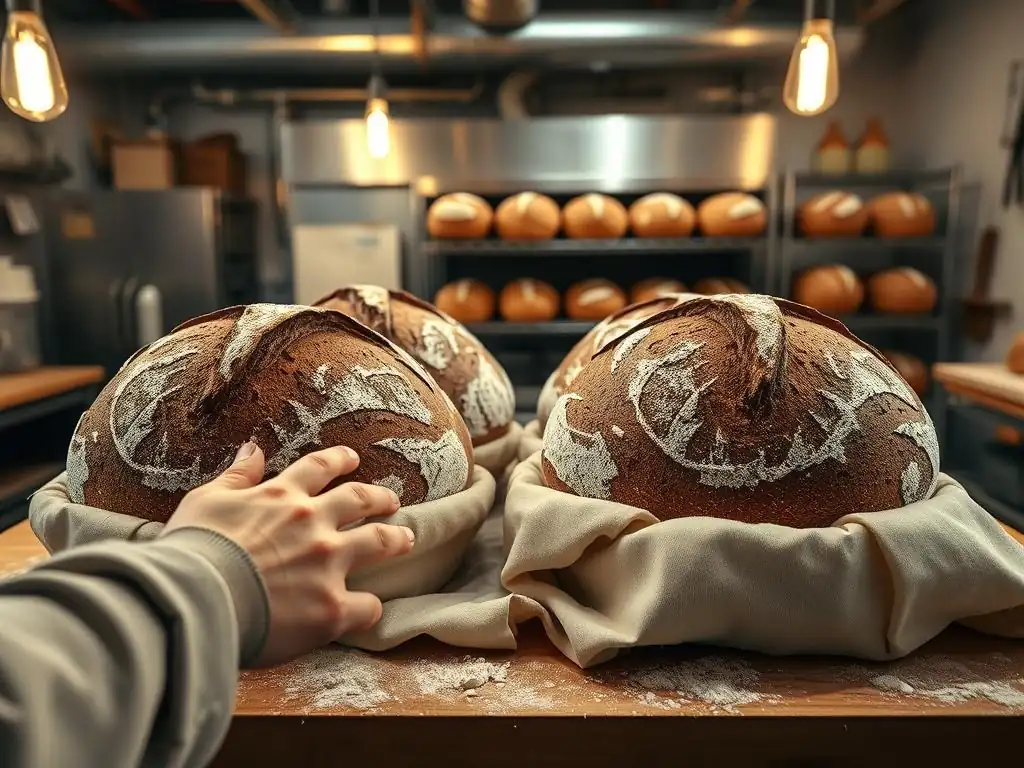
Welcome to BakeWithEase, your guide to effortlessly elevating your baking skills! Ever dreamt of filling your kitchen with the irresistible aroma of freshly baked sourdough rye? This article delves into the secrets of baking sourdough rye loaves in bulk, unlocking a world of efficiency and deliciousness. Discover how to streamline the process, ensuring perfectly consistent results every time, and prepare to impress with a bounty of flavorful, homemade bread. Ready to master the art of bulk sourdough rye baking? Let's get started!
- Baking Multiple Sourdough Rye Loaves at Once: A Guide for Efficient Baking
- Introduction: Mastering Bulk Sourdough Rye Baking with BakeWithEase
- Planning Your Bulk Sourdough Rye Baking Session
- Step-by-Step Guide to Baking Sourdough Rye Loaves in Bulk
- Troubleshooting Common Issues in Bulk Sourdough Rye Baking
- Tips for Successfully Baking Sourdough Rye in Bulk
- Sourdough Rye Loaf Storage and Enjoyment
- Conclusion: Enjoy the Rewards of Efficient Sourdough Rye Baking
-
Frequently Asked Questions
- What is the best way to prepare for baking multiple sourdough rye loaves at once?
- How can I ensure the quality of my sourdough rye loaves when baking in bulk?
- What are some common mistakes to avoid when baking sourdough rye loaves in large batches?
- Can I use the same recipe for baking different sizes of sourdough rye loaves?
- How can I store my sourdough rye loaves after baking?
- Final Reflection: The Joy and Mastery of Bulk Sourdough Rye Baking
- Unleash Your Inner Rye Master: Bake a Batch!
Baking Multiple Sourdough Rye Loaves at Once: A Guide for Efficient Baking
Introduction: Mastering Bulk Sourdough Rye Baking with BakeWithEase
Welcome to BakeWithEase! If you've fallen in love with the tangy flavor and hearty texture of sourdough rye bread, you might be wondering how to scale up your baking. Baking sourdough rye loaves bulk can be incredibly rewarding, saving you time in the long run and ensuring a steady supply of delicious bread for your family or friends. This guide will walk you through the process, from planning to troubleshooting, so you can confidently bake multiple loaves simultaneously.
Why Bake Multiple Sourdough Rye Loaves? Efficiency and More
Baking multiple sourdough rye loaves offers several compelling advantages. Primarily, it significantly improves efficiency. Instead of spending several hours over multiple days to bake one loaf at a time, you can consolidate the effort into a single baking session, handling mixing, bulk fermentation, shaping, and baking for several loaves concurrently. This is particularly beneficial if you have a busy schedule or if you frequently bake for larger groups or events.
Beyond time savings, baking sourdough rye loaves bulk can also be more energy-efficient. Heating your oven takes a considerable amount of energy, and maximizing its use by baking multiple items at once is generally more economical than running it repeatedly for single loaves. Furthermore, having several loaves on hand means less frequent baking, freeing up your time for other activities while still enjoying fresh, homemade bread.
Understanding the Challenges of Baking Sourdough Rye in Bulk
While the benefits are clear, baking sourdough rye loaves bulk does present unique challenges compared to baking a single loaf. Managing the dough volume is a primary hurdle; handling a large mass of sticky, rye-inclusive dough requires different techniques and tools than a small batch. Proper mixing and ensuring uniform gluten development across a large batch can be tricky.
Another significant challenge lies in proofing and baking. A large volume of dough ferments differently than a small one, often requiring adjustments to timing and temperature management. Getting multiple loaves to proof evenly can be difficult, especially if they are different sizes or shapes. During baking, ensuring even heat distribution and achieving consistent crust development across all loaves simultaneously in a home oven requires careful planning and often some trial and error to perfect.
Planning Your Bulk Sourdough Rye Baking Session
Successful baking sourdough rye loaves bulk starts with thorough planning. Before you even touch your starter, consider how many loaves you want to bake, the capacity of your equipment, and the specific requirements of your chosen sourdough rye recipe. Thinking ahead about scaling, tools, and ingredient adjustments will set you up for a smoother and more successful bake.
Recipe Scaling for Multiple Sourdough Rye Loaves
Scaling your recipe is the first crucial step in baking sourdough rye loaves bulk. Most standard recipes are designed for one or two loaves, often using around 500g of flour per loaf.
To bake four loaves, for instance, you would typically need to multiply all ingredient quantities by a factor of four. This means if your recipe calls for 500g rye flour, 500g strong bread flour, 200g starter, 700g water, and 20g salt for two loaves (total flour 1000g), scaling up for four loaves (total flour 2000g) would require approximately 1000g rye flour, 1000g strong bread flour, 400g starter, 1400g water, and 40g salt.
It's important to note that while scaling ingredient weights is generally a direct multiplication, the process doesn't always scale linearly. Mixing times might need slight adjustments, and fermentation times can sometimes be shorter due to the larger mass retaining heat more effectively. Always double-check your calculations, perhaps even rounding slightly for ease of measurement, especially when dealing with smaller amounts like salt. Using a baker's percentage calculator can be very helpful for accurate scaling.
Equipment Considerations for Large-Batch Sourdough Rye
When baking sourdough rye loaves bulk, assess whether your current equipment can handle the increased volume. You'll need larger mixing bowls or containers for bulk fermentation. A standard home stand mixer might struggle with dough quantities exceeding 1.5-2 kg of flour, so you might need to mix by hand or in batches if baking very large quantities, say 3kg of flour or more.
Consider your shaping surface; you'll need ample space to work with multiple portions of dough simultaneously. Proofing baskets (bannetons) or alternative proofing containers will also need to accommodate the number of loaves you plan to bake. Having enough bench scrapers and dough knives is also helpful for managing the large dough mass efficiently.
Oven Space and Temperature Control for Even Baking
Your oven's capacity is perhaps the most critical equipment constraint when baking sourdough rye loaves bulk. A typical home oven can usually fit two standard-sized loaf pans or 2-3 freeform boules on a single rack. Trying to cram too many loaves into the oven at once will impede air circulation, leading to uneven baking – some loaves might brown faster on one side, while others remain pale.
Effective temperature control is paramount. When you open the oven door to load multiple loaves, the temperature drops significantly. The oven needs sufficient time to recover. Baking multiple items also means they absorb more heat, potentially requiring a slightly longer baking time or a small temperature adjustment (sometimes slightly lower after the initial high heat blast) compared to baking a single loaf. Preheating thoroughly, often for 45-60 minutes, is essential to saturate baking surfaces and the oven cavity with heat.
Mixing and Shaping Tools for Consistent Results
Handling a large, sticky sourdough rye dough requires robust tools. A large, sturdy mixing bowl (at least 6-8 quarts for 2kg+ of flour) is necessary for the initial mix and bulk fermentation. If using a stand mixer, ensure its capacity is sufficient for the total dough weight; attempting to mix too much dough can strain the motor. For hand mixing, a large tub or food-grade bucket can be more manageable than a standard bowl.
For shaping, a large, non-stick surface (like a wooden board or silicone mat) is invaluable. Having multiple bench scrapers allows you to divide and handle portions of dough efficiently. Using proofing baskets of uniform size helps ensure the loaves are roughly the same shape and size before baking, contributing to more even baking results when baking sourdough rye loaves bulk.
Ingredient Adjustments for Bulk Fermentation
While the primary scaling is proportional, subtle adjustments might be considered when baking sourdough rye loaves bulk, particularly regarding starter amount and hydration, as the larger mass behaves differently during fermentation.
Adjusting Starter Amounts for Bulk Fermentation
When baking sourdough rye loaves bulk, the sheer volume of dough generates and retains more heat internally during fermentation. This can accelerate the process. To manage this, some bakers slightly reduce the percentage of starter used compared to a single loaf recipe. For example, if a single loaf recipe uses 20% starter (baker's percentage relative to total flour), you might reduce it to 18% or 15% when scaling up for multiple loaves, especially in a warm environment.
Alternatively, you can keep the starter percentage the same but monitor the dough's activity very closely, as the bulk fermentation may reach its peak faster. The goal is to achieve the desired level of fermentation (often a 50-70% increase in volume for rye-inclusive doughs) at a predictable rate, preventing over-fermentation before you're ready to divide and shape. Accurate kitchen scales are essential for precise starter measurements.
Hydration Levels in Large Sourdough Rye Batches
Rye flour is notoriously thirsty, and sourdough rye doughs can be quite sticky, especially at high hydration. When scaling up for baking sourdough rye loaves bulk, the dough mass is heavier and can feel slightly different to handle. While you generally shouldn't change the hydration percentage significantly, be prepared for the dough to feel potentially looser or more challenging to manage simply due to the increased volume.
Some bakers find they might need to slightly reduce the hydration by a tiny amount (perhaps 1-2%) in very large batches if they are struggling with handling, but this can impact the final crumb texture. It's often better to stick to the original hydration percentage and focus on developing good dough handling techniques for large volumes. Ensure accurate water measurement, as even a small error in a large batch can significantly affect the dough consistency.
Step-by-Step Guide to Baking Sourdough Rye Loaves in Bulk
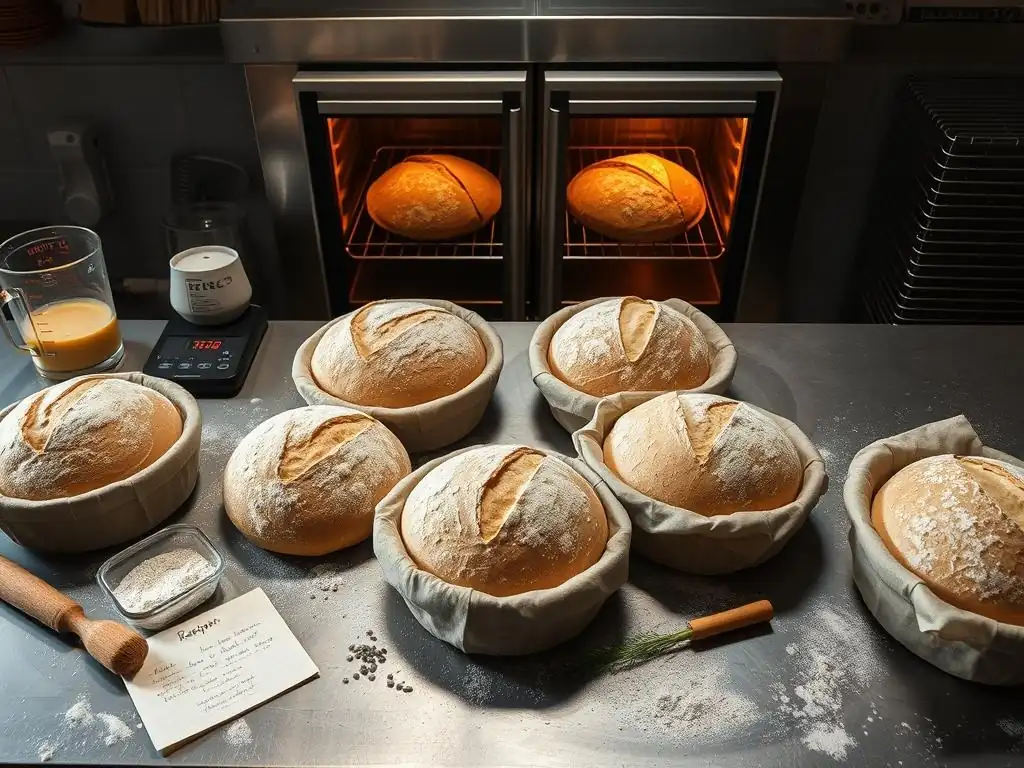
Once your planning is complete, it's time to mix, shape, and bake! This section outlines the process for baking sourdough rye loaves bulk, highlighting key considerations at each stage to ensure consistency and quality across all your loaves.
Step 1: Mixing the Dough for Multiple Rye Loaves
Begin by accurately weighing all your scaled ingredients. In a very large mixing bowl or tub, combine the scaled amount of warm water and your active sourdough starter. Whisk briefly to disperse the starter. Add the scaled amount of rye flour and bread flour, mixing until just combined – this is the autolyse stage. Cover and let rest for 20-60 minutes.
After the autolyse, add the scaled amount of salt. Now, the mixing begins. For a large batch, a heavy-duty stand mixer is ideal, mixing on low to medium speed until the dough develops some strength and becomes smoother, which might take 10-15 minutes or longer depending on the mixer and dough size. If mixing by hand, use the pincer method and stretch-and-fold technique in the bowl, which will take longer and require significant effort. The dough will be sticky due to the rye content, but it should start to hold together.
Bulk Fermentation Techniques for Sourdough Rye
Bulk fermentation, or the first rise, is where the magic happens. For baking sourdough rye loaves bulk, perform the bulk ferment in a single large container. This allows the entire mass to ferment together, benefiting from the collective warmth and microbial activity. After the initial mixing, perform a series of stretch-and-folds or coil folds every 30-60 minutes during the first 2-3 hours of bulk fermentation. This helps develop dough structure and equalize temperature throughout the large mass.
Monitor the dough's volume and texture rather than strictly following a time. Rye doughs don't typically double in size; look for a 50-70% increase in volume, a slightly domed surface, and the presence of bubbles on the surface and sides. The total bulk fermentation time for a large batch might be similar to or slightly shorter than a single loaf, depending on temperature and starter activity, often ranging from 4 to 8 hours at room temperature (around 70-75°F or 21-24°C).
Step 2: Dividing and Shaping the Dough
Once bulk fermentation is complete, gently transfer the large dough mass onto a lightly floured surface. Avoid degassing the dough too much. Use a bench scraper to divide the dough into equal portions based on the desired weight of your finished loaves (e.g., if aiming for four 800g loaves, divide the total dough weight by four). Weigh each portion to ensure uniformity.
Pre-shape each portion into a rough ball or log and let them rest for 15-25 minutes, covered, to allow the gluten to relax. This resting period is crucial, especially when handling multiple pieces of dough, as it makes the final shaping much easier. While one piece rests, you can pre-shape the next, creating an efficient workflow for baking sourdough rye loaves bulk.
Achieving Uniformity in Sourdough Rye Loaf Shapes
Uniformity in shaping is vital for even baking when dealing with multiple loaves. After the rest period, shape each dough portion into its final form – typically boules or batards for freeform loaves, or place them into prepared loaf pans if using. Rye dough can be stickier and less elastic than wheat-only dough, so handle it gently but confidently.
Aim for consistent tension on the surface of each loaf. For boules, gently round the dough, creating surface tension by pulling the dough towards you or rotating it against the surface. For batards, fold and roll the dough, ensuring a taut surface. Place each shaped loaf seam-side up into a well-floured banneton or seam-side down into a loaf pan. Consistent size and shape mean they will likely bake at a similar rate.
Step 3: Proofing the Sourdough Rye Loaves
Proofing is the final rise before baking. For baking sourdough rye loaves bulk, you'll have several loaves proofing simultaneously. Place the bannetons or pans in a consistent temperature environment. A large proofing box, a dedicated space in your kitchen, or even your oven (turned off, with the light on, can create a slightly warm environment) can work. Ensure they are covered to prevent drying out.
Cold proofing in the refrigerator (4-5°C or 39-41°F) is often the preferred method for sourdough, especially when baking multiple loaves. It slows down fermentation, allowing you more flexibility in your baking schedule (up to 12-48 hours or even longer) and developing deeper flavor. Plus, cold dough is easier to score. If proofing at room temperature, monitor the loaves closely; they will likely be ready in 1-3 hours, depending on the temperature and dough activity.
Managing Proofing Times in a Bulk Bake
When baking sourdough rye loaves bulk, the challenge is getting all loaves proofed correctly and ready to bake around the same time, especially if your oven can't fit them all at once. If you can bake all loaves simultaneously, aim for them to be perfectly proofed when the oven is ready. If you need to bake in batches (e.g., two loaves, then another two), stagger the proofing slightly or use the refrigerator to hold some loaves while others finish proofing or are baking.
A common strategy is to cold proof all loaves. Take out the first batch you plan to bake (say, two loaves) about 30-60 minutes before you intend to bake them, while the oven preheats. Leave the remaining loaves in the refrigerator. Once the first batch is in the oven, take out the next batch so they can warm up slightly before their turn. This requires careful timing but ensures each loaf goes into the oven at the optimal proofing stage.
Step 4: Baking Multiple Sourdough Rye Loaves Simultaneously
Preheating your oven is critical when baking sourdough rye loaves bulk. Allow ample time, often 45-60 minutes or even longer, to ensure the oven cavity, baking stone, or Dutch ovens are thoroughly heated to your target temperature (typically 450-500°F or 230-260°C). Crowding the oven will lead to uneven results, so only load as many loaves as can fit comfortably with space for heat circulation.
Carefully transfer the proofed loaves onto your hot baking surface (stone, steel, or into preheated Dutch ovens). Score each loaf quickly and confidently just before loading. If using Dutch ovens, place one loaf in each preheated pot, cover, and load into the oven. If baking on a stone/steel, load the scored loaves directly onto the hot surface using a peel.
Oven Temperature and Baking Time Adjustments for Multiple Loaves
When baking sourdough rye loaves bulk, you might need to adjust the standard baking time and temperature slightly. With more mass absorbing heat, the oven temperature inside will likely be lower than the thermostat setting, and the loaves will take longer to bake through. A common approach is to start baking at a high temperature (like 475°F or 245°C) for the first 15-20 minutes (with steam or covered) and then reduce the temperature (to 425-450°F or 220-230°C) for the remaining 20-30 minutes or until the internal temperature reaches 205-210°F (96-99°C).
Monitor all loaves, especially those positioned near the oven walls or door, as these areas can be hotter or cooler depending on your oven. Rotate the loaves halfway through the uncovered baking time if you notice uneven browning. Baking multiple loaves will generally add 5-15 minutes to the total bake time compared to a single loaf.
Steam Injection for Sourdough Rye Crust Development
Creating steam in the oven during the initial phase of baking is essential for achieving a beautiful, crispy crust on sourdough rye. Steam keeps the surface of the dough moist, allowing it to expand fully before the crust sets. When baking sourdough rye loaves bulk, generating enough steam for multiple loaves can be more challenging than for a single loaf.
If using Dutch ovens, the sealed environment naturally traps the steam released by the dough, making it an excellent method for multiple loaves if you have enough Dutch ovens to fit in your oven. If baking on a stone or steel, you'll need an external steam source. This can be achieved by placing a tray of hot water or ice cubes on the bottom rack of the oven just before loading the loaves. Ensure the steam method is effective and safe, especially when dealing with multiple loaves quickly.
Step 5: Cooling and Storing Your Sourdough Rye Bread
Once the loaves are baked to a deep golden-brown color and have reached the correct internal temperature, remove them from the oven. Immediately transfer them to a wire cooling rack. This step is non-negotiable! Allowing the loaves to cool completely on a rack is crucial for preventing a gummy interior and developing the final flavor and texture.
Resist the urge to slice into your beautiful sourdough rye loaves until they have cooled for at least 2-3 hours, or even longer for very large or dense loaves. As they cool, steam escapes, and the internal structure sets. Trying to slice too early will result in a sticky, dense crumb. Once completely cool, they are ready for storage or enjoying.
Troubleshooting Common Issues in Bulk Sourdough Rye Baking
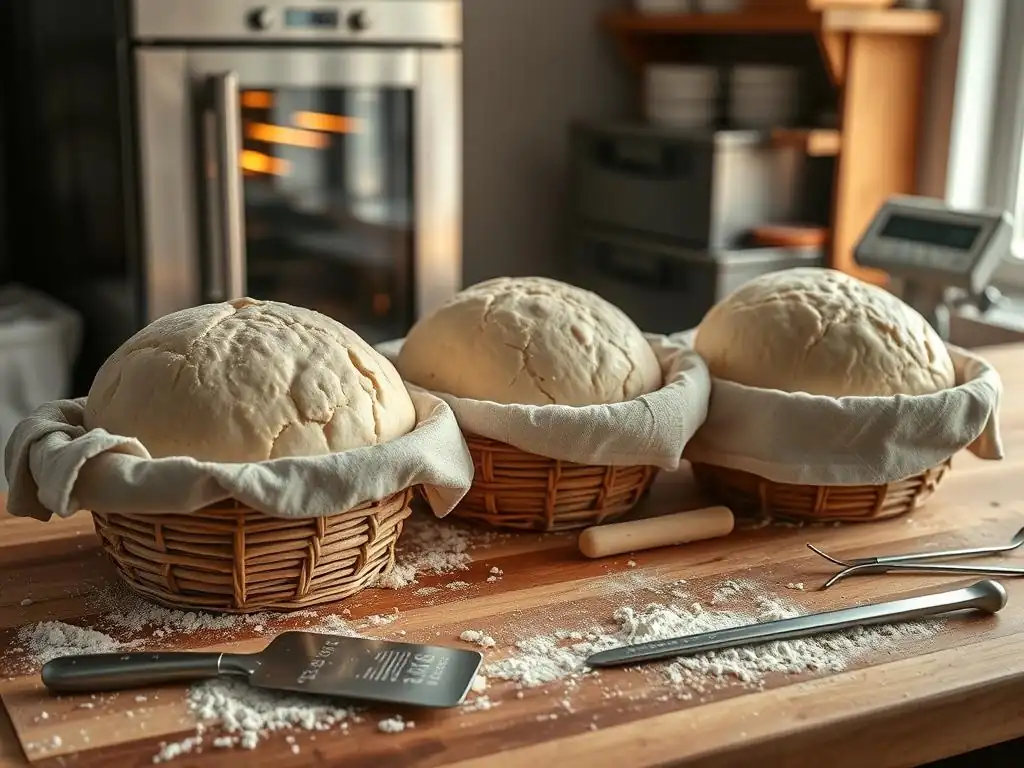
Even with careful planning, baking sourdough rye loaves bulk can sometimes present challenges. Knowing how to identify and address common issues will help you achieve consistent, delicious results every time.
Uneven Baking: Causes and Solutions
Uneven baking is a frequent problem when baking sourdough rye loaves bulk, characterized by loaves that are darker on one side, paler on the other, or inconsistent in crust development. The primary cause is usually uneven heat distribution within the oven, exacerbated by crowding too many loaves onto a single rack or having oven hotspots.
To mitigate uneven baking, ensure adequate space between loaves for air circulation. Rotate the loaves halfway through the baking time, carefully turning them 180 degrees or swapping their positions on the rack, if necessary. Preheating your oven for a sufficient duration (60+ minutes) with your baking surface inside helps saturate the oven with heat, leading to more stable temperatures. Baking in Dutch ovens can also help by creating a more uniform baking environment for each individual loaf.
Dough Over-Proofing: Prevention and Recovery
Over-proofing is a risk when baking sourdough rye loaves bulk because the large dough mass can ferment faster than a small one, especially in warm conditions. An over-proofed dough might look very puffy but lack structure, potentially collapsing when turned out or scored. The resulting bread can be dense and lack oven spring.
Prevention is key: monitor your bulk fermentation and proofing closely, relying on visual cues (volume increase, surface bubbles) rather than just time. Using a slightly lower percentage of starter or cold proofing in the refrigerator are excellent strategies to slow fermentation down and give you more control. If you suspect a loaf is slightly over-proofed before baking, handle it very gently, score it minimally, and bake it as quickly as possible. There's limited recovery for significantly over-proofed dough, but gentle handling can sometimes salvage it.
Dense or Gummy Crumb: Addressing Texture Problems
A dense or gummy crumb can be disappointing after the effort of baking sourdough rye loaves bulk. Several factors can contribute to this: insufficient fermentation, inadequate gluten development, baking at too low a temperature, not baking long enough, or slicing the loaf before it's fully cooled. Rye flour naturally produces a denser crumb than wheat, but it shouldn't be gummy.
Ensure your starter is active and your bulk fermentation reaches the target volume increase (50-70% for rye). Spend sufficient time during the initial mixing phase to develop some dough strength, even though rye inhibits gluten development. Always bake until the internal temperature is at least 205°F (96°C). Most importantly, allow the loaves to cool completely on a wire rack for several hours before slicing. Slicing hot bread traps steam and results in a gummy texture.
Tips for Successfully Baking Sourdough Rye in Bulk
Mastering baking sourdough rye loaves bulk involves refining your technique and understanding the nuances of your specific oven and environment. Here are a few extra tips to help you achieve consistently great results.
Pre-heating your oven properly for even baking
Proper oven preheating is non-negotiable when baking sourdough rye loaves bulk. Simply waiting for the oven's preheat indicator light to turn off is often not enough, especially when using a baking stone or steel. These surfaces, and the oven walls themselves, need time to absorb and radiate heat effectively.
Aim to preheat your oven for at least 45-60 minutes, or even longer, at the target high temperature (e.g., 475-500°F or 245-260°C) before loading your loaves. This ensures that the intense heat needed for initial oven spring and crust development is readily available to all loaves simultaneously, contributing to more even baking across the batch.
Utilizing a baking stone or Dutch oven for optimal results
Using a thermal mass like a baking stone, baking steel, or Dutch oven is highly recommended when baking sourdough rye loaves bulk on BakeWithEase. These tools absorb and retain heat extremely well, providing a consistent, high temperature to the base of the loaf, which is crucial for good oven spring and crust development.
Dutch ovens are particularly effective as they trap steam around the loaf during the crucial initial phase of baking, promoting maximum expansion and a thin, crisp crust. If baking multiple loaves on a stone or steel, ensure it is large enough to accommodate them comfortably without crowding. Remember to preheat these surfaces along with your oven for the full duration.
The importance of dough temperature control
Controlling the temperature of your dough throughout the process is a key factor in successful sourdough baking, and it becomes even more critical when baking sourdough rye loaves bulk. A larger dough mass will ferment faster at the same ambient temperature than a small one because it retains metabolic heat more effectively.
Monitoring your dough temperature (aiming for a consistent range, perhaps 75-80°F or 24-27°C during bulk fermentation) can help you predict fermentation times more accurately. Using cooler water during mixing or opting for a longer, colder bulk fermentation or proof in the refrigerator are excellent ways to manage dough temperature and slow down fermentation, giving you more control over your baking schedule, especially when handling multiple loaves.
Sourdough Rye Loaf Storage and Enjoyment
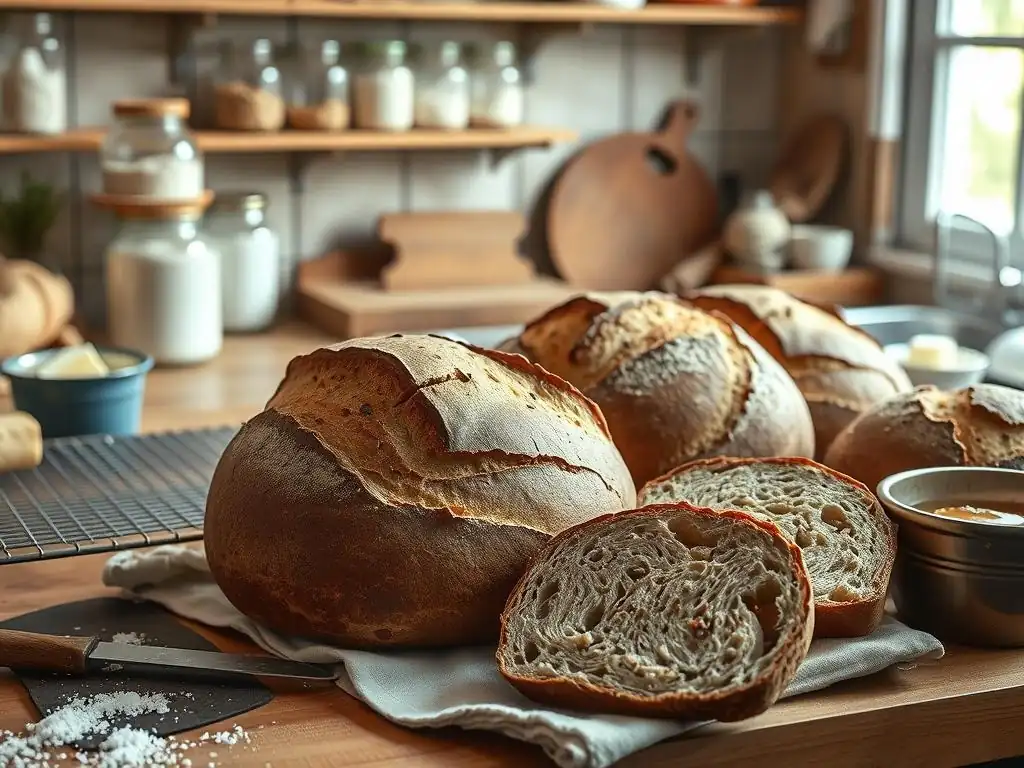
You've successfully navigated baking sourdough rye loaves bulk – now for the best part: enjoying your bounty! Proper storage ensures your hard work stays fresh and delicious for as long as possible.
Best Practices for Storing Freshly Baked Rye Bread
Once your sourdough rye loaves are completely cool (this can take several hours), proper storage is essential to maintain their quality. A whole loaf will stay fresh longer than a sliced one because the interior crumb is protected from drying out. Store whole loaves at room temperature in a paper bag or a breathable linen bread bag. Avoid airtight plastic bags or containers for long-term storage at room temperature, as they can trap moisture and make the crust soft and potentially lead to mold.
For longer storage, especially when baking sourdough rye loaves bulk, freezing is an excellent option. Allow the loaves to cool completely, then wrap each loaf tightly in plastic wrap followed by a layer of aluminum foil or place in a freezer-safe bag. Frozen sourdough rye can last for several months. Thaw at room temperature, and refresh the crust by warming the loaf in a moderate oven (350°F or 175°C) for 10-15 minutes. Sliced bread can also be frozen; place parchment paper between slices for easy retrieval.
Serving Suggestions for your Homemade Sourdough Rye
Your homemade sourdough rye bread, especially when you've perfected baking sourdough rye loaves bulk, is incredibly versatile and delicious. The tangy flavor and dense, chewy texture pair wonderfully with a variety of foods.
Enjoy it simply sliced with butter, or use it as the base for hearty open-faced sandwiches topped with smoked salmon, cream cheese, or savory spreads. It's fantastic toasted and served alongside soups or stews. Sourdough rye also makes exceptional croutons or breadcrumbs. Don't forget classic pairings like sharp cheeses, cured meats, or pickled foods, which complement the bread's characteristic tang.
Conclusion: Enjoy the Rewards of Efficient Sourdough Rye Baking
Baking sourdough rye loaves bulk might seem daunting initially, but with careful planning, attention to detail, and practice, it's a highly efficient way to keep your kitchen stocked with this delicious bread. By understanding how to scale your recipe, manage larger dough volumes, optimize your oven space, and troubleshoot common issues, you can successfully bake multiple loaves simultaneously. The satisfaction of pulling several perfectly baked sourdough rye loaves from your oven at once is immense, and the time saved means more opportunities to share your passion for baking. Happy baking!
Frequently Asked Questions
What is the best way to prepare for baking multiple sourdough rye loaves at once?
To successfully bake multiple sourdough rye loaves at once, it's essential to organize your ingredients and ensure you have enough space in your oven. Additionally, using bulk fermentation techniques will help manage the process efficiently.
How can I ensure the quality of my sourdough rye loaves when baking in bulk?
Maintaining consistent temperatures during fermentation and baking is crucial. Use a kitchen thermometer to monitor the dough and ensure even baking for all loaves, preserving their flavor and texture.
What are some common mistakes to avoid when baking sourdough rye loaves in large batches?
Common mistakes include over-proofing the dough and not adjusting the baking time for multiple loaves. Always keep an eye on the loaves’ appearance to prevent them from becoming overcooked or unevenly baked.
Can I use the same recipe for baking different sizes of sourdough rye loaves?
Yes, you can use the same recipe for different sizes, but be aware that baking times will vary. Adjust accordingly to ensure that each loaf is baked to perfection, regardless of its size.
How can I store my sourdough rye loaves after baking?
To maintain freshness, store your sourdough rye loaves in a cool, dry place wrapped in cloth or paper. For longer storage, consider freezing them in airtight bags to preserve their flavor and texture.
Final Reflection: The Joy and Mastery of Bulk Sourdough Rye Baking
The art of baking multiple sourdough rye loaves simultaneously isn't just about efficiency; it's about unlocking a deeper understanding of the process and achieving a consistently superior product. Mastering this technique allows home bakers to not only save time but also to refine their skills and produce a larger quantity of this complex and rewarding bread. The ability to bake in bulk translates directly to consistent quality and the joy of sharing delicious, homemade rye with friends and family.
The impact of sourdough baking, particularly with a challenging grain like rye, extends beyond the kitchen. It fosters a connection to traditional methods, encourages experimentation, and provides a tangible sense of accomplishment. The rhythmic kneading, the patient waiting, the satisfying aroma of the oven – these are all elements that contribute to a mindful and enriching experience. Bread is the staff of life,
they say, and in the act of making it, we connect to something primal and deeply satisfying. This is especially true when working with a grain as historically significant as rye.
Now, consider your own baking journey. What challenges have you faced? What triumphs have you celebrated? I encourage you to experiment with baking multiple loaves of sourdough rye at once. Embrace the potential for both success and learning from any setbacks. The rewards – the taste, the aroma, the satisfaction of creating something beautiful and delicious from simple ingredients – are well worth the effort. Don't be afraid to push your boundaries and discover the joy of mastering this rewarding skill.
Unleash Your Inner Rye Master: Bake a Batch!
Thanks for diving into the world of multi-loaf sourdough rye baking! You've just unlocked a new level of bread-making mastery. Now, let's put that knowledge into action.
- Bake a batch today! Challenge yourself to make at least two loaves using the techniques you just learned. Record your process and results—you might discover your new favorite bread.
- Share your sourdough journey! Post a picture of your magnificent loaves on social media and tag #BakeWithEaseRye – let's inspire others!
- Experiment with flavors: Try adding different seeds, spices, or even fruits to your next batch. What unexpected combination will you create?
What unique twist will you add to your next multi-loaf sourdough rye adventure?