
The pH of Pizza Dough: Understanding Acidity for Taste and Texture

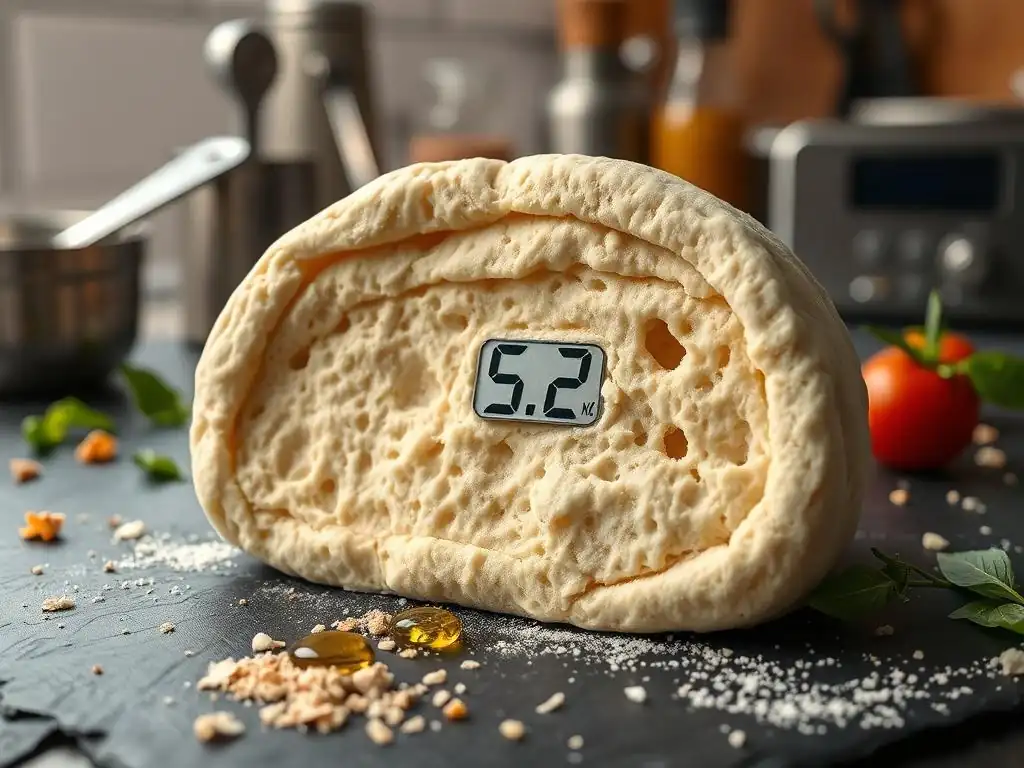
Welcome to BakeWithEase, where we unlock the secrets to baking perfection! Ever wondered how acidity affects the taste and texture of your favorite pizza? This week, we delve into the fascinating science of pizza dough pH levels. Discover how understanding this key factor can elevate your homemade pizza from good to unforgettable. Intrigued? Let's explore the world of pH and pizza together!
- Introduction: Why Pizza Dough pH Levels Matter for Baking
- Understanding pH: The Basics for Bakers
- The Ideal pH Range for Pizza Dough: Achieving Perfect Taste and Texture
- Factors Affecting Pizza Dough pH
- Adjusting Pizza Dough pH: Techniques for Control
- Troubleshooting Pizza Dough pH Problems
- Pizza Dough pH and Flavor Development: The Science of Taste
- Advanced Techniques: Mastering Pizza Dough pH for Consistency
- Conclusion: Elevate Your Pizza Baking with pH Knowledge
-
Frequently Asked Questions
- What is the ideal pH range for pizza dough, and why is it important?
- How does pH affect the taste and texture of pizza crust?
- What ingredients can influence the pH level of pizza dough?
- How can I measure the pH level of my pizza dough at home?
- What happens if my pizza dough's pH is too high or too low, and how can I fix it?
- Final Reflection: The Tangible Impact of pH on Pizza Perfection
- Unleash Your Inner Pizzaiolo: Master the Art of Dough pH!
Introduction: Why Pizza Dough pH Levels Matter for Baking
Have you ever wondered what gives a great pizza crust its perfect balance of flavor and texture? While ingredients like flour, water, yeast, and salt are fundamental, a less-discussed but equally critical factor is the dough's pH level. Understanding and controlling the pH of your pizza dough can significantly elevate your baking, moving you from good results to truly exceptional ones.
The acidity or alkalinity of your dough influences everything from gluten development and yeast activity to the final taste and browning of your crust. Paying attention to pizza dough pH levels is a mark of a baker looking to master their craft.
For home bakers looking to replicate the quality of their favorite pizzerias, delving into the science behind pizza dough pH levels offers a powerful tool. It allows for more consistent results, better troubleshooting, and the ability to intentionally manipulate flavor and texture profiles. Whether you're striving for a light, airy Neapolitan crust or a chewier New York style, managing pH provides a level of control that simply following a recipe might not offer. Let's explore why these seemingly small numbers on the pH scale hold such significance in the world of pizza making.
Understanding pH: The Basics for Bakers
What is pH and How Does it Relate to Baking?
pH is a scale used to specify the acidity or basicity of an aqueous solution. It's a measure of the concentration of hydrogen ions (H+) in a substance. In simple terms, a lower pH indicates higher acidity, while a higher pH indicates higher alkalinity (or basicity). In baking, and specifically with pizza dough, pH is crucial because it directly impacts the biochemical reactions happening within the dough. This includes the activity of enzymes that break down starches and proteins, the rate at which yeast ferments sugars, and the structural development of gluten.
The pH level of your pizza dough influences the speed and efficiency of fermentation. Yeast thrives within a specific pH range, and deviations can either slow down or accelerate its activity, affecting the dough's rise and flavor production. Furthermore, pH affects the dough's rheology – its flow and deformation properties. Acidic conditions, for example, can make dough more extensible and less elastic, which is desirable for stretching thin crusts. Understanding these interactions is key to mastering pizza dough pH levels.
The pH Scale Explained: From Acidic to Alkaline
The pH scale ranges from 0 to 14. A pH of 7 is considered neutral, like pure water. Solutions with a pH below 7 are acidic, and the lower the number, the stronger the acid (e.g., lemon juice is around pH 2).
Solutions with a pH above 7 are alkaline, and the higher the number, the stronger the base (e.g., baking soda dissolved in water is around pH 8-9). This logarithmic scale means that each whole pH value below 7 is ten times more acidic than the next higher value. Similarly, each whole pH value above 7 is ten times more alkaline than the next lower value.
For pizza dough, we are primarily concerned with the slightly acidic range. Freshly mixed dough typically starts with a pH in the range of 5.5 to 6.5, depending heavily on the ingredients used, particularly the flour and water. As the dough ferments, metabolic processes by yeast and lactic acid bacteria produce organic acids (like lactic acid and acetic acid), causing the pH to gradually decrease.
This drop in pH is a natural and desirable part of fermentation, contributing significantly to the dough's structure and characteristic tangy flavor. Monitoring this descent in pizza dough pH levels is vital for controlling fermentation and predicting the final outcome.
Measuring pH in Pizza Dough: Tools and Techniques
Accurately measuring the pH of pizza dough requires specific tools. While pH indicator strips can give a rough estimate, they are not precise enough for serious dough management. The most accurate method involves using a digital pH meter, ideally one designed for semi-solid samples. These meters typically have a probe that can be inserted directly into the dough. To get a reading, you usually need to insert the probe into a small sample of dough, ensuring the tip is fully in contact with the dough mass and not just air pockets.
Before measuring, it's crucial to calibrate your pH meter using buffer solutions of known pH (typically pH 4.01 and 7.01). This ensures the meter provides accurate readings. Consistency in measurement technique is also important; try to measure at the same point in the dough's lifecycle (e.g., immediately after mixing, after bulk fermentation, before shaping) and at a consistent temperature, as temperature can slightly affect pH readings. Keeping a log of your pizza dough pH levels at different stages helps you understand how your specific ingredients and process influence acidity over time.
The Ideal pH Range for Pizza Dough: Achieving Perfect Taste and Texture
Optimal pH for Different Pizza Styles: Neapolitan vs. New York
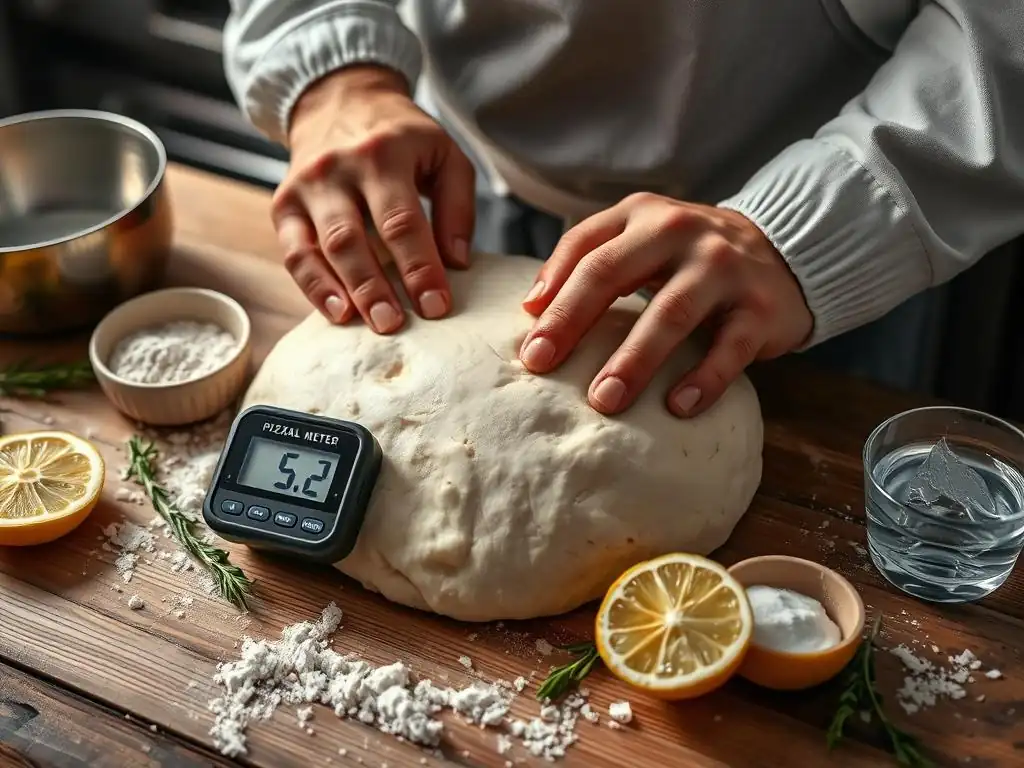
The "ideal" pH for pizza dough isn't a single number but rather a range that shifts depending on the desired outcome and pizza style. For traditional Neapolitan pizza, which is characterized by a very light, airy, and slightly chewy crust with good charring (cornicione), the target pH range is often slightly higher at the end of fermentation compared to styles requiring longer fermentation or a tangier flavor.
Neapolitan dough might finish fermentation with a pH around 4.8 to 5.2, after starting around 5.8 to 6.2. This range supports rapid fermentation and results in a dough that handles well for stretching thin.
In contrast, styles like New York pizza, which often involve longer, colder fermentation periods, typically see the dough's pH drop further. The extended fermentation allows more time for lactic and acetic acids to develop, resulting in a more pronounced tangy flavor profile. A typical New York style dough might start fermentation around pH 5.8-6.2 but could finish closer to pH 4.5 to 4.8. This lower pH contributes to the characteristic chewiness and flavor complexity. Understanding these nuances in target pizza dough pH levels is key to achieving authentic results for different styles.
How pH Impacts Gluten Development in Pizza Dough
pH plays a significant role in gluten development, the process by which proteins in flour (glutenin and gliadin) form an elastic network when hydrated and worked. Water is essential for this network to form, but the acidity of the water and the dough environment influences the protein interactions. A slightly acidic environment (pH 4-6) is generally favorable for gluten development. In this range, the proteins are more receptive to forming cross-links, leading to a strong, extensible network capable of trapping gases produced by yeast.
However, if the pH becomes too low (very acidic, below 4), it can start to break down the gluten network, leading to a sticky, weak, and less elastic dough that is difficult to handle and results in a dense crust. Conversely, a dough that remains too alkaline (pH above 7) can also negatively impact gluten structure, making it less extensible and potentially more brittle. The optimal range for effective gluten development and handling properties seems to be within the typical fermenting dough pH levels, generally between 4.5 and 6.0.
The Relationship Between pH and Yeast Activity in Pizza Dough
Yeast activity is highly sensitive to temperature and pH. Commercial baker's yeast (Saccharomyces cerevisiae) functions optimally in a slightly acidic environment, typically with a pH between 4.5 and 6.0. Within this range, the yeast efficiently converts sugars into carbon dioxide (for rise) and ethanol, along with other flavor compounds. As the dough's pH drops during fermentation due to acid production, it initially encourages yeast activity up to a point.
However, if the pH drops too low (below 4.5), yeast activity starts to slow down significantly. This is why over-fermented dough, which is very acidic, may not rise as vigorously in the oven. Lactic acid bacteria, which are often present in flour and contribute to flavor, are more tolerant of lower pH levels than yeast and continue producing acids even as yeast activity wanes. The interplay between yeast activity and the resulting drop in pizza dough pH levels is a delicate balance that requires monitoring and control for optimal fermentation and flavor.
Factors Affecting Pizza Dough pH
Flour Type and its Influence on pH
The type of flour used is a primary determinant of the initial pH of your pizza dough. Different flours have varying mineral content and inherent acidity. For example, whole wheat flour generally has a lower initial pH (more acidic) than refined white flour (like Type 00 or bread flour) due to the presence of the bran and germ, which contain more minerals and organic acids. The protein content and ash content (a measure of mineral content) of flour can also influence its buffering capacity – its ability to resist changes in pH.
Flours with higher ash content tend to have a higher buffering capacity, meaning they can absorb more acid produced during fermentation before their pH drops significantly. This is one reason why doughs made with certain traditional flours might ferment differently than those made with modern, highly refined flours. Understanding the typical starting pizza dough pH levels associated with different flour types helps predict the fermentation process and manage expectations.
Water Quality and its Impact on Dough Acidity
Water, being the solvent in the dough, plays a significant role in its initial pH and buffering capacity. The pH of your tap water can vary depending on your location and water source. Soft water tends to be slightly acidic or neutral and has low mineral content, offering little buffering capacity. Hard water, on the other hand, contains higher levels of dissolved minerals, particularly calcium and magnesium carbonates, which are alkaline.
Using hard water will result in a dough with a higher initial pH and greater buffering capacity. This means it will take longer for the acids produced during fermentation to lower the pH significantly. While some minerals in hard water can be beneficial for gluten development, excessively alkaline water can hinder fermentation and flavor development. Many professional bakers use filtered or specifically treated water to ensure consistency in their pizza dough pH levels and overall results.
Fermentation Time and Temperature: Adjusting pH Naturally
Fermentation is the process that most significantly lowers the pH of pizza dough over time. Yeast and, importantly, lactic acid bacteria (LAB) consume sugars in the dough and produce organic acids, primarily lactic acid and acetic acid. As these acids accumulate, the pH of the dough decreases. The longer the fermentation period, especially cold fermentation in the refrigerator, the more time these microorganisms have to produce acids, resulting in a lower final pH and a tangier flavor.
Temperature also affects the rate of acid production. Warmer temperatures (like room temperature) accelerate both yeast activity and LAB activity, leading to a faster drop in pH. Colder temperatures slow down yeast more significantly than LAB, allowing LAB to contribute more proportionally to the acid production, which often leads to more acetic acid (a sharper, vinegary tang) compared to the milder lactic acid favored by warmer fermentation. Manipulating fermentation time and temperature is a primary method bakers use to naturally control pizza dough pH levels and flavor.
The Role of Starters and Levain in Pizza Dough pH
Using a sourdough starter or levain introduces a complex ecosystem of wild yeasts and a high concentration of lactic acid bacteria into the dough from the beginning. Starters themselves are highly acidic, typically having a pH between 3.5 and 4.5. When incorporated into pizza dough, the starter immediately lowers the initial pH compared to a dough made solely with commercial yeast.
The presence of a large population of active LAB in the starter ensures significant acid production throughout the fermentation process. This leads to a lower final dough pH, which is characteristic of sourdough pizza and contributes significantly to its complex flavor profile and often a slightly crispier crust texture. The amount of starter used and its ripeness (acidity level) are critical factors influencing the final pizza dough pH levels in sourdough recipes.
Adjusting Pizza Dough pH: Techniques for Control
Using Acidic Ingredients: Adding Lactic Acid
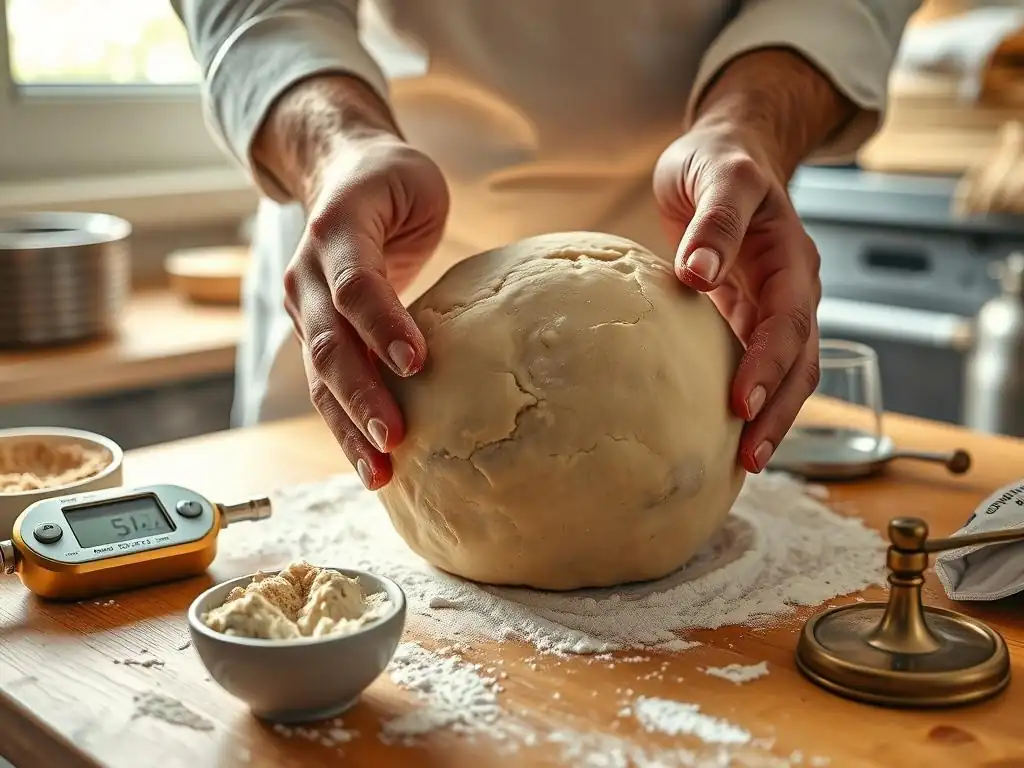
While fermentation naturally produces acids, bakers can sometimes make minor adjustments to pizza dough pH levels using external acidic ingredients, though this is less common for subtle shifts and more for specific technical reasons or flavor profiles. One method is adding food-grade lactic acid, which is the primary acid produced during fermentation. Adding a small amount (e.g., 0.1% to 0.5% of flour weight) can slightly lower the initial pH or compensate for issues like overly alkaline water.
Using other acidic ingredients like a touch of vinegar or lemon juice is generally not recommended for fine-tuning pH in pizza dough, as they introduce distinct flavors that may not be desirable and can adversely affect gluten structure if used in significant amounts. Lactic acid is preferred because it is a natural byproduct of fermentation and contributes a clean, tangy flavor that aligns with desired pizza dough characteristics.
Employing Alkaline Ingredients: Adding a Minimal Amount of Baking Soda
Adjusting dough to be more alkaline is rarely a goal for pizza dough, as the desired state is slightly acidic after fermentation. However, in extreme cases where water or other ingredients result in an unusually low initial pH, a tiny amount of an alkaline substance might theoretically be considered to raise it slightly, but this is an advanced and generally discouraged technique for pizza dough. Baking soda (sodium bicarbonate) is alkaline (pH ~8-9 in solution). Adding even a minuscule amount (e.g., less than 0.05% of flour weight, dissolved in water) would raise the pH.
However, adding baking soda to pizza dough is highly likely to negatively impact flavor (soapy taste) and texture (can make the crust tough or crumbly) and interfere with yeast activity. It's much better practice to address the root cause of low initial pH, such as excessively acidic water, rather than trying to correct it with alkaline additives. Focus on managing pizza dough pH levels through natural fermentation and ingredient selection.
Controlling Fermentation Time to Fine-Tune pH
As discussed earlier, fermentation time is the most natural and effective way to control the final pH of your pizza dough. If your dough is reaching your target pH too quickly, you can slow down fermentation by reducing the dough temperature (e.g., moving it to a cooler spot or the refrigerator) or reducing the amount of yeast/starter used. Conversely, if the pH is not dropping fast enough, you can increase the temperature or slightly increase the yeast/starter quantity.
Monitoring the pH over time allows you to predict when the dough will reach its optimal acidity for baking. For instance, if your recipe typically reaches its ideal pH of 4.8 in 48 hours at 4°C (39°F), and you notice it's only at pH 5.5 after 24 hours, you know it's on track.
If it's already at pH 4.9 after 24 hours, your fermentation is faster than usual, perhaps due to a warmer fridge or more active starter, and you might need to adjust your timing or temperature for the next batch. This iterative process of monitoring and adjusting based on pizza dough pH levels is key to consistency.
Monitoring and Adjusting Water Hardness for pH Balance
The hardness of your water directly impacts the initial pH and buffering capacity of your dough. If you have very hard water (high mineral content, high pH), it will resist the natural pH drop during fermentation. This can lead to longer fermentation times needed to reach the desired acidity and potentially impact flavor development by favoring lactic acid production over acetic acid in some cases. If you have very soft water (low mineral content, potentially lower pH), the dough will have less buffering capacity, and the pH may drop more rapidly.
While complex water treatment systems exist, home bakers can manage water hardness by using filtered water or blending tap water with distilled water to achieve a desired mineral content and pH. Some resources suggest optimal water hardness for baking is around 50-100 ppm (parts per million) total dissolved solids. Testing your water's hardness and pH allows you to make informed decisions about whether to adjust it, providing better control over the initial pizza dough pH levels and the subsequent fermentation process.
Troubleshooting Pizza Dough pH Problems
Dough is Too Acidic: Identifying and Correcting the Issue
If your pizza dough pH levels drop too low (significantly below 4.5) before you're ready to bake, it indicates over-fermentation or an imbalance in the fermentation process. Symptoms include dough that is excessively sticky, difficult to handle, lacks structure, and may have a very strong, sometimes unpleasant, sour smell. The resulting crust can be dense and lack oven spring because the low pH inhibits yeast activity and may degrade the gluten structure.
Correcting overly acidic dough on the fly is difficult. Prevention is key. Monitor your fermentation time and temperature closely, especially in warmer conditions or with very active starters. Reducing fermentation time, using less starter/yeast, or fermenting at a cooler temperature in future batches will help prevent the pH from dropping too low. Ensure your starter isn't overly acidic if using sourdough. In an emergency, a very small amount of baking soda could theoretically be used, but as noted, this negatively impacts quality and isn't a recommended solution for fine pizza.
Dough is Too Alkaline: Recognizing and Resolving the Problem
Dough that is too alkaline (pH remains above 5.5-6.0 after intended fermentation time) usually results from insufficient fermentation or ingredients with high pH and buffering capacity, particularly hard water or certain types of flour. Symptoms include dough that is less extensible, potentially tearing easily when stretched, and a crust that lacks the characteristic tangy flavor and may not brown as effectively. Yeast activity might also be slightly less efficient at the higher end of its optimal range.
To resolve dough that is too alkaline, ensure your fermentation environment is warm enough to support yeast and LAB activity, or extend the fermentation time. If using commercial yeast, verify its freshness. If using sourdough, ensure your starter is active and mature before adding it to the dough. Check the pH of your water and consider using filtered or softer water if it's excessively alkaline. Increasing the proportion of starter (for sourdough) or slightly increasing the fermentation temperature in future batches can help ensure the pizza dough pH levels drop sufficiently.
The Impact of Incorrect pH on Pizza Crust Texture
Incorrect pizza dough pH levels directly impact the final crust texture. Dough that finishes fermentation within the optimal slightly acidic range (e.g., pH 4.8-5.2 for Neapolitan, 4.5-4.8 for NY) develops a strong yet extensible gluten network capable of trapping fermentation gases. This results in a crust with good oven spring, a light and airy crumb structure (cornicione), and a desirable balance of chewiness and crispness.
If the dough is too acidic (pH < 4.5), the gluten network weakens, leading to a dense crust with poor rise and potentially a gummy texture. If the dough remains too alkaline (pH > 5.5-6.0 after fermentation), the gluten might be tighter and less extensible, making stretching difficult and potentially resulting in a tougher or less airy crust. Managing pizza dough pH levels is fundamental to achieving the desired textural attributes of your pizza crust.
Common Mistakes in pH Management and How to Avoid Them
One common mistake is not considering the pH of your water source. As discussed, water pH and hardness significantly impact initial dough pH and buffering capacity. Test your water and adjust if necessary. Another mistake is inconsistent fermentation temperature, which directly affects the rate of acid production and the final pH. Use a consistent environment or temperature-controlled fermentation.
Over-fermenting or under-fermenting relative to the desired pH is also common. This often stems from not monitoring the dough's progress beyond visual cues. Using a pH meter and tracking the drop in pizza dough pH levels provides objective data to guide your fermentation time. Finally, using an immature or overly acidic/alkaline starter (for sourdough) can throw off the dough's pH balance from the start. Ensure your starter is healthy and active with a stable, characteristic pH.
Pizza Dough pH and Flavor Development: The Science of Taste
How Acidity Contributes to Pizza Dough Flavor Complexity
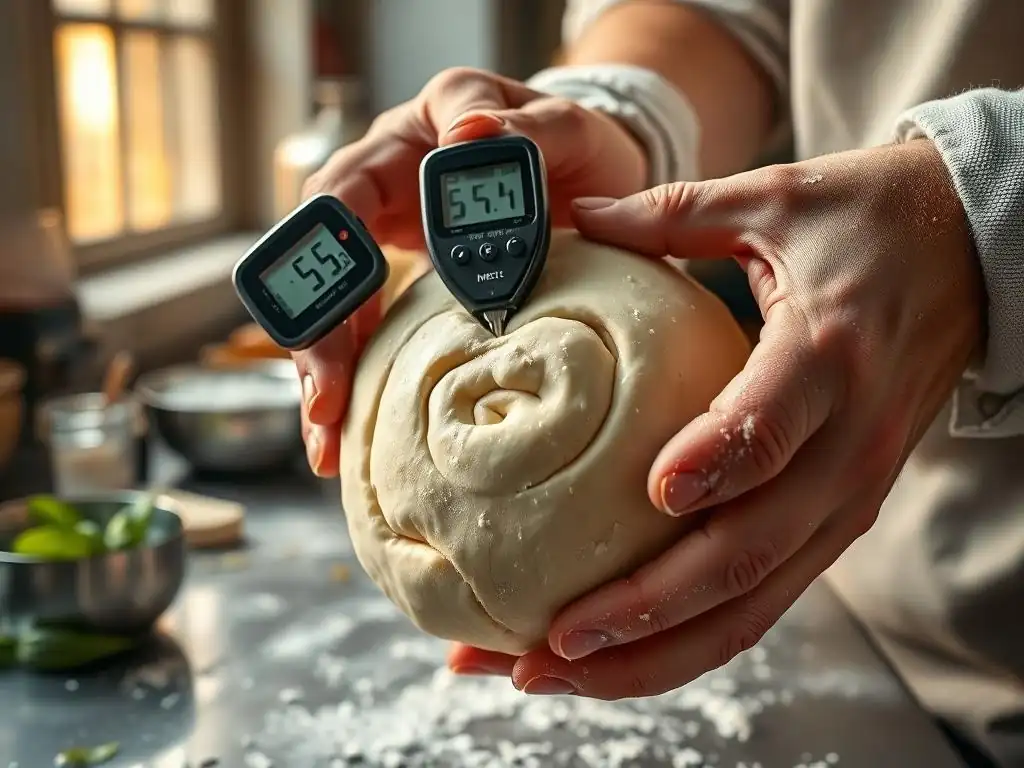
The tangy, complex flavors in fermented pizza dough are largely a result of the organic acids produced by yeast and, more significantly, lactic acid bacteria (LAB). Lactic acid contributes a clean, sour note, while acetic acid provides a sharper, more vinegary tang. The balance and concentration of these acids, directly related to the final pizza dough pH levels, are crucial for flavor. A pH that drops sufficiently low allows these acids to develop, creating depth of flavor that simple dough lacks.
Cold fermentation is particularly effective at developing complex flavors because it slows down yeast more than LAB, allowing LAB to produce more acids, including a higher proportion of acetic acid, over a longer period. This lower pH environment also facilitates enzymatic activity that breaks down starches into simpler sugars, which not only feed the yeast but also contribute to sweetness and browning during baking, further enhancing flavor complexity.
The Maillard Reaction and pH's Role in Browning
The Maillard reaction is a complex series of chemical reactions between amino acids and reducing sugars that occurs during baking, responsible for the desirable browning of the crust and the development of hundreds of flavor compounds. The rate and extent of the Maillard reaction are influenced by temperature, moisture, and pH.
A slightly acidic environment (pH 5-6) is generally optimal for the Maillard reaction in bread crusts. As the pH drops below this range (more acidic), the reaction can slow down. This is why doughs that are significantly over-fermented and very acidic might brown less effectively, resulting in a paler crust despite adequate baking time and temperature. Doughs that finish fermentation within the target pizza dough pH levels ensure sufficient sugars are available and the pH is conducive to achieving that beautiful, flavorful brown crust.
Balancing Acidity and Sweetness in Pizza Dough
Achieving a perfect balance of acidity and sweetness is key to a delicious pizza crust. The sweetness comes from the natural sugars present in the flour and the simpler sugars produced by enzymatic breakdown of starch during fermentation. The acidity comes from the lactic and acetic acids produced by fermentation. These two elements interplay to create a balanced flavor profile.
If the dough's pH is too high (not acidic enough), the crust might taste bland and lack depth. If the pH is too low (too acidic), the sourness can overpower the subtle sweetness and other flavors. Managing pizza dough pH levels through controlled fermentation allows bakers to fine-tune this balance. Longer, colder fermentation typically increases both acidity and the breakdown of starches (potentially increasing perceived sweetness and browning potential), leading to a more complex balance than a quick, warm ferment.
Advanced Techniques: Mastering Pizza Dough pH for Consistency
Creating a Pizza Dough pH Log for Tracking and Improvement
For serious bakers aiming for consistent, high-quality results, maintaining a pizza dough pH log is invaluable. This involves recording key data points for each batch: recipe details (flour type, hydration, salt, yeast/starter percentage), mixing time/method, water source/pH/hardness, initial dough temperature, fermentation temperature(s) and duration(s), and, critically, pH readings at specific intervals (e.g., after mixing, after bulk fermentation, before shaping, before baking).
Over time, this log reveals patterns. You can see how changes in ingredients, temperature, or timing affect the rate of pH drop and the final pH. This data allows you to troubleshoot problems more effectively and replicate successful batches consistently. For example, if you know your ideal NY style dough consistently hits pH 4.7 after 48 hours at 4°C, your log helps you identify when a batch is off-schedule and adjust accordingly. Tracking pizza dough pH levels moves your baking from guesswork to a data-driven process.
Experimenting with Different pH Levels for Unique Flavors
Once you are comfortable monitoring and controlling your standard pizza dough pH levels, you can start experimenting to create unique flavor profiles. For example, intentionally pushing a cold fermentation longer to achieve a lower pH (e.g., 4.3-4.5) can result in a significantly tangier, more sour crust, appealing to those who enjoy a strong sourdough flavor. Conversely, slightly shorter fermentation times or warmer temperatures might result in a higher final pH (e.g., 5.0-5.3), yielding a milder, less acidic crust.
You can also experiment with different flour blends or starter hydration levels, monitoring how they impact the pH trajectory and final flavor. For instance, incorporating a small percentage of whole wheat or rye flour will likely lead to a faster pH drop and potentially more acetic acid production compared to using only refined white flour. These controlled experiments, guided by pH measurements, allow you to intentionally develop specific flavor characteristics in your pizza dough.
Optimizing pH for Specific Ovens and Baking Environments
The type of oven you use and its temperature significantly impact the final moments of your pizza dough's life – the bake. While pH is primarily controlled during fermentation, the final dough pH influences factors like enzymatic activity (affecting sugar availability for browning) and gluten structure stability at high heat. Understanding your oven's characteristics can help you fine-tune your target dough pH.
For example, very hot ovens (like wood-fired ovens reaching 450°C+) bake pizzas extremely quickly (60-90 seconds). In this environment, rapid oven spring and quick crust setting are crucial. A dough with a pH in the optimal Neapolitan range (4.8-5.2) is well-suited for this, providing good extensibility for stretching and sufficient structural integrity to handle the intense heat.
For home ovens or deck ovens operating at lower temperatures (250-300°C+), where the bake takes longer (5-10 minutes), the dough has more time to set. The slightly lower pH often targeted for NY style (4.5-4.8) works well, contributing to chewiness and flavor development over the longer bake. Adjusting your target pizza dough pH levels based on your baking environment can enhance results.
Conclusion: Elevate Your Pizza Baking with pH Knowledge
Mastering the art of pizza making is a journey that involves understanding not just the ingredients and techniques, but also the science behind the transformation of dough. The pH level of your pizza dough is a fundamental scientific parameter that influences nearly every aspect of the final crust, from its texture and handling properties to its complex flavor profile and browning characteristics. By understanding what pH is, how it changes during fermentation, and the factors that influence it, bakers gain a powerful tool for control and consistency.
Moving beyond simply following recipes, paying attention to pizza dough pH levels allows you to troubleshoot issues effectively, replicate successful results consistently, and intentionally experiment to create crusts with specific attributes. Whether you're chasing the light chew of a Neapolitan or the tangy bite of a New York slice, monitoring and managing pH empowers you to achieve your baking goals. So, grab a pH meter, start tracking your dough's journey on the acidity scale, and elevate your pizza game to new heights.
Frequently Asked Questions
What is the ideal pH range for pizza dough, and why is it important?
The ideal pH range for pizza dough is generally between 5.0 and 6.0. This range is crucial for proper gluten development and flavor enhancement during fermentation.
How does pH affect the taste and texture of pizza crust?
A lower pH (more acidic) contributes to a tangier flavor and can impact the gluten structure, leading to a softer, more extensible dough. Higher pH can result in a bland taste and a tougher crust.
What ingredients can influence the pH level of pizza dough?
Ingredients like starter cultures (sourdough), acidic additives (lemon juice or vinegar), and even the type of flour used can significantly affect the pH level.
How can I measure the pH level of my pizza dough at home?
While professional bakers use pH meters, home bakers can use pH test strips to get a general idea. Remember that accurate measurements require careful calibration.
What happens if my pizza dough's pH is too high or too low, and how can I fix it?
If the pH is too high, consider adding a small amount of acidic ingredient like lemon juice. If too low, reduce fermentation time or use a less acidic starter in the next batch.
Final Reflection: The Tangible Impact of pH on Pizza Perfection
Understanding the pH of pizza dough isn't just a scientific curiosity; it's the key to unlocking truly exceptional pizza. The subtle shifts in acidity directly translate to noticeable differences in flavor, texture, and even the overall baking process. Mastering this seemingly small detail can elevate your pizza-making from good to truly unforgettable.
The exploration of optimal pH levels in pizza dough has profoundly impacted my own approach to baking, and I suspect it will resonate with many home bakers and professional pizzaiolos alike. The quest for the perfect crust is a timeless pursuit, and understanding the chemical reactions at play adds a new layer of appreciation to the craft. The proof is in the pudding, or in this case, the pizza.
This simple adage highlights the importance of practical application, and the tangible results of understanding the pH factor are undeniable. The subtle nuances in taste and texture are a testament to the power of this often-overlooked element.
Now, it's your turn to experiment! Don't be afraid to adjust your dough's acidity, meticulously tracking your results. Consider the impact of different flours, hydration levels, and fermentation times on the final pH. By embracing this scientific approach, you'll not only improve your pizza-making skills but also deepen your understanding of the culinary arts. The journey to pizza perfection is a continuous process of learning and refinement, and understanding the pH of your dough is a crucial step along the way.
Unleash Your Inner Pizzaiolo: Master the Art of Dough pH!
Thanks for diving into the fascinating world of pizza dough pH! You've now unlocked a key ingredient to creating truly exceptional pies. Ready to put your newfound knowledge into practice?
- Experiment with your next dough: Try adjusting your ingredient ratios based on what you've learned about pH and its impact on gluten development and flavor. This is your chance to discover the perfect balance for your taste!
- Share your pizza journey: Tell us about your baking adventures! Share your experiences, successes (and even those "oops" moments) – we'd love to hear from you in the comments below.
- Explore our other resources: Discover more baking tips and techniques on BakeWithEase.com. We've got a wealth of knowledge ready to help elevate your baking game.
What unique pH-adjusting technique will you try in your next pizza dough creation?