
The Stretch and Fold Method: Building Strength in Baguette Dough


Welcome to BakeWithEase, your partner in creating delicious baked goods!
Ever wondered how to achieve that perfect airy crumb and chewy crust in your homemade baguettes? This week, we're diving deep into a baker's secret weapon: the baguette dough stretch fold technique. Unlock the secrets to building dough strength and discover how this simple method can transform your baking. Curious to learn more and elevate your bread game? Let's get started...
- The Stretch and Fold Method: Building Strength in Baguette Dough for Perfect Baguettes
- Introduction to the Stretch and Fold Technique in Baguette Baking
- Understanding Gluten Development in Baguette Dough
- The Stretch and Fold Method: A Step-by-Step Guide for Baguette Dough
- Different Stretch and Fold Techniques for Baguettes
- Benefits of Using Stretch and Fold for Baguette Dough
- Troubleshooting Common Issues with Stretch and Fold
- Tips and Tricks for Perfecting Your Baguette Dough Stretch and Fold
- Stretch and Fold vs. Kneading: Which is Better for Baguettes?
- Advanced Techniques: Combining Stretch and Fold with Other Baguette Methods
- Conclusion: Mastering the Art of the Stretch and Fold for Exceptional Baguettes
-
Frequently Asked Questions
- What is the stretch and fold method, and why is it important for baguette dough?
- How often should I perform stretch and folds on my baguette dough?
- When should I not use the stretch and fold method?
- How do I perform a stretch and fold correctly?
- What are the key benefits of using stretch and fold compared to traditional kneading?
- Final Reflection: The Enduring Power of the Stretch and Fold
- Unleash Your Inner Boulanger: Master the Baguette!
The Stretch and Fold Method: Building Strength in Baguette Dough for Perfect Baguettes
Introduction to the Stretch and Fold Technique in Baguette Baking
Baking a perfect baguette is a journey, and one of the most crucial steps in developing that signature airy, open crumb and crispy crust lies in how you handle the dough. Unlike traditional vigorous kneading, the stretch and fold method offers a gentler, yet incredibly effective, way to build structure in high-hydration doughs like those used for baguettes. This technique relies on time and a series of gentle manipulations to align and strengthen the gluten network, which is essential for trapping the gases produced during fermentation.
Mastering the baguette dough stretch fold is a game-changer for home bakers. It's a technique that requires patience rather than brute force, making it accessible to everyone, regardless of physical strength. By understanding the science behind it and practicing the movements, you can transform a shaggy, wet dough into a smooth, elastic mass capable of yielding professional-quality baguettes right from your own oven. BakeWithEase is here to guide you through each step, ensuring your baguette dough develops the strength it needs for that coveted structure.
Why Stretch and Fold is Crucial for Baguette Dough Strength
Baguette dough typically has a high hydration level, often ranging from 70% to over 80% flour weight in water. This high water content makes the dough very sticky and difficult to knead traditionally without adding excessive amounts of flour, which can result in a dense loaf. The stretch and fold method allows you to develop gluten in this wet environment without incorporating extra flour. By gently stretching the dough upwards and folding it back onto itself, you are effectively aligning the gluten strands that are already present and beginning to hydrate.
This systematic manipulation, performed over a period of time with resting intervals, encourages the gluten network to become stronger and more elastic. Think of gluten strands like tiny elastic bands. When they are first mixed with water, they are tangled and weak.
The stretch and fold process helps to untangle them and arrange them in a more organized structure, like weaving threads into a strong fabric. This strengthened network is what gives the baguette dough the ability to hold its shape during proofing and baking and capture the carbon dioxide produced by the yeast, leading to that beautiful, open interior structure. Without sufficient dough strength from techniques like the baguette dough stretch fold, the dough would collapse, resulting in a flat, dense bread.
BakeWithEase's Guide to Mastering the Stretch and Fold
At BakeWithEase, we believe that understanding the 'why' behind a technique is just as important as knowing the 'how'. Our approach to the baguette dough stretch fold method focuses on building confidence through clear instructions and explanations. We break down the process into manageable steps, emphasizing the feel and appearance of the dough at each stage. This allows you to actively learn and adapt, rather than just blindly following a recipe.
Our guide will walk you through everything from the initial mix and rest period to the specific techniques used for stretching and folding the baguette dough. We'll cover how often to perform the folds, what to look for in terms of dough development, and how to troubleshoot common issues. Our goal is to empower you to not only execute the stretch and fold correctly but to understand why you are doing it, enabling you to adjust the technique based on the specific characteristics of your flour, hydration level, and kitchen environment, ensuring consistent success with your baguette dough.
Understanding Gluten Development in Baguette Dough
Gluten is the foundation of bread structure, and its proper development is paramount for achieving the desired texture in baguettes. It's formed when two proteins found in wheat flour, glutenin and gliadin, combine with water and are manipulated. This manipulation, whether through kneading or the stretch and fold method, causes these proteins to link together, forming an elastic network that can stretch and expand without breaking.
In the context of high-hydration baguette dough, managing gluten development is particularly delicate. Too much manipulation can tear the fragile network, while too little leaves the dough weak and unable to support its own structure. The stretch and fold technique provides a controlled way to develop this network gradually over time, allowing the gluten to form and strengthen without the risk of overworking that can occur with intensive kneading, especially in such wet dough. This method respects the dough's hydration level, promoting a relaxed yet strong structure ideal for the baguette's characteristic open crumb.
The Role of Gluten in Baguette Structure
The gluten network acts like a balloon within the baguette dough. As yeast ferments sugars, it produces carbon dioxide gas. The elastic gluten network traps this gas, causing the dough to rise and expand. During baking, this trapped gas expands further, creating the internal structure – the crumb – of the bread. A well-developed gluten network in baguette dough is strong enough to hold this expanding gas, preventing the bubbles from collapsing, which results in the airy, open holes characteristic of a great baguette crumb.
Beyond trapping gas, gluten also provides structural integrity to the baked loaf. It prevents the baguette from spreading out too much during proofing and baking, helping it maintain its elongated shape. Furthermore, the tension built into the gluten network through techniques like the baguette dough stretch fold contributes to the crust formation. As the bread bakes and the internal moisture turns to steam, the taut surface, supported by the strong gluten structure, allows the crust to expand and crisp up beautifully, often resulting in attractive oven spring and a crackling crust.
How Stretch and Fold Enhances Gluten Formation
The stretch and fold method actively encourages the development and alignment of the gluten network in baguette dough. Each time you stretch a portion of the dough upwards, you are elongating the existing gluten strands. When you fold that stretched portion back onto itself, you are layering these strands. Repeating this process from different sides of the dough, with rest periods in between, allows the gluten to relax after being stretched and then form new connections in its new layered configuration.
These rest periods are crucial. They give the gluten network time to hydrate further and for enzymatic activity to begin breaking down starches, making the dough more extensible. The gentle nature of the baguette dough stretch fold, compared to the mechanical force of kneading, is particularly beneficial for wet doughs.
It minimizes the risk of tearing the delicate gluten strands while still effectively building strength and elasticity. Over several cycles of stretching, folding, and resting (typically 3-5 cycles over 1.5 to 3 hours), the initially shaggy and weak dough transforms into a smooth, elastic, and resilient mass, visibly stronger and ready for shaping.
The Stretch and Fold Method: A Step-by-Step Guide for Baguette Dough

Mastering the baguette dough stretch fold is straightforward once you understand the basic movements. This guide outlines the typical process, assuming you've just mixed your ingredients. Remember, consistency and gentle handling are key.
Step 1: Initial Dough Mixing and Rest
Begin by mixing your flour, water, salt, and yeast (or starter) until just combined. The dough will likely be shaggy and sticky, especially given the high hydration typical of baguette dough. At this stage, the gluten network is barely formed. Cover the bowl and let the dough rest for an initial period, often called the autolyse (if only flour and water were mixed initially) or simply a resting period after all ingredients are combined. A rest of 20 to 30 minutes is common.
This initial rest allows the flour to fully hydrate and gives the gluten proteins a chance to start forming connections on their own, even without manipulation. It makes the dough less sticky and more extensible for the subsequent stretching and folding. This brief pause is a critical preparatory step before you begin actively building strength with the baguette dough stretch fold technique. It primes the dough for easier handling and more efficient gluten development.
Step 2: The First Stretch and Fold - The 30-Minute Mark
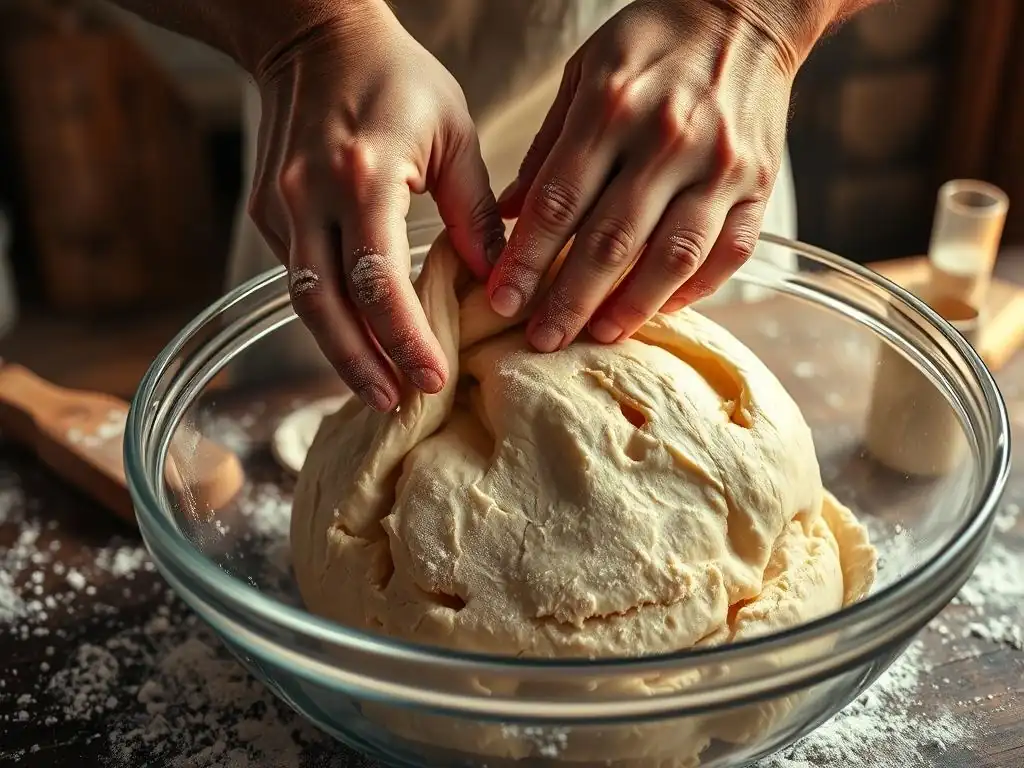
After the initial rest (around 30 minutes after mixing), it's time for the first stretch and fold. Wet your hands slightly to prevent sticking – this is much better than using dry flour. Reach under one side of the dough, grab a portion from the bottom, gently stretch it upwards without tearing it, and fold it over the top of the dough towards the opposite side.
Rotate the bowl about a quarter turn and repeat the stretch and fold process. Continue this for all four sides of the dough (or roughly four points around the bowl). The dough will still be relatively loose, but you should feel a slight increase in resistance compared to its initial state. This first set of folds begins the crucial process of aligning the gluten strands in your baguette dough. Cover the bowl again and let it rest.
Step 3: Subsequent Stretch and Folds - Intervals and Frequency
Subsequent stretch and folds are performed at regular intervals. For baguette dough, intervals of 30 to 60 minutes are typical. The exact timing can depend on the recipe, room temperature, and how quickly your dough is developing strength. During each rest period, the gluten network relaxes and strengthens further. When you perform the next set of folds, you'll notice the dough becomes progressively smoother, more elastic, and holds its shape better.
The number of stretch and fold cycles needed for baguette dough usually ranges from 3 to 5. By the third or fourth set of folds, the dough should feel significantly stronger, smoother, and more cohesive. It will resist stretching more and should form a relatively taut ball in the bowl. Continue performing the four-sided stretch and fold at the prescribed intervals until the dough shows good signs of strength and elasticity, indicating the baguette dough stretch fold process is effectively building structure.
Step 4: Gentle Handling of the Dough
Throughout the stretch and fold process, gentle handling is paramount. Avoid tearing the dough or being too rough. The goal is to encourage the gluten network to align and strengthen, not to break it. Use wet hands as needed to manage stickiness, rather than pulling forcefully. Think of it as coaxing the dough into submission, not wrestling with it.
Observe the dough after each fold and rest period. It should become progressively smoother and more elastic. If it starts to feel very tight or tears easily during a stretch, you may have done enough folds or need slightly longer rest periods between folds. The dough should feel alive and resilient, ready to spring back slightly when poked. Gentle handling throughout the baguette dough stretch fold process ensures the delicate structure required for an open crumb is preserved and developed properly.
Different Stretch and Fold Techniques for Baguettes
While the basic principle of stretching and folding remains the same, there are variations in technique that can be employed, often depending on the hydration level of the baguette dough or personal preference. Each method aims to build dough strength and structure effectively.
The Traditional Bowl Stretch and Fold
This is the most common and easiest technique, ideal for beginners working with baguette dough. As described in the step-by-step guide, the dough remains in the bowl throughout the process. You use wet hands to grab a portion of the dough from underneath, stretch it upwards, and fold it over the dough mass.
This method is straightforward because the sides of the bowl help contain the wet dough and provide leverage for the stretch. It's effective for building tension and layering the dough without requiring much counter space or making a mess. Performing the stretch and fold in the bowl allows you to easily see the dough's development and manage its stickiness, making it an excellent starting point for mastering the baguette dough stretch fold technique.
The In-Bowl Coil Fold Technique
The coil fold is a variation particularly useful for very high-hydration baguette dough (75% water or more) that is too slack to easily perform the traditional stretch and fold from the sides. For this technique, wet your hands and slide them under the center of the dough mass in the bowl. Gently lift the dough from the center, allowing the ends to hang down. As you lift, the dough will naturally stretch and coil under itself.
Once lifted a few inches, gently lower the dough back into the bowl, allowing the coiled ends to tuck underneath the center. Repeat this lifting and coiling motion 2-3 times around the bowl. This technique is gentler than the traditional stretch and fold and is very effective at building layers and strength in extremely wet doughs without tearing them. It's a fantastic way to manage sticky baguette dough while still promoting excellent gluten development.
The Lamination Technique: An Alternative to Stretch and Fold
While not strictly a stretch and fold in the typical sense, lamination is an advanced technique that serves a similar purpose: building significant strength and layers in high-hydration dough. It's often used in conjunction with, or sometimes instead of, the initial stretch and folds for baguette dough. After the initial mixing and rest, the dough is carefully turned out onto a lightly floured or wet surface and gently stretched or persuaded into a large, thin rectangle.
Once the dough is stretched thin (it can sometimes be stretched almost transparently), it is folded like a business letter – typically folding one-third over the middle, then the other third over that. This creates multiple layers of dough. Lamination is incredibly effective at building structure and incorporating air. It requires a very extensible dough and a bit more practice than the standard stretch and fold, but it can yield exceptional results for baguette dough, contributing to an incredibly open and even crumb structure. It's often performed once or twice early in the bulk fermentation.
Benefits of Using Stretch and Fold for Baguette Dough
Adopting the stretch and fold method for your baguette dough brings a multitude of benefits that contribute significantly to the final quality of your bread. It's a technique favored by many artisan bakers for its ability to gently yet effectively build structure.
Improved Dough Strength and Elasticity
The primary benefit of the baguette dough stretch fold is the significant improvement in the dough's strength and elasticity. As the gluten network develops and aligns through repeated stretching and folding, the dough transforms from a weak, slack mass into a robust, resilient structure. You'll feel the difference as it becomes easier to handle, shape, and score.
This enhanced strength means the dough can support its own weight and resist collapsing during the final proofing and baking stages. The elasticity allows it to expand gracefully in the oven, contributing to excellent oven spring. A strong, elastic baguette dough is fundamental to achieving the desired shape and volume of a classic baguette.
Enhanced Air Incorporation and Open Crumb Structure
While traditional kneading incorporates air directly, the stretch and fold method incorporates air more subtly by creating layers within the dough. Each fold traps a small amount of air between the layers. As the dough ferments and expands, these trapped air pockets contribute to the formation of the characteristic open crumb structure of a baguette.
Furthermore, the strong, elastic gluten network developed through the baguette dough stretch fold is highly effective at trapping the carbon dioxide gas produced by the yeast. This allows larger bubbles to form and remain intact during baking, leading to those beautiful, irregular holes that define a perfect baguette crumb. The gentle nature of the technique also helps preserve these delicate gas bubbles compared to more aggressive kneading.
Better Flavor Development Through Controlled Fermentation
The stretch and fold method is typically performed over a longer bulk fermentation period (often 2-4 hours or more) compared to the shorter, intensive kneading approach. This extended fermentation time, punctuated by the periodic folds, allows for slower, more complex flavor development. The yeast and bacteria (if using a sourdough starter) have more time to produce flavorful organic acids and compounds.
The gentle handling also helps maintain a consistent dough temperature, which is crucial for controlled fermentation. By building strength gradually with the baguette dough stretch fold, you allow the dough to develop both structure and flavor simultaneously, resulting in a more nuanced and delicious final product. This slower process is key to the depth of flavor found in artisan baguettes.
Troubleshooting Common Issues with Stretch and Fold
While the stretch and fold method is relatively forgiving, you might encounter a few challenges, especially when first learning the technique for baguette dough. Understanding how to identify and address these issues will improve your results.
Dough Too Wet or Sticky
A common issue with high-hydration baguette dough is excessive stickiness, making the stretch and fold difficult. If the dough feels unmanageably sticky even with wet hands, it might be slightly too hydrated for your flour or technique.
- Solution: Ensure your hands are adequately wet before touching the dough. If it's still sticking excessively, try using slightly less water in your next batch (e.g., reduce hydration by 2-3%). Alternatively, switch to a gentler technique like the coil fold, which is specifically designed for very wet dough. You can also try performing the folds on a very lightly wet counter surface rather than in the bowl, though this requires more practice. Resist the urge to add significant amounts of dry flour during the folds, as this will change the hydration and potentially toughen the dough.
Dough Not Strengthening Enough
If, after several sets of stretch and folds over the recommended time, your baguette dough still feels slack, weak, and doesn't hold its shape well, it might not be developing sufficient gluten strength.
- Solution: Ensure you are performing enough folds (typically 4 sides per cycle, 3-5 cycles total). Check your dough temperature; fermentation and gluten development are slower in cold dough. Aim for a dough temperature around 75-78°F (24-26°C). The type of flour can also play a role; ensure you are using a bread flour with adequate protein content (around 11-13%). If your room is cold, consider extending the resting time between folds to give the gluten more time to relax and align. Sometimes, simply adding one or two extra sets of stretch and fold can make a significant difference in the baguette dough's strength.
Over-Stretching the Dough
While you want to stretch the dough, doing so too forcefully or stretching too far can tear the developing gluten network, which is counterproductive. Signs of over-stretching include the dough tearing easily when you try to pull it up, or it becoming very tight and losing elasticity instead of gaining it.
- Solution: Be gentle! The stretch should be firm but controlled. Don't force the dough beyond its natural point of resistance. If you feel it's about to tear, stop stretching that portion and move to another side. If you suspect you've over-stretched during a cycle, simply give the dough a longer rest period (e.g., 45-60 minutes) before the next fold, allowing the gluten to recover. Reducing the number of folds in subsequent cycles can also help prevent further stress on the baguette dough.
Tips and Tricks for Perfecting Your Baguette Dough Stretch and Fold
Achieving consistent results with the baguette dough stretch fold technique comes with practice. Here are a few tips to help you perfect your method and get the most out of your dough.
Using Wet Hands to Prevent Sticking
This is perhaps the most important tip for handling high-hydration baguette dough. Keeping your hands wet (not dripping, but lightly moistened) prevents the dough from sticking to your fingers. This allows you to grip the dough firmly enough to stretch it without it adhering and tearing unevenly.
Have a small bowl of water next to your mixing bowl. Dip your fingers in the water before reaching into the dough for each stretch and fold. Re-wet as needed. This simple step makes the entire process much cleaner and easier, allowing you to focus on the feel of the baguette dough and the quality of the stretch.
Maintaining Consistent Intervals
Performing your stretch and folds at consistent intervals (e.g., every 30, 45, or 60 minutes) helps the dough develop strength evenly over time. Randomly folding the dough can lead to inconsistent gluten development.
Setting a timer after each set of folds is a good practice. While exact adherence isn't critical (a few minutes off won't ruin your bread), aiming for consistency helps you learn how the dough behaves over time and makes it easier to predict its development cycle. This structured approach to the baguette dough stretch fold contributes to predictable and positive results.
Adjusting the Number of Folds Based on Dough Hydration
The ideal number of stretch and fold cycles can vary depending on the hydration level of your baguette dough and the type of flour used. Very wet doughs (e.g., 80%+ hydration) often benefit from more frequent folds (e.g., 4-5 cycles) to build sufficient structure. Drier doughs (e.g., 65-70% hydration, though baguettes are usually wetter) might require fewer folds (e.g., 2-3 cycles) as they develop strength more readily through shorter kneading or fewer manipulations.
Pay attention to the dough's feel. If it feels strong and elastic after only three folds, you might not need a fourth or fifth. If it's still quite slack after four folds, an extra fold might be beneficial. Learning to read your dough is key, and adjusting the baguette dough stretch fold frequency based on its development is a sign of growing baking skill.
Stretch and Fold vs. Kneading: Which is Better for Baguettes?

The choice between stretch and fold and traditional kneading often depends on the type of bread being made and the desired outcome. While both methods develop gluten, they do so in different ways and can lead to different crumb structures.
Comparing Gluten Development Methods
Traditional kneading involves vigorously working the dough, typically on a counter, through pushing, pulling, and folding. This creates friction and rapidly aligns gluten strands. It's very effective for developing strength quickly and is often preferred for lower hydration doughs used for sandwich loaves or rolls, where a tighter, more uniform crumb is desired. Kneading can incorporate a lot of air initially but can also be more prone to overworking or tearing the gluten if not done carefully, especially with wet dough.
The stretch and fold method, conversely, relies on time and gentle manipulation. It develops gluten more gradually, allowing the dough to relax between cycles. This method is particularly well-suited for high-hydration doughs like baguette dough because it's less messy and builds strength without adding extra flour. It excels at creating layers within the dough, which contributes to the open, irregular crumb structure highly prized in artisan baguettes.
When to Choose Stretch and Fold over Traditional Kneading
For baguette dough, the stretch and fold method is generally considered superior, especially for home bakers working with high hydration levels. Its advantages include:
- Managing high hydration: It's much easier to handle wet, sticky dough using stretch and fold in a bowl or with wet hands than attempting to knead it vigorously on a floured surface.
- Promoting open crumb: The layering effect and gentler development of the gluten network are ideal for achieving the large, irregular holes characteristic of a baguette.
- Less intensive: It requires less physical effort than traditional kneading, relying more on time and patience.
- Reduced risk of overworking: The periodic resting periods make it less likely to accidentally overwork the dough compared to continuous kneading.
While a brief period of initial mixing or even a few minutes of light kneading might precede the stretch and fold process, the bulk of the gluten development for artisan baguette dough is often achieved through multiple cycles of the gentle baguette dough stretch fold technique.
Advanced Techniques: Combining Stretch and Fold with Other Baguette Methods
Once you're comfortable with the basic baguette dough stretch fold, you can explore how it interacts with other common artisan bread techniques to further enhance the quality of your baguettes.
Using Stretch and Fold in Conjunction with Autolyse
Autolyse is a technique where flour and water are mixed and allowed to rest for 20 minutes to several hours before adding salt and yeast/starter. This initial rest allows the flour to fully hydrate and enzymatic activity to begin breaking down starches, which makes the dough more extensible.
Combining autolyse with the baguette dough stretch fold is a powerful approach. The autolyse step makes the dough much easier to stretch without tearing once the salt and leavening are added. You'll typically add the remaining ingredients after the autolyse, mix them in gently, and then begin your series of stretch and folds at regular intervals during the bulk fermentation. The autolyse preps the dough, and the baguette dough stretch fold builds the final structure, resulting in a dough that is both extensible and strong.
Incorporating Stretch and Fold with Cold Fermentation
Cold fermentation (retarding the dough in the refrigerator) is a technique used to slow down fermentation, allowing for longer flavor development and improved handling. The stretch and fold method fits seamlessly into a cold fermentation schedule for baguette dough.
Typically, you would perform 2-3 sets of stretch and folds at room temperature over the first 1-2 hours of bulk fermentation to build initial dough strength. After these initial folds, the dough is then transferred to the refrigerator for a long, slow fermentation (often 12-48 hours). While the dough is cold, fermentation is slow, but enzymatic activity continues to break down proteins and starches, further enhancing flavor and digestibility. The strength built by the initial room-temperature baguette dough stretch fold cycles helps the dough maintain its structure throughout the long cold proofing period.
Conclusion: Mastering the Art of the Stretch and Fold for Exceptional Baguettes
The stretch and fold method is more than just a step in a recipe; it's a fundamental technique for anyone aspiring to bake truly exceptional baguettes. By gently manipulating your baguette dough over time, you are actively participating in the magical process of gluten development, transforming simple ingredients into a living, breathing mass capable of incredible structure and flavor. This technique, favoring patience and finesse over brute force, makes the art of artisan bread baking accessible and rewarding.
Embracing the baguette dough stretch fold allows you to cultivate a deeper understanding of your dough. You learn to feel its strength developing with each fold, observe its transformation over time, and appreciate how simple actions contribute to complex results. The payoff is significant: a baguette with that desired open, airy crumb, a thin, crispy crust, and a depth of flavor that is simply unmatched by breads made with less nuanced techniques. It's a skill that will elevate all your high-hydration baking endeavors.
Achieving the Perfect Baguette Crumb and Crust with Proper Technique
The ultimate goal of using the baguette dough stretch fold is to lay the groundwork for that iconic baguette interior and exterior. A properly strengthened dough from this technique will hold the gas produced during fermentation, leading to large, irregular holes in the crumb. It will also have the necessary surface tension to expand beautifully in the oven, resulting in a thin, crackling crust.
Remember that while stretch and fold is vital, it's part of a larger process. Combining this technique with proper shaping, scoring, and baking with steam (to allow maximum oven spring before the crust hardens) is essential. But without the underlying strength and structure provided by effective baguette dough stretch fold cycles, achieving that perfect balance of open crumb and crispy crust would be significantly more challenging. It is the foundation upon which the rest of your baguette-making efforts are built.
Further Resources for Baguette Baking on BakeWithEase.com
Exploring the world of baguette baking offers endless opportunities for learning and refinement. The baguette dough stretch fold is just one piece of the puzzle. On BakeWithEase.com, you can find a wealth of resources to continue your journey.
We offer detailed guides on everything from understanding flour types and hydration levels to mastering shaping techniques for baguettes, implementing cold fermentation schedules, and achieving optimal steam in your home oven. Dive into our collection of baguette recipes, watch step-by-step video tutorials (available on our site), and join our community of bakers. Whether you're troubleshooting a sticky dough or aiming for a more open crumb, BakeWithEase.com is your comprehensive guide to mastering the art of the baguette. Keep practicing your baguette dough stretch fold, and happy baking!
Frequently Asked Questions
What is the stretch and fold method, and why is it important for baguette dough?
The stretch and fold method is a technique used to develop gluten in dough without kneading. It's crucial for baguette dough because it creates a stronger dough structure leading to better oven spring and a more open crumb.
How often should I perform stretch and folds on my baguette dough?
Typically, you would perform stretch and folds on baguette dough 3-4 times during the first hour or two of bulk fermentation. This depends on your dough's strength and the recipe's instructions.
When should I not use the stretch and fold method?
Avoid stretch and folds if your dough is already very strong or if the recipe specifically advises against it. Overworking the gluten can result in a tough and dense baguette.
How do I perform a stretch and fold correctly?
Gently lift one side of the dough, stretch it upwards, and fold it over the center. Rotate the bowl 90 degrees and repeat until all sides have been stretched and folded. This is repeated several times during bulk fermentation.
What are the key benefits of using stretch and fold compared to traditional kneading?
Stretch and fold is gentler on the dough, preserves more flavor and gas production, and it's easier to manage with wetter, higher hydration doughs, which are commonly used for baguettes.
Final Reflection: The Enduring Power of the Stretch and Fold
The seemingly simple act of stretching and folding baguette dough is, in reality, a profound metaphor for the process of growth and development. Mastering this technique isn't just about achieving a perfect airy crumb; it's about understanding the delicate balance between structure and resilience, a balance mirrored in countless aspects of life. The patience and attention required translate far beyond the baking bowl.
The impact of the stretch and fold extends beyond the immediate creation of a beautiful baguette. It speaks to a deeper appreciation for the slow, deliberate processes that yield the most rewarding results. This mindful approach to baking, focusing on the subtle nuances of gluten development, resonates with a growing cultural emphasis on artisanal craftsmanship and the value of slowing down. The best things in life are not things; they are experiences.
This quote perfectly encapsulates the satisfaction derived not just from the final product, but from the journey of creating it, a journey mirrored in the repetitive yet transformative stretch and fold.
Now, consider your own "dough." What aspects of your life require the same patient nurturing, the same careful attention to detail? What seemingly small actions, repeated consistently, can lead to significant growth and strength? Embrace the stretch and fold philosophy – commit to the process, trust the method, and discover the remarkable results that await you, both in your baking and in your life.
Unleash Your Inner Boulanger: Master the Baguette!
Thanks for taking the time to explore the secrets of the stretch and fold method! We hope you now feel confident in your ability to create strong, beautiful baguette dough. Ready to put your new skills to the test?
- Bake your first perfect baguette: Gather your ingredients, follow the recipe, and experience the satisfaction of crafting your own delicious bread. Don't be afraid to experiment!
- Share your baking journey: Post a picture of your baguette creation on social media and tag #BakeWithEaseStretchAndFold – we'd love to see your results!
- Explore more advanced techniques: Dive deeper into the world of bread baking by checking out our other articles on sourdough starters and advanced shaping techniques.
What unique twist will you add to your next baguette? Let us know in the comments below!