
Achieving Consistent Piping: Pressure and Pace

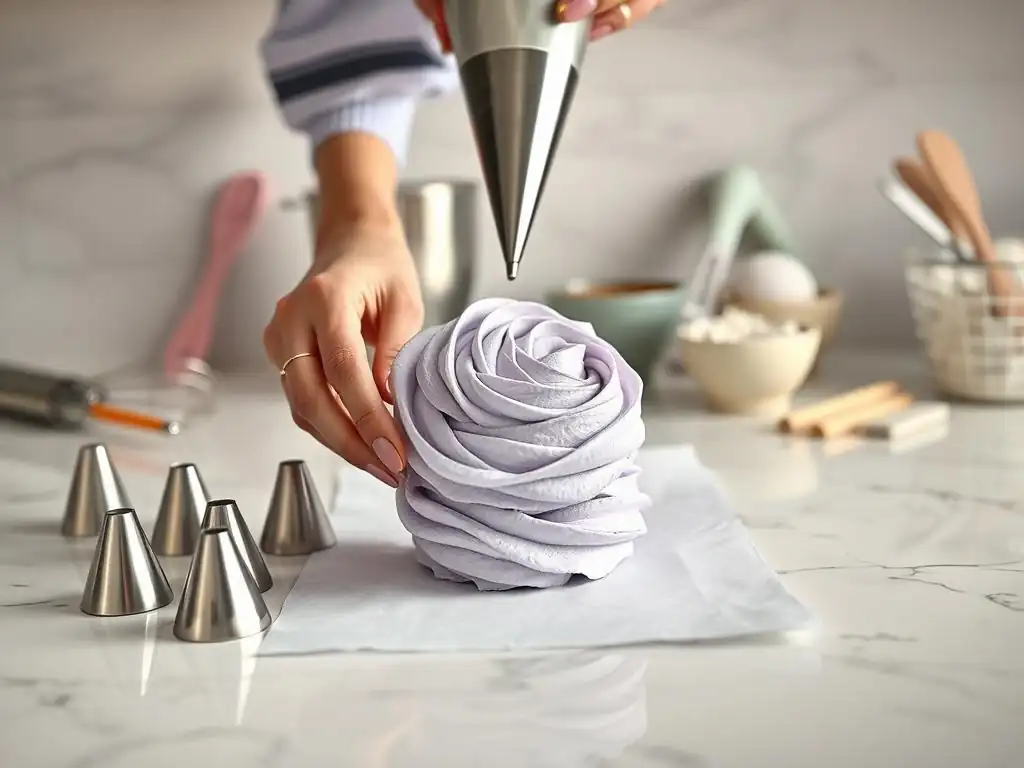
Welcome to BakeWithEase, your partner in creating delightful baked goods! Ever struggled with uneven swirls or shaky lines when decorating? This week, we're diving deep into the secrets of achieving consistent piping buttercream frosting. Discover how mastering pressure and pace can transform your creations from amateur to artistry, and unlock the potential for truly professional-looking desserts. Intrigued? Let's get started!
- Mastering Buttercream Piping: Your Guide to Consistent Results
- Understanding Pressure Control for Uniform Piping
- Maintaining a Steady Pace for Flawless Buttercream Designs
- Consistent Piping Buttercream Frosting Tips: Key Techniques
- Troubleshooting Common Piping Problems: Pressure and Pace Issues
- Advanced Piping Techniques: Building on a Solid Foundation
- Beyond the Basics: Continued Practice and Experimentation
- Conclusion: Your Path to Consistent Piping Success
-
Frequently Asked Questions
- What is the most important factor in achieving consistent piping with buttercream frosting?
- How do I avoid air bubbles when filling my piping bag with buttercream?
- What kind of piping tip is best for beginners trying to achieve consistent results?
- How can I practice my piping skills without wasting a lot of buttercream?
- What should I do if my buttercream is too stiff for smooth piping?
- Final Reflection: Mastering the Art of Consistent Piping
- Unlock Your Perfect Piping: Master the Art Today!
Mastering Buttercream Piping: Your Guide to Consistent Results
Consistent piping is often the difference between a homemade treat and a professionally finished dessert. Whether you're decorating a simple cake, adding borders to cupcakes, or creating intricate designs, achieving uniform lines, dots, and swirls is fundamental. This requires a solid understanding and control of two primary elements: the pressure you apply to the piping bag and the pace at which you move it. Mastering these can elevate your baking decorations significantly, making them look polished and intentional.
Developing reliable control over your piping bag takes practice, but the principles are straightforward. Think of it like learning to draw – you need to control how hard you press the pencil and how quickly you move it to get the desired line thickness and shape. With buttercream frosting, the consistency of your medium adds another layer, but focusing on pressure and pace provides a strong foundation for all your decorating endeavors. These consistent piping buttercream frosting tips are essential for anyone looking to improve their decorative skills.
Why Consistent Piping Matters for Beautiful Baking
Consistent piping is crucial for creating visually appealing baked goods. Imagine a birthday cake with a border of piped shells; if some shells are large and others are small, or if the lines are wobbly, the overall presentation suffers. Uniformity signals skill and attention to detail, making your cakes, cupcakes, and cookies look professionally made even if you're a home baker. For example, piping identical rosettes on a batch of a dozen cupcakes ensures each one is equally enticing.
Moreover, consistency isn't just about aesthetics; it affects the structure and balance of your decoration. A stable border requires uniform application, and delicate details need steady hands and even pressure. Inconsistent piping can lead to structural weaknesses, such as borders that collapse or designs that look lopsided. Achieving consistency, therefore, improves both the beauty and the integrity of your piped decorations.
The Importance of Practice and Technique
Like any skill, mastering consistent piping requires dedicated practice. Simply knowing the techniques isn't enough; you need to build muscle memory and develop a feel for how the buttercream responds to your touch. Think of it as training your hands to communicate with the piping bag. Regularly practicing basic shapes and movements will significantly improve your control over pressure and pace, leading to much more predictable and attractive results.
Developing proper technique from the outset prevents bad habits that can hinder progress. Learning the correct grip, understanding how to apply even pressure, and practicing controlled movements are foundational. While it might feel slow at first, focusing on these core techniques during practice sessions will build a solid base for more complex decorating later on. These consistent piping buttercream frosting tips are best absorbed through hands-on experience.
Understanding Pressure Control for Uniform Piping
Pressure control is perhaps the most critical aspect of achieving uniform results when piping buttercream. The amount of pressure you apply directly dictates the volume of frosting that comes out of the tip at any given moment. Too much pressure, and your lines will be thick and potentially messy; too little, and they will be thin and broken. Finding the right, steady pressure is key to creating designs that are uniform in size and thickness.
Developing fine pressure control allows you to create a variety of effects with the same piping tip. A large round tip, for instance, can produce tiny dots with light, quick pressure or large mounds with sustained, firm pressure. The ability to modulate this pressure smoothly and consistently is what enables intricate work and uniform patterns across an entire cake or batch of cookies. This is a fundamental skill among consistent piping buttercream frosting tips.
Applying Even Pressure: A Fundamental Piping Technique
Applying even pressure means maintaining the same squeeze on the piping bag throughout a continuous line or shape. The pressure should come primarily from your dominant hand, typically the one holding the top of the bag and squeezing the buttercream down. Your non-dominant hand usually guides the tip. The goal is to exert a steady, unchanging force as you move the bag.
A common mistake is to squeeze harder or softer unintentionally as you move the bag, resulting in lines that swell and thin. To practice even pressure, try piping a straight line on parchment paper; focus solely on keeping the pressure constant from start to finish. Repeat this until the line has the same thickness throughout. This exercise helps build the necessary hand strength and control required for consistent piping buttercream frosting tips.
Choosing the Right Piping Bag and Tip for Pressure Control
The tools you use significantly impact your ability to control pressure. High-quality piping bags, whether disposable or reusable, should be sturdy enough to withstand steady pressure without bursting. Disposable bags, often made from polyethylene, come in various thicknesses; thicker bags offer better grip and control for firmer buttercreams. Reusable bags, typically nylon or cotton, conform well to your hand but require thorough cleaning.
Piping tips also play a role. Different tips require varying amounts of pressure to produce the desired effect. For instance, a large open star tip (like a 1M) might require more pressure than a small round tip (like a #3) to achieve its characteristic shape. Using the correct size bag for the tip is also important – a bag that's too full or too empty can make pressure control difficult. Generally, fill your bag about two-thirds full for optimal control.
Practice Drills: Piping Straight Lines and Dots
Effective practice involves repetition of basic movements. Piping straight lines is an excellent drill for pressure and pace control. Draw parallel lines on parchment paper or a baking sheet and practice piping between them, aiming for consistent thickness and staying within the lines. Try piping lines of different lengths, from short dashes to long swoops.
Another vital drill is piping dots. Start by touching the tip to the surface, applying steady pressure until the dot reaches the desired size, and then stopping pressure and lifting straight up. The key is to make each dot the same size. Practice rows and grids of dots, focusing on uniform spacing and size. Aim to pipe a grid of 50 small dots, all roughly the same diameter, within a few minutes. These drills directly improve your consistent piping buttercream frosting tips execution.
Maintaining a Steady Pace for Flawless Buttercream Designs
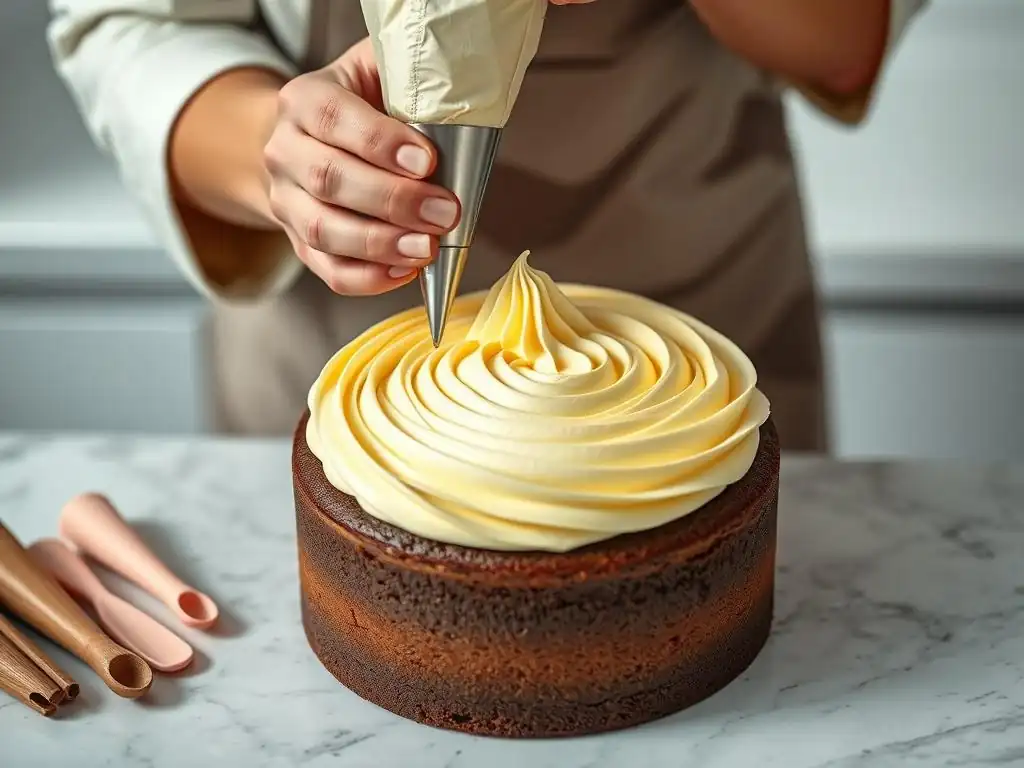
While pressure controls the amount of buttercream coming out, pace controls how that buttercream is distributed as you move the piping bag. A steady pace ensures that the volume of frosting released by your consistent pressure is spread evenly along your intended path. Moving too fast with consistent pressure will result in thin, stretched designs, while moving too slow will cause the frosting to pile up and look heavy or uneven.
Finding and maintaining a steady pace is particularly important for continuous designs like borders, writing, or swirls. A jerky or inconsistent pace will directly translate into a wobbly or irregular design. Developing a smooth, fluid movement is just as crucial as applying even pressure for achieving consistently beautiful results.
The Importance of Rhythm in Buttercream Piping
Think of piping as having a rhythm – the steady squeeze of pressure combined with the smooth movement of the bag. This rhythm creates the flow of buttercream onto your surface. When piping a continuous line, for example, you want a consistent flow of frosting (controlled by pressure) being laid down at a consistent speed (controlled by pace). If your pace speeds up but your pressure doesn't adjust, the line thins out. If your pace slows down, the line thickens.
Developing this rhythm requires coordination between your hands. Your squeezing hand maintains pressure, while your guiding hand directs the tip's movement. Practicing simple continuous shapes like spirals or waves helps you synchronize these movements and find a comfortable rhythm. This rhythmic approach is a key component of effective consistent piping buttercream frosting tips.
Finding Your Ideal Piping Speed: A Personalized Approach
There is no single "right" speed for piping; it depends on the tip size, the buttercream consistency, the design you're creating, and your own comfort level. What's important is finding a speed that you can maintain steadily for the duration of the task. For a beginner, a slower pace might be necessary to ensure accuracy, while an experienced decorator might work more quickly.
Experiment on parchment paper with different speeds while maintaining consistent pressure. See how the same tip and pressure create different lines at different speeds. Find a pace where you feel in control and can produce smooth, uniform results. As you gain confidence, you may naturally increase your speed, but consistency at your chosen pace is always the priority.
Techniques for Smooth and Controlled Movements
Achieving smooth, controlled movements involves using your guiding hand effectively and minimizing unnecessary motion. Hold the bag comfortably, not too tightly. When piping lines, especially long ones, try to move your entire arm and shoulder rather than just your wrist or fingers, which can lead to shakiness. For shorter movements, like piping dots or small details, stabilize your guiding hand by resting it lightly on the cake surface if possible.
Keep the tip close to the surface you are piping on – typically just a few millimeters away, unless you are piping a design meant to stand up higher. Hovering too far above the surface makes it harder to control the flow and direction. Practicing these movements on a flat surface helps build the muscle memory for smooth application, essential for consistent piping buttercream frosting tips.
Consistent Piping Buttercream Frosting Tips: Key Techniques
Mastering pressure and pace is foundational, but several specific techniques can further enhance your consistent piping results. These tips cover everything from how you hold the bag to preparing your buttercream, providing a comprehensive approach to achieving uniform and beautiful decorations every time.
Tip #1: Proper Bag Grip and Hand Positioning for Stability
Hold the piping bag correctly for maximum control and stability. The top of the bag should be twisted or secured, and this is where your dominant hand applies pressure, squeezing from the top down. Your non-dominant hand should guide the tip end of the bag. Ensure your grip is firm enough to apply pressure but not so tight that it causes tension or reduces dexterity. A relaxed but controlled grip is key to smooth piping.
Tip #2: Stabilizing Your Wrist for Precise Control
For intricate details or continuous borders, stabilizing your wrist is crucial. Avoid letting your wrist wobble, as this will lead to uneven lines and shapes. When piping on a flat surface like a cake top, you can often rest the side of your guiding hand or pinky finger lightly on the surface to act as a brace. For piping on the side of a cake or cupcakes, hold your hands steady and try to use your arm for movement, keeping the wrist relatively fixed.
Tip #3: Using a Guide for Straight Lines and Patterns
Don't hesitate to use guides, especially when starting out or for complex patterns. For straight lines on a cake side, you can gently score the frosting surface beforehand or use a ruler pressed lightly against the cake as a temporary guide. For repetitive patterns like scallops or waves, drawing a faint outline on the surface or using a template underneath parchment paper can ensure uniform size and spacing. This is a smart approach for consistent piping buttercream frosting tips.
Tip #4: Practicing on Parchment Paper Before Decorating
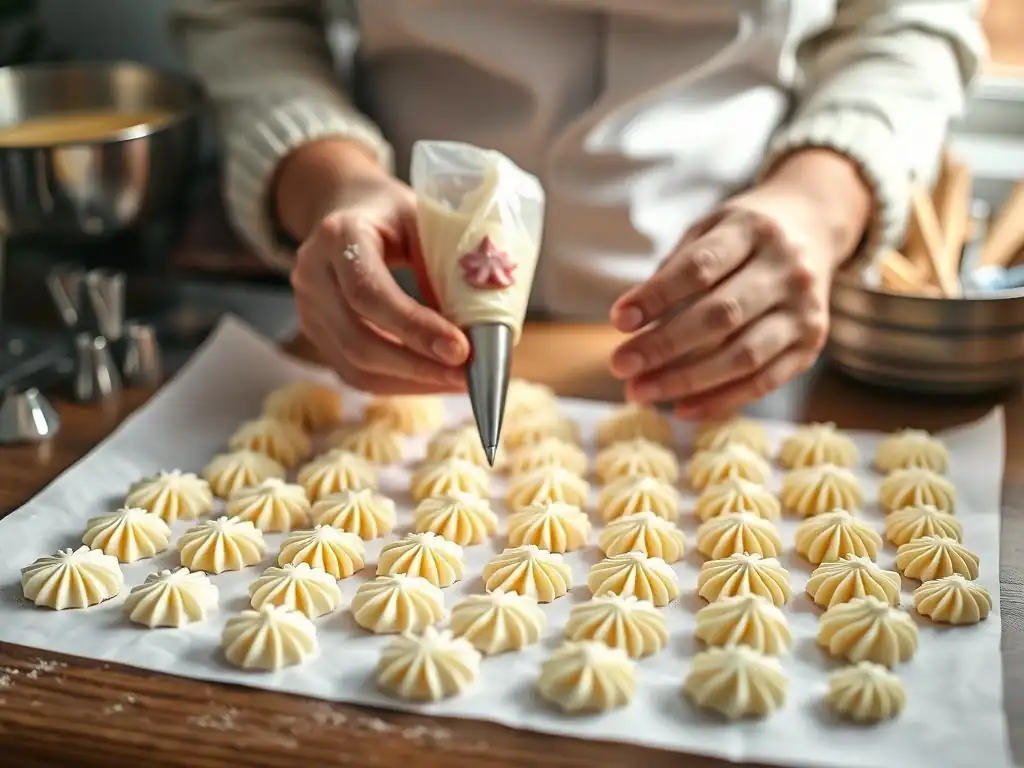
Always practice your design on a piece of parchment paper or an overturned baking sheet before applying it to your actual baked good. This allows you to test the buttercream consistency, check your pressure and pace, and rehearse the movement. It's much better to discover an issue or refine a technique on parchment than on your final cake. Scrape the practice frosting back into the bag (if clean) to minimize waste.
Tip #5: Managing Buttercream Temperature for Optimal Consistency
The temperature of your buttercream significantly affects its piping consistency. Buttercream that is too cold will be stiff and hard to pipe smoothly, requiring excessive pressure which leads to hand fatigue and inconsistent flow. Buttercream that is too warm will be too soft, lose its shape quickly, and can result in messy, undefined designs. Ideal piping temperature allows the buttercream to be pliable enough to flow smoothly with moderate pressure but firm enough to hold its shape once piped.
If your buttercream is too cold, warm it gently by kneading the bag with your hands for a few minutes. If it's too warm, pop the bag (sealed) into the refrigerator for 5-10 minutes. Finding this sweet spot is vital for consistent piping buttercream frosting tips.
Troubleshooting Common Piping Problems: Pressure and Pace Issues
Even with practice, you might encounter issues. Most common problems in piping can be traced back to inconsistencies in pressure, pace, or buttercream temperature. Learning to identify these issues and apply the correct fixes will save you frustration and improve your results.
Inconsistent Line Thickness: Causes and Solutions
If your piped lines are thick in some sections and thin in others, the primary culprit is usually inconsistent pressure. You are likely squeezing harder and softer as you move the bag.
- Cause: Uneven hand pressure on the bag.
- Solution: Focus on maintaining a steady squeeze from the top of the bag. Practice the straight-line drill specifically focusing on pressure consistency. Ensure your buttercream is at the correct temperature – stiff buttercream can make even pressure difficult.
Another factor could be an unsteady pace combined with pressure issues. If you slow down but don't decrease pressure, the line thickens. If you speed up without increasing pressure, it thins.
- Cause: Pace not matching pressure.
- Solution: Practice coordinating your squeezing hand and your guiding hand movement. Find a comfortable, steady rhythm and maintain it.
Uneven Designs: Identifying the Root Cause
When your rosettes are different sizes, your shells are irregular, or your borders are wobbly, it's often a combination of inconsistent pressure and an unsteady pace or movement.
- Cause: Jerky movements, inconsistent pressure application throughout a shape.
- Solution: Practice the specific design on parchment paper repeatedly. Focus on smooth, continuous movements and maintaining even pressure throughout the execution of the shape (e.g., a steady circle for a rosette, a continuous squeeze and release for a shell). Ensure your grip is stable (Tip #1 & #2).
Sometimes, the issue is simply the angle of the tip relative to the surface. If the tip isn't held consistently, the frosting won't be laid down uniformly.
- Cause: Inconsistent tip angle.
- Solution: Pay attention to the angle at which you hold the tip. For many borders and shapes, holding the tip perpendicular or at a consistent 45-degree angle to the surface is necessary.
Preventing Air Bubbles in Your Buttercream Decorations
Air bubbles can cause frustrating gaps and inconsistencies in your piped designs. They often appear when you refill the bag or if the buttercream was not mixed thoroughly.
- Cause: Air trapped in the buttercream or introduced when filling the bag.
- Solution: Before filling the bag, gently stir your buttercream with a spatula to remove any large air pockets. When filling the bag, use a spatula to scoop buttercream in, pressing it against the side of the bag to minimize trapped air. Once the bag is filled, twist the top securely and gently squeeze the bag over your practice surface until any air bubbles are pushed out before starting your decoration. You can also hold the filled bag tip-up and tap it gently on the counter to help air rise.
Advanced Piping Techniques: Building on a Solid Foundation
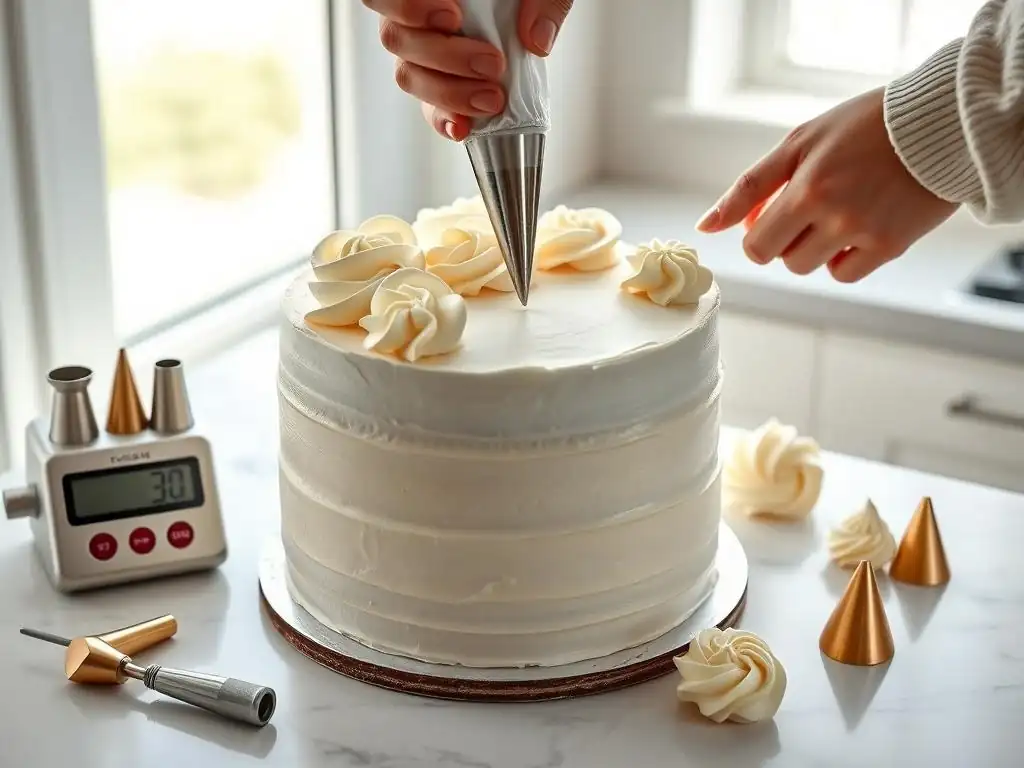
Once you have mastered the basics of pressure and pace and can pipe consistently, you are ready to explore more complex decorating techniques. These advanced methods build directly on the fundamental control you've developed, allowing you to create stunning and elaborate designs.
Mastering Rosettes, Swirls, and Borders
Consistent pressure and a steady pace are absolutely essential for perfect rosettes, swirls, and borders. For a rosette, you need consistent pressure as you move the tip in a circular motion. For a shell border, it's about a consistent squeeze and release motion, with each shell being the same size due to uniform pressure and timing.
- Rosettes: Use a star tip (like 1M). Start in the center, apply steady pressure while moving outwards in a circle, then spiral inwards, releasing pressure cleanly at the center. Consistent pressure throughout the spiral is key for uniform thickness.
- Swirls: Use a large round or star tip for cupcake swirls. Start at the outer edge, apply steady pressure, and move in a continuous spiral inwards, maintaining the same speed and pressure.
- Borders: Techniques like shells, ropes, or beads all rely on repetitive application of a shape. Practice each shape until you can execute it identically every time, using consistent pressure and pace for each element.
Creating Intricate Designs with Confidence
More intricate designs, such as lacework, basketweave, or detailed patterns, require even finer control over pressure and pace, often with smaller tips. These techniques involve combining basic movements (lines, dots) in complex arrangements.
- Confidence: Your confidence in achieving consistent results comes from the solid foundation of pressure and pace control. When you know you can pipe a straight, uniform line or a perfectly sized dot every time, you can approach more complex patterns without hesitation.
- Precision: Intricate designs demand high precision. This is where consistent pressure and a slow, deliberate pace with smooth movements become paramount. Using guides (Tip #3) can be particularly helpful here.
Piping Flowers with Consistent Petals
Piping buttercream flowers, like roses or mums, is a beautiful advanced technique that heavily relies on consistent pressure, pace, and angle control. Each petal needs to be formed with the same volume of buttercream and the same movement to look uniform and create a balanced flower.
- Petal Consistency: Using a petal tip (like #104), the angle and pressure applied as you move the tip determine the shape and size of the petal. Consistent pressure ensures each petal has the same thickness, while a steady pace ensures smooth edges.
- Layering: Building a realistic flower involves layering petals. Maintaining consistency from one petal to the next, and layer to layer, is what makes the final flower look cohesive and professional. Practice piping individual petals of uniform size and shape before assembling them into a full flower.
Beyond the Basics: Continued Practice and Experimentation
Mastering consistent piping buttercream frosting tips is an ongoing journey. Even experienced decorators continue to practice and refine their skills. The world of baking decoration is vast, with endless possibilities for creativity, and consistent piping is your reliable tool to bring those ideas to life.
The Value of Regular Practice for Consistent Results
Regular practice is the single best way to maintain and improve your piping skills. Even short, frequent practice sessions are more beneficial than infrequent, long ones. Dedicate 10-15 minutes a few times a week to piping lines, dots, or basic shapes on parchment paper. This keeps your hand muscles trained and reinforces the feel of applying consistent pressure and maintaining a steady pace.
Practice with different buttercream consistencies and various piping tips to understand how they behave. The more familiar you become with your tools and medium, the more consistent your results will be. Consider setting specific practice goals, like piping 30 uniform shells in a row or writing a full sentence in cursive without breaks or wobbles.
Exploring Different Buttercream Recipes and Piping Tips
Not all buttercreams pipe the same. American buttercream, Swiss meringue buttercream, Italian meringue buttercream, and French buttercream all have different textures and stiffnesses. Experiment with piping different types of buttercream to see how pressure and pace need to be adjusted for each. For example, a stiffer American buttercream might require more pressure than a lighter Swiss meringue buttercream.
Similarly, explore the vast array of piping tips available – round, star, petal, leaf, specialty tips. Each tip requires slightly different handling and pressure/pace adjustments to achieve its intended effect. Don't be afraid to try new tips and practice with them; this expands your decorating repertoire and deepens your understanding of consistent piping buttercream frosting tips.
Sharing your decorated baked goods is a rewarding part of the process. Pay attention to feedback, both from others and your own critical eye. What went well? What could be more consistent? Comparing your results over time can be a great motivator.
Look at the work of other bakers for inspiration and techniques. Online communities, books, and classes offer opportunities to learn new approaches and refine your skills. Learning from others' experiences and seeing examples of well-executed consistent piping buttercream frosting tips can provide valuable insights and ideas for your own practice.
Conclusion: Your Path to Consistent Piping Success
Achieving consistent piping in buttercream frosting is a fundamental skill that dramatically enhances the visual appeal of your baked creations. It hinges on mastering two core elements: applying steady, even pressure to the piping bag and maintaining a smooth, controlled pace as you move the tip. While it requires practice, focusing on these techniques, using the right tools, managing buttercream temperature, and utilizing simple practice drills will lay a strong foundation.
Remember to start with the basics – perfect those straight lines and uniform dots on parchment paper. Gradually work your way up to more complex shapes and designs, always paying attention to how your pressure and pace influence the outcome. By consistently practicing these consistent piping buttercream frosting tips and techniques, troubleshooting common issues, and continuing to experiment, you'll gain the confidence and skill needed to create beautifully and consistently decorated baked goods every time. Happy piping!
Frequently Asked Questions
What is the most important factor in achieving consistent piping with buttercream frosting?
The most important factor is maintaining consistent pressure on the piping bag while simultaneously controlling your pacing and speed. This ensures a uniform flow of frosting.
How do I avoid air bubbles when filling my piping bag with buttercream?
Gently press the buttercream against the side of the bowl as you fill the bag. This helps to remove trapped air and prevent bubbles from disrupting your piping.
What kind of piping tip is best for beginners trying to achieve consistent results?
A simple round tip is often recommended for beginners. It allows you to focus on pressure and pace without the added complexity of intricate designs.
How can I practice my piping skills without wasting a lot of buttercream?
Use mashed potatoes or shortening instead of buttercream for practice. These alternatives offer a similar consistency and are much more economical.
What should I do if my buttercream is too stiff for smooth piping?
Add a small amount of milk or cream to the buttercream, mixing well until it reaches a smoother, more pliable consistency suitable for piping.
Final Reflection: Mastering the Art of Consistent Piping
The pursuit of perfectly consistent buttercream piping isn't just about aesthetics; it's about achieving a level of control that translates to professional-quality results, regardless of skill level. This article explored the crucial interplay between pressure and pace in achieving that consistency, demonstrating how seemingly small adjustments can dramatically impact the final product. From the initial pressure applied to the bag to the steady, controlled movement of your hand, every element contributes to a flawless finish.
The impact of consistent piping extends far beyond the individual cake. It represents a dedication to craftsmanship, a pursuit of excellence that resonates across various creative fields. The ability to execute precise, repeatable techniques instills confidence and allows for greater creative freedom. As the renowned pastry chef, Pierre Hermé, once said, Pastry is a science, but it's also an art. It's about precision, but it's also about passion.
This perfectly encapsulates the journey towards mastering consistent piping – a blend of technical skill and artistic expression.
Now, consider your own baking journey. What techniques have you found most effective in achieving consistent piping? What challenges have you overcome? Don't be afraid to experiment, to adjust pressure and pace, to find what works best for you. The path to mastering consistent piping is a personal one, filled with learning, adaptation, and ultimately, the immense satisfaction of creating beautiful, flawlessly executed buttercream designs. Embrace the process, celebrate your progress, and let your creativity flourish.
Unlock Your Perfect Piping: Master the Art Today!
Thanks for taking the time to explore the secrets of consistent piping! We hope you now feel more confident in creating beautiful, professional-looking baked goods. Ready to put your new skills into practice?
- Practice your pressure and pace: Spend just 15 minutes today focusing on controlled pressure and steady hand movements. Even small improvements will make a big difference!
- Share your creations: Show off your piping prowess on social media using #BakeWithEasePiping – we’d love to see your results!
- Challenge yourself: Try a new piping technique or design from the tips provided. What are you most excited to bake next?
What’s the most challenging aspect of piping you’re looking to conquer next? Let us know in the comments below!