
Almond Croissants (TwiceBaked): A Viennoiserie Masterpiece Recipe


Welcome to BakeWithEase, your haven for unlocking baking brilliance! Are you ready to transform humble croissants into a symphony of almondy delight? This guide unveils the secrets to perfecting an almond croissant recipe, making this Viennoiserie masterpiece surprisingly easy. Dive in to discover how to achieve that flaky, buttery, and irresistibly nutty experience – you might just surprise yourself! What's the key ingredient to taking your almond croissants to the next level? Keep reading to find out!
- Almond Croissants: A Twice-Baked Delight
- Introduction: Mastering Almond Croissants at Home
- Understanding the Almond Croissant
- Almond Croissant Recipe: Ingredient Breakdown
- Step-by-Step Guide: Baking Almond Croissants
- Tips and Tricks for the Best Almond Croissants
- Troubleshooting Common Almond Croissant Issues
- Variations: Exploring Different Almond Croissant Recipes
- Serving and Enjoying Your Homemade Almond Croissants
- Conclusion: Almond Croissant Mastery
-
Frequently Asked Questions
- What makes the BakeWithEase almond croissant recipe "easy" for perfecting?
- What are the key differences between a regular croissant and an almond croissant?
- Can I use store-bought croissants for this BakeWithEase recipe, or do I need to make them from scratch?
- What is frangipane, and why is it important for almond croissants?
- What are some common mistakes to avoid when making almond croissants, according to BakeWithEase?
- Final Reflection: The Enduring Allure of the Perfect Almond Croissant
- Unlock Your Inner Pastry Chef: Bake the Perfect Almond Croissant!
Almond Croissants: A Twice-Baked Delight
Introduction: Mastering Almond Croissants at Home
The Ultimate Guide to Perfect Almond Croissants
Welcome to the delightful world of almond croissants! Often found nestled amongst pain au chocolat and other viennoiseries in a French bakery, the almond croissant stands out as a truly special treat. This article serves as your ultimate guide to mastering the art of making these exquisite pastries right in your own kitchen. We'll walk you through the process, focusing on the techniques that yield that coveted balance of flaky, moist, and nutty perfection, making perfecting almond croissant recipe easy and accessible for home bakers.
Creating the perfect almond croissant recipe easy involves understanding the unique "twice-baked" process. Unlike a standard croissant, the almond version gets a second trip to the oven after being filled with a rich frangipane cream and soaked in syrup. This second bake transforms a potentially day-old croissant into a luxurious dessert or breakfast pastry, crisping the exterior while warming and setting the creamy almond filling inside. We'll delve into the specifics of each step, from preparing your base croissants to achieving that beautiful golden finish, ensuring your homemade almond croissants rival those from your favorite patisserie.
Why Almond Croissants are a Baker's Delight
Almond croissants offer a unique satisfaction for the home baker. They take a familiar base – the humble croissant – and elevate it into something entirely new and decadent. The process itself is engaging, involving the creation of a silky frangipane and a flavorful syrup soak, adding layers of skill and flavor. Successfully perfecting almond croissant recipe easy means transforming simple ingredients into a complex pastry with contrasting textures: the slight crispness of the twice-baked exterior, the tender, moist interior from the syrup, and the creamy, rich frangipane center dotted with crunchy almonds.
Beyond the baking process, the reward of biting into a warm, homemade almond croissant is immense. The aroma of toasted almonds and butter fills your kitchen, and the combination of sweet frangipane and flaky pastry is simply divine. It's a pastry that feels indulgent and special, perfect for a lazy weekend brunch or a sophisticated afternoon treat. Sharing these homemade delights with friends and family adds another layer of joy, showcasing your baking prowess and the simple pleasure of a well-executed classic.
Understanding the Almond Croissant
What Makes an Almond Croissant Different?
The key difference between a regular croissant and an almond croissant lies in the "twice-baked" method and the inclusion of a rich frangipane filling and a sweet syrup soak. A standard croissant is baked once to achieve its signature flaky layers and airy interior. An almond croissant, however, starts with a baked croissant (often day-old, which is ideal as it's slightly drier and better absorbs the syrup). This croissant is then split, soaked in a sugar syrup, filled and topped with frangipane (almond cream), sprinkled with sliced almonds, and baked again.
This second bake is transformative. The syrup moistens the interior, preventing dryness, while also adding sweetness and often an almond or rum flavor. The frangipane, a mixture of butter, sugar, almond flour, and eggs, bakes into a soft, fragrant filling. During the second bake, the frangipane sets, and the exterior of the croissant crisps up again, creating a delightful contrast in textures. The result is a pastry that is denser and richer than a regular croissant, with a pronounced almond flavor that penetrates throughout.
Origins of the Almond Croissant
While the croissant itself has Austrian origins popularized in France, the almond croissant is believed to be a later invention, likely originating in Parisian bakeries. It's a classic example of culinary ingenuity born out of necessity – specifically, the need to repurpose day-old croissants that were no longer at their peak flakiness. Instead of discarding them, bakers devised a method to revitalize them, transforming them into a new, highly desirable pastry.
This "waste not, want not" approach led to the development of the twice-baked technique. By soaking the slightly stale croissant in syrup, it regains moisture and becomes pliable. The addition of frangipane not only provides a delicious filling but also adds weight and richness, making the revamped croissant feel substantial and luxurious. While specific dates and names are hard to pinpoint, the tradition of the almond croissant as a way to give yesterday's pastry a new, delicious life is well-established in French baking culture.
Almond Croissant Recipe: Ingredient Breakdown
Essential Ingredients for Flaky Croissants
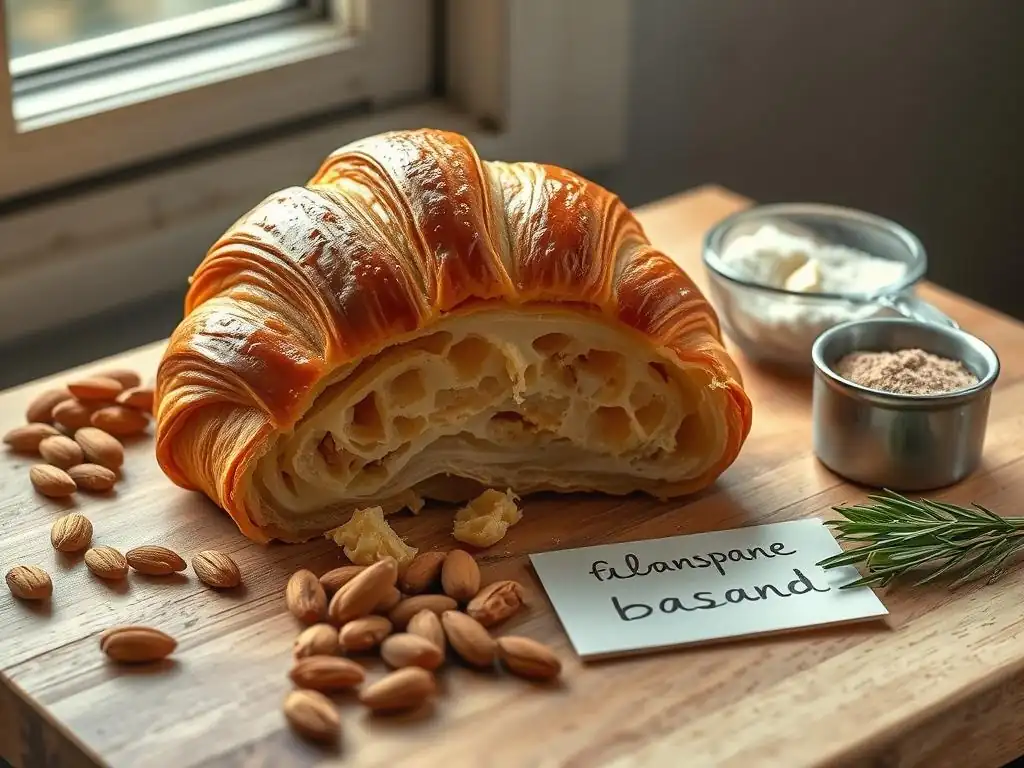
While perfecting almond croissant recipe easy at home often starts with using pre-baked croissants, the quality of these base pastries is paramount. Ideally, you'll use croissants that are one day old. Their slightly drier texture allows them to absorb the almond syrup more effectively without becoming completely soggy. Look for croissants that are made with real butter, as this contributes significantly to the flavor and helps the layers crisp up nicely during the second bake. A good base croissant will have visible layers and a buttery aroma.
If you're feeling ambitious and want to bake your croissants from scratch first, the essential ingredients for the base dough include strong bread flour (for structure), cold unsalted butter (for lamination and flakiness), milk, water, yeast, sugar, and salt. The key to flaky layers lies in the lamination process – repeatedly folding butter into the dough and rolling it out. However, for a simpler approach to perfecting almond croissant recipe easy, starting with quality store-bought or bakery-bought croissants is perfectly acceptable and traditional for the twice-baked method.
Frangipane: The Heart of the Almond Croissant
Frangipane is the star filling of the almond croissant, providing its signature moist, nutty center. It's a relatively simple cream made primarily from ground almonds (almond flour), sugar, butter, and eggs. A common ratio often starts with equal weights of softened butter, granulated sugar, and almond flour, with eggs added to bind and enrich. For instance, 100g butter, 100g sugar, and 100g almond flour might be combined with 1-2 eggs. Sometimes a small amount of all-purpose flour or cornstarch is added to improve stability and texture when baked, perhaps 10-20g per 100g of almond flour.
To make frangipane, softened butter is creamed with sugar until light and fluffy. Eggs are then beaten in one at a time, followed by the almond flour and any additional flour or flavorings like vanilla or almond extract. The mixture should be smooth, creamy, and spreadable. It's crucial that the butter is soft but not melted, and the eggs are at room temperature to prevent the mixture from curdling. The quality of your almond flour also matters; finely ground blanched almond flour yields the smoothest frangipane.
Almond Syrup: Adding Moisture and Flavor
The almond syrup is the crucial element that revives the day-old croissant and infuses it with moisture and sweetness before the second bake. It's typically a simple syrup, made by dissolving sugar in water, then flavored with almond extract, a nut-based liqueur like Amaretto, or even rum. A standard simple syrup uses a 1:1 ratio of sugar to water by weight or volume (e.g., 100g sugar dissolved in 100ml water, or 1 cup sugar in 1 cup water). Heating the water helps the sugar dissolve quickly, but the syrup should be cooled before use.
The flavorings are added once the syrup is made and slightly cooled. A teaspoon or two of almond extract per cup of syrup is usually sufficient, or a tablespoon or two of liqueur. The syrup should be sweet and fragrant but not overly concentrated. Its purpose is to penetrate the croissant's crumb, making it tender and flavorful. Applying the right amount is key to perfecting almond croissant recipe easy – enough to moisten the pastry without making it soggy.
Toppings: Almonds and Powdered Sugar
The characteristic look of an almond croissant is completed with a generous sprinkling of sliced or flaked almonds on top before the second bake, and a dusting of powdered sugar after cooling. Sliced almonds, also known as flaked almonds, are thin cuts of blanched almonds. When baked, they toast beautifully, adding a lovely crunch and intensified nutty flavor that complements the soft frangipane. Approximately 10-15 grams of sliced almonds per croissant is a good amount to ensure ample coverage and texture.
After the almond croissants have cooled slightly, a final flourish of powdered sugar (also known as icing sugar or confectioners' sugar) is added. This adds a touch of sweetness and gives the pastry that classic bakery finish. Using a small sieve or sifter helps distribute the sugar evenly over the domed surface of the frangipane. This simple step enhances the visual appeal and provides a delicate sweetness that balances the richness of the frangipane and the toasted almonds.
Step-by-Step Guide: Baking Almond Croissants
Preparing the Croissants
The first step in perfecting almond croissant recipe easy is preparing your base croissants. As mentioned, day-old croissants work best. Using a serrated knife, carefully slice each croissant horizontally, almost completely through, creating a "mouth" or hinge, similar to preparing a sandwich roll. Be gentle to avoid crushing the delicate layers, especially if your croissants are very flaky. The goal is to open them up so they can be filled and absorb the syrup.
Once sliced, the croissants are ready to be moistened with the almond syrup. You can do this by lightly brushing the cut surfaces and the exterior of the croissant with the cooled syrup using a pastry brush. Alternatively, for a slightly more saturated result, you can quickly dip the entire croissant into a shallow dish of syrup. The dipping method requires a lighter hand and quicker action to prevent the croissant from becoming waterlogged. Aim for the croissant to feel slightly heavier and damp to the touch, but not dripping wet. Excess syrup can lead to a soggy bottom.
Making the Frangipane Cream
With the croissants prepared, it's time to make the frangipane. Ensure your butter is softened to room temperature, but not melted. In a medium bowl, cream the softened butter and granulated sugar together using a whisk or electric mixer until the mixture is pale and fluffy. This incorporates air and ensures a smooth texture.
Next, beat in the eggs one at a time, mixing well after each addition. Scrape down the sides of the bowl as needed. Finally, add the almond flour (and any optional all-purpose flour or cornstarch) and your chosen extract (almond, vanilla, etc.). Mix until just combined and smooth.
Avoid overmixing once the flour is added. The resulting frangipane should be a thick, spreadable paste, roughly the consistency of thick cake batter or soft cookie dough. If it seems too stiff, you can add a tiny splash of milk or extract; if too loose, chill it briefly or mix in a tablespoon more almond flour.
Assembling the Almond Croissants
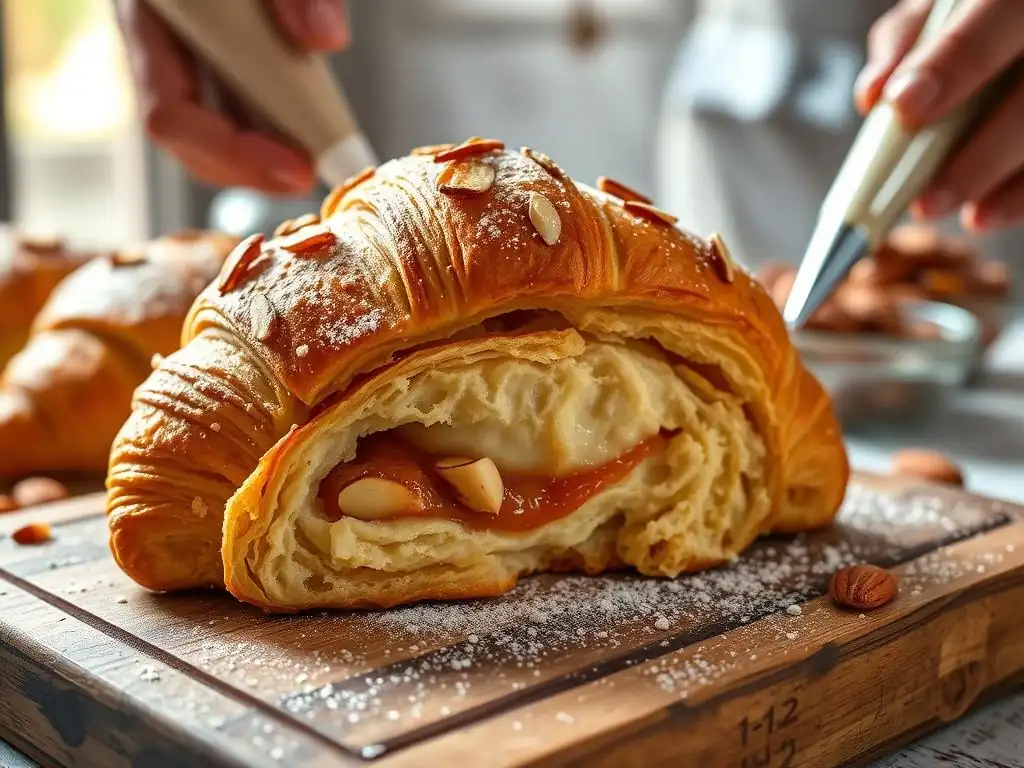
Assembling is where the magic happens in perfecting almond croissant recipe easy. Take a prepared (syrup-soaked) croissant and gently open it along the slice. Using a spoon or piping bag, generously fill the inside with a good amount of frangipane cream. Don't be shy – the frangipane is a key component. Close the croissant gently.
Now, spread more frangipane over the top of the closed croissant, covering the entire upper surface from end to end. This layer should be thick enough to hold the almonds but not so thick that it overflows excessively during baking. Smooth the top with the back of a spoon or an offset spatula. Finally, generously sprinkle the top frangipane layer with sliced or flaked almonds, pressing them gently into the cream so they adhere. Place the assembled croissants on a baking sheet lined with parchment paper.
Baking to Golden Perfection
The second bake is where the almond croissants achieve their final glory. Preheat your oven to a moderate temperature, typically around 350°F (175°C). Place the assembled croissants on the middle rack of the preheated oven. The baking time can vary depending on your oven and the size of the croissants, but it generally takes between 15 to 25 minutes.
During baking, the frangipane will puff slightly and set, and the sliced almonds on top will toast to a beautiful golden brown. The croissant itself will crisp up again on the exterior. You'll know they are done when the frangipane is set and golden brown around the edges, the almonds are toasted, and the croissant looks deliciously crisp. Avoid over-baking, which can dry them out, or under-baking, which leaves the frangipane gooey. Once baked, transfer them to a wire rack to cool slightly before the final dusting of powdered sugar.
Tips and Tricks for the Best Almond Croissants
Achieving the Perfect Flaky Texture
Achieving the perfect flaky texture in a twice-baked almond croissant starts with the quality of your base croissant. A good quality, buttery croissant with distinct layers is essential. While the syrup soak and frangipane will soften the interior, the goal is for the exterior to re-crisp during the second bake. To help this along, ensure your oven is properly preheated to the specified temperature, typically around 350°F (175°C). Baking at a slightly higher temperature initially (say, 375°F/190°C for the first 5-7 minutes) before reducing can also help crisp the outside quickly, though watch carefully to prevent burning the almonds.
Another crucial factor is preventing the croissant from becoming waterlogged by the syrup. Apply just enough syrup to moisten the crumb without making it soggy. Brushing is often safer than dipping for beginners perfecting almond croissant recipe easy. Ensure the frangipane isn't overly wet either. The combination of a quality base, careful syrup application, and the correct oven temperature for the second bake will give you the best chance at a beautifully crisp exterior contrasting with the moist, rich interior.
Preventing Soggy Almond Croissants
Sogginess is a common issue when making almond croissants, primarily caused by too much syrup or a frangipane that is too loose. To prevent this, be judicious with the almond syrup application. You want to moisten the croissant, not saturate it. If dipping, ensure the dip is very brief – just a quick in-and-out. If brushing, apply an even layer but don't overdo it. The croissant should feel slightly damp, not heavy and wet.
The consistency of your frangipane also plays a role. If the frangipane is too runny, it can seep into the croissant and make it soggy. Ensure your frangipane is a thick, spreadable paste. If it seems too loose after mixing, chilling it in the refrigerator for 15-30 minutes can help firm it up. Also, ensure your oven is hot enough during the second bake. A sufficiently hot oven helps the exterior dry out and crisp up, counteracting the moisture from the syrup and frangipane.
Working with Frangipane
Frangipane is generally easy to work with, but its consistency is key. It should be soft enough to spread or pipe easily but firm enough to hold its shape and not run everywhere. Ensure your butter is properly softened, not melted, when you start. If your kitchen is warm, the frangipane can become very soft; a brief chill in the fridge (15-30 minutes) will firm it up nicely for easier handling and spreading.
When filling the croissants, a piping bag fitted with a wide plain tip makes the job neatest, allowing you to easily fill the interior cavity. For spreading on top, a small offset spatula or the back of a spoon works well. If you have leftover frangipane, it can be stored in an airtight container in the refrigerator for up to 3-4 days or frozen for longer. It's versatile and can be used in tarts, cakes, or other pastries.
Storing and Reheating Almond Croissants
Homemade almond croissants are best enjoyed fresh from the oven after cooling slightly, but they can be stored. Allow them to cool completely before storing. Store them in an airtight container at room temperature for up to 2 days. For longer storage, they can be refrigerated for up to 4 days or frozen for up to 1 month. If freezing, wrap each croissant individually in plastic wrap before placing them in a freezer-safe container.
To reheat and revitalize stored almond croissants, the oven is your best friend for restoring some of that lovely crispness. Preheat your oven to around 300°F (150°C). Place the croissants directly on the oven rack or on a baking sheet and warm for 5-10 minutes, or until heated through and the exterior is slightly crisp again. Avoid using a microwave, as it will make the pastry soft and potentially rubbery. Reheating in the oven is the best way to recapture that fresh-baked experience and perfect the almond croissant recipe easy enjoyment even days later.
Troubleshooting Common Almond Croissant Issues
Dry Almond Croissants
If your almond croissants turn out dry, it's likely due to insufficient moisture from the syrup or frangipane, or over-baking. Ensure you are using enough almond syrup to moisten the base croissant adequately – it should feel slightly damp to the touch after soaking. Also, make sure you are using a generous amount of frangipane, both inside and on top, as the frangipane itself contains butter and eggs which contribute moisture.
Over-baking is another culprit for dryness. Keep a close eye on the croissants during the second bake. They should be golden brown and the frangipane set, but not hard or excessively dark around the edges. Baking for too long at too high a temperature will wick away moisture. Using day-old croissants that aren't excessively stale to begin with also helps, as they retain some inherent moisture.
Frangipane Consistency
Issues with frangipane consistency can impact the final pastry. If your frangipane is too runny, it might seep out during baking or make the croissant soggy. This is often due to using too much egg or not enough almond flour, or using melted rather than softened butter. If it seems too loose, try chilling it briefly to firm it up, or stir in a tablespoon of extra almond flour or a tiny pinch of cornstarch.
If the frangipane is too stiff, it will be hard to spread and can even crack during baking. This might happen if the butter wasn't soft enough, or if you used too much flour relative to the wet ingredients. If it's too stiff, you can try warming it gently (briefly over a double boiler, not microwave) or mixing in a few drops of milk or extra extract to loosen it slightly. Proper creaming of butter and sugar and using room temperature eggs also helps achieve the correct texture.
Croissant Issues
Problems with the base croissant can also affect the outcome. If your original croissants were low quality, very dry, or not made with real butter, the final result will suffer. A good base croissant should have some structure and buttery flavor to begin with. If the croissants are difficult to slice without crushing, they might be too fresh; day-old is truly ideal for the twice-baked method.
During the second bake, watch out for the croissants burning on the bottom or edges before the frangipane is set. This can happen if your oven has hot spots or if the baking sheet is too low. Using parchment paper helps prevent sticking and can offer a little protection against burning. If the tops are browning too quickly but the frangipane isn't set, you can loosely tent the croissants with foil for the last few minutes of baking.
Variations: Exploring Different Almond Croissant Recipes

Chocolate Almond Croissants
A delicious variation on the classic is the chocolate almond croissant. This involves adding chocolate to the filling, creating a richer, more decadent pastry. One common method is to place a few chocolate chips or a small piece of dark chocolate (like a segment of a chocolate batôn) inside the croissant along with the frangipane filling before closing it up. The chocolate melts during the second bake, creating a lovely pocket of gooey chocolate within the almond cream.
Another approach is to incorporate cocoa powder or melted chocolate directly into the frangipane itself. For instance, you could add 1-2 tablespoons of unsweetened cocoa powder per standard batch of frangipane, or swirl in a tablespoon of melted dark chocolate. This creates a chocolate-flavored almond cream that pairs wonderfully with the toasted almonds on top. Experiment with the amount of chocolate to find your preferred intensity, making perfecting almond croissant recipe easy to customize.
Pistachio Almond Croissants
For a vibrant green twist, try making pistachio almond croissants. This variation replaces some or all of the almond flour in the frangipane with finely ground pistachios (pistachio flour or meal). Using raw, unsalted pistachios that you grind yourself often yields the best color and flavor. Blanching and peeling the pistachios before grinding will result in a smoother, greener frangipane.
You can substitute half or all of the almond flour with pistachio flour in your standard frangipane recipe (e.g., 50g almond flour, 50g pistachio flour). Adding a touch of pistachio extract can further enhance the nutty flavor. The process remains the same: fill and top the syrup-soaked croissants with the pistachio frangipane, top with chopped or sliced pistachios (or a mix of almonds and pistachios), and bake. The result is a beautifully colored pastry with a distinct, delicate pistachio flavor that complements the richness of the frangipane.
Serving and Enjoying Your Homemade Almond Croissants
Pairing Suggestions
Homemade almond croissants are a treat best savored, and the right pairing can elevate the experience. The classic accompaniment is a good cup of coffee. The slight bitterness of coffee cuts through the sweetness and richness of the pastry beautifully. A strong espresso, a creamy latte, or a simple black coffee all work wonderfully.
If you prefer tea, many varieties pair well. A robust black tea like Earl Grey or English Breakfast stands up nicely to the richness. Green tea or a delicate herbal tea could also offer a refreshing contrast. For a simple, comforting pairing, especially for breakfast or brunch, a cold glass of milk is also a great choice, echoing the creamy texture of the frangipane. Consider serving them slightly warm for the best texture and aroma.
Almond Croissants for Special Occasions
Almond croissants feel inherently special, making them perfect for weekend brunches, holiday breakfasts, or as a sophisticated dessert. Their impressive appearance and rich flavor make them a welcome addition to any celebratory spread. Imagine serving a plate of warm, sugar-dusted almond croissants alongside fresh fruit, yogurt, and coffee for a memorable brunch gathering.
They are also lovely for afternoon tea or as a treat to share with guests. The effort involved in making them, even when perfecting almond croissant recipe easy using pre-made croissants, shows care and attention. Presenting a batch of these golden, almond-topped pastries is a delightful way to show appreciation and share the joy of homemade baking. They are a guaranteed crowd-pleaser that adds a touch of French elegance to any occasion.
Conclusion: Almond Croissant Mastery
Frequently Asked Questions
What makes the BakeWithEase almond croissant recipe "easy" for perfecting?
The BakeWithEase recipe focuses on clear, step-by-step instructions and uses easy-to-find ingredients, making it accessible even for bakers who are new to viennoiserie. It emphasizes technique over complex procedures.
What are the key differences between a regular croissant and an almond croissant?
Almond croissants are essentially twice-baked croissants. They are typically made from day-old croissants soaked in syrup, filled with almond cream (frangipane), and then baked again until golden brown and deliciously crispy.
Can I use store-bought croissants for this BakeWithEase recipe, or do I need to make them from scratch?
While making croissants from scratch is rewarding, this recipe can be adapted for store-bought croissants to simplify the process. This makes it a great way to perfect the almond filling and topping.
What is frangipane, and why is it important for almond croissants?
Frangipane is an almond cream filling that is crucial to the flavor and texture of almond croissants. It provides the rich, nutty, and moist interior that defines this pastry.
What are some common mistakes to avoid when making almond croissants, according to BakeWithEase?
Common mistakes include using too much syrup, which can make the croissants soggy, and not baking them long enough, which can result in a pale and undercooked final product. The BakeWithEase recipe provides tips to avoid these issues.
Final Reflection: The Enduring Allure of the Perfect Almond Croissant
The pursuit of the perfect almond croissant is not merely a culinary quest; it's a journey into the heart of pastry artistry. This recipe, meticulously crafted to balance ease of execution with exceptional results, highlights the power of patience and precision in achieving culinary excellence. The seemingly simple act of layering butter, dough, and almond frangipane becomes a testament to the transformative potential of dedication and attention to detail.
The enduring appeal of the almond croissant lies not just in its exquisite taste, but in its ability to evoke feelings of comfort, celebration, and sophisticated indulgence. It's a treat that transcends the everyday, transforming a simple breakfast or afternoon tea into a moment of pure joy. As Julia Child once wisely said, Find something you're passionate about and keep tremendously interested in it.
This recipe, I hope, has ignited that passion for many, encouraging a deeper appreciation for the artistry and science behind this beloved pastry.
Now, I invite you to embrace the challenge. Don't be intimidated by the seemingly complex process; instead, see it as an opportunity for growth, for learning, and for the immense satisfaction of creating something truly beautiful and delicious. The journey to perfecting your own almond croissant is a personal one, filled with experimentation, discovery, and ultimately, the sweet reward of a perfectly golden, flaky, and utterly irresistible treat. So, gather your ingredients, roll up your sleeves, and embark on this delightful adventure. The perfect almond croissant awaits.
Unlock Your Inner Pastry Chef: Bake the Perfect Almond Croissant!
Thanks for taking the time to explore the art of the twice-baked almond croissant with us! We hope you’ve gained valuable insights and are ready to elevate your baking game. Now, let's put those newfound skills into action.
- Bake your own masterpiece! Use the recipe and tips from the article to create your own batch of delicious almond croissants. Don't be afraid to experiment with different flavors and techniques.
- Share your baking journey: Post a picture of your creations on social media and tag us – we'd love to see your results!
- Challenge yourself: Try adapting this recipe to create other delicious twice-baked pastries. What other flavors might be incredible?
Ready to transform your kitchen into a Viennoiserie haven? What innovative twist will you add to your almond croissants?