
When and How to Enrich Your Yeasted Doughs

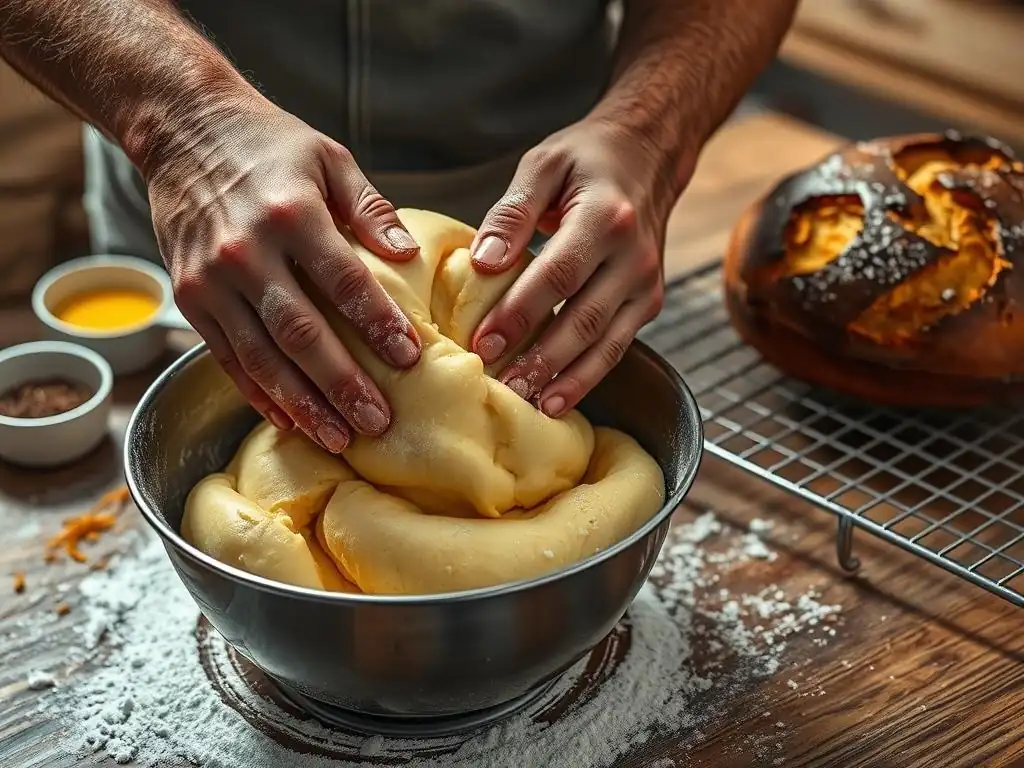
Welcome to BakeWithEase, your kitchen companion on the journey to baking brilliance! Ever wondered how to transform a simple yeasted dough into something truly extraordinary? This week, we delve into the secrets of enriching yeasted dough, unlocking a world of flavor and texture you won't believe. Discover when and how to add ingredients like butter, eggs, and sugar to elevate your breads and pastries, and prepare to be amazed by the results. Intrigued? Let's get baking!
- Mastering Enriched Yeasted Doughs: The Baker's Handbook
- Understanding Enriched Yeasted Doughs for Baking Excellence
- Timing is Key: When to Incorporate Enrichments into Your Dough
- Step-by-Step Guide: How to Enrich Yeasted Dough for Optimal Results
- Recipes Featuring Enriched Yeasted Doughs: Inspiration for Your Baking
- Mastering Enriched Doughs: Advanced Techniques and Tips
- Frequently Asked Questions
- Final Reflection: The Transformative Power of Enrichment in Yeasted Doughs
- Unlock Your Dough's Potential: Elevated Baking Awaits!
Mastering Enriched Yeasted Doughs: The Baker's Handbook
Understanding Enriched Yeasted Doughs for Baking Excellence
What Defines an Enriched Dough? Exploring Fats, Sugars, and Dairy
Enriched yeasted doughs stand apart from lean doughs (like those used for baguettes) due to the addition of ingredients beyond the basic flour, water, yeast, and salt. These added components typically include fats (like butter or oil), sugars (granulated, honey, or syrup), and dairy products (milk, cream, or yogurt), and often eggs.
These enrichments significantly alter the dough's structure, texture, and flavor profile. The amount of enrichment can vary dramatically; a slightly enriched dough might contain just a small amount of butter and sugar, while a rich brioche can be composed of up to 50-70% butter and eggs relative to the flour weight.
The presence of fats and sugars, in particular, interacts with the gluten network that develops during kneading. Fats coat the gluten strands, inhibiting their full development and resulting in a softer, more tender crumb. Sugars not only add sweetness but also retain moisture, contributing to a moist texture and extending shelf life.
Dairy products add richness and contribute to browning through lactose and proteins. Eggs contribute fat (from the yolk) and protein (from the white), adding richness, binding properties, and helping to create a finer crumb structure. Understanding the specific role of each ingredient is key to mastering how to enrich yeasted dough to achieve desired results.
The Impact of Enrichment: Tenderness, Flavor Complexity, and Extended Freshness
The addition of enriching ingredients has a profound impact on the final baked good. One of the most noticeable effects is increased tenderness. The fats shorten the gluten strands, preventing the chewy texture characteristic of lean breads. This makes enriched doughs ideal for pastries, rolls, and sweet breads where a soft, melt-in-your-mouth quality is desired. Think of the difference between a crusty sourdough and a soft, buttery dinner roll – that's the power of enrichment at play.
Beyond texture, enrichments contribute significantly to flavor and aroma. Butter provides a rich, creamy taste, while eggs add depth and richness. Sugar enhances sweetness and encourages caramelization during baking, leading to a beautiful golden-brown crust. Dairy adds subtle tang and richness.
Furthermore, the added fats and sugars help retain moisture within the crumb, preventing the bread from drying out quickly. This extended freshness means that enriched baked goods often stay soft and delicious for several days, unlike lean breads which are often best eaten the day they are baked. Learning how to enrich yeasted dough effectively means unlocking these desirable characteristics.
Timing is Key: When to Incorporate Enrichments into Your Dough
The Importance of Initial Gluten Development Before Enrichment
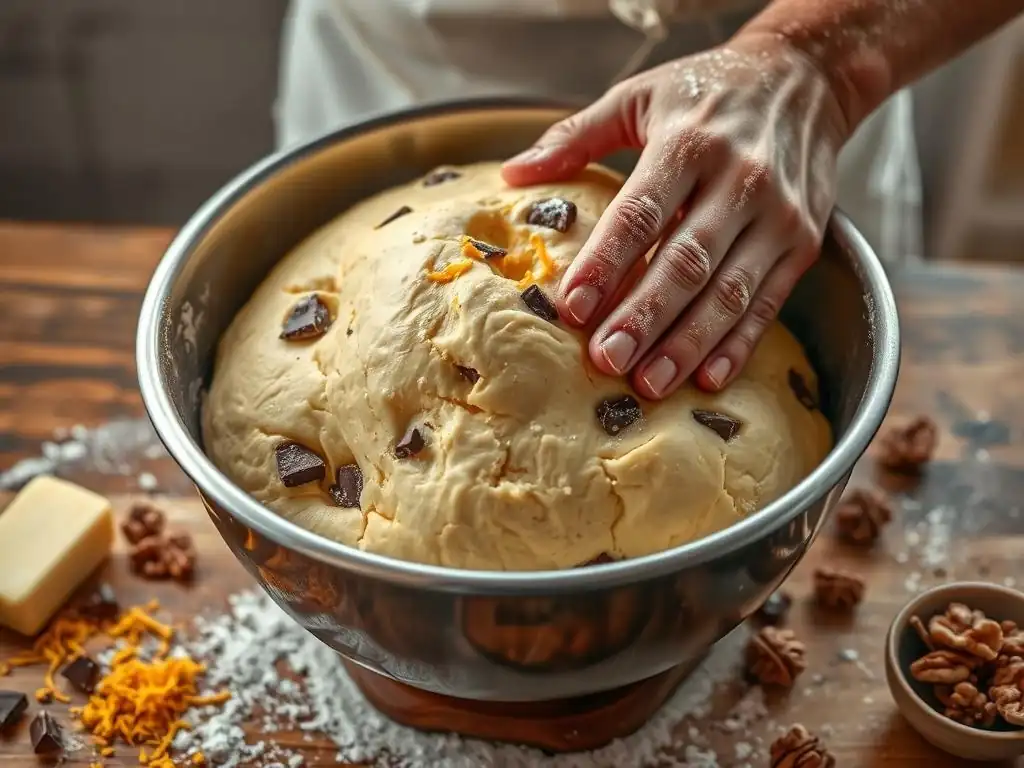
A crucial aspect of how to enrich yeasted dough successfully is understanding the timing of adding enriching ingredients. Many recipes for moderately to heavily enriched doughs recommend developing the gluten structure before adding significant amounts of fat and sugar. Gluten is the protein network that gives bread dough its strength and elasticity, allowing it to trap the carbon dioxide produced by the yeast and rise. Fats and sugars can interfere with gluten development by coating the flour particles and protein strands, making it harder for them to bond and form a strong network.
Therefore, a common technique is to mix the flour, water (or milk/dairy), yeast, and sometimes eggs and a small amount of sugar first, and knead this base dough until some gluten development has occurred. This might involve mixing until the dough just starts to come together and pass the "windowpane test" (where a small piece can be stretched thin enough to see light through it without tearing).
Only after this initial structure is established are the fats (like softened butter) and remaining sugars gradually added and kneaded into the dough. This two-stage mixing process ensures that the dough has enough structural integrity to support the rich additions and achieve a good rise.
Avoiding Common Mistakes: Preventing Gluten Inhibition and Dough Separation
Adding too much fat or sugar too early in the mixing process is a common pitfall when learning how to enrich yeasted dough. As mentioned, fats coat gluten strands, and high concentrations of sugar can draw water away from the flour, both hindering gluten formation. If enrichments are added all at once to an undeveloped dough, the result can be a weak, greasy, or sticky dough that struggles to hold its shape or rise properly. The dough might even appear separated or curdled.
To avoid these issues, incorporate soft butter or other fats gradually, piece by piece, allowing each addition to be fully absorbed into the dough before adding the next. This is particularly important for high-fat doughs like brioche. Similarly, add large amounts of sugar incrementally.
Using a stand mixer with a dough hook is often recommended for enriched doughs because it provides consistent, vigorous kneading, which helps incorporate the enrichments smoothly and develop gluten despite their presence. Monitoring the dough's temperature is also vital, as the friction from prolonged kneading with rich ingredients can cause it to overheat, negatively impacting yeast activity and gluten structure.
When Not to Enrich: Lean Doughs for Rustic Breads and Pizza
While knowing how to enrich yeasted dough is valuable for many applications, it's equally important to understand when enrichment is not appropriate. Lean doughs, consisting only of flour, water, yeast, and salt, are designed to produce breads with a chewy texture, a robust crust, and often large, irregular holes in the crumb (open crumb structure). Examples include classic French baguettes, rustic country loaves, and many types of pizza dough.
Adding significant amounts of fat, sugar, or dairy to these doughs would counteract their desired characteristics. The fat would soften the crust and crumb, eliminating the chewiness. Sugar would promote browning too quickly and add unwanted sweetness. For a crisp pizza crust or a loaf with a crackly exterior and airy interior, a lean dough is essential. Therefore, when your goal is a rustic, chewy, or exceptionally crusty bread, stick to the basic ingredients and skip the enrichment.
Step-by-Step Guide: How to Enrich Yeasted Dough for Optimal Results
Preparing Your Enrichments: Butter, Eggs, Sugar, and Dairy
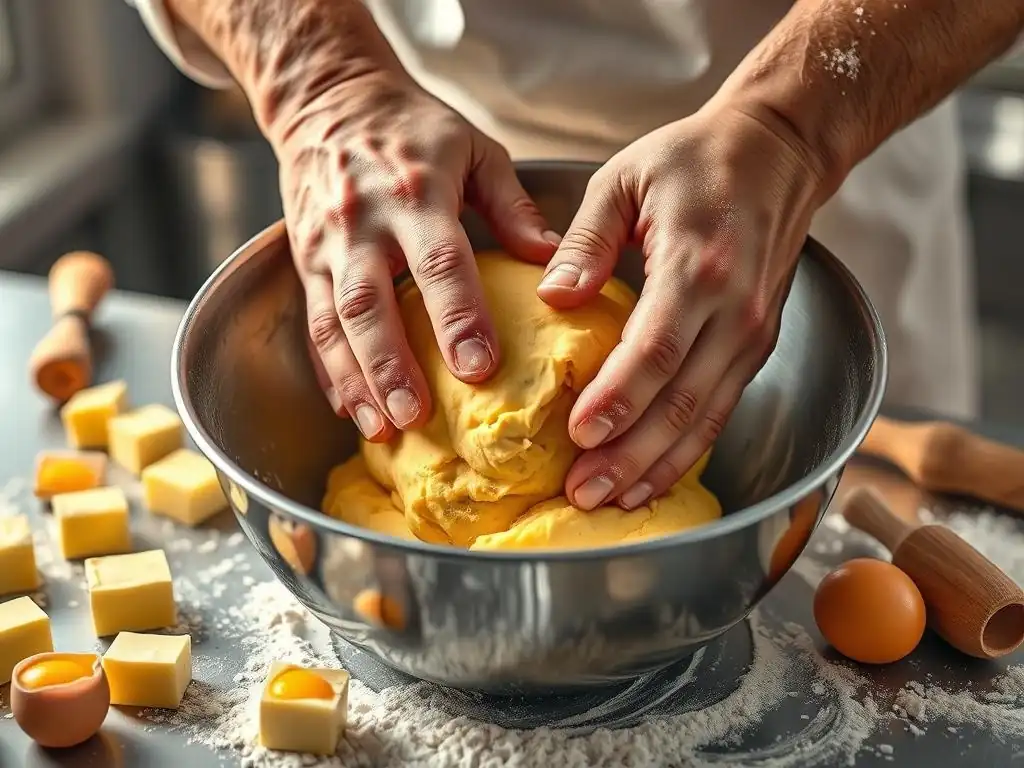
Successfully learning how to enrich yeasted dough begins with proper ingredient preparation. For butter enrichment, ensure your butter is softened but not melted. Softened butter, around 65-70°F (18-21°C), integrates smoothly into the dough. Cold butter will create lumps, and melted butter can make the dough greasy. Eggs should ideally be at room temperature; cold eggs can stiffen the butter and make incorporation more difficult.
Butter Enrichment: Using European-Style Butter for Rich Flavor
When it comes to butter, the type matters. European-style butter, which typically has a higher fat content (around 82-84%) compared to American butter (around 80%), is often preferred for enriched doughs, especially brioche. The higher fat content contributes to a richer flavor and a more tender crumb. To incorporate softened butter, it's usually added gradually to the dough after initial gluten development, kneading until each piece is fully absorbed before adding the next. This slow addition prevents the dough from becoming slick and separated and allows the gluten to continue developing around the fat.
Egg Enrichment: Whole Eggs vs. Yolks – Understanding the Moisture and Fat Balance
Eggs add richness, moisture, and help create a finer crumb structure. Recipes might call for whole eggs, egg yolks, or a combination. Whole eggs provide both fat (from the yolk) and protein and moisture (from the white).
Egg yolks, however, contribute significantly more fat and lecithin, an emulsifier, resulting in an exceptionally rich, tender, and moist crumb. Using only yolks (as in some very rich brioche recipes) requires careful balancing of the overall hydration, as yolks contain less water than whites. Consider a classic brioche recipe that might use 6 large eggs and 10 egg yolks per kilogram of flour – this ratio highlights the preference for yolk richness.
Sugar Enrichment: Granulated, Honey, or Syrup? Affecting Texture and Browning
Sugar adds sweetness, tenderness, and aids in browning. Granulated sugar is most common, but liquid sugars like honey or maple syrup can also be used. Granulated sugar absorbs moisture and contributes to a slightly drier, more crumbly texture in higher amounts, while liquid sugars add moisture and can result in a softer, chewier texture. Honey, in particular, also adds distinct flavor notes and can help retain moisture, extending freshness. The amount of sugar impacts yeast activity; small amounts (1-5%) boost fermentation, while large amounts (over 10-15%) can slow it down by drawing water away from the yeast cells.
Incorporating Enrichments: Methods and Techniques
The method of incorporating enrichments is critical to achieving a smooth, well-developed dough. The goal is to add the fats, sugars, and dairy without destroying the nascent gluten network or making the dough greasy and unmanageable. Different techniques are employed depending on the richness of the dough and whether you're using a mixer or kneading by hand.
The Gradual Incorporation Method: Preventing Dough Separation
For doughs with significant amounts of fat (like butter), the gradual incorporation method is paramount. After the initial dough (flour, liquid, yeast, salt, maybe eggs) has been mixed and kneaded to develop some gluten, softened butter is added piece by piece. Add a small cube or tablespoon of butter, and knead until it's fully absorbed into the dough and the dough is smooth again before adding the next piece.
This process is repeated until all the butter is incorporated. This prevents the dough from becoming a greasy mess and allows the gluten to effectively wrap around the fat. This technique is fundamental to how to enrich yeasted dough properly, especially with butter.
Using a Stand Mixer for Enriched Doughs: Preventing Overheating
A stand mixer with a dough hook is often the preferred tool for enriched doughs, particularly very rich ones like brioche. The mixer provides consistent, powerful kneading needed to incorporate large amounts of fat and sugar and develop gluten in their presence. Begin mixing the base dough on low speed, then increase to medium speed (e.g., speed 2-4 on a KitchenAid) for initial gluten development. Once the enrichments are added, continue mixing on medium speed.
Be mindful of the dough's temperature; prolonged mixing can generate heat. If the dough feels warm (above 80°F or 27°C), stop mixing and chill it in the refrigerator for 15-20 minutes before resuming. Some bakers even chill their mixing bowl and dough hook beforehand.
Hand Kneading Enriched Doughs: Techniques for Temperature Control
Hand kneading enriched doughs is possible but requires patience and specific techniques. Since enriched doughs can be sticky and soft, especially during enrichment incorporation, techniques like the "slap and fold" method can be effective. This involves repeatedly lifting the dough, slapping it onto the counter, and folding it over itself. For incorporating butter by hand, you can flatten the dough slightly, dot softened butter over the surface, fold it over, and then knead gently until absorbed, repeating with the remaining butter.
Keeping your hands and the work surface lightly floured (or even slightly damp) can help manage stickiness. If the dough becomes too warm and sticky, cover it and rest it in the refrigerator for 20-30 minutes before continuing to knead. Mastering how to enrich yeasted dough by hand is a rewarding skill.
Troubleshooting Enriched Doughs: Common Problems and Solutions
Even with careful technique, enriched doughs can present challenges. Knowing how to enrich yeasted dough also means knowing how to fix common issues.
Dough Too Sticky? Adjusting Hydration and Gluten Development
Enriched doughs are often stickier than lean doughs due to the added fats and sugars. If the dough is excessively sticky and won't come together or develop structure, it might be overhydrated relative to the flour's absorption capacity, or the gluten hasn't developed sufficiently. Try kneading for a few more minutes; sometimes, the dough just needs more time to build strength and absorb the moisture.
If it remains excessively sticky after significant kneading (and enrichment incorporation), you can try adding a tablespoon of flour at a time, kneading until incorporated, until the dough becomes more manageable. Ensure your initial gluten development phase was adequate before adding enrichments.
Dough Not Rising? Optimizing Yeast Activity and Temperature Control
If your enriched dough isn't rising as expected, several factors could be at play. Ensure your yeast is active; proof it in warm liquid with a pinch of sugar before adding to the flour if you're unsure. Dough temperature is crucial; enriched doughs benefit from warmer proofing temperatures (around 75-80°F or 24-27°C) than lean doughs, but too hot (over 85°F or 30°C) can kill the yeast.
Also, remember that large amounts of sugar and fat can slow down yeast activity, so enriched doughs often require longer proofing times than lean doughs. Ensure the dough is in a warm, draft-free place. If it's particularly cold, use a proofing box or the oven with the light on.
Recipes Featuring Enriched Yeasted Doughs: Inspiration for Your Baking
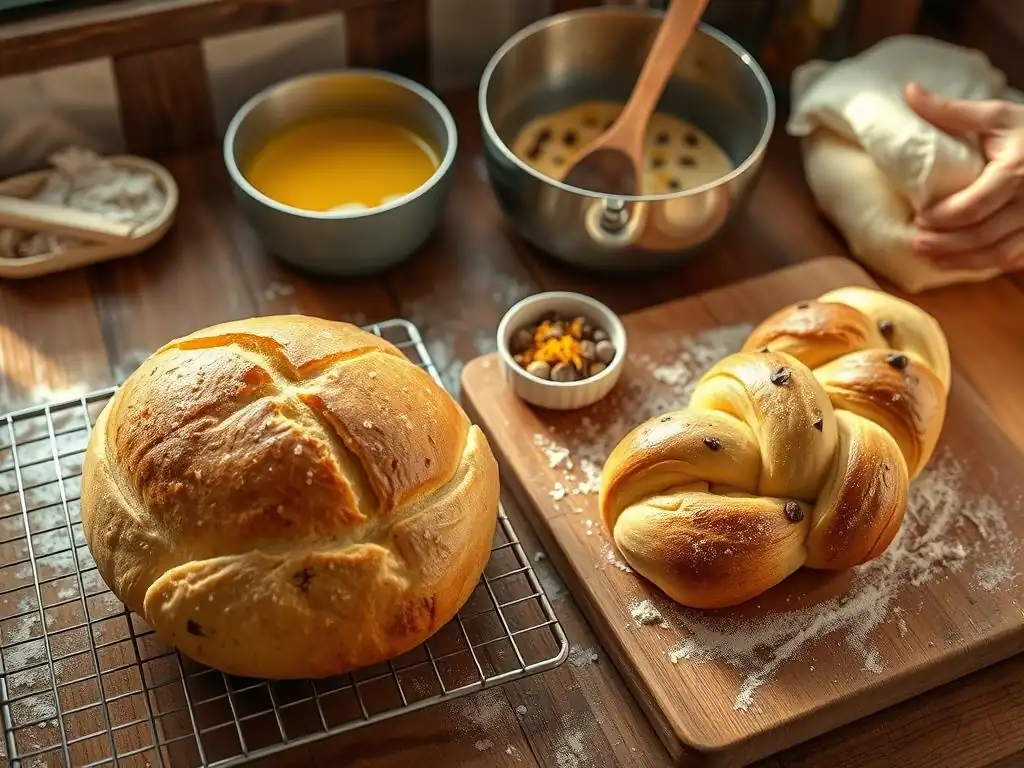
Mastering how to enrich yeasted dough opens the door to a world of delicious baked goods. Here are some classic examples:
Classic Brioche: A Versatile Base for Sweet and Savory Treats
Brioche is the quintessential example of a highly enriched dough, often containing a significant percentage of butter and eggs (sometimes more butter than flour by weight!). This results in a bread that is incredibly soft, tender, and rich, with a fine, cake-like crumb. Its versatility is unmatched; it can be baked as a loaf, rolls, or used for sweet applications like pain au chocolat or savory ones like burger buns. The high fat content requires careful, often prolonged, kneading and chilling the dough is usually necessary to make it easy to handle for shaping.
Cinnamon Rolls: Achieving a Soft and Pillowy Texture
Cinnamon rolls rely on a moderately enriched dough to achieve their signature soft, pillowy texture. The dough typically includes butter, sugar, eggs, and milk. This enrichment prevents the rolls from being tough or dry. The softness is key to the enjoyment, allowing the layers to pull apart easily after baking. The sugar in the dough also contributes to the golden-brown exterior and helps keep the crumb moist, complementing the sweet filling and glaze.
Challah Bread: A Traditional Braided Bread with Rich Flavor
Challah is a traditional Jewish bread, often recognized by its beautiful braided shape. It is typically enriched with eggs, oil (or sometimes butter), and sugar, though generally less heavily enriched than brioche. This gives challah a slightly sweet, rich flavor and a soft, springy crumb, while still having enough structure to hold a braid. The eggs contribute to the golden color of both the crumb and the crust, especially when brushed with an egg wash before baking.
Mastering Enriched Doughs: Advanced Techniques and Tips
Once you've grasped the basics of how to enrich yeasted dough, you can explore more advanced techniques and ingredients.
Working with Chocolate in Enriched Doughs: Preventing Seizing and Bloom
Adding chocolate chips, chunks, or swirls to enriched doughs like babka or pain au chocolat requires care. Chocolate contains cocoa solids and fat. When incorporating solid chocolate pieces into dough, ensure they are evenly distributed. For swirling chocolate pastes or fillings, make sure the paste isn't too warm, as it can melt the butter in the dough and make it greasy. Preventing chocolate bloom (the grayish streaks on the surface) and seizing (when melted chocolate becomes grainy) involves controlling temperature. Avoid overheating the dough during mixing and handle it gently.
Adding Spices and Flavorings: Balancing Flavors and Aromas
Enriched doughs are excellent vehicles for spices and flavorings like cinnamon, cardamom, vanilla, citrus zest, or extracts. Spices can be added with the dry ingredients, while extracts and zests are often mixed into the wet ingredients (like eggs or milk) or added during the initial mixing phase. Be mindful of the potency of spices; too much can overpower the rich flavors of the dough.
For instance, a common cinnamon roll recipe might use 1-2 teaspoons of ground cinnamon in the dough itself, in addition to the filling. Balancing these additions enhances the overall aroma and taste profile of the finished bake.
Shaping and Baking Enriched Doughs: Achieving Even Baking and Golden Crust
Shaping enriched doughs can sometimes be trickier than lean doughs because they are softer and more extensible due to the fat content. Chilling the dough thoroughly after proofing (or after the first rise) can make it much easier to handle for shaping braids, rolls, or other forms. Baking enriched doughs requires careful temperature control.
The sugar and fat promote rapid browning, so they are often baked at slightly lower temperatures (e.g., 350-375°F or 175-190°C) than lean breads to ensure the interior cooks through without the crust burning. Covering the loaf loosely with foil partway through baking is a common technique to prevent over-browning while the inside finishes cooking. Using an egg wash or milk wash before baking enhances the golden color and shine of the crust.
Task List:
- [x] Understand definition of enriched doughs.
- [x] Explain impact of enrichment on texture, flavor, freshness.
- [x] Discuss timing of enrichment addition.
- [x] Detail initial gluten development importance.
- [x] Address common mistakes (gluten inhibition, separation).
- [x] Explain when not to enrich (lean doughs).
- [x] Provide step-by-step guide on how to enrich yeasted dough.
- [x] Detail preparation of enrichments (butter, eggs, sugar).
- [x] Explain incorporation methods (gradual, stand mixer, hand).
- [x] Troubleshoot common problems (stickiness, no rise).
- [x] List example recipes (Brioche, Cinnamon Rolls, Challah).
- [x] Include advanced techniques (chocolate, spices, shaping/baking).
- [x] Ensure each ### has >= 2 paragraphs.
- [x] Integrate keyword naturally.
- [x] Use Markdown formatting.
- [x] Maintain Educational, Friendly tone.
- [x] Avoid prohibited elements.
Frequently Asked Questions
What exactly does it mean to "enrich" yeasted dough?
Enriching yeasted dough means adding ingredients like butter, eggs, or sugar to improve its flavor, texture, and shelf life. These additions create a softer, more tender crumb and a richer taste.
When is the best time to add enrichments to my yeasted dough?
Typically, enrichments are added after the gluten has initially developed. This prevents the fat and sugar from inhibiting gluten formation. Add them gradually after the initial mixing.
How do I know if I've added too many enrichments?
An overly enriched dough can become slack and difficult to handle. It might take longer to rise, or even fail to rise properly. Adjust the recipe or your technique if you experience this.
What are some common examples of enriched yeasted dough recipes?
Many delicious baked goods use enriched doughs! Examples include brioche, challah, and cinnamon rolls. These recipes rely on fats and sugars for their signature textures and flavors.
Can I enrich all types of yeasted dough, or are there exceptions?
While most yeasted doughs can be enriched, it's not always appropriate. Lean doughs, like those for French bread, benefit from minimal ingredients to achieve their characteristic crust and texture.
Final Reflection: The Transformative Power of Enrichment in Yeasted Doughs
The art of enriching yeasted doughs is more than just a culinary technique; it's a journey of flavor and texture transformation that resonates deeply with the modern pursuit of artisanal baking. Understanding the nuances of adding fats, sugars, and eggs elevates a simple loaf into a masterpiece, a testament to the power of thoughtful ingredient selection. This knowledge, once considered the exclusive domain of experienced bakers, is now readily accessible, empowering home cooks to create truly exceptional bread.
The impact of enriched doughs extends far beyond the individual baker's kitchen. It speaks to a broader cultural shift towards appreciating the process and the quality of ingredients. We are increasingly valuing handcrafted goods and the stories they tell, and enriched doughs, with their complex flavors and textures, perfectly embody this sentiment. Bread is the staff of life,
they say, and enriching that staff transforms it into something truly special, something to be savored and shared.
Now, consider your own baking journey. What new heights of flavor and texture can you achieve by experimenting with different enrichment techniques? Will you try adding a touch of olive oil for a subtle Mediterranean flair, or perhaps fold in some rich egg yolks for a supremely tender crumb? The possibilities are vast, and the rewards are immeasurable. Embrace the process, experiment fearlessly, and discover the transformative power of enrichment in your own kitchen.
Unlock Your Dough's Potential: Elevated Baking Awaits!
Thanks for taking the time to explore the art of enriching yeasted doughs! We hope you've gained valuable insights into creating truly exceptional baked goods. Now it's time to put your newfound knowledge into action.
- Experiment with a new enrichment today: Try adding one of the suggested ingredients – perhaps that jar of fruit preserves you’ve been meaning to use – to your next loaf and see the difference!
- Share your enriched baking creations: Show off your masterpiece on social media and inspire others! Use #BakeWithEaseEnriched to join our baking community.
- Explore different enrichment options: Dive deeper into the world of dough enrichments and discover new flavor combinations and textures.
Ready to unleash your inner baker and create something truly amazing? What unique enrichment will you try next?