
Enriching Dough for Viennoiseries: The Role of Fat and Eggs

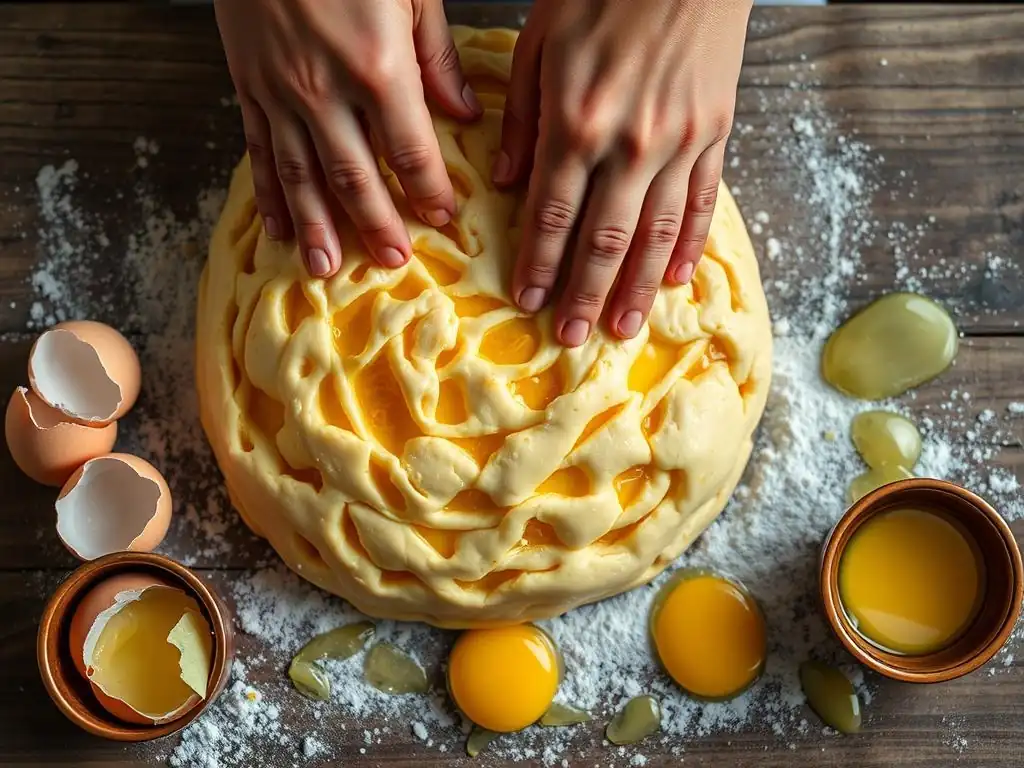
Welcome to BakeWithEase, where turning baking dreams into delicious realities is our specialty! Ever wondered how to achieve that perfectly flaky, melt-in-your-mouth texture in your pastries? This week, we're diving deep into the secrets of fat and egg enrichment dough. Unlock the techniques that elevate your viennoiseries from good to unforgettable and discover the role these essential ingredients play in creating baking masterpieces. Intrigued? Let's get started!
- Introduction to Viennoiserie Dough Enrichment
-
The Role of Fat in Viennoiserie Dough
- Types of Fat Used in Viennoiserie (Butter, European-Style Butter, Clarified Butter)
- How Fat Affects Dough Structure and Lamination
- Best Practices for Working with Fat in Dough
- Egg Yolks vs. Whole Eggs: Understanding the Difference
- How Eggs Contribute to Dough Texture and Flavor
- Egg Handling Techniques for Dough Enrichment
- Fat and Egg Enrichment Dough: A Balanced Approach
- Advanced Techniques for Enhancing Dough with Fat and Eggs
- Recipes Demonstrating Fat and Egg Enrichment
- Conclusion: Mastering the Art of Fat and Egg Enrichment in Viennoiseries
-
Frequently Asked Questions
- What is "fat and egg enrichment" in dough, and why is it important for viennoiseries?
- What types of fats are best suited for enriching viennoiseries dough?
- How do eggs contribute to the quality of enriched viennoiseries dough?
- Can I substitute ingredients in enriched dough recipes, especially concerning fat and eggs?
- What are some common mistakes to avoid when working with fat and egg enrichment dough?
- Final Reflection: The Golden Ratio of Viennoiserie
- Unleash Your Inner Pâtissier: Elevate Your Viennoiserie Game!
Introduction to Viennoiserie Dough Enrichment
What Makes Viennoiserie Dough Special?
Viennoiserie dough occupies a unique space in the baking world, bridging the gap between simple bread and rich pastry. Unlike lean doughs used for baguettes, which rely primarily on flour, water, yeast, and salt, Viennoiserie doughs are enriched. This means they incorporate significant amounts of ingredients like fat (typically butter), eggs, sugar, and sometimes milk.
This enrichment process dramatically alters the dough's characteristics, resulting in products that are tender, flavorful, and often have a soft, cake-like crumb or distinct, flaky layers. Think croissants, pain au chocolat, brioche, and danishes – these are the stars of the Viennoiserie category, celebrated for their luxurious texture and taste, which are direct results of fat and egg enrichment dough.
The enrichment process not only adds richness and flavor but also affects the dough's handling properties and final structure. Ingredients like sugar and fat tenderize the dough by interfering with gluten development, while eggs add richness, color, and contribute to the dough's structure and moisture. This careful balance is what allows Viennoiserie doughs to be rolled out thinly, laminated (folded with layers of fat), and baked into light, airy, yet substantial pastries. Mastering the techniques for incorporating these enriching elements is key to achieving the signature qualities of these beloved baked goods.
The Importance of Fat and Eggs in Viennoiserie
Fat and eggs are arguably the most critical components in achieving the signature richness and texture of Viennoiseries. Fat, particularly butter, provides flavor, tenderness, and is essential for creating the distinct flaky layers found in croissants and pain au chocolat through lamination. Without sufficient fat, these pastries would lack their characteristic crisp exterior and tender, layered interior. The percentage of butter in a classic croissant dough, for example, can be as high as 25-30% of the flour weight in the dough itself, plus an additional 25-50% of the flour weight used for lamination, totaling a significant amount of fat.
Eggs contribute richness, moisture, color, and help bind the dough, adding structure and improving the crumb texture. They also contribute to the dough's overall flavor profile and help create a softer, more tender final product compared to leaner doughs. In a rich brioche, eggs can constitute a substantial portion of the recipe, sometimes exceeding 50% of the flour weight by liquid measure (considering the egg's water content).
This high ratio of fat and egg enrichment dough is what gives brioche its distinctive soft, almost cakey texture and golden hue. Understanding how these two ingredients interact and contribute is fundamental to successful Viennoiserie baking.
The Role of Fat in Viennoiserie Dough
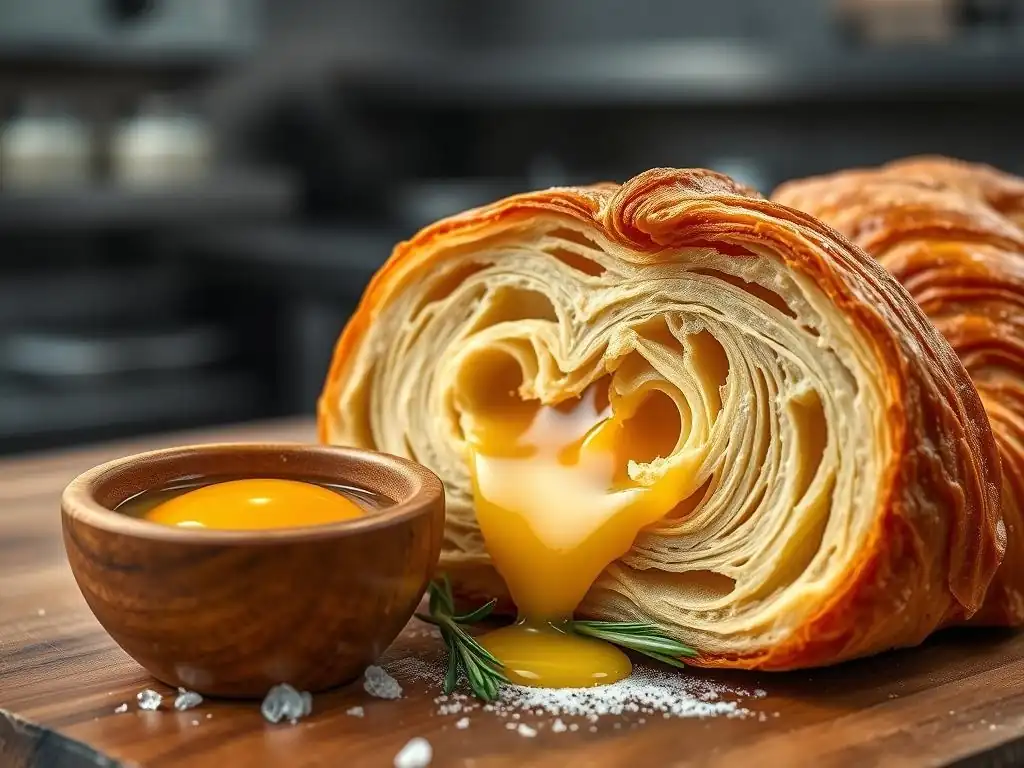
Types of Fat Used in Viennoiserie (Butter, European-Style Butter, Clarified Butter)
Butter: The Gold Standard for Flavor and Texture
Butter is the quintessential fat for most traditional Viennoiseries, prized for its complex flavor and unique melting properties. Standard unsalted butter in the US typically contains around 80% fat, 18% water, and 2% milk solids. This composition is crucial for lamination; the water turns to steam during baking, helping to separate the layers, while the milk solids contribute flavor and browning.
For a classic croissant, using high-quality butter is paramount as its flavor is a dominant element in the final product. The fat in the dough also shortens gluten strands, resulting in a more tender crumb compared to lean bread.
Using butter requires careful temperature control. It needs to be pliable enough to roll into the dough without breaking but cold enough to remain distinct layers during folding. Too warm, and it melts into the dough; too cold, and it shatters. Bakers often chill the butter to a specific temperature, perhaps around 50-55°F (10-13°C), before incorporating it for lamination, ensuring it has the right consistency to be rolled and folded repeatedly without melting into the dough layers prematurely.
European-Style Butter and Clarified Butter: Alternatives and Considerations
European-style butter, often containing a higher fat percentage (typically 82-86%) and less water than standard butter, is frequently preferred by professional bakers for Viennoiserie. The lower water content means less steam is produced during baking, potentially leading to flakier, more defined layers. The higher fat content also contributes to a richer flavor and a slightly different dough consistency. While standard butter works well, opting for a higher-fat butter can enhance the quality of laminated doughs like croissants, often yielding a more tender and flavorful result.
Clarified butter, or ghee, is pure butterfat with the water and milk solids removed. While not traditionally used for lamination in classic croissants (as the milk solids contribute flavor and the water aids steam separation), it can be used in the dough itself for added richness without introducing extra moisture or solids that could affect gluten development differently.
Some recipes might call for a small amount of clarified butter for specific textures or flavors. However, for achieving the iconic flaky structure of laminated Viennoiseries, the balance of fat, water, and milk solids found in traditional or European-style butter is generally preferred.
How Fat Affects Dough Structure and Lamination
Fat's Impact on Gluten Development
Fat plays a significant role in controlling gluten development in enriched doughs like those used for Viennoiseries. Gluten is formed when proteins in flour, glutenin and gliadin, combine with water and are developed through mixing and kneading. Fat coats these protein molecules, preventing them from fully hydrating and forming strong gluten networks. This "shortening" effect results in a more tender dough that is less elastic and easier to roll out thinly, which is essential for lamination. A dough rich in fat and egg enrichment dough will be softer and less chewy than a lean dough.
The amount and type of fat used directly influence the degree of gluten development. A higher fat percentage means more interference with gluten formation, leading to a more tender crumb. For example, a brioche dough with 50% butter (by flour weight) will be much more tender and cake-like than a simple enriched loaf with only 10% butter. This controlled gluten development is key to achieving the desired texture in various Viennoiseries, from the soft crumb of brioche to the crisp flakiness of a croissant.
Achieving Flaky Layers with Proper Fat Incorporation
Lamination is the technique that creates the iconic flaky layers in pastries like croissants and pain au chocolat, and it relies entirely on the proper incorporation and handling of fat. This process involves enclosing a block of cold butter within the dough, then repeatedly rolling and folding the dough to create alternating layers of dough and fat. As the pastry bakes, the water in the butter turns to steam, forcing the dough layers apart, while the fat melts and is absorbed, creating distinct, crisp layers.
The key to successful lamination and achieving flaky layers is maintaining the butter and dough at the correct temperatures throughout the folding process. The butter must be cold and firm enough to remain in distinct layers but pliable enough to roll out without breaking. If the butter is too warm, it melts into the dough; if too cold, it shatters, disrupting the layers.
Multiple folds (typically three or four "turns") are performed, with chilling periods in between, to create hundreds or even thousands of superfine layers. A standard croissant might have 3-4 folds, resulting in 2^n layers (where n is the number of folds), theoretically producing 81 or 243 layers, though some merging of layers is inevitable.
Best Practices for Working with Fat in Dough
Temperature Control for Optimal Fat Performance
Temperature control is paramount when working with fat, especially butter, in Viennoiserie dough. The butter used for lamination needs to be at a specific temperature range, typically between 50°F and 55°F (10°C and 13°C). At this temperature, the butter is firm but pliable, allowing it to be rolled out evenly with the dough without melting or cracking. The dough itself also needs to be kept cool, usually around 40-45°F (4-7°C), to prevent the butter from melting into it during the rolling and folding process.
Chilling periods between folds are non-negotiable. After each turn, the dough must rest in the refrigerator for 30-60 minutes. This allows the gluten to relax, making the dough easier to roll again, and more importantly, it chills the butter layers, ensuring they remain distinct and firm for the next fold. Skipping or shortening these chilling periods can lead to the butter melting into the dough, resulting in a greasy texture and a lack of distinct layers in the final baked product. Maintaining consistent temperatures throughout the entire process is the single most important factor for successful lamination.
Folding Techniques for Even Fat Distribution
Proper folding techniques are essential for creating uniform layers of dough and fat, which in turn ensures even rising and flakiness during baking. The most common folding methods for laminated doughs are the single fold (folding the dough into thirds, like a letter) and the double fold (folding both ends towards the center, then folding in half). Most croissant and pain au chocolat recipes use a combination of these folds to build up the layers. For example, a recipe might call for three single folds or one double fold followed by two single folds.
The key is to ensure the edges are neatly sealed after each fold to completely enclose the butter. This prevents the butter from leaking out during rolling and baking. Rolling should be done evenly and gently, applying steady pressure to lengthen the dough without tearing it or squeezing the butter out. Rolling in different directions between folds can help maintain a rectangular shape, making subsequent folds easier. The precision in these folding techniques, combined with correct temperature, is what transforms a simple dough enriched with fat and egg enrichment dough into a masterpiece of layered pastry.
Egg Yolks vs. Whole Eggs: Understanding the Difference
The Richness and Emulsifying Power of Egg Yolks
Egg yolks are powerhouses of richness, flavor, and emulsifying capability in enriched doughs. Yolks contain a high percentage of fat (about 33% by weight) and natural emulsifiers like lecithin. This fat contributes significantly to the dough's tenderness and richness, while lecithin helps to create a smooth, homogenous mixture by binding fats and liquids together. Using only egg yolks in a dough, as is sometimes done in very rich brioche variations or specific pastry doughs, results in an exceptionally tender, moist, and flavorful crumb with a vibrant golden color.
A recipe relying heavily on egg yolks might use a higher proportion of yolks to flour compared to one using whole eggs to achieve a similar level of richness, though this also introduces more fat relative to liquid. For instance, a standard brioche might use 2-3 whole eggs per 500g of flour, while a richer version might substitute some or all of these with 6-8 egg yolks, drastically increasing the fat content and richness of the fat and egg enrichment dough. The emulsifying action of the yolks also helps to create a finer, more even crumb structure.
Whole Eggs: Structure and Moisture Contributions
Whole eggs provide a balance of richness, moisture, and structure to Viennoiserie doughs. Composed of roughly equal parts yolk and white (by weight, after shelling), whole eggs offer protein from both components, which contributes to the dough's structure and stability during baking. The water content (about 75% in the white) adds necessary hydration, while the fat in the yolk provides tenderness and richness. Using whole eggs is common in many Viennoiserie recipes, including standard brioche and some croissant doughs, as they offer a good balance of desired characteristics.
Incorporating whole eggs results in a dough that is rich and tender from the yolk's fat but also has good structure from the egg white proteins. This balance is often preferred for doughs that need to hold their shape well during proofing and baking, such as braided brioche or filled pastries. A typical brioche recipe might use 2-4 whole eggs per 500g of flour, contributing both liquid and solids that enrich the dough and aid in creating a soft yet structured crumb. The use of whole eggs in fat and egg enrichment dough provides a complete package of benefits.
How Eggs Contribute to Dough Texture and Flavor
Egg's Impact on Dough Color and Crumb
Eggs significantly influence the color and crumb texture of Viennoiserie doughs. The carotenoids present in egg yolks impart a beautiful golden or yellowish hue to the dough and the final baked product. This is particularly noticeable in brioche, which often has a rich, sunny interior color directly proportional to the number of yolks used. Lean doughs, lacking eggs, will have a paler interior.
Beyond color, eggs contribute to a softer, more tender crumb. The fat from the yolks shortens gluten strands, similar to butter, while the proteins in both the yolk and white contribute to a finer, more even cell structure within the bread or pastry. This results in a crumb that is less open and chewy than lean bread and more delicate and moist. A well-enriched fat and egg enrichment dough will yield a product with a desirable balance of tenderness and structure, making it a pleasure to eat.
Enhancing Flavor Profiles with Eggs
Eggs add a subtle but distinct richness and depth of flavor to baked goods. The natural fats and proteins in eggs contribute to the overall savory-sweet profile of Viennoiseries, complementing the flavors of butter, sugar, and flour. While butter is often the dominant flavor in pastries like croissants, eggs provide a foundational richness that enhances the overall sensory experience.
In recipes where eggs are used in high proportions, such as brioche (which can contain up to 60% eggs by flour weight in liquid form), their flavor becomes more prominent, lending a custardy richness to the crumb. This richness pairs beautifully with sweet fillings or can stand alone. The flavor contribution of eggs is a key component in developing complex and appealing tastes in fat and egg enrichment dough creations.
Egg Handling Techniques for Dough Enrichment
Incorporating Eggs for Smooth Dough Consistency
Properly incorporating eggs into dough is crucial for achieving a smooth and homogeneous consistency. Eggs should typically be added gradually to the dough after the initial mixing of flour, liquid, and yeast. Often, they are added one at a time, allowing each egg to be fully absorbed into the dough before adding the next. This ensures that the liquids and fats from the eggs are evenly distributed throughout the gluten network as it develops.
Using room temperature eggs is often recommended. Cold eggs can chill the dough, potentially affecting yeast activity, and they don't incorporate as smoothly into a dough as those closer to the dough's temperature. Whisking the eggs lightly before adding them can also help integrate them more easily, preventing streaks of unincorporated egg in the dough. This careful incorporation is vital for developing a uniform fat and egg enrichment dough.
Preventing Over-Mixing When Adding Eggs
While enriched doughs require thorough mixing to develop some gluten structure and incorporate the significant amounts of fat and eggs, it's important to avoid over-mixing once the eggs are added. Eggs, particularly the whites, contain proteins that can make the dough very extensible and sticky if overworked after they are fully incorporated. Over-mixing can lead to a dough that is difficult to handle and can result in a tough or rubbery texture in the final product.
Once all the eggs are added and fully incorporated, mixing should continue only until the dough is smooth, elastic, and pulls away from the sides of the bowl. For very rich doughs, like brioche, this might take 10-15 minutes in a stand mixer on medium speed.
The dough should pass the "windowpane" test (a small piece can be stretched thinly without tearing), but it will be softer and stickier than a lean dough. Learning to recognize the correct dough consistency at this stage is key to preventing over-mixing and ensuring a tender crumb in your fat and egg enrichment dough.
Fat and Egg Enrichment Dough: A Balanced Approach
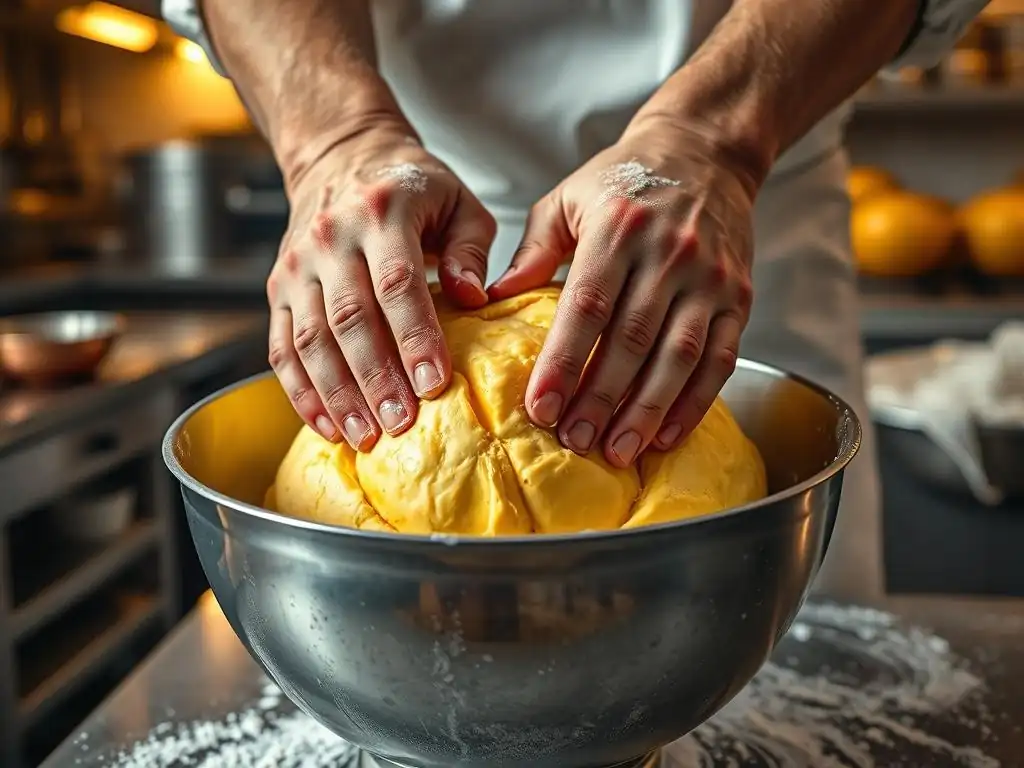
Finding the Right Ratio of Fat to Eggs
Determining the optimal ratio of fat to eggs is critical for achieving the desired characteristics in a specific Viennoiserie. There's no single "right" ratio; it varies greatly depending on the type of pastry being made.
A croissant dough, focused on flaky layers, prioritizes butter for lamination, while the dough itself might have a moderate amount of eggs (perhaps 1-2 whole eggs per 500g flour) and some butter (maybe 10-15% of flour weight). Brioche, centered on a rich, soft crumb, uses a high percentage of both butter (often 30-60% of flour weight) and eggs (sometimes 40-60% of flour weight in liquid measure).
Balancing these components means considering the desired outcome: flakiness, tenderness, richness, color, and handling properties. Too much fat can make the dough greasy and difficult to handle, potentially collapsing during baking. Too many eggs can make the dough overly rich, heavy, and sometimes rubbery if not handled correctly.
Recipes provide a starting point for these ratios, but understanding the function of each ingredient allows bakers to troubleshoot or adapt. For instance, if a brioche dough feels too dry or lacks richness, adding an extra egg yolk might be the appropriate adjustment, contributing both fat and emulsification to the fat and egg enrichment dough.
Calculating the Ideal Enrichment Level for Your Recipe
Calculating the enrichment level in baking recipes is often done using baker's percentages, where all ingredients are expressed as a percentage of the flour weight (which is always 100%). This allows for easy comparison and scaling of recipes. For fat and eggs, you would calculate:
% Fat = (Weight of Fat / Weight of Flour) * 100% Eggs (Whole) = (Weight of Whole Eggs / Weight of Flour) * 100% Egg Yolks = (Weight of Egg Yolks / Weight of Flour) * 100
A lean dough might have 0-5% fat and 0% eggs. A moderately enriched dough (like some challah or basic enriched rolls) might have 10-15% fat and 10-15% whole eggs. Classic brioche is highly enriched, often featuring 30-60% butter and 30-60% eggs.
Croissant dough itself might be 10-15% butter and 5-10% eggs, but the total fat content including the lamination butter (which is often calculated separately based on the initial dough weight or flour weight) pushes the overall fat level much higher, sometimes exceeding 50-70% of the initial flour weight when considering the entire pastry. Analyzing recipes using these percentages helps understand the degree of fat and egg enrichment dough.
Combining Fat and Eggs for Optimal Results
The Synergistic Effect of Fat and Eggs on Dough
Fat and eggs work together synergistically in enriched doughs, meaning their combined effect is greater than the sum of their individual contributions. Fat tenderizes the dough by interfering with gluten, while eggs add richness, moisture, and contribute proteins that provide structure. The emulsifying power of egg yolks helps integrate the large amount of fat into the dough smoothly, preventing greasiness and ensuring even distribution.
When combined, fat and eggs create a dough that is not only rich and flavorful but also has a desirable texture – tender yet structured, with a fine, even crumb (in the case of brioche) or distinct, flaky layers (in the case of laminated doughs). This synergistic effect is particularly evident in recipes like brioche, where high amounts of both butter and eggs result in an incredibly soft, luxurious dough that is both pliable enough to knead and shape yet holds its form during baking.
The successful interaction of fat and egg enrichment dough elements is key to these textures.
Troubleshooting Common Issues with Enriched Doughs
Dough Too Rich: Solutions and Adjustments
A dough that is too rich (meaning it contains excessive amounts of fat or eggs relative to the flour) can be difficult to handle. It might feel greasy, sticky, lack structure, and fail to hold its shape during proofing or baking. Common signs include the dough not developing sufficient elasticity during kneading or spreading excessively during proofing. If you suspect your dough is too rich early in the mixing process, you can try adding a small amount of additional flour (start with a tablespoon or two) to help absorb excess fat and moisture and potentially aid gluten development.
If the dough is already mixed and proving difficult to handle, chilling it thoroughly can help firm it up, making it easier to shape. For laminated doughs that are too rich, the butter might leak out during rolling; ensuring everything is kept very cold is crucial. In future attempts with the recipe, slightly reducing the amount of fat or eggs (perhaps by 5-10%) and ensuring accurate measurement (preferably by weight) can help achieve a better balance in the fat and egg enrichment dough.
Dough Not Rich Enough: Adding More Fat or Eggs
A dough that is not rich enough will feel tougher, less tender, and might have a drier or more open crumb than desired for a Viennoiserie. It might also lack the characteristic golden color that eggs provide. If you realize the dough isn't rich enough during mixing, you can sometimes incorporate a little extra softened butter or whisked egg towards the end of the kneading process. However, adding large amounts of fat or liquid late can be challenging and affect dough structure.
A more reliable approach is to adjust the recipe for the next time. If the dough lacks tenderness and richness, consider increasing the percentage of butter (for both flavor and tenderness) or adding an extra egg yolk (for richness, color, and emulsification). If it feels slightly dry and lacks softness, an extra whole egg or a bit more butter might be needed. By understanding how fat and eggs function, you can make informed adjustments to achieve the perfect fat and egg enrichment dough.
Advanced Techniques for Enhancing Dough with Fat and Eggs
Using Different Fats for Unique Flavor Profiles (Duck Fat, Ghee)
While butter is the standard, experimenting with other fats can introduce unique flavor dimensions to Viennoiseries. Duck fat, for instance, has a lower melting point than butter and a distinct savory flavor.
While not suitable for traditional lamination due to its composition, a small amount could potentially be incorporated into the dough itself in recipes like savory brioche or rolls to add richness and a subtle gamey note. Ghee (clarified butter) offers pure butter flavor without the water and milk solids; incorporating it into the dough (not for lamination) can boost richness and tenderness, though it might affect texture differently than whole butter due to the absence of water.
Exploring fats like high-quality olive oil (in specific, non-traditional enriched doughs like some Italian sweet breads) or even rendered animal fats (like lard, though less common in sweet Viennoiseries) can open up new flavor possibilities. However, each fat has different melting points and compositions, which will significantly impact dough handling and the final texture. Substituting fats requires experimentation and understanding how the specific fat behaves compared to butter in a fat and egg enrichment dough.
Exploring Egg Washes for Color and Shine
An egg wash, typically applied to the surface of Viennoiseries before baking, is another way eggs enhance the final product, primarily contributing to color and shine. A basic egg wash is a whisked whole egg. Adding a splash of water or milk creates a thinner wash that gives a less intense color and a slight sheen. Using only egg yolks mixed with a little cream or milk yields a richer, darker, and shinier finish. Using only egg whites and water gives a very thin, crisp crust with minimal color.
The type of egg wash chosen depends on the desired appearance. For a deeply golden, glossy finish on a brioche loaf or croissant, a yolk-heavy wash is ideal. For a lighter, subtle sheen on a pain au chocolat, a whole egg and water mix might be preferred. Applying the wash evenly with a pastry brush and being careful not to let it pool around the base of the pastry prevents layers from sealing together and ensures a professional-looking finish. This final touch with eggs is crucial for the visual appeal of fat and egg enrichment dough products.
Incorporating Flavored Fats into Viennoiserie Dough (Vanilla Bean Infused Butter)
Infusing fats, particularly butter, with flavors before incorporating them into the dough can add another layer of complexity and aroma to Viennoiseries. Vanilla bean infused butter is a classic example. Splitting a vanilla bean, scraping out the seeds, and warming them gently with melted butter (then chilling and resolidifying) allows the butter to absorb the intense vanilla flavor. This flavored butter can then be used in the dough or even for lamination (if carefully handled and chilled).
Other possibilities include infusing butter with citrus zest, spices like cardamom or cinnamon, or even floral notes like lavender. Savory applications could involve infusing butter with roasted garlic or herbs for enriched rolls. The key is to infuse the flavor gently without introducing excess moisture or solids that could interfere with dough structure or lamination. Using flavored fat adds a sophisticated twist to traditional fat and egg enrichment dough recipes.
Recipes Demonstrating Fat and Egg Enrichment
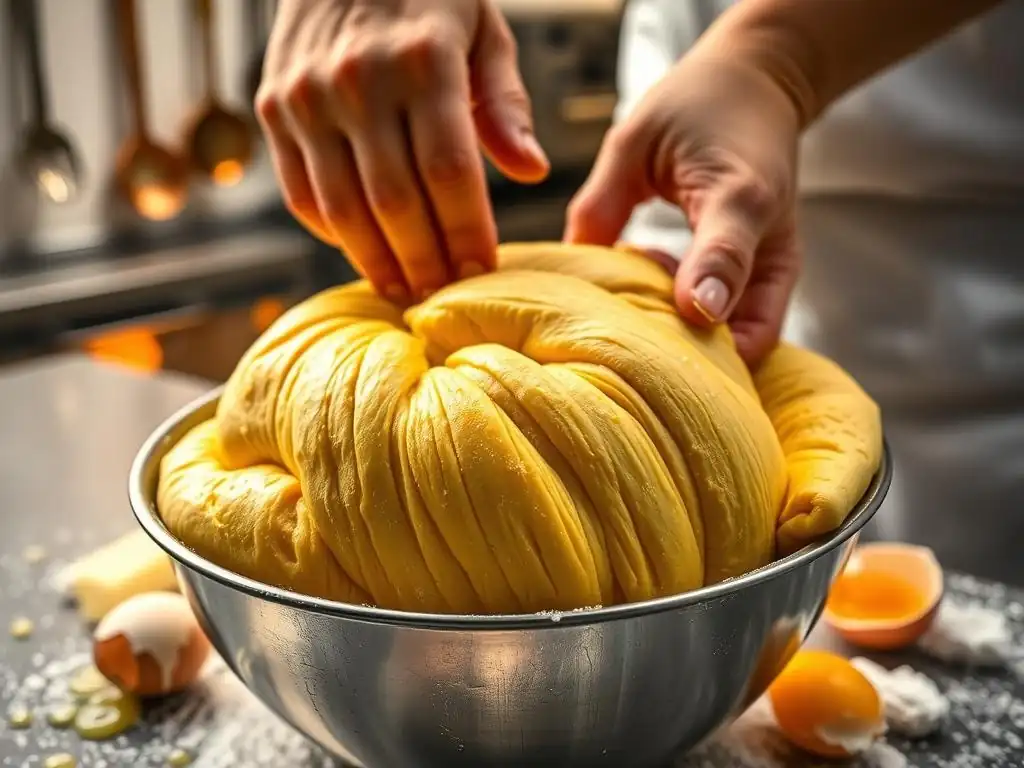
Croissant Recipe: A Deep Dive into Fat and Egg Use
A classic croissant recipe exemplifies the crucial role of fat, particularly in lamination, while also utilizing a moderate amount of eggs in the dough. The process begins with creating an enriched dough (often called the détrempe) using flour, water, yeast, sugar, a small amount of salt, and usually 10-15% butter and 5-10% whole eggs (by flour weight). These enriching agents contribute flavor, tenderness, and help the dough handle the subsequent rigorous process of lamination.
The bulk of the fat comes from the "butter block" ( beurre de tourage), which is a specific amount of cold butter (often 25-50% of the flour weight from the détrempe) enclosed and rolled into the dough over several turns. The interaction between the moderately enriched détrempe, which has some structure from gluten and egg protein but is tenderized by the initial fat and eggs, and the cold, layered butter is what creates the characteristic honeycomb interior and flaky exterior.
The eggs in the détrempe contribute to the dough's elasticity and ability to withstand rolling without tearing, while the high percentage of added butter defines the structure of this fat and egg enrichment dough masterpiece.
Pain au Chocolat Recipe: Achieving the Perfect Flaky Texture
Pain au chocolat uses the same fundamental laminated dough as croissants, meaning it relies equally heavily on fat (butter for lamination) and the moderate egg and fat enrichment within the dough itself. The primary difference lies in the shaping and filling – the dough is cut into rectangles, filled with chocolate batons, and rolled up. This shape requires the laminated dough to perform slightly differently during baking, with less emphasis on the dramatic rise seen in a croissant's horns and more on achieving distinct, even layers around the chocolate core.
The fat and egg enrichment dough, prepared and laminated identically to croissant dough, provides the necessary structure to hold the chocolate while ensuring flakiness. The butter layers create pockets that fill with steam, separating the dough layers as they bake around the melting chocolate. The eggs in the initial dough contribute tenderness and help create a cohesive structure that prevents the dough from cracking or tearing during rolling and shaping. The success of pain au chocolat hinges on the precise handling of the laminated fat and egg enrichment dough.
Brioche Recipe: Showcasing the Richness of Egg and Butter
Brioche is the ultimate demonstration of fat and egg enrichment dough, characterized by its exceptionally high proportion of butter and eggs. Unlike laminated doughs, brioche is typically a single, homogeneous dough mixed until it is incredibly smooth, elastic, and enriched. Recipes often call for 30-60% butter and 30-60% eggs (by flour weight). The butter is usually added softened, piece by piece, towards the end of mixing, and the eggs are incorporated gradually earlier in the process.
The high percentage of fat and eggs significantly inhibits gluten development, resulting in a very tender, soft crumb that is almost cake-like. The eggs contribute substantial moisture and protein, which help bind the dough and provide structure despite the high fat content.
The richness from both butter and eggs gives brioche its distinctive golden color and luxurious flavor. Kneading brioche requires significant time (often 15-20 minutes in a stand mixer) to properly develop the gluten network and emulsify the large quantity of fat and eggs into the dough, creating a smooth, satiny fat and egg enrichment dough that is a joy to handle once chilled.
Conclusion: Mastering the Art of Fat and Egg Enrichment in Viennoiseries
Key Takeaways for Successful Viennoiserie Baking
Mastering Viennoiserie baking, and specifically working with fat and egg enrichment dough, boils down to understanding the fundamental roles of these key ingredients and practicing precise techniques. Remember that fat, especially butter, is crucial for flavor, tenderness, and creating those coveted flaky layers through lamination. Eggs contribute richness, moisture, color, and structure, balancing the tenderness provided by the fat. The ratio of fat to eggs, and the total amount of enrichment, defines the specific type of Viennoiserie you are creating, from the layered flakiness of a croissant to the soft richness of a brioche.
Success relies heavily on temperature control, particularly when handling butter for lamination, and careful mixing to properly incorporate fats and eggs without overworking the dough. Accurate measurement of ingredients, preferably by weight, is essential given the delicate balance required in these enriched doughs. By paying attention to these details and understanding how fat and egg enrichment dough behaves at each stage, you can consistently produce delicious, high-quality Viennoiseries.
Further Exploration: Resources and Recipes for Enriched Doughs
Embarking further into the world of enriched doughs offers endless possibilities beyond the classic croissant and brioche. Explore recipes for pain aux raisins, Danish pastries, or even different regional variations of brioche like pain de mie or kougelhopf. Each recipe will showcase slightly different ratios and techniques for fat and egg enrichment dough, offering new insights into how these ingredients shape texture and flavor.
Look for resources that provide detailed step-by-step instructions and explain the why behind each stage, from mixing and kneading to proofing and baking. Practicing with classic recipes is the best way to build intuition for handling rich doughs. Don't be discouraged by initial challenges; working with fat and egg enrichment dough requires patience and practice, but the rewards of a perfectly baked, tender, and flaky pastry are well worth the effort.
Frequently Asked Questions
What is "fat and egg enrichment" in dough, and why is it important for viennoiseries?
Fat and egg enrichment refers to the process of adding butter or other fats and eggs to dough. This process is important for viennoiseries because it creates a rich, tender, and flavorful final product.
What types of fats are best suited for enriching viennoiseries dough?
Generally, high-quality butter is considered the best fat due to its flavor and workability. Other fats like shortening or even certain oils can be used, but they will impact the final taste and texture.
How do eggs contribute to the quality of enriched viennoiseries dough?
Eggs provide moisture, richness, and structure to the dough. The yolks contribute to tenderness and color, while the whites add strength and elasticity.
Can I substitute ingredients in enriched dough recipes, especially concerning fat and eggs?
While substitutions are possible, they will affect the outcome. Substituting fat may alter the flavor and texture, while reducing eggs can result in a drier, less tender product.
What are some common mistakes to avoid when working with fat and egg enrichment dough?
Common mistakes include using incorrect temperatures (too warm or too cold), overmixing the dough, or not allowing sufficient proofing time. These issues can negatively impact the rise and texture of the viennoiseries.
Final Reflection: The Golden Ratio of Viennoiserie
The delicate balance of fat and eggs in viennoiserie dough isn't just a recipe detail; it's the key to unlocking unparalleled texture and flavor. This seemingly simple combination dictates the final product's richness, flakiness, and overall mouthfeel, impacting everything from the airy lightness of a croissant to the tender crumb of a pain au chocolat. Understanding this relationship is crucial for any baker aiming for professional-level results.
The influence of fat and egg enrichment on the viennoiserie landscape is profound, shaping not only the taste but also the very identity of these beloved pastries. The pursuit of the perfect ratio has driven innovation and experimentation for centuries, resulting in the diverse range of viennoiseries we enjoy today. As a baker myself, I've witnessed firsthand the transformative power of these ingredients, the way a careful adjustment can elevate a simple dough into something truly exceptional. The proof of the pudding is in the eating,
and in the case of viennoiserie, the proof lies in the delicate layers and melt-in-your-mouth texture achieved through masterful fat and egg incorporation.
Now, it's your turn to explore this fascinating world. Don't be afraid to experiment with different fat percentages and egg additions, to observe the subtle shifts in texture and flavor. Embrace the journey of discovery, for the perfect balance of fat and egg in your viennoiserie dough is waiting to be found. The reward? The satisfaction of creating pastries that are not only delicious but also a testament to your skill and understanding of this fundamental baking principle.
Unleash Your Inner Pâtissier: Elevate Your Viennoiserie Game!
Thanks for exploring the world of richer, flakier viennoiseries! You've just unlocked the secrets to mastering dough enrichment – now it's time to put your newfound knowledge into action.
Here's how to take your baking to the next level:
- Bake the Perfect Croissant: Put your enriched dough skills to the test! Try out the croissant recipe we've shared – you'll find it much easier now that you understand the process better.
- Experiment with Different Fats: Explore how various fats—such as butter, lard, or duck fat—affect the texture and flavor of your baked goods. Keep notes on your results to become a true viennoiserie expert!
- Share Your Success (or Challenges!): Connect with our community on social media and share your baking journey. Let's learn and grow together!
Are you ready to elevate your baking and craft truly exceptional viennoiseries? Which fat will you try first?