
Essential Tools for Intermediate Viennoiserie Baking Success

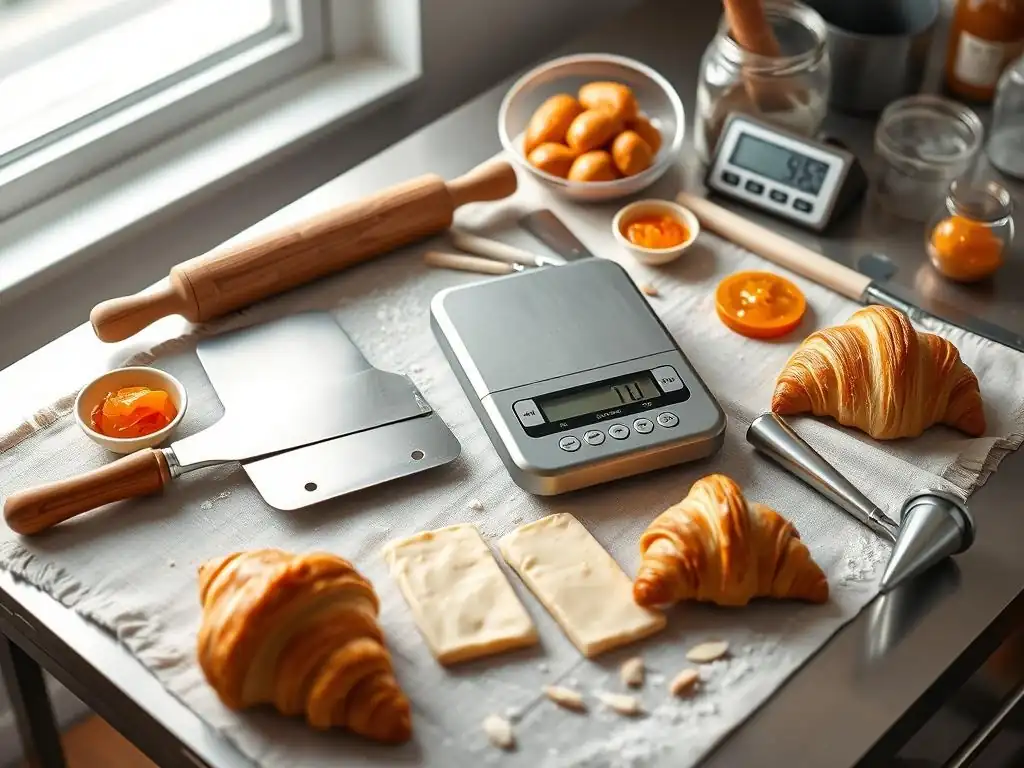
Welcome to BakeWithEase!
Unlock the secrets to crafting exquisite Viennoiserie with our expert guidance. Are you ready to elevate your baking game? This article reveals the essential tools that will transform your dough into flaky, buttery masterpieces. Discover the secrets to success in intermediate baking and embark on a journey to perfect croissants, pain au chocolat, and more. Intrigued? Let's get baking!
- Elevate Your Viennoiserie Baking with the Right Equipment
-
Key Baking Tools for Mastering Viennoiserie
- Dough Sheeters: Achieving Perfect Layers in Viennoiseries
- Precision Thermometers: Critical for Yeast Activation and Chocolate Tempering
- High-Quality Rolling Pins: Essential for Even Dough Distribution
- Bench Scrapers: Your Ally for Clean and Efficient Dough Handling
- Sharp Knives or Pizza Cutters: Precise Cuts for Uniform Shapes
- Must-Have Ingredients for Viennoiserie
- Optional Tools That Enhance Viennoiserie Baking
- Tips for Choosing the Right Viennoiserie Baking Tools
- Maintaining Your Viennoiserie Baking Tools
-
Frequently Asked Questions
- What are the most essential tools for intermediate Viennoiserie baking, and why are they important?
- Why is a laminating sheeter considered an essential tool for intermediate Viennoiserie baking?
- Is a stand mixer truly necessary, or can I knead the dough by hand?
- What kind of thermometer is best for Viennoiserie baking?
- Beyond the basics, what's one optional tool that can elevate my Viennoiserie baking?
- Final Reflection: Mastering the Craft of Viennoiserie
- Unleash Your Inner Viennoiserie Master!
Elevate Your Viennoiserie Baking with the Right Equipment
Stepping up your game in Viennoiserie baking, that delightful realm of laminated doughs like croissants and pain au chocolat, requires more than just practice; it demands the right arsenal of tools. As you move beyond basic recipes, the precision and consistency needed to achieve those coveted flaky layers and rich textures become paramount. Having access to the proper Viennoiserie baking essential tools can dramatically improve your results, turning frustrating attempts into successful, beautiful pastries.
Investing in quality equipment designed for the specific demands of laminated dough makes a significant difference. From achieving uniform dough thickness to controlling critical temperatures, the right tools simplify complex techniques and help ensure repeatable success. This guide explores the key equipment that will support your journey into mastering intermediate Viennoiserie baking.
Key Baking Tools for Mastering Viennoiserie
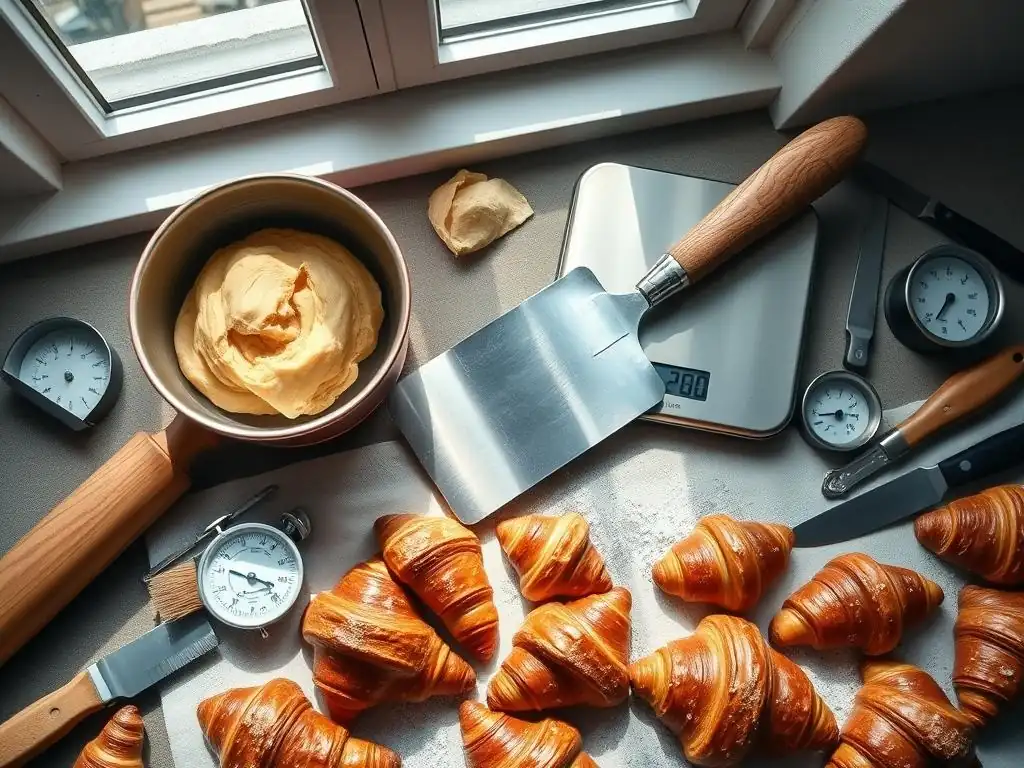
Dough Sheeters: Achieving Perfect Layers in Viennoiseries
While not strictly essential for a home baker, a dough sheeter is one of the most impactful Viennoiserie baking essential tools for achieving consistent, thin layers, especially when working with larger batches or challenging doughs. These machines mechanically roll dough to a precise, uniform thickness across its entire surface, which is incredibly difficult to replicate manually. Achieving an even thickness, often down to 3 millimeters (about 1/8 inch) for croissant dough before the final fold, is crucial for developing hundreds of distinct, airy layers during baking.
Small countertop sheeters are available for serious home bakers or small-scale production, offering a significant advantage in labor reduction and consistency compared to hand rolling. For example, manually rolling a large détrempe (the base dough) and butter block evenly can take considerable time and effort, often resulting in variations in thickness. A sheeter performs this task quickly and uniformly, ensuring that each fold incorporates layers of precisely the same thickness, leading to a more predictable and superior final product with that characteristic honeycomb structure.
Precision Thermometers: Critical for Yeast Activation and Chocolate Tempering
Temperature control is non-negotiable in successful Viennoiserie baking, making precision thermometers indispensable Viennoiserie baking essential tools. For yeasted doughs like croissants, activating yeast requires water within a specific temperature range, typically between 24-27°C (75-80°F). Water that is too cold will result in slow or inactive yeast, while water that is too hot can kill it entirely, leading to dough that doesn't rise properly. A digital instant-read thermometer allows you to verify your liquid temperature accurately.
Furthermore, if your Viennoiserie recipe includes chocolate, like pain au chocolat or chocolate-filled croissants, tempering the chocolate for dipping or decoration might be necessary. Tempering involves heating and cooling chocolate to specific temperatures to stabilize cocoa butter crystals, giving chocolate a glossy finish and a firm snap. For dark chocolate, this often involves melting to around 45-50°C (113-122°F), cooling to 28-29°C (82-84°F), and then reheating slightly to 31-32°C (88-90°F). A reliable thermometer is absolutely critical for hitting these narrow temperature windows and achieving perfectly tempered chocolate.
High-Quality Rolling Pins: Essential for Even Dough Distribution
Even if you use a dough sheeter, a high-quality rolling pin remains a fundamental Viennoiserie baking essential tool, especially for shaping and minor adjustments. For intermediate bakers, a heavier rolling pin, often made from marble, stainless steel, or a dense wood, can be beneficial. The weight assists in rolling out cold, firm dough and butter layers without requiring excessive force, which could tear the delicate structure. Length is also important; a pin around 40-50 cm (16-20 inches) provides enough width to handle larger dough blocks comfortably during the lamination process.
The surface material matters too. Marble stays naturally cool, helping to keep the butter in the dough firm during rolling, which is vital for creating distinct layers. Stainless steel also retains cold well. Wooden pins are classic and effective, but ensure they are smooth and well-maintained. Regardless of material, the goal is to roll the dough evenly and consistently across its entire surface, maintaining a uniform thickness at each stage of folding. A good rolling pin allows for controlled pressure, preventing thin spots or tearing that can compromise the final bake.
Bench Scrapers: Your Ally for Clean and Efficient Dough Handling
A simple yet incredibly versatile item, the bench scraper is a highly recommended Viennoiserie baking essential tool for any baker working with dough. Typically made of stainless steel with a sturdy handle, its primary uses include dividing dough into portions, transferring dough without stretching or tearing, and scraping flour and dough remnants from your work surface. For Viennoiserie, precise portioning is key for uniform pastries; a scraper allows you to cleanly cut dough into equal pieces, whether you're aiming for 60g croissants or 80g pains au chocolat.
Beyond portioning, a bench scraper is invaluable for keeping your workspace clean and managing sticky dough. It efficiently scrapes up excess flour, butter, and dough scraps from your counter, making cleanup faster and preventing build-up that could interfere with subsequent steps. When handling delicate laminated dough, using a scraper to lift and move it minimizes contact with warm hands, helping to keep the butter cold and preventing layers from sticking together prematurely. It's a tool you'll find yourself reaching for constantly throughout the baking process.
Achieving uniform shapes is crucial for both the appearance and even baking of Viennoiseries, making sharp cutting tools essential Viennoiserie baking essential tools. Whether you're cutting triangles for croissants or rectangles for pain au chocolat, a clean, swift cut is vital. A dull blade can drag the dough, compressing the layers and sealing them together along the cut edge. This prevents those edges from puffing up properly during baking, resulting in a less flaky crust.
A very sharp chef's knife or a dedicated pastry knife with a long, straight blade works well for making precise cuts through laminated dough. Alternatively, a sharp pizza cutter can be incredibly efficient for cutting straight lines quickly across larger sheets of dough, minimizing handling. The key is to use a tool that slices cleanly through all the layers without distorting the dough's structure. Investing in a good, sharp cutting tool will ensure your pastries bake into beautifully defined shapes with perfectly separated layers.
Must-Have Ingredients for Viennoiserie
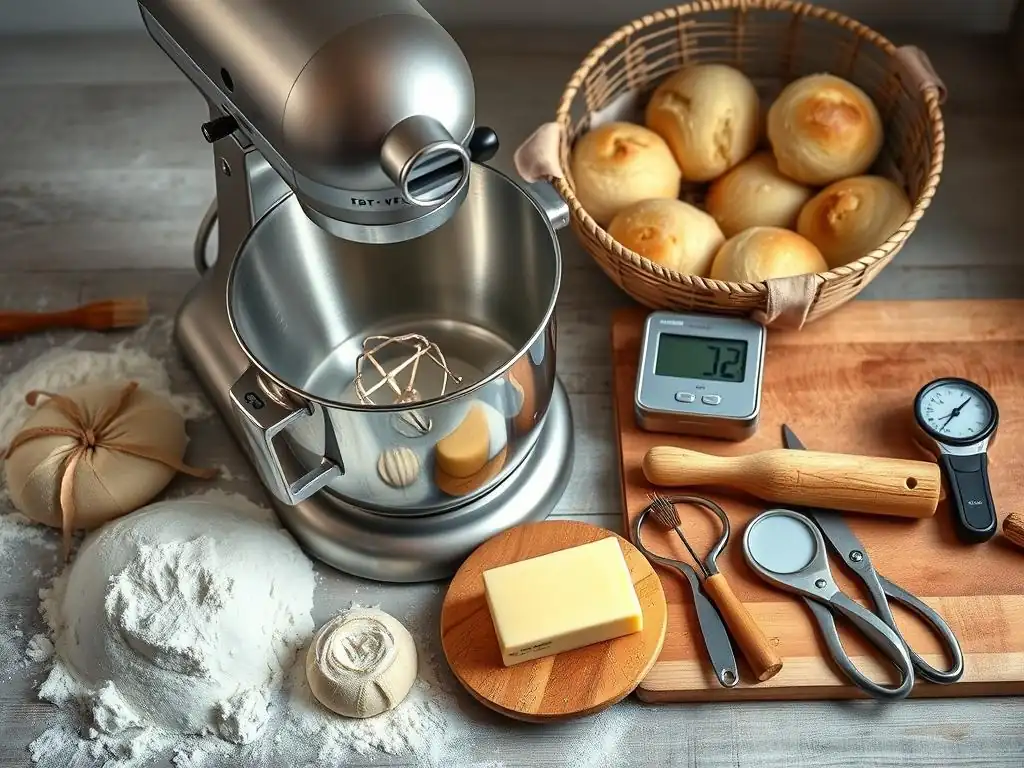
High-Gluten Flour: The Foundation of Flaky Viennoiseries
The type of flour you use fundamentally impacts the structure and texture of your Viennoiseries, making high-gluten flour a critical must-have ingredient. Unlike cakes or pastries requiring tender crumbs, laminated doughs rely on a strong gluten network to provide elasticity and structure. This network allows the dough to be rolled out thinly multiple times without tearing and provides the framework that traps steam during baking, creating those characteristic airy layers. Flours with a protein content typically ranging from 12% to 14% are considered high-gluten and are ideal for this purpose.
Using a flour with sufficient protein ensures the dough has the strength to withstand the rigorous process of lamination (folding butter into the dough). A weaker flour might tear, making rolling difficult and resulting in fewer, less defined layers. While some recipes might suggest all-purpose flour for beginners, transitioning to a higher-gluten bread flour or even a specialized pastry flour blend designed for lamination will significantly improve the dough's extensibility and elasticity, leading to superior flakiness and volume in your final Viennoiseries.
European-Style Butter: Key to Rich Flavor and Lamination
Butter is arguably the second most important ingredient in Viennoiserie, acting as both a flavor enhancer and the key to lamination. European-style butter, with its higher butterfat content (typically around 82% compared to 80% in many American varieties) and lower water content, is considered essential for achieving the best results. This higher fat content contributes to a richer flavor and a more pliable texture when the butter is chilled, making it easier to create a smooth, even butter block for encasing in the dough.
The lower water content in European butter is crucial because excess water can interact with the flour during lamination, potentially developing gluten in the butter layers themselves. This would hinder the separation of dough layers during baking. Furthermore, butter with a higher melting point (often a characteristic of higher-fat butters) stays firmer for longer while you are rolling and folding the dough, preventing it from melting into the dough before baking. Using high-quality, high-fat butter is a cornerstone of authentic, flaky Viennoiseries.
Instant Dry Yeast: Reliable and Consistent Leavening
For consistent and predictable results in yeasted Viennoiseries like croissants, instant dry yeast is a highly recommended ingredient. Unlike active dry yeast, which typically needs to be proofed in warm liquid before being added to dry ingredients, instant dry yeast can usually be mixed directly into the flour. This simplifies the process and reduces a potential point of failure. Instant dry yeast is also known for its reliable and vigorous activity, providing consistent leavening that helps the dough rise properly and contributes to the final texture and volume of the baked goods.
Using instant dry yeast allows for a more straightforward mixing process and often leads to a faster rise time compared to active dry yeast. While fresh yeast is also used professionally, instant dry yeast offers convenience and a longer shelf life for the home baker. Ensuring your yeast is fresh and stored properly (usually in an airtight container in the refrigerator or freezer) is key to its performance and the successful rise of your Viennoiserie dough.
Valrhona Chocolate: Achieving the Perfect Chocolate Batons
For pain au chocolat, the quality of the chocolate is paramount, and using a high-quality baking chocolate like Valrhona chocolate batons is often the standard for achieving excellent results. These batons (small sticks of chocolate) are specifically designed for baking; they contain less cocoa butter than eating chocolate, which helps them hold their shape better and melt more slowly within the pastry during baking. Valrhona is renowned for its consistent quality and rich flavor, providing a luxurious chocolate experience that complements the buttery layers of the Viennoiserie.
Using dedicated baking chocolate batons ensures that the chocolate melts into a soft, gooey center without completely dissolving or leaking out of the pastry. The size and shape of the batons are also optimized for pain au chocolat, allowing for even distribution within the rolled dough. While other high-quality dark chocolates can be used, Valrhona batons are a popular choice among bakers for their reliability, superior taste, and performance specifically in pain au chocolat, contributing significantly to the final product's appeal.
Optional Tools That Enhance Viennoiserie Baking
Proofing Box: Controlling Fermentation for Consistent Results
While not strictly essential, a proofing box is a Viennoiserie baking essential tool that can significantly improve consistency, especially in environments with fluctuating temperatures. Viennoiserie dough requires precise fermentation conditions – typically a warm, humid environment, often around 25-30°C (77-86°F) with 70-80% humidity. A proofing box provides a controlled microclimate, ensuring the yeast ferments at an optimal rate, leading to consistent dough development and predictable rise.
Using a proofing box eliminates guesswork and reliance on ambient room temperature, which can vary greatly. This controlled environment helps achieve the perfect "proof" before baking, where the dough has expanded sufficiently but not over-proofed, which could lead to a poor rise in the oven. For intermediate bakers looking to refine their process and ensure consistent results regardless of external conditions, a proofing box is a valuable investment.
Stand Mixer with Dough Hook: Efficient Kneading for Large Batches
For those making larger batches of Viennoiserie dough, a stand mixer equipped with a dough hook is a highly convenient, though optional, Viennoiserie baking essential tool. The initial mixing and kneading of the détrempe (the base dough before adding butter) can be quite demanding, especially when dealing with stiff doughs made with high-gluten flour. A stand mixer handles this task efficiently, developing the necessary gluten structure without the physical effort required for hand kneading.
A standard home stand mixer, often with a capacity for handling 1-2 kilograms (2-4 pounds) of dough, can significantly reduce preparation time and ensure consistent mixing. While hand mixing is certainly possible, particularly for smaller batches, a stand mixer guarantees uniform incorporation of ingredients and efficient gluten development, setting a strong foundation for the subsequent lamination process. It's a tool that enhances efficiency and reduces labor, allowing you to focus your energy on the crucial lamination steps.
Perforated Baking Sheets: Promoting Even Baking and Crispness
Perforated baking sheets, also known as air bake sheets, are optional but beneficial Viennoiserie baking essential tools for promoting even heat distribution and achieving a crisp bottom crust. These sheets have tiny holes across their surface, allowing hot air to circulate more freely around the base of the pastries. This increased airflow helps prevent soggy bottoms and encourages uniform browning and crisping.
When baking laminated pastries like croissants, ensuring the bottom is as golden and crisp as the top is desirable. A standard solid baking sheet can sometimes trap moisture underneath the pastry, leading to a less crisp base. Perforated sheets mitigate this by allowing steam to escape and hot air to reach the bottom surface more effectively. Using these sheets can contribute to a more professional-looking and texturally superior final product.
Ruler: Ensuring Uniform Dimensions for Professional Presentation
While seemingly basic, a simple ruler is an excellent optional Viennoiserie baking essential tool for ensuring uniformity and professional presentation. Precise measurements are important at various stages, from rolling out the dough to specific dimensions before folding (e.g., a rectangle 20x60 cm) to cutting triangles or rectangles of consistent size. Uniformly sized pastries not only look better but also bake more evenly.
Using a ruler to guide your cuts ensures that every croissant triangle is the same width at the base and the same length, leading to rolls of similar size and weight. For pain au chocolat, measuring the rectangle dimensions and the placement of the chocolate batons ensures consistency. This attention to detail, facilitated by a simple ruler, elevates your Viennoiserie from homemade to bakery-quality in appearance and baking performance.
Tips for Choosing the Right Viennoiserie Baking Tools
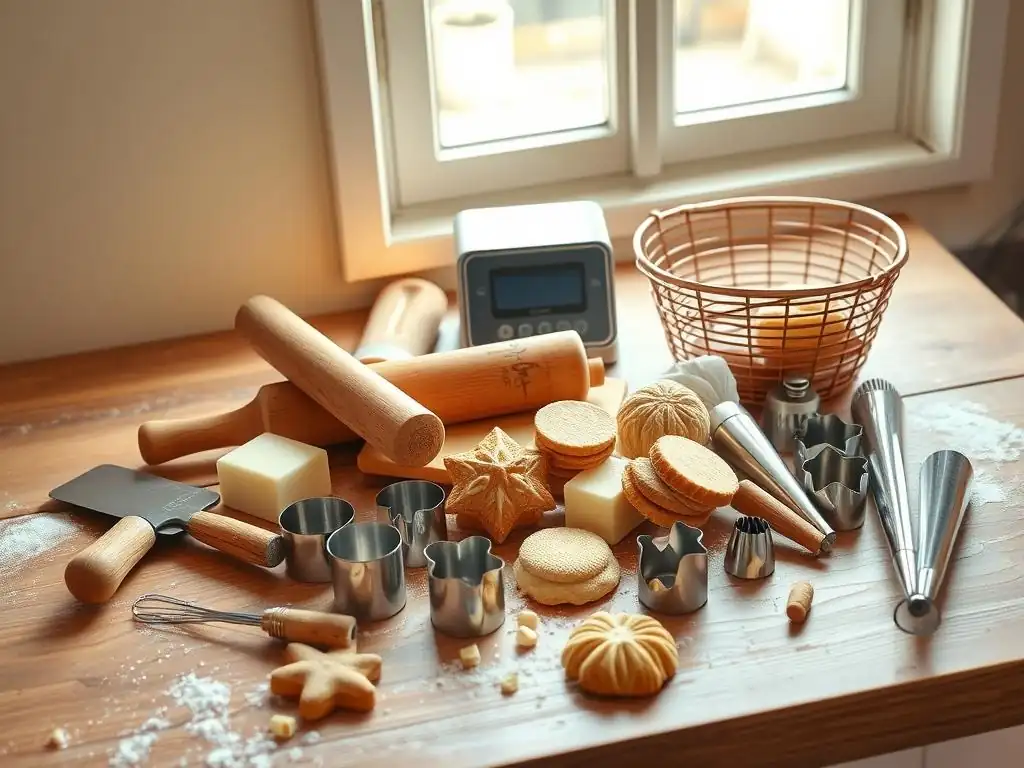
Consider Your Baking Frequency and Batch Size
When selecting Viennoiserie baking essential tools, think realistically about how often you plan to bake and the typical batch size you anticipate making. If you bake croissants only occasionally for your family, investing in a large commercial-grade dough sheeter might be unnecessary. A sturdy rolling pin and diligent technique could suffice. However, if you plan to bake large batches regularly for friends, events, or even potential sale, tools like a stand mixer or a countertop dough sheeter could be worthwhile investments that save significant time and effort.
Similarly, consider storage space and budget. While a proofing box offers great control, a simple hack involving your oven with the light on and a pan of hot water might suffice for occasional use. Prioritizing tools that address the specific challenges you face most often in your intermediate Viennoiserie baking journey will lead to more impactful purchases. Start with the core essentials and add optional tools as your skills and frequency of baking increase.
Read Reviews and Compare Different Brands
Before purchasing Viennoiserie baking essential tools, especially more expensive items like thermometers, rolling pins, or stand mixers, take the time to read reviews and compare different brands and models. Look for feedback from other bakers who use these tools specifically for laminated doughs. Reviews can provide valuable insights into a tool's durability, ease of use, accuracy (for thermometers), and overall performance in real-world baking scenarios.
Compare specifications, materials, and features across different options within your budget. For instance, when looking at rolling pins, compare the weight, material, and length. For thermometers, check the response time and temperature range. Don't rely solely on manufacturer descriptions; seek out independent reviews and forums where bakers discuss their experiences. This research helps ensure you choose tools that are not only suitable for Viennoiserie baking but also reliable and well-regarded by the baking community.
Invest in Quality Tools for Longevity and Performance
While it might be tempting to opt for the cheapest available option, investing in quality Viennoiserie baking essential tools generally pays off in the long run. Well-made tools are typically more durable, perform better, and can significantly improve your baking experience and results. A cheap rolling pin might be uneven or difficult to maneuver, while a high-quality one will provide better control and last for years. Similarly, a precise thermometer from a reputable brand will give accurate readings crucial for sensitive processes like yeast activation and chocolate tempering.
Quality tools are often designed with the specific task in mind, offering better ergonomics, materials, and functionality. For example, a sharp, well-balanced knife makes cutting dough easier and more effective. While the initial cost might be higher, the longevity and superior performance of quality tools make them a better value over time and contribute more reliably to your success in intermediate Viennoiserie baking.
Maintaining Your Viennoiserie Baking Tools
Proper Cleaning and Storage for Optimal Lifespan
Taking care of your Viennoiserie baking essential tools is key to ensuring their longevity and performance. After each use, clean tools promptly according to the manufacturer's instructions. For example, wooden rolling pins should typically not be submerged in water but wiped clean and dried thoroughly. Stainless steel tools like bench scrapers or rolling pins can usually be washed with soap and water, but drying immediately prevents water spots or potential rust.
Store tools properly to protect them from damage and keep them readily accessible. Rolling pins can be hung or stored in a dedicated drawer. Knives should be stored safely, perhaps in a knife block or with blade guards, to protect the edge and prevent accidents. Keeping your workspace and tools clean and organized not only prolongs their life but also makes the baking process more efficient and enjoyable.
Calibrating Thermometers for Accuracy
Accuracy is paramount for precision thermometers, especially when used for critical temperatures in Viennoiserie baking. Over time, thermometers can lose calibration. It's a good practice to check your thermometer's accuracy periodically. A common method is the ice bath test: fill a glass with crushed ice and cold water, stir for a few minutes, and insert the thermometer probe without touching the sides or bottom. A properly calibrated thermometer should read 0°C (32°F).
Some digital thermometers allow for recalibration, while others might need to be replaced if they are consistently off. Checking calibration ensures that when your recipe calls for a specific temperature for yeast or chocolate, you are hitting that target accurately. Reliable temperature readings from your Viennoiserie baking essential tools are fundamental for consistent results.
As mentioned earlier, sharp knives are crucial for clean cuts in laminated dough. Regularly sharpening your knives is an essential maintenance task for these Viennoiserie baking essential tools. A sharp knife requires less pressure to cut, reducing the risk of crushing the dough layers. Depending on the type of knife, this might involve using a sharpening steel regularly to maintain the edge or using a whetstone or professional sharpening service when the blade becomes dull.
A well-maintained, sharp knife makes the task of cutting dough significantly easier and more effective, contributing to the final structure and appearance of your Viennoiseries. Don't underestimate the impact of a sharp blade on the delicate layers you've worked so hard to create. Incorporating knife sharpening into your tool maintenance routine will ensure your cutting tools are always ready to perform their best.
Frequently Asked Questions
What are the most essential tools for intermediate Viennoiserie baking, and why are they important?
A stand mixer with a dough hook attachment is crucial for efficiently developing gluten. A laminating sheeter helps create the thin layers of butter and dough characteristic of Viennoiserie. Finally, a precise digital scale ensures accurate ingredient measurements.
Why is a laminating sheeter considered an essential tool for intermediate Viennoiserie baking?
A laminating sheeter creates consistent, thin layers of dough and butter more easily than manual rolling. This results in a flakier, more even final product that's challenging to achieve otherwise. It significantly reduces the time and effort required for lamination.
Is a stand mixer truly necessary, or can I knead the dough by hand?
While hand-kneading is possible, a stand mixer with a dough hook provides the power and consistency needed for proper gluten development. It's especially important for enriched doughs like those used in Viennoiserie, which require longer kneading times.
What kind of thermometer is best for Viennoiserie baking?
A digital instant-read thermometer is ideal for monitoring the temperature of your butter and dough during proofing. Maintaining the correct temperature is crucial for yeast activity and preventing the butter from melting prematurely.
Beyond the basics, what's one optional tool that can elevate my Viennoiserie baking?
A proofing box offers precise temperature and humidity control, creating the ideal environment for dough to rise. This results in consistent and predictable results, especially in challenging climates.
Final Reflection: Mastering the Craft of Viennoiserie
The pursuit of perfect viennoiserie is a journey of precision and passion, and the right tools are your compass and map. Achieving that delicate, flaky, and intensely flavorful pastry requires more than just a good recipe; it demands the mastery of specific equipment that elevates the baking experience from frustrating to fulfilling. This article has highlighted the essential tools that bridge the gap between amateur attempts and truly exceptional results.
The impact of quality tools on the final product is undeniable. From the perfectly formed croissant to the airy, layered pain au chocolat, the right equipment allows for consistent results and a level of control that significantly impacts the final taste and texture. The difference between good and great is often in the details, and in baking, those details are often found in the tools you use.
This quote perfectly encapsulates the importance of investing in the right equipment, not just for the immediate satisfaction, but for the long-term development of your baking skills and the joy of consistently producing beautiful and delicious viennoiserie.
Now, consider your own baking journey. What tools are you currently using? Are there any gaps in your arsenal that might be hindering your progress? Take this opportunity to assess your equipment and identify areas for improvement. Investing in even one or two of the tools highlighted in this article can significantly enhance your baking experience and unlock a new level of mastery. Embrace the process, experiment with different techniques, and most importantly, enjoy the journey of creating truly exceptional viennoiserie.
Unleash Your Inner Viennoiserie Master!
Thanks for joining us on this delicious journey into the world of intermediate viennoiserie! You've gained valuable insights and techniques – now it's time to put them into practice. Ready to elevate your baking game?
- Begin your next viennoiserie masterpiece today! Think about which recipe you're most excited to tackle and start gathering your ingredients. Don't be afraid to experiment with flavors and techniques.
- Share your baking journey! Post a picture of your creation on social media and tag #BakeWithEase – we'd love to see your results!
- Explore our advanced viennoiserie recipes: Dive deeper into the world of laminated doughs and discover new challenges to master.
What exciting viennoiserie creation will you bake first? Let us know in the comments below!