
Scaling Puff Pastry Recipes: Tips for Larger Batches

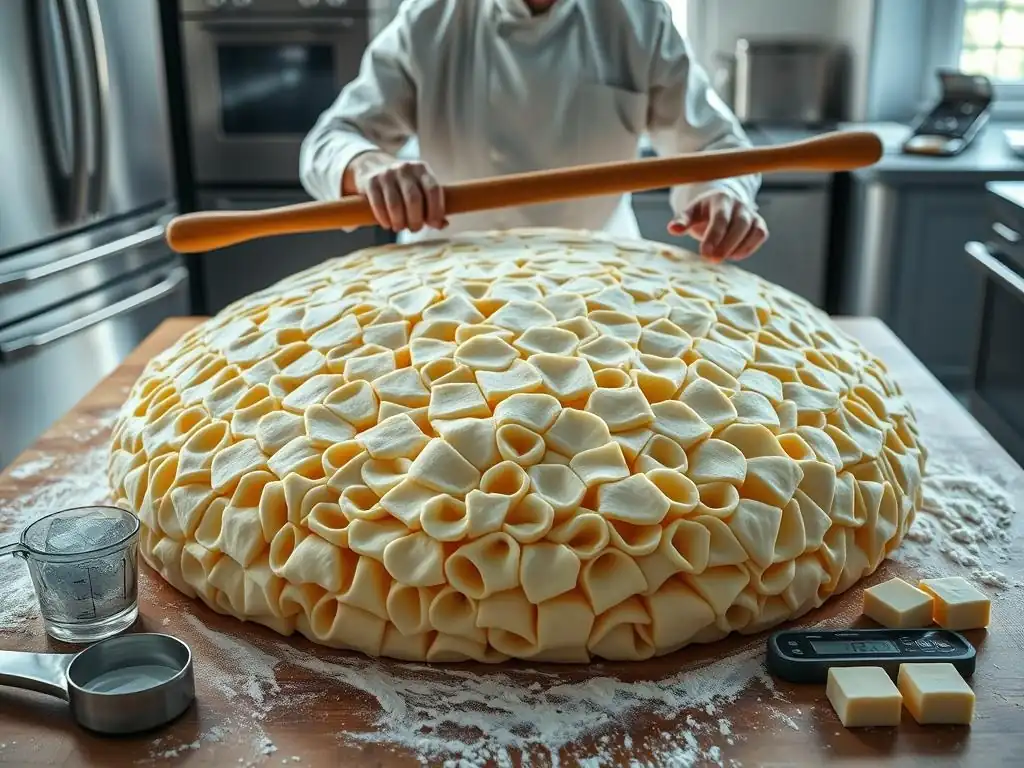
Welcome to BakeWithEase, your guide to confident baking! Ever dreamt of effortlessly creating dozens of flaky croissants or savory tarts? This week, we're diving deep into the secrets of large batch puff pastry, unlocking techniques that will transform your baking from small-scale to spectacular. Discover how to scale your recipes without sacrificing that perfect, buttery rise – are you ready to elevate your pastry game?
- Introduction to Scaling Puff Pastry for Larger Batches
- Key Considerations Before Scaling Your Puff Pastry Recipe
- Essential Tips for Scaling Puff Pastry Ingredients
- Mastering the Puff Pastry Dough Making Process for Large Quantities
- Chilling and Resting: Critical Steps for Scaling Puff Pastry Successfully
- Baking Large Batch Puff Pastry: Achieving Consistent Results
- Troubleshooting Common Issues When Scaling Puff Pastry
- Storing and Freezing Large Batches of Puff Pastry
- Recipe Adaptation: Examples of Scaling Popular Puff Pastry Creations
- Conclusion: Confidently Baking Large Batch Puff Pastry
-
Frequently Asked Questions
- What is the most important factor to consider when scaling a puff pastry recipe for a large batch?
- How does the kneading process change when making a large batch of puff pastry?
- What's the best way to chill a large batch of puff pastry dough?
- How does baking time differ when baking a larger batch of puff pastry products?
- What are some common mistakes to avoid when scaling puff pastry recipes?
- Final Reflection: Mastering the Art of Large-Batch Puff Pastry
- Unlock the Secrets to Effortless Scaling!
Introduction to Scaling Puff Pastry for Larger Batches
Puff pastry is a marvel of baking, known for its ethereal flakiness created by countless thin layers of dough and butter. While mastering a standard batch is a rewarding achievement, sometimes the occasion calls for more – perhaps a large family gathering, a special event, or simply stocking up your freezer. Scaling up your favorite puff pastry recipe to produce a large batch puff pastry can be incredibly efficient, saving time on repeated processes. However, it introduces unique challenges that differ significantly from making a smaller quantity.
Successfully creating large batch puff pastry requires more than just multiplying ingredients. It demands careful consideration of every step, from initial mixing and lamination to chilling, resting, and baking. The increased volume affects dough handling, temperature control, and even how the final product bakes. This guide will walk you through the essential tips and techniques to confidently scale your puff pastry production, ensuring those coveted flaky layers are achieved even in larger quantities.
Why Scale Up Your Puff Pastry Recipe?
Scaling up your puff pastry recipe offers several distinct advantages, making the effort worthwhile for specific baking needs. One of the primary reasons is efficiency. The foundational steps of making puff pastry – mixing the détrempe (dough base), preparing the butter block (beurrage), and performing the series of folds (turns) – are time-consuming regardless of the batch size.
By combining these steps for a large batch puff pastry, you consolidate your work, reducing the overall time spent relative to making multiple smaller batches. For example, instead of making three separate batches requiring, say, 2 hours each (total 6 hours excluding chilling), a single large batch might take 3-4 hours, including slightly longer chilling times.
Another key benefit is consistency. When you make one large batch of puff pastry, you are working with a single, uniform dough throughout the entire process. This means the hydration level, gluten development, and butter distribution should be more consistent across the entire quantity compared to combining multiple smaller batches, which might have slight variations. This consistency is crucial for achieving uniform flakiness and rise in your final baked goods, whether they are palmiers, turnovers, or vol-au-vents, ensuring a more predictable and higher-quality result across many items.
Understanding the Challenges of Large Batch Puff Pastry
While scaling offers efficiency, it also presents significant hurdles that require careful planning and execution. The most immediate challenge is managing the sheer volume of dough and butter. A standard home recipe might use 250-500g of flour, resulting in a manageable dough block. Doubling or tripling this for a large batch puff pastry means handling 1-1.5kg or more of dough, which becomes heavy, bulky, and difficult to manipulate by hand, especially during lamination. Rolling out such a large, firm dough block evenly requires considerable physical strength and adequate workspace, which many home kitchens may lack.
Temperature control becomes exponentially more critical and challenging with larger quantities. A large block of dough and butter retains heat much longer than a small one. As you work the dough, friction generates heat, and this heat builds up more rapidly and dissipates slower in a large mass.
If the dough or butter gets too warm, the butter can soften excessively, melt, or even squeeze out during rolling, destroying the distinct layers needed for puff pastry's characteristic rise. This means chilling times between folds will need to be significantly longer, and maintaining a cool working environment is paramount to prevent the butter from becoming too soft to create defined layers.
Key Considerations Before Scaling Your Puff Pastry Recipe
Before you even measure your first ingredient for a large batch puff pastry, it's crucial to assess your resources and capabilities. Scaling isn't just about math; it's about logistics. Thinking through the practical aspects upfront can save you a lot of frustration and potential failure down the line. These considerations go beyond simply having enough ingredients; they involve evaluating your tools, workspace, and even the quality of your ingredients in larger quantities.
Taking the time to plan will help you anticipate problems before they arise. For instance, can your mixer handle the increased load? Do you have enough refrigerator space for a massive dough block? Is your rolling pin up to the task, or will you need help? Addressing these questions beforehand is key to a smooth and successful scaling process. Ignoring these practicalities is a common pitfall when attempting large batch puff pastry for the first time.
Evaluating Your Equipment for Large-Scale Puff Pastry Production
When scaling up for a large batch puff pastry, your standard kitchen equipment might reach its limits. A typical home stand mixer (like a 4.5 or 5-quart model) is usually designed to handle doughs made with up to about 500-600g of flour comfortably.
Attempting to mix a dough with 1kg or more of flour in such a mixer can strain the motor, potentially leading to damage. For larger batches (e.g., using 1.5kg or more of flour), a larger capacity mixer (like a 6-quart, 8-quart, or even a commercial-style 20-quart mixer if you're scaling significantly) with a robust motor is often necessary to properly develop the gluten without overheating the equipment.
Beyond mixing, consider your rolling tools. A standard 10 or 12-inch rolling pin might suffice for a small batch, but rolling out a large sheet of dough (potentially 2-3 feet long or wide) for lamination becomes cumbersome.
A longer, heavier rolling pin, or even a specialized laminating pin (like a French-style tapered pin or a large, heavy wooden pin), can make the task easier and more efficient. Furthermore, if you plan on frequent large batch puff pastry production, investing in a dough sheeter, even a small countertop model, can dramatically simplify and improve the lamination process, ensuring uniform thickness and preventing butter leakage.
Assessing Your Baking Space for Handling Large Doughs
Your workspace is another critical factor when making large batch puff pastry. A standard kitchen counter might offer just enough space for a small batch, but scaling up requires considerably more room. You'll need ample flat surface area for rolling out the large détrempe and butter block, as well as for performing the folds. A dough sheet for a 1.5kg flour batch might need to be rolled out to dimensions of roughly 2 feet by 3 feet for the initial encasement and subsequent folds. Do you have a counter or table large enough to accommodate this comfortably?
Refrigeration space is equally, if not more, important. A large block of puff pastry dough, perhaps 12x18 inches and 1-2 inches thick, takes up substantial real estate in your refrigerator. You need enough clear shelf space to lay the dough flat without bending or folding it, which can disrupt the layers.
Consider if you have dedicated space for this, possibly needing to rearrange or empty shelves. Furthermore, ensure your refrigerator is consistently cold (ideally between 35°F and 40°F or 1.5°C and 4.5°C) to properly chill the large mass of dough and butter between folds, which is essential for successful lamination.
Ingredient Quality: Maintaining Consistency in Large Batches
The quality of your ingredients is always important, but when scaling up for large batch puff pastry, inconsistencies can be magnified. Using high-quality, consistent flour is crucial. Different brands or types of flour (e.g., all-purpose vs. bread flour) have varying protein levels and hydration capacities. When buying larger quantities, ensure you are using the same type and brand of flour throughout the batch to maintain predictable dough consistency. A slight variation in protein content across 2kg of flour can significantly impact gluten development compared to a small batch.
Butter quality is paramount for puff pastry. For large quantities, it's even more vital to use a high-quality butter with a relatively high fat content (typically 82% or higher) and a consistent texture. European-style butters are often preferred for their plasticity and higher fat percentage, which contributes to better flaking.
Using a butter that is too soft, too hard, or inconsistent in texture across a large block will make lamination difficult and can lead to uneven layers or butter leakage. When purchasing large amounts of butter, ensure it's all from the same production batch if possible, or at least the same brand and type, to guarantee uniformity in its behavior during the lamination process.
Essential Tips for Scaling Puff Pastry Ingredients
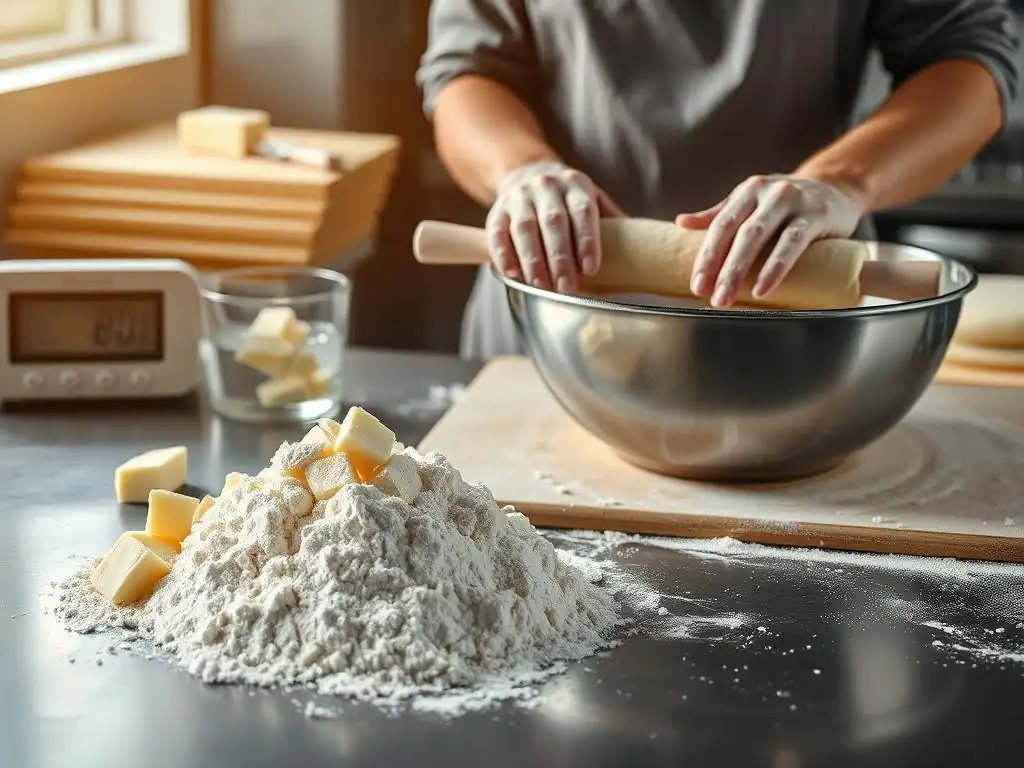
Scaling ingredients for a large batch puff pastry seems straightforward – just multiply everything by the desired factor, right? While that's the starting point, there are nuances to consider, especially regarding hydration and the physical properties of butter when working with larger volumes. Precise measurement becomes even more critical, as small errors are amplified.
Think of it like building a large structure; the foundation must be perfectly stable. In puff pastry, that foundation is your ingredient balance. Getting the ratios right is the first step to ensuring your large batch puff pastry behaves correctly during mixing, lamination, and baking.
Calculating Ingredient Ratios for Large Batch Puff Pastry
The fundamental ratios for puff pastry typically remain consistent regardless of scale, but precision is key when working with large batch puff pastry quantities. A common ratio by weight is roughly 1 part liquid (water or milk), 2 parts butter (for the butter block), and 2 parts flour (for the détrempe). Some recipes might adjust these slightly, perhaps using a bit less liquid or a bit more butter depending on the desired richness and flakiness.
For example, a recipe starting with 500g flour might use 250g water and 500g butter. To triple this for a large batch, you'd aim for 1500g (1.5kg) flour, 750g water, and 1500g (1.5kg) butter.
It is highly recommended to use a digital scale for measuring all ingredients, especially for large batches. Measuring by volume (cups) is notoriously inaccurate, and these inaccuracies are magnified when scaling. For instance, a cup of flour can vary in weight by 20% or more depending on how it's scooped and leveled.
Using a scale ensures you are maintaining the correct proportions precisely. If your standard recipe uses 400g flour, 200g water, and 400g butter, scaling to 5x means using exactly 2000g flour, 1000g water, and 2000g butter. This adherence to weight ratios is paramount for predictable results in large batch puff pastry.
Scaling Butter: The Key to Flaky Layers in Large Quantities
Scaling the butter for a large batch puff pastry requires careful attention, as the butter block's properties are critical for successful lamination. The total amount of butter for the beurrage should scale proportionally to the flour amount, typically at a 1:1 ratio by weight (e.g., 1kg flour requires 1kg butter for the block). However, preparing this large butter block is different. Instead of just creaming a small amount, you'll be working with perhaps 1-2 kilograms or more of butter. This butter needs to be pliable but cool – typically around 50-55°F (10-13°C).
To form a large, consistent butter block, you can cut the cold butter into cubes, then process it in a food processor or stand mixer with a paddle attachment until it forms a cohesive, smooth mass. Avoid overworking it, as this can make it too soft. Alternatively, you can beat it with a rolling pin between sheets of parchment paper until pliable, then shape it into the required rectangle (usually half the size of the détrempe rectangle before the first fold).
Ensuring this large butter block is uniformly pliable and the correct temperature is vital. If parts are too hard or too soft, it will be difficult to roll evenly within the dough, leading to uneven layers or blowouts during lamination of your large batch puff pastry.
Adjusting Flour Amounts: Hydration and Gluten Development in Large Doughs
Scaling the flour for a large batch puff pastry directly impacts the amount of liquid needed for the détrempe, maintaining the target hydration ratio. However, mixing a larger volume of dough affects gluten development. In a small batch, hand-mixing or a small mixer might suffice. For a large batch (e.g., 2kg flour), a powerful stand mixer is almost essential to adequately mix the flour and liquid to just combine, forming a shaggy dough without overdeveloping the gluten initially. Overmixing at this stage can make the dough tough.
The hydration level (ratio of water to flour) is crucial. While the ratio remains constant, the dough in a large batch tends to feel firmer or drier than a small batch with the same ratio due to the increased mass and slightly slower hydration penetration. You might find you need to add a tiny splash more water than the strict ratio dictates, but do this cautiously, adding just a tablespoon or two at a time until the dough comes together.
The goal is a dough that is firm but not dry, smooth but not sticky. The specific amount of flour (e.g., 1.5kg, 2kg, 3kg) will determine the size of your détrempe, which in turn dictates the size of your butter block and the dimensions you'll be working with throughout the lamination of your large batch puff pastry.
Liquid Adjustments: Temperature and Type
The type and temperature of the liquid used in the détrempe are particularly important when scaling up for a large batch puff pastry. Cold liquid is essential to keep the dough cool and the butter firm during the initial mixing. For a standard batch, ice water is often recommended. When scaling up, using a larger volume of cold or ice water is even more critical because the mixing process generates more heat in a larger mass of dough. Ensure your water is as cold as possible, perhaps even using ice cubes that are strained out before adding the water.
While water is the most common liquid, some recipes use milk or a mix of milk and water for a slightly richer dough. If using milk for a large batch, ensure it is also very cold. The temperature of the liquid directly impacts the final temperature of the détrempe after mixing. Aim for a détrempe temperature of no more than 60-65°F (15-18°C) immediately after mixing. If the dough feels warmer, an extra chilling step before incorporating the butter block might be necessary to prevent the butter from melting into the dough prematurely during lamination.
Salt and Sugar: Their Role in Flavor and Structure When Scaling
Salt plays a dual role in puff pastry: enhancing flavor and controlling gluten development. When scaling for a large batch puff pastry, the amount of salt should increase proportionally with the flour (typically 1.5-2% of the flour weight). Ensure the salt is evenly distributed throughout the flour before adding the liquid. In a large mixer, adding the salt to the dry ingredients before incorporating the liquid helps achieve this uniformity. Salt helps strengthen the gluten structure, which is important for the dough's elasticity and ability to withstand rolling and folding, but too much can make the dough tough.
Sugar, if used, is usually in small quantities in the détrempe, primarily for flavor and potentially aiding browning. Some recipes omit sugar entirely. If your recipe includes sugar (e.g., 1-2% of the flour weight), scale it proportionally.
Like salt, ensure it's well-distributed in the dry ingredients. While sugar can tenderize dough by interfering with gluten development, the small amounts used in puff pastry are unlikely to cause significant issues when scaling. The primary concern with both salt and sugar in large batches is ensuring even distribution throughout the large mass of dough to avoid pockets of concentrated flavor or inconsistent gluten development.
Mastering the Puff Pastry Dough Making Process for Large Quantities
Making the dough base and incorporating the butter block are the first major steps in creating large batch puff pastry. The techniques used for small batches need adaptation when dealing with significantly larger volumes. The goal remains the same: create a firm but pliable dough and a well-incorporated butter block, ready for the laminating folds.
Handling the larger mass requires efficiency and strength, whether you're using equipment or relying on manual techniques. Preventing the dough and butter from warming up during these initial stages is paramount to setting the stage for successful lamination.
Mixing Techniques for Large Puff Pastry Dough Batches
Mixing the détrempe for a large batch puff pastry requires a robust mixer if you're not doing it by hand. For a 2kg flour batch, a 6-quart or larger stand mixer with a dough hook is ideal. The key is to mix just until the ingredients are combined and a shaggy dough forms, not until smooth. Overmixing at this stage will develop too much gluten prematurely, making the dough difficult to roll out later. Use the lowest speed setting on your mixer to avoid generating excessive heat through friction.
If mixing by hand for a very large batch (though challenging), use a large bowl or even mix directly on a clean surface. Combine dry ingredients, make a well, add cold liquid, and gradually incorporate the flour from the sides until a cohesive dough forms. This requires significant physical effort for large quantities (e.g., a 1.5kg flour batch).
Regardless of the method, the goal is a rough, slightly sticky dough that holds together. Wrap the dough tightly and chill it thoroughly for at least 1-2 hours (longer for larger batches, perhaps 3-4 hours) before proceeding, allowing the flour to fully hydrate and the gluten to relax.
Kneading and Resting: Optimizing Gluten Development in Large Doughs
Puff pastry détrempe requires minimal initial kneading; the rolling during lamination develops the necessary gluten. After the initial mixing for a large batch puff pastry, the dough doesn't need traditional kneading. Instead, the brief mixing action is sufficient to bring the dough together. The crucial "kneading" or gluten development happens incrementally as you roll and fold the dough during the lamination process.
Resting is far more important, especially for large doughs. After mixing the détrempe and after each set of folds (turns), the dough needs to rest and chill. For a large batch (e.g., 1.5kg flour), the initial rest after mixing should be at least 2-3 hours in the refrigerator.
This allows the gluten strands to relax, making the dough pliable and easy to roll without snapping back excessively. It also ensures the dough is thoroughly chilled before encasing the butter. Skipping or shortening these rests, particularly for large volumes, will result in a tough, difficult-to-handle dough that is prone to tearing during lamination.
Lamination Techniques for Large Puff Pastry Production
Lamination is the heart of puff pastry, creating the layers by repeatedly folding butter into dough. For large batch puff pastry, this process becomes physically demanding and requires space. The technique involves rolling the détrempe into a rectangle, placing the butter block on it, encasing the butter, and then performing a series of folds (turns), usually 4 to 6 single or double turns, with chilling periods in between.
Rolling a large dough sheet evenly requires technique. Start by gently pressing the dough with your rolling pin from the center outwards to avoid creating thin spots. Lift and turn the dough frequently to prevent sticking and ensure even expansion. Maintain a rectangular shape as you roll. This is where a larger rolling pin or a dough sheeter is invaluable for large batches, helping to maintain even thickness across a wide area (e.g., rolling a 1.5kg batch to 20x40 inches for a fold).
Using a Stand Mixer for Large Puff Pastry Doughs
While stand mixers are primarily used for mixing the détrempe, they can assist in the initial preparation of the butter block for large batch puff pastry. As mentioned, cutting cold butter into cubes and processing it in a stand mixer with a paddle attachment on low speed until it forms a cohesive, pliable mass is an effective way to prepare a large quantity of butter (e.g., 1kg or more) without melting it with your hands. This ensures the butter block is uniformly soft enough to roll without being too warm.
Some advanced techniques or specific attachments might allow for initial sheeting of the détrempe or butter, but for the traditional lamination process of folding, the stand mixer's role is generally limited to the initial dough and butter preparation. The bulk of the lamination – the rolling and folding – must be done manually or with a specialized dough sheeter, as a stand mixer cannot perform these actions on a large, layered dough block.
Hand-Lamination Techniques: Tips for Large-Scale Production
Hand-laminating a large batch puff pastry (e.g., using 2kg flour) requires significant physical effort, especially during the later turns when the dough becomes firmer and the layers are established. Work on a generously floured, cool surface. Roll with firm, even pressure, focusing on maintaining a consistent thickness across the entire large sheet (aiming for perhaps 1/4 to 1/3 inch thick for each rolling step before folding). Lift and rotate the dough frequently to prevent it from sticking to the surface and to help maintain its shape.
Consider using a large pastry mat marked with measurements to help guide your rolling and folding for large batch puff pastry. This helps ensure you roll to the correct dimensions for each turn. When performing the folds (e.g., a single fold involves folding the dough into thirds like a letter), ensure the edges are aligned neatly to create clean layers.
For a large, heavy dough, you might need assistance to lift and fold accurately. After each fold, gently press the dough to seal the edges and mark the number of turns completed (e.g., by pressing indentations with your fingers) before wrapping and chilling.
Chilling and Resting: Critical Steps for Scaling Puff Pastry Successfully
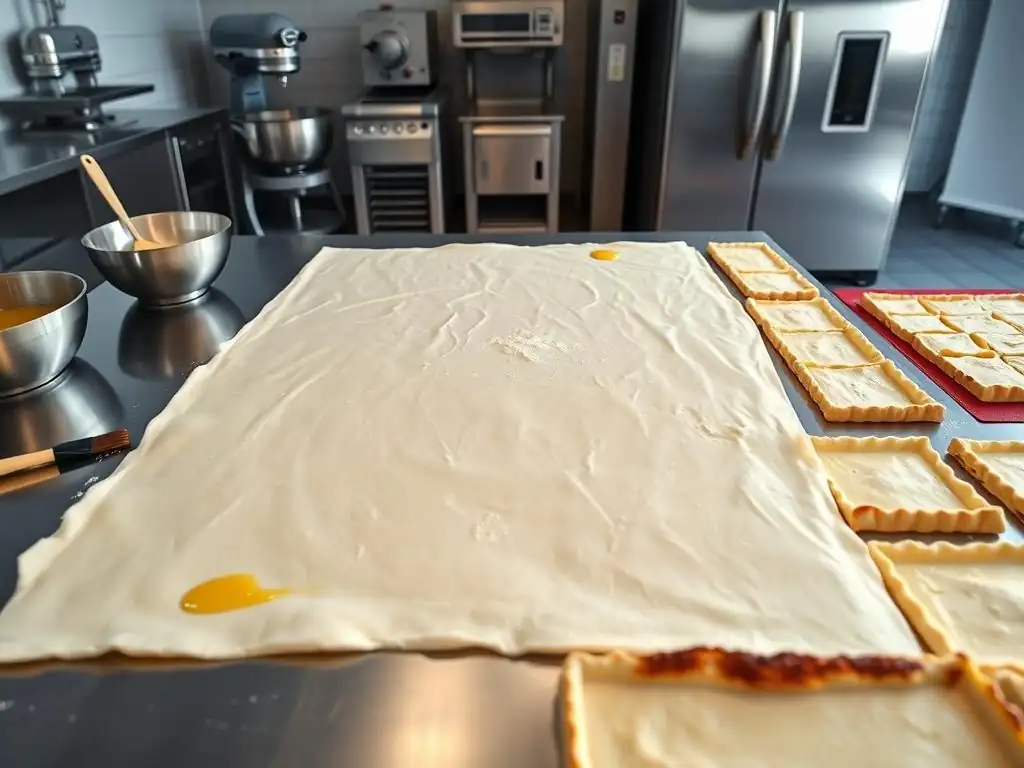
Chilling and resting are arguably the most critical steps in making puff pastry, and their importance is magnified when working with large batch puff pastry. These periods allow the gluten to relax and, more importantly, the butter to firm up. Without sufficient chilling, the butter will be too soft to maintain distinct layers during rolling, leading to a greasy, dense pastry.
The increased mass of a large dough block means it takes significantly longer to cool down and firm up in the refrigerator. Patience is key; rushing the chilling process will compromise the final flakiness of your large batch puff pastry.
The Importance of Proper Chilling Between Folds
Proper chilling between folds is non-negotiable for successful puff pastry, especially large batch puff pastry. Each rolling and folding step slightly warms the dough and softens the butter due to friction and handling. Chilling solidifies the butter layers, making them distinct and firm enough to withstand the pressure of the next rolling step without merging with the dough or squeezing out. When the dough is rolled after chilling, the firm butter layers stretch into thin sheets alongside the dough layers.
If the dough and butter are not sufficiently chilled (ideally to 40-45°F or 4-7°C throughout the block), the butter will melt into the dough during rolling, resulting in a greasy dough that bakes into a tough, bread-like texture rather than the desired flaky layers. For large batches, the core of the dough block will take much longer to cool than the edges. Therefore, chilling times need to be extended to ensure the entire mass is uniformly cold and the butter is firm throughout.
Optimizing Chilling Times for Large Puff Pastry Blocks
Optimizing chilling times for large batch puff pastry involves considering the size and thickness of your dough block and the efficiency of your refrigerator. While a small batch might require 30-45 minutes of chilling between turns, a large batch (e.g., 1.5kg flour) might need 1.5 to 2 hours or even longer between each fold. The dough should feel firm to the touch but still slightly pliable. If it's too hard, let it sit at room temperature for a few minutes before rolling, but watch it closely.
Wrap the large dough block tightly in plastic wrap, ensuring no air pockets, to prevent it from drying out or absorbing refrigerator odors. Place it on a flat surface in the coldest part of your refrigerator. For very large blocks, consider placing it on a baking sheet to make it easier to handle and ensure it stays flat.
Monitor the dough's temperature; if you have a probe thermometer, checking the internal temperature can be helpful. The butter layers need to be firm enough that they don't squish out when rolled, but not so hard that they crack. Adjust chilling times based on how the dough feels and rolls – if butter is leaking, chill longer.
Preventing Dough Shrinkage and Toughness in Large Batches
Dough shrinkage and toughness can be frustrating issues when making puff pastry, and they can be exacerbated when working with large batch puff pastry. Shrinkage often occurs when the gluten hasn't had sufficient time to relax after mixing or rolling. The dough is under tension, and when heat is applied (during baking) or tension is released (when cutting), it snaps back. Ensuring adequate resting and chilling periods between every step, especially after rolling and before cutting, is crucial. For large batches, these rests might need to be longer.
Toughness is usually a result of overworking the dough, either during the initial mixing of the détrempe or by not allowing sufficient rest between folds, which keeps the gluten tense. Using very cold liquid during mixing and minimal initial mixing are key. Equally important is being gentle but firm during rolling; avoid forcing the dough or stretching it excessively.
If the dough is resisting and snapping back significantly as you roll, it needs more rest. Chill it again for an extended period (e.g., another 30-60 minutes beyond your planned time for a large batch) to allow the gluten to relax before attempting to roll again.
Baking Large Batch Puff Pastry: Achieving Consistent Results
Baking large batch puff pastry items requires careful consideration of oven temperature, baking time, and even tray placement. A single large sheet of puff pastry, or multiple large items cut from a big batch, will bake differently than a small piece. Achieving uniform puff and golden-brown color across all pieces is the goal.
The increased volume and surface area of large puff pastry items mean they absorb and distribute heat differently. Adjusting your baking strategy is necessary to prevent underbaking in some areas and overbaking in others, ensuring every piece from your large batch puff pastry is perfectly flaky.
Oven Temperature and Baking Time Adjustments for Large Quantities
When baking items made from large batch puff pastry, you might need to slightly adjust your oven temperature and baking time compared to small pieces. Puff pastry typically bakes at a high temperature (often 400-425°F or 200-220°C) to create steam rapidly within the layers, causing them to separate and puff. For larger items or a tray loaded with many pieces, the oven temperature might need to be slightly lower (e.g., 375-400°F or 190-200°C) to ensure the pastry cooks through without the exterior burning before the interior layers are fully baked and the butter has done its work.
Baking time will inevitably be longer for larger items. A small turnover might bake in 15-20 minutes, but a large strudel or a sheet of pastry for a tart might take 30-45 minutes or even longer. When baking multiple items from a large batch puff pastry on one tray, ensure there is adequate space between them for hot air circulation. If baking multiple trays, rotate them halfway through the baking time to promote even browning and puffing. Always bake until the pastry is deeply golden brown and feels light and hollow, indicating the layers have fully separated and cooked.
Preventing Uneven Baking in Large Puff Pastry Sheets
Baking a large sheet of puff pastry cut from a large batch can be challenging due to the risk of uneven heat distribution in your oven. The edges may bake faster and brown more quickly than the center. To combat this, if you notice the edges browning too quickly, you can carefully cover them with strips of aluminum foil. This shields the edges from direct radiant heat, allowing the center to catch up.
Using a heavy-duty baking sheet helps distribute heat more evenly across the base of the pastry. Placing the baking sheet on a rack in the middle of the oven is usually best for even convection. If your oven has hot spots, you might need to rotate the tray periodically (e.g., every 10-15 minutes for a long bake).
For very large sheets, some bakers even use two baking sheets stacked together to insulate the bottom and prevent it from over-browning before the top is done. Achieving uniform color and puff across a large batch puff pastry requires vigilance and potentially some oven-specific adjustments.
Recognizing Doneness: Visual Cues for Perfectly Baked Puff Pastry
Recognizing when large batch puff pastry is perfectly baked is crucial for achieving the desired flakiness and texture. The most obvious cue is the puff: the pastry should have risen significantly, creating visible layers. The height will depend on the number of turns and the specific recipe, but it should be noticeably taller than when it went into the oven.
Color is another key indicator. Perfectly baked puff pastry should be a rich, deep golden brown across the entire surface, including the sides. Pale pastry is likely underbaked, meaning the layers may be doughy or greasy.
If you gently tap the surface, it should feel firm and sound hollow, indicating the interior is cooked through and the moisture has evaporated, leaving behind those crisp, flaky layers. If the pastry looks done on the outside but feels heavy or soft, it needs more time in the oven. For large items, cutting into a small corner piece after baking can also confirm doneness inside.
Troubleshooting Common Issues When Scaling Puff Pastry
Scaling puff pastry introduces new variables and potential pitfalls. Issues that might be minor in a small batch can become significant problems when dealing with large batch puff pastry. Knowing how to identify and address these common issues is essential for success.
From soggy bottoms to tough dough and butter leakage, these problems often stem from temperature control, insufficient chilling, or improper handling of the larger volume of dough and butter. A systematic approach to troubleshooting will help you salvage your large batch puff pastry.
Preventing Soggy Puff Pastry in Large Batches
Soggy puff pastry, particularly the bottom layer, is a common issue, and it can be more pronounced when baking larger items or a crowded tray from a large batch puff pastry. This often happens when the bottom hasn't received enough heat or when excessive moisture (either from the filling or trapped steam) interferes with the layering. Ensure your oven is fully preheated to the correct temperature before baking. Using a preheated baking sheet can help give the bottom crust a head start on crisping.
For items with fillings, ensure the filling isn't too wet. For large turnovers or strudels from your large batch puff pastry, using a slightly thicker filling or adding a binder like breadcrumbs or cornstarch can absorb excess moisture. Baking on the lowest oven rack can sometimes provide more direct heat to the bottom, but watch carefully to prevent burning. Ensure there's good air circulation around items on the tray; overcrowding prevents even heat distribution, leading to steaming rather than crisping.
Addressing Tough or Dense Puff Pastry
Tough or dense puff pastry, lacking the characteristic light, flaky layers, usually points to issues with gluten development or insufficient fat separation during baking. Overmixing the détrempe initially develops too much gluten. For large batch puff pastry, this is more likely if using a powerful mixer on too high a speed or mixing for too long. The dough should just come together.
Insufficient resting and chilling between folds also contributes to toughness. If the gluten doesn't relax, the dough remains elastic and resists rolling, leading to uneven layers that don't separate properly. Ensure generous chilling times (as discussed earlier, potentially 1.5-2+ hours per fold for large batches). Finally, if the butter melts into the dough during lamination (due to warm dough/butter or a warm environment), you lose the distinct fat layers needed for flaking, resulting in a dense texture.
Fixing Shrinkage and Distortion During Baking
Shrinkage and distortion during baking, especially noticeable in cut shapes from large batch puff pastry, are almost always due to insufficient relaxation of the dough's gluten. If the dough is rolled out and cut while the gluten is still tense, it will contract as it bakes. This is more likely with large pieces where rolling puts more stress on the dough.
Ensure that after the final roll-out of your large batch puff pastry sheet, you allow the dough to rest thoroughly in the refrigerator for a significant period (at least 30-60 minutes, or even longer for very large sheets) before cutting. This allows the gluten to relax completely. When cutting shapes, use a sharp knife or pastry wheel and cut cleanly without dragging the dough. For shapes like strips for palmiers or ribbons for lattices, chilling the cut pieces briefly before baking can also help them hold their shape.
Handling Butter Leakage in Large-Scale Production
Butter leakage during lamination or baking is a clear sign that the butter is too soft or warm, or the dough has been handled too roughly. For large batch puff pastry, the increased volume makes controlling butter temperature more challenging. If you see butter oozing out during rolling, immediately stop, wrap the dough tightly, and return it to the refrigerator for an extended chilling period (at least 1-2 hours for a large block). The butter needs to firm up completely.
Ensure your working surface and environment are cool. If your kitchen is warm, consider working in shifts, returning the dough to the refrigerator frequently. During baking, some slight butter leakage is normal, but excessive leakage indicates the butter wasn't properly encased or the dough wasn't cold enough when it went into the oven, causing the butter to melt out before it could create steam and lift the layers. Ensure your butter block was properly formed and fully encased in the dough during the initial steps of your large batch puff pastry process.
Storing and Freezing Large Batches of Puff Pastry
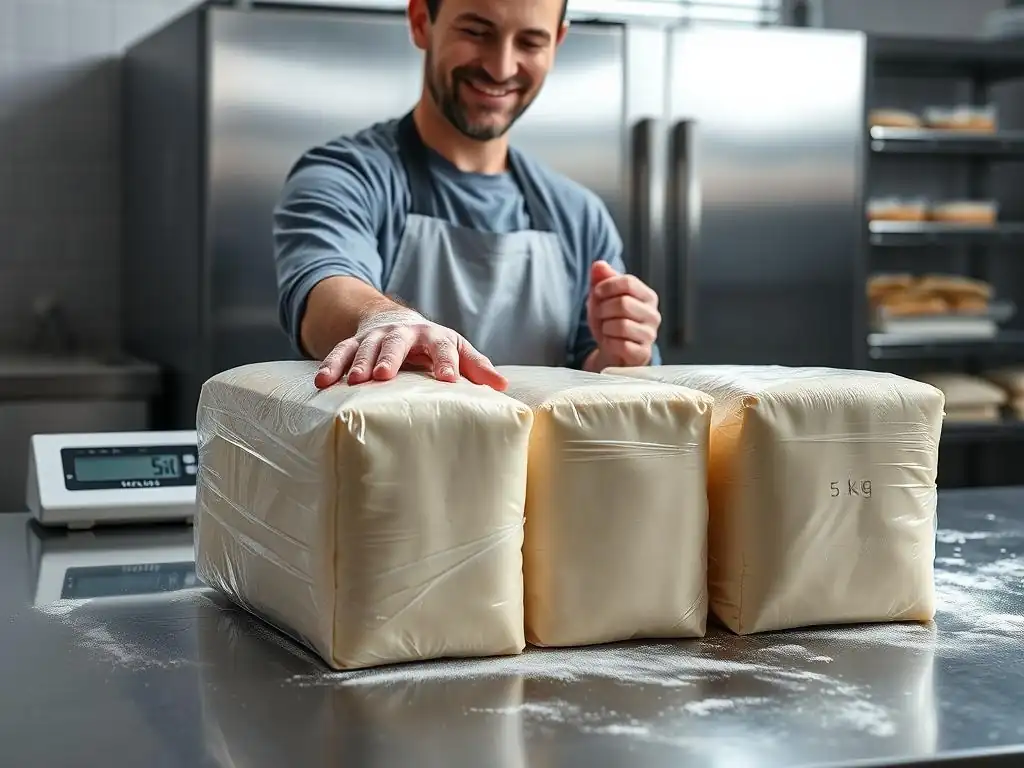
One of the biggest advantages of making large batch puff pastry is the ability to store or freeze the excess for future use. Proper storage techniques are essential to maintain the quality, texture, and flakiness of the dough over time, ensuring your efforts yield delicious results whenever you need them.
Whether you plan to use the dough within a few days or several months, careful wrapping and handling are key to preventing drying out, freezer burn, or contamination. Storing large quantities requires adequate space and attention to detail.
Proper Storage Techniques for Unbaked Puff Pastry
Unbaked large batch puff pastry dough can be stored in the refrigerator for 2-3 days. It is absolutely crucial to wrap the dough tightly. Use multiple layers of plastic wrap, ensuring no part of the dough is exposed to the air. This prevents the dough from drying out and forming a skin, which can impede puffing, and also protects it from absorbing odors from the refrigerator.
For very large blocks, it might be helpful to divide the dough into smaller, more manageable portions (e.g., 500g or 1kg blocks) before wrapping, depending on how you plan to use it. Flatten the wrapped blocks slightly into rectangles or squares for easier storage and more efficient chilling. Label each package with the date and the number of turns completed. Store the wrapped dough on a flat surface in the coldest part of the refrigerator.
Freezing and Thawing Large Quantities of Puff Pastry Dough
Freezing is an excellent option for storing large batch puff pastry for longer periods, typically up to 2-3 months. To freeze, wrap the well-chilled dough tightly in plastic wrap as described for refrigeration, then add an additional layer of aluminum foil or place the wrapped dough in a freezer-safe bag or container. This double layer of protection helps prevent freezer burn, which can damage the dough's structure and result in dry, brittle pastry.
When ready to use, thaw frozen large batch puff pastry slowly in the refrigerator. Depending on the size of the block (e.g., a 1kg block), this can take 24-48 hours. Avoid thawing at room temperature, as this can cause the butter layers to soften too quickly and potentially melt, compromising the lamination. Once thawed, the dough should be chilled again for at least 30-60 minutes before rolling or cutting to ensure the butter is firm. Do not refreeze thawed puff pastry.
Maintaining Quality After Freezing and Thawing
While freezing is effective, it can slightly affect the quality of large batch puff pastry compared to using it fresh. The primary impact is often a subtle reduction in the ultimate height and puff, though the flakiness should still be excellent if properly frozen and thawed. The key to maintaining the best possible quality is minimizing ice crystal formation during freezing and ensuring a slow, even thaw.
Using a deep freezer (which maintains a very low, consistent temperature) is better than a standard refrigerator freezer for long-term storage of large quantities. Ensure the dough is very cold before freezing to speed up the freezing process. When thawing, patience is essential; a slow thaw prevents the butter from becoming too soft. Once thawed and chilled, handle the dough gently during rolling and cutting. Even after freezing, your large batch puff pastry should produce delicious results if stored and thawed correctly.
Recipe Adaptation: Examples of Scaling Popular Puff Pastry Creations
Scaling the puff pastry dough itself is one thing, but adapting recipes that use puff pastry, cut from your large batch puff pastry, also requires some thought. The size and thickness of the cut pieces, as well as the amount and type of filling, need to be adjusted to ensure even baking and structural integrity.
Let's look at a few common puff pastry applications and how scaling them up might affect the process and outcome when using dough from a large batch puff pastry. These examples highlight the importance of matching the filling and baking method to the size of the pastry piece.
Scaling Palmiers: Maintaining Shape and Caramelization
Palmiers, those delightful "elephant ear" cookies, are made by rolling puff pastry with sugar (and sometimes cinnamon) and slicing it before baking. When scaling production using large batch puff pastry, you'll have a much larger sheet of dough to work with (e.g., rolling a 500g portion of your large batch dough to 1/8 inch thick and 15x20 inches). Ensure the dough is rolled out evenly to maintain uniform thickness across the large sheet.
Applying the sugar evenly across such a large surface is key to consistent caramelization. Use a sieve to dust the sugar evenly. When rolling the edges towards the center, aim for a tight, even roll along the entire length of the large dough sheet.
When slicing the rolled dough (e.g., cutting a 20-inch roll into 1-inch slices), use a sharp knife to get clean cuts without squishing the layers. Baking a large quantity of palmiers from your large batch puff pastry might require multiple trays, so ensure proper spacing (at least 1-2 inches apart) and potentially rotate trays for even browning and caramelization.
Scaling Apple Turnovers: Preventing Filling Leakage
Apple turnovers are a classic use for puff pastry. When making a large quantity from your large batch puff pastry, the main challenge is preventing filling leakage and ensuring the pastry bakes properly around a potentially wet filling. If cutting large turnover squares (e.g., 6x6 inches) from your large sheet, ensure the dough is rolled to an appropriate thickness (around 1/8 inch).
Prepare your apple filling so it's not excessively wet. Cooking the apples slightly beforehand to reduce moisture, or adding a thickener like cornstarch or flour, is crucial, especially for larger turnovers. Don't overfill the pastry squares; leave enough margin around the edges (at least 1/2 inch) to seal properly.
Using an egg wash around the edges helps create a strong seal. Venting the top of each turnover (cutting slits) allows steam to escape during baking, preventing blowouts. Baking a large tray of turnovers from your large batch puff pastry might require slightly longer baking times than small ones (e.g., 25-35 minutes at 375-400°F or 190-200°C) to ensure the filling is hot and the pastry is golden and crisp.
Scaling Sausage Rolls: Ensuring Even Cooking and Flakiness
Sausage rolls, made by wrapping sausage meat in puff pastry and slicing, are another popular application. When using large batch puff pastry for many sausage rolls, consistency in the pastry thickness and sausage filling amount is important for even cooking. Roll your puff pastry sheet from the large batch to a consistent thickness (e.g., 1/8 inch). Shape your sausage meat into even logs.
Wrap the pastry around the sausage logs, ensuring a tight seam. Using an egg wash on the seam helps seal it. Cut the large wrapped logs into individual sausage rolls (e.g., 2-3 inches long) using a sharp knife.
Ensure the ends are sealed or tucked under slightly to prevent the filling from escaping. When baking a large tray of sausage rolls from your large batch puff pastry, space them adequately apart (at least 1 inch). They will likely require a longer baking time than smaller pastries (e.g., 20-30 minutes at 400°F or 200°C), depending on the thickness of the sausage, until the pastry is golden brown and the sausage is cooked through (internal temperature of 160°F or 71°C).
Conclusion: Confidently Baking Large Batch Puff Pastry
Scaling your puff pastry recipe to create a large batch puff pastry is a rewarding endeavor that can significantly increase your baking efficiency. While it presents unique challenges, primarily related to handling larger volumes, maintaining temperature control, and ensuring adequate chilling, these challenges are surmountable with careful planning and execution.
By understanding the principles of scaling, evaluating your equipment and workspace, meticulously measuring ingredients, and adapting your techniques for mixing, lamination, chilling, and baking, you can successfully produce large quantities of high-quality puff pastry. Don't be intimidated by the size; approach it systematically, prioritize temperature management, and allow generous time for chilling and resting. With practice, creating large batch puff pastry will become another skill in your baking repertoire, allowing you to effortlessly prepare impressive pastries for any occasion.
Frequently Asked Questions
What is the most important factor to consider when scaling a puff pastry recipe for a large batch?
The most important factor is maintaining the correct ratio of ingredients, especially the butter to flour ratio. Slight deviations can significantly impact the final texture and rise of the puff pastry.
How does the kneading process change when making a large batch of puff pastry?
Kneading may need to be adjusted. Over-kneading can develop too much gluten, resulting in a tough pastry. Consider using a stand mixer for larger batches to ensure even mixing without overworking the dough.
What's the best way to chill a large batch of puff pastry dough?
Divide the dough into smaller, manageable portions before chilling. This ensures even and rapid cooling, which is crucial for proper lamination and preventing the butter from melting. Use flat discs to chill more effectively.
How does baking time differ when baking a larger batch of puff pastry products?
Baking time may need to be slightly increased. Monitor the pastry closely and ensure it's golden brown and fully cooked in the center. Use a thermometer to confirm the internal temperature.
What are some common mistakes to avoid when scaling puff pastry recipes?
Avoid overcrowding the oven, as this can hinder proper air circulation and result in uneven baking. Also, ensure all ingredients are accurately measured using a kitchen scale for consistent results.
Final Reflection: Mastering the Art of Large-Batch Puff Pastry
Scaling puff pastry recipes successfully isn't just about multiplying ingredients; it's about understanding the delicate dance between butter, flour, and time. The seemingly simple act of creating this flaky masterpiece transforms into a complex culinary challenge when attempting larger batches. This article has explored the crucial techniques needed to maintain the signature lightness and crispness, even when working with significantly increased quantities.
The pursuit of perfect puff pastry, regardless of scale, reflects a deeper human desire for mastery and precision. It's a testament to our ability to refine processes and achieve remarkable results through careful attention to detail. This pursuit resonates throughout culinary history, a constant striving for excellence. The only way to do great work is to love what you do.
- Steve Jobs. This quote, while not directly about pastry, speaks to the dedication and passion required to conquer the challenges of large-batch baking, and to achieve a truly exceptional product.
Now, consider your own culinary adventures. Have you ever tackled a large-scale baking project? What adjustments did you make? Perhaps this article has inspired you to try your hand at a larger puff pastry recipe, armed with the knowledge gained here. Don't be afraid to experiment, to adjust, and to embrace the learning process. The journey towards mastering large-batch puff pastry is a rewarding one, filled with delicious discoveries and the satisfaction of creating something truly magnificent. Go forth and bake!
Unlock the Secrets to Effortless Scaling!
Thanks for diving into the world of larger-than-life puff pastry! You've now got the knowledge to tackle ambitious baking projects. Ready to put your new skills to the test?
- Master the art of scaling: Try doubling your favorite puff pastry recipe this weekend and see the magic unfold! Note your adjustments – what worked well, what could be improved next time?
- Share your baking triumph: Post a picture of your scaled-up creation on social media and tag us @BakeWithEase – we’d love to see your magnificent results!
- Explore new recipes: Browse our recipe library for even more inspiration—many are perfect for scaling to larger batches. Let's see what delicious masterpieces you can create!
What incredible puff pastry creation will you bake next?