
How to Tell When Your Viennoiseries Are Perfectly Baked

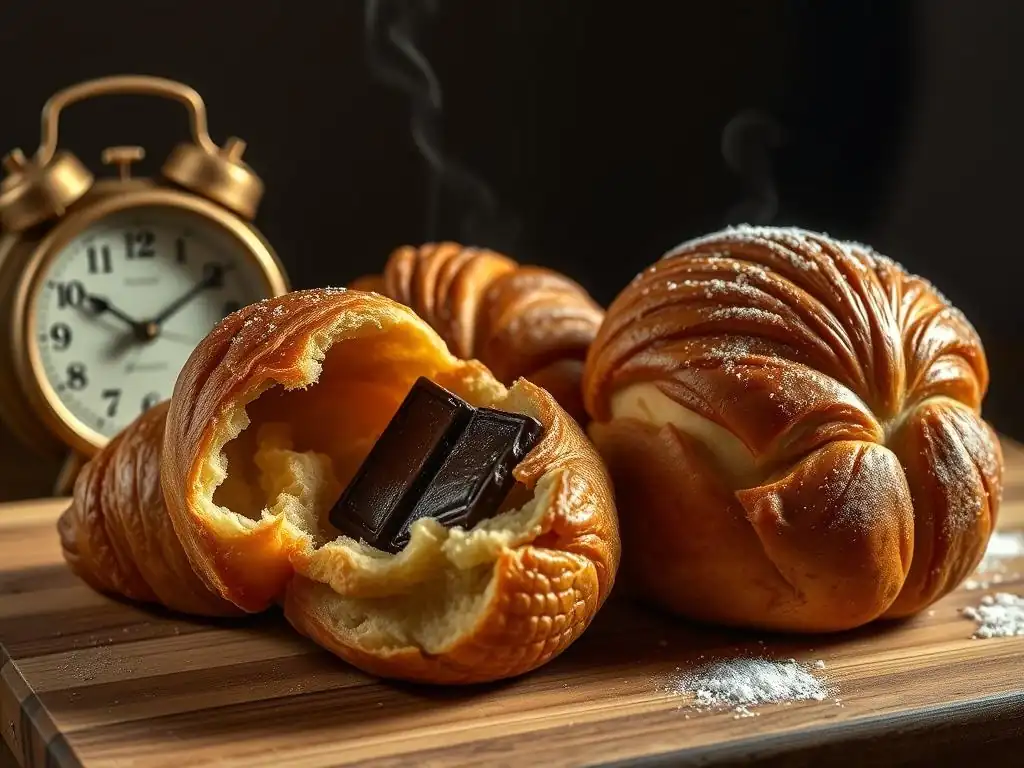
Welcome to BakeWithEase, your trusted companion in the kitchen! Ever wondered if you're truly unlocking the full potential of your pastries? This week, we're diving deep into a crucial aspect of baking: timing. Discover the secrets to achieving perfectly baked viennoiseries and elevate your baking game. Are you ready to master the art of the golden crust and flaky interior? Let's get started!
- How to Tell When Your Viennoiseries Are Perfectly Baked: The BakeWithEase Guide
- Achieving Viennoiserie Perfection: Mastering the Baking Time
- Understanding the Importance of Proper Baking for Viennoiseries
- Visual Cues for Perfectly Baked Viennoiseries
- Internal Temperature Checks for Viennoiseries: Precision Baking
- Texture Tests: The Tactile Approach to Baking Viennoiseries
- Specific Viennoiserie Baking Time Indicators: Pain au Chocolat, Croissants, and More
- Troubleshooting Common Viennoiserie Baking Problems
- Tips and Tricks for Consistent Viennoiserie Baking Results
- Mastering the Art of Viennoiserie Baking: Practice Makes Perfect
-
Frequently Asked Questions
- How crucial is the internal temperature for perfectly baked viennoiseries?
- What are some visual cues to look for when baking viennoiseries?
- How does the type of oven affect the baking time of viennoiseries?
- Is it possible to overbake viennoiseries, and what are the consequences?
- What is the "tap test," and how can it help determine doneness?
- Final Reflection: The Golden Crust and the Fleeting Moment of Perfection
- Unlock the Secrets to Perfectly Golden Viennoiseries!
How to Tell When Your Viennoiseries Are Perfectly Baked: The BakeWithEase Guide
Achieving Viennoiserie Perfection: Mastering the Baking Time
Baking viennoiseries like croissants, pain au chocolat, and pains aux raisins is a rewarding process that culminates in flaky, buttery layers. However, the difference between a good pastry and a truly exceptional one often comes down to mastering the baking time. Achieving perfectly baked viennoiseries timing is crucial, as it dictates the texture, color, and overall success of your bake.
Understanding how to identify when your pastries have reached peak doneness ensures you avoid common pitfalls like underbaked, doughy centers or overbaked, dry exteriors. This guide from BakeWithEase will walk you through the key indicators, from visual cues to internal temperatures, helping you consistently produce delicious, perfectly baked viennoiseries that impress.
Understanding the Importance of Proper Baking for Viennoiseries
Why Accurate Baking Time Matters for Flaky Pastries
Accurate baking time is absolutely critical for achieving the signature flakiness of viennoiseries. These pastries rely on the delicate interplay of butter melting and creating steam within the dough layers. If baked for too short a time, the internal structure doesn't set properly, leaving you with a dense, gummy interior and a pale, soft crust that lacks the desired shatter.
Conversely, overbaking can dry out the pastry, making it tough and brittle rather than light and airy. The butter may render out excessively, and the delicate layers can become fused or too hard. Getting the perfectly baked viennoiseries timing just right is about hitting that sweet spot where the interior is fully cooked and structured, and the exterior is beautifully golden and crisp.
The Science Behind a Perfectly Baked Croissant: Dough Structure and Lamination
The magic of a perfectly baked croissant lies in its lamination – the process of folding butter into dough to create numerous alternating layers. During baking, the high heat causes the water in the butter to turn to steam, which forces the dough layers apart, creating the airy pockets characteristic of a successful bake. Simultaneously, the heat sets the gluten structure in the dough, providing the framework that holds these layers in place.
Proper baking time and temperature allow the steam leavening to do its work effectively before the fat renders completely out. The Maillard reaction and caramelization occur on the surface, contributing to the desirable golden-brown color and complex flavors. Achieving perfectly baked viennoiseries timing ensures this intricate dance of steam, structure setting, and browning happens in harmony.
Visual Cues for Perfectly Baked Viennoiseries
The Ideal Golden-Brown Color: Identifying Doneness
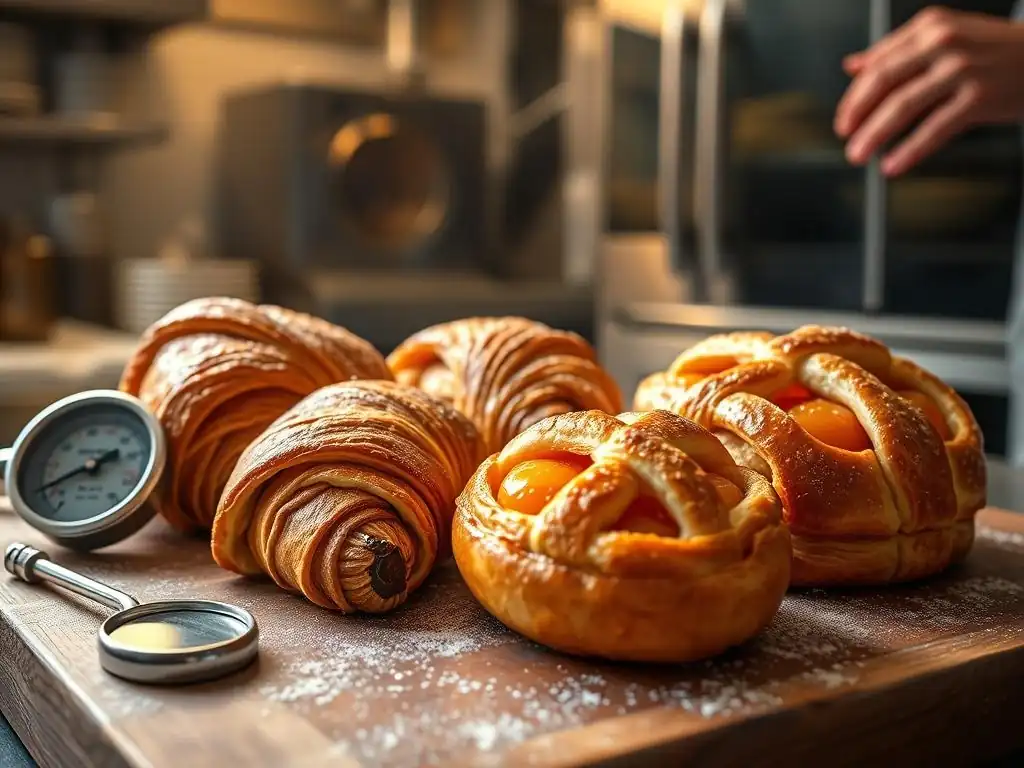
One of the most reliable visual indicators of perfectly baked viennoiseries is their color. They should possess a rich, deep golden-brown hue across the entire surface, not just on the peaks. This color signifies that the sugars on the exterior have caramelized and the Maillard reaction has occurred sufficiently, contributing significant flavor and a desirable crust.
Avoid pastries that are pale yellow or light brown, as these are likely underbaked. Likewise, watch out for areas that are excessively dark brown or black, indicating burning. The ideal color is warm and inviting, suggesting a full, even bake. Think of the color of toasted almonds or dark honey as a good benchmark for perfectly baked viennoiseries.
Observing the Crust: Checking for a Crisp and Even Bake
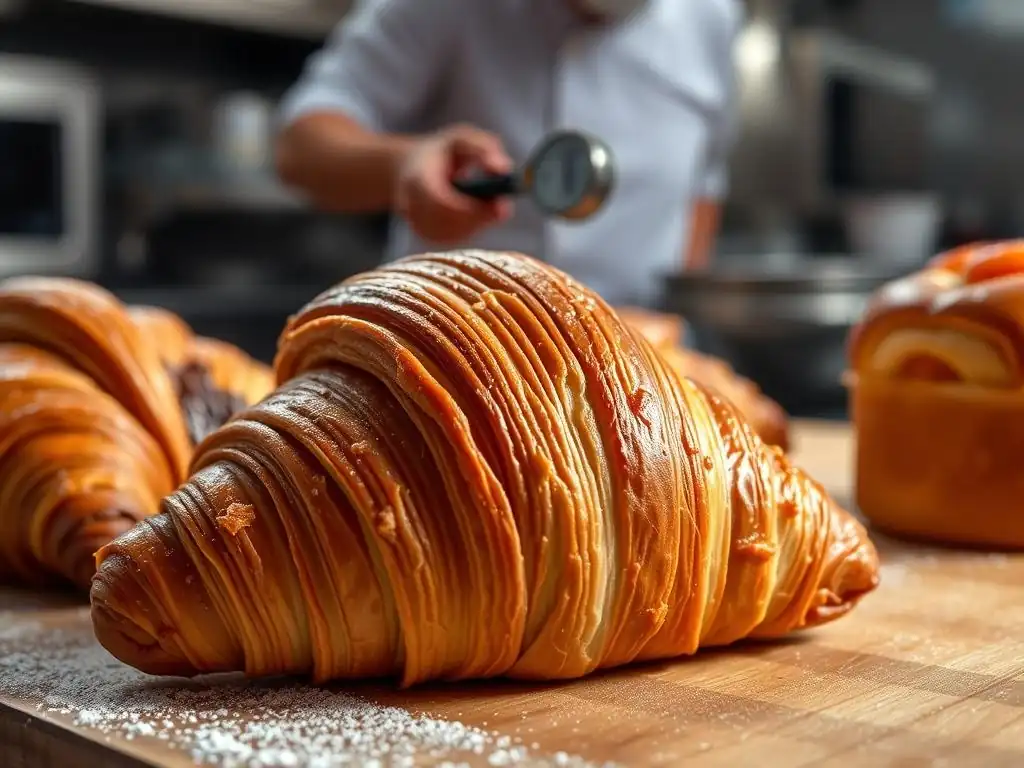
Beyond color, the appearance and feel of the crust offer vital clues. A perfectly baked viennoiserie should have a crust that looks crisp and somewhat fragile. You should be able to see distinct, separated layers on the surface, especially on the sides and ends of a croissant. The crust should feel firm when gently touched (carefully, as it will be hot! ).
An underbaked crust will appear soft, potentially wrinkled, and will yield easily when pressed. An overbaked crust might look overly hard, potentially cracked, or uniformly dark without visible layers. An even color and texture across the entire pastry, without significant pale or dark patches, is a good sign of uniform and perfectly baked viennoiseries.
Examining the Shape: Ensuring Proper Puff and Expansion
The shape and volume of your pastries after baking are strong indicators of success. Perfectly baked viennoiseries should have expanded significantly from their proofed state, showcasing a good "oven spring." Croissants, for example, should have opened up, revealing their distinct crescent shape and layers. Pain au chocolat should be noticeably puffed.
Pastries that remain relatively flat, dense, or haven't expanded much are likely underbaked or suffered from poor proofing or lamination. While overbaking typically doesn't cause pastries to flatten unless the structure completely collapsed, a poorly shaped or dense pastry after baking is a clear sign that the lamination and baking process didn't achieve the desired outcome for perfectly baked viennoiseries.
Internal Temperature Checks for Viennoiseries: Precision Baking
Using a Thermometer to Gauge Doneness: Target Temperatures for Different Viennoiseries
For a truly precise way to ensure perfectly baked viennoiseries, an instant-read thermometer is indispensable. While visual cues are helpful, internal temperature confirms that the dough's starches have gelatinized and the structure is fully set. For most laminated doughs like croissants and pain au chocolat, a target internal temperature is typically between 190°F and 200°F ( 88°C to 93°C).
Reaching this temperature range guarantees the interior is cooked through, preventing that dreaded gummy or raw texture. Slightly denser viennoiseries might benefit from hitting the higher end of this range, while very light ones might be done closer to 190°F. Relying on internal temperature alongside visual cues significantly improves your chances of consistent, perfectly baked viennoiseries.
Where to Insert the Thermometer for Accurate Readings
To get an accurate internal temperature reading, insert the probe of your instant-read thermometer into the thickest part of the pastry. For a croissant, this is usually in the center of the rolled section. For a pain au chocolat, aim for the middle section, trying to avoid hitting the chocolate pieces directly, as they will be much hotter.
Ensure the thermometer tip is fully embedded in the center of the pastry and not touching the baking sheet or just under the surface crust. Hold it steady for a few seconds until the temperature stabilizes. Checking multiple pastries on the tray can also give you a better overall sense of the batch's progress towards being perfectly baked viennoiseries.
Understanding Temperature Variations: Factors Affecting Internal Temperature
Several factors can influence how quickly your viennoiseries reach their target internal temperature. The most significant is your oven's actual temperature versus the setting – a poorly calibrated oven can run hot or cool, drastically affecting baking time. The size and thickness of the pastries also matter; larger items take longer to heat through than smaller ones.
Initial dough temperature before baking and the number of pastries on the tray can also play a role. A crowded oven or dough that was slightly too cold might extend the baking time needed to reach the desired internal temperature. Being aware of these variables helps you anticipate adjustments needed for achieving perfectly baked viennoiseries consistently.
Texture Tests: The Tactile Approach to Baking Viennoiseries
The Gentle Press Test: Assessing the Crumb's Resilience
Once your viennoiseries are out of the oven and have cooled slightly (just enough to handle without burning yourself! ), a gentle press test can reveal a lot about the interior bake. Lightly press the side or bottom of the pastry. A perfectly baked viennoiserie should feel relatively firm but not hard, and it should spring back slightly when released.
An underbaked pastry will feel soft, mushy, and will likely stay indented when pressed. An overbaked one might feel excessively hard or brittle. This tactile test provides valuable feedback on whether the internal crumb structure is properly set, confirming your perfectly baked viennoiseries timing was correct.
Feeling for a Light and Airy Texture: Avoiding Doughiness
Another tactile test involves simply picking up the pastry. Perfectly baked viennoiseries should feel surprisingly light for their size. This lightness is a direct result of the successful lamination process creating numerous air pockets within the crumb.
If a pastry feels heavy or dense when you pick it up, it's a strong indicator of underbaking or issues with lamination or proofing. A heavy pastry suggests the interior is still dense and doughy rather than airy and flaky, meaning it hasn't achieved the desired texture of perfectly baked viennoiseries.
Examining the Interior Structure: Honeycomb Pattern and Open Crumb
While this is a post-bake assessment you perform by cutting into one of your pastries (perhaps the least perfect one of the batch! ), examining the interior structure is key to understanding your baking success. A perfectly baked viennoiserie should reveal a beautiful "honeycomb" pattern when sliced open. This means you see many irregular, open air pockets separated by thin, delicate layers of baked dough.
An underbaked pastry will show a dense, uniform interior with few distinct layers or air pockets, potentially even appearing gummy. An overbaked pastry might look dry inside, with layers that seem brittle rather than tender. This internal view is the ultimate confirmation that your techniques, including perfectly baked viennoiseries timing, were successful.
Specific Viennoiserie Baking Time Indicators: Pain au Chocolat, Croissants, and More
Perfecting Pain au Chocolat: Recognizing Doneness Signs
Pain au chocolat should bake to a rich golden-brown color, similar to croissants, but pay close attention to the ends where the chocolate is enclosed, as these can darken quickly. They should be well-puffed, showing visible layers along the sides. The internal temperature, checked in the thickest pastry part away from the chocolate, should reach around 190-195°F ( 88-91°C).
The chocolate inside should be fully melted and slightly gooey, but not burnt (which can happen if baked too hot or long). A gentle press test should confirm a firm but not hard structure. These signs, combined with a typical baking time often ranging from 15 to 20 minutes at around 400°F ( 200°C), depending on size and oven, are indicators of perfectly baked pain au chocolat.
Achieving Flawless Croissant Baking: Time and Temperature Guidelines
Flawless croissants will be a deep, even golden-brown all over, including the underside, which is often a sign of a well-baked base. They should exhibit significant puff and clearly defined, separated layers. The internal temperature is a critical indicator, aiming for 195-200°F ( 91-93°C) to ensure the interior is fully set and airy.
A common starting point for baking croissants is a hot oven, typically 400-425°F ( 200-220°C), for 12 to 18 minutes. However, specific timing varies based on croissant size, dough hydration, and oven performance. Listening for a hollow sound when tapping the bottom is another traditional test. A perfectly baked croissant feels incredibly light and shatters beautifully when pulled apart.
Baking Other Viennoiseries: Kouign-Amann, Chausson aux Pommes, and Pains aux Raisins
Different viennoiseries have unique characteristics indicating doneness. Kouign-Amann, with its added sugar, will caramelize deeply, resulting in a darker golden-brown exterior, often with dark, bubbling sugar spots. The internal temperature should still reach around 190-195°F ( 88-91°C). Chausson aux Pommes should be golden-brown and well-puffed, with the apple filling potentially bubbling slightly through vents; check the pastry temperature around 190°F ( 88°C).
Pains aux Raisins should be golden-brown with a visible swirl pattern. The pastry cream should be set, and the pastry itself should feel light. An internal temperature near 190°F ( 88°C) is a good sign. While visual cues are important for all, understanding the specific expectations for each type helps you achieve perfectly baked viennoiseries across the board.
Troubleshooting Common Viennoiserie Baking Problems
Addressing Underbaked Viennoiseries: Rescue Techniques
If your viennoiseries come out pale, feel heavy and doughy, and haven't reached the target internal temperature, they are underbaked. If you catch this immediately after removing them from the oven, you might be able to return them to continue baking. Reduce the oven temperature slightly (e.g., to 350°F / 175°C) to prevent the exterior from burning while the interior finishes. Monitor them closely for color and temperature.
If they have cooled significantly, saving them for their intended perfect state is difficult. However, they can sometimes be repurposed. Consider slicing them horizontally and toasting them in a pan or under a broiler until golden and crisp, or using them in a recipe like bread pudding. Prevention is truly the best approach for perfectly baked viennoiseries.
Preventing Overbaked Viennoiseries: Adjusting Baking Time and Temperature
Overbaked viennoiseries are characterized by a hard, dry, and potentially burnt crust and a dry, brittle interior. Once overbaked, they cannot be rescued. Prevention is key. Always preheat your oven thoroughly and consider using an oven thermometer to verify its accuracy. If your oven runs hot, reduce the temperature slightly or start checking for doneness sooner than the recipe suggests.
- Use an oven thermometer to check true temperature.
- Start checking doneness 2-3 minutes before the minimum recipe time.
- If tops brown too fast, loosely tent the tray with aluminum foil.
- If bottoms burn, try a baking stone or steel, or place a sacrificial baking sheet on the rack below.
Adjusting your process based on your specific oven is crucial for consistently achieving perfectly baked viennoiseries timing.
Dealing with Uneven Baking: Oven Hot Spots and Rotation Strategies
Most home ovens have hot spots, areas where the temperature is higher, leading to uneven baking. Some pastries on the tray might be perfectly golden while others remain pale. To combat this common issue, rotate your baking sheet halfway through the baking time.
For example, if baking for 16 minutes, rotate the tray 180 degrees after 8 minutes. If using multiple racks, you might also need to swap the trays between racks halfway through. Observing which areas of your oven brown faster helps you anticipate and plan your rotation strategy for ensuring all your viennoiseries are perfectly baked.
Tips and Tricks for Consistent Viennoiserie Baking Results
The Importance of Oven Calibration: Ensuring Accurate Temperature
An accurate oven temperature is perhaps the single most important factor for consistent baking, especially with sensitive pastries like viennoiseries. Home ovens are notoriously inaccurate; the temperature displayed on the dial or digital read-out can be significantly different from the actual temperature inside the oven cavity. An inexpensive oven thermometer placed inside the oven will show you the true temperature.
Knowing your oven's variance allows you to adjust the set temperature accordingly. If your oven bakes 25°F ( 14°C) cool when set to 400°F, you know to set it to 425°F instead. This simple step is fundamental to achieving reliable and perfectly baked viennoiseries timing, as the baking time is directly tied to the temperature.
Using a Baking Stone or Steel: Promoting Even Heat Distribution
Using a baking stone or steel can dramatically improve the bake of your viennoiseries, particularly the bottom crust and overall puff. Placing a preheated stone or steel on a lower rack helps stabilize the oven temperature and provides intense, even radiant heat from below. This encourages a quick, powerful rise and ensures the bottom of the pastry bakes through and becomes crisp, avoiding a pale, doughy base.
Preheat the stone or steel for at least 30-60 minutes with the oven. Place your baking sheet directly on the stone/steel or on the rack immediately above it. This consistent heat source helps achieve the desired layering and contributes significantly to producing perfectly baked viennoiseries with a beautiful, uniform crust.
Proofing and its impact on Baking Time
Proper proofing is a critical step before baking viennoiseries, and it directly impacts the necessary baking time. Proofing allows the yeast to ferment and produce gases, expanding the dough and developing flavor. Correctly proofed viennoiseries should be visibly larger (often doubled in size) and feel light and airy.
Under-proofing results in dense pastries that take longer to bake through and may not achieve full expansion or color. Over-proofing can weaken the gluten structure, causing the pastries to potentially collapse in the oven, leading to a dense, uneven bake. Paying close attention to proofing guides and ensuring your pastries are adequately (but not excessively) proofed is vital for predictable and perfectly baked viennoiseries timing.
Mastering the Art of Viennoiserie Baking: Practice Makes Perfect
Keeping a Baking Journal: Tracking Your Results and Adjustments
Becoming proficient at baking perfectly baked viennoiseries timing takes practice and careful observation. A baking journal is an invaluable tool for this. For each batch, record details such as the recipe used, the oven temperature (both setting and actual, if you use a thermometer), the total baking time, and notes on the appearance (color, puff) and texture (crispness, interior crumb).
Also, jot down any adjustments you made (e.g., rotated the tray after 10 minutes, tented with foil) and the outcome. Reviewing your journal helps you understand how your oven behaves, identify patterns in your results, and refine your technique. This systematic approach accelerates your learning and leads to more consistently perfectly baked viennoiseries.
Experimenting with Different Techniques: Refining Your Baking Skills
Once you've mastered the basics of recognizing doneness, don't be afraid to experiment slightly to refine your results. For instance, some bakers prefer a slightly lower temperature for a longer time to achieve a darker, more even bake without risking burning, while others advocate for a hotter, faster bake for maximum puff.
Try adjusting the position of your baking sheet in the oven or experimenting with using a baking stone versus a regular tray. Small tweaks can make a big difference. By combining knowledge of visual cues, temperature checks, tactile tests, and careful journaling, you'll develop an intuitive sense for perfectly baked viennoiseries timing and truly master the art.
Frequently Asked Questions
How crucial is the internal temperature for perfectly baked viennoiseries?
The internal temperature is absolutely crucial! It's a reliable indicator that the dough is cooked through and the fats have rendered properly, resulting in a flaky texture.
What are some visual cues to look for when baking viennoiseries?
Look for a deep golden brown color and a slight sheen on the surface. The viennoiseries should also have expanded significantly and feel relatively light for their size.
How does the type of oven affect the baking time of viennoiseries?
Different ovens heat differently! Convection ovens typically bake faster and more evenly, requiring a reduced baking time, while conventional ovens may need a slightly longer baking period for even cooking.
Is it possible to overbake viennoiseries, and what are the consequences?
Yes, overbaking can lead to dry, tough viennoiseries. The butter will evaporate excessively, and the layers won't be as distinct, resulting in a less enjoyable texture.
What is the "tap test," and how can it help determine doneness?
The "tap test" involves gently tapping the bottom of the viennoiserie. A hollow sound indicates that the internal structure has set and the viennoiserie is likely baked through.
Final Reflection: The Golden Crust and the Fleeting Moment of Perfection
The pursuit of the perfectly baked viennoiserie is more than just a culinary quest; it's a meditation on precision, patience, and the ephemeral nature of perfection itself. The subtle shifts in color, the delicate aroma, the satisfying crack – these are the fleeting signals that tell us we've achieved a moment of culinary grace. Mastering these cues, as detailed in this article, is key to unlocking the true potential of your baking.
The journey to understanding the ideal bake time for viennoiseries is a deeply personal one. It's about learning to trust your senses, to interpret the visual and olfactory cues that only experience can teach. The best things in life are worth waiting for,
and this certainly holds true for the perfectly baked croissant or pain au chocolat. The anticipation, the careful observation, and the ultimate reward of that first bite – it's a process that connects us to the artistry of baking and the simple pleasures of life.
Now, I invite you to take what you've learned and apply it to your own baking adventures. Don't be afraid to experiment, to adjust your techniques based on your oven and ingredients. Embrace the imperfections, for they are part of the learning process. The next time you pull a tray of viennoiseries from the oven, remember the subtle nuances discussed here, and savor the triumph of achieving that golden crust and perfectly airy interior. The journey to perfection is ongoing, and each perfectly baked treat is a step closer to mastering the art.
Unlock the Secrets to Perfectly Golden Viennoiseries!
Thanks for diving into the world of perfectly baked viennoiseries! We hope you now feel confident in identifying that magical moment of golden-brown perfection. Ready to put your new skills to the test?
- Bake your own masterpiece: Try one of our favorite viennoiserie recipes – the results are guaranteed to impress! (recipe link would go here if this were a real website)
- Share your baking journey: Post a picture of your golden-brown creations on social media and tag us – we'd love to see them! #BakeWithEase #ViennoiseriePerfection
- Challenge a friend: See who can bake the most perfectly golden croissant this week!
So, what delicious viennoiserie will you be tackling first?