
Making Macarons Without Special Equipment: Is It Possible?

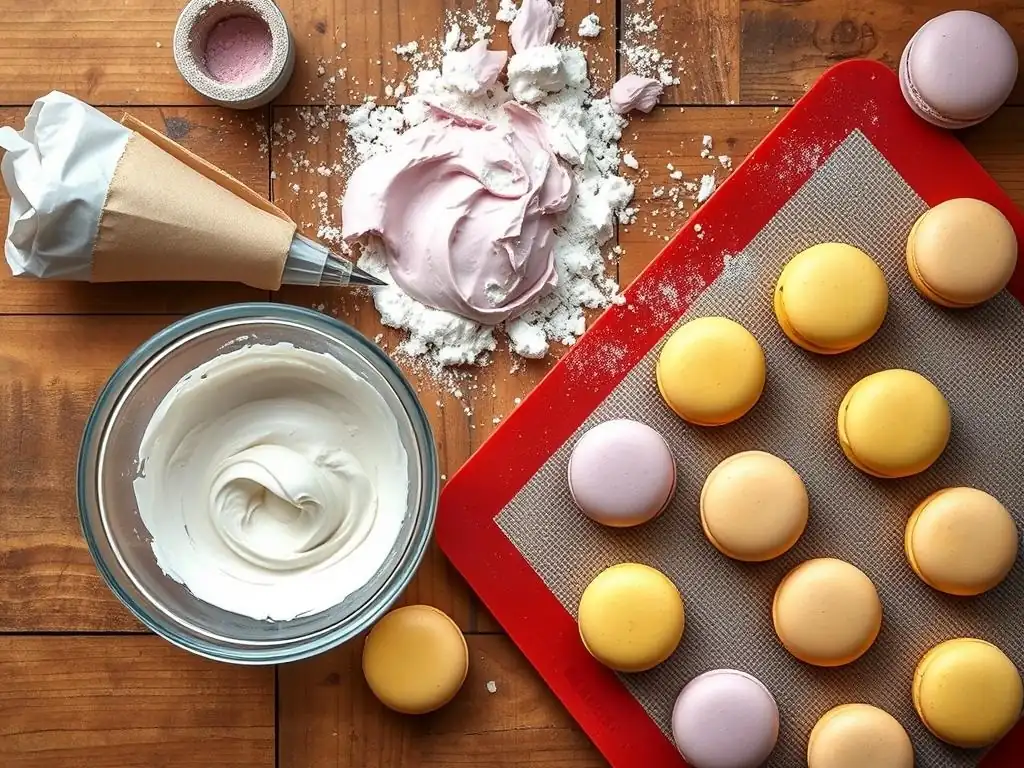
Welcome to BakeWithEase, your guide to unlocking the joy of baking! Ever dreamt of creating those delicate, coveted French treats at home? You might be surprised to learn that the answer to "Making Macarons Without Special Equipment: Is It Possible?" is a resounding yes! Dive in and discover our secrets to crafting perfect, easy macarons using everyday kitchen tools, and prepare to impress with these elegant pastries. Get ready to bake with ease!
- Baking Macarons: Achieving Success Without Specialized Equipment
- Understanding Macaron Challenges and Essential Techniques
- Equipment Substitutions for Home Macaron Baking
-
Step-by-Step Macaron Recipe for Home Bakers
- Ingredient Preparation and Workspace Setup
- Creating Macaron Batter: A Simplified Meringue Approach
- Achieving Proper Macaronage Consistency
- Piping Techniques for Uniform Macaron Shells
- Resting Macarons for Skin Formation
- Baking Macarons: Temperature and Time Considerations
- Simple Macaron Filling Recipes
- Troubleshooting Common Macaron Issues
- Macaron Flavor Variations and Filling Ideas
- Tips for Consistent Macaron Success
- Conclusion: Baking Macarons Successfully at Home
-
Frequently Asked Questions
- Can you really make macarons without a stand mixer?
- What's the most crucial element for macaron success when not using special tools?
- Are there any ingredient substitutions recommended for easier macaron making without special equipment?
- How do I ensure even baking without a professional oven?
- What's the best way to pipe macarons without specialized piping tips?
- Final Reflection: The Sweet Simplicity of Macaron Making
- Unleash Your Inner Macaron Master!
Baking Macarons: Achieving Success Without Specialized Equipment
Baking delicate French macarons at home often seems like a daunting task, requiring specialized tools and precise techniques. Many bakers might shy away, believing a stand mixer, professional piping bags, and specific baking mats are non-negotiable. However, the truth is that achieving beautiful, delicious macarons is absolutely possible even if you don't have a kitchen filled with high-end gadgets. The key lies in understanding the fundamental science behind these finicky cookies and mastering techniques that can be adapted using common kitchen items. With patience and a bit of clever substitution, you can certainly bake easy macarons without special tools.
This guide will walk you through the essential steps, common pitfalls, and clever workarounds needed to create delightful macaron shells and fillings using minimal equipment. We'll demystify the process, showing you how to achieve those coveted "feet" and smooth tops without needing professional gear. Getting started with easy macaron baking at home is more accessible than you might think, proving that passion and technique can overcome the need for expensive equipment.
Understanding Macaron Challenges and Essential Techniques
Macarons are notoriously sensitive to small variations in ingredients, mixing, and baking conditions. Their structure relies on a stable meringue and a carefully mixed batter (macaronage) to create a light, airy shell with a distinct "foot" at the base. Common challenges include cracked shells, hollow interiors, lack of feet, and uneven texture. Mastering a few core techniques, regardless of equipment, is crucial for success. This includes properly preparing the meringue, achieving the correct batter consistency, and baking at the right temperature. Understanding the role of each ingredient is also fundamental when aiming for easy macarons without special tools.
The journey to perfect macarons involves precision, observation, and practice. While professional equipment can standardize some variables, understanding the why behind each step allows you to adjust based on your environment and available tools. For instance, properly whipping egg whites to the correct stage is vital for the meringue's stability, which directly impacts the shell's rise and structure. Learning to identify this stage visually and texturally is a skill that transcends specific equipment. Similarly, achieving the right macaronage consistency by hand requires developing a feel for the batter, something a machine can't teach you.
Key Macaron Ingredients and Their Functions
Each ingredient in a macaron recipe plays a specific and critical role in the final outcome. The standard macaron recipe typically includes almond flour, egg whites, granulated sugar, and powdered sugar. Understanding how these components interact is vital for troubleshooting and adapting techniques, especially when aiming for easy macarons without special tools. For example, the quality and preparation of the almond flour significantly impact the shell's texture, while the sugar contributes to stability and shine.
The careful balance of these ingredients is what makes macarons unique. Too much moisture from improperly prepared almond flour, or not enough sugar to stabilize the meringue, can lead to flat or cracked shells. The ratio of dry ingredients (almond flour and powdered sugar) to wet ingredients (egg whites) needs to be precise. While recipes provide measurements, factors like humidity can affect the weight of dry ingredients, requiring slight adjustments based on feel – a nuance important for making easy macarons without special tools work consistently.
Almond Flour Selection and Preparation
Almond flour is the backbone of the macaron shell, providing structure and that characteristic slightly chewy texture. For the best results, use finely ground almond flour. Coarsely ground flour can result in bumpy, uneven shells. Many recipes recommend sifting the almond flour with the powdered sugar to remove any larger pieces or clumps. If your almond flour isn't super fine, you might need to process it briefly in a food processor with the powdered sugar to achieve a finer texture, being careful not to over-process and turn it into almond butter.
Even with finely ground flour, sifting is a crucial step. Passing the almond flour and powdered sugar mixture through a fine-mesh sieve ensures a smooth, lump-free texture for the macaron shells. This helps prevent imperfections on the surface and contributes to the delicate structure. If you don't have a fine-mesh sieve, you can carefully push the mixture through a coarser sieve or even use a clean, dry whisk to break up clumps, although a sieve is highly recommended for optimal smoothness when baking easy macarons without special tools.
Egg White Preparation: Achieving Stiff Peaks
Egg whites are fundamental for creating the meringue that gives macarons their lift and structure. For optimal results, use aged egg whites (separated a day or two in advance and stored covered in the refrigerator, then brought to room temperature before use). Aging helps break down the protein structure slightly, allowing them to whip up more volume and stability. Room temperature egg whites also whip better than cold ones. The goal is to whip them to stiff, glossy peaks.
Stiff peaks mean that when you lift the whisk (or beaters), the peaks stand straight up without drooping. They should be glossy and not dry or curdled-looking. Undermixing the egg whites will result in a weak meringue that can't support the shell structure, leading to flat macarons without feet. Overmixing can cause the meringue to become unstable and break, also negatively impacting the shells. Achieving the perfect stiff peak meringue is a critical step for making easy macarons without special tools successful.
Sugar Types and Their Impact on Macaron Structure
Macaron recipes typically call for two types of sugar: granulated sugar and powdered sugar. Granulated sugar is used in the meringue, added gradually to the whipping egg whites to create a stable, glossy structure. The sugar dissolves into the egg whites, forming a strong network that traps air. Using superfine granulated sugar can help it dissolve more easily, reducing the risk of grainy meringue.
Powdered sugar (also known as confectioners' sugar or icing sugar) is mixed with the almond flour. It contributes to the structure and tenderness of the macaron shell and also helps absorb moisture. Ensure your powdered sugar is free of lumps; sifting it with the almond flour is essential. The combination of the stable meringue (from granulated sugar) and the dry ingredients (almond flour and powdered sugar) is what creates the unique texture and appearance of a perfect macaron shell, even when pursuing easy macarons without special tools.
Equipment Substitutions for Home Macaron Baking
Successfully baking easy macarons without special tools is largely about smart substitutions and adapting techniques. While professional tools can offer consistency, many common kitchen items can perform the same functions effectively. You don't need a pricey stand mixer; a hand mixer or even vigorous hand whisking can work. Similarly, parchment paper is a perfectly good alternative to silicone baking mats, and improvised piping methods are readily available.
The key is to understand the purpose of each tool and find a substitute that achieves a similar outcome. For instance, a stand mixer provides consistent speed and power for whipping meringue, but a patient hand and whisk can achieve the same result with more effort. Silicone mats help with even heat distribution and easy release, but parchment paper works well if properly prepared. Thinking creatively about how to accomplish each step without the "standard" equipment is central to mastering easy macarons without special tools.
Hand Mixing Techniques for Macaron Batter
While a stand mixer makes whipping meringue faster and easier, you can absolutely achieve stiff peaks using a hand mixer or even a balloon whisk and arm power. For a hand mixer, start on low speed to break up the egg whites, then gradually increase the speed to medium-high. Add the granulated sugar slowly once the egg whites are frothy. Continue whipping until stiff, glossy peaks form. This might take 10-15 minutes with a hand mixer.
If using a balloon whisk, be prepared for a workout! Ensure your bowl is clean and dry. Start whisking the egg whites vigorously in a circular motion. Once they become frothy, gradually add the sugar while continuing to whisk. Maintain a consistent, fast pace. This can take 20-30 minutes or even longer to reach stiff peaks. While more labor-intensive, it is a perfectly viable method for making easy macarons without special tools.
Parchment Paper Alternatives for Baking
Silicone baking mats (like Silpats) are popular for macarons because they provide a non-stick surface and even heat distribution. However, high-quality parchment paper is an excellent alternative and is often more accessible. Cut the parchment paper to fit your baking sheet. You can even draw macaron templates on the underside of the parchment paper using a pencil (circles about 1.5 inches in diameter, spaced about 1 inch apart) to help guide your piping and ensure uniform size.
Ensure the parchment paper lies flat on the baking sheet. Sometimes, a tiny dab of batter in the corners underneath the parchment can help secure it. Parchment paper provides a good non-stick surface for the macaron shells to bake and release cleanly. While some bakers report slightly different results compared to silicone mats (e.g., regarding feet development), consistent technique and oven temperature control yield excellent results on parchment, making it ideal for easy macarons without special tools.
Piping Techniques Without Specialized Piping Bags
Piping the macaron batter into uniform circles is important for even baking and presentation. While professional piping bags and tips are standard, you don't need them. A sturdy zip-top bag is a simple and effective substitute. Spoon the macaron batter into one corner of the bag. Push the batter down into the corner, then twist the top of the bag to seal it. Snip off a small piece of the corner with scissors – start small, you can always make the opening larger if needed.
Hold the bag with the snipped corner down and pipe the batter onto your prepared baking sheet (parchment paper with templates works perfectly here). Hold the bag perpendicular to the sheet and apply steady, even pressure to pipe circles. Stop squeezing and flick the bag upwards to break the flow cleanly. Practice on a piece of scrap paper first if you're new to piping. This method is perfectly adequate for creating uniform shells when making easy macarons without special tools.
The Importance of an Oven Thermometer
Oven temperature is one of the most critical factors for successful macaron baking, and oven thermostats are often inaccurate, sometimes by as much as 50°F (around 28°C). Using an inexpensive oven thermometer placed inside your oven is highly recommended, regardless of whether you have special equipment or are aiming for easy macarons without special tools. It allows you to know the actual temperature inside the oven and adjust your oven dial accordingly.
Baking macarons at the wrong temperature is a common cause of failure. Too hot and they can crack or brown too quickly without developing feet. Too cool and they won't rise properly and can become chewy. A reliable oven thermometer helps you maintain the precise temperature required by your recipe (often around 280-320°F or 135-160°C, depending on the recipe and oven) for consistent results. This simple, inexpensive tool is perhaps the most important piece of equipment for baking easy macarons without special tools successfully.
Step-by-Step Macaron Recipe for Home Bakers
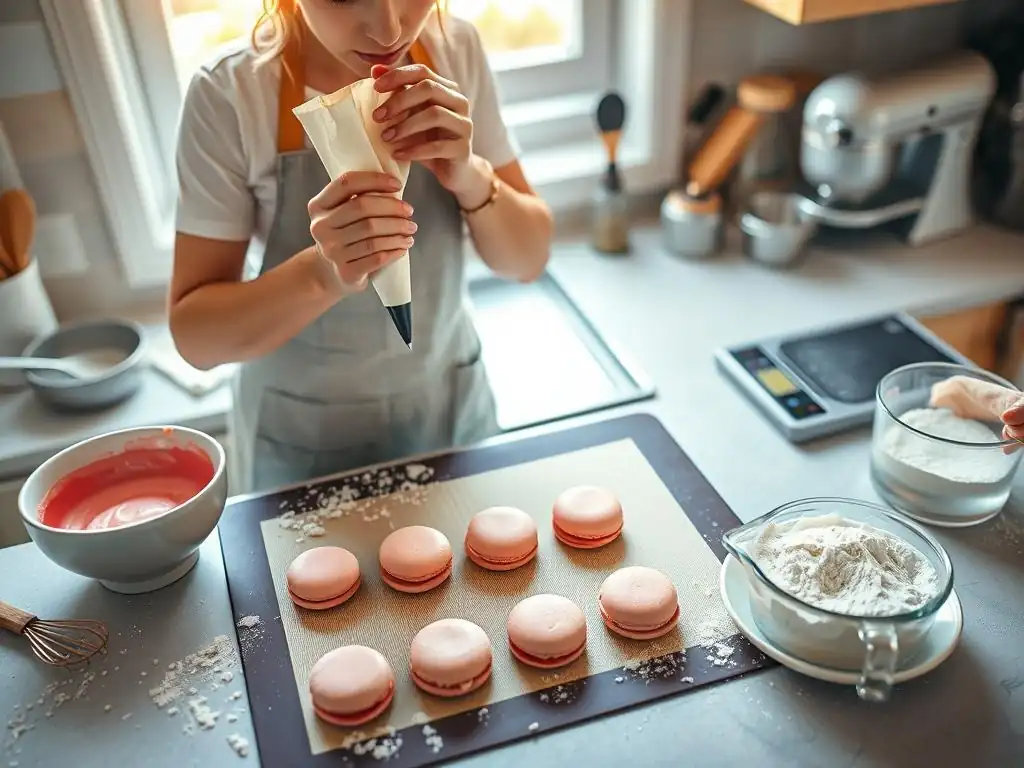
This section outlines a simplified approach to baking macarons using common kitchen tools. The focus is on technique and observation, proving that easy macaron baking at home is achievable. We'll cover everything from preparing ingredients to achieving the perfect bake and adding simple fillings.
Following these steps carefully, even without specialized gear, will increase your chances of macaron success. The process requires patience and attention to detail, particularly during the meringue whipping and macaronage stages.
Ingredient Preparation and Workspace Setup
Before you begin, measure all your ingredients precisely. It's often recommended to weigh them using a kitchen scale for accuracy, but if you don't have one, be meticulous with cup and spoon measurements, ensuring dry ingredients like almond flour and powdered sugar are spooned lightly into measuring cups and leveled. Sift the almond flour and powdered sugar together into a bowl and set aside. Separate your aged, room-temperature egg whites into a clean, grease-free bowl. Prepare your baking sheets by lining them with parchment paper. If using templates, place them under the parchment.
Ensure your workspace is clean and free from any grease or moisture, as this can prevent the egg whites from whipping properly. Have your granulated sugar measured out and ready to be added gradually. Prepare your piping bag substitute (like a zip-top bag) and scissors. Having everything prepped before you start whipping the meringue makes the process smoother and reduces the chance of errors, contributing to an easier experience when making easy macarons without special tools.
Creating Macaron Batter: A Simplified Meringue Approach
The French meringue method, which involves whipping raw egg whites with sugar, is commonly used for easy macarons without special tools. Begin whipping the room-temperature egg whites on low speed until they become frothy. Gradually increase the speed. Once they reach soft peaks (they hold their shape but the tips curl over), start adding the granulated sugar very slowly, about a tablespoon at a time, allowing it to incorporate before adding more.
Continue whipping on medium-high speed. You'll notice the meringue becoming glossy and thicker. Keep whipping until stiff peaks form – when you lift the whisk, the peaks should stand straight up firmly. The meringue should be smooth and shiny. This stable meringue is the foundation of your macaron shells and is achievable with persistent whipping, whether by hand or with a hand mixer.
Achieving Proper Macaronage Consistency
Macaronage is the crucial step of folding the dry ingredients (sifted almond flour and powdered sugar) into the meringue. This needs to be done carefully to achieve the right batter consistency – often described as lava-like or slowly flowing like ribbons. Add the dry ingredients to the meringue in two or three additions. Using a spatula (a rubber or silicone one works well), gently fold the dry ingredients into the meringue using a motion that involves scraping the sides of the bowl, cutting through the center, and folding the batter over itself.
The goal is to deflate the meringue just enough to create a smooth, flowing batter, but not so much that it becomes too liquid. You'll know you've reached the correct consistency when you lift the spatula, and the batter falls off in a thick ribbon that slowly reincorporates back into the mass within about 10-15 seconds. This stage is critical for achieving proper feet and smooth tops, and it requires practice to judge correctly, especially when making easy macarons without special tools.
Piping Techniques for Uniform Macaron Shells
Transfer the macaron batter into your prepared piping bag substitute (like a zip-top bag with a snipped corner). Hold the bag perpendicular to the baking sheet, centered over your template circles (if using). Apply steady, even pressure to pipe the batter until it fills the circle. Stop squeezing and flick the bag upwards quickly to break the flow. Try to keep the size and shape of each piped shell as consistent as possible for even baking.
Once all the shells are piped, rap the baking sheet firmly on the counter several times. This helps to release any air bubbles trapped in the batter, which can cause cracking during baking. You'll see the shells spread slightly and become smoother. Use a toothpick to pop any visible air bubbles on the surface. This step is essential for achieving smooth, unblemished shells when aiming for easy macarons without special tools.
Resting Macarons for Skin Formation
After piping and rapping the trays, the macaron shells need to rest at room temperature. This is a crucial step where a dry skin forms on the surface of the shells. The skin prevents the shells from cracking in the oven and helps force the batter to expand horizontally, creating the characteristic "feet". The resting time can vary greatly depending on the humidity of your environment, typically ranging from 30 minutes to 2 hours.
You'll know the shells are ready to bake when you can gently touch the surface without any batter sticking to your finger. The surface should feel dry and smooth. Do not skip this step, as insufficient resting is a major cause of cracked shells. Patience during the resting period is key to successful easy macarons without special tools.
Baking Macarons: Temperature and Time Considerations
Preheat your oven with your oven thermometer inside to the temperature specified in your recipe (often around 280-320°F or 135-160°C). Once the oven reaches the correct temperature, place one baking sheet of rested macarons on the middle rack. Baking time typically ranges from 12 to 18 minutes, but this varies significantly based on your oven.
The macarons are done when they don't wobble on their feet when gently nudged. The feet should be well-formed, and the tops should be firm. If they wobble, they need a few more minutes. Avoid opening the oven door frequently during baking. Once baked, remove the tray from the oven and let the shells cool completely on the baking sheet before attempting to remove them. Trying to remove them too soon will cause them to stick and break. Proper temperature control, guided by your oven thermometer, is paramount for easy macaron baking at home.
Simple Macaron Filling Recipes
Once your macaron shells are completely cool, you can fill them. The filling not only adds flavor but also provides moisture to soften the shells slightly, creating the perfect texture. Simple fillings like ganache, buttercream, or jam work wonderfully and don't require specialized equipment. A basic chocolate ganache requires just chopped chocolate and hot heavy cream, stirred until smooth. Buttercream can be made by creaming softened butter with powdered sugar and a splash of milk or cream.
To fill, match similarly sized shells. Dollop or pipe a small amount of filling onto the flat side of one shell (using a spoon or your zip-top bag piping substitute) and gently sandwich it with another shell. Do not overfill, as it will squeeze out the sides. Filled macarons are best if allowed to mature in the refrigerator for at least 12-24 hours; this allows the flavors to meld and the shell texture to improve, resulting in truly delightful easy macarons without special tools.
Troubleshooting Common Macaron Issues
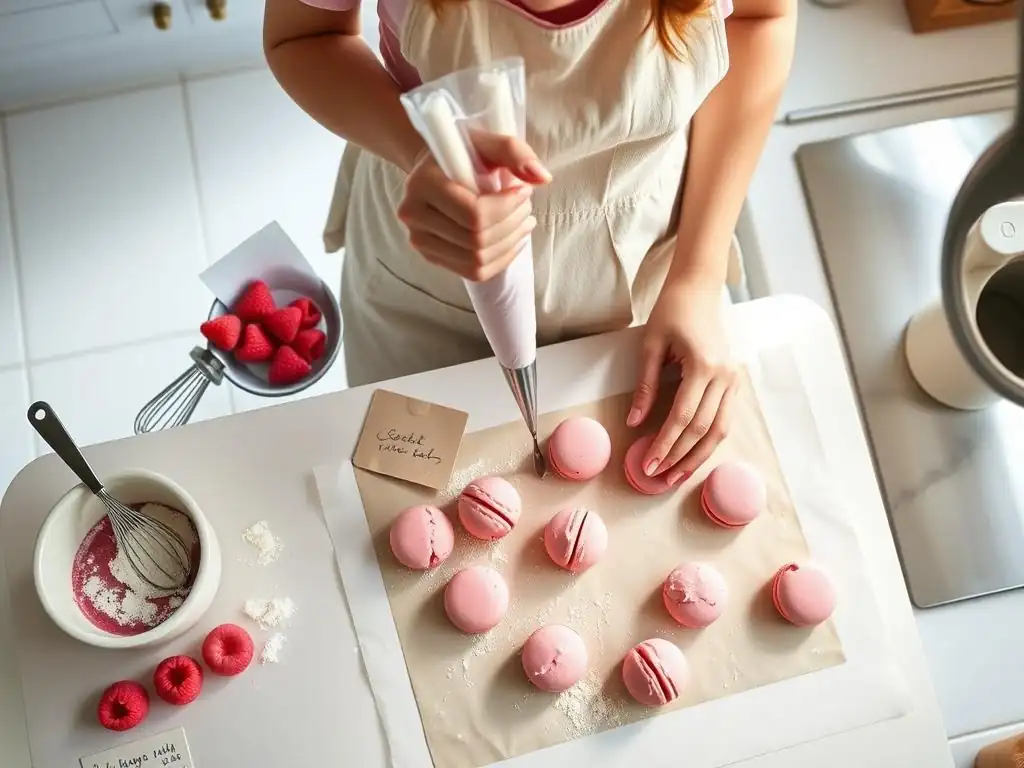
Even when making easy macarons without special tools, problems can arise. Understanding the common issues and their likely causes is crucial for improving your technique and achieving consistent results. Don't be discouraged by imperfect batches; macarons have a reputation for being finicky for a reason!
Most problems stem from issues with the meringue, macaronage, resting, or baking temperature. By carefully reviewing each step of your process when a batch fails, you can often identify the culprit and adjust for your next attempt.
Preventing Macaron Cracking
Cracked macaron shells are a frequent frustration. This is often caused by insufficient resting time (the skin didn't form properly), trapping air that bursts during baking. Ensure your shells rest until a dry skin is formed, typically 30 minutes to 2 hours depending on humidity. Another major cause is oven temperature being too high. Use an oven thermometer to verify your oven's actual temperature and ensure it's not running too hot.
Aggressive rapping of the trays after piping helps release large air bubbles, also reducing the risk of cracking. Overmixing the macaronage can also contribute, as it weakens the batter's structure. Aim for that lava-like consistency, not a completely liquid batter. Addressing these points significantly increases your chances of smooth, uncracked shells when making easy macarons without special tools.
Addressing Hollow Macarons
Hollow shells are another common issue, where the top shell separates from the bottom foot, leaving an empty space inside. This can be caused by overmixing the macaronage, which incorporates too much air that then collapses during baking. It can also result from baking at a temperature that is too low or for too short a time, preventing the interior from setting properly.
Ensure your macaronage isn't overmixed; stop folding as soon as the batter flows like a ribbon. Verify your oven temperature with a thermometer and ensure you bake the macarons long enough for the interior to set (they shouldn't wobble when gently nudged). Sometimes, a slight adjustment in oven temperature or baking time is needed for your specific oven to prevent hollowness, even when making easy macarons without special tools.
Achieving Proper Macaron Feet
The "foot" is the ruffled base of the macaron shell, a signature characteristic. A lack of feet is usually due to insufficient resting time (no skin formed to force the batter outwards and upwards) or baking at too low a temperature. The skin needs to be dry enough to hold the top intact while the batter expands underneath, creating the foot.
Confirm that your shells have developed a dry skin before baking. Also, check your oven temperature with a thermometer; if it's too low, the shells won't rise properly and develop feet. Ensure your meringue was whipped to stiff, stable peaks, as a weak meringue won't provide enough lift. Proper resting and accurate oven temperature are key to achieving those desired feet, even when pursuing easy macarons without special tools.
Macaron Flavor Variations and Filling Ideas
Once you've mastered the basic technique for easy macaron baking at home, you can explore a world of flavor variations. The shells themselves can be flavored (e.g., with cocoa powder or food coloring), and the fillings offer endless possibilities.
Experimenting with different flavor combinations is one of the joys of macaron making. Start with simple variations before tackling more complex flavors.
Classic Vanilla Macaron Recipe
A classic vanilla macaron features plain shells paired with a simple vanilla bean buttercream or ganache. The shells are typically made using the standard recipe of almond flour, powdered sugar, egg whites, and granulated sugar. A tiny amount of white gel food coloring can be added to the batter during the macaronage stage if you desire perfectly white shells.
For the filling, a basic vanilla buttercream is made by beating softened unsalted butter until creamy, then gradually adding sifted powdered sugar and pure vanilla extract (or vanilla bean paste for visible specks). Add a tablespoon or two of milk or cream to reach a spreadable consistency. This simple pairing highlights the delicate texture of the shell and is a great starting point for easy macarons without special tools.
Chocolate Macaron Recipe with Chocolate Ganache
To make chocolate macaron shells, replace a small amount of the sifted powdered sugar/almond flour mixture with unsweetened cocoa powder. A common ratio is to swap out about 10-15 grams of the dry mix for cocoa powder. Ensure the cocoa powder is unsweetened and sifted with the other dry ingredients. This adds a subtle chocolate flavor and a rich brown color to the shells.
Pairing chocolate shells with a smooth chocolate ganache creates a decadent treat. Ganache is typically made by pouring hot heavy cream over finely chopped chocolate (dark, milk, or white, depending on preference) and letting it sit for a few minutes before stirring until smooth and emulsified. Let the ganache cool and thicken to a spreadable consistency before filling the shells. This simple filling is perfect for easy macarons without special tools.
Lemon Macaron Recipe with Lemon Curd Filling
Lemon macarons are bright and refreshing. You can add a small amount of lemon zest to the dry ingredients for subtle flavor in the shells, or simply make plain shells. The star is often the vibrant lemon curd filling. Lemon curd is made from egg yolks, sugar, lemon juice, lemon zest, and butter, cooked gently until thickened.
Lemon curd provides a tangy contrast to the sweet shells. It can be made ahead of time and stored in the refrigerator. For a firmer filling, you can whip some softened butter into cooled lemon curd to make a lemon buttercream. This combination is a delightful option once you're comfortable making easy macarons without special tools.
Tips for Consistent Macaron Success
Achieving consistent results with macarons, especially when using basic equipment, requires attention to detail and learning to read your batter and oven. Small variations can have significant impacts.
Focusing on precision in measurement, understanding the visual cues of the batter, and knowing how to manage your oven are key skills for reliable outcomes.
Measuring Ingredients Accurately
Precision is paramount in macaron making. While some baking allows for flexibility, macarons are quite sensitive to ingredient ratios. Using a kitchen scale to weigh ingredients (especially the almond flour, powdered sugar, and egg whites) is highly recommended as it provides the most accurate measurements compared to volume cups. If you don't have a scale, be extremely careful and consistent with your volume measurements.
Ensure your dry ingredients are well-sifted and free of clumps. For liquids like egg whites, measure them carefully. Accurate measurement is the foundation for a successful batch of easy macarons without special tools. Even minor deviations can affect the meringue stability or the macaronage consistency, leading to issues like hollowness or poor feet.
Judging Batter Consistency: Visual Cues
Learning to recognize the correct macaronage consistency by sight and feel is crucial. The batter should not be too thick (this can cause bumpy tops and cracking) or too thin (this will result in flat shells that spread too much). As you fold, periodically lift the spatula and observe how the batter falls.
It should fall in a thick, continuous ribbon, like slow-moving lava. This ribbon should hold its shape for a few seconds before slowly melting back into the bulk of the batter. This "lava lamp" or "ribbon stage" is the perfect point to stop folding. Over-folding is a very common mistake when making easy macarons without special tools; it's better to slightly under-fold than to over-fold.
Oven Adjustment Strategies for Optimal Results
Even with an oven thermometer, you might need to make minor adjustments to your baking temperature or time based on how your macarons are baking. If they are browning too quickly but not developing feet, the temperature might be too high. If they are taking a very long time to bake and remain soft or chewy, the temperature might be too low.
Consider rotating your baking sheet halfway through the baking time if your oven has hot spots. If the tops are browning too much, you can try placing an empty baking sheet on the rack above your macarons to shield them slightly. Pay attention to how your first few batches behave and adjust accordingly. Learning your oven's quirks is part of mastering easy macaron baking at home.
Conclusion: Baking Macarons Successfully at Home
Baking beautiful, delicious macarons without specialized equipment is not only possible but also a rewarding experience. While the process demands precision, patience, and attention to detail, it doesn't require a kitchen full of expensive tools. By focusing on the fundamental techniques – achieving a stable meringue, mastering the macaronage, allowing for proper resting, and controlling oven temperature – you can overcome the perceived barriers.
Remember that practice makes perfect. Your first batch of easy macarons without special tools might not be textbook perfect, and that's okay! Analyze what went wrong, adjust your technique, and try again. With each attempt, you'll gain a better understanding of the process and your own kitchen environment. Embrace the challenge, trust the process, and soon you'll be enjoying homemade macarons baked with skill and simplicity.
Frequently Asked Questions
Can you really make macarons without a stand mixer?
Yes! While a stand mixer can be helpful, you can successfully make macarons by hand using a whisk and a bit of elbow grease. The key is ensuring your meringue reaches stiff peaks.
What's the most crucial element for macaron success when not using special tools?
The macaronage, the process of folding the almond flour and icing sugar into the meringue, is absolutely critical. You're aiming for a batter that slowly flows off your spatula.
Are there any ingredient substitutions recommended for easier macaron making without special equipment?
Not really. Sticking to the classic macaron ingredients – almond flour, icing sugar, egg whites, and granulated sugar – is best. Substitutions can drastically affect the texture.
How do I ensure even baking without a professional oven?
Oven temperature is paramount. Use an oven thermometer to verify your oven's accuracy and rotate your baking sheets halfway through to promote even cooking.
What's the best way to pipe macarons without specialized piping tips?
A simple ziplock bag with a small corner snipped off works surprisingly well! Practice your piping technique on parchment paper before piping onto your baking sheet.
Final Reflection: The Sweet Simplicity of Macaron Making
The pursuit of perfect macarons no longer requires a specialized arsenal of tools; accessibility has arrived. This article demonstrated that achieving delicate, delightful macarons is within reach for everyone, regardless of their kitchen equipment. The myth of needing expensive tools is debunked, opening up the world of macaron-making to a wider, more enthusiastic audience.
The journey of creating these delicate confections, even without specialized equipment, is a testament to the power of resourcefulness and patience. It's a process that mirrors life itself – requiring careful attention to detail, a willingness to adapt, and the understanding that perfection is often found in the imperfections. The most beautiful things are not associated with perfection, but with the imperfections that make them unique.
This quote perfectly encapsulates the charm of homemade macarons, even those made without the fancy tools.
Now, it's your turn. Consider the lessons learned here – the importance of precise measurements, the beauty of embracing simplicity, and the rewarding feeling of creating something delicious with your own two hands. Don't let the perceived complexity of macaron-making deter you. Gather your ingredients, find your courage, and embark on your own macaron adventure. The sweet reward awaits.
Unleash Your Inner Macaron Master!
Thanks for joining us on this delicious journey into macaron-making without fancy equipment! We hope you've discovered the joy of creating these delicate treats is more accessible than you thought. Ready to take the next step?
- Bake your own batch: Use the techniques we outlined to create your own stunning macarons. Experiment with different flavors and colors – let your creativity soar!
- Share your creations: Post a picture of your macarons on social media and tag us @BakeWithEase – we'd love to see your amazing results!
- Join our baking community: Head over to our forum (link removed per instructions) and share your tips, tricks, and questions with fellow baking enthusiasts. Let's learn together!
What unexpected flavor combination will you try first in your macaron adventure?