
Mastering German Pretzels (Brezel) at Home, Simply Explained

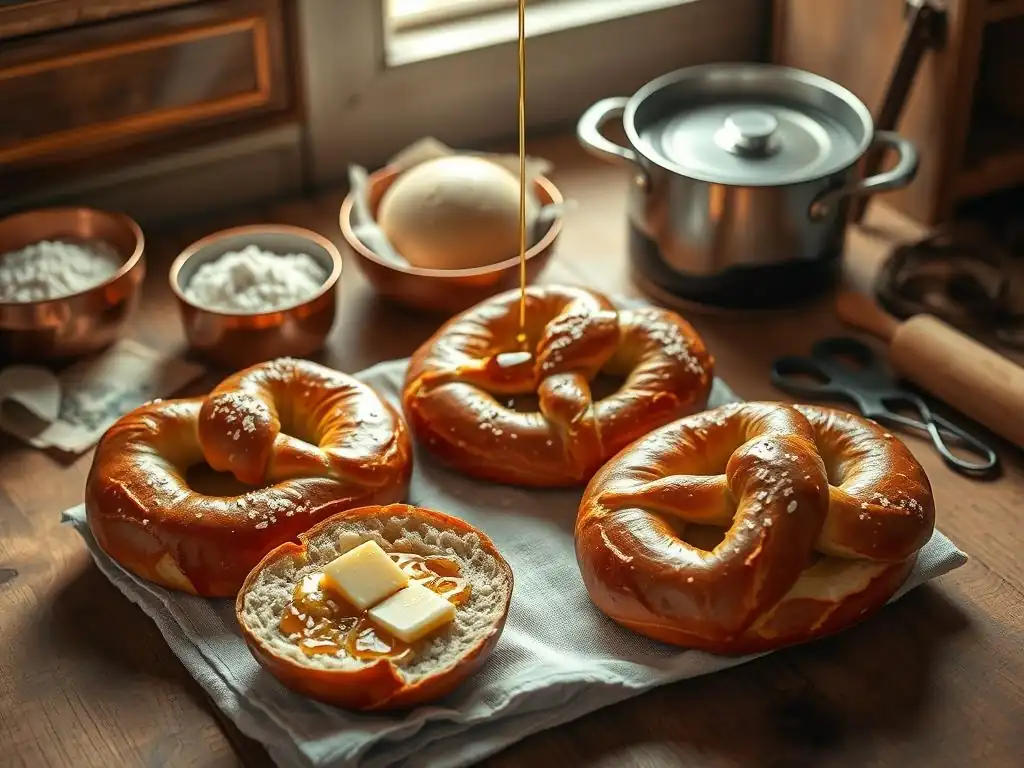
Welcome to BakeWithEase, your kitchen companion for baking adventures! Ever dreamt of crafting authentic, chewy-on-the-inside, crispy-on-the-outside German pretzels (Brezel) in your own home? You're in the right place! Our easy German pretzel recipe simplifies the process, breaking down traditional techniques into manageable steps. Curious to discover the secret to that perfect pretzel bite? Let's get baking!
- Mastering Bavarian Pretzels (Brezen) at Home: An Easy Recipe for Home Bakers
- Introduction to Bavarian Baking Delights: The Authentic Brezen
- The Secret to an Easy Bavarian Pretzel Recipe: Ingredients and Equipment
- Step-by-Step Guide: Baking Your Own Delicious Bavarian Pretzels
- Variations on the Classic Bavarian Pretzel Recipe
- Tips and Tricks for Baking Perfect Bavarian Pretzels Every Time
- Conclusion: Your Journey to Mastering the Easy Bavarian Pretzel Recipe
-
Frequently Asked Questions
- How difficult is it to make German pretzels (Brezel) from scratch using an easy recipe?
- What kind of flour is best for an easy German pretzel recipe?
- What gives German pretzels their distinct color and flavor?
- Can I freeze German pretzels, and if so, what's the best way?
- Where can I find the best easy German pretzel recipe, including tips for baking success?
- Final Reflection: The Enduring Allure of the Simple Brezel
- Unleash Your Inner Bäcker: Bake the Perfect Brezel!
Mastering Bavarian Pretzels (Brezen) at Home: An Easy Recipe for Home Bakers
Introduction to Bavarian Baking Delights: The Authentic Brezen
Welcome to Home Bakers' Guide to Homemade Pretzels
Hello, fellow baking enthusiasts! If you've ever dreamed of recreating that iconic taste and chewy texture of a genuine Bavarian pretzel, you're in the right place. Often called "Brezen" in their homeland, these aren't just snacks; they're a cultural cornerstone, especially in Bavaria. Many home bakers might find the idea of making pretzels daunting, but we're here to show you that mastering this classic is absolutely achievable with our easy German pretzel recipe. Forget complicated techniques; we break down every step to bring the authentic taste of Munich right into your kitchen.
This guide is designed with you, the home baker, in mind, whether you're just starting out or looking to perfect a beloved classic. We'll walk through the essential ingredients, demystify the shaping process, and explain the magic behind that signature dark crust. Our goal is to empower you to bake delicious, authentic pretzels that will impress everyone. Get ready to experience the joy of pulling a warm, perfectly baked Brezen straight from your own oven!
Why Bavarian Pretzels are a Baking Staple
Bavarian pretzels hold a special place in the world of baking due to their unique combination of a crisp, dark exterior and a soft, chewy interior. Unlike standard bread, the brief dip in a lye or baking soda solution before baking is what gives them their distinctive color, flavor, and texture – a process that sets them apart and makes them instantly recognizable. They are a staple at beer gardens, festivals, and bakeries throughout Southern Germany, often served simply with butter or enjoyed alongside traditional dishes.
Their popularity extends far beyond Bavaria, making them a beloved treat globally. Mastering an easy German pretzel recipe allows you to connect with this rich culinary heritage and bring a piece of German tradition into your home. The simple yet precise technique, once understood, reveals why these pretzels have remained a favorite for centuries, embodying a perfect balance of simplicity and unique character.
Bavarian Pretzels in Regional & Cultural Baking
Regional baking traditions tell stories about history, agriculture, and community, and Bavarian pretzels are a prime example. Originating likely in the monastic kitchens of Europe centuries ago, the pretzel shape is said to resemble arms crossed in prayer. In Bavaria, the Brezen evolved to its current form, becoming deeply intertwined with local culture, particularly during festivals like Oktoberfest, where millions are consumed.
Exploring regional baking delights like the Bavarian Brezen offers a fascinating look at how simple ingredients can be transformed through specific techniques to create something iconic. This easy German pretzel recipe not only teaches you a baking skill but also connects you to a vibrant cultural practice, offering a taste of Bavarian life and history right from your own oven. It's more than just baking; it's an edible journey into cultural heritage.
The Secret to an Easy Bavarian Pretzel Recipe: Ingredients and Equipment
Essential Ingredients for Authentic Brezen
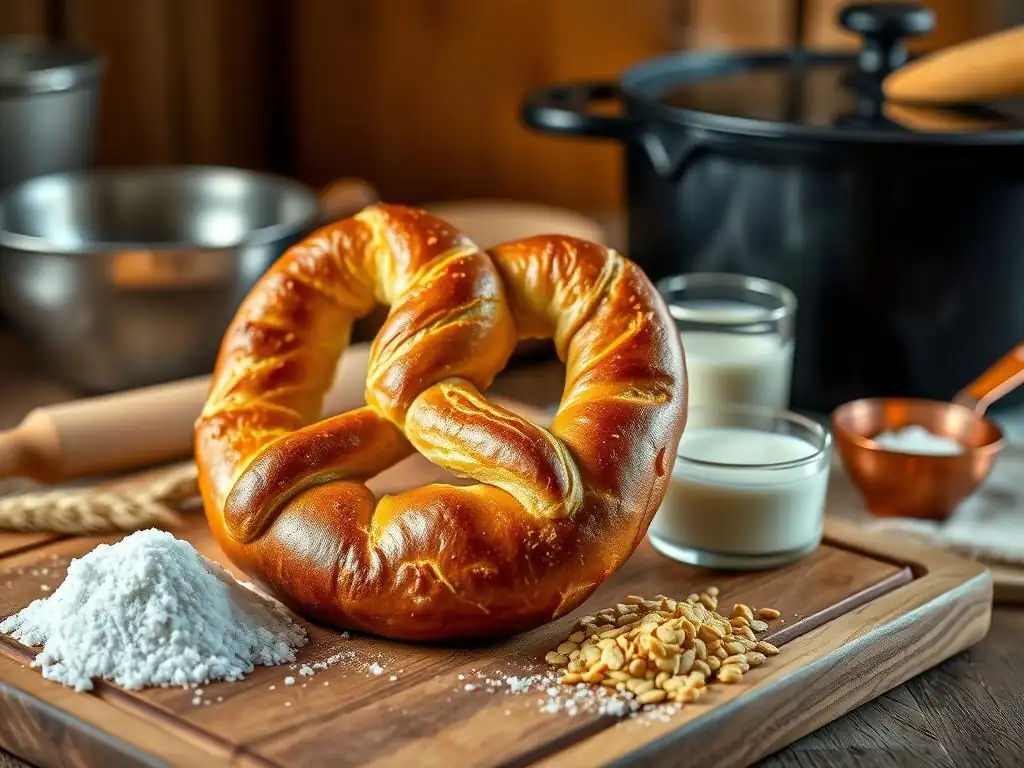
Creating authentic Bavarian pretzels requires a few key ingredients that contribute significantly to their unique flavor and texture. While the list is relatively short, the quality and type of each ingredient play a crucial role. Using bread flour, for instance, provides the necessary gluten development for that characteristic chewiness. The yeast ensures a proper rise, creating the airy pockets within the dough.
The most distinctive ingredient is the alkaline solution used for dipping, traditionally lye, but more commonly and safely, baking soda for the home baker. This solution is critical for developing the signature dark brown crust and slightly tangy flavor. Don't underestimate the role of salt, either – coarse pretzel salt sprinkled just before baking provides bursts of flavor and adds to the classic look.
Flour, Yeast, Malt Extract, Baking Soda, Salt, Water
Let's look closer at the core components of our easy German pretzel recipe.
- Flour: Bread flour is highly recommended for its higher protein content (typically 12-14%), which develops strong gluten networks essential for the pretzel's structure and chew. All-purpose flour (around 10-12% protein) can work but may result in a less chewy texture.
- Yeast: Active dry or instant yeast can be used. Instant yeast is often preferred for its convenience as it can be mixed directly with the dry ingredients, while active dry yeast usually requires proofing in warm water first. A standard recipe for 8-10 pretzels might use around 7-10 grams (about 2 teaspoons) of yeast.
- Malt Extract: Diastatic malt extract, often in powder form, is a secret weapon for achieving a better crust color and flavor. It contains enzymes that help break down starches into sugars, which caramelize during baking. A small amount, maybe 1-2 teaspoons, can make a noticeable difference in your easy pretzel recipe. If unavailable, a pinch of sugar can provide food for the yeast but won't replicate the malt flavor or enzymatic action.
- Baking Soda: This is the safe alternative to food-grade lye (sodium hydroxide) for the dipping bath. Heating the water with baking soda creates an alkaline solution. For a typical bath, you might use 1/2 cup (about 100-120 grams) of baking soda per 8-10 cups (2-2.5 liters) of water. This relatively high concentration is key to achieving a good crust.
- Salt: Fine salt (like table salt or fine sea salt) is used in the dough for flavor. Coarse pretzel salt (large, irregular crystals of rock salt) is sprinkled on top after the baking soda dip and before baking. These large crystals don't dissolve in the bath and provide that classic, salty crunch.
- Water: Lukewarm water (around 105-115°F or 40-46°C) is needed to activate the yeast. The amount will vary depending on the flour, but typically ranges from 1.25 to 1.5 cups (300-350 ml) for about 3-4 cups (400-500 grams) of flour.
Must-Have Equipment for Baking Bavarian Pretzels at Home
Having the right tools makes the process of baking an easy German pretzel recipe much smoother and more successful. You don't need a professional kitchen, but a few specific items are highly recommended. A sturdy stand mixer with a dough hook can significantly reduce the effort required for kneading, though manual kneading is certainly possible.
You'll also need large mixing bowls for rising the dough, a sharp knife or lame for scoring, and baking sheets lined with parchment paper or silicone mats. For the baking soda bath, a wide, shallow pot or pan is ideal for easy dipping, and a slotted spoon or spider is essential for safely transferring the wet pretzels to the baking sheet. Using these tools ensures each step of your homemade German pretzels turns out perfectly.
Step-by-Step Guide: Baking Your Own Delicious Bavarian Pretzels
Preparing the Dough: The Foundation of a Perfect Pretzel
The dough is the heart of any good pretzel. It needs to be smooth, elastic, and properly proofed to achieve the desired texture. Starting with accurate measurements is key – using a kitchen scale for ingredients like flour and water provides the most consistent results for your easy pretzel recipe.
Hydration levels are also important; a typical pretzel dough has a relatively low hydration, meaning less water compared to flour, which contributes to its firm structure needed for shaping. Kneading develops the gluten, turning a shaggy mix into a smooth, pliable dough ready for its first rise.
Activating the Yeast for a Light and Airy Texture
If using active dry yeast, you'll need to activate it first. Combine the yeast with the lukewarm water (between 105°F and 115°F / 40°C and 46°C) and a pinch of sugar or malt extract in a small bowl. Let it sit for about 5-10 minutes until it becomes frothy and bubbly. This confirms the yeast is alive and active. If it doesn't foam, your water might have been too hot or too cold, or the yeast may be expired, and you'll need to start with fresh yeast.
For instant yeast, this step is unnecessary as it can be mixed directly with the dry ingredients. However, ensuring your water is within the correct temperature range for the recipe is still vital, typically calling for warm water around 105-115°F (40-46°C) to encourage optimal yeast activity during mixing and rising. Proper yeast activation is fundamental to the success of your easy German pretzel recipe, ensuring a good rise and tender crumb.
Mixing and Kneading: Achieving Dough Elasticity
Combine the activated yeast mixture (or warm water and instant yeast) with the flour, salt, and malt extract (if using) in a large mixing bowl or the bowl of a stand mixer. Mix on low speed with a dough hook until the ingredients just come together.
Then, increase the speed to medium and knead for 8-10 minutes until the dough is smooth, elastic, and pulls away cleanly from the sides of the bowl. If kneading by hand, turn the dough out onto a lightly floured surface and knead vigorously for 10-15 minutes, folding and pushing the dough until it feels smooth and bounces back when gently poked.
Proper kneading is crucial for developing the gluten structure that gives Bavarian pretzels their characteristic chewiness. The dough should pass the "windowpane test" – if you stretch a small piece thin enough, you should be able to see light through it without it tearing. This elasticity is what allows the dough to hold its shape during the baking soda bath and baking, resulting in perfectly formed homemade German pretzels.
First Rise: Allowing the Dough to Develop Flavor
After kneading, lightly grease a clean bowl with a neutral oil (like vegetable or canola oil). Place the dough in the bowl, turning it to coat all sides. Cover the bowl tightly with plastic wrap or a clean damp towel to prevent the dough from drying out. Let the dough rise in a warm, draft-free place until it has doubled in size. This typically takes about 60-90 minutes at room temperature (around 70-75°F or 21-24°C).
This first rise, or bulk fermentation, allows the yeast to produce carbon dioxide gas, which leavens the dough, and also develops flavor through fermentation. While some recipes call for a cold proof after shaping, a sufficient initial rise at room temperature is essential for this easy German pretzel recipe to ensure good volume and texture before shaping and the alkaline bath.
Shaping the Perfect Pretzel: A Visual Guide
Shaping is perhaps the most visually distinctive step in making Bavarian pretzels. While it might seem tricky at first, with a little practice, you'll master the classic twist. The key is to work with the dough gently but confidently, maintaining the tension built during kneading and rising.
The traditional pretzel shape involves rolling the dough into long ropes and then creating the characteristic loop and twist. Don't worry if your first attempts aren't perfect; they'll still taste delicious! Consistency in thickness is important for even baking.
Dividing the Dough: Creating Even Portions
Once the dough has doubled in size, gently punch it down to release the air. Turn the dough out onto a lightly floured surface. Using a bench scraper or knife, divide the dough into equal portions. For medium-sized pretzels, aim for pieces weighing between 80-100 grams (about 2.8 to 3.5 ounces) each. This recipe should yield 8-10 pretzels of this size. Weighing the portions ensures that your pretzels are uniform in size, which helps them bake evenly.
Rounding each portion into a smooth ball before shaping can help create an even texture. This is done by pulling the edges of the dough underneath and pinching them together at the bottom. Let the dough balls rest for 5-10 minutes, covered, to relax the gluten, which makes rolling easier. This rest period is a small but important step in achieving perfectly shaped homemade German pretzels.
Rolling the Dough: Achieving the Ideal Pretzel Shape
Take one dough ball and, using the palms of your hands, begin rolling it back and forth on a lightly floured or unfloured surface (some find an unfloured surface provides better grip). Start rolling from the center and work your way outwards, applying even pressure to create a long, thin rope. The ends should be significantly thinner than the center – aim for a rope that is about 20-24 inches (50-60 cm) long, with the center being about 1 inch (2.5 cm) thick and the ends tapering down to about 1/2 inch (1 cm).
Maintaining even thickness along the rope is crucial, except for the tapered ends. If the dough resists rolling, let it rest for a few minutes before continuing. This process requires a bit of patience, but creating a smooth, evenly rolled rope is the foundation for a beautifully shaped pretzel in your easy pretzel recipe.
The Pretzel Twist: Mastering the Classic Form
To form the classic pretzel shape, hold the rope by the thin ends. Lift the ends and bring them up and over the center of the rope, forming a loop. Twist the ends around each other twice, then bring the twisted ends down and press them firmly onto the bottom curve of the pretzel loop. Ensure the ends are securely attached so they don't unravel during the bath or baking.
Place the shaped pretzels on a baking sheet lined with parchment paper. It's helpful to place the sheet in the freezer for 10-15 minutes at this stage. Freezing slightly firms up the dough, making it easier to handle during the baking soda bath and helping the pretzels maintain their shape. This simple trick is key to success with shaping your easy German pretzel recipe.
The Baking Soda Bath: Achieving the Authentic Pretzel Color and Flavor
The baking soda bath is the defining step for Bavarian pretzels. It's a quick dip in an alkaline solution that changes the dough's surface chemistry, allowing it to brown deeply and quickly in the oven and contribute to the unique flavor. While traditional recipes use lye, a much stronger alkali, a hot baking soda solution is a safe and effective alternative for home bakers wanting an easy German pretzel recipe.
The higher the concentration of baking soda and the hotter the water, the closer you get to the results of a lye bath. However, even a simple hot water and baking soda bath will give your homemade German pretzels that characteristic color and a hint of that classic "pretzel" taste.
Preparing the Baking Soda Solution: Simple and Safe!
To prepare the baking soda bath, fill a wide, shallow pot or pan with about 8-10 cups (2-2.5 liters) of water. Add 1/2 cup (about 100-120 grams) of baking soda to the water. Stir to dissolve most of the baking soda. Heat the solution on the stovetop until it is just simmering, but not vigorously boiling. Keep the heat low to maintain a gentle simmer throughout the dipping process. Using a wide pan makes it easier to fully submerge the pretzels without crowding.
Ensure you have your slotted spoon or spider ready next to the pot. Also, have your prepared baking sheets (lined with parchment and possibly lightly oiled or sprayed) ready near the bath, as the dipped pretzels need to be transferred immediately. This setup streamlines the process and ensures a smooth transition from bath to baking sheet for your easy pretzel recipe.
Dipping the Pretzels: Achieving the Perfect Soak
Carefully lift one frozen or chilled pretzel and gently lower it into the simmering baking soda solution using your slotted spoon or spider. Submerge the pretzel completely for about 20-30 seconds, gently nudging it to ensure all surfaces are exposed to the solution. Avoid leaving the pretzel in the bath for too long, as this can make the surface gummy or affect the dough's structure.
Using the slotted spoon, carefully lift the pretzel out of the bath, allowing excess liquid to drain back into the pot. Place the dipped pretzel onto the prepared baking sheet, leaving adequate space between pretzels (at least 1-2 inches or 2.5-5 cm) as they will expand slightly during baking. Repeat with the remaining pretzels. Handle the dipped pretzels gently as the surface is now delicate. This quick dip is fundamental to developing the signature color and flavor profile of your homemade German pretzels.
Baking Soda Solution Safety
While baking soda is much safer than lye, the hot solution still requires caution. Avoid splashing the hot liquid. It's advisable to wear gloves when handling the wet pretzels if you have sensitive skin, as the alkaline solution can be drying. Ensure good ventilation in your kitchen as the simmering solution can produce some steam.
Dispose of the cooled baking soda solution safely down the drain with running water. Keep children and pets away from the hot solution and dipped pretzels. Following these simple safety precautions ensures that making your easy German pretzel recipe is a pleasant and safe experience.
Baking Your Brezen: Achieving Golden Perfection
Baking is the final step where your shaped and dipped dough transforms into beautiful, golden-brown pretzels. The high initial heat of the oven helps the pretzels puff up quickly and sets the crust. Proper scoring allows for controlled expansion, preventing cracks and creating that classic split along the thickest part of the pretzel.
Monitoring the pretzels as they bake is important, as oven temperatures can vary. You're looking for a rich, dark brown color – a sign that the Maillard reaction and caramelization are doing their work on the surface treated by the baking soda bath.
Preheating the Oven: Ensuring Even Baking
Preheat your oven to a high temperature, typically around 400°F to 450°F (200°C to 230°C). A higher temperature helps the pretzel puff quickly and encourages good crust development. Ensure the oven is fully preheated before placing the pretzels inside. Using an oven thermometer can help confirm the actual temperature inside your oven, as built-in thermostats can sometimes be inaccurate by 20-30 degrees Fahrenheit (10-15 degrees Celsius).
Position an oven rack in the center of the oven for the best air circulation and even browning. Having the oven at the correct high temperature from the start is vital for achieving the desired texture and appearance of your easy pretzel recipe, ensuring a crisp exterior and a soft interior.
Scoring the Pretzels: Preventing Bursting and Enhancing Appearance
Just before placing the dipped pretzels in the preheated oven, score them. Using a very sharp knife, razor blade (lame), or even sharp scissors, make a shallow cut (about 1/4 inch or 0.5 cm deep) along the thickest part of the bottom curve of the pretzel. This score acts as a vent, allowing steam to escape during baking and directing the expansion of the dough. Without scoring, the pretzel might burst unpredictably elsewhere, ruining its shape.
Scoring also contributes to the classic look of a Bavarian pretzel, creating that characteristic split. Make a single, clean cut for the best results. This small step is essential for both the aesthetics and the structural integrity of your homemade German pretzels during baking.
Baking Time and Temperature: Achieving a Golden-Brown Crust
Bake the scored pretzels in the preheated oven at 400-450°F (200-230°C) for approximately 10-15 minutes. The exact baking time will depend on your oven and the size of your pretzels. They are ready when they have achieved a deep, glossy, golden-brown color. The high heat ensures the exterior sets quickly while the interior cooks through.
If you prefer a lighter crust, you can bake for a shorter time, but the characteristic color is part of the authentic experience. For a darker, more traditional crust, lean towards the longer end of the baking time. Rotate the baking sheet halfway through the baking time for more even browning.
Monitoring the Baking Process
Keep a close eye on your pretzels as they bake, especially towards the end of the suggested time range. They can go from perfectly browned to burnt quite quickly at high temperatures. Look for a rich mahogany color. If one part of the pretzel is browning faster than another, you can loosely tent that area with aluminum foil.
The pretzels should also sound hollow when tapped on the bottom, indicating they are cooked through. Remove them from the oven using oven mitts and transfer them to a wire rack immediately to cool slightly. Monitoring is key to ensuring your easy German pretzel recipe results in perfectly baked, not overdone, treats.
Variations on the Classic Bavarian Pretzel Recipe
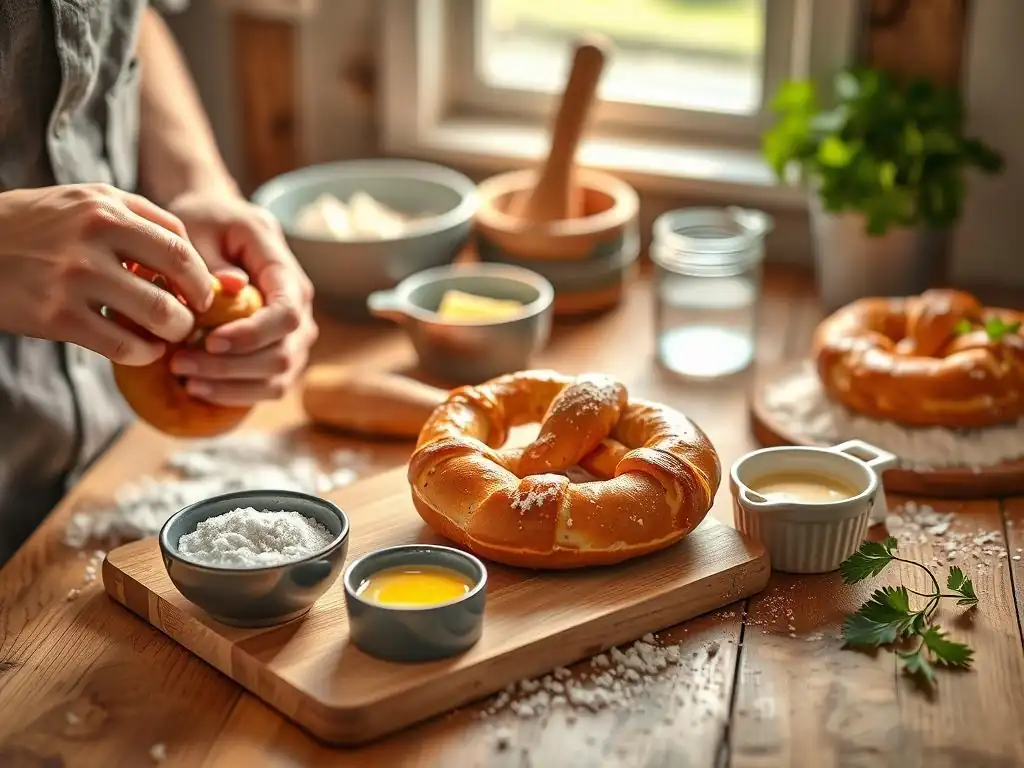
While the classic salted Bavarian pretzel is a masterpiece on its own, this easy German pretzel recipe serves as a fantastic base for delicious variations. Experimenting with toppings and additions can transform your homemade pretzels into new and exciting treats.
Sweet Pretzels: A Delicious Twist
Sweet pretzels might sound unconventional if you're only familiar with the savory version, but they are a delightful alternative. Instead of sprinkling with coarse salt after the baking soda bath, you can top the pretzels with coarse sugar, cinnamon sugar, or even a streusel topping before baking. Some recipes incorporate a small amount of sugar into the dough itself for a slightly sweeter base.
Another popular sweet variation is to bake the pretzels plain (without salt), and once cooled, dip them in a glaze made from powdered sugar and milk or lemon juice. These sweet versions, while not traditionally Bavarian Brezen, showcase the versatility of the pretzel dough and are a fun way to use your easy pretzel recipe.
Cheese Pretzels: Adding Savory Flavor
Adding cheese is a popular savory variation that pairs wonderfully with the pretzel's texture and flavor. Before baking, after the baking soda bath and scoring, you can sprinkle the pretzels generously with shredded cheese. Sharp cheddar, Gruyère, or a blend of your favorite melting cheeses works well.
For an extra cheesy kick, some bakers incorporate grated cheese directly into the dough during the kneading stage. The cheese melts as the pretzels bake, creating gooey pockets and a savory crust. This easy German pretzel recipe variation is perfect for cheese lovers and makes a fantastic snack or accompaniment.
Pretzel Bites: Perfect for Snacking
Transforming your pretzel dough into bite-sized pieces is an excellent way to create easy, shareable snacks. Instead of shaping the dough into full pretzels, roll the ropes and then cut them into 1-2 inch (2.5-5 cm) pieces. These bites still benefit from the baking soda bath to get that signature color and flavor.
Dip the bites in the simmering baking soda solution for about 15-20 seconds, then place them on a baking sheet, sprinkle with salt or other desired toppings, and bake at a slightly higher temperature (around 425-475°F or 220-245°C) for a shorter time, typically 8-12 minutes, until deeply browned. Pretzel bites from your easy pretzel recipe are perfect for dipping sauces and make great party snacks.
Tips and Tricks for Baking Perfect Bavarian Pretzels Every Time
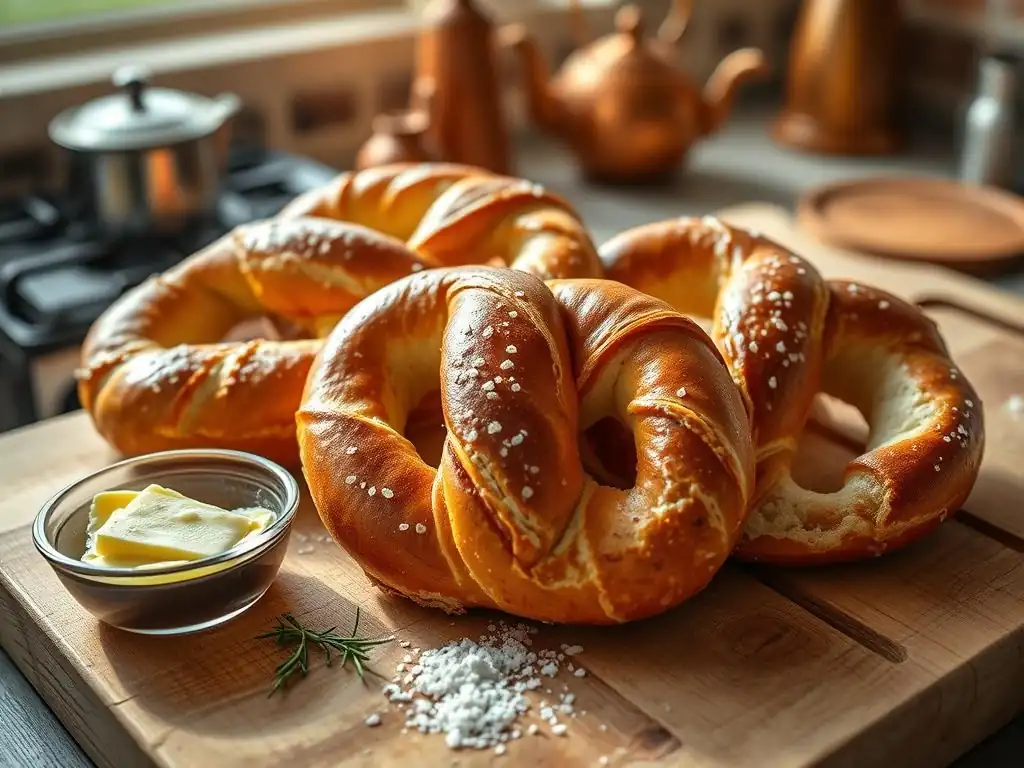
Even with an easy German pretzel recipe, a few common challenges can arise. Knowing how to troubleshoot and having some extra tips can elevate your baking from good to great.
Troubleshooting Common Pretzel Baking Problems
- Pretzels spreading too much: This could be due to insufficient kneading (gluten not developed enough), over-proofing, or the dough being too warm before shaping/dipping. Ensure you knead thoroughly, don't let the dough over-rise, and chill or slightly freeze the shaped pretzels before the bath.
- Pale crust: The baking soda solution might not be strong enough, or the dipping time was too short. Ensure you used the correct amount of baking soda (1/2 cup per 8-10 cups water) and dipped for the full 20-30 seconds. The oven temperature might also be too low; check with an oven thermometer.
- Tough pretzels: This is often caused by over-kneading or using too much flour during shaping. Stick to the recommended kneading time and use minimal flour on your work surface.
- Salt not sticking: Sprinkle the coarse salt immediately after the baking soda bath while the surface is still wet.
Storing Your Homemade Pretzels: Keeping Them Fresh
Homemade pretzels are best enjoyed fresh, ideally within a few hours of baking. However, you can store them to enjoy later. Once completely cooled, store pretzels in a paper bag at room temperature for up to 1-2 days. Avoid airtight containers, as they can make the crust soft and rubbery.
For longer storage, cooled pretzels can be frozen. Wrap them individually in plastic wrap, then place in a freezer-safe bag or container for up to 1-2 months. To reheat frozen pretzels, thaw at room temperature, then warm them in a preheated oven at 350°F (175°C) for 5-8 minutes until heated through and the crust crisp.
Serving Suggestions: Enjoying Your Delicious Brezen
The most traditional way to enjoy a Bavarian Brezen is simple: split it horizontally and spread it generously with butter (often called "Butterbrezen"). The salt and butter combination is classic for a reason! They are also excellent served with various dips, such as mustard (sweet Bavarian mustard is traditional), cheese sauce, or a simple beer cheese dip.
Homemade German pretzels are a perfect accompaniment to soups, stews, or salads. They are also a must-have alongside German sausages or cold cuts. Of course, they are the quintessential pairing for a cold German beer. However you choose to enjoy them, savor the taste of your accomplishment with this easy German pretzel recipe!
Conclusion: Your Journey to Mastering the Easy Bavarian Pretzel Recipe
Celebrate Your Baking Success with Home Bakers
Congratulations! You've taken the steps to master an easy German pretzel recipe and bring the taste of Bavaria into your home kitchen. From activating the yeast to shaping the iconic twist and achieving that perfect golden-brown crust, each step contributes to creating these beloved baked goods. Baking pretzels is a rewarding process that culminates in a truly delicious and satisfying result.
We hope this guide has demystified the process and empowered you to bake confidentially. Remember that like any baking skill, practice makes perfect. Don't be discouraged if your first batch isn't absolutely flawless; every attempt brings you closer to pretzel perfection. Celebrate your success and the joy of baking something truly special.
One of the greatest pleasures of baking is sharing the fruits of your labor. Your warm, fresh homemade German pretzels are sure to be a hit with friends and family. Serve them warm from the oven, perhaps with some butter and mustard, and watch them disappear! Sharing your easy pretzel recipe creations adds an extra layer of joy to the baking experience.
These pretzels are perfect for gatherings, parties, or simply as a special treat for your loved ones. Their unique appearance and delicious flavor make them a memorable addition to any table. Enjoy the smiles and compliments as you share these delightful Bavarian baking delights.
Further Exploration of Bavarian Baking Delights
Mastering this easy German pretzel recipe is just the beginning! Bavarian baking offers a wealth of other delicious treats to explore. From sweet pastries like Bienenstich (bee sting cake) and Prinzregententorte (Prince Regent Cake) to hearty breads and other regional specialties, there's a whole world of flavor waiting in German baking.
Continue your baking journey by trying out other recipes from the Regional & Cultural Baking category on BakeWithEase.com. Expanding your repertoire allows you to discover new techniques and flavors, deepening your appreciation for the diverse world of baking. Keep practicing your easy German pretzel recipe, and happy baking!
Frequently Asked Questions
How difficult is it to make German pretzels (Brezel) from scratch using an easy recipe?
With an easy German pretzel recipe from BakeWithEase, even beginners can successfully bake Brezel at home. The recipes are designed with step-by-step instructions and readily available ingredients.
What kind of flour is best for an easy German pretzel recipe?
Traditionally, German pretzels are made with bread flour which has a higher protein content. This results in a chewy texture that is characteristic of a good pretzel.
What gives German pretzels their distinct color and flavor?
The characteristic color and flavor come from dipping the pretzels in a lye solution (food-grade). BakeWithEase.com provides guidance on safe alternatives if you're uncomfortable using lye, like a baking soda bath.
Can I freeze German pretzels, and if so, what's the best way?
Yes, pretzels freeze well! It's best to freeze them after baking but before adding salt. Simply wrap them tightly in plastic wrap and then aluminum foil, or place them in a freezer bag.
Where can I find the best easy German pretzel recipe, including tips for baking success?
BakeWithEase.com offers a mastered recipe for easy German pretzels (Brezel) with simplified steps and baking tips. You'll find everything you need, from ingredient lists to baking time recommendations.
Final Reflection: The Enduring Allure of the Simple Brezel
Mastering the art of the German pretzel at home isn't just about baking; it's about connecting with a rich culinary tradition and experiencing the joy of simple perfection. The seemingly straightforward process, detailed in this guide, unlocks a world of flavor and satisfaction that transcends the mere act of eating. This easy German pretzel recipe, once mastered, becomes a source of pride and a delicious way to share a piece of German culture with friends and family.
The influence of simple, yet deeply satisfying recipes like this one extends far beyond the kitchen. It's a reminder that sometimes, the most rewarding experiences come from focusing on the fundamentals, from appreciating the nuances of a perfectly formed crust and the subtle tang of the dough. As the renowned chef Julia Child once said, Find something you're passionate about and keep tremendously interested in it.
For me, that passion lies in the alchemy of baking, and the German pretzel, in its simplicity and elegance, perfectly embodies this sentiment.
Now, it's your turn. Don't just read this recipe; live it. Gather your ingredients, embrace the process, and experience the satisfaction of creating something beautiful and delicious with your own hands. The warmth of a freshly baked pretzel, the aroma filling your kitchen – these are the rewards that await you. So, roll up your sleeves, and embark on your own pretzel-making journey. The taste of success, and a perfectly golden-brown brezel, is waiting for you.
Unleash Your Inner Bäcker: Bake the Perfect Brezel!
Thanks for taking the time to explore the world of German pretzels with us! We hope you now feel confident in tackling this delicious treat. Ready to get baking?
- Dive into your first Brezel bake: Use our guide to create your own masterpiece. Remember, practice makes perfect, and even small imperfections add character!
- Share your Brezel journey: Snap a picture of your creation and share it on social media using #BakeWithEaseBrezel – we'd love to see your results!
- Explore other BakeWithEase recipes: From sourdough to croissants, we have a whole world of baking adventures waiting for you.
So, what unique twist will you add to your next Brezel? Let's hear your baking ideas in the comments below!