
Simple Steps to Baking French Pistachio Macarons

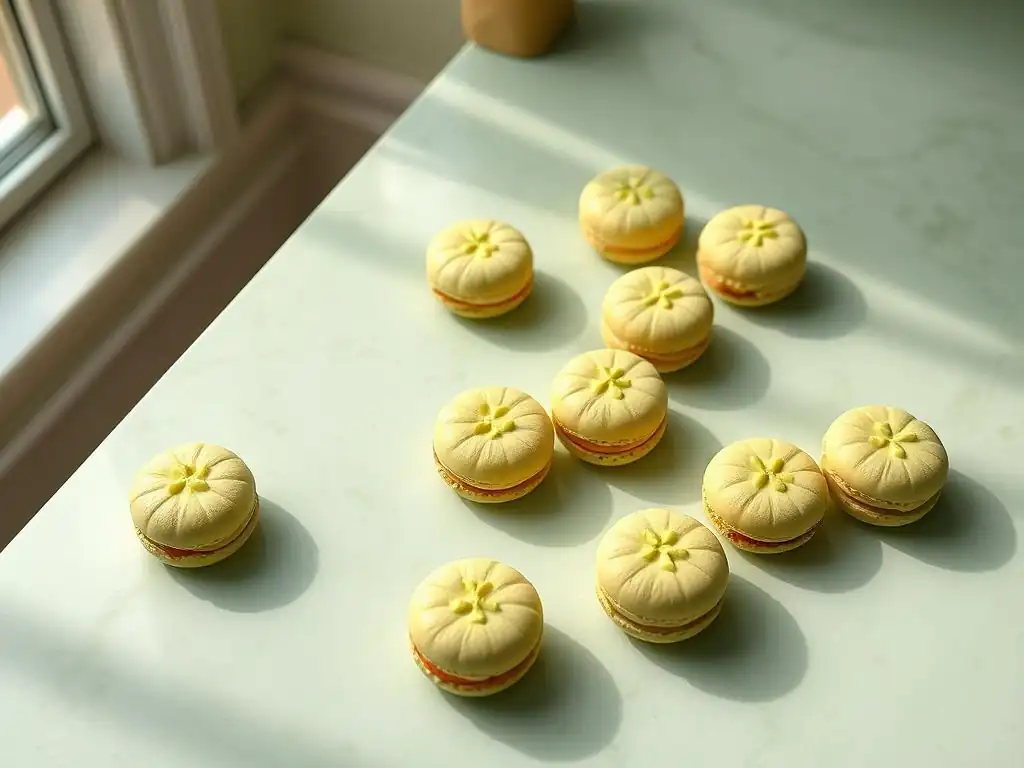
Welcome to BakeWithEase!
Ever dreamt of perfectly piped, pastel-green delights? Get ready to unlock the secrets of a classic French indulgence. In this article, we're demystifying the art of crafting French pistachio macarons, offering a beginner-friendly recipe that will have you creating these delicate treats with confidence. Curious about the key to that signature "foot" and smooth shell? Let's dive in and discover the simple steps that make all the difference!
- Simple Steps to Baking French Pistachio Macarons: A Beginner's Guide
- Introduction to French Macarons: A BakeWithEase Classic
- Gathering Your Ingredients for Pistachio Macarons
- Equipment Needed for Perfect Pistachio Macarons
- Step-by-Step: Baking French Pistachio Macarons - The Recipe
- Tips and Tricks for French Macaron Success
- Storing Your Homemade Pistachio Macarons
- Enjoying Your Delicious French Pistachio Macarons
- Conclusion: Mastering the Art of French Macarons
-
Frequently Asked Questions
- What makes French macarons so notoriously difficult to bake, and how does this recipe simplify the process?
- What are the key ingredients needed for a successful French Pistachio Macaron, and are there any substitutions possible?
- What is the importance of the "macaronage" step in this recipe, and how do I know when it's done correctly?
- How do I prevent my macaron shells from cracking during baking?
- What are some troubleshooting tips if my French Pistachio Macarons don't turn out perfectly on my first attempt?
- Final Reflection: The Enduring Allure of the Perfect Macaron
- Unleash Your Inner Pâtissier: Master the Macaron!
Simple Steps to Baking French Pistachio Macarons: A Beginner's Guide
Introduction to French Macarons: A BakeWithEase Classic
Why Pistachio Macarons are Perfect for Beginner Bakers
Pistachio macarons offer a fantastic starting point for those new to the world of French patisserie. Unlike some flavors that require complex infusions or temperamental chocolate, the pistachio flavor is often introduced via finely ground pistachio flour or a high-quality pistachio paste added to the filling. This simplifies the flavor integration process significantly.
Furthermore, the natural greenish hue of pistachios can help mask slight imperfections in coloring, a common challenge for beginners aiming for vibrant, consistent shell colors. Focusing on a single, robust flavor like pistachio allows new bakers to concentrate on mastering the core techniques of macaron making – the meringue, the macaronage, and the piping – without being overwhelmed by intricate flavor preparations.
Choosing pistachio also provides a wonderful sensory experience, from the subtle aroma during baking to the delightful crunch and creamy filling upon tasting. It's a classic flavor that feels both sophisticated and approachable. A successful batch of French pistachio macarons provides immense satisfaction and builds confidence, encouraging beginner bakers to explore more complex flavors later. The specific challenge of working with pistachio flour, which can vary in texture, also introduces early lessons in ingredient consistency and its impact on the final product, valuable knowledge for any aspiring macaron expert.
Understanding the Basics of French Macaron Baking
French macaron baking fundamentally relies on a few key elements: a meringue base, a finely ground nut flour, and powdered sugar. The most common method is the French meringue method, where granulated sugar is gradually whipped into egg whites until stiff, glossy peaks form. This creates the stable base for the shell.
The dry ingredients – typically almond flour and powdered sugar – are then carefully folded into the meringue using a technique called macaronage. This step is crucial; it requires deflating the meringue just enough to create a lava-like consistency that can be piped smoothly but retains enough air to rise and form the characteristic "feet" during baking.
Achieving the perfect macaron involves precision at every stage. Measuring ingredients accurately, whipping the meringue to the correct stiffness, mastering the macaronage technique, and controlling oven temperature are all critical. Even environmental factors like humidity can play a role.
While this might sound daunting, breaking down the process into simple, manageable steps, as we will do here, makes it entirely achievable for a beginner baker tackling a French pistachio macarons recipe. Understanding the why behind each step – why you sift dry ingredients, why you rest the shells, why oven temperature is key – demystifies the process and sets you up for success.
Gathering Your Ingredients for Pistachio Macarons
Essential Ingredients for French Macarons
The foundation of any French macaron recipe rests on four core ingredients: egg whites, granulated sugar, powdered sugar, and finely ground nut flour. Egg whites provide the structure through the meringue. Granulated sugar stabilizes the meringue and contributes to the shell's crisp exterior. Powdered sugar, also known as confectioners' sugar, adds sweetness and fineness to the shell texture. The nut flour, traditionally almond flour, provides body and chewiness. For French pistachio macarons, this nut flour component will include or be supplemented by pistachio flour.
The quality and preparation of these ingredients are paramount. Egg whites should ideally be aged for a day or two at room temperature, though fresh, room-temperature egg whites can also work. Sugar should be measured precisely. Powdered sugar must be free of lumps, often requiring sifting, especially if it contains cornstarch (anti-caking agent), which can affect the texture. Using ingredients at the correct temperature, particularly room temperature egg whites, is vital for achieving a stable meringue that is essential for successful French pistachio macarons.
High-Quality Pistachio Flour: The Key to Flavor
For authentic French pistachio macarons, using high-quality pistachio flour or finely ground pistachios is crucial for both flavor and texture. While some recipes might use almond flour with added pistachio extract or paste, incorporating actual ground pistachios enhances the nutty depth. Pistachio flour should be very fine, similar in consistency to almond flour.
If you are grinding your own pistachios, blanching them first to remove the skins can help achieve a brighter green color and finer grind. Use unsalted, shelled pistachios. Pulse them in a food processor with a small amount of powdered sugar from your recipe's total amount to prevent them from turning into a paste due to their oil content.
The ratio of pistachio flour to almond flour can vary. Some recipes use 100% pistachio flour, while others use a blend, perhaps 50/50 almond and pistachio. Using 100% pistachio flour can sometimes result in a slightly oilier batter or a less smooth shell if the grind isn't fine enough.
For a beginner's French pistachio macarons recipe, starting with a blend (e.g., 75% almond, 25% pistachio by weight) or ensuring your pistachio flour is exceedingly fine is a good strategy. Always sift the pistachio flour along with the almond flour and powdered sugar to remove any larger pieces that could disrupt the smooth shell surface.
Other Necessary Ingredients and Their Roles
Beyond the core four, other ingredients are needed, particularly for coloring and the filling. For the shells, a small amount of gel or powder food coloring is typically used to enhance the natural pistachio green. Liquid food coloring should be avoided as it adds too much moisture. A tiny pinch of cream of tartar or a few drops of lemon juice can be added to the egg whites before whipping; this acid helps stabilize the meringue, making it more forgiving for beginner bakers attempting French pistachio macarons.
The filling is where the rich pistachio flavor often truly shines. A classic choice for French pistachio macarons is a pistachio buttercream. This requires unsalted butter, more powdered sugar, a liquid (like milk or cream), vanilla extract, and crucially, high-quality pistachio paste. The paste provides intense flavor and color. Ensure the butter is softened to room temperature for a smooth buttercream. Some recipes might opt for a ganache or a specific pistachio cream filling, but a simple buttercream is straightforward for beginners and pairs beautifully with the delicate shells.
Equipment Needed for Perfect Pistachio Macarons
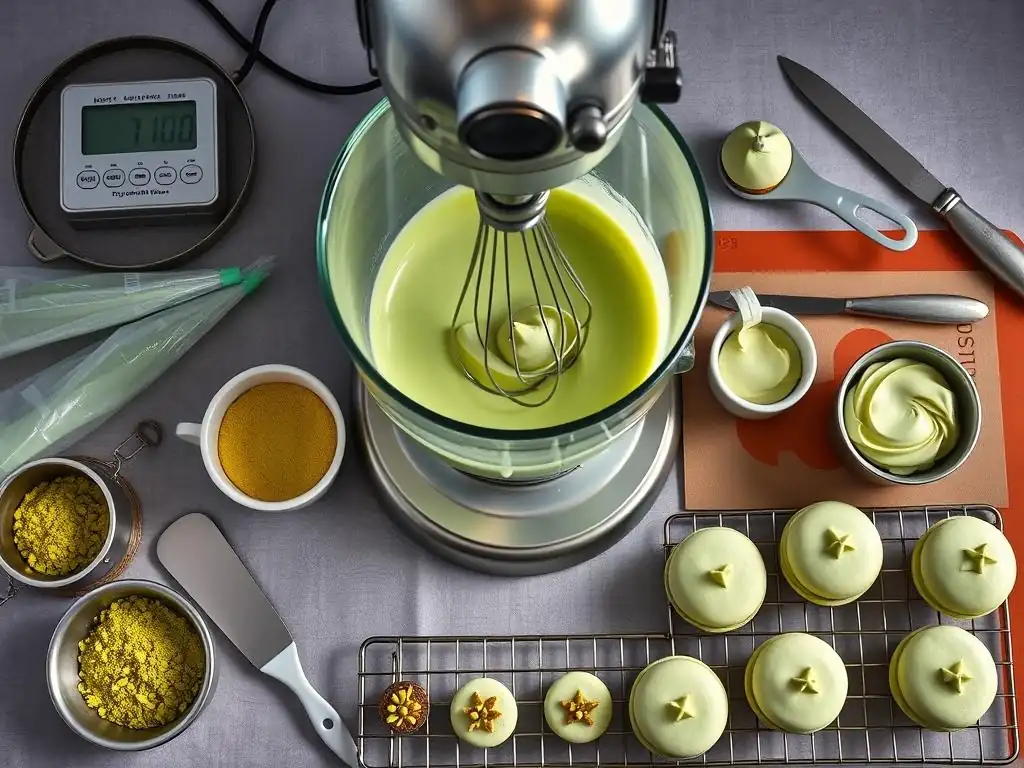
Must-Have Baking Tools for Macarons
Having the right tools is as important as having the right ingredients when tackling a French pistachio macarons beginner recipe. You'll need accurate measuring tools, preferably a digital kitchen scale for weighing ingredients in grams, as this provides the most consistent results. A fine-mesh sieve is essential for sifting the powdered sugar and nut flours, removing lumps and ensuring a smooth batter. A stand mixer with a whisk attachment is highly recommended for whipping the meringue to the necessary stiff peaks; while a hand mixer can work, it requires more effort and time to achieve the same stability.
Other key tools include a large mixing bowl (preferably glass or metal, as plastic can retain grease), a rubber spatula for the delicate macaronage folding process, and baking sheets. Silicone baking mats (like Silpats) or parchment paper are necessary liners for the baking sheets; silicone mats often provide more even heat distribution and easier release, which is beneficial for achieving those perfect macaron feet. A template drawn on parchment paper (or pre-printed silicone mats) helps pipe consistently sized shells.
Choosing the Right Piping Bag and Tip
For piping uniform French pistachio macarons, a good quality piping bag and tip are indispensable. Disposable piping bags are convenient, but reusable silicone or nylon bags also work well. The size of the bag should be large enough to hold a decent amount of batter without being overfilled, typically a 12-inch or 14-inch bag is suitable.
The piping tip is crucial for shaping the shells. A plain round tip is standard for macarons. A tip with an opening between 0.8 cm and 1.2 cm (approximately 0.3 to 0.5 inches) is commonly used, depending on the desired macaron size. A Wilton 1A or Ateco 807 tip are popular choices. Using the correct tip size helps ensure the macarons are uniform and have the classic smooth, round shape after piping. Ensure the tip is securely fitted in the bag before filling it with the delicate macaron batter.
Oven Considerations for Macaron Success
The oven is perhaps the most temperamental piece of equipment in macaron making. Achieving the correct temperature and even heat distribution is vital for developing the signature "feet" and preventing cracked shells or hollow centers. Macarons are typically baked at a relatively low temperature, often between 300°F and 325°F (150°C and 160°C). It is highly recommended to use an oven thermometer to verify your oven's actual temperature, as oven thermostats can be inaccurate by as much as 25-50°F.
Uneven heating can cause macarons on one side of the tray to bake faster than the other. If your oven has hot spots, you might need to rotate the baking sheet halfway through the baking time. Some bakers also find success by placing an empty baking sheet on the rack above the macarons to shield them from direct top heat, helping to prevent browning and cracking. Knowing your oven's quirks through testing is key to consistent results when baking French pistachio macarons or any macaron variety.
Step-by-Step: Baking French Pistachio Macarons - The Recipe
Step 1: Preparing the Macaronage Batter
Sifting the Almond and Pistachio Flour
The first crucial step in making the macaron shells is preparing the dry ingredients. In a medium bowl, combine the finely ground almond flour, pistachio flour, and powdered sugar. It is absolutely essential to sift these ingredients together through a fine-mesh sieve. This removes any larger particles of nuts or clumps of powdered sugar, which could result in bumpy or uneven macaron shells. Sifting also helps to aerate the dry mixture slightly.
After sifting, discard any larger bits that remain in the sieve. Weighing your ingredients before sifting ensures you have the correct proportions. Typically, the weight of almond flour and powdered sugar are roughly equal, with pistachio flour substituting a portion of the almond flour. For instance, a common ratio might use around 100-110 grams each of almond flour and powdered sugar, with 25-30 grams of fine pistachio flour added to the mix.
Whipping the Meringue to Stiff Peaks
In a clean, grease-free bowl (metal or glass is best), add the room temperature egg whites. Begin whipping the egg whites on medium speed using a stand mixer with a whisk attachment. Once the egg whites become frothy and opaque, gradually start adding the granulated sugar, a tablespoon at a time, while the mixer is running. Allow about 30-60 seconds between additions for the sugar to dissolve.
Increase the mixer speed to medium-high or high. Continue whipping until the meringue is thick, glossy, and forms stiff peaks. Stiff peaks mean that when you lift the whisk, the meringue stands straight up without curling over. This stage can take anywhere from 5 to 10 minutes depending on your mixer and egg whites. If using food coloring, add gel or powder color during the last minute of whipping to ensure it's evenly distributed. A stable, well-whipped meringue is the backbone of successful French pistachio macarons.
Combining the Dry and Wet Ingredients: The Macaronage Technique
This step, known as macaronage, is perhaps the most critical and requires practice to master. Add the sifted dry ingredients (almond flour, pistachio flour, powdered sugar) to the prepared meringue. Using a rubber spatula, begin folding the dry ingredients into the meringue. The goal is to deflate the meringue just enough to achieve a smooth, flowing batter consistency, often described as "lava-like" or like "slow-moving ribbon."
Start by cutting through the middle of the bowl and scraping the spatula around the edge, lifting and folding the mixture. Continue folding and gently pressing the batter against the side of the bowl to eliminate air bubbles. Periodically test the consistency by letting the batter drip from the spatula; it should flow slowly and continuously like a thick ribbon, and you should be able to draw a figure eight with the dripping batter without it breaking immediately.
Over-mixing will result in a batter that is too thin, leading to flat macarons without feet. Under-mixing will leave the batter too stiff, resulting in peaked or cracked shells.
Step 2: Piping the Macaron Shells
Preparing the Piping Bag
Once the macaronage batter has reached the correct consistency, it's time to transfer it to a piping bag. Fit your piping bag with the chosen round tip (e.g., 1A or 807). To make filling easier, place the piping bag tip-down in a tall glass or jar and fold the top edges of the bag over the rim.
Carefully spoon the macaron batter into the prepared piping bag. Avoid filling the bag too full, which can make it difficult to handle and pipe evenly. Fill it about two-thirds full. Twist the top of the bag to seal the batter and push it down towards the tip, removing any large air bubbles trapped inside.
Piping Uniform Macaron Shells on Baking Sheets
Place a silicone baking mat or parchment paper (with a template underneath if using) on your baking sheet. Hold the piping bag vertically, with the tip close to the surface of the mat/paper. Apply even pressure to the bag to pipe rounds of batter. Stop squeezing when the shell reaches the desired size, then quickly flick the bag upwards to break the flow of batter.
Pipe shells of consistent size, leaving enough space between them (about 1-2 inches) as they will spread slightly. Using a template helps ensure uniformity, which is important for pairing shells later. Once piped, gently tap the baking sheet firmly on the counter 2-3 times. This helps to release any remaining air bubbles trapped in the batter and allows the shells to settle and flatten slightly, resulting in a smooth surface for your French pistachio macarons.
Resting the Macaron Shells: Forming the Skin
After piping and tapping the shells, they must rest at room temperature. This resting period, often called drying or skinning, is crucial for successful macaron feet. As the shells rest, the surface dries out and forms a delicate skin. This skin prevents the tops from cracking in the oven and forces the air to push the batter outwards and upwards, creating the characteristic "feet."
The resting time varies depending on humidity levels. In a dry environment, it might take 30-60 minutes. In humid conditions, it could take 1-2 hours or even longer. The shells are ready to bake when you can gently touch the surface without it sticking to your finger. The surface should feel dry and smooth. Do not skip this step when making your French pistachio macarons!
Step 3: Baking the Pistachio Macarons to Perfection
Oven Temperature and Baking Time
Preheat your oven to the correct temperature, typically between 300°F and 325°F (150°C and 160°C). As mentioned earlier, verifying the temperature with an oven thermometer is highly recommended. Place the baking sheet with the rested macaron shells on the middle rack of your preheated oven.
Baking time usually ranges from 12 to 15 minutes, depending on the size of your macarons and your oven. The key is to bake them just until they are set. They should lift easily from the baking mat without sticking. The feet should be well-developed and appear slightly puffed. Over-baking can lead to dry, brittle shells, while under-baking will result in sticky bottoms and potentially hollow interiors.
Identifying the "Feet" of a Perfect Macaron
The "feet" (or pieds in French) are the ruffled base of the macaron shell, slightly wider than the top. They are a hallmark of a properly baked macaron and indicate that the resting and baking processes were successful. The feet form as the air trapped in the meringue expands during baking. Because the dried skin on top prevents the air from escaping upwards, it forces the batter to rise outwards at the base, creating the distinctive ruffled ring.
Well-formed feet are relatively even in height around the circumference of the shell. They should not be excessively large or completely absent. Seeing the feet appear within the first 5-8 minutes of baking is usually a good sign that you are on the right track with your French pistachio macarons. If the feet are uneven, it might indicate uneven heat in your oven or inconsistent macaronage.
Cooling the Macaron Shells
Once baked, remove the baking sheet from the oven. Do not attempt to remove the macaron shells from the mat immediately. Let them cool completely on the baking sheet, undisturbed. This allows the shells to firm up and detach easily from the silicone mat or parchment paper.
Attempting to peel them off too soon will likely result in broken shells or sticky bottoms. Cooling can take 15-30 minutes. Once fully cooled, the shells should peel off cleanly with minimal effort. If they are still sticking significantly, they might need another minute or two in the oven, or perhaps they weren't fully cooled. Handle the delicate shells with care as you peel them off the mat.
Step 4: Making the Pistachio Buttercream Filling
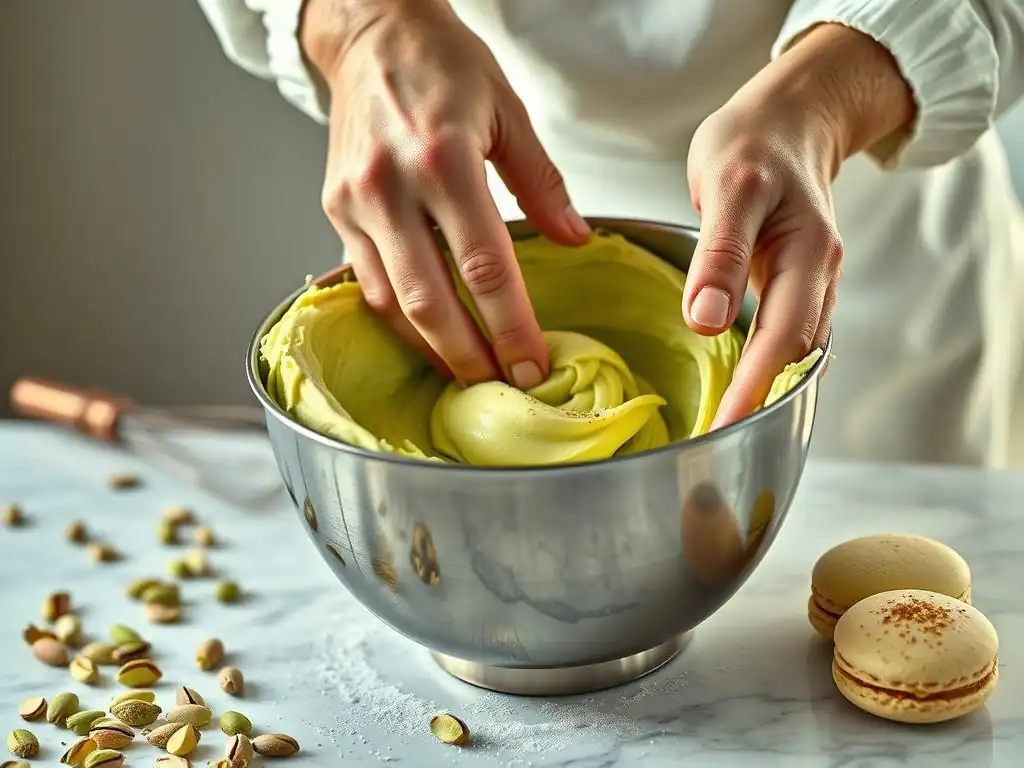
Ingredients for the Pistachio Buttercream
A rich and flavorful filling is essential to complement the delicate shells of your French pistachio macarons. For a classic pistachio buttercream, you will need softened unsalted butter, powdered sugar, milk or cream, vanilla extract, and high-quality pistachio paste. Ensure your butter is genuinely at room temperature – soft enough to easily indent with your finger, but not melted or greasy.
The quantity of ingredients will depend on how much filling you want for your macarons. A typical batch might use 1/2 cup (1 stick or about 113 grams) of butter, 2-3 cups (240-360 grams) of powdered sugar, 1-2 tablespoons of milk or cream, 1/2 teaspoon of vanilla extract, and 2-4 tablespoons of pistachio paste. Using good quality pistachio paste is crucial for intense, authentic flavor.
Achieving a Smooth and Creamy Buttercream
In a medium bowl, beat the softened butter using an electric mixer (handheld or stand mixer with paddle attachment) until it is light and fluffy, about 2-3 minutes. Gradually add the sifted powdered sugar, a cup at a time, mixing on low speed until incorporated. Once all the sugar is added, the mixture will be quite thick and crumbly.
Add the milk or cream, vanilla extract, and pistachio paste. Beat on medium speed until the buttercream is smooth, creamy, and well combined. You might need to scrape down the sides of the bowl occasionally. If the buttercream is too thick, add a little more milk or cream, a teaspoon at a time, until the desired consistency is reached. If it's too thin, add a little more powdered sugar. The goal is a spreadable or pipeable consistency that holds its shape.
Step 5: Assembling the Pistachio Macarons
Pairing the Macaron Shells
Once the macaron shells are completely cooled, carefully peel them off the baking mat. Arrange them in pairs of similar size and shape. Since piping by hand can result in slight variations, taking a moment to match up shells ensures that each finished macaron looks uniform and has a stable base and top.
Lay out all your shells flat side up. Go through and find the closest matches in terms of diameter and height. Place the paired shells side-by-side on a tray or clean surface, ready for filling. This step makes the assembly process much faster and more efficient.
Filling the Macarons with Buttercream
Transfer the prepared pistachio buttercream filling into a piping bag fitted with a round or star tip (a star tip can give a nice visual flourish to the filling). Take one matched macaron shell and pipe a generous dollop of buttercream onto the flat side of one shell. Aim for a mound of filling in the center, leaving a small border around the edge.
Place the matching shell on top of the filling, gently pressing down and twisting slightly until the filling spreads evenly to the edges. Be careful not to press too hard, which could crack the delicate shells. Repeat this process with all the paired shells until all your French pistachio macarons are assembled.
Maturing the Macarons: The Importance of Resting
After assembly, the French pistachio macarons are technically ready to eat, but they are significantly better after a period of "maturing" or resting. Place the assembled macarons in an airtight container and refrigerate them. During this resting period, which ideally lasts 12 to 24 hours, the moisture from the filling is absorbed by the shells.
This absorption softens the shells slightly and marries the flavors of the shell and the filling, resulting in the characteristic chewy texture and harmonious taste of a perfect macaron. While you can certainly try one right away, allowing them to mature transforms them from crisp shells with filling into cohesive, delightful treats. This resting step is non-negotiable for the best French pistachio macarons experience.
Tips and Tricks for French Macaron Success
Troubleshooting Common Macaron Problems
Baking macarons can be challenging, and beginners often encounter issues. One common problem is cracked shells; this is usually caused by insufficient resting time (no skin formed) or oven temperature being too high. If your shells have no feet, it's likely due to under-whipped meringue, over-mixed batter (macaronage too thin), or insufficient resting time. Hollow shells can result from over-whipped meringue, under-mixing, or baking at too high a temperature.
Sticky bottoms usually indicate under-baking or trying to remove them from the mat before they are fully cooled. Uneven feet or leaning shells might point to uneven heat in the oven or inconsistent piping/tapping. Don't be discouraged by imperfect batches! Each attempt is a learning opportunity. Pay close attention to the texture of your meringue and batter, ensure accurate measurements, and verify your oven temperature. Taking notes on what you did during each batch can help identify variables.
Achieving Perfect Macaron "Feet" Every Time
Consistently achieving those beautiful macaron feet is a hallmark of mastering the French pistachio macarons beginner recipe. The most critical factors are the meringue stability, the macaronage technique, and the resting period. Ensure your meringue is whipped to stiff, glossy peaks – it should stand straight up when the whisk is lifted. Undermixed meringue won't provide enough structure for the feet to rise.
Perfecting the macaronage is key; the batter must be deflated just enough to flow like lava, but not so much that it's runny. Practice folding gently but effectively. Finally, the resting period is non-negotiable. The shells must form a dry, touchable skin. Test this by gently touching a shell; if it's sticky, it needs more time. Baking at the correct, consistent temperature also ensures the feet develop properly. If your oven is inconsistent, try rotating the tray or using an upper shield tray.
Flavor Variations: Beyond Pistachio
Once you've mastered the French pistachio macarons beginner recipe, the world of macaron flavors opens up! The basic shell recipe remains largely the same, with variations primarily introduced through coloring and the filling. For example, you could make classic vanilla macarons with a vanilla bean buttercream or chocolate macarons by adding a small amount of cocoa powder to the dry ingredients and filling them with chocolate ganache.
Fruit flavors are popular, often achieved through fruit purée in buttercreams or ganaches (like raspberry or passion fruit). Coffee macarons use espresso powder in the shells and coffee-flavored filling. Get creative with extracts, zests, and different types of chocolate or fruit purées in your fillings. Just remember to maintain the correct consistency of both the shell batter and the filling for successful assembly and maturation.
Storing Your Homemade Pistachio Macarons
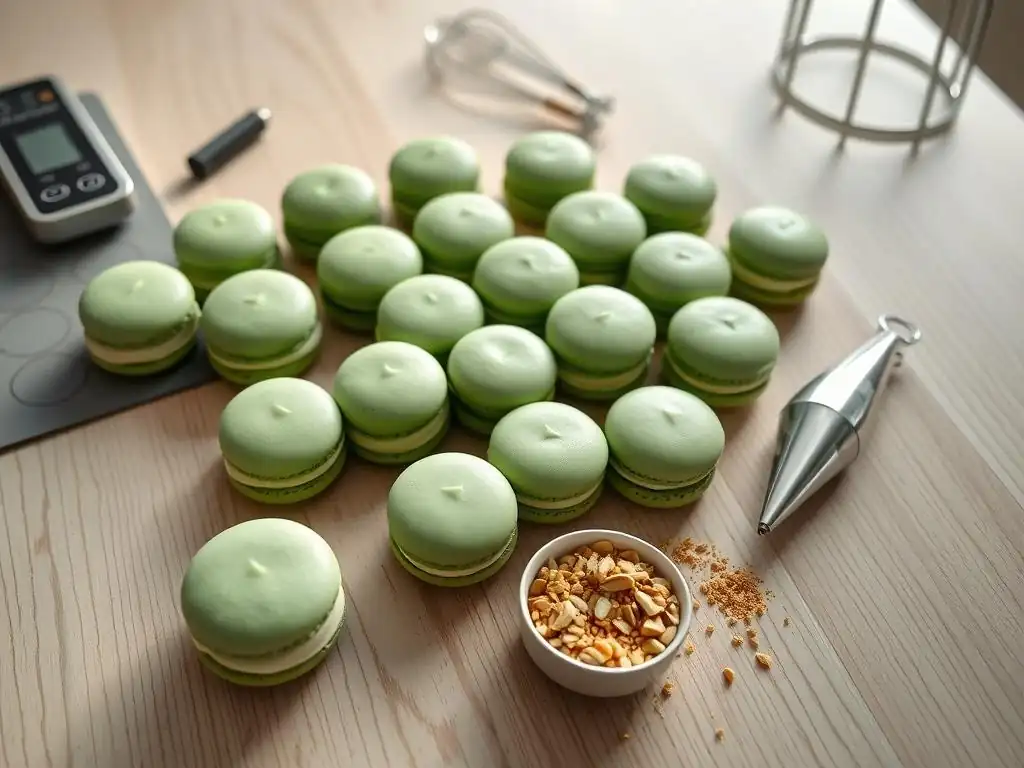
Proper Storage Techniques to Maintain Freshness
Proper storage is essential to maintain the delicate texture and flavor of your homemade French pistachio macarons. After the crucial maturation period in the refrigerator (12-24 hours), transfer the macarons to an airtight container. Layer them gently, placing parchment paper between layers to prevent them from sticking together or damaging the shells.
Store the airtight container in the refrigerator. When stored correctly in the fridge, macarons will maintain their best texture and flavor for about 3-5 days. Keeping them in an airtight container prevents them from drying out or absorbing odors from the refrigerator. For optimal enjoyment, allow them to sit at room temperature for 10-15 minutes before serving; this softens the filling slightly and brings out the full flavor.
Shelf Life and Freezing Macarons
While macarons are best enjoyed within a few days of assembly and maturation from the refrigerator, they can also be frozen for longer storage. To freeze assembled French pistachio macarons, place them in a single layer on a baking sheet and freeze until solid (about 1-2 hours). Once frozen, transfer them to an airtight container, again layering with parchment paper.
Frozen macarons can maintain their quality for up to 1-2 months. To thaw, transfer the airtight container from the freezer to the refrigerator and let them thaw overnight. Once thawed in the fridge, they should be consumed within 2-3 days. You can also freeze unfilled shells and filling separately. Freeze shells in an airtight container layered with parchment. Freeze filling in a piping bag or airtight container. Thaw both in the fridge, then fill and mature as usual. This extends the shelf life and allows you to have shells ready for different fillings.
Enjoying Your Delicious French Pistachio Macarons
Serving Suggestions and Presentation Ideas
Presenting your beautiful homemade French pistachio macarons is part of the joy of baking! Arrange them artfully on a platter, cake stand, or in small decorative boxes. Their vibrant green color (if you added coloring) and perfect feet make them visually appealing on their own. For a simple yet elegant presentation, dust them lightly with powdered sugar or garnish the serving plate with a few chopped pistachios.
Macarons are perfect for afternoon tea, dessert tables, or as a thoughtful homemade gift. Pair them with a cup of coffee, tea, or even a glass of champagne. Consider serving them alongside other small pastries or cookies for a varied dessert experience. Their delicate nature makes them a special treat to be savored slowly.
We love seeing your baking triumphs! Once you've successfully baked your batch of French pistachio macarons using our beginner recipe and tips, consider sharing your experience. Tell us about your journey, any challenges you overcame, and how delicious they turned out. Connecting with other bakers on BakeWithEase.com can provide encouragement and inspiration.
Sharing photos of your beautiful pistachio macarons can also help others see what's possible and motivate them to try the recipe themselves. You've mastered a classic French pastry, and that's definitely something to celebrate and share with the BakeWithEase community!
Conclusion: Mastering the Art of French Macarons
Congratulations! You've Baked French Pistachio Macarons.
You've done it! By following these simple steps, you've successfully navigated the process of baking French pistachio macarons. From understanding the foundational ingredients and techniques to mastering the macaronage and achieving those coveted feet, you've completed a challenging yet rewarding baking project. This beginner recipe for French pistachio macarons has hopefully demystified the process and shown you that beautiful, delicious macarons are within your reach.
The skills you've learned – precise measuring, meringue whipping, careful folding, and temperature control – are transferable to many other baking endeavors. Take pride in your accomplishment. Making macarons requires patience and attention to detail, and completing a batch, especially a tricky flavor like pistachio which involves specific flour handling, is a significant achievement for any beginner baker.
Next Steps: Expanding Your Macaron Baking Skills
Now that you have a successful batch of French pistachio macarons under your belt, you can continue to refine your technique and explore new possibilities. Practice makes perfect, and each batch will teach you something new about working with your ingredients and oven. Try tweaking the resting time slightly to see how it affects the feet, or experiment with different macaronage consistencies on small test batches.
You can also start exploring other macaron flavors! Try a simple vanilla or chocolate, or venture into fruit-based fillings. As you gain confidence, you can attempt more complex techniques or flavor pairings. The journey of macaron making is one of continuous learning and delicious rewards. Keep baking, keep experimenting, and most importantly, keep enjoying the process with BakeWithEase.
Frequently Asked Questions
What makes French macarons so notoriously difficult to bake, and how does this recipe simplify the process?
French macarons are challenging due to their need for precise measurements and temperature control. This recipe simplifies the process by providing clear, step-by-step instructions and focusing on beginner-friendly techniques.
What are the key ingredients needed for a successful French Pistachio Macaron, and are there any substitutions possible?
The key ingredients include almond flour, powdered sugar, granulated sugar, egg whites, and pistachio paste. Substitutions are generally discouraged for best results, but high-quality almond flour is crucial.
What is the importance of the "macaronage" step in this recipe, and how do I know when it's done correctly?
The "macaronage" is the process of deflating the meringue mixture to the correct consistency. It's done correctly when the batter flows slowly and forms a ribbon-like consistency.
How do I prevent my macaron shells from cracking during baking?
Prevent cracking by ensuring accurate oven temperature and properly resting the piped macaron shells before baking. This allows a skin to form, preventing the shells from bursting.
What are some troubleshooting tips if my French Pistachio Macarons don't turn out perfectly on my first attempt?
Don't be discouraged! Common issues include hollow shells (likely due to oven temperature) or cracked shells (insufficient resting time). Adjusting these factors and practicing will improve your results.
Final Reflection: The Enduring Allure of the Perfect Macaron
Mastering the delicate art of French pistachio macarons is more than just baking; it's a journey of precision, patience, and ultimately, delicious reward. The seemingly simple steps outlined in this guide unlock a world of culinary creativity, proving that even the most intricate desserts are achievable with the right approach. This isn't just about following a recipe; it's about understanding the science behind the perfect shell and the artistry of the final product.
The enduring appeal of the macaron lies not only in its exquisite taste but also in its symbolic representation of elegance and sophistication. It's a treat that transcends generations, a testament to the power of simple ingredients transformed into something truly extraordinary. The most beautiful things are the simplest,
a sentiment that perfectly encapsulates the magic of the macaron. This recipe, while detailed, aims to demystify the process, empowering aspiring bakers to confidently tackle this iconic pastry and experience the joy of creation firsthand.
Now, it's your turn. Don't let the perceived complexity of the macaron intimidate you. Take the steps outlined in this guide, embrace the process, and allow yourself to be amazed by the results. The satisfaction of creating these delicate, pastel-hued delights is a reward in itself, a testament to your dedication and a delicious treat to share with those you love. So, gather your ingredients, put on your apron, and embark on your own macaron adventure. The perfect pistachio macaron awaits!
Unleash Your Inner Pâtissier: Master the Macaron!
Thanks for joining us on this delicious journey into the world of French pistachio macarons! We hope you gained valuable insights and feel inspired to create these delicate treats. Now it's time to put your newfound knowledge into practice!
- Bake your perfect pistachio macarons today! Gather your ingredients and follow the recipe steps – you might be surprised how easy it is.
- Share your baking triumphs (or hilarious fails!) on social media using #BakeWithEaseMacarons. Let's see those beautiful creations!
- Explore other delicious recipes on BakeWithEase.com – we have a whole world of baking adventures waiting for you.
Ready to transform your kitchen into a Parisian patisserie? What's your favorite part of the macaron-making process?