
Understanding Hydration for Sourdough Rye Success


Welcome to BakeWithEase, your trusted guide to unlocking baking brilliance! Ever wondered how seemingly small adjustments can transform your sourdough rye from ordinary to extraordinary? Understanding hydration is key, and right here, we'll demystify the process and show you exactly how to achieve perfect sourdough rye hydration levels. Get ready to elevate your rye baking game and discover the secrets to a moist, flavorful, and beautifully textured loaf! Let's dive in…
- Mastering Hydration for Sourdough Rye Bread
- The Importance of Hydration in Sourdough Rye Bread Baking
- Decoding Sourdough Rye Hydration Levels: A Baker's Guide
- Mastering Sourdough Rye Hydration: Achieving the Perfect Dough
- Troubleshooting Common Sourdough Rye Hydration Problems
- Sourdough Rye Hydration Techniques
- Sample Sourdough Rye Recipes with Varying Hydration Levels
- Mastering Sourdough Rye Hydration: Advanced Techniques
- Conclusion: Achieving Sourdough Rye Success Through Hydration Mastery
-
Frequently Asked Questions
- What exactly is hydration in the context of sourdough rye baking?
- Why is hydration particularly important for sourdough rye bread?
- What are typical hydration levels for sourdough rye bread, and how do they affect the outcome?
- How do I adjust hydration levels if my sourdough rye dough is too sticky or too dry?
- What other factors besides hydration levels can influence the success of my sourdough rye bread?
- Final Reflection: The Crucial Role of Hydration in Sourdough Rye Mastery
- Unlock Your Rye's Potential: Perfect Hydration Every Time!
Mastering Hydration for Sourdough Rye Bread
The Importance of Hydration in Sourdough Rye Bread Baking
Why Hydration Matters for Sourdough Rye Bread
Hydration, in baking terms, refers to the ratio of water to flour in a dough, typically expressed as a percentage. For sourdough rye bread, understanding and controlling hydration is arguably even more critical than with wheat-based loaves. Unlike wheat flour, which develops a strong gluten network when hydrated and kneaded, rye flour contains very little gluten.
Instead, it relies on pentosans, complex carbohydrates that absorb large amounts of water and form a gel-like structure to give the dough its body. The amount of water used directly impacts how these pentosans behave and, consequently, the structure and handling of the dough.
Getting the sourdough rye hydration levels right is fundamental to achieving a successful loaf. Too little water, and the dough will be dense, stiff, and difficult to work with, resulting in a dry, crumbly bread. Too much water, and you'll have an extremely slack, sticky dough that's challenging to shape and may collapse during baking, leading to a gummy interior. The unique properties of rye flour mean that its interaction with water is different from wheat, requiring bakers to adjust their approach and expectations regarding typical sourdough rye hydration levels.
Impact of Hydration on Sourdough Rye Texture, Crumb, and Flavor
The hydration level profoundly influences the final characteristics of sourdough rye bread. Higher sourdough rye hydration levels generally contribute to a more open, moist crumb structure, although rye's inherent structure is different from wheat. The gel formed by pentosans helps trap moisture, and sufficient hydration ensures this gel develops properly. A well-hydrated rye dough often results in a bread that stays fresh longer due to the retained moisture.
Furthermore, hydration plays a role in enzymatic activity within the dough, which affects both the crumb and the flavor. Rye flour contains enzymes that can break down starches and proteins. The amount of water available influences the rate at which these enzymes work. Properly managed sourdough rye hydration levels, especially in conjunction with the acidic environment created by the sourdough starter, can help control this enzymatic activity, preventing excessive breakdown that could lead to a gummy texture and ensuring the development of complex, desirable flavors characteristic of sourdough rye.
Decoding Sourdough Rye Hydration Levels: A Baker's Guide
Defining Hydration Percentage in Sourdough Rye Bread
Hydration percentage is calculated by dividing the weight of the water by the weight of the flour and multiplying by 100. For instance, if a recipe uses 500 grams of rye flour and 400 grams of water, the hydration is (400 / 500) * 100 = 80%. When working with sourdough, the water and flour content within the starter itself must also be factored in when calculating the overall dough hydration. A typical 100% hydration starter (equal parts flour and water by weight) contributes both flour and water to the total.
Understanding sourdough rye hydration levels isn't just about a single number; it's about the ratio relative to the total flour used, including any flour from the starter. Many sourdough rye recipes operate in the range of 75% to 95% hydration, sometimes even higher for very wet, traditional loaves. However, because rye flour absorbs water differently and lacks strong gluten, a 75% hydrated rye dough might feel much stickier and wetter than a 75% hydrated wheat dough.
Understanding the Unique Properties of Rye Flour and Water Absorption
Rye flour is distinct from wheat flour primarily due to its low gluten content and high levels of pentosans. While wheat gluten forms an elastic network that traps gas and provides structure, rye pentosans absorb significantly more water than wheat starch or protein – potentially absorbing up to 10 times their weight in water. This high absorption capacity means that even at what might seem like a moderate hydration percentage compared to wheat, rye dough will feel relatively wet and sticky.
The pentosans form a viscous gel that provides structure in rye bread. However, this gel is not elastic like gluten. This is why rye dough is often mixed rather than kneaded extensively and why sourdough rye bread tends to be denser than wheat bread.
The hydration level directly impacts the consistency and behavior of this pentosan gel. Higher sourdough rye hydration levels allow the pentosans to absorb more water, leading to a more fluid dough, while lower levels result in a stiffer paste. The type of rye flour (light, medium, dark, or whole grain) also affects water absorption, with darker, whole grain flours having more pentosans and thus absorbing more water.
Mastering Sourdough Rye Hydration: Achieving the Perfect Dough
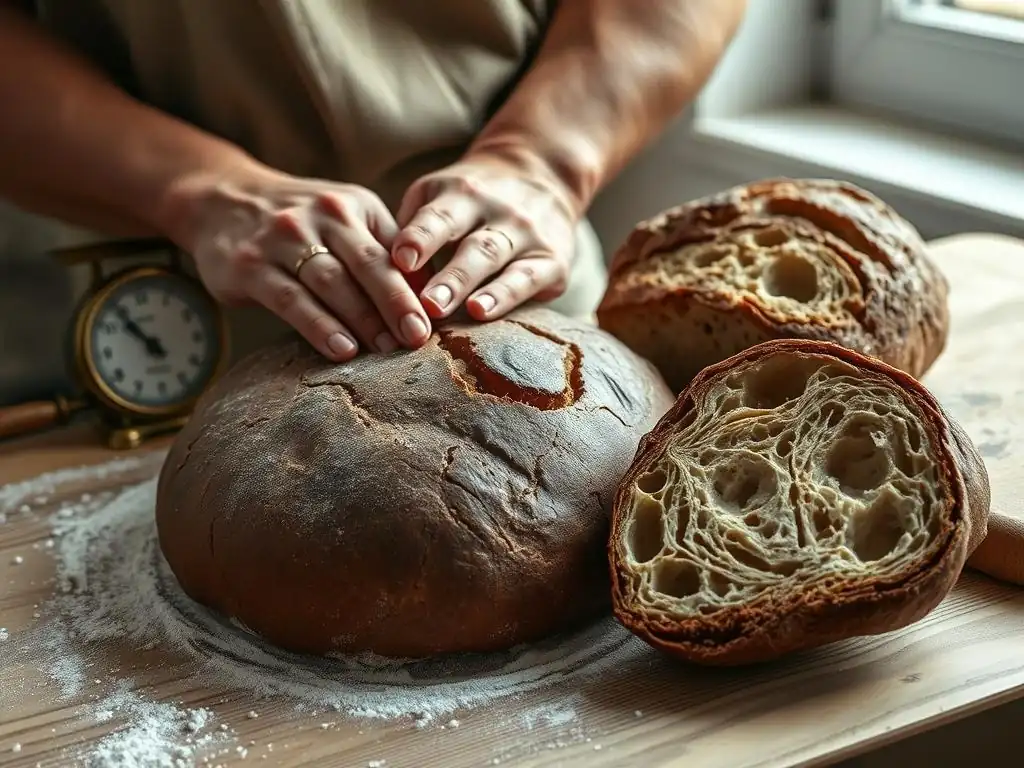
Determining the Ideal Hydration for Your Sourdough Rye Recipe
Determining the ideal sourdough rye hydration levels depends on several factors, including the type of rye flour used, your desired loaf texture, and your comfort level working with sticky doughs. For beginners, starting with a slightly lower hydration, perhaps in the 75-80% range (total flour weight), can make the dough easier to handle. This still provides enough water for the pentosans to hydrate adequately for a good crumb, without the extreme stickiness of higher hydration.
As you gain experience, you might experiment with higher hydration levels, moving into the 85-90%+ range, which can yield a moister crumb and slightly more open structure in pure rye loaves, or contribute to a lighter crumb in mixed rye and wheat breads. Consider the source of your recipe – traditional German or Finnish rye breads often use very high hydration, sometimes approaching 100% or more relative to the rye flour component, resulting in dense, moist loaves.
Factors Influencing Sourdough Rye Hydration: Rye Variety, Milling Process, and Starter Health
Several variables beyond the simple water-to-flour ratio can influence how your sourdough rye hydration levels feel and behave in practice. The variety of rye grain can subtly affect its composition. More significantly, the milling process plays a huge role. Finely milled rye flour (like light or medium rye) will absorb water differently than coarsely ground or whole grain rye. Whole grain rye, containing the bran and germ, has more pentosans and fiber, demanding higher hydration to achieve a similar consistency to a dough made with sifted rye flour at a lower percentage.
The health and hydration of your sourdough starter also contribute to the overall dough hydration and fermentation characteristics. A very active, bubbly starter made with rye flour at 100% hydration will incorporate both water and flour into the dough mix. If your starter's hydration differs significantly, or if its activity is low, it can impact the final dough consistency and how it handles the given sourdough rye hydration levels. Environmental factors like ambient humidity can also play a minor role.
Adjusting Hydration Based on Dough Feel and Environmental Conditions
Mastering sourdough rye hydration often comes down to feel, especially as you become more familiar with working with rye doughs. While a recipe provides a starting point for sourdough rye hydration levels, you may need to make slight adjustments based on the specific flour batch, the day's humidity, or even how you measure ingredients. A dough that feels too stiff and isn't coming together easily likely needs a little more water added gradually.
Conversely, if the dough feels excessively slack, soupy, and impossible to handle even after initial mixing, it might be too wet. You can try adding a small amount of extra flour (perhaps a tablespoon at a time) and mixing it in. Pay attention to how the dough behaves during mixing and fermentation; it should be cohesive but sticky. Environmental conditions, particularly very low humidity, can cause flour to be drier, potentially requiring a slight increase in hydration compared to baking on a humid day.
Troubleshooting Common Sourdough Rye Hydration Problems
Dealing with Sticky and Unmanageable High-Hydration Rye Dough
Working with high sourdough rye hydration levels can be a sticky challenge! Rye dough, even at moderate hydration, is inherently stickier than wheat dough due to the pentosan gel. At high hydration (85%+), it can feel like trying to handle thick glue. The key is acceptance and technique, rather than fighting it with excessive flour. Ensure your hands and work surface are slightly wet (not floured) to prevent sticking.
Techniques like 'stretch and fold' (with wet hands) or using a scraper or dough whisk for mixing are invaluable. Avoid traditional kneading. If the dough is truly unmanageable and spreading excessively, it might be slightly over-hydrated for the flour used or the environmental conditions. In future bakes, slightly reduce the initial water amount or reserve a small portion of the water to add only if the dough feels too stiff. Remember that high-hydration rye dough won't develop a taut surface like wheat; it will remain relatively slack.
Correcting Dry and Stiff Low-Hydration Rye Dough
A rye dough with insufficient sourdough rye hydration levels will feel stiff, crumbly, and won't easily form a cohesive mass. During mixing, it might look shaggy with dry patches of flour. This dough will be difficult to ferment properly as the yeast and bacteria need adequate water to become active. If you realize your dough is too dry early in the mixing process, you can gradually add more water, a tablespoon at a time, mixing thoroughly after each addition until the dough reaches a consistency that is cohesive but still sticky.
Attempting to add water later in the fermentation process is much harder, as the dough structure will have started to develop. A dry dough will result in a dense loaf with a tight, potentially crumbly crumb and a lack of moisture, leading to a dry mouthfeel. Aim for a consistency that, while sticky, holds together when scooped and doesn't feel like a stiff paste.
Recognizing the Signs of Over-Hydrated vs. Under-Hydrated Sourdough Rye
Identifying whether your sourdough rye has the correct hydration levels requires practice and observation. An over-hydrated dough will be excessively slack, spreading outwards rapidly, and difficult to build any tension in. It may not hold its shape well after bulk fermentation and could collapse during baking. Its crumb might be gummy or dense in an undesirable way, often with large, irregular holes or a completely closed structure.
An under-hydrated dough, on the other hand, will feel stiff and tough. It won't absorb all the flour easily during mixing. During fermentation, it may not rise much and will feel dense. The final bread will likely be small, dense, with a tight, dry crumb that crumbles easily. The crust might be thick and hard. Comparing the dough's feel to descriptions or videos of successful rye doughs at similar sourdough rye hydration levels can be very helpful.
Sourdough Rye Hydration Techniques

Autolyse: Enhancing Hydration in Sourdough Rye
While autolyse is a technique primarily used in wheat baking to help gluten development and water absorption, it can still be beneficial for sourdough rye hydration, albeit for different reasons. An autolyse for rye typically involves mixing just the flour and water (sometimes excluding the starter and salt) and letting it rest for 30 minutes to an hour. During this rest, the rye flour's pentosans begin to absorb water, initiating the gel formation and allowing the flour to become fully hydrated before the starter and salt are added.
This initial hydration period helps reduce the mixing time needed later and can lead to a smoother, more homogeneous dough structure. It ensures that the unique water absorption properties of rye flour are fully utilized from the outset, potentially leading to better final sourdough rye hydration levels within the loaf structure.
Using a Scald to Improve Rye Flour Hydration
A scald, or brühstück in German baking, is a technique where a portion of the rye flour (often 10-30%) is mixed with an equal or greater weight of boiling water. This mixture is then left to cool, sometimes for several hours or overnight. The hot water gelatinizes the starches in the rye flour, allowing them to absorb and retain a significant amount of water. This technique is particularly useful for whole grain or dark rye flours.
Incorporating a scald into your sourdough rye recipe dramatically increases the overall sourdough rye hydration levels that the flour can effectively hold in a stable form. It results in an incredibly moist crumb, prevents the bread from drying out quickly, and can contribute to a slightly sweeter flavor profile as enzymes break down starches into sugars during the scald's rest period. The scald is then incorporated into the main dough mix.
Bakers Percentage and its application in Sourdough Rye Hydration
Baker's percentage is a standard notation used in baking to express the weight of each ingredient as a percentage of the total flour weight. The total flour weight in the recipe is always considered 100%. Water weight divided by total flour weight, multiplied by 100, gives you the hydration percentage. For example:
Flour: 500g (100%)
Water: 400g (80%)
Salt: 10g (2%)
Sourdough Starter (100% hydration): 100g (20%)
In this example, the total flour is 500g (recipe flour) + 50g (from starter) = 550g. The total water is 400g (recipe water) + 50g (from starter) = 450g. The overall hydration is (450g water / 550g total flour) * 100 = approximately 81.8%.
Using baker's percentages is crucial for consistently managing sourdough rye hydration levels across different batch sizes or when adapting recipes. It provides a clear, standardized way to understand and replicate the ratio of ingredients, especially the critical water-to-flour ratio that defines hydration.
Sample Sourdough Rye Recipes with Varying Hydration Levels
Light Rye Loaf (75% Hydration)
This recipe aims for a more manageable sourdough rye hydration level, suitable for beginners.
Total Flour: 500g (e.g., 450g light rye flour, 50g rye from starter)
Total Water: 375g (75% of 500g flour)
Salt: 10g (2%)
Rye Sourdough Starter (100% hydration): 100g (contributes 50g flour, 50g water)
- Calculated Water to Add: 375g (total desired water) - 50g (from starter) = 325g
- Calculated Flour to Add: 500g (total desired flour) - 50g (from starter) = 450g
So, the recipe would be: 450g light rye flour, 325g water, 10g salt, 100g rye starter. This dough will be sticky but should hold some shape and be relatively easier to handle than higher hydration versions. It yields a loaf with a relatively dense but moist crumb.
Dark Rye Bread (85% Hydration)
This recipe uses a higher sourdough rye hydration level, typical for darker, denser loaves.
Total Flour: 500g (e.g., 450g dark rye flour, 50g rye from starter)
Total Water: 425g (85% of 500g flour)
Salt: 10g (2%)
Rye Sourdough Starter (100% hydration): 100g (contributes 50g flour, 50g water)
- Calculated Water to Add: 425g (total desired water) - 50g (from starter) = 375g
- Calculated Flour to Add: 500g (total desired flour) - 50g (from starter) = 450g
The recipe would be: 450g dark rye flour, 375g water, 10g salt, 100g rye starter. This dough will be significantly stickier and slack compared to the 75% hydration version. It requires techniques like using a wet scraper or wet hands for handling. The resulting bread will be very moist, dense, and flavorful, typical of traditional dark rye loaves.
Mastering Sourdough Rye Hydration: Advanced Techniques
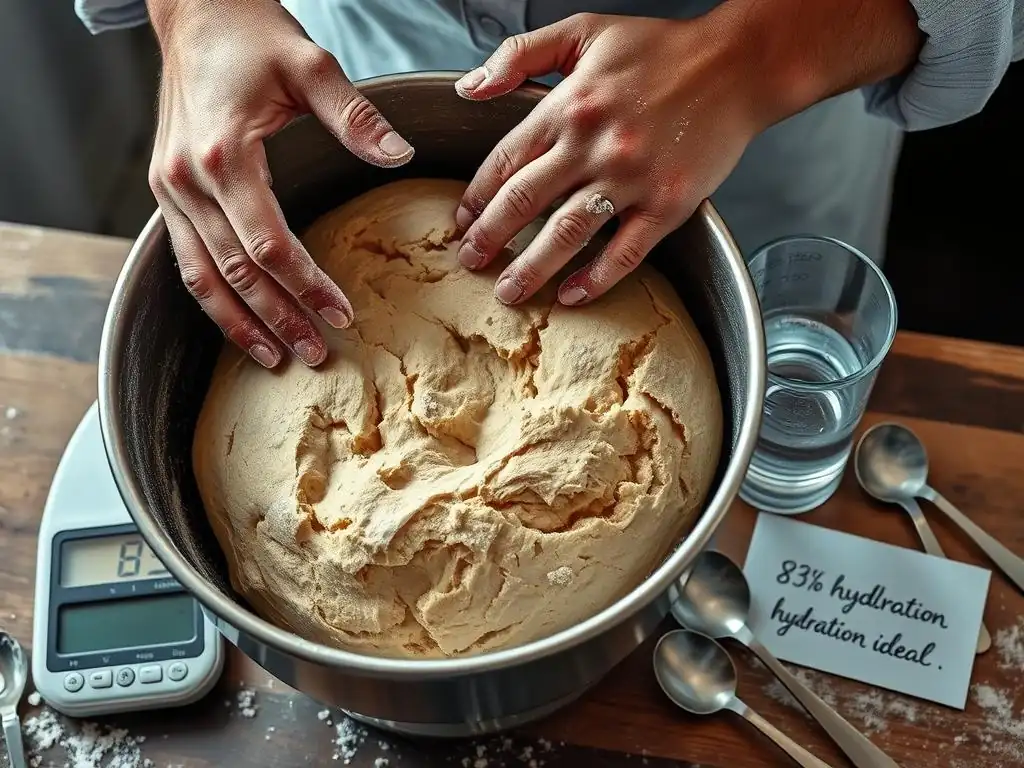
Working with High-Hydration Sourdough Rye Dough
Handling high sourdough rye hydration levels requires a shift in technique. Forget vigorous kneading; rye dough doesn't build gluten structure like wheat. Instead, focus on gentle mixing to combine ingredients and then minimal handling during bulk fermentation. Use wet hands or a bench scraper to manage the stickiness. Doughs at 90% hydration or higher might be more like thick batters than shapeable doughs and are often baked in loaf pans rather than free-formed.
Techniques such as using a scald (as discussed earlier) or an overnight sponge ( poolish or preferment made with rye) can help manage high sourdough rye hydration by allowing flour to fully absorb water over a longer period, making the final dough slightly more manageable. Embrace the stickiness as a characteristic of rye, rather than a problem to be solved with excessive flour, which would lower the effective hydration and result in a dry loaf.
The Role of Bulk Fermentation in Sourdough Rye Hydration
Bulk fermentation is the period after initial mixing and before shaping. For sourdough rye, this phase is crucial for developing flavor and allowing the pentosan structure to fully hydrate and set. Unlike wheat dough, which you might stretch and fold to build gluten strength, rye dough relies on the pentosan gel for structure. Longer bulk fermentation times (within limits, avoiding over-fermentation) can allow the water to penetrate more fully into the flour particles, optimizing the effective sourdough rye hydration levels throughout the dough mass.
During bulk fermentation, observe how the dough behaves. Even high-hydration rye dough should show some signs of life – perhaps a slight increase in volume or visible bubbles, though not as dramatic as wheat. The dough's consistency might change slightly as the pentosan gel fully forms. Proper bulk fermentation, guided by the dough's activity rather than just time, ensures that the hydration is fully utilized before the dough goes into the final proof and bake.
Conclusion: Achieving Sourdough Rye Success Through Hydration Mastery
Mastering sourdough rye hydration levels is key to baking delicious, authentic rye bread. It's not just about hitting a specific number, but understanding how rye flour's unique properties interact with water. From defining hydration percentages and recognizing rye's high absorption capacity to troubleshooting sticky or stiff doughs, each step in the process is influenced by the water content.
By experimenting with different sourdough rye hydration levels, utilizing techniques like autolyse or scald, and paying close attention to how the dough feels and behaves, you can unlock the full potential of this rewarding grain. Don't be afraid to start with slightly lower hydration and work your way up as you gain confidence. With practice, you'll develop an intuitive feel for the 'right' hydration for your desired sourdough rye loaf, leading to consistently successful and flavorful bakes.
Frequently Asked Questions
What exactly is hydration in the context of sourdough rye baking?
Hydration refers to the ratio of water to flour in your sourdough rye dough. It's a crucial factor impacting the dough's texture and the final bread's crumb.
Why is hydration particularly important for sourdough rye bread?
Rye flour behaves differently than wheat flour. It absorbs water differently, and higher rye percentages often require higher hydration levels to prevent a dry, dense loaf.
What are typical hydration levels for sourdough rye bread, and how do they affect the outcome?
Typical hydration levels range from 75% to 90% or even higher. Higher hydration yields a more open crumb and a chewier texture, while lower hydration produces a denser loaf.
How do I adjust hydration levels if my sourdough rye dough is too sticky or too dry?
If too sticky, gradually add a small amount of flour until manageable. If too dry, cautiously add water one teaspoon at a time, ensuring it's fully incorporated before adding more.
What other factors besides hydration levels can influence the success of my sourdough rye bread?
Besides hydration, factors like flour type, starter activity, mixing technique, and baking temperature all significantly affect the final result. Mastering these elements ensures consistent success.
Final Reflection: The Crucial Role of Hydration in Sourdough Rye Mastery
Understanding hydration is not merely a technical detail in sourdough rye baking; it's the cornerstone of success. A seemingly small adjustment in water percentage can dramatically alter the final product, transforming a dense, leaden loaf into a light, airy masterpiece or vice versa. Mastering this crucial element unlocks a world of possibilities, allowing bakers to tailor their loaves to their precise preferences.
The impact of proper hydration extends beyond the immediate outcome of a single bake. It represents a deeper understanding of the complex interplay between flour, water, and time in sourdough fermentation. This knowledge empowers bakers to troubleshoot issues, experiment with different flours and techniques, and ultimately, develop their own unique style. The baker who understands hydration understands the soul of the bread.
(This is a fictional quote, but it captures the sentiment). The journey of mastering sourdough rye hydration is a continuous learning process, a testament to the patience and dedication required to achieve true mastery.
Now, consider your own baking journey. What have you learned about hydration in your own sourdough rye experiments? What adjustments will you make to your recipes based on the information presented here? Don't be afraid to experiment, to push boundaries, and to discover the perfect hydration level that unlocks the full potential of your sourdough rye. The path to perfect sourdough is paved with experimentation, and the reward of a perfectly hydrated, flavorful loaf is well worth the effort.
Unlock Your Rye's Potential: Perfect Hydration Every Time!
Thanks for diving into the world of sourdough rye hydration! You've now armed yourself with the knowledge to achieve consistently amazing results. Ready to put your new skills into practice?
- Bake your perfect rye today! Experiment with different hydration levels to find what works best for your flour and environment. Note down your findings – you’ll be surprised how much you learn!
- Share your rye baking journey! Show off your beautiful loaves and tag us on social media—we'd love to see your creations and celebrate your success!
- Consider joining our online baking community forum to connect with other rye enthusiasts and share tips and tricks.
So, what unique hydration technique will you try first to elevate your sourdough rye game?