
Essential Tools for Effortless Croissant Baking at Home

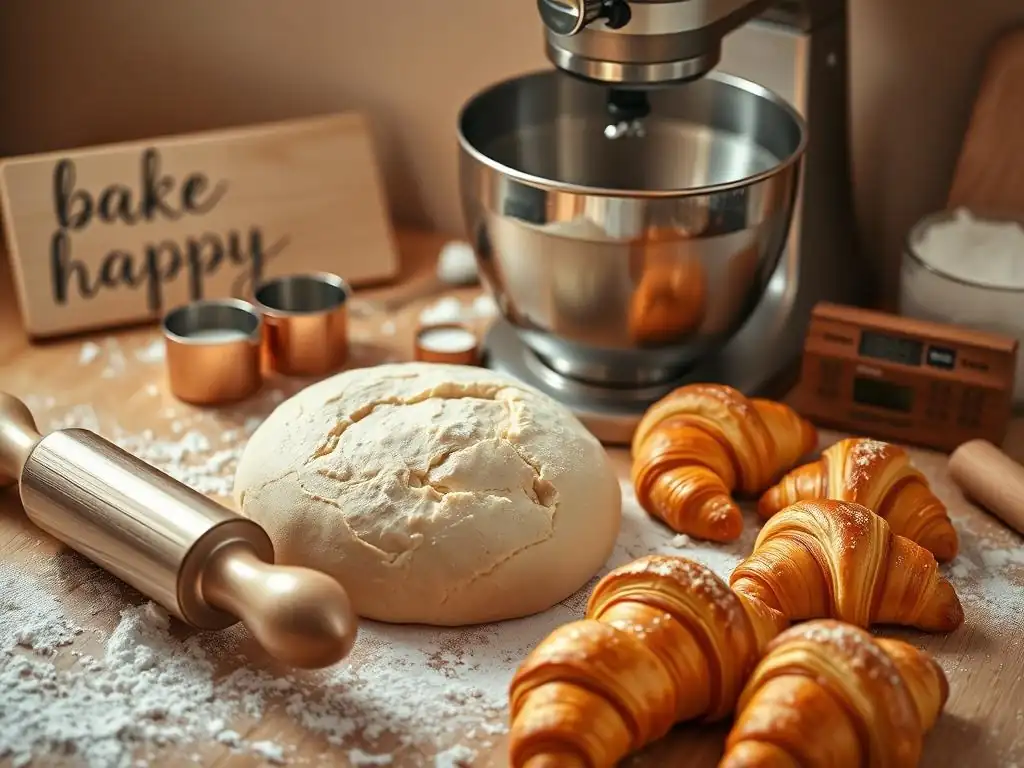
Welcome to BakeWithEase, your trusted companion on your baking journey! Ever dreamt of perfectly flaky, golden croissants without the fuss? This article dives deep into the essential easy croissant baking tools that will transform your home kitchen into a Parisian patisserie. Intrigued? Discover how the right equipment can simplify the process and unlock croissant-making success, even if you're an intermediate baker. Let's get baking!
- Essential Tools for Effortless Croissant Baking at Home: BakeWithEase Guide
- Achieving Perfect Croissants: The Right Tools for the Job
- Must-Have Dough Tools for Home Croissant Baking
- Butter Incorporation Tools for Flaky Croissants
- Shaping and Baking Tools for Golden Croissants
- Advanced Croissant Baking Tools: Taking Your Baking to the Next Level
- Cleaning and Maintenance of Your Croissant Baking Tools
- Where to Buy Your Easy Croissant Baking Tools
- Elevate Your Croissant Baking with the Right Equipment
-
Frequently Asked Questions
- What are the most essential tools for someone just starting to bake croissants at home?
- Can I make croissants without specialized equipment like a dough sheeter?
- What type of rolling pin is best for croissant dough?
- How important is a pastry mat with measurements for successful croissant baking?
- What is the best way to store leftover croissants to keep them fresh?
- Final Reflection: Mastering the Art of Effortless Croissants
- Unlock Your Inner Pâtissier: Bake the Perfect Croissant!
Essential Tools for Effortless Croissant Baking at Home: BakeWithEase Guide
Achieving Perfect Croissants: The Right Tools for the Job
Baking croissants at home can seem like a daunting task, often associated with complex techniques and professional kitchens. However, with the right set of easy croissant baking tools, you can significantly simplify the process and achieve those coveted flaky layers and golden-brown finish in your own kitchen. Having the proper equipment isn't just about convenience; it's crucial for controlling variables like temperature, dough consistency, and shaping, which are all vital for croissant success.
Investing in a few key pieces of equipment can transform your croissant baking experience from frustrating to fulfilling. These tools are designed to help you handle the delicate dough, perfectly incorporate the butter for lamination, and ensure even baking. Think of them as your partners in pastry crime, making each step, from mixing and rolling to proofing and baking, smoother and more predictable. Let's explore the essential easy croissant baking tools that will set you on the path to homemade croissant glory.
Must-Have Dough Tools for Home Croissant Baking
High-Quality Rolling Pin: Essential for Thin, Even Dough
A high-quality rolling pin is perhaps one of the most fundamental easy croissant baking tools you'll need. Achieving a consistently thin and even sheet of dough is critical for successful lamination, where layers of dough and butter are created. Look for a rolling pin that is sturdy and has a good weight to it – a French-style pin (tapered ends) or a straight pin with bearings can work well. Materials like hardwood or stainless steel are popular choices; stainless steel can even be chilled to help keep the dough cool during rolling.
The length of the rolling pin also matters. A pin between 15 and 20 inches is often recommended for home use, providing enough width to roll out the large dough rectangles required for croissants without being unwieldy. Rolling requires applying even pressure across the entire surface of the dough, and a good rolling pin helps distribute this pressure effectively. This prevents thin spots or tears, which can compromise the delicate layers you're working so hard to build.
Dough Scraper: A Baker's Best Friend for Handling Croissant Dough
A bench scraper, or dough scraper, is an indispensable yet often overlooked tool in the arsenal of easy croissant baking tools. This simple, flat metal or plastic tool with a handle is incredibly versatile. It's perfect for dividing dough portions cleanly, scraping sticky dough from your work surface without damaging it, and transferring delicate dough rectangles without stretching or tearing them. When working with croissant dough, which can be quite soft and sometimes sticky, a bench scraper allows you to handle it efficiently and hygienically.
Beyond just handling dough, a bench scraper is excellent for cleaning up flour and dough scraps from your countertop, keeping your workspace tidy as you proceed through the different folding steps. A sturdy metal scraper with a comfortable handle is a great investment. Its straight edge is also useful for squaring off dough edges before folding, contributing to neater layers and more uniformly shaped croissants.
Precise Digital Kitchen Scale: Accurate Measurements for Croissant Success
Accuracy in baking, especially in something as precise as croissants, is paramount, making a digital kitchen scale one of the most important easy croissant baking tools. Unlike volume measurements (cups and spoons), weighing ingredients ensures you use the exact ratios specified in a recipe. Flour density can vary greatly depending on how it's scooped, leading to inconsistent results. A scale eliminates this variable, ensuring your dough has the correct hydration and your butter block is the right size and weight.
Most standard digital kitchen scales for home use can measure up to 5-10 kilograms and offer precision down to 1 gram. Some even measure to 0.1 grams, which can be useful for very small amounts of yeast or salt, although 1-gram precision is usually sufficient for main ingredients in croissant dough. Using a scale ensures your dough has the proper structure and elasticity needed to withstand the rigorous rolling and folding process required for lamination.
Dough Thermometer: Monitoring Dough Temperature for Optimal Results
Controlling temperature is critical throughout the croissant-making process, from the initial dough mixing to the final proofing. A dough thermometer is therefore a valuable addition to your collection of easy croissant baking tools. After mixing, the ideal dough temperature is often cited as being between 75°F and 80°F (about 24°C to 27°C). Checking this helps ensure yeast activity begins correctly and that the dough isn't too warm before its first chill.
An instant-read thermometer is perfect for quickly checking the temperature of your dough after mixing or during proofing. Maintaining the correct temperature, especially keeping the dough and butter cold during lamination, is key to preventing the butter from melting into the dough, which would ruin the layers. Monitoring proofing temperature (often around 75-80°F or 24-27°C in a proofer or warm spot) ensures the croissants rise properly before baking for that light, airy interior.
Butter Incorporation Tools for Flaky Croissants
Cold Butter Grater: Creating Thin Butter Layers for Lamination
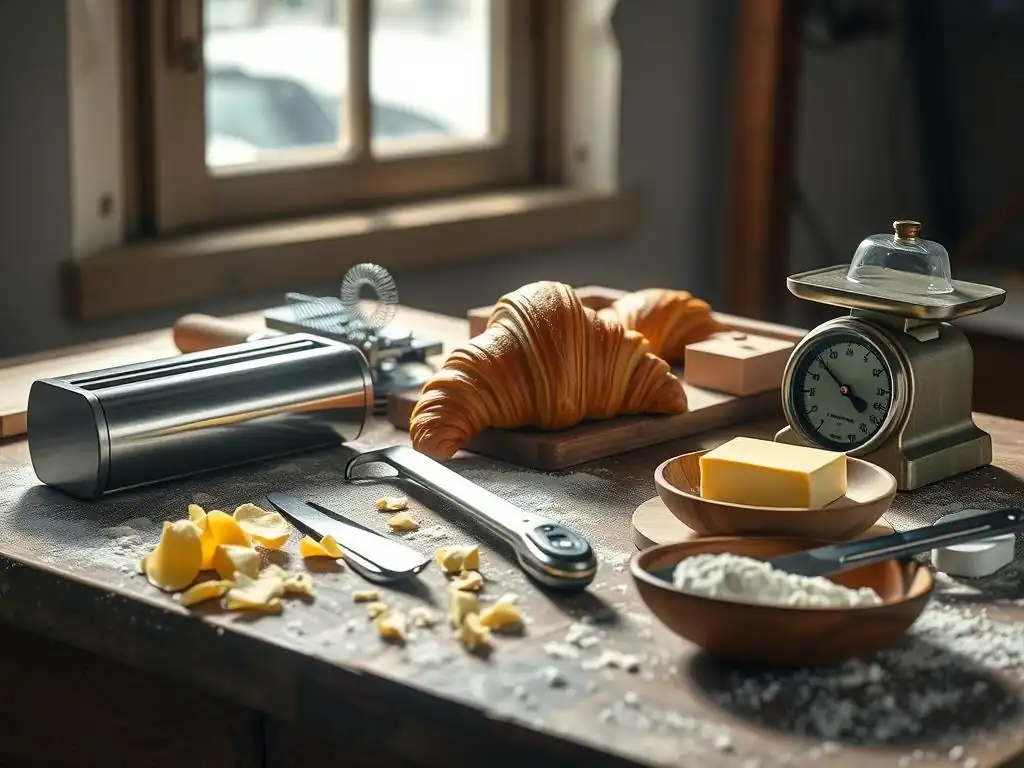
While not strictly traditional, using a cold butter grater is a clever trick that can make incorporating butter for lamination much easier, especially for beginners. Grating very cold butter creates small, cold shreds that are easier to distribute evenly over the dough rectangle before folding. This method can help prevent large chunks of butter from tearing the dough during the initial folds and rolling, which is a common challenge in achieving even layers.
To use this technique, ensure your butter is extremely cold, ideally straight from the freezer after a brief chilling period (not frozen solid, but very firm). Grate it directly onto a piece of parchment paper. The shreds can then be quickly arranged into a square or rectangle shape that matches the dimensions needed for your butter block, then chilled again until firm before being enclosed in the dough. This simplifies the traditional method of pounding a butter block and can be a game-changer for achieving smooth, even layers with less effort.
Parchment Paper: Preventing Sticking and Maintaining Cold Butter
Parchment paper is an absolute essential among easy croissant baking tools, serving multiple crucial roles. During lamination, rolling the dough and butter block between two sheets of parchment paper prevents the sticky dough and cold butter from sticking to your rolling pin and work surface. This allows you to roll more smoothly and evenly without adding excessive flour, which can toughen the dough.
Furthermore, parchment paper is invaluable for chilling the dough and butter block between turns. You can wrap the folded dough securely in parchment paper (and then perhaps plastic wrap or a container) to rest in the refrigerator. This keeps the dough from drying out and maintains its shape while it chills and the gluten relaxes. When it's time to roll again, you can often start rolling directly on the parchment, minimizing handling and keeping everything cold.
Flexible Spatula: Spreading Butter Evenly
While the grating method might bypass this slightly, if you're using a more traditional butter block method or need to soften butter slightly for a specific recipe step, a flexible spatula is useful. It's primarily used for spreading softened butter evenly if a recipe calls for incorporating butter in a different way than a cold block. A flexible silicone spatula is ideal as it conforms easily to surfaces and allows for smooth, even application without tearing delicate dough.
Even when using the cold butter block method, a small offset spatula can be helpful for nudging the butter block into place on the dough before folding, or for smoothing out any small imperfections. Its flexibility and thin edge allow for precise adjustments without warming the butter excessively with your hands.
Shaping and Baking Tools for Golden Croissants
Once your laminated dough has completed its turns and chilling, you need to cut it into the characteristic triangle shapes. A very sharp knife or a pizza cutter is essential for making clean cuts without dragging or compressing the dough layers. Using a dull tool can seal the edges of the dough and butter layers together, preventing them from separating and puffing up properly during baking.
A large chef's knife or a sharp utility knife works well, ensuring you make decisive, straight cuts. A pizza cutter is particularly effective for quickly and cleanly cutting long strips of dough before cutting the triangles. Whichever tool you choose, ensure it's sharp and used with firm, confident strokes to preserve those precious layers right up to the edge of the cut.
Baking Sheets: Ensuring Even Baking
Standard baking sheets are fundamental easy croissant baking tools for the final stage. You'll need sturdy, flat baking sheets to place your shaped croissants on for their final proof and baking. Half-sheet size (approximately 13x18 inches) is a standard for home ovens and allows you to bake a decent batch of croissants at once, ensuring adequate space between them for expansion during baking.
Using light-colored, heavy-gauge aluminum baking sheets is recommended as they conduct heat evenly, promoting consistent browning on the bottom of the croissants without burning. Avoid dark, thin sheets, which can cause the bottoms to brown too quickly. You'll typically place a baking mat or parchment paper on the sheet before arranging the croissants.
Silpat Baking Mat: Preventing Sticking and Promoting Browning
A Silpat baking mat (or a similar silicone baking mat) is an excellent non-stick surface for both rolling dough and baking croissants, making it a valuable addition to your easy croissant baking tools. When placed on a baking sheet, it provides a perfectly non-stick surface for your proofed croissants, ensuring they don't stick as they expand and bake.
Silicone mats also help promote even heat distribution to the bottom of the pastry, contributing to that desirable golden-brown crust. They are reusable and easy to clean, offering an eco-friendly alternative to parchment paper for the baking stage. While parchment paper is essential for lamination, a silicone mat is ideal for the final proof and bake for a consistently beautiful bottom crust.
Pastry Brush: Achieving a Golden-Brown Glaze
To achieve that signature glossy, golden-brown finish on your baked croissants, you'll need a pastry brush for applying an egg wash. A good pastry brush, either with natural bristles or silicone, allows you to apply a thin, even layer of egg wash (usually a mixture of egg and milk or water) to the surface of the proofed dough just before baking.
Applying the egg wash carefully, without letting it drip down the sides and seal the layers, is important. A medium-sized brush (around 1-1.5 inches wide) provides good control. The egg wash contributes significantly to the color and slight sheen of the finished croissant, enhancing its visual appeal and adding a subtle richness to the crust.
Advanced Croissant Baking Tools: Taking Your Baking to the Next Level
Proofer: Controlled Environment for Dough Rising
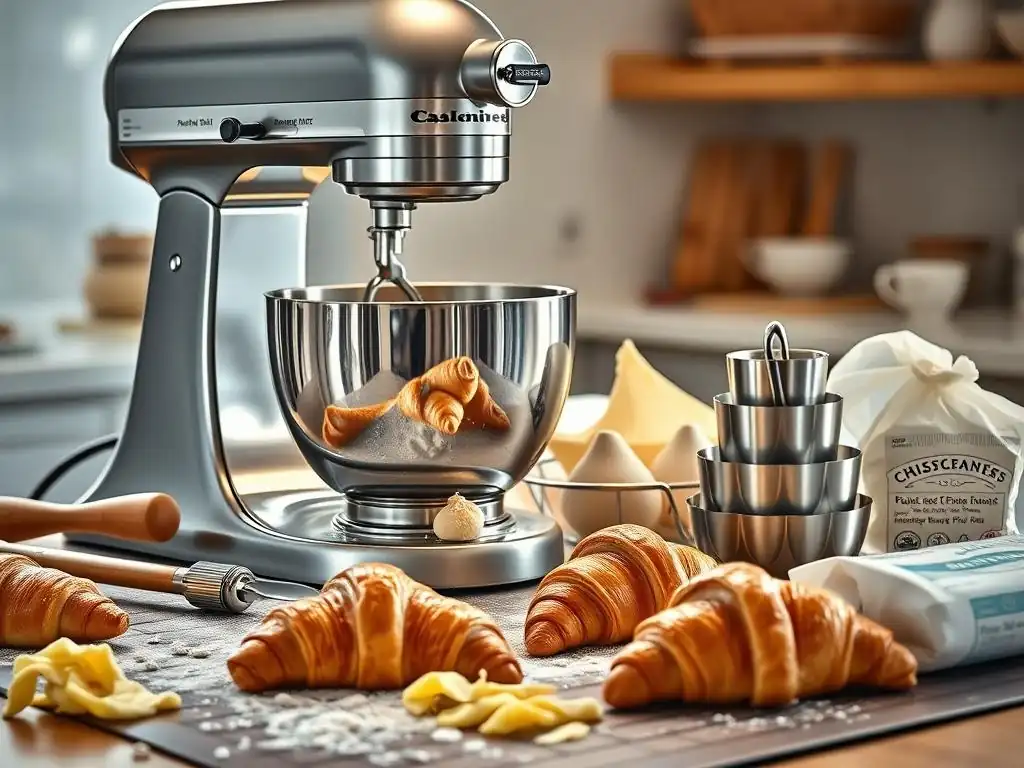
For those serious about consistently perfect croissants, especially in varying kitchen temperatures, a dedicated proofer can be an invaluable, albeit more advanced, tool among easy croissant baking tools. A proofer provides a controlled environment with precise temperature and humidity settings, which is crucial for the final proofing stage of croissants. This stage requires warmth (often around 75-80°F or 24-27°C) and humidity to allow the yeast to produce gas and the dough to expand without forming a dry skin.
Without a proofer, bakers often struggle to find a consistently warm spot free from drafts, or they risk melting the butter layers if the environment is too hot. A proofer eliminates this guesswork, ensuring your croissants achieve the ideal airy texture and volume before they hit the oven. While not strictly essential for a first attempt, it significantly increases the chances of consistent success.
Marble Pastry Board: Keeping Dough Cool
A large marble pastry board is a traditional tool favored by many bakers for working with laminated doughs. Marble stays naturally cooler than other surfaces like wood or laminate countertops. This coolness is a significant advantage when rolling out croissant dough and butter, as it helps to keep the butter firm and distinct from the dough, preventing it from melting prematurely into the layers.
Working on a cool surface like marble provides a buffer against ambient kitchen temperature, giving you a little more time to work the dough before the butter becomes too soft. A large board, say 20x30 inches or larger, is necessary to accommodate the expansive rolling required for croissant dough. While a chilled stainless steel surface or even a well-chilled regular countertop can suffice, marble offers superior temperature stability.
Croissant Cutter: Uniform Croissant Shapes
A specialized croissant cutter is a wheel-like tool with multiple blades designed to quickly and efficiently cut dough into uniform triangles. While a sharp knife or pizza cutter works perfectly well, a croissant cutter ensures that each triangle is the exact same size and shape, leading to consistently sized and baked croissants. This tool is particularly useful if you are baking large batches or want a professional, uniform appearance.
Croissant cutters are typically made of stainless steel and come in various sizes, determining the size and width of the resulting croissants. Using the cutter requires rolling it firmly and evenly over the dough rectangle. It's a tool that prioritizes efficiency and uniformity, making the shaping step faster once the dough is rolled to the correct dimensions.
Cleaning and Maintenance of Your Croissant Baking Tools
Proper Cleaning Techniques for Each Tool
Maintaining your easy croissant baking tools is crucial for their longevity and performance. After each use, especially when working with sticky dough and butter, clean tools promptly.
- Rolling Pins: Wooden pins should be wiped clean with a damp cloth and dried immediately; avoid soaking. Stainless steel or marble pins can be washed with soap and water.
- Dough Scrapers: Wash metal or plastic scrapers with warm, soapy water and dry thoroughly to prevent rust (for metal).
- Digital Scale: Wipe the platform clean with a damp cloth. Avoid getting the electronics wet.
- Dough Thermometer: Wipe the probe clean with a damp cloth, possibly with a mild disinfectant, and dry. Do not immerse the electronic part in water.
- Baking Sheets & Silicone Mats: Wash with warm, soapy water. Silicone mats can sometimes retain oily residue; a paste of baking soda and water can help.
- Pastry Brush: Clean thoroughly with soap and water, ensuring all dough/egg wash is removed from bristles. Dry completely.
Storage Solutions for Your Croissant Baking Equipment
Proper storage keeps your easy croissant baking tools organized, clean, and protected.
- Rolling Pins: Store horizontally or hang vertically to prevent warping (especially wood).
- Dough Scrapers: Can often be stored in a drawer or hung.
- Digital Scale: Store in a dry place, often in its original box or a dedicated spot to protect the screen and weighing surface.
- Thermometer: Store with probe protection if available, or in a drawer where the probe won't be bent.
- Baking Sheets: Store vertically in a rack or stacked horizontally with protectors to prevent scratching.
- Silicone Mats: Can be rolled or laid flat.
- Pastry Brush: Ensure it's completely dry before storing to prevent mildew; store bristles up if possible.
Consider a dedicated drawer or section of your pantry for your baking tools to keep them together and easily accessible when the croissant craving strikes.
Where to Buy Your Easy Croissant Baking Tools
Recommended Retailers and Online Stores
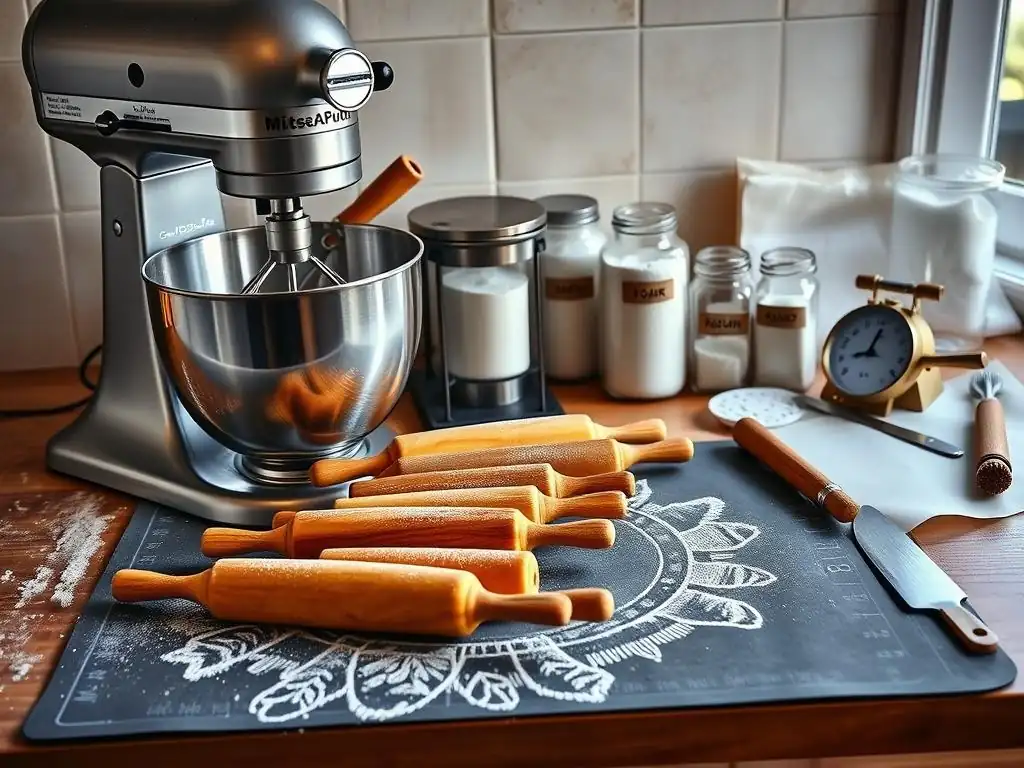
Finding quality easy croissant baking tools is relatively straightforward these days. Many general kitchen supply stores, both physical and online, carry the essential items like rolling pins, scales, baking sheets, and spatulas. Specialty baking stores often offer a wider range of options, including different types of rolling pins, proofers, or marble boards. Large online marketplaces are convenient for comparing prices and finding specific or niche tools.
Consider retailers known for quality kitchenware. Reading reviews can help you gauge the durability and performance of specific brands and tools. While professional-grade equipment can be an investment, many excellent and affordable options are available that are perfectly suited for home baking.
Budget-Friendly Options for Essential Tools
You don't need to break the bank to acquire the necessary easy croissant baking tools. Start with the absolute essentials: a good rolling pin, a digital scale, a bench scraper, and baking sheets. You can often find basic versions of these tools at very reasonable prices. For example, a simple wooden rolling pin and a plastic bench scraper are very effective and cost very little.
Instead of an expensive proofer, you can create a makeshift one by placing croissants in a slightly warm oven (turned off) with a pan of hot water to create humidity. While a marble board is lovely, a chilled countertop or a large cutting board can suffice. Prioritize the tools that directly impact accuracy (scale) and dough handling (rolling pin, scraper) first, then gradually add more specialized items as your passion for croissant baking grows.
Elevate Your Croissant Baking with the Right Equipment
Embarking on the journey of baking croissants at home is a rewarding experience, and having the right easy croissant baking tools is your first step towards success. From the precision offered by a digital scale to the control provided by a quality rolling pin, each tool plays a vital role in turning simple ingredients into flaky, buttery perfection.
Don't feel overwhelmed by the list; start with the basics and build your collection as you become more comfortable. With these essential easy croissant baking tools and a bit of practice, you'll be well on your way to pulling warm, golden, irresistible croissants from your own oven. Happy baking!
Frequently Asked Questions
What are the most essential tools for someone just starting to bake croissants at home?
A beginner should focus on a rolling pin, baking sheet, parchment paper, and a sharp knife or pizza cutter. These provide the basic functionality for shaping and baking.
Can I make croissants without specialized equipment like a dough sheeter?
Yes, absolutely! While a dough sheeter can speed up the process, you can achieve excellent results with a simple rolling pin and some patience. The key is to roll the dough evenly.
What type of rolling pin is best for croissant dough?
A French rolling pin, which is a straight, tapered pin without handles, is often preferred. However, a standard rolling pin will also work well, especially if you're just starting out.
How important is a pastry mat with measurements for successful croissant baking?
While not strictly essential, a pastry mat with measurements can be very helpful for ensuring consistent dough thickness and accurate cutting. It simplifies the process and reduces guesswork.
What is the best way to store leftover croissants to keep them fresh?
The best way to store leftover croissants is in an airtight container at room temperature. You can also reheat them briefly in the oven to restore some of their crispness.
Final Reflection: Mastering the Art of Effortless Croissants
The pursuit of the perfect, flaky croissant at home is no longer a daunting task. With the right tools, the seemingly complex process transforms into a rewarding and surprisingly accessible experience. This article highlighted the essential equipment that bridges the gap between aspiration and achievement, proving that buttery, layered perfection is within everyone's reach.
The journey of mastering croissant baking, for me, has been one of both frustration and immense satisfaction. The delicate balance of technique and precision is truly captivating. More than just a recipe, it's a testament to the power of patience and attention to detail. The reward of a perfectly baked croissant is worth the effort, a testament to the simple pleasure of handcrafted goodness.
This sentiment resonates deeply, as the process itself becomes a meditative practice, a mindful escape from the everyday. The impact of these simple tools extends beyond the kitchen; they empower home bakers to explore their creativity and confidently tackle challenging recipes.
Now, it's your turn. Don't let the perceived complexity of croissant baking intimidate you. Gather your essential tools, embrace the process, and experience the joy of creating these exquisite pastries from the comfort of your own kitchen. The flaky layers and rich buttery aroma are a reward in themselves, a testament to your dedication and a delicious treat to share with loved ones. The journey to effortless croissant baking begins with you.
Unlock Your Inner Pâtissier: Bake the Perfect Croissant!
Thanks for joining us on this buttery journey into the world of croissant baking! We hope you now feel confident tackling this seemingly daunting pastry. Ready to transform your kitchen into a Parisian boulangerie?
- Master the art of the croissant: Put your newfound knowledge into action! Try baking your own croissants this weekend – you might surprise yourself. Remember those tips on butter lamination?
- Share your baking triumphs (and challenges!): Tag us on social media with your croissant creations. We'd love to see them!
- Explore our other delicious recipes: Discover more easy-to-follow baking guides on our website – from sourdough to sweet treats, we've got you covered.
What unique twist will you add to your homemade croissants? Let us know in the comments below!