
The History of the Croissant: A Story of Layers

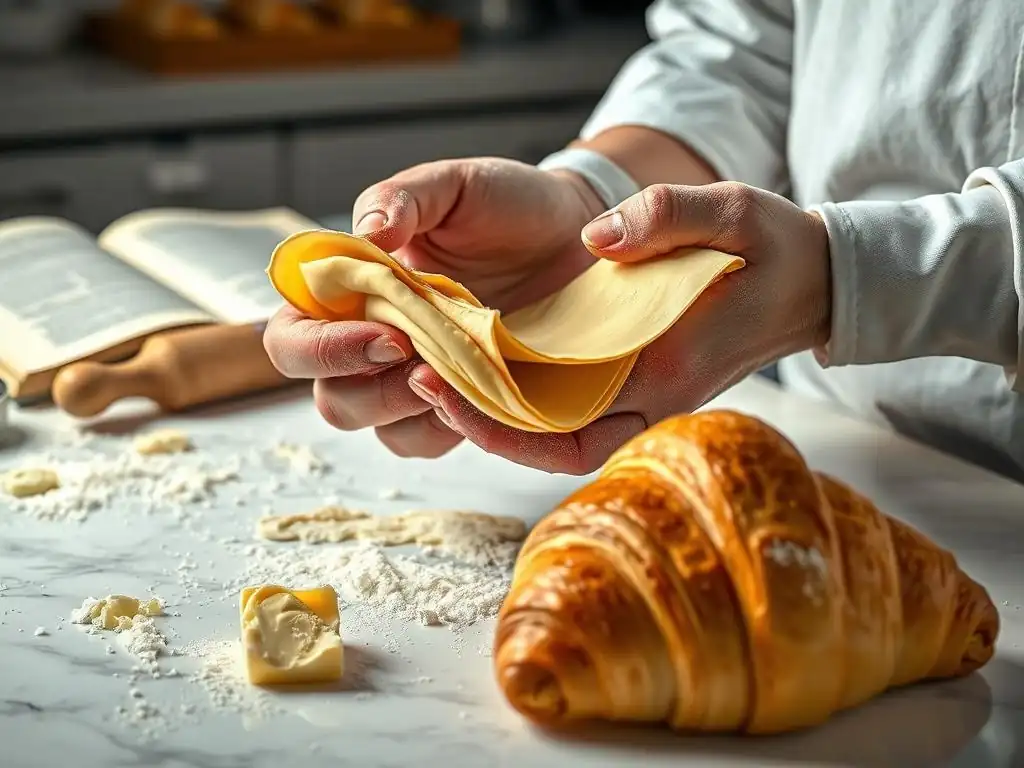
Welcome to BakeWithEase, your haven for all things baking! Ever wondered about the captivating history behind that flaky, buttery delight? Dive into "The History of the Croissant: A Story of Layers" and unravel the surprisingly complex origins of this beloved pastry. You might be surprised to discover what it really takes to understand how to make croissants and appreciate their rich heritage. Ready to uncover the secrets behind those perfect, golden layers? Let's get started!
- Introduction: Unveiling the Croissant's Past
- The Pre-Croissant Era: Viennese Origins
- The French Connection: Croissant Transformation
- The Rise of the Modern Croissant: Refinement and Innovation
- Making Croissants: A Historical Baking Journey
- Croissant Variations and Regional Adaptations
- Tips for Baking Perfect Croissants at Home
- The Croissant Today: A Global Pastry Icon
- Conclusion: Celebrating History and Deliciousness
-
Frequently Asked Questions
- How did the croissant originate, and is it truly French?
- What makes a croissant so difficult to bake at home?
- What kind of flour is best for making croissants?
- What's the best way to keep croissants fresh after baking?
- Can I substitute ingredients in a croissant recipe, like using margarine instead of butter?
- Final Reflection: The Enduring Allure of the Croissant
- Unleash Your Inner Baker: Craft the Perfect Croissant!
Introduction: Unveiling the Croissant's Past
The Croissant: A Global Pastry Icon
The croissant stands as a universally recognized symbol of French patisserie, celebrated for its delicate layers, rich buttery flavor, and ethereal flakiness. Found in bakeries and cafes from Paris to Tokyo, this crescent-shaped pastry has captured the hearts and appetites of people across the globe. Its appeal lies not just in its taste and texture, but also in the artisanal skill required to create it, making it a benchmark for bakers learning their craft, including those exploring how to make croissants at home.
Beyond its status as a breakfast staple, the croissant represents a fascinating journey through history, culture, and culinary innovation. Its evolution from a simple roll to the complex laminated pastry we know today is a testament to centuries of baking tradition and refinement. Understanding this history provides a deeper appreciation for the effort involved in mastering the techniques needed when you decide to take on the rewarding challenge of how to make croissants yourself.
Exploring Croissant History and Baking Techniques
Delving into the history of the croissant reveals a narrative rich with intriguing origin stories and significant culinary advancements. While often associated solely with France, the croissant's roots are widely believed to lie elsewhere, with its journey across borders influencing its transformation. This historical exploration isn't just academic; it sheds light on the foundational techniques that are still crucial today for achieving that perfect, layered result.
The evolution of the croissant is intrinsically linked to the development of specific baking methods, particularly lamination – the process of folding butter into dough to create numerous thin layers. Learning how to make croissants involves mastering this intricate technique, which was refined over generations. By tracing the croissant's past, we can better understand why certain steps, ingredients, and processes are vital when attempting to recreate this iconic pastry in your own kitchen.
The Pre-Croissant Era: Viennese Origins
The "Kipferl": Croissant's Ancestor
The widely accepted ancestor of the modern croissant is the Austrian Kipferl, a crescent-shaped roll dating back centuries. While legends often link its creation to the Siege of Vienna by the Ottomans in 1683, celebrating the city's survival, historical evidence suggests the Kipferl existed long before this event. These early versions were typically denser than today's croissant, often made from a brioche-like dough or a simpler bread dough, and lacked the extensive lamination characteristic of the French version.
The Kipferl was a common pastry throughout Austrian bakeries in the 17th and 18th centuries, varying in size and composition. Some were plain, while others incorporated nuts or other fillings. Their crescent shape was popular for various types of rolls and pastries across Central Europe. The key difference from the modern croissant lay in the dough structure; while some might have involved simple folding, they didn't utilize the sophisticated layering process that defines how to make croissants today.
Viennese Baking Traditions
Viennese baking traditions are renowned for their rich variety of pastries and breads, heavily influenced by Central European culinary practices. Bakeries in Vienna historically produced a wide array of sweet and savory items, utilizing techniques passed down through apprenticeships. The Kipferl was just one example among many popular rolls and cakes.
These traditions often involved enriched doughs, using ingredients like eggs, sugar, and butter, though perhaps not in the high quantities or with the specific lamination method used in later French patisserie. Viennese bakers were skilled artisans, and their mastery of dough preparation and shaping laid a foundation that would eventually contribute to the development of the croissant. The emigration of Austrian bakers, particularly to France, played a significant role in transporting these skills and the concept of the crescent-shaped roll across borders.
The French Connection: Croissant Transformation
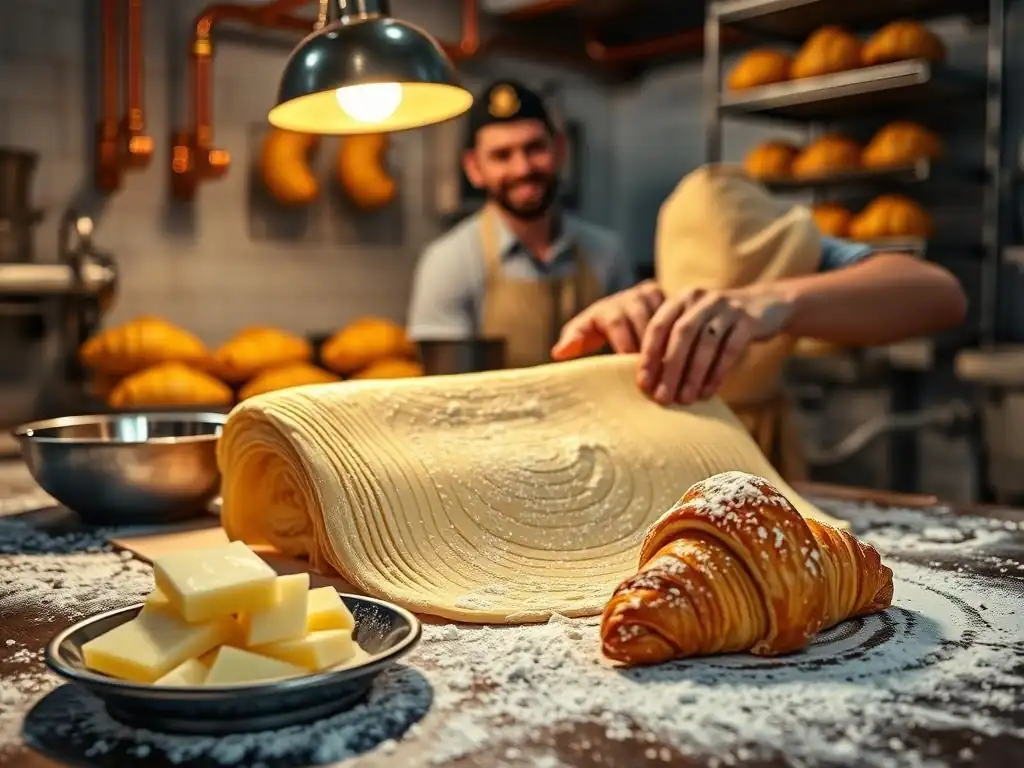
The Kipferl's Journey to Becoming the Croissant in France
The transition of the Austrian Kipferl into the French croissant is a fascinating chapter in culinary history, often attributed to Marie Antoinette. While the story of her introducing the pastry to the French court upon her arrival in 1770 is popular, concrete evidence is scarce. It is more likely that the Kipferl arrived in France through the influx of Austrian bakers and immigrants during the 18th and 19th centuries, who brought their traditional recipes and techniques with them.
By the 19th century, the Kipferl had become known in Paris, primarily through Viennese bakeries like the one established by August Zang around 1838. Zang's bakery is credited with popularizing Viennese pastries in Paris, including a version of the Kipferl. However, it was French bakers who took this concept and began to apply their own sophisticated pastry techniques, particularly leveraging the nascent understanding of lamination, to create something new and distinct – the French croissant.
French Bakers and Croissant Development
French bakers, already masters of puff pastry ( pâte feuilletée), recognized the potential of applying lamination to the Kipferl dough. Puff pastry, with its hundreds of thin, crisp layers, provided a blueprint for achieving extreme flakiness. They began experimenting with incorporating significant amounts of butter into an enriched dough, folding and rolling it repeatedly to create multiple alternating layers of dough and butter.
This innovation transformed the denser Kipferl into the light, airy, and shatteringly crisp pastry we recognize today. The French focused on a specific type of dough, richer than traditional bread dough but less complex than full puff pastry, known as pâte levée feuilletée (leavened puff pastry). This development was crucial in defining how to make croissants with their characteristic texture – both flaky and slightly soft inside. By the late 19th and early 20th centuries, the laminated croissant had become firmly established in French bakeries as a distinct pastry, separate from its Austrian ancestor.
The Rise of the Modern Croissant: Refinement and Innovation
Perfecting Lamination for Flaky Croissants
The defining characteristic of a perfect croissant is its numerous, distinct, and airy layers, achieved through the meticulous process of lamination. This technique involves enclosing a block of cold butter within a dough (the détrempe) and then repeatedly folding and rolling the dough. A typical process involves three "double turns" or similar sequences of folds and rests, potentially creating hundreds of layers of dough separated by paper-thin layers of butter.
During baking, the water in the butter turns to steam, forcing the dough layers apart and creating pockets of air. Simultaneously, the butter melts and is absorbed, contributing to the rich flavor and tender texture. Mastering lamination is arguably the most critical step when learning how to make croissants, requiring precision in temperature control, dough handling, and resting periods to prevent the butter from melting or breaking through the dough layers.
Flour, Butter, and Yeast: Key Ingredients
The quality and type of ingredients are paramount in making exceptional croissants. A specific type of flour, typically a medium-protein bread flour (around 11-12% protein), is preferred. This provides enough structure for the dough to hold its shape through the rigorous lamination process but isn't so strong that it becomes tough. The protein content affects gluten development, which is essential for the dough's elasticity and ability to form thin layers.
Butter is perhaps the most iconic ingredient, contributing both flavor and flakiness. High-quality, high-fat butter (ideally 82% fat or higher) is crucial. It needs to be pliable but cold enough to form distinct layers without melting into the dough during lamination. The amount of butter is substantial, often representing 40-50% of the flour weight. Active dry or instant yeast is used to leaven the dough, providing lift during proofing and contributing to the airy interior structure, working in concert with the steam from the butter during baking.
Making Croissants: A Historical Baking Journey
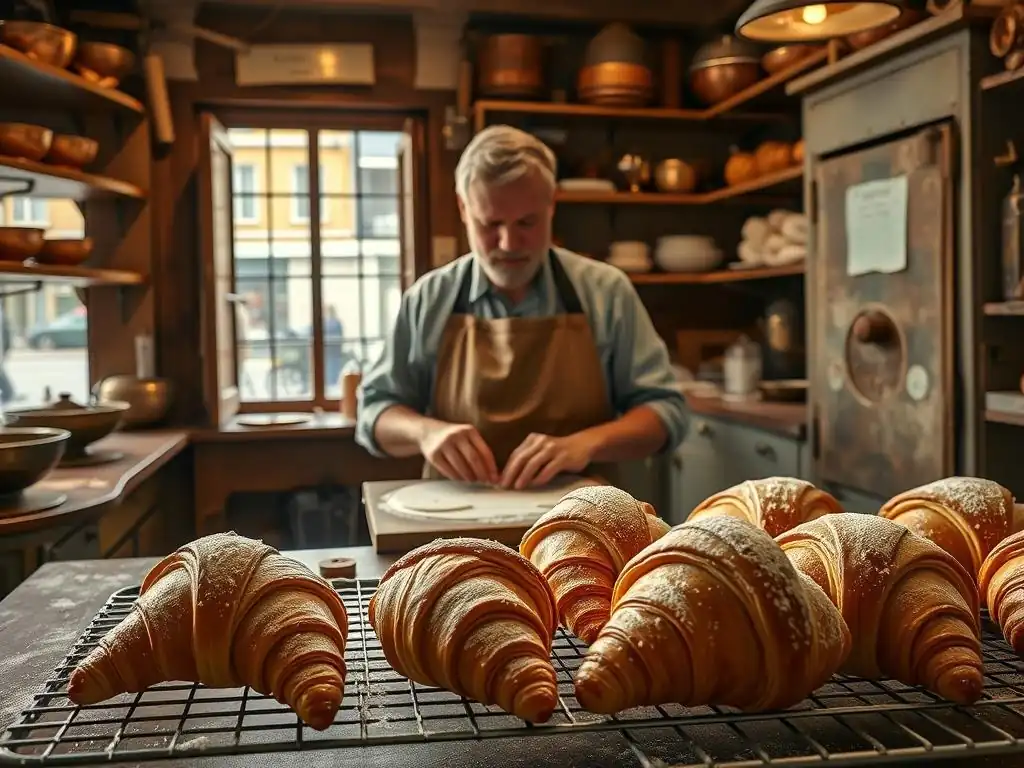
Dough Preparation: A Historical Perspective
Historically, the initial dough for crescent rolls like the Kipferl would have been a simpler bread or enriched dough, mixed by hand. As the croissant evolved in France, the détrempe became more specific: a lean dough made from flour, water, yeast, a little sugar, and salt. This base dough is mixed until just combined, often less developed than a typical bread dough at this stage, to allow for the subsequent folding.
Modern methods for how to make croissants still begin with this relatively simple dough base. While commercial bakeries use powerful mixers, home bakers can achieve excellent results mixing by hand or with a stand mixer. The key is developing just enough gluten for elasticity without making the dough too strong, as it will be further developed during the rolling and folding process. Historically, the temperature control was less precise, but today, keeping the dough and butter cold is understood as critical for successful lamination.
Lamination: Creating Layers
Lamination, the heart of making flaky croissants, involves wrapping the butter block ( beurrage) in the détrempe and performing a series of folds and rolls. A common sequence involves three "single" folds (folding the dough into thirds like a letter) or a combination of single and "double" folds (folding both ends to the middle, then folding in half). Each fold requires the dough to be rolled out into a rectangle first.
- Roll dough into a rectangle.
- Place cold butter block on two-thirds of the dough.
- Fold the uncovered third over the butter.
- Fold the remaining butter-covered third over that (single fold).
- Chill the dough.
- Repeat rolling, folding, and chilling steps 2-3 more times.
Historically, this process would have been labor-intensive and done entirely by hand. Modern techniques for how to make croissants benefit from consistent refrigeration and precise rolling pins, but the fundamental principle of creating alternating dough and butter layers remains unchanged. The number of layers increases exponentially with each fold; three single folds result in approximately 27 layers, while combinations with double folds can yield hundreds.
Shaping and Proofing
Once lamination is complete, the dough is rolled out to its final thickness, typically a few millimeters. It is then cut into triangles using a sharp knife or pastry cutter. Each triangle is gently stretched and rolled from the base towards the point to form the classic crescent shape. This shaping requires care to avoid compressing the layers created during lamination.
After shaping, the croissants undergo a crucial proofing stage. Unlike bread, croissants are proofed at a relatively low temperature (around 24-26°C or 75-80°F) in a humid environment. This allows the yeast to produce carbon dioxide, causing the dough to expand, while keeping the butter solid. Proper proofing takes several hours, often 2-3 hours, and is essential for achieving a light, airy interior. Under-proofing results in dense croissants, while over-proofing can cause the butter to leak out during baking.
Baking to Golden Perfection
Baking is the final step in the process of how to make croissants, and it's where the magic of lamination truly comes to life. Croissants are typically baked at a high initial temperature (around 200-220°C or 390-430°F) for the first few minutes. This intense heat causes the butter to melt rapidly and generate steam, which dramatically expands the layers. The temperature is then often lowered (to around 180-190°C or 350-375°F) to allow the croissants to bake through and develop a deep golden-brown color without burning.
The baking time varies depending on size and oven, but is typically 15-25 minutes. A perfectly baked croissant should be deeply colored on the outside, indicating a crisp crust, and light and airy with visible layers on the inside. The aroma of warm, buttery pastry is the final reward for the effort put into mastering how to make croissants.
Croissant Variations and Regional Adaptations
Pain au Chocolat and Almond Croissants
While the classic plain croissant is iconic, its success has spawned numerous delicious variations. The pain au chocolat, or chocolate croissant, is arguably the most popular. It is made by wrapping one or two pieces of dark chocolate batons within the dough before rolling it into a shape that resembles a small loaf rather than a crescent. This variation follows the same lamination and baking process as the standard croissant.
The almond croissant ( croissant aux amandes) is often made from day-old croissants, giving them a second life. They are typically dipped in syrup, filled with almond cream ( frangipane), topped with more frangipane and sliced almonds, and then baked again. This creates a richer, sweeter, and denser pastry with a delightful almond flavor and a slightly softer texture than a fresh plain croissant. Other variations include croissants filled with fruit, cream, or savory ingredients.
Global Croissant Styles
While the French style is the most widely recognized, croissants have been adapted and interpreted in various ways around the world. In some regions, the dough might be slightly sweeter or use different types of fat. Some bakeries prioritize extreme crispiness, while others aim for a softer, more bread-like interior. For instance, some American-style croissants can be larger and have a less pronounced curve than their French counterparts.
Many countries have their own crescent-shaped pastries that predate or run parallel to the French croissant, showcasing a shared human inclination towards this form. These variations, while perhaps not strictly "croissants" in the laminated sense, highlight the global appeal of buttery, layered or enriched crescent rolls. Learning how to make croissants often begins with the classic French method, but exploring these global variations offers a wider perspective on pastry making.
Tips for Baking Perfect Croissants at Home
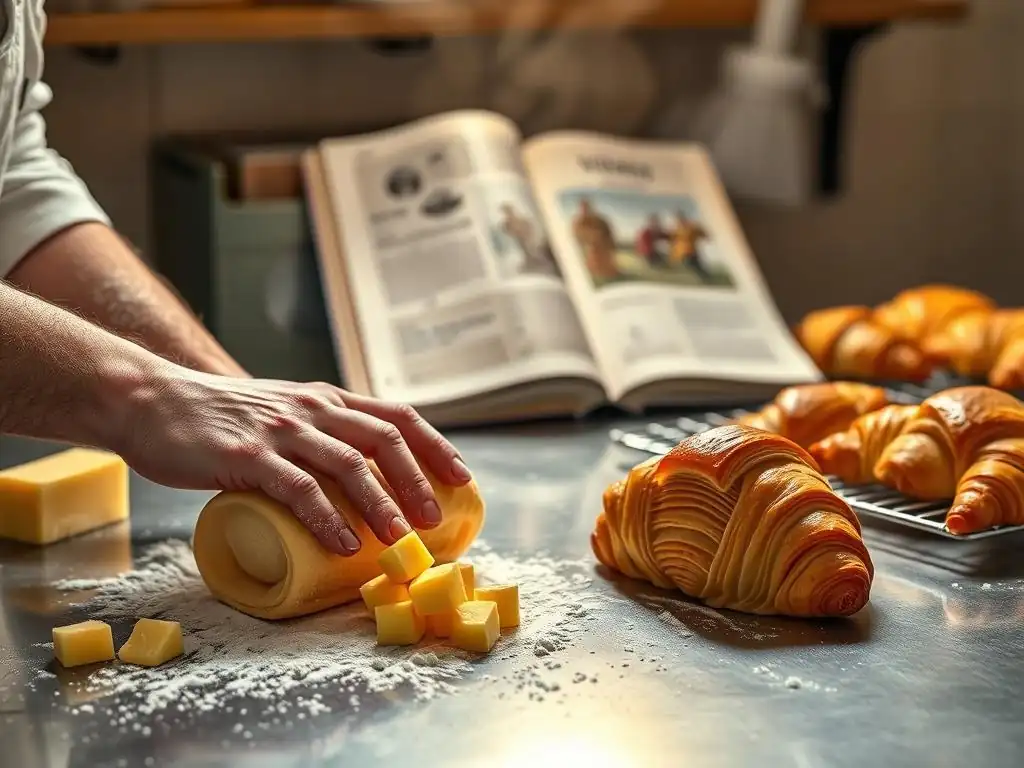
Achieving Flaky and Buttery Texture
Mastering how to make croissants with that coveted flaky and buttery texture requires attention to detail at every stage. Here are some key tips:
- Use high-quality, cold butter: The butter must be cold and the right consistency – pliable but not soft – for lamination. European-style butter with higher fat content is often preferred.
- Keep everything cold: The dough, butter, and even your work surface should be kept cool. Chill the dough adequately between folds (at least 30-60 minutes) to allow the gluten to relax and the butter to firm up.
- Roll evenly: Roll the dough to a consistent thickness before each fold and before final shaping. Uneven rolling leads to uneven layers.
- Don't rush proofing: Proofing is critical. A properly proofed croissant will be visibly expanded and jiggly. It should look airy and feel delicate.
- Ensure proper oven temperature: Start with a hot oven to get that initial steam lift, then adjust as needed to bake through without burning the exterior.
Troubleshooting Common Baking Issues
Even when following instructions closely on how to make croissants, issues can arise.
- Butter leaking during proofing or baking: This often indicates the butter was too soft during lamination, the dough wasn't chilled enough between folds, or the proofing temperature was too high, causing the butter to melt before the structure was set.
- Dense, bread-like texture: This is usually a result of insufficient lamination (not enough folds or layers), butter melting into the dough during lamination, or under-proofing. The dough didn't develop enough layers or didn't rise enough before baking.
- Croissants losing shape: This can happen if the dough wasn't chilled enough before shaping, the tension isn't right when rolling the triangles, or they are over-proofed.
- Tough texture: Overworking the dough during initial mixing or excessive rolling during lamination can develop too much gluten, resulting in a tough croissant. Using too high-protein flour can also contribute.
Here's a quick task list for successful home baking:
- [x] Use cold ingredients.
- [x] Chill dough adequately between folds.
- [x] Roll dough evenly.
- [x] Proof in a humid, temperature-controlled environment.
- [x] Bake at correct temperatures.
The Croissant Today: A Global Pastry Icon
Croissants in Bakeries and Cafes Worldwide
Today, the croissant is a staple in bakeries and cafes across continents, solidifying its status as a truly global pastry icon. From traditional Parisian boulangeries adhering to centuries-old techniques to modern cafes offering innovative fillings and variations, the croissant's presence is ubiquitous. Its popularity is such that the quality of a bakery is often judged by the perfection of its croissants – the flakiness, the buttery aroma, the open, airy interior structure.
The sheer volume produced globally is immense. While precise worldwide figures are hard to pinpoint, it's estimated that millions of croissants are consumed daily. In France alone, bakeries produce vast quantities for the morning rush, often using industrial methods for speed and consistency, although artisanal bakers still champion the traditional, time-consuming process. This widespread availability and consistent demand highlight the croissant's successful journey from a regional roll to an international phenomenon.
The Croissant's Enduring Appeal
The enduring appeal of the croissant lies in its unique combination of textures and flavors, a result of the intricate lamination process. The contrast between the crisp, shatteringly flaky exterior and the soft, slightly chewy, airy interior is a sensory delight. The rich, deep flavor of high-quality butter is fundamental to its identity. This sensory experience, coupled with its elegant shape and cultural associations with leisurely breakfasts and Parisian cafes, contributes to its lasting popularity.
Furthermore, the challenge and reward of making croissants contribute to their appeal, both for professional bakers and home enthusiasts learning how to make croissants. It's a pastry that demands skill and patience, and successfully creating a batch of perfect, golden croissants is a significant achievement. Its versatility also adds to its charm, being equally delicious plain, with jam, or as the base for sweet and savory fillings.
Conclusion: Celebrating History and Deliciousness
Encouraging Home Baking
The journey of the croissant, from its humble origins as the Austrian Kipferl to its status as a sophisticated French pastry and global icon, is a testament to culinary evolution and the power of technique. Understanding this history not only enriches our appreciation for this beloved pastry but also illuminates the fundamental principles behind its creation. The intricate process of lamination, perfected over generations, is what gives the croissant its unique character and makes learning how to make croissants a fascinating challenge.
We encourage you to embark on your own baking journey and try making croissants at home. While it requires time, patience, and practice, the reward of pulling a tray of warm, golden, flaky croissants from your own oven is immense. It connects you directly to centuries of baking tradition and allows you to experience the magic of layers transforming simple ingredients into something truly extraordinary. Don't be discouraged by initial attempts; like any skilled craft, mastering how to make croissants takes practice.
Resources for Croissant Baking
For those inspired to tackle the art of making croissants, numerous resources are available. Look for detailed guides and recipes that break down the lamination process step-by-step. Pay close attention to instructions regarding dough temperature, resting times, and folding techniques. Watching videos can also be incredibly helpful to visualize the process.
Remember that baking is an edible science, and variables like room temperature, butter consistency, and oven accuracy can all play a role. Don't be afraid to experiment and learn from each batch. With dedication and the right guidance, you too can learn how to make croissants that rival those from your favorite bakery, creating your own delicious history in your kitchen.
Frequently Asked Questions
How did the croissant originate, and is it truly French?
While the croissant is iconic in France, its origins are debated. It's believed to be inspired by the Austrian kipferl. The French refined it into the flaky pastry we know today.
What makes a croissant so difficult to bake at home?
The difficulty lies in the lamination process, which requires folding butter into dough repeatedly. This creates the distinct layers that give the croissant its airy texture.
What kind of flour is best for making croissants?
A strong bread flour with a high protein content is recommended. This ensures the dough develops enough gluten for the proper structure and rise of the croissant.
What's the best way to keep croissants fresh after baking?
Store them in an airtight container at room temperature. For longer storage, you can freeze them after they've cooled completely. Reheat them in the oven for a crisp, fresh taste.
Can I substitute ingredients in a croissant recipe, like using margarine instead of butter?
While possible, substituting butter will drastically affect the flavor and texture. Butter's high fat content and melting point are crucial for achieving the desired flakiness.
Final Reflection: The Enduring Allure of the Croissant
The seemingly simple croissant, a buttery, flaky testament to pastry artistry, holds a history far richer and more complex than its delicate layers might suggest. Its enduring popularity isn't just a testament to its deliciousness, but a reflection of our ongoing fascination with culinary traditions and the artistry of transforming simple ingredients into something truly extraordinary. The journey from humble beginnings to global culinary icon is a story worth savoring, just like the pastry itself.
The croissant's influence extends far beyond the breakfast table; it represents a cultural exchange, a testament to the power of culinary innovation to transcend borders and generations. Its evolution, from Viennese Kipferl to the iconic crescent shape we know today, mirrors the interconnectedness of our world. The meticulous process of making a croissant, demanding patience and precision, speaks to a deeper human desire for craftsmanship and the satisfaction of creating something beautiful and delicious. The best things in life are worth waiting for,
and the perfectly layered croissant is a delicious embodiment of this truth.
Now, consider your own approach to baking, to creation. Do you embrace the challenge of mastering a complex technique, or do you shy away from the effort required to achieve excellence? The croissant, in its layered complexity, serves as a metaphor for life itself: it requires patience, precision, and a willingness to embrace the process.
I invite you to take on the challenge, to learn the art of the croissant, and to discover the rewarding journey of transforming simple ingredients into something truly magnificent. The reward? Not just a delicious pastry, but a deeper appreciation for the artistry and dedication that goes into creating something truly special.
Unleash Your Inner Baker: Craft the Perfect Croissant!
Thanks for exploring the rich history and delicious layers of the croissant with us! We hope you gained a new appreciation for this iconic pastry. Now it's time to put your newfound knowledge to the test.
- Master the art of croissant-making: Try our step-by-step guide (available on our site - bakewithease.com) and conquer those delicate layers. This is your chance to truly experience the satisfaction of creating something beautiful and delicious from scratch.
- Share your croissant journey: Post a picture of your baking masterpiece on social media using #BakeWithEaseCroissant and inspire others!
- Explore further: Delve into our collection of other French pastry recipes. You might just discover your next favorite!
What unique twist will you add to your homemade croissant? Let's hear about it in the comments!