
Why Are Your Croissants Pale? (And How to Get Golden)

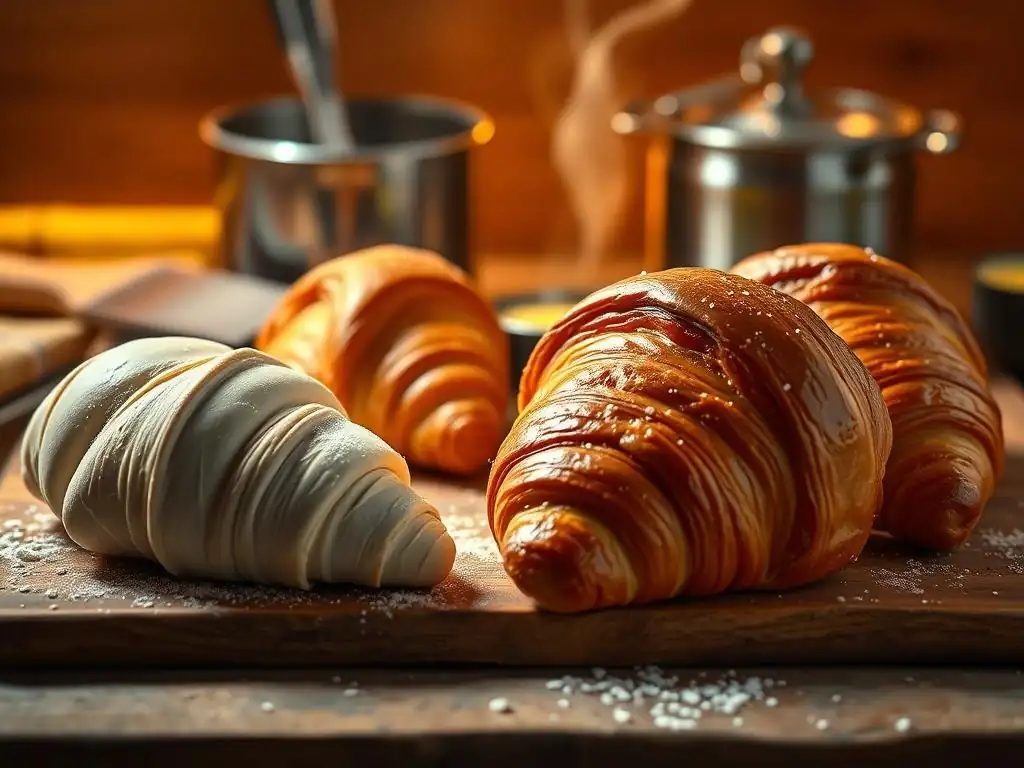
Welcome to BakeWithEase, your guide to baking brilliance! Ever wondered why your croissants lack that perfect golden hue? Unlocking the secrets to a truly golden bake is easier than you think. Dive into our article, "Why Are Your Croissants Pale? (And How to Get Golden)," and discover the simple techniques that will transform your Pale Croissants Golden Recipe from bland to breathtaking. Ready to achieve croissant perfection? Let's get baking!
- Why Are Your Croissants Pale? (And How to Get Golden) - BakeWithEase
- Understanding Pale Croissants: Common Baking Problems
- Achieving Golden Croissants: The Ultimate Baking Guide
- Troubleshooting Pale Croissants: Step-by-Step Solutions
- The Science Behind Croissant Color: Maillard Reaction Explained
- Golden Croissant Recipe: A BakeWithEase Guide to Perfection
- Tips and Tricks for Consistently Golden Croissants
-
Frequently Asked Questions
- Why are my croissants coming out pale even when I bake them for the recommended time?
- How does egg wash contribute to the golden color of croissants?
- What role does sugar play in achieving a golden croissant crust?
- Can the type of butter I use affect the color of my croissants?
- What oven settings are optimal for baking croissants to a golden brown?
- Final Reflection: The Golden Ratio of Baking and Life
- Unlock the Golden Crust: Bake Brighter Croissants!
Why Are Your Croissants Pale? (And How to Get Golden) - BakeWithEase
Understanding Pale Croissants: Common Baking Problems
Identifying the Reasons for Pale Croissants at Home
Achieving that perfect, flaky, golden-brown croissant crust is the mark of a successful bake. If your croissants are consistently coming out pale, lacking that rich hue, several factors in your process might be the culprits. One common reason is insufficient baking time or temperature. Croissants need adequate heat and time in the oven for the complex sugars and proteins on their surface to undergo browning reactions. If the oven is too cool or the baking duration too short, these reactions won't complete, leaving you with disappointingly pale results.
Another significant factor contributing to pale croissants is improper proofing. Proofing is the final rise before baking, allowing the yeast to produce gas and the dough to relax. However, over-proofing can sometimes lead to a weaker structure and a surface that dries out too much, preventing even browning.
Conversely, under-proofing means the dough hasn't developed sufficiently, which can also impact how it bakes and colors. The lack of an effective egg wash or using a wash that's too thin is also a frequent cause; the egg wash is crucial for providing a glossy surface and enhancing the golden color during baking. Without it, or with a poor application, the crust will likely remain dull and pale.
The Impact of Oven Temperature on Croissant Color
Oven temperature plays a critical role in the development of the golden crust on your croissants. If your oven temperature is set too low, even slightly, it can drastically hinder the browning process. The chemical reactions responsible for the desirable golden color, primarily the Maillard reaction and caramelization, require specific temperature ranges to occur effectively. The Maillard reaction, which involves amino acids and reducing sugars, typically starts around 280°F (140°C) but accelerates significantly at higher temperatures. Caramelization, the browning of sugars, begins around 320°F (160°C) or higher, depending on the type of sugar.
Baking croissants often involves starting at a relatively high temperature, perhaps around 400°F (200°C), for the initial phase to create oven spring and quickly set the layers, before potentially lowering it slightly to ensure the interior cooks through without the exterior burning. If your oven runs cool, or if you bake at a temperature below this effective range, these browning reactions won't reach their full potential, resulting in pale croissants.
This is why calibrating your oven or using an oven thermometer is essential – the temperature displayed on your oven's dial might not be the actual temperature inside. A difference of even 25°F can be the deciding factor between pale and perfectly golden.
The Role of Sugar and Dairy in Achieving a Golden-Brown Crust
Sugar and dairy, particularly butter and milk solids, are key ingredients that significantly contribute to the beautiful golden-brown color of baked goods like croissants. Sugar provides the necessary reducing sugars for the Maillard reaction to occur and also undergoes caramelization at high temperatures. While croissant dough doesn't typically contain a large amount of granulated sugar, the presence of lactose (milk sugar) from butter and potentially milk or cream used in the dough or egg wash is crucial. Lactose is a reducing sugar and actively participates in the Maillard reaction, contributing to browning.
Furthermore, the significant amount of butter laminated into the dough is vital. As the croissants bake, the butter melts and the milk solids within the butter are exposed to heat. These milk solids, rich in proteins and lactose, brown beautifully through the Maillard reaction. A high-quality butter with a good percentage of milk solids will contribute more effectively to browning than butter with fewer solids or alternative fats. The fat from the butter also helps distribute heat and can enhance the overall browning effect, resulting in a richer, more even golden hue compared to low-fat alternatives.
Achieving Golden Croissants: The Ultimate Baking Guide
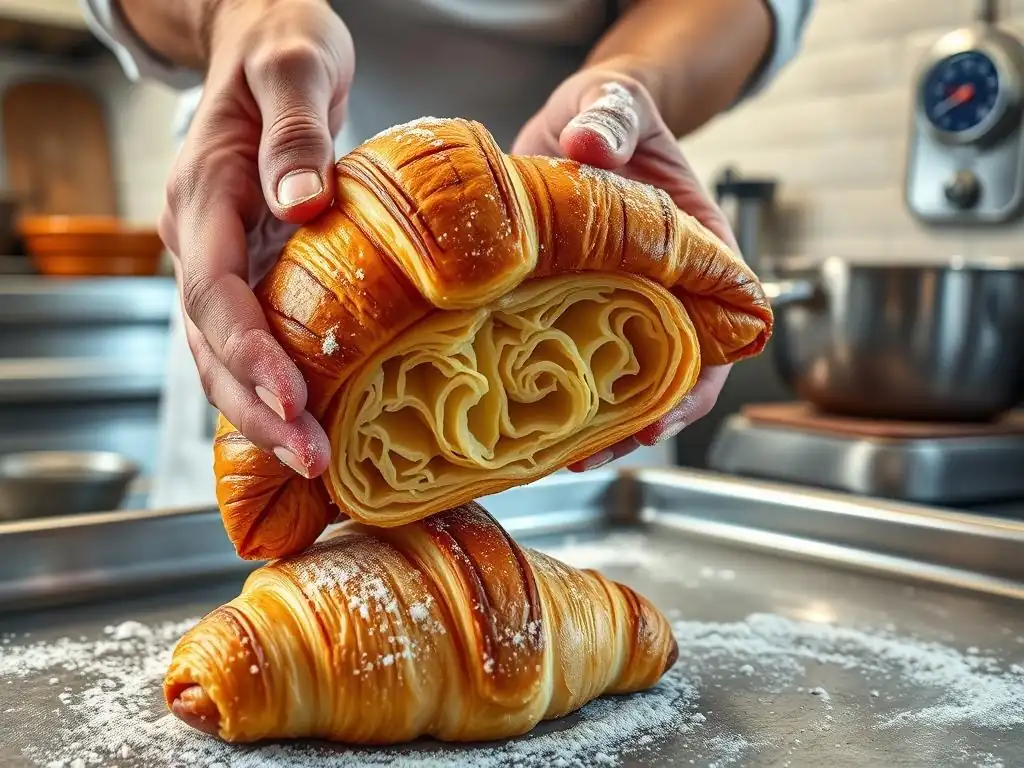
Mastering the Art of Golden-Brown Croissants: Key Techniques
Achieving that coveted golden hue on your croissants involves several key techniques working in harmony throughout the process. One fundamental technique is proper lamination, ensuring even layers of dough and butter. This structure allows heat to penetrate efficiently, cooking the interior while the exterior browns. Another crucial step is careful handling during shaping; avoid degassing the dough too much, as some internal moisture and gases contribute to the texture and how the surface browns.
The most direct technique for influencing color is the application of an effective egg wash. A standard wash typically consists of egg yolk mixed with a little water or milk. The proteins and sugars in the egg and dairy brown rapidly in the oven. Applying this wash evenly just before baking is essential. Beyond the wash, mastering your oven is paramount. Understanding its hot spots and ensuring it's accurately preheated to the correct temperature is vital. Using an oven thermometer can provide peace of mind and consistent results, helping you avoid the common issue of pale croissants.
Recipe Adjustments for Perfect Croissant Color: Increasing Sugar Content
While traditional croissant dough isn't heavily sweetened, subtle adjustments to the recipe can enhance the potential for a golden crust, particularly if you're struggling to achieve color with standard methods. One approach is to slightly increase the amount of sugar added to the dough itself. Even a small increase, perhaps from 20 grams to 25-30 grams per kilogram of flour, can provide more reducing sugars available for the Maillard reaction and caramelization during baking. This doesn't drastically alter the classic flavor profile but gives the surface more opportunity to brown effectively.
Alternatively, and often more effectively, you can adjust the composition of your egg wash. A simple wash of just egg yolk and water provides color, but adding a pinch of sugar or a teaspoon of honey to the wash dramatically boosts the browning potential. The sugars in honey caramelize beautifully, contributing a deep golden-brown finish.
Using milk or cream instead of water in the wash also adds lactose (milk sugar) and milk proteins, both of which enhance the Maillard reaction. Experimenting with washes like egg yolk + milk + pinch of sugar can significantly improve the golden color of your pale croissants.
Troubleshooting Pale Croissants: Step-by-Step Solutions
Solution 1: Adjusting Oven Temperature for Ideal Croissant Baking
If your croissants are coming out pale, the very first thing to check is your oven temperature. Many home ovens are not calibrated accurately, and the temperature displayed can be significantly different from the actual temperature inside. For croissants, you generally need a temperature in the range of 375°F to 400°F (approximately 190°C to 200°C) for optimal browning and lift. If you are baking at a lower temperature, the browning reactions won't occur sufficiently within the typical baking time of 15-25 minutes, depending on size.
To implement this solution, acquire an inexpensive oven thermometer and place it inside your oven. Preheat your oven to the temperature specified in your recipe (e.g., 390°F or 200°C) and wait at least 20-30 minutes after the preheat indicator turns off to allow the temperature to stabilize. Check the thermometer's reading.
If it's lower than your target temperature, adjust your oven's setting upwards until the thermometer reads correctly. For example, if your oven reads 350°F when set to 390°F, you might need to set it to 430°F to achieve the desired 390°F. This simple step is fundamental for a reliable pale croissants golden recipe.
Using an Oven Thermometer for Consistent Croissant Color
An oven thermometer is an indispensable tool for any serious baker, especially when tackling delicate pastries like croissants where consistent temperature is paramount for color and texture. Without one, you are essentially guessing your oven's true temperature. This uncertainty is a leading cause of variable baking results, including pale croissants. By placing a thermometer in the center of your oven, you get an accurate, real-time reading of the ambient temperature.
Consistency is key to achieving that perfect golden hue bake after bake. Once you know how your oven performs, you can make precise adjustments. If your oven consistently runs cool by 30°F, you know to set your dial 30°F higher than the recipe calls for. This eliminates the guesswork and ensures that the surface of your croissants reaches the temperatures required for the Maillard reaction and caramelization to produce a rich, even golden-brown crust, transforming your pale croissants into masterpieces.
Solution 2: Enhancing the Egg Wash for a Rich, Golden Hue
A high-quality, properly applied egg wash is perhaps the most direct method to ensure your croissants achieve a rich, golden color. A common issue leading to pale croissants is using a wash that is too thin (too much water), applied too sparsely, or omitted entirely. The egg proteins and fats, along with any added dairy or sugar, provide the necessary components for significant browning during baking.
To enhance your egg wash, consider using a mixture richer in egg yolk, as yolks contain more fat and browning potential than whites. A ratio of 1 egg yolk to 1-2 tablespoons of milk or cream often yields a richer color than using a whole egg and water. Apply the wash evenly with a soft pastry brush just before the croissants go into the oven.
Ensure you get good coverage but avoid letting pools of wash collect in the crevices between layers, as this can glue them together and inhibit rise. A second light coat might be applied partway through baking (around the 10-12 minute mark), but be cautious not to deflate the pastries.
Egg Wash Variations: Adding Honey for Color
Beyond adjusting the egg-to-liquid ratio, incorporating a touch of sugar or honey into your egg wash is a powerful technique for achieving a deeper golden-brown color and a slightly glossier finish. Honey is particularly effective due to its natural sugars, which caramelize beautifully at baking temperatures. A simple variation involves whisking together one egg yolk with one tablespoon of milk or cream and then adding about half a teaspoon of honey or granulated sugar. Ensure the sugar dissolves completely into the wash.
This enhanced wash provides extra fuel for the browning reactions on the croissant surface. When baked, the sugars in the honey or added sugar, combined with the egg and dairy proteins, create a vibrant, appetizing golden hue. This method is especially useful if you find your standard egg wash results in pale croissants despite correct oven temperature and proofing. It's a simple yet effective tweak for your pale croissants golden recipe quest.
Solution 3: Optimizing Proofing Time for Enhanced Croissant Color
Proper proofing is a delicate balance, and getting it wrong can impact the final color of your croissants. If your croissants are pale, consider whether they are being under-proofed or over-proofed. Under-proofed croissants are dense and may not expand fully in the oven; while they will eventually brown, the texture will be off, and the browning might be uneven.
More commonly, over-proofing can contribute to paleness. During over-proofing, the dough structure weakens, and the surface can develop a dry skin. This dry surface inhibits the even distribution of the egg wash and can prevent the surface from browning uniformly or as deeply as it should.
Optimal proofing for croissants typically involves letting them rise in a warm, humid environment until they are visibly puffy and jiggly, but not so fragile that they collapse when gently touched. This often takes 1.5 to 3 hours at room temperature (around 75-80°F or 24-27°C) with sufficient humidity. A properly proofed croissant will have a slightly tacky surface that accepts the egg wash well, providing a smooth, receptive canvas for browning. If your pale croissants seem too large or deflated before baking, they might be over-proofed.
The Impact of Over-Proofing on Croissant Color
Over-proofing can negatively impact croissant color in a couple of ways. Firstly, as mentioned, the surface can dry out and develop a skin, which prevents the egg wash from adhering smoothly and evenly. An uneven wash leads to splotchy or incomplete browning. Secondly, excessive proofing can sometimes deplete the readily available surface sugars and change the dough's surface chemistry in a way that slightly hinders the Maillard reaction compared to optimally proofed dough.
Think of it like this: the surface needs to be just right – slightly moist and tacky – for the egg wash to form a continuous film that browns beautifully. Over-proofing compromises this ideal surface state.
While the primary issue with over-proofing is usually structural (leading to collapsing or poor layers), its effect on surface condition is a subtle but real contributor to pale croissants. Ensuring your proofing environment has adequate humidity (like using a proofing box or placing them in a turned-off oven with a pan of hot water) can help prevent the surface from drying out during proofing, thus improving its browning potential.
The Science Behind Croissant Color: Maillard Reaction Explained
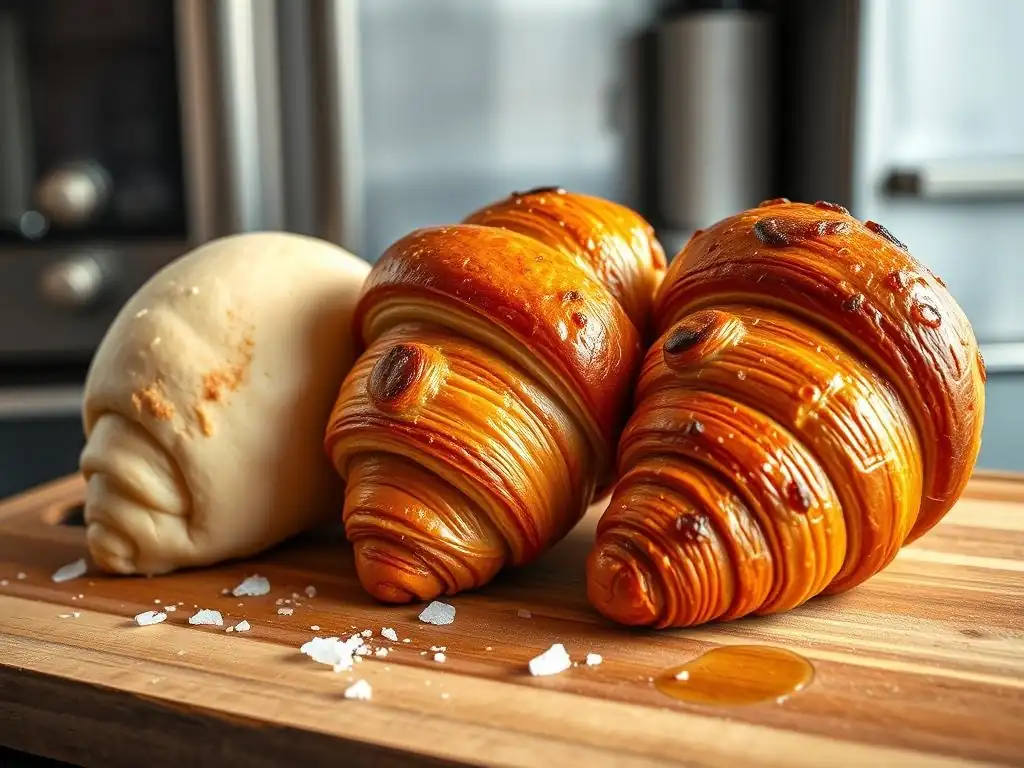
Exploring the Maillard Reaction in Croissant Baking
The beautiful golden-brown color on your baked goods, including croissants, is primarily the result of a complex chemical process called the Maillard reaction. This reaction occurs when amino acids (from proteins, like those in flour, egg, and milk solids) react with reducing sugars (like glucose, fructose, lactose, and maltose) under heat. It's not a single reaction but a cascade of reactions that produce hundreds of different compounds, many of which contribute to the color and flavor of baked crusts, roasted meats, and toasted bread.
In croissant baking, the Maillard reaction happens intensely on the surface where the temperature is highest and where ingredients like flour proteins, butter's milk solids, and the components of the egg wash come together. This reaction begins to occur noticeably at temperatures above 280°F (140°C). As the temperature increases, the reaction accelerates, producing the characteristic brown pigments (melanoidins) and contributing to the complex, savory-sweet aroma and flavor that makes croissants so appealing. Without this reaction, triggered by sufficient heat and the presence of proteins and sugars, your croissants would remain pale and lack depth of flavor.
Maximizing the Maillard Reaction for Golden-Brown Results
To maximize the Maillard reaction and ensure your pale croissants become golden, you need to optimize the conditions under which it occurs. The key factors are temperature, time, and the presence of reactants (amino acids and reducing sugars) and moisture on the surface. Baking at the correct, sufficiently high temperature (typically above 375°F or 190°C) is crucial, as the reaction proceeds much faster at higher temperatures. Ensuring your oven is accurately calibrated is paramount.
Secondly, the presence of reducing sugars and proteins on the surface must be adequate. This is where the egg wash, especially one enhanced with milk, cream, or a touch of sugar/honey, plays a significant role. The wash coats the surface with a layer rich in these reactants.
The moisture content on the surface is also important; the Maillard reaction works best in a relatively dry environment, but the surface shouldn't be completely dry (like the skin from over-proofing). The initial heat of the oven helps evaporate surface moisture quickly, allowing the reaction to take over and create that desirable golden hue. A properly executed pale croissants golden recipe pays close attention to these elements.
Golden Croissant Recipe: A BakeWithEase Guide to Perfection
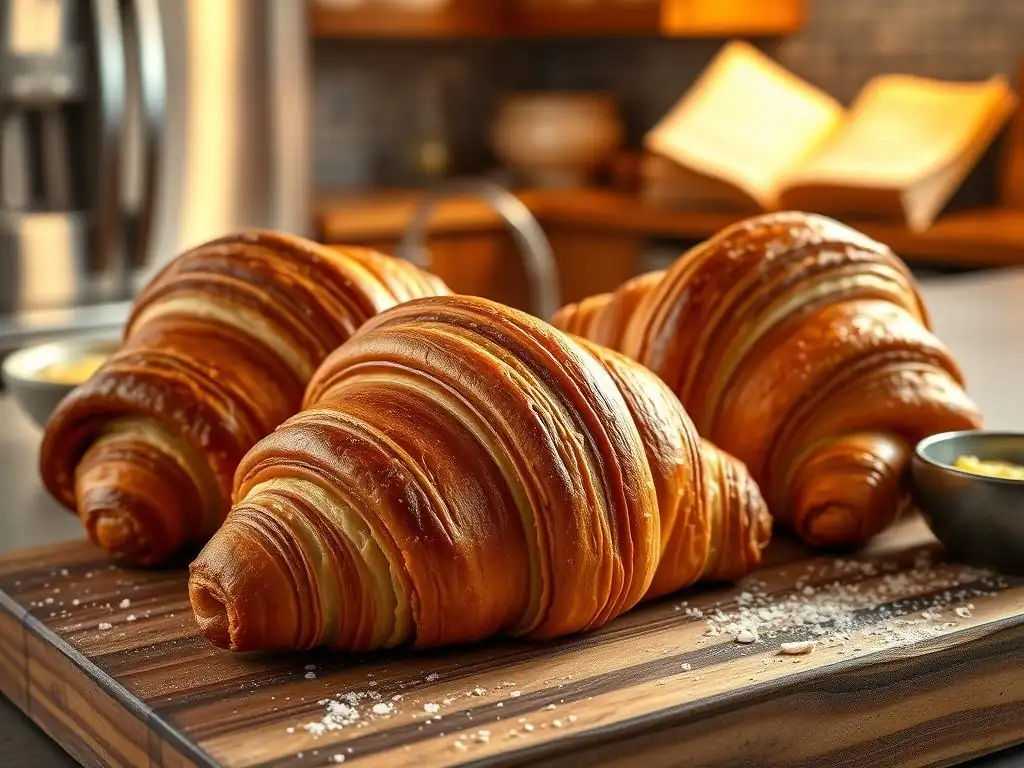
Ingredients for Golden Croissants: High-Fat Butter and Strong Flour
Crafting golden croissants starts with selecting the right ingredients that contribute to both structure and color. You'll need high-quality, high-protein bread flour (typically around 12-14% protein) for a strong gluten network that can support the many layers and provide structure during the significant rise.
Equally important is high-fat butter, often referred to as European-style butter, which usually contains at least 82% butterfat compared to the standard 80% in many regions. The higher fat content makes the butter more pliable for lamination and also means a slightly higher concentration of milk solids, which are essential for browning via the Maillard reaction.
For the dough itself, beyond flour and butter, you'll need water or milk (milk adds more lactose for browning), yeast (active dry or instant), a small amount of sugar (around 20-30 grams per kilogram of flour is typical), and salt. The sugar in the dough feeds the yeast and contributes to flavor and some browning.
For the crucial egg wash that provides the golden finish, you'll need eggs, potentially milk or cream, and optionally a pinch of sugar or honey for enhanced color. Using cold ingredients and maintaining cold temperatures throughout the process is vital for successful lamination, which in turn supports even baking and coloring.
Step-by-Step Baking Instructions for Golden Croissants: Cold Fermentation Technique
Achieving golden croissants with beautiful layers often benefits from a cold fermentation technique, which develops flavor and makes the dough easier to handle. Here's a simplified process focusing on steps that ensure color:
- Prepare the Dough: Mix your dough ingredients (flour, water/milk, yeast, sugar, salt) until a smooth dough forms. Knead slightly, then chill thoroughly for several hours, ideally overnight.
- Prepare the Butter Block: Shape your cold, high-fat butter into a flat, rectangular block.
- Laminate: Encase the butter in the dough. Perform a series of folds (typically 3-4 "turns," like a book fold or letter fold) with chilling periods (at least 30-60 minutes) in between each turn. This creates hundreds of thin layers of dough and butter. Keep everything cold.
- Shape: Roll the laminated dough to the desired thickness (around 3-4mm), cut into triangles, and shape into croissants.
- Proof: Place shaped croissants on baking sheets. Proof in a warm, humid environment (75-80°F or 24-27°C is ideal, with 70-80% humidity) until significantly puffy and jiggly, showing distinct layers. This could take 1.5 to 3 hours. They should look expanded but not fragile or collapsed.
- Egg Wash: Gently brush the proofed croissants just before baking with your chosen egg wash (e.g., egg yolk + milk + pinch of sugar). Ensure even coverage.
- Bake: Preheat your oven accurately using an oven thermometer to 390°F (200°C). Bake for 15-25 minutes, depending on size. They should puff dramatically, separate into layers, and turn a rich golden-brown. If they are browning too quickly, you might reduce the temperature slightly partway through (e.g., to 375°F or 190°C) or tent loosely with foil, but aim for sufficient time for the color to develop.
- Cool: Let cool slightly on a wire rack before devouring.
Following these steps, particularly focusing on cold lamination, proper proofing, and a good egg wash baked in an accurately heated oven, is key to transforming pale croissants into golden perfection.
Tips and Tricks for Consistently Golden Croissants
Pro Baking Secrets for Perfect Croissant Color Every Time
Achieving consistently golden croissants like those from a French patisserie requires attention to detail and a few pro tricks. One key secret is temperature management, not just in the oven but throughout the process. Keeping the dough and butter cold during lamination ensures clean layers, which expand properly and brown evenly. Many professionals use a cold fermentation step (retarding the shaped croissants in the refrigerator overnight) which develops flavor and often results in a slightly more robust structure that proofs and bakes beautifully, promoting even color.
Another tip is to use a convection setting on your oven if available. Convection circulates hot air, leading to more even baking and often faster, more uniform browning. If using convection, you may need to reduce the temperature by about 25°F (15°C) compared to conventional baking. Finally, don't be afraid to experiment with your egg wash. Adding a tiny amount of dark corn syrup or maple syrup to the wash (just a few drops per egg yolk) can boost caramelization and shine, giving you that deep golden, glossy finish that defines a beautiful croissant.
Avoiding Common Mistakes that Lead to Pale Croissants
To avoid the frustration of pale croissants and consistently achieve a golden bake, be mindful of these common pitfalls. Firstly, do not skip or skimp on the egg wash. A thin, watery wash or incomplete coverage is a prime suspect for paleness. Ensure your wash is rich and applied evenly. Secondly, verify your oven temperature. An inaccurate oven is perhaps the most frequent cause of pale baked goods. Use an oven thermometer every time you bake.
Thirdly, avoid over-proofing. While under-proofing isn't ideal either, over-proofed dough can develop a poor surface texture that doesn't brown well. Proof until puffy and jiggly, but stop before they look fragile or start to spread excessively. Lastly, ensure your ingredients, particularly your butter, are high quality. The milk solids in good butter are crucial for the Maillard reaction. By addressing these common issues – egg wash, oven temperature, proofing, and ingredients – you'll be well on your way to mastering the pale croissants golden recipe and baking beautiful, golden-brown croissants consistently.
Frequently Asked Questions
Why are my croissants coming out pale even when I bake them for the recommended time?
Pale croissants often indicate insufficient sugar in the dough or not enough egg wash. Another possibility is oven temperature is too low.
How does egg wash contribute to the golden color of croissants?
Egg wash contains proteins and sugars that caramelize during baking. This caramelization creates the golden-brown color we expect on croissants.
What role does sugar play in achieving a golden croissant crust?
Sugar helps with browning via the Maillard reaction. A balanced sugar content ensures the crust develops a rich, golden hue without burning.
Can the type of butter I use affect the color of my croissants?
Yes, butter with a higher fat content can contribute to a richer color. European-style butter, known for its higher fat content, is often preferred for achieving a golden crust.
What oven settings are optimal for baking croissants to a golden brown?
A consistent oven temperature is crucial. Start at a higher temperature (e.g., 400°F/200°C) to encourage initial rise and color development, then reduce it slightly to ensure the inside is fully cooked without burning the outside.
Final Reflection: The Golden Ratio of Baking and Life
The pursuit of the perfect golden-brown croissant isn't just about aesthetics; it's a metaphor for achieving excellence in any endeavor. A pale croissant, while perhaps still delicious, lacks that visual appeal, that promise of flaky, buttery perfection. It highlights the importance of understanding the subtle nuances of a process to achieve truly exceptional results.
The journey to mastering the croissant, much like navigating life's challenges, requires patience, precision, and a willingness to learn from mistakes. Each slightly pale batch represents a lesson learned, a step closer to understanding the interplay of temperature, time, and technique. As Julia Child wisely said, You don't have to be a genius or a great chef to cook wonderfully. You just have to have a love for food and a willingness to learn.
This applies equally to baking and to life's broader ambitions. The pursuit of that perfect golden hue reflects a deeper desire for mastery and self-improvement.
Now, I invite you to consider your own "pale croissants"—those areas in your life where you've fallen short of your ideal. What adjustments can you make to achieve your desired "golden" outcome? What lessons can you learn from past "pale" attempts? Don't be discouraged by imperfections; embrace them as opportunities for growth and refinement. The journey towards excellence, whether in baking or in life, is a rewarding one, filled with the sweet taste of success and the warmth of accomplishment.
Unlock the Golden Crust: Bake Brighter Croissants!
Thanks for taking the time to learn about achieving perfectly golden croissants! You now have the knowledge to transform your baking. Ready to put your new skills to the test?
- Bake a batch of golden croissants today! Use what you’ve learned to make your next batch the best yet. Remember those tips on steam and oven temperature?
- Share your baking triumph! Post a picture of your golden-brown creations on social media and tag us! Let's inspire others.
- Try a new variation! Experiment with different flours or fillings to discover your perfect croissant recipe.
What unique twist will you add to your next croissant masterpiece?