
Thermometer Tactics: InstantRead vs Candy vs Oil for Precision Bakes

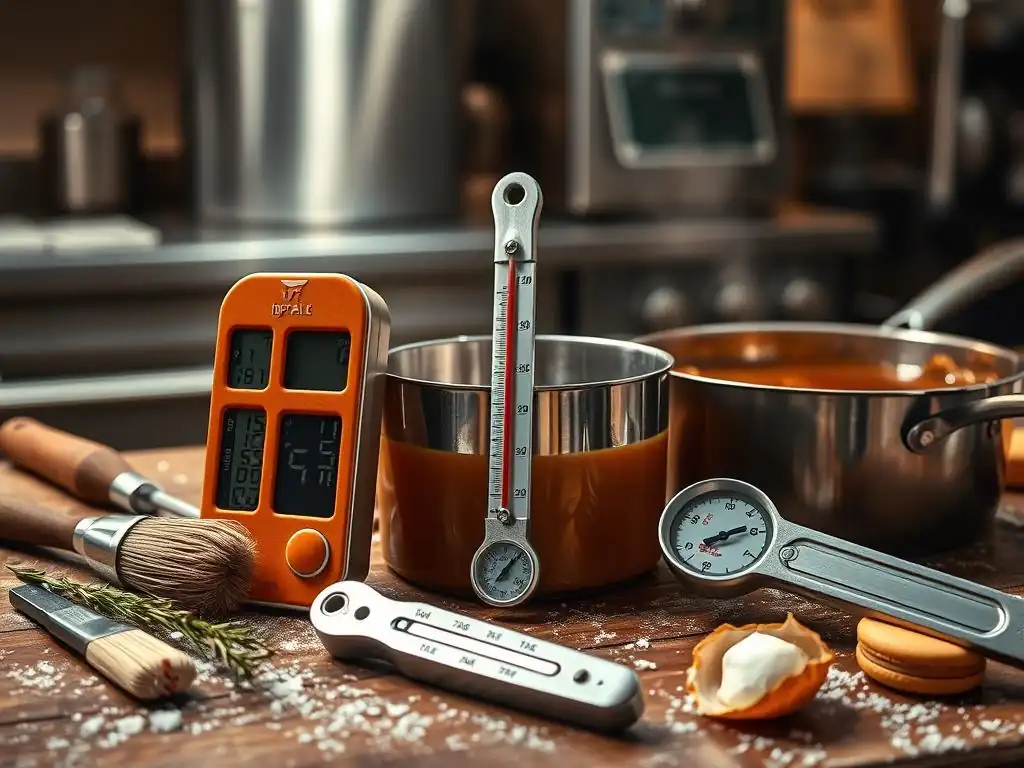
Welcome to BakeWithEase, your haven for conquering the kitchen, one delicious bake at a time! Ever wonder if your oven's lying about its temperature? Or if your cookies are really done? This week we're diving deep into the world of instant read thermometer baking tips to unlock the secrets to perfectly baked goods, every single time. Discover how to use this essential tool (and others!) to elevate your baking game and banish underbaked disasters forever. Ready to become a baking precisionist? Let's get started!
- Baking Thermometers: Instant-Read vs. Candy vs. Deep-Fry for Precision
- Understanding Baking Thermometers: Achieve Baking Success
- Instant-Read Thermometers: Quick and Convenient Baking Checks
- Candy Thermometers: Mastering Sugar Work and Deep Frying
- Deep-Fry Thermometers: Achieving Precise Temperatures for Deep Frying
-
Instant-Read vs. Candy vs. Deep-Fry Thermometers: A Detailed Comparison
- Accuracy Comparison: Which Thermometer Wins?
- Speed and Convenience: Instant-Read vs. Candy Thermometer
- Temperature Range: Matching the Thermometer to Your Baking Needs
- Durability and Maintenance: Keeping Your Thermometers in Top Shape
- Cost Considerations: Finding the Best Thermometer for Your Budget
- Choosing the Right Thermometer for Your Baking Needs
- Mastering Baking with Thermometers: Advanced Techniques
- Conclusion: Elevate Your Baking with Precise Temperature Control
-
Frequently Asked Questions
- What is the primary benefit of using an instant-read thermometer in baking?
- How does an instant-read thermometer differ from a candy thermometer in baking applications?
- Can I use an instant-read thermometer for deep-frying oil, even though the article focuses on baking?
- What are some common baking mistakes that an instant-read thermometer can help prevent?
- Where should I insert the instant-read thermometer for the most accurate reading in a loaf of bread?
- Final Reflection: The Pursuit of Baking Perfection
- Unlock Baking Perfection: Master Your Thermometer Technique!
Baking Thermometers: Instant-Read vs. Candy vs. Deep-Fry for Precision
Understanding Baking Thermometers: Achieve Baking Success
Why Temperature Matters for Baking Success
Temperature is a silent but crucial ingredient in baking. It directly influences the chemical and physical transformations that occur, from activating yeast and setting proteins to crystallizing sugars and developing structure. For instance, yeast thrives in a specific temperature range, typically between 105°F and 115°F (40°C - 46°C). If your liquid is too cold, the yeast won't activate; too hot, and you risk killing the organisms vital for leavening your bread or dough. Similarly, the temperature of butter affects how it incorporates into doughs and batters, impacting final texture.
Beyond leavening, temperature dictates the setting of custards (around 160°F - 170°F / 71°C - 77°C to prevent curdling), the structure of meringue (specific sugar syrup temperatures create stability), and the texture of cookies (temperature of dough and oven impact spread and chewiness). Even slightly off temperatures can lead to disappointing results like sunken cakes, tough pastry, or grainy fudge. Mastering temperature control is not just about following a recipe; it's about understanding the science behind the bake to ensure consistent, successful outcomes every time.
The Importance of Accurate Temperature Readings in Baking
Reliance on inaccurate oven dials or simply "eyeballing" doneness can introduce significant variability into your baking. An oven thermostat can be off by as much as 50 degrees Fahrenheit, drastically altering baking times and results. Similarly, judging the readiness of a cake or bread solely by appearance can lead to an undercooked center or an overbaked crust. Accurate temperature readings remove this guesswork, providing objective data points that guide your process.
Precision is paramount in tasks like tempering chocolate, where specific melting and cooling temperatures must be hit exactly to achieve a stable, glossy finish. For sugar work, hitting the precise temperature stage (e.g., soft ball at 235-245°F / 118-129°C for fudge, or hard crack at 300-310°F / 149-154°C for brittle) is the sole determinant of the final candy texture. Using accurate thermometers ensures you reach these critical points reliably, leading to predictable and delicious results batch after batch.
Instant-Read Thermometers: Quick and Convenient Baking Checks
What is an Instant-Read Thermometer?
An instant-read thermometer is a probe-style thermometer designed to quickly measure the internal temperature of food. It typically features a sharp, slender metal probe connected to a digital display or an analog dial. These thermometers are characterized by their speed, providing a temperature reading within a few seconds (often 1-5 seconds for digital models). They are not designed to be left in food while it cooks, but rather used for rapid spot checks.
Available in various styles, from pocket-sized digital pens to larger, more robust analog probes, instant-read thermometers are versatile tools. They work by using a thermistor or thermocouple in the probe tip to detect temperature changes rapidly. Their primary utility lies in providing a quick, accurate snapshot of internal temperature at a specific moment, making them indispensable for checking doneness without significant heat loss or disruption to the baking process.
Benefits of Using an Instant-Read Thermometer for Baking
The primary benefit of an instant-read thermometer in baking is its speed and convenience. It allows bakers to quickly verify the internal temperature of baked goods like cakes, breads, muffins, and quick breads without having to wait long periods or rely on less reliable methods like the toothpick test. This rapid feedback loop helps prevent over-baking, which can result in dry, tough textures, and under-baking, which can lead to gummy or raw centers. Getting accurate instant read thermometer baking tips down can truly transform your baking.
Furthermore, instant-read thermometers are versatile. While excellent for cakes and breads, they can also be used to check the temperature of liquids for activating yeast, tempering chocolate (though careful technique is needed as it's not designed to clip on), or ensuring fillings like quiche or savory pastries reach a safe internal temperature (often around 165°F / 74°C for fillings containing eggs or meat). Their portability and ease of use make them a go-to tool for many baking tasks.
Best Uses for Instant-Read Thermometers in Baking: Checking Cake Doneness
One of the most common and effective instant read thermometer baking tips is using it to check the doneness of cakes. While the toothpick test is popular, it only tells you if the center is cooked; an instant-read thermometer tells you the actual internal temperature, which is a more reliable indicator of overall doneness and texture. Insert the probe into the thickest part of the cake, avoiding the sides or bottom of the pan.
Most cakes are done when their internal temperature reaches between 200°F and 210°F (93°C - 99°C). Richer cakes like pound cake or those with lots of fruit might be done slightly lower, around 190°F (88°C).
Beyond cakes, an instant-read thermometer is invaluable for bread baking. Lean bread doughs are typically done when the internal temperature reaches 190°F to 200°F (88°C - 93°C). For enriched doughs (with eggs, butter, milk), the target is often closer to 190°F (88°C). Checking the temperature of liquids for yeast activation ( 105°F - 115°F / 40°C - 46°C) is another crucial application. These instant read thermometer baking tips ensure your leavening is active and your finished products are perfectly cooked through.
Tips for Using Instant-Read Thermometers Accurately
To get the most accurate readings from your instant-read thermometer, always insert the probe into the thickest part of the food. For cakes, this is usually the center; for breads, the bottom crust or side. Ensure the probe is fully inserted and not touching the bottom or sides of the pan, which can give a falsely high reading due to contact with hot metal. Wait for the reading to stabilize before taking it – even for "instant" models, it takes a few seconds.
Calibration is key for any thermometer, including instant-reads. A simple ice bath test is recommended: fill a glass with ice, add a little water, stir, and insert the thermometer probe. It should read 32°F (0°C). If it doesn't, make a note of the difference or recalibrate if your model allows. Regular cleaning of the probe with soap and hot water is also essential for hygiene and to prevent flavor transfer, especially between sweet and savory bakes. Following these instant read thermometer baking tips ensures reliable results.
Limitations of Instant-Read Thermometers in Baking
While incredibly useful, instant-read thermometers have limitations. They are designed for quick spot checks, not for continuous monitoring of temperature over long periods. This makes them unsuitable for tasks like deep frying or candy making, which require maintaining a specific, often high, temperature for an extended duration. The probe isn't meant to be left submerged or clipped to the side of a pot during cooking.
Another limitation can be the temperature range of some models; while they handle oven temperatures well, some cheaper models might not be rated for the very high temperatures required for hard crack candy or deep frying. Probe length can also be a factor when dealing with very large items or deep pots. Understanding these limitations is important when choosing the right tool for a specific baking task.
Candy Thermometers: Mastering Sugar Work and Deep Frying
What is a Candy Thermometer?
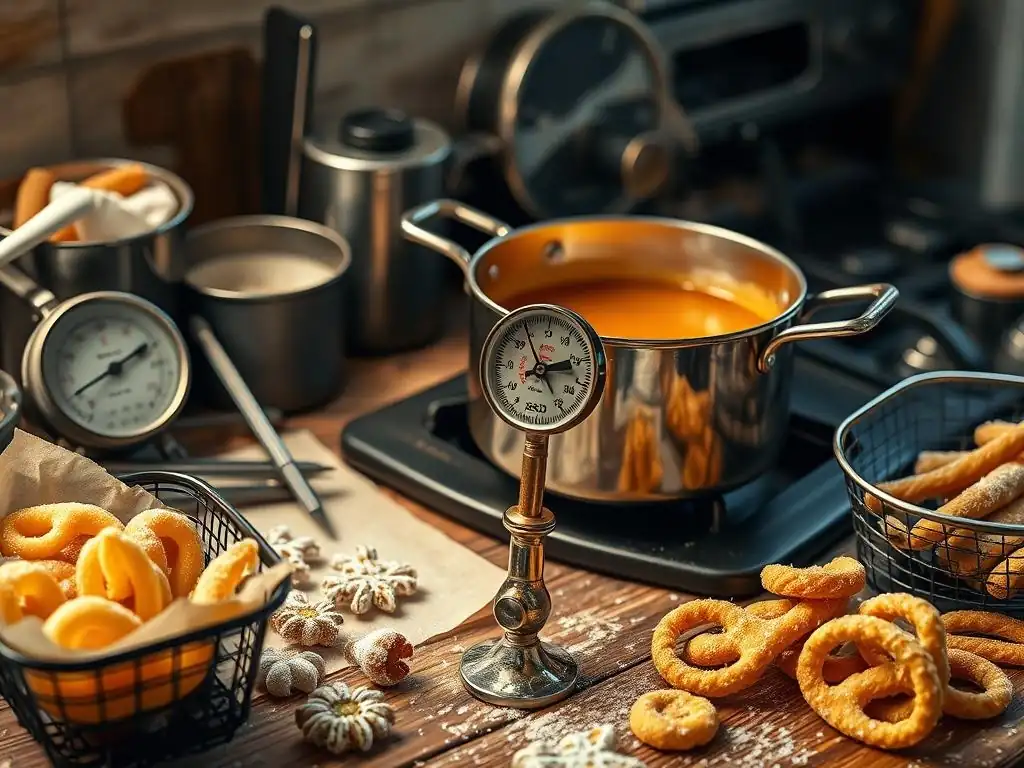
A candy thermometer is a specialized thermometer designed to measure the temperature of hot sugar syrups, oil, or other liquids heated to high temperatures. They typically feature a long probe or stem, often made of glass or metal, with a temperature scale marked with the various stages of sugar crystallization (thread, soft ball, firm ball, hard ball, soft crack, hard crack). Many candy thermometers include an adjustable clip to securely attach them to the side of a saucepan, allowing for hands-free, continuous monitoring.
These thermometers are built to withstand and accurately read temperatures well above the boiling point of water, often up to 400°F (200°C) or higher. While traditional models are analog and require reading a scale, digital candy thermometers are also available, offering precise digital readouts and sometimes alarms. Their design, particularly the clip and high-temperature range, makes them ideal for processes requiring sustained, high heat and precise temperature control.
Key Features of a Good Candy Thermometer for Baking
A reliable candy thermometer for baking tasks should have several key features. Firstly, a clear and easy-to-read temperature scale is essential, often marked with the different sugar stages for quick reference. A sturdy, adjustable clip is crucial, allowing the thermometer to be securely attached to pots of various sizes while ensuring the probe is submerged in the liquid without touching the bottom, which can give an inaccurate reading.
The temperature range should be sufficient for common sugar work and deep frying, typically up to at least 400°F (200°C). Durability is also important, as these thermometers handle hot liquids and high temperatures; look for robust construction. For glass types, a protective metal casing around the bulb can be beneficial. Digital versions offer precision and sometimes features like alarms, but ensure they are rated for the required high temperatures.
Using a Candy Thermometer for Caramel, Fudge, and Toffee
Precise temperature control is non-negotiable when making caramel, fudge, toffee, and other sugar confections. Each candy type requires the sugar syrup to reach a specific temperature stage to achieve the desired texture. For example, fudge requires the soft ball stage ( 235-245°F / 118-129°C), where a drop of syrup in cold water forms a soft, pliable ball. Caramel often falls into the soft ball to firm ball range ( 245-250°F / 118-121°C), resulting in a chewy texture.
Toffee, on the other hand, requires the hard crack stage ( 300-310°F / 149-154°C), where the sugar becomes brittle when cooled. Using a candy thermometer ensures you hit these exact temperatures. Attach the thermometer to the side of the pot, ensuring the bulb or probe is fully immersed in the boiling sugar syrup but not touching the pan bottom. Monitor the temperature carefully as it rises, removing the syrup from the heat the moment it reaches the target temperature to prevent overcooking.
Deep Frying with a Candy Thermometer: Achieving the Perfect Crust
Although primarily designed for sugar, candy thermometers are also well-suited for deep frying in a baking context, such as making doughnuts, churros, or fritters. The high temperature range and the ability to clip onto the pot make them effective for monitoring oil temperature. Maintaining a consistent oil temperature, typically between 350°F and 375°F (175°C - 190°C) for most baked goods, is crucial for achieving a perfectly cooked interior and a golden, crispy exterior without absorbing too much oil.
Attach the candy thermometer to the side of your deep-frying pot, ensuring the probe is submerged in the oil but not touching the bottom. Heat the oil slowly to the desired temperature before adding food. Be aware that adding food will cause the temperature to drop; the thermometer allows you to monitor this drop and adjust the heat accordingly to bring it back up, ensuring even cooking and optimal texture for your deep-fried treats.
Candy Thermometer Calibration: Ensuring Accuracy
Like all thermometers, candy thermometers can lose accuracy over time or be affected by altitude. Calibrating your candy thermometer is a simple yet vital step to ensure your sugar work and deep frying are successful. The most common method is the boiling water test: bring a pot of water to a rolling boil at sea level. A properly calibrated thermometer should read 212°F (100°C). Note that the boiling point decreases at higher altitudes (approximately 1°F for every 550 feet above sea level).
If your thermometer reads higher or lower than the expected boiling point for your altitude, you must adjust your target temperatures in recipes accordingly. For example, if it reads 210°F at sea level, add 2°F to all recipe temperatures (e.g., aim for 247°F instead of 245°F). Perform this test periodically, especially if you notice inconsistencies in your candy or deep-fried results, to maintain accuracy.
Deep-Fry Thermometers: Achieving Precise Temperatures for Deep Frying
Understanding Deep-Fry Thermometers
A deep-fry thermometer is specifically designed for measuring and maintaining the temperature of hot oil used for deep frying. While similar in appearance and function to candy thermometers (many can be used interchangeably), deep-fry thermometers are often built with a focus on the demands of frying oil. This can include more robust construction, a potentially wider temperature range specifically catering to high oil temperatures, and often a larger, more secure clip designed for deep pots.
These thermometers are essential for safe and effective deep frying. They allow you to heat oil to the precise temperature required for different foods and, crucially, to monitor and adjust that temperature as food is added, ensuring consistent cooking, proper browning, and preventing the food from becoming greasy (if the oil is too cool) or burning (if it's too hot).
When selecting a deep-fry thermometer for baking-related tasks like frying doughnuts or fritters, look for features that ensure safety and accuracy. A high temperature range is critical, often extending up to 500°F (260°C) or even higher, to safely handle the temperatures required for frying. A sturdy, adjustable clip is non-negotiable, allowing you to secure the thermometer to various pot sizes and keep the probe immersed in the oil without touching the bottom.
Clear, easy-to-read markings are important for quick checks while managing hot oil. Some deep-fry thermometers may also feature a heat-resistant handle or a designated cool zone on the stem for safer handling. While many are analog, digital deep-fry thermometers offer precise readings and sometimes include timers or temperature alarms, adding an extra layer of control and safety.
When to Use a Deep-Fry Thermometer
A deep-fry thermometer is indispensable whenever a recipe calls for cooking food by fully immersing it in hot oil. In the baking world, this includes making classic yeast or cake doughnuts, French crullers, beignets, churros, apple fritters, or even some types of fried pies. These items require specific oil temperatures to cook through properly, develop the right crust and color, and prevent excessive oil absorption.
Using a deep-fry thermometer ensures you hit the optimal temperature range, typically between 350°F and 375°F (175°C - 190°C) depending on the specific item. It allows you to monitor the temperature fluctuations that occur when food is added to the hot oil and adjust your heat source to maintain consistency throughout the frying process, leading to uniformly cooked, golden-brown results.
Safely Using Deep-Fry Thermometers
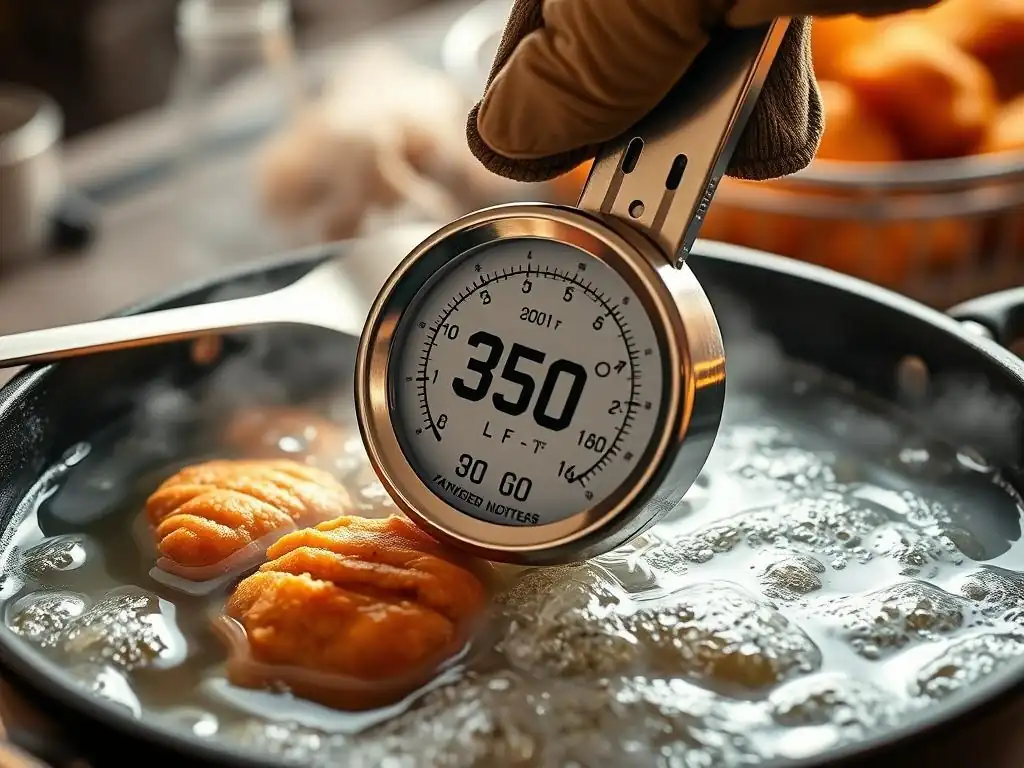
Working with hot oil requires caution, and using a deep-fry thermometer safely is part of that. Always ensure the thermometer is securely clipped to the side of the pot, with the probe fully submerged in the oil but not touching the bottom. Keep the handle or top of the thermometer away from direct heat sources. Never leave hot oil unattended, and have a plan in place for grease fires (like a metal lid to smother flames, never water).
Insert food gently into the hot oil to avoid splashing. Monitor the thermometer as you fry; the temperature will drop when food is added. Adjust your heat as needed to bring the oil back up to the target temperature, but avoid rapid, drastic heat changes. Allow the thermometer to cool down with the oil before attempting to clean it.
Calibration of a Deep-Fry Thermometer: The Importance of Accuracy
Accurate temperature readings are critical for both the quality and safety of deep-fried foods. An uncalibrated deep-fry thermometer can lead to oil that's too cool (resulting in greasy food) or too hot (leading to burnt exteriors and raw interiors). Calibrating your deep-fry thermometer regularly is essential. The boiling water test is the standard method: at sea level, boiling water should read 212°F (100°C).
Perform this test periodically to check your thermometer's accuracy. If it reads off, note the variance and adjust your target frying temperatures accordingly. For instance, if your thermometer reads 210°F in boiling water at sea level, you know it reads 2 degrees low, so you would aim for 352°F when the recipe calls for 350°F oil. Consistent calibration ensures your deep-fried baked goods are cooked to perfection and safe to eat.
Instant-Read vs. Candy vs. Deep-Fry Thermometers: A Detailed Comparison
Accuracy Comparison: Which Thermometer Wins?
When it comes to sheer accuracy, high-quality digital instant-read thermometers often have the edge, frequently boasting accuracy within +/- 1°F or 2°F. They tend to be less susceptible to parallax errors compared to reading the scale on an analog thermometer. However, the accuracy of any thermometer is dependent on proper calibration and usage.
Analog candy and deep-fry thermometers, while reliable when calibrated, might have a slightly wider margin of error or be harder to read precisely to the degree. Digital versions of candy/deep-fry thermometers can match the accuracy of instant-reads but are less common. Ultimately, a well-calibrated, correctly used thermometer of any type will provide sufficiently accurate results for most baking and frying tasks, but digital instant-reads are generally considered the most precise when calibrated.
Speed and Convenience: Instant-Read vs. Candy Thermometer
Speed is where the instant-read thermometer truly shines. Providing a reading in mere seconds, it's perfect for quick spot checks on cakes, breads, or custards without disrupting the cooking process for long. It's highly convenient for checking multiple items or different spots within a large item quickly. These instant read thermometer baking tips emphasize speed for efficiency.
Candy and deep-fry thermometers, while slower to register changes, are designed for continuous monitoring. Their clip feature allows them to be left in the pot, providing a constant, hands-free temperature display. This makes them far more convenient for processes like candy making or deep frying, where temperature needs to be watched and maintained over a longer period. Neither is inherently "better"; their convenience depends entirely on the task at hand.
Temperature Range: Matching the Thermometer to Your Baking Needs
Matching the thermometer's temperature range to your specific baking needs is crucial. Instant-read thermometers are typically sufficient for checking internal temperatures of baked goods and liquids, often ranging up to 300°F or 400°F. However, they are not built for sustained exposure to temperatures at the higher end of this range.
Candy and deep-fry thermometers are specifically designed for higher, sustained temperatures. Candy thermometers usually go up to at least 400°F, covering all sugar stages. Deep-fry thermometers often reach 500°F or higher, necessary for safely monitoring hot oil. If your baking involves high-temperature sugar work or deep frying, a dedicated candy or deep-fry thermometer with an adequate range is essential, as an instant-read is not suitable for these sustained high-heat tasks.
Durability and Maintenance: Keeping Your Thermometers in Top Shape
Durability varies significantly across thermometer types and between specific models. Analog glass candy thermometers are the most fragile and require careful handling and storage to avoid breakage. Digital instant-reads are susceptible to water damage (check if yours is waterproof!) and can be damaged if dropped. Metal probe thermometers, both digital and analog, tend to be more robust.
Proper maintenance involves cleaning the probe thoroughly after each use, avoiding submerging digital heads unless specified as waterproof. Store thermometers safely where they won't be dropped or knocked over. For digital models, check and replace batteries as needed. Regular calibration is also a form of maintenance, ensuring the tool remains accurate over its lifespan. Following these steps helps prolong the life and accuracy of your thermometers.
Cost Considerations: Finding the Best Thermometer for Your Budget
The cost of baking thermometers varies widely. Basic analog candy or deep-fry thermometers are often the most affordable, typically ranging from $10 to $25. Digital instant-read thermometers have a broader price range, from basic models around $20-$30 to high-end, ultra-fast, and accurate models costing $50 or well over $100.
Digital candy or deep-fry thermometers are generally more expensive than their analog counterparts. When considering cost, think about how frequently you'll use the thermometer and for what tasks. An avid baker who frequently makes bread and cakes might prioritize investing in a high-quality instant-read, while someone focused on confectionery and fried treats will need a reliable candy/deep-fry thermometer. Sometimes, owning two different types is the most effective solution for covering a range of baking activities.
Choosing the Right Thermometer for Your Baking Needs
Consider Your Baking Style: What Do You Bake Most Often?
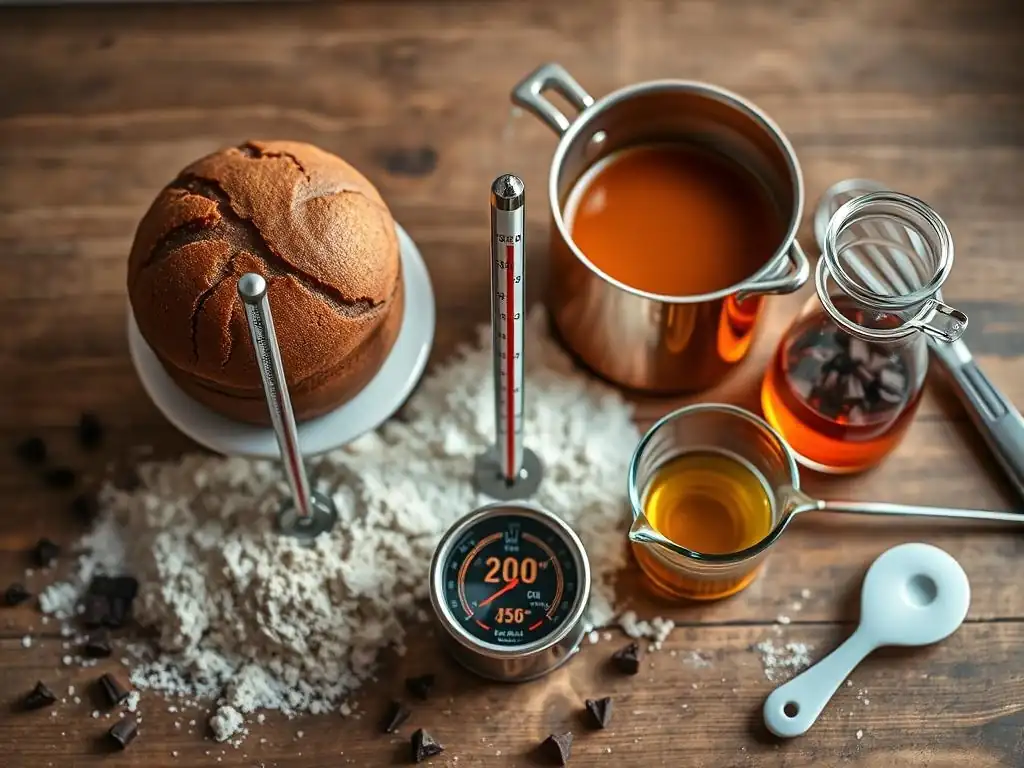
Your baking habits should be the primary driver when choosing a thermometer. If your passion lies in baking cakes, muffins, quick breads, and yeasted loaves, an instant-read thermometer is arguably the most essential tool. Its ability to quickly check internal doneness and liquid temperatures for yeast activation makes it invaluable for these tasks. Leveraging instant read thermometer baking tips will directly improve results in these areas.
Conversely, if you frequently venture into the world of homemade candies like fudge, caramels, or brittle, or enjoy making deep-fried treats such as doughnuts or churros, a dedicated candy or deep-fry thermometer is a necessity. These tasks require precise, sustained high-temperature monitoring that an instant-read thermometer is not designed for. Knowing your baking focus helps you select the tool that will provide the most benefit.
Budget and Frequency of Use: Investing in Quality
While budget is always a factor, consider the frequency and importance of temperature control in your baking. If you bake often and for tasks where temperature is critical (like bread, macarons, or candy), investing in a higher-quality, more accurate thermometer will save you frustration and wasted ingredients in the long run. An inaccurate thermometer is worse than no thermometer, as it provides misleading information.
For occasional bakers or those trying a new technique, a less expensive but still functional and calibrated thermometer might be sufficient. However, if you plan to make temperature-sensitive items a regular part of your baking repertoire, purchasing a reliable thermometer designed for those specific tasks is a worthwhile investment that pays off in consistent, delicious results.
Storage and Cleaning: Maintaining Your Thermometer
Proper care extends the life and ensures the accuracy of your baking thermometers. Develop a routine for cleaning probes immediately after use to prevent food residue from hardening, which can affect future readings and hygiene. For digital thermometers, be mindful of water exposure to the electronic components unless they are specifically rated as waterproof.
Store thermometers safely. Analog glass candy thermometers are particularly fragile and should be stored where they are protected from bumps and falls. Many come with protective casings or loops for hanging. Digital instant-reads often come with probe covers or cases. Proper storage prevents damage and keeps your thermometer ready for the next baking adventure.
Mastering Baking with Thermometers: Advanced Techniques
Temperature Conversions for Baking: Fahrenheit vs. Celsius
Many recipes, especially those sourced internationally, use different temperature scales – Fahrenheit (°F) and Celsius (°C). Understanding how to convert between the two is a useful skill for any baker using thermometers. The formulas are:
- °C = (°F - 32) / 1.8
- °F = (°C * 1.8) + 32
While you can use online converters or apps, having a few key conversions memorized for common baking temperatures can be helpful. For example, 350°F is approximately 175°C, and the boiling point of water, 212°F, is exactly 100°C. Being comfortable with these conversions ensures you can accurately follow recipes regardless of the units used, leveraging your thermometer's readings effectively.
Troubleshooting Baking Issues with Temperature Readings
Thermometers aren't just for following recipes; they are powerful diagnostic tools for troubleshooting. Is your yeast dough not rising? Check the temperature of the liquid you used – if it was above 130°F (54°C), you likely killed the yeast. Is your cake raw in the middle despite the timer going off? Use an instant-read thermometer to check the internal temperature; if it's below 200°F (93°C), it needs more time or your oven temperature is off. These instant read thermometer baking tips help identify the root cause of failure.
Did your caramel crystallize and turn grainy? It might not have reached a high enough temperature, or sugar crystals were left on the sides of the pan. Is your deep-fried doughnut greasy? The oil temperature was likely too low. By taking temperature readings at critical stages, you can identify where things went wrong and adjust your technique for future bakes, turning failures into learning opportunities.
Advanced Baking Applications: Using Thermometers for Macarons
Macarons, those delicate French confections, are a prime example of advanced baking where precise temperature control is paramount, particularly when using the Italian or Swiss meringue methods. For Italian meringue, sugar syrup is heated to the soft ball stage, typically between 240°F and 248°F (115°C - 120°C), before being slowly streamed into whipping egg whites. The temperature of the syrup cooks the egg whites, creating a stable, glossy meringue.
In the Swiss meringue method, egg whites and sugar are heated together over a double boiler until they reach a specific temperature, usually around 130°F - 140°F (54°C - 60°C), before being whipped. This gentle heating process also creates a stable meringue. Using an accurate thermometer to hit these exact temperatures is crucial for developing the proper structure and stability of the meringue, which directly impacts the success of your macaron shells, preventing common issues like hollows or cracking.
Conclusion: Elevate Your Baking with Precise Temperature Control
Mastering temperature control is a fundamental step towards consistent and successful baking. Whether you're using instant read thermometer baking tips to check your cake's doneness, relying on a candy thermometer for perfect caramel, or monitoring oil for deep-fried treats, the right thermometer provides the crucial data needed to guide your process.
Understanding the purpose, features, and limitations of instant-read, candy, and deep-fry thermometers allows you to select the best tool for each specific task. Investing in accurate thermometers and learning how to use and calibrate them will undoubtedly elevate your baking, transforming guesswork into precision and leading to more delicious results every time you bake.
Frequently Asked Questions
What is the primary benefit of using an instant-read thermometer in baking?
An instant-read thermometer ensures accurate internal temperature readings, which is crucial for achieving the perfect texture and doneness in baked goods, preventing under- or over-baking.
How does an instant-read thermometer differ from a candy thermometer in baking applications?
An instant-read thermometer offers rapid temperature checks ideal for smaller items like cookies or bread rolls, while a candy thermometer is designed for continuous monitoring during processes like making caramel or deep-frying.
Can I use an instant-read thermometer for deep-frying oil, even though the article focuses on baking?
While possible, it's generally safer to use an oil thermometer specifically designed for high temperatures and deep vats of oil. This ensures accurate readings and minimizes the risk of injury.
What are some common baking mistakes that an instant-read thermometer can help prevent?
Using an instant-read thermometer helps prevent undercooked centers in cakes, doughy bread, and overbaked cookies by providing precise temperature feedback.
Where should I insert the instant-read thermometer for the most accurate reading in a loaf of bread?
Insert the thermometer into the thickest part of the loaf, avoiding contact with the pan, and aim for the center of the bread for the most accurate internal temperature reading.
Final Reflection: The Pursuit of Baking Perfection
The quest for perfectly baked goods hinges on precision, and that precision begins with the right tool. Choosing the right thermometer can mean the difference between a flawlessly risen cake and a dense, disappointing failure. This article explored the nuances of three popular thermometer types – instant-read, candy, and oil – highlighting their strengths and weaknesses in the baking context. The impact of this seemingly small detail is far greater than many bakers realize.
The ongoing debate surrounding the "best" thermometer for baking underscores the importance of understanding the unique properties of each type. The subtle variations in accuracy and responsiveness can significantly impact the final product. As a baker myself, I've experienced firsthand the frustration of inaccurate temperature readings and the resulting culinary catastrophes. The difference between a good baker and a great baker is often just a few degrees.
– This anonymous quote perfectly encapsulates the delicate balance required in baking, a balance that a reliable thermometer helps maintain.
Now, consider your own baking journey. Which thermometer type resonates most with your baking style and needs? Perhaps it's time to reassess your current tools and invest in a thermometer that will elevate your baking game. Don't let inaccurate temperatures hold you back from achieving baking perfection. Embrace the precision, experiment with different techniques, and discover the joy of consistently delicious results. The journey to mastering the art of baking is a continuous one, and choosing the right tools is the first step towards unlocking your full potential.
Unlock Baking Perfection: Master Your Thermometer Technique!
Thanks for diving into the world of precise baking with us! You've just learned how different thermometers can dramatically impact your baking results. Now it's time to put that knowledge into action.
- Prioritize your primary thermometer: Choose the thermometer type best suited to your baking style (Instant-Read, Candy, or Oil) and make it your go-to tool for all future baking projects.
- Practice makes perfect! Experiment with different recipes, focusing on the temperature control you've learned. Share your baking triumphs (or even your learning curves!) with us in the comments below.
- Challenge yourself: Try a recipe you've always avoided due to temperature concerns. You'll be surprised at how much easier it is with the right thermometer!
So, what delicious creation will you conquer with your newfound thermometer mastery?