
Conquer High Altitude Cookies: Your Guide to Perfect Texture

Welcome to BakeWithEase, your trusted companion in the wonderful world of baking!
Ever battled with flat, dry, or spread-out cookies at high altitude? You're not alone! Discover the secrets to baking perfect, chewy, and delicious high altitude cookies in our comprehensive guide. Unlock the science behind adapting your recipes and say goodbye to baking fails. Eager to learn how to achieve that ideal texture? Let's get started!
- Introduction to High Altitude Cookie Baking
- Understanding the Challenges of High Altitude Cookie Recipes
- Essential High Altitude Cookie Adjustments for Perfect Texture
- High Altitude Cookie Recipe Troubleshooting Guide
- Tools and Ingredients for Successful High Altitude Cookie Baking
- Tips and Tricks for Mastering High Altitude Cookie Baking
- Conclusion: Baking Beautiful Cookies at Any Altitude
-
Frequently Asked Questions
- What makes baking cookies at high altitude different?
- What are some common problems when baking cookies at high altitude?
- What adjustments should I make to a standard cookie recipe for high altitude?
- Can I use any cookie recipe at high altitude, or are some better suited?
- Where can I find a reliable high altitude cookie recipe?
- Final Reflection: The Sweet Success of High-Altitude Baking
- Unlock Your Altitude Baking Secrets!
Baking at high altitude, typically considered above 3,000 feet (approximately 900 meters), presents unique challenges compared to baking at sea level. The primary culprit is the lower atmospheric pressure. At higher elevations, the air pressure pushing down on your dough is significantly less. This reduced pressure allows leavening gases (from baking powder or baking soda) to expand more rapidly and to a greater extent before the cookie's structure has set. Imagine a balloon inflating much faster – if the dough isn't ready, it can't contain that rapid expansion, leading to issues like excessive spread and a coarse texture.
Furthermore, water boils at a lower temperature at high altitude. At sea level, water boils at 212°F (100°C), but at 5,000 feet (about 1,500 meters), it boils around 203°F (95°C). This lower boiling point means that moisture in your cookie dough evaporates faster during baking. This accelerated evaporation can dry out cookies quickly, resulting in a hard, brittle texture rather than the desired chewy or tender crumb. These combined factors necessitate specific adjustments to standard high altitude cookie recipes to achieve optimal results.
Understanding High Altitude Adjustments
Successfully baking a high altitude cookie recipe requires strategic modifications to counteract the effects of lower pressure and increased moisture evaporation. The core principle is to strengthen the dough's structure while controlling leavening and hydration. This typically involves increasing structure-building ingredients like flour or eggs, decreasing ingredients that promote spread or rapid gas expansion such as sugar and leavening agents, and sometimes slightly reducing liquids.
Making these adjustments isn't a one-size-fits-all process; the ideal modifications can vary depending on the specific recipe ingredients, the type of cookie, and the exact elevation. For instance, a delicate meringue cookie will require different adjustments than a dense chocolate chip cookie. It's often a process of trial and error, starting with recommended guidelines and then fine-tuning based on your results at your specific altitude. Many bakers living at elevations like Denver, Colorado (around 5,280 feet or 1,600 meters) or Flagstaff, Arizona (around 7,000 feet or 2,100 meters) have developed refined techniques specific to their locations.
Lower Air Pressure: How it Impacts Baking
The most significant factor affecting high altitude cookie recipes is the lower atmospheric pressure. As altitude increases, the column of air above you decreases, resulting in less pressure. This reduced pressure has a direct impact on gases within your cookie dough. Leavening agents like baking powder and baking soda produce carbon dioxide gas. In a high-altitude environment, this gas faces less resistance from the surrounding air, causing it to expand much more vigorously and quickly compared to sea level.
This rapid and excessive expansion can cause the dough to rise too much before the proteins (like gluten from flour and protein from eggs) have coagulated and set the structure. Consequently, the dough can't support the inflated structure, leading to a collapse or excessive spreading during baking. For example, a cookie that might bake up thick and chewy at sea level could spread into a thin, flat disc at 6,000 feet if no adjustments are made, because the gas expanded too fast and the structure couldn't hold it.
Cookie spread is influenced by several factors, including fat melting, sugar liquefying, and the dough's structure setting. At high altitudes, the lower air pressure exacerbates the spread issue, particularly in recipes reliant on chemical leaveners. As mentioned, the leavening gases expand too rapidly, pushing the dough outwards before the heat has had a chance to firm it up. This premature expansion contributes significantly to a thinner cookie.
Furthermore, the lower boiling point of water at high altitude means steam forms and escapes from the dough more readily. While this might seem like it would reduce spread, it can actually weaken the dough's structure prematurely, allowing the melting fats and sugars to spread more freely before the flour and egg proteins can create a stable network. Recipes with high amounts of butter and sugar are particularly susceptible to excessive spreading at high elevations, often requiring substantial adjustments to the high altitude cookie recipe.
Moisture Loss: A Key Factor in High Altitude Baking
Another critical challenge in high altitude baking is increased moisture evaporation. The air is generally drier at higher elevations, and combined with the lower boiling point of water, moisture escapes from baked goods more quickly during the baking process. This rapid moisture loss can lead to cookies that are dry, crumbly, or hard rather than soft and chewy.
Imagine baking two identical batches of cookies, one at sea level and one at 7,000 feet. The batch at high altitude will likely lose moisture at a faster rate. This isn't just about the final texture; it also affects how the cookie bakes. If the surface dries out too quickly, it can form a crust that restricts the interior from baking evenly, potentially leading to a cookie that is burnt on the edges but undercooked in the center, or simply uniformly dry throughout. Counteracting this moisture loss is a key part of developing a successful high altitude cookie recipe.
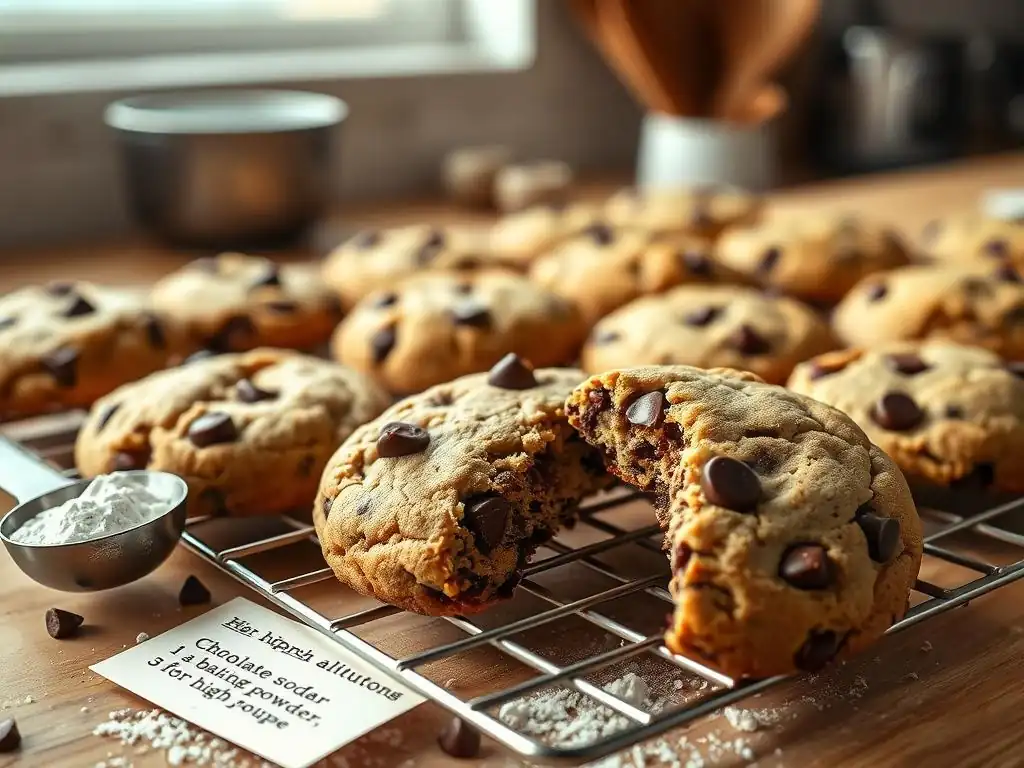
Increasing the amount of flour is one of the most common and effective adjustments for high altitude cookie recipes. Flour provides structure through its proteins (gluten) and starches. At high altitudes, the dough needs extra structural support to withstand the increased pressure from leavening gases and prevent excessive spread. Adding more flour helps create a stronger framework that can hold the dough's shape as it bakes.
Typical recommendations suggest increasing flour by about 1 to 3 tablespoons per cup of flour called for in the original sea-level recipe, especially for elevations above 3,500 feet. For example, if a recipe calls for 2 cups of flour, you might start by adding an extra 2-4 tablespoons. This seemingly small increase can make a significant difference in controlling spread and improving the final texture of your high altitude cookies. It's crucial to add flour gradually and mix only until just combined to avoid developing too much gluten, which can result in tough cookies.
Increasing Flour for Structure
As mentioned, the primary goal of adding more flour is to reinforce the dough's internal structure. The proteins in flour, particularly gluten (when developed through mixing), create a network that provides strength and elasticity. At high altitude, this network needs to be more robust to resist the outward push of rapidly expanding gases and the tendency to spread due to lower atmospheric pressure and faster fat melting.
Adding extra flour essentially stiffens the dough slightly, making it less prone to collapsing outwards before it has set in the oven. This adjustment is particularly important for cookies that rely on chemical leaveners and have a high fat content, as these factors contribute most significantly to spread. For instance, a classic chocolate chip cookie recipe might see a significant improvement in thickness and chewiness simply by incorporating an extra 2-3 tablespoons of all-purpose flour per cup.
Best Types of Flour for High Altitude Cookie Baking
For most high altitude cookie recipes, all-purpose flour is the standard choice and works well with adjustments. Its moderate protein content provides sufficient structure for most cookie types when increased slightly. However, the specific type of flour can influence the final outcome.
- All-Purpose Flour: Versatile and widely available. Increase amount as recommended.
- Bread Flour: Has higher protein content than all-purpose. While it provides more structure, it can lead to tougher cookies if overmixed, so use with caution or in specific recipes designed for chewier texture.
- Cake Flour: Has lower protein content. Generally not recommended for increasing structure in high altitude cookies unless the recipe specifically calls for it; adjustments would focus on other ingredients.
- Pastry Flour: Intermediate protein level between cake and all-purpose. Can be used, but adjustments will likely follow all-purpose guidelines.
When adjusting a high altitude cookie recipe, stick to the flour type specified in the original recipe and apply the increase percentage to that type unless otherwise advised.
Liquid Adjustments: Hydration is Key
Reducing the liquid content in a high altitude cookie recipe is another common adjustment aimed at controlling spread and counteracting the effects of faster moisture evaporation. While it might seem counterintuitive given the dry air, reducing initial liquid slightly can help create a firmer dough that is less prone to spreading excessively in the oven before it sets.
The amount of reduction is typically small, often just 1 to 2 teaspoons per cup of liquid in the original recipe, or sometimes a percentage reduction of total liquid. For example, if a recipe calls for 1/4 cup milk or 1 egg (which contributes liquid), you might reduce the milk by a teaspoon or use a slightly smaller egg. This adjustment is most effective when combined with increased flour. The goal is to achieve a dough consistency similar to what you'd have at sea level before baking.
Reducing Liquid to Prevent Excess Spread
Lower atmospheric pressure allows gases and steam to expand more freely, and lower boiling points mean moisture evaporates faster. A dough with too much initial liquid will be looser and more likely to spread rapidly outwards before its structure sets. By slightly reducing the liquid, you create a denser, less fluid dough from the start.
This firmer dough is better equipped to resist the forces that cause excessive spread at high altitude. It helps maintain the cookie's shape as it bakes, leading to a thicker, more desirable texture. For instance, in a drop cookie recipe, reducing the milk or egg by a small amount can help the cookies hold their dome shape rather than flattening significantly.
Which Liquids to Adjust in Your Cookie Recipe
The liquids to adjust in a high altitude cookie recipe can include various components, depending on the recipe.
- Milk, Cream, or Water: These are direct liquid additions that can be slightly reduced.
- Eggs: Eggs contribute significant liquid (the white is mostly water) and also provide structure. Some high altitude adjustments involve reducing the total egg amount (e.g., using a slightly smaller egg or using 1 whole egg plus 1 yolk instead of 2 whole eggs) or sometimes adding an extra yolk for structure while potentially reducing another liquid.
- Vanilla Extract or other Flavorings (Liquid): While these are liquids, their volume is usually small enough that adjusting them isn't necessary for spread control. Focus on larger liquid components.
Always start with a small reduction and observe the dough consistency and baked results. It's easier to add a tiny bit more liquid if the dough seems too dry than to correct a dough that's too wet.
Sugar Adjustments: Balancing Sweetness and Structure
Reducing sugar is another crucial adjustment for high altitude cookie recipes. Sugar contributes to sweetness, tenderness, and browning, but it also promotes spread by liquefying as it heats up. At high altitudes, with the increased tendency for dough to spread and moisture to evaporate, excess sugar can exacerbate these issues, leading to thin, brittle, or overly browned cookies.
Typical recommendations suggest reducing sugar by about 1 to 3 tablespoons per cup of sugar in the original recipe, especially above 5,000 feet. For a recipe calling for 1 cup of granulated sugar, you might reduce it by 2-3 tablespoons. This reduction helps control spread and prevents the cookies from becoming too fragile or developing a hard, sugary crust.
Reducing Sugar Content for Better Texture
Sugar melts and becomes a liquid during baking, contributing to the spread of the cookie dough. At high altitude, this effect is amplified due to the faster heating and setting processes. By reducing the amount of sugar, you decrease the amount of liquid that forms from melted sugar, resulting in less spread.
Furthermore, sugar interferes with gluten development and protein coagulation, making the dough more tender. While tenderness is desired, too much tenderness at high altitude can lead to a cookie that crumbles easily or lacks sufficient structure to hold its shape. A slight reduction in sugar helps create a slightly firmer dough that bakes up with better integrity and a more desirable chewy or tender (but not brittle) texture. For example, reducing sugar in a shortbread recipe baked at 6,000 feet can prevent it from becoming excessively crumbly.
The Impact of Different Sugars on High Altitude Cookies
Different types of sugar behave differently in cookie dough, and their impact at high altitude can vary.
- Granulated Sugar: Promotes more spread and crispness. Reducing it is often a primary adjustment.
- Brown Sugar: Contains molasses, which adds moisture and chewiness. While it contributes liquid, its effect on spread is often less pronounced than granulated sugar volume-wise, but it contributes to moisture retention, which can be beneficial. Adjustments often involve reducing the total amount of sugar, which might mean slightly reducing both granulated and brown sugar if both are used.
- Powdered Sugar: Contains cornstarch, which can help stabilize dough and reduce spread. Recipes using powdered sugar might require less drastic sugar reduction or different adjustments.
When adjusting sugar in a high altitude cookie recipe, consider the type(s) used and their specific properties. A combination of reducing total sugar and sometimes slightly altering the ratio of brown to granulated sugar can be effective.
Baking Temperature and Time Adjustments for High Altitude
Adjusting oven temperature and baking time is critical for successful high altitude cookie recipes. Because moisture evaporates faster and leavening gases expand more quickly, cookies tend to bake and brown more rapidly at higher elevations. Baking at the standard sea-level temperature can result in cookies that are overdone on the outside but potentially undercooked inside, or simply too dry and hard.
A common adjustment is to slightly lower the oven temperature, typically by 15-25°F (8-15°C), particularly for elevations above 3,000 feet. For instance, if a recipe calls for 375°F (190°C), you might bake at 350°F (175°C). This lower temperature allows the cookies to bake more evenly, giving the interior time to set before the edges and surface brown too much.
Lowering the Oven Temperature for Even Baking
Lowering the baking temperature slows down the rate at which the cookie heats and sets. At high altitude, the combination of lower boiling point and faster moisture evaporation means the dough reaches critical temperatures (where fats melt, sugars liquefy, and proteins coagulate) more quickly. If the temperature is too high, the exterior can set and brown before the interior is fully cooked, or the rapid heating can exacerbate spread before the structure is firm.
Reducing the temperature allows for a more gradual heat transfer throughout the cookie. This gives the dough's internal structure (reinforced by flour and egg adjustments) time to set properly, resulting in a cookie that is cooked through with a more consistent texture from edge to center. It also helps prevent the edges from burning or becoming excessively crisp before the rest of the cookie is done.
Adjusting Baking Time to Prevent Over-Browning
Along with lowering the temperature, you will often need to slightly decrease the baking time for high altitude cookie recipes. Even at a lower temperature, the faster rate of baking at high altitude means cookies will reach doneness sooner than they would at sea level.
Start checking your cookies for doneness a few minutes before the minimum time listed in the original recipe. For example, if a recipe says bake for 8-10 minutes, start checking at 6 or 7 minutes. Look for visual cues appropriate for the type of cookie – golden edges, a set center, or a slightly cracked surface. Over-baking is a common pitfall at high altitude and is a major contributor to dry, hard cookies. It's better to under-bake slightly (as cookies continue to set as they cool on the baking sheet) than to over-bake.
Leavening Agent Adjustments: Achieving the Right Rise
Adjusting leavening agents (baking powder and baking soda) is a critical step in developing a successful high altitude cookie recipe. As previously discussed, lower atmospheric pressure causes leavening gases to expand more vigorously. Using the same amount of leavener as a sea-level recipe will result in excessive puffing and subsequent collapse or spreading, leading to thin, flat cookies with a coarse, open crumb.
The standard adjustment is to slightly reduce the amount of baking powder and/or baking soda. The degree of reduction depends on the altitude and the amount of leavener in the original recipe. For elevations above 5,000 feet, a reduction of 10-25% of the leavening agent is often recommended. For example, if a recipe calls for 1 teaspoon of baking soda, you might reduce it to 3/4 teaspoon or slightly less.
Reducing Baking Powder or Baking Soda
Reducing the leavening agent directly controls the amount of gas produced during baking. With less gas expanding, the dough is under less internal pressure, allowing the structure (strengthened by flour and egg adjustments) to set properly before excessive expansion occurs. This helps the cookies maintain their shape, thickness, and a finer, more even crumb structure.
Consider a batch of cookies using a high altitude cookie recipe comparison: one with standard leavening at 5,000 feet, and one with reduced leavening. The standard batch will likely spread significantly and be thin, while the reduced leavening batch will hold its shape better and have a more desirable height and texture. The exact reduction needed can vary, and sometimes a combination of reducing leavening and increasing flour is necessary.
Understanding the Role of Leavening in High Altitude
Leavening agents create air pockets within the dough, contributing to texture and rise. Baking soda requires an acid to react and produce gas, while baking powder contains both acid and base and reacts when wet and heated. At high altitude, both reactions occur more rapidly and produce more expansion due to less atmospheric resistance.
The goal of reducing leavening in a high altitude cookie recipe is not to eliminate the rise entirely, but to moderate it so that the dough's structure can keep pace with the gas expansion. Too much leavening leads to a fragile, airy structure that collapses. Too little leavening, however, can result in dense, heavy cookies. Finding the right balance is key to achieving the desired tenderness and texture without excessive spread or collapse.
Common Problems and Solutions
Baking at high altitude can be a learning curve, and even with adjustments, you might encounter issues. Here are some common problems with high altitude cookie recipes and potential solutions:
- [ ] Cookies Spreading Too Thin:
- Problem: The cookies flattened excessively during baking.
- Possible Causes: Too much sugar, too much leavening, too much liquid, not enough flour, oven temperature too high, dough too warm.
- Solutions:
- Increase flour by 1-3 tablespoons per cup.
- Reduce sugar by 1-3 tablespoons per cup.
- Reduce liquid (milk, egg) by 1-2 teaspoons per cup of liquid.
- Reduce baking powder/soda by 10-25%.
- Lower oven temperature by 15-25°F.
- Ensure butter isn't overly soft; chill dough thoroughly (30-60 minutes or longer).
- [ ] Cookies Being Too Dry:
- Problem: The baked cookies are hard, crumbly, or lack chewiness.
- Possible Causes: Too much flour, not enough liquid, over-baking, oven temperature too high.
- Solutions:
- Slightly decrease the amount of flour added in your adjustment (if you added too much).
- Ensure liquid reduction wasn't too drastic, or slightly increase liquid next time.
- Reduce baking time; check for doneness earlier.
- Lower oven temperature further if needed.
- Consider slightly increasing brown sugar relative to granulated sugar (if recipe uses both) for added moisture.
- [ ] Cookies Not Rising Properly:
- Problem: Cookies are dense or don't puff up as expected.
- Possible Causes: Too little leavening, oven temperature too low, using expired leavening agents.
- Solutions:
- Ensure you didn't reduce the leavening too much; slightly increase it next time.
- Verify your oven temperature is accurate with an oven thermometer.
- Check the freshness of your baking powder/soda. Baking powder should bubble vigorously when a teaspoon is added to hot water. Baking soda should bubble when a 1/4 teaspoon is mixed with a tablespoon of vinegar.
- [ ] Cookies Burning on the Edges:
- Problem: The edges of the cookies are over-browned or burnt while the center is still soft.
- Possible Causes: Oven temperature too high, baking time too long, baking sheet too dark or thin, cookies placed too close to oven walls.
- Solutions:
- Lower oven temperature by 15-25°F.
- Reduce baking time; check frequently.
- Use lighter colored, standard gauge baking sheets. Avoid dark non-stick sheets which absorb more heat.
- Ensure cookies are spaced adequately on the sheet and the sheet is centered in the oven.
Navigating these issues is part of mastering your high altitude cookie recipe. Keep notes on the adjustments you make and the results!
Essential Baking Equipment for High Altitude
Having the right tools can make a difference when adapting a high altitude cookie recipe. Precision is key.
- Accurate Oven Thermometer: Ovens are notoriously inaccurate, and at high altitude, precise temperature control is vital. An oven thermometer will ensure your lowered temperature setting is actually what's happening inside the oven. Studies have shown oven temperatures can vary by as much as 50°F (28°C) from the dial setting.
- Digital Kitchen Scale: For consistent results, weighing ingredients, especially flour, is more accurate than using volume measures. A scale helps ensure your adjusted flour amount is precise. For example, a cup of all-purpose flour can weigh anywhere from 4 to 5 ounces depending on how it's scooped, but weighing ensures you add the exact target weight.
- Measuring Spoons and Cups: Even if weighing dry ingredients, you'll need accurate measuring tools for liquids and smaller amounts of dry ingredients like leavening agents and salt.
- Quality Baking Sheets: Medium-gauge, light-colored aluminum baking sheets are ideal as they promote even heat distribution and prevent bottoms from burning easily.
While you can use standard ingredients, understanding how they behave at high altitude helps.
- All-Purpose Flour: As noted, this is the standard. For high altitude, ensure it's fresh.
- Fresh Leavening Agents: Baking powder and baking soda lose potency over time, which is critical when you are already reducing the amount. Always check their freshness.
- Butter: Use unsalted butter for better control over salt content. Ensure it's at the specified temperature (softened, melted, etc.) – consistency is important.
- Eggs: Use large eggs unless the recipe specifies otherwise. Consider weighing eggs for ultimate consistency, as egg sizes can vary slightly. A large egg is typically around 50-57 grams.
- Granulated Sugar and Brown Sugar: Use fresh sugars. Clumpy brown sugar can affect texture.
Using fresh, quality ingredients and measuring them precisely according to your high altitude adjustments will significantly increase your chances of success.
Measuring Ingredients Accurately
Precision in measurement is paramount when adapting a high altitude cookie recipe. Small errors can have magnified effects at higher elevations. For dry ingredients like flour and sugar, weighing them on a digital scale is the most accurate method. If using volume measures for flour, use the "spoon and level" method: lightly spoon flour into the measuring cup until overflowing, then level off the excess with a straight edge. Do not scoop directly from the bag, as this compacts the flour and results in using too much.
For liquids, use liquid measuring cups placed on a flat surface, reading at eye level. Measure leavening agents and salt precisely using appropriate measuring spoons, leveling off the excess. Inconsistent measurements are a frequent cause of unpredictable results in high altitude baking. Taking the time to measure accurately is one of the simplest yet most impactful steps you can take.
Chilling the Dough for Better Results
Chilling cookie dough is beneficial at any altitude, but it's particularly helpful for high altitude cookie recipes. Chilling serves several purposes: it solidifies fats (like butter), which helps control spread; it allows the flour to fully hydrate, improving texture; and it gives flavors time to meld.
For high altitude cookies, chilling the dough for at least 30-60 minutes, or even several hours, can significantly improve their shape and texture. The firmer, colder dough spreads less rapidly when it hits the hot oven, giving the structure more time to set. For instance, many bakers at 5,000+ feet swear by chilling their chocolate chip cookie dough overnight for optimal thickness and chewiness. Chilling is especially recommended if you've had issues with cookies spreading too thin despite other adjustments.
Cookies baked at high altitude can sometimes dry out faster due to the lower ambient humidity and the baking process itself. Proper storage is essential to maintain their texture and freshness. Once completely cooled, store cookies in an airtight container.
For softer or chewy cookies, adding a slice of bread or a marshmallow to the container can help maintain moisture. The cookies will absorb moisture from the bread/marshmallow, keeping them soft. This trick can be particularly useful for high altitude cookie recipes that tend to dry out quickly. Store different types of cookies separately, as flavors and moisture levels can transfer. Properly stored, most high altitude cookies will stay fresh for several days.
Mastering high altitude cookie recipes involves understanding the fundamental scientific principles at play and making informed adjustments to standard sea-level recipes. While the challenges of lower pressure, faster leavening expansion, and increased moisture evaporation are real, they are certainly surmountable. By strategically adjusting flour, liquid, sugar, leavening, temperature, and time, you can achieve cookies with the perfect texture, shape, and flavor, regardless of your elevation.
Remember that successful high altitude baking often requires a bit of experimentation. Start with recommended adjustments (like increasing flour by a few tablespoons per cup, reducing sugar and leavening slightly, and lowering oven temperature) and bake a test batch. Observe the results – did they spread too much? Are they too dry? Use the troubleshooting guide to identify potential issues and fine-tune your adjustments for the next batch. With practice and attention to detail, you'll be baking beautiful, delicious high altitude cookies with confidence.
Frequently Asked Questions
High altitude baking requires adjustments due to the lower air pressure. This causes liquids to evaporate faster and leavening agents to rise more quickly, potentially leading to dry, flat cookies.
Common issues include cookies spreading too thin, being dry and crumbly, or having a cake-like texture. These are often due to imbalances in moisture and over-leavening.
Typically, you'll need to reduce the amount of leavening (baking soda or baking powder), increase the liquid, and potentially increase the oven temperature slightly. This helps control the rise and prevent excessive dryness.
While you can adapt most recipes, those with higher fat content and less leavening tend to be more forgiving at high altitudes. Recipes specifically designed for high altitude are often the easiest to use.
BakeWithEase.com offers a variety of high altitude cookie recipes with detailed instructions and adjustments, ensuring you achieve the perfect texture every time.
Final Reflection: The Sweet Success of High-Altitude Baking
Conquering the challenges of high-altitude baking isn't just about achieving the perfect cookie; it's about mastering the elements and celebrating the unique rewards of baking at elevation. The seemingly simple act of baking a cookie transforms into a fascinating exploration of atmospheric pressure and ingredient ratios when you're thousands of feet above sea level. This guide has armed you with the knowledge to tackle those challenges head-on, resulting in consistently delicious, perfectly textured cookies, no matter your altitude.
The journey of perfecting high-altitude baking has been a personal one, filled with both frustrating failures and exhilarating successes. It's a testament to the enduring power of culinary experimentation and the satisfaction of overcoming seemingly insurmountable obstacles. The only way to do great work is to love what you do.
- Steve Jobs. This quote resonates deeply, as the passion for baking, even with its unique high-altitude hurdles, fuels the pursuit of that perfect cookie. The process itself, the careful adjustments and the eventual triumph, is as rewarding as the final product.
Now, it's your turn. Don't let the thin air intimidate you. Take the knowledge gained from this guide, experiment with different recipes, and embrace the unique challenges of high-altitude baking. The perfectly crisp edges, the chewy centers, the delightful aroma filling your kitchen—these are the rewards that await. Remember the lessons learned, adapt them to your own style, and most importantly, enjoy the sweet success of your high-altitude baking journey.
Unlock Your Altitude Baking Secrets!
Thanks for joining us on this baking adventure! You've now got the tools to conquer those tricky high-altitude cookies and achieve perfectly textured treats every time. Ready to take your baking to new heights?
- Bake a test batch: Use your newfound knowledge to whip up a small batch of your favorite cookies, adjusting the recipe as needed. This is your chance to perfect your technique!
- Share your success (or even your struggles!): Post a picture of your perfectly baked cookies on social media and tag us—we'd love to see your creations!
- Experiment with different recipes: Don't be afraid to try new high-altitude-friendly recipes. You might discover your new favorite cookie!
What altitude-defying baking masterpiece will you create next?