
Excessive Sugar Bloom on Decorated Cookies? Freshness Solutions Revealed

Welcome to BakeWithEase, your trusted guide to baking brilliance! Tired of unsightly crystals ruining your beautifully decorated cookies? You've landed in the right place. Discover the secrets to sugar bloom prevention in our comprehensive guide and learn how to keep your cookies looking and tasting their best. Intrigued? Let's unlock the secrets to perfectly preserved and irresistibly delicious cookies!
- Preventing and Addressing Sugar Bloom on Decorated Cookies
- Understanding Sugar Bloom
- Preventing Sugar Bloom: Baking
- Preventing Sugar Bloom: Storage
- Reversing Sugar Bloom
- Maintaining Cookie Freshness
- Key Takeaways: Preventing Sugar Bloom
-
Frequently Asked Questions
- What exactly is sugar bloom on cookies, and why does it happen?
- How does BakeWithEase recommend preventing sugar bloom when decorating cookies?
- What role does the freshness of ingredients play in sugar bloom prevention?
- Are there specific types of cookie recipes that are less prone to sugar bloom?
- What can be done to remedy cookies that already have sugar bloom?
- Final Reflection: The Enduring Sweetness of Perfect Cookies
- Rediscover Perfectly Crisp Cookies: Banish Sugar Bloom!
Sugar bloom can be a frustrating issue for bakers, especially when presenting beautifully decorated cookies. It appears as a cloudy or dusty white layer on the surface, marring the vibrant colors and smooth finish of your icing. Understanding what causes sugar bloom and implementing effective prevention strategies is key to maintaining the quality and appearance of your baked goods. This guide delves into the science behind this phenomenon and provides practical tips for sugar bloom prevention cookies, covering everything from baking and icing techniques to storage solutions.
Understanding Sugar Bloom
Before tackling prevention, it's crucial to understand what sugar bloom is, how to identify it, and the scientific principles that cause it. This knowledge forms the foundation for effective sugar bloom prevention cookies strategies.
What is Sugar Bloom?
Sugar bloom is a common confectionery defect characterized by the formation of a dull, white, powdery layer on the surface of sugar-based products, such as icing, fondant, or candy. It occurs when sugar crystals reform on the surface after the sugar has dissolved and recrystallized. Unlike fat bloom, which affects chocolate and involves cocoa butter separating, sugar bloom specifically relates to the behavior of sugar molecules under certain environmental conditions. While sugar bloom doesn't typically affect the taste of the cookie itself, it significantly detracts from the visual appeal of decorated cookies, making them look stale or damaged.
This phenomenon is distinct from other surface issues like moisture condensation (which can lead to stickiness) or cracking. The texture of sugar bloom is typically dry and powdery or slightly rough, depending on the size of the reformed crystals. It's often most visible on colored icing or fondant where the white layer stands out against the darker background. Effective sugar bloom prevention cookies aims to create conditions where this recrystallization is inhibited.
Identifying Sugar Bloom
Identifying sugar bloom is usually straightforward. Look for a dull, white, or grayish film or powdery coating on the surface of your decorated cookies. This bloom can be uniform across the surface or appear in patches. It often develops over time, especially if cookies are stored improperly.
- Visual inspection:
- Dullness or loss of shine on the icing.
- Presence of a white, powdery, or gritty layer.
- Appearance is often similar to dust or fine sugar crystals.
- Tactile inspection:
- The surface may feel slightly rough or gritty if touched gently.
In contrast, fat bloom on chocolate coatings would appear more greasy or waxy. Sugar bloom is dry. If you gently rub the affected area, sugar bloom will often feel like fine sugar granules and might even brush off slightly, whereas a sticky surface indicates moisture condensation. Recognizing these signs early is important, although reversing severe sugar bloom is often difficult or impossible.
The Science Behind Sugar Bloom
Sugar bloom is primarily caused by moisture. When sugar (like sucrose) dissolves in water or moisture present in the air, it forms a sugar solution. If this moisture then evaporates, the dissolved sugar is left behind. As the water leaves, the sugar molecules rearrange themselves into visible crystals on the surface. This process is called recrystallization.
The key triggers for sugar bloom are fluctuations in temperature and humidity. For example, moving cookies from a cool, dry environment to a warm, humid one can cause condensation to form on the surface. This condensation dissolves a tiny amount of surface sugar.
When the cookies are moved back to a drier environment, the moisture evaporates, leaving behind reformed sugar crystals. Even slight temperature changes in storage can cause moisture to migrate within the cookie or icing, leading to dissolution and recrystallization. High humidity in the storage environment also provides ample moisture for surface sugar to absorb, dissolve, and subsequently recrystallize as conditions change or drying occurs.
Preventing Sugar Bloom: Baking

The foundation for sugar bloom prevention cookies starts even before decoration – during the baking process itself. Proper dough preparation and baking techniques contribute to a stable cookie structure less prone to moisture issues.
Choosing the right cookie recipe is a critical first step for sugar bloom prevention cookies. Recipes with a relatively lower moisture content in the baked cookie itself tend to be more stable. Shortbread or sugar cookie recipes that result in a crisp, dry cookie are generally better candidates for decoration, especially if they will be stored or transported. Recipes high in molasses, honey, or other hygroscopic (moisture-attracting) ingredients might be more susceptible to moisture fluctuations.
Consider the ratio of sugar to fat and flour. While sugar is necessary for texture and sweetness, excessive sugar in the cookie dough itself (beyond what's needed for flavor and structure) could potentially contribute to issues, though surface icing is the primary concern for bloom. Focusing on a sturdy, less-moist cookie base provides a good canvas for your icing and reduces the overall moisture content of the final product.
Even Baking Techniques
Consistent and even baking is vital for sugar bloom prevention cookies. Cookies that are underbaked or have inconsistent doneness can retain excess moisture in certain areas. This uneven moisture distribution can create localized humidity differences, promoting sugar dissolution and recrystallization on the icing surface later on.
Ensure your oven temperature is accurate (using an oven thermometer is highly recommended, as oven temperatures can vary by as much as 25°F or more). Rotate your cookie sheets halfway through baking to ensure even browning and moisture evaporation. Bake cookies until they are evenly golden brown on the edges and appear set in the center, according to the specific recipe guidelines. Over-baking should also be avoided, as it can lead to other issues like dryness and reduced flavor, but ensuring they are baked through is key for moisture control.
Proper Cooling Procedures
Cooling cookies properly is another essential step in sugar bloom prevention cookies. After baking, cookies are still undergoing structural changes and releasing moisture. They should be transferred from the hot baking sheet to a wire cooling rack within a few minutes (check your recipe's instructions, as some delicate cookies need longer to set on the sheet).
Allow cookies to cool completely and thoroughly on the wire rack before attempting to decorate them or store them. Cooling on a solid surface can trap steam underneath, leading to condensation. Ensure good air circulation around the cookies during cooling. Rushing the cooling process or stacking warm cookies can trap moisture and create conditions ripe for future sugar bloom. Cookies should reach room temperature throughout their structure before the next steps.
The type of icing used and how it is applied and dried significantly impacts the likelihood of sugar bloom on decorated cookies. This section focuses on icing-specific strategies for sugar bloom prevention cookies.
Choosing the Right Icing
The composition of your icing is a major factor in sugar bloom prevention cookies. Royal icing, made from powdered sugar, meringue powder (or egg whites), and water, is a popular choice for decorated cookies due to its ability to dry hard. However, its high sugar content makes it susceptible to sugar bloom if not handled correctly. Fondant is another common sugar-based decoration medium that can experience bloom.
Icings with a higher fat content, like buttercream, are generally less prone to sugar bloom because the fat acts as a barrier to moisture. However, buttercream presents other challenges (like melting or smudging) and doesn't dry to the same hard finish as royal icing. When using royal icing or fondant, ensure your recipe uses the correct proportions of sugar to liquid. Too much liquid can increase drying time and the potential for moisture-related issues.
Proper drying of decorated cookies is paramount for sugar bloom prevention cookies. Royal icing needs to dry completely and harden to form a stable surface. This process, often called "crusting" or "drying," involves the evaporation of water from the icing. Incomplete drying is a major cause of sugar bloom, as residual moisture can later migrate to the surface and cause recrystallization.
Allow decorated cookies to air dry in a cool, dry environment with good air circulation. Avoid drying in humid conditions. Depending on the thickness of the icing and the humidity, this can take anywhere from 6 to 24 hours, or even longer for very thick layers.
Using a fan on a low setting can help speed up drying, but avoid directing it too strongly or too closely, which can cause cracking. Some bakers use a food dehydrator set to a low temperature (around 100-110°F or 38-43°C) specifically for drying royal icing, which can significantly reduce drying time and humidity exposure.
Thin Icing Layers
Applying icing in thin, even layers is another effective technique for sugar bloom prevention cookies. Thicker layers of icing take significantly longer to dry all the way through. While the surface may appear dry, the interior can still hold moisture. This trapped moisture can eventually migrate to the surface, especially with temperature or humidity changes, leading to sugar bloom.
When decorating, aim for the minimum thickness necessary to achieve your desired look. If layering colors or details, allow each layer to dry sufficiently before applying the next. For flooded areas, ensure the icing consistency allows it to spread evenly without being excessively thick. This approach promotes faster and more complete drying, reducing the risk of moisture-related sugar bloom.
Preventing Sugar Bloom: Storage
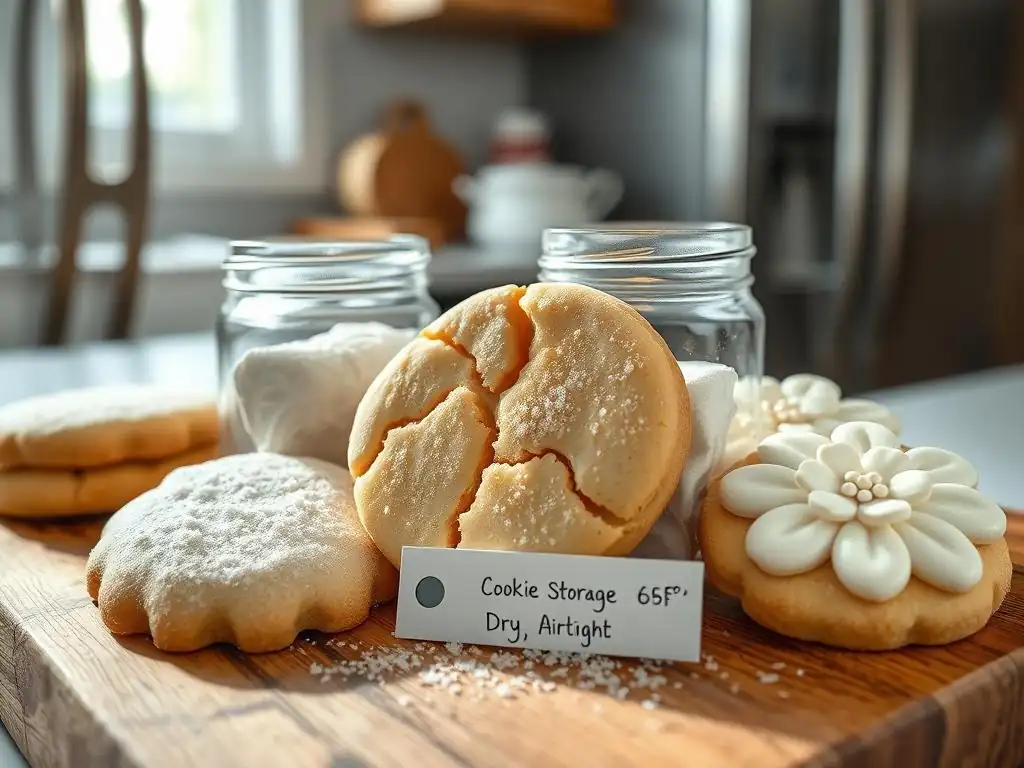
How you store your decorated cookies after they are completely dry is perhaps the most critical factor for sugar bloom prevention cookies. Improper storage is a leading cause of this defect.
Airtight Containers
Storing fully dried and decorated cookies in airtight containers is essential for sugar bloom prevention cookies. An airtight container creates a barrier against external moisture fluctuations and humidity. Exposing cookies to the open air, especially in a humid environment, allows the sugar in the icing to absorb moisture from the atmosphere, setting the stage for bloom.
Use containers with tight-fitting lids. Food storage containers with rubber seals are ideal. Ensure the cookies are completely cool and the icing is fully dry before placing them in the container. Packing cookies that are still warm or slightly soft will trap moisture inside the container, guaranteeing bloom. If stacking layers of cookies, separate them with parchment paper or wax paper to prevent them from sticking and to offer a slight buffer, though the primary benefit comes from the sealed environment.
Humidity Control
Controlling the humidity of the storage environment is paramount for sugar bloom prevention cookies. High humidity is sugar's worst enemy when it comes to bloom. Sugar is hygroscopic, meaning it readily absorbs moisture from the air. When the air is humid, the icing surface can absorb enough moisture to dissolve some of the surface sugar, which then recrystallizes as the humidity drops or temperature changes.
Ideally, store decorated cookies in a cool, dry place where humidity is controlled. Relative humidity below 40-50% is generally recommended for storing confectionery. Avoid storing cookies in areas like kitchens (where cooking generates steam), near sinks, or in basements, which can be naturally damp. If you live in a humid climate, consider using a dehumidifier in the storage area or adding a food-safe desiccant packet (like silica gel packets designed for food) to the airtight container, ensuring it does not directly touch the cookies.
Ideal Storage Temperature
Storing decorated cookies at a consistent, cool room temperature is best for sugar bloom prevention cookies. Significant fluctuations in temperature are a major trigger for sugar bloom. Moving cookies from a cold environment (like a refrigerator) to a warmer one can cause condensation to form on the surface, providing the moisture needed for sugar dissolution and recrystallization.
Aim to store cookies between 65°F and 70°F (18°C-21°C). Avoid storing them in areas that experience significant temperature swings, such as near ovens, heating vents, or sunny windows. While refrigeration or freezing is sometimes necessary for certain types of cookies or for long-term storage, it increases the risk of sugar bloom due to the temperature change upon thawing. If you must refrigerate or freeze, ensure cookies are exceptionally well-wrapped in airtight packaging and allow them to come to room temperature slowly within the packaging before opening to minimize condensation.
Reversing Sugar Bloom
Once sugar bloom has occurred, especially if it's severe, it can be very difficult, if not impossible, to completely reverse the effect and restore the original appearance of the icing. However, there are a couple of approaches you can try for mild cases.
Addressing Mild Sugar Bloom
For very mild cases of sugar bloom, which might appear as a slight dullness or a very fine powdery layer, you might be able to improve the appearance slightly. One common suggestion is to gently brush the surface with a very soft brush (like a clean, dry paintbrush) to remove the loose crystals. However, this often doesn't fully eliminate the bloom, as the crystals are typically adhered to the surface.
Another technique sometimes mentioned is very lightly steaming the cookie surface. Holding the cookie briefly over a pot of simmering water (for just a second or two, from a safe distance) might redissolve the surface crystals. However, this is a risky method. Too much steam will make the icing sticky, cause colors to bleed, or even melt the icing entirely. It's not a reliable method for sugar bloom prevention cookies or reversal and is generally not recommended for intricate designs. Success is limited and depends heavily on the severity of the bloom and the type of icing.
Dealing with Severe Sugar Bloom
Unfortunately, for severe sugar bloom where the white layer is thick and prominent, there are generally no effective ways to reverse it without damaging the decoration. The recrystallization is too extensive. Attempting to brush it off will likely scratch or damage the icing. Applying moisture will likely lead to stickiness and color bleeding.
In cases of severe bloom, the best course of action is often to accept the cosmetic defect. While the cookie is still edible, it won't be suitable for sale or gifting if appearance is important. This underscores the importance of focusing on sugar bloom prevention cookies through proper baking, drying, and storage techniques rather than relying on post-bloom fixes. Prevention is significantly easier and more effective than attempting reversal.
While preventing sugar bloom focuses on the icing surface, maintaining the overall freshness of the cookie contributes to its longevity and stability. Fresh cookies are less likely to undergo the moisture changes that can trigger sugar bloom.
Packaging for Freshness
Proper packaging is key not only for preventing sugar bloom but also for maintaining the cookie's texture and flavor. Once cookies are completely cool and the icing is fully dry (this step cannot be rushed! ), they should be packaged immediately in airtight containers or sealed bags.
For individual packaging, heat-sealable cellophane bags are excellent. They create a barrier against air and moisture. Ensure the seal is complete. For multiple cookies, use sturdy, airtight containers as discussed previously. Adding a food-safe oxygen absorber packet can further extend freshness by reducing oxidation, which affects flavor, though its direct impact on sugar bloom is less significant than moisture control. Proper packaging protects the cookies from the environment, which is a cornerstone of sugar bloom prevention cookies.
Ingredients for Shelf Life
The ingredients used in your cookie recipe can influence its natural shelf life and stability. While sugar bloom is primarily an icing issue, a cookie base that stays fresher longer is less likely to interact negatively with the icing over time. Ingredients like butter (compared to oil) can contribute to a longer shelf life due to their fat content acting as a preservative. Sugar itself is a preservative, though too much can lead to texture issues.
Using high-quality ingredients and ensuring proper ingredient ratios (as per a tested recipe) contributes to a stable cookie structure. Avoiding excessive amounts of highly perishable or hygroscopic ingredients in the cookie dough can also be beneficial.
Shipping decorated cookies presents a significant challenge for sugar bloom prevention cookies and overall freshness. Cookies are exposed to varying temperatures and humidity levels during transit, increasing the risk of bloom and breakage.
To mitigate risks:
- Ensure cookies are completely dry and cooled before packaging.
- Individually seal each cookie in an airtight bag (like heat-sealed cellophane).
- Pack cookies snugly in a sturdy container, using padding (like crinkle paper or bubble wrap) to prevent movement.
- Consider using insulated packaging and possibly a frozen gel pack (wrapped to prevent condensation contact) if shipping to a warm climate, although this introduces temperature change risks upon arrival.
- Ship using expedited services to minimize transit time and environmental exposure.
While these steps help, shipping decorated cookies with royal icing always carries some risk of sugar bloom due to unpredictable environmental conditions during transit. Managing temperature and humidity fluctuations during shipping is the hardest part of sugar bloom prevention cookies for mail-order treats.
Key Takeaways: Preventing Sugar Bloom
Preventing sugar bloom on decorated cookies requires attention to detail throughout the entire process, from baking to storage. It's a multi-faceted problem with solutions spanning several stages of cookie creation.
Baking, Icing, and Storage
Effective sugar bloom prevention cookies hinges on mastering three main areas:
- Baking: Use a suitable cookie recipe, bake cookies thoroughly and evenly, and cool them completely on a wire rack.
- Icing: Choose appropriate icing (like royal icing), ensure it dries completely in a low-humidity environment, and apply thin layers.
- Storage: Store fully dried cookies in airtight containers in a cool, dry place with stable temperatures. Avoid humidity and temperature fluctuations.
Following these guidelines significantly reduces the risk of sugar bloom, helping your beautiful decorations stay pristine. Remember that prevention is far more effective than trying to fix bloom after it appears.
Resources for Learning
For those looking to deepen their understanding of sugar bloom prevention cookies and other cookie decorating techniques, numerous resources are available. Online tutorials, baking blogs (like BakeWithEase.com! ), and dedicated cookie decorating classes offer valuable insights.
- Look for tutorials specifically addressing royal icing consistency and drying times.
- Seek out information on proper cookie storage techniques for different climates.
- Explore forums or communities where bakers share experiences and tips on troubleshooting common issues like sugar bloom.
Continuous learning and practice are key to mastering cookie decorating and ensuring your creations remain beautiful and bloom-free.
Frequently Asked Questions
Sugar bloom is a white, grainy appearance on the surface of cookies. It occurs when sugar crystals dissolve due to moisture and then recrystallize as the moisture evaporates.
BakeWithEase emphasizes using high-quality ingredients and ensuring the cookies are completely cooled before decorating. Also, control humidity and temperature during decorating.
What role does the freshness of ingredients play in sugar bloom prevention?
Fresh ingredients, especially fresh butter and eggs, contribute to a more stable cookie dough. This reduces the likelihood of excess moisture that leads to sugar crystallization and bloom.
Recipes with a lower sugar-to-fat ratio tend to be less susceptible. Also, BakeWithEase might suggest recipes using invert sugars, like honey or corn syrup, which inhibit sugar crystallization.
Lightly brushing the cookies with warm water or steam can sometimes redissolve the sugar. However, this is a temporary fix, and prevention is always the best approach, as BakeWithEase would likely advise.
The fight against sugar bloom isn't just about aesthetics; it's about preserving the integrity and enjoyment of a perfectly crafted cookie. A seemingly minor issue, sugar bloom significantly impacts the visual appeal and, consequently, the overall experience of indulging in these delightful treats. This article has explored the science behind this phenomenon, offering practical solutions to maintain the pristine beauty and deliciousness of your cookies.
The pursuit of the perfect cookie transcends mere culinary skill; it's a reflection of our desire for perfection and the joy found in sharing something beautiful and delicious. The impact of sugar bloom extends beyond the individual baker; it influences the standards of professional bakers, the expectations of consumers, and even the artistry involved in cookie decorating. The details are not the details. They make the design.
– Charles Eames. This quote perfectly encapsulates the importance of addressing even the smallest imperfections, like sugar bloom, to achieve true excellence in baking.
Now, consider your own baking journey. Have you experienced the frustration of sugar bloom? What techniques from this article resonate most with your baking style? I encourage you to experiment with the solutions presented, to refine your methods, and to embrace the challenge of creating cookies that are not only delicious but also visually stunning. The pursuit of the perfect cookie is an ongoing journey, and each step, each lesson learned, adds to the sweetness of the experience.
Thanks for joining us on this journey to perfectly crisp cookies! We hope you now understand the science behind sugar bloom and how to prevent it. Ready to put your new knowledge into action?
- Bake a batch of your favorite cookies using the tips we've shared. Experiment with different techniques and see which works best for you! This is where the real fun begins.
- Share your baking triumphs (and challenges!) with us on social media using #BakeWithEaseSugarBloom. Let's create a community of cookie experts together!
- Consider trying a new recipe that incorporates these freshness techniques! Challenge yourself to create something truly special.
What unexpected techniques will you experiment with to prevent sugar bloom in your next batch of cookies?