
Stand Mixer FaceOff: Find Your Baking Powerhouse

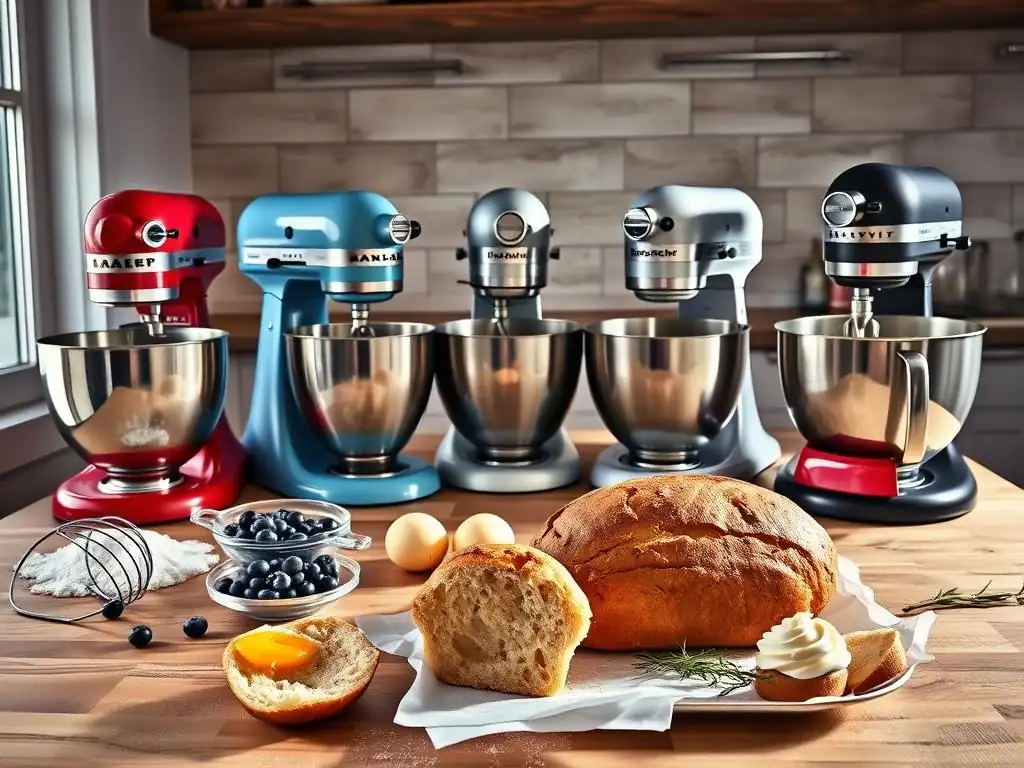
Welcome to BakeWithEase, your trusted companion on your baking journey! Ever wondered which appliance can truly elevate your creations from simple to spectacular? This time, we are diving into the world of stand mixers. Specifically, are you ready to discover the best stand mixer for beginners? Unlock the secrets to effortless dough mixing and flawless batter preparation as we compare top contenders and guide you towards the perfect baking powerhouse. Let's get started and find the ideal mixer to fuel your passion for baking!
- The Baking Bestie's Guide to the Best Stand Mixer for Beginners
- Understanding Stand Mixers: An Essential Baking Equipment Guide
- Stand Mixer Face-Off: Top Models for Beginner Bakers
- Choosing the Right Attachments for Your Stand Mixer: Beginner's Guide
- Tips for Using Your Stand Mixer Like a Pro: Beginner-Friendly Advice
- Which Stand Mixer is Right for You? Making the Best Choice for Your Baking Journey
-
Frequently Asked Questions
- What features are most important in a stand mixer for beginners?
- How much should I expect to spend on a good stand mixer for beginners?
- What are some common mistakes beginners make when using a stand mixer?
- What attachments are essential for a beginner's stand mixer?
- How do I maintain my stand mixer to ensure it lasts longer?
- Final Reflection: The Joy of Baking, Powered by the Perfect Machine
- Unleash Your Inner Baker: Find the Perfect Stand Mixer!
The Baking Bestie's Guide to the Best Stand Mixer for Beginners
Stepping into the world of baking can feel a little overwhelming with all the tools and techniques out there. But fear not, budding bakers! While your hands and a whisk can get you started, there's one piece of equipment that truly transforms the baking experience, especially for beginners: the stand mixer. Think of it as your tireless assistant, capable of kneading dough until it's perfectly elastic, whipping cream to fluffy peaks in minutes, and creaming butter and sugar like a dream.
Finding the best stand mixer for beginners is about discovering a tool that simplifies complex tasks, ensures consistent results, and makes the process more enjoyable, not more complicated. It's an investment that pays dividends in delicious baked goods and saved effort. This guide is designed to walk you through everything you need to know to choose the perfect stand mixer to kickstart your baking adventures with ease and confidence.
Understanding Stand Mixers: An Essential Baking Equipment Guide
Why a Stand Mixer is a Game-Changer for Beginners
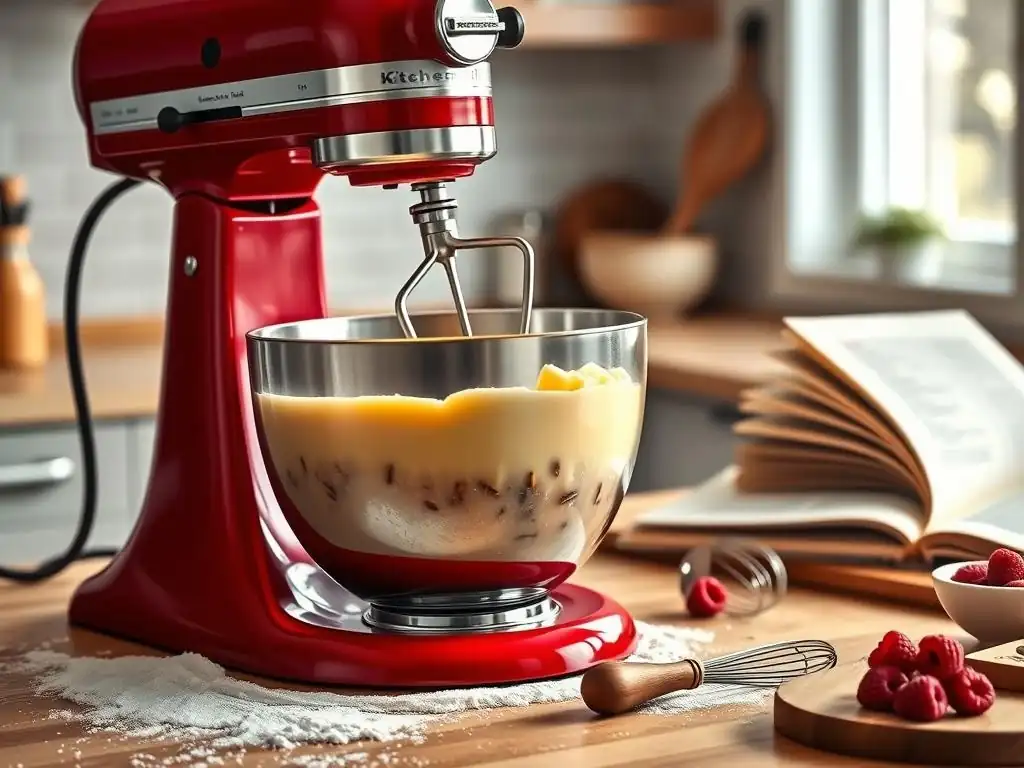
For anyone new to baking, a stand mixer is more than just a convenience; it's a significant advantage that helps overcome common early challenges. Tasks that require vigorous, sustained mixing, like kneading bread dough or whipping stiff meringue, become effortless. Instead of tiring out your arms and potentially getting inconsistent results, the stand mixer handles the hard work, allowing you to focus on measuring ingredients accurately and understanding the process. This consistency is key to building confidence in your baking skills.
Consider kneading dough by hand – it can take 10-15 minutes of continuous effort to develop gluten properly, which is crucial for airy bread. A stand mixer can often achieve the same result in about 5-8 minutes with minimal effort from you. Similarly, whipping egg whites to stiff peaks for a delicate soufflé or meringue can be a precise, arm-aching task by hand.
A stand mixer, however, can accomplish this reliably in just a few minutes, freeing you up to prepare other components of your recipe. This reduction in physical labor and increase in consistency makes tackling more advanced recipes accessible and less intimidating for the beginner baker.
Different Types of Stand Mixers: Tilt-Head vs. Bowl-Lift
Stand mixers primarily come in two main designs: tilt-head and bowl-lift. The tilt-head design is often the more popular choice for home bakers, especially those just starting out. With a tilt-head mixer, the head of the mixer tilts back, allowing easy access to the mixing bowl and the beater. This makes it simple to scrape down the sides of the bowl, add ingredients while mixing, or remove the bowl and attachment. They typically feature bowls ranging from 4.5 to 5 quarts, suitable for most standard home baking recipes.
Bowl-lift mixers, on the other hand, have a stationary head. The bowl is secured onto arms and is lifted up into the mixing position using a lever. This design is generally sturdier and better suited for handling larger capacities and heavier, denser doughs, like multiple loaves of bread or large batches of cookie dough.
Bowl-lift models often come with larger bowls, frequently 6 quarts or more, and tend to have more powerful motors. While robust, accessing the bowl and attachment isn't quite as straightforward as with a tilt-head model, which is why tilt-heads are often recommended as the best stand mixer for beginners due to their user-friendly access.
Key Features to Consider When Choosing a Beginner-Friendly Stand Mixer
When selecting the best stand mixer for beginners, several features are particularly important for ensuring ease of use and versatility. Power, typically measured in watts, is a crucial factor. While you don't necessarily need the most powerful motor available, a wattage between approximately 300W and 500W is generally sufficient for handling common tasks like mixing cake batters, cookie doughs, and even moderate amounts of bread dough without straining the motor. A mixer with adequate power will perform more reliably and last longer.
Bowl capacity is another key consideration. For most beginner bakers and average home use, a bowl size of 4.5 to 5 quarts is ideal. This size can comfortably handle standard recipes, such as a batch of 3-4 dozen cookies or dough for 1-2 loaves of bread.
Having multiple speed settings, ideally 6 or more, provides greater control over the mixing process, allowing you to start slowly to avoid splattering and gradually increase speed for whipping or kneading. Ensure the mixer comes with the three essential attachments: a flat beater, a dough hook, and a wire whisk, as these cover the vast majority of basic baking needs. Finally, consider the mixer's weight and footprint – you'll want something sturdy enough not to walk across the counter but not so heavy you can't move it, and that fits comfortably in your kitchen space.
Stand Mixer Face-Off: Top Models for Beginner Bakers
Comparison Criteria: Power, Capacity, Attachments, and Ease of Use
To help you navigate the options and find the best stand mixer for beginners, we'll compare a few popular models based on criteria most relevant to new bakers. Power indicates the motor's strength, affecting its ability to handle different dough consistencies and batch sizes. Capacity refers to the volume of the mixing bowl, dictating how much you can mix at once.
Attachments are the tools that come with the mixer, each designed for specific tasks like kneading, beating, or whipping. Finally, ease of use encompasses factors like how easy it is to add ingredients, scrape the bowl, change attachments, and clean the mixer – all vital for a smooth baking experience, especially when you're just learning the ropes.
We'll look at how these factors stack up in a few models often considered by beginners, from the iconic classic to more budget-conscious or powerful alternatives. Understanding these trade-offs will help you decide which features are most important for your personal baking style and needs.
Stand Mixer Model 1: KitchenAid Artisan - The Classic Choice
Pros: Wide Color Selection, Durable Build, Planetary Mixing Action
The KitchenAid Artisan 5-Quart Tilt-Head Stand Mixer is arguably the most recognizable stand mixer and a popular choice for many home bakers, including those moving beyond basic hand mixing. One of its most appealing features is the incredible range of colors available – over 20 options – allowing you to truly match it to your kitchen decor. Beyond aesthetics, it boasts a robust, all-metal construction that contributes to its reputation for durability and longevity. Many bakers report using their KitchenAid mixers for decades.
A key performance feature is its planetary mixing action, where the beater spins in one direction while revolving in the bowl in the other. This motion ensures that ingredients are thoroughly incorporated from the center to the edges of the bowl, significantly reducing the need to stop and scrape. With a 5-quart capacity bowl, it's well-sized for standard home baking tasks, capable of handling dough for about 9 dozen cookies or 4.5 loaves of bread in a single batch.
It typically comes standard with a flat beater, dough hook, and wire whisk, covering the essential attachments needed for most beginner recipes. Its tilt-head design also makes adding ingredients and changing attachments straightforward.
Cons: Higher Price Point, Attachment Cost, Heavy
While the KitchenAid Artisan is often lauded as a top-tier home mixer, its primary drawback for many beginners is the cost. It represents a significant investment compared to some other models on the market, which might be a barrier for someone unsure how frequently they'll use a stand mixer. The initial purchase price is just the beginning; KitchenAid offers a vast array of optional attachments (pasta makers, grinders, etc. ), but these come at an additional cost, sometimes adding up significantly if you plan to expand its functionality.
Another point to consider is its weight. The sturdy, all-metal construction, while contributing to durability and stability during mixing, also makes the Artisan quite heavy, often weighing around 26 pounds. This means it's not a mixer you'll want to constantly move in and out of storage. Ideally, you'll need dedicated counter space for it. Despite these cons, its performance, durability, and widespread availability of parts and accessories make it a strong contender, often considered by those looking for a reliable best stand mixer for beginners that will last for years.
Stand Mixer Model 2: Hamilton Beach Eclectrics - The Budget-Friendly Option
Pros: Affordable Price, Decent Power, Splash Shield Included
The Hamilton Beach Eclectrics Stand Mixer is often highlighted as an excellent entry point for beginners looking for a stand mixer without a hefty price tag. Its most attractive feature is its affordability, making it accessible to those on a tighter budget or unsure if they will fully commit to baking with a stand mixer. Despite the lower cost, it typically offers decent power, often around 400 watts, which is sufficient for handling many common baking tasks like mixing cake batters, cookie doughs, and light bread doughs.
Unlike some entry-level mixers, the Hamilton Beach Eclectrics often includes a splash shield right in the box. This simple accessory is incredibly useful for beginners, helping to prevent flour clouds and batter splatters when adding ingredients at the start of mixing, keeping your workspace cleaner. It usually comes with the standard set of attachments: a flat beater, dough hook, and whisk, providing the basic tools needed for a wide range of recipes. Its relative lightness compared to more heavy-duty models also makes it easier to store away if counter space is limited.
Cons: Louder Motor, Fewer Speed Settings, Less Durable
While budget-friendly, the Hamilton Beach Eclectrics does have some compromises compared to higher-priced models. Users often note that the motor can be significantly louder during operation, especially when handling thicker doughs, which might be a minor annoyance. It also typically offers fewer speed settings than premium mixers, perhaps 6 speeds compared to 10 or 12 on other models. While adequate for most tasks, this offers slightly less fine control over the mixing speed.
Durability is another area where it might fall short compared to mixers with all-metal construction. While the motor is often sufficient, some components or the overall build might not withstand the same level of heavy, frequent use over many years as more expensive models. For a beginner who bakes occasionally, this is often not a major issue, but for someone planning on daily or heavy-duty use, it might not be the longest-lasting option. However, for its price point, it offers solid value and is a strong candidate for the best stand mixer for beginners who prioritize affordability.
Stand Mixer Model 3: Cuisinart SM-50 - The Powerful Contender
Pros: Powerful Motor, Large Capacity, 12 Speed Settings
The Cuisinart SM-50 5.5-Quart Stand Mixer presents itself as a powerful and versatile option that balances features and price point, potentially making it the best stand mixer for beginners who anticipate tackling larger batches or denser doughs. It boasts a robust 500-watt motor, providing ample power to handle challenging tasks, including kneading stiff bread dough or mixing large quantities of thick cookie batter without bogging down. This extra power can offer a sense of reliability and capability for more demanding recipes as a beginner's skills grow.
Its 5.5-quart bowl capacity is slightly larger than the standard 4.5 or 5 quarts found on many beginner-focused models, allowing you to prepare larger batches – dough for perhaps 5-6 loaves of bread or over 10 dozen cookies. A standout feature is its wide range of 12 speed settings, offering precise control from a very slow stir (perfect for gently incorporating dry ingredients without a mess) to a very fast whip (ideal for aerating egg whites or cream quickly). It also includes the standard flat beater, dough hook, and whisk, often made of durable materials.
Cons: Bulky Size, Limited Color Options, More Expensive than Hamilton Beach
Despite its power and capacity, the Cuisinart SM-50 does have some potential downsides for beginners. Its larger capacity and powerful motor contribute to a bulkier footprint compared to some smaller tilt-head models. It will require a decent amount of counter space or dedicated storage. While it comes in several attractive finishes, the color selection is typically much more limited compared to the vast palette offered by KitchenAid.
In terms of cost, the Cuisinart SM-50 is generally priced higher than budget options like the Hamilton Beach Eclectrics, positioning it as a mid-range investment. It's often less expensive than the KitchenAid Artisan, but still represents a significant purchase for a beginner. Its weight is also considerable, though often slightly less than the heaviest KitchenAid models. These factors mean a beginner needs to weigh the benefits of extra power and capacity against the cost and size.
Choosing the Right Attachments for Your Stand Mixer: Beginner's Guide
When you get your stand mixer, you'll typically find three main attachments included: the dough hook, the flat beater, and the wire whisk. These three tools are the workhorses of the stand mixer world and are essential for tackling the vast majority of beginner baking recipes. Understanding what each attachment is designed for is key to using your best stand mixer for beginners effectively and getting the desired results from your recipes. Using the wrong attachment can lead to poor texture or overworking ingredients.
Familiarizing yourself with these standard attachments and when to use them will quickly elevate your baking game. They are designed to perform specific mixing actions that are difficult or impossible to replicate consistently by hand, making your stand mixer a truly indispensable tool in the kitchen.
The Dough Hook: Mastering Bread and Pizza Dough
The dough hook is the attachment that typically looks like a large hook or a spiral. Its unique shape is specifically designed for kneading yeast doughs, such as those used for bread, pizza, pasta, and rich sweet doughs like brioche or cinnamon rolls. Kneading is a process that develops gluten, the protein structure that gives yeast breads their elasticity and chewiness. Traditionally, this is done by hand, requiring significant physical effort and time.
Using the dough hook on your stand mixer automates this labor-intensive task. The hook works the dough against the sides of the bowl, mimicking the folding and stretching action of hand kneading. This develops the gluten network efficiently and consistently. For many beginner bakers, successfully kneading dough is a significant milestone, and the dough hook makes achieving that perfect, elastic texture much more reliable than manual kneading. Always start on a low speed when using the dough hook to prevent the dough from climbing up the hook and into the mixer head.
The flat beater, also sometimes called the paddle attachment, is arguably the most versatile attachment and the one you'll likely use most frequently as a beginner. It's designed for general mixing, beating, and creaming. Its shape is ideal for combining ingredients thoroughly without incorporating excessive air, making it perfect for tasks like creaming butter and sugar until light and fluffy (the foundation for many cakes and cookies), mixing cookie dough, blending cake batters, making frosting, or even mashing potatoes.
When creaming butter and sugar, the flat beater works by pressing the ingredients against the sides of the bowl, incorporating small pockets of air into the mixture. This aeration is crucial for the texture and rise of baked goods like butter cakes and cookies. For batters, it effectively blends wet and dry ingredients until just combined, ensuring there are no pockets of flour. Remember to scrape down the sides and bottom of the bowl frequently when using the flat beater, as ingredients can stick and not get fully incorporated by the paddle alone, especially with thicker mixtures.
The Wire Whisk: Whipping Cream and Egg Whites with Ease
The wire whisk attachment, which looks like a traditional balloon whisk but is much larger and designed to attach to the mixer, is used for incorporating air into ingredients. It's essential for tasks that require aeration and volume, such as whipping egg whites into meringue, whipping heavy cream into whipped cream, making fluffy frostings, or preparing light batters like those for angel food cake.
The numerous wires of the whisk quickly beat air into liquids, increasing their volume dramatically. This process is significantly faster and more effective with a stand mixer than doing it by hand. For example, whipping heavy cream to stiff peaks can take less than 5 minutes with a stand mixer whisk, compared to potentially 10-15 minutes or more by hand.
When using the whisk, it's best to start at a medium speed to build volume and then increase to high speed to achieve stiff peaks, monitoring closely to avoid over-whipping. Ensure your bowl and whisk are completely clean and free of any grease when whipping egg whites or cream for best results.
Optional Attachments: Expanding Your Baking Repertoire
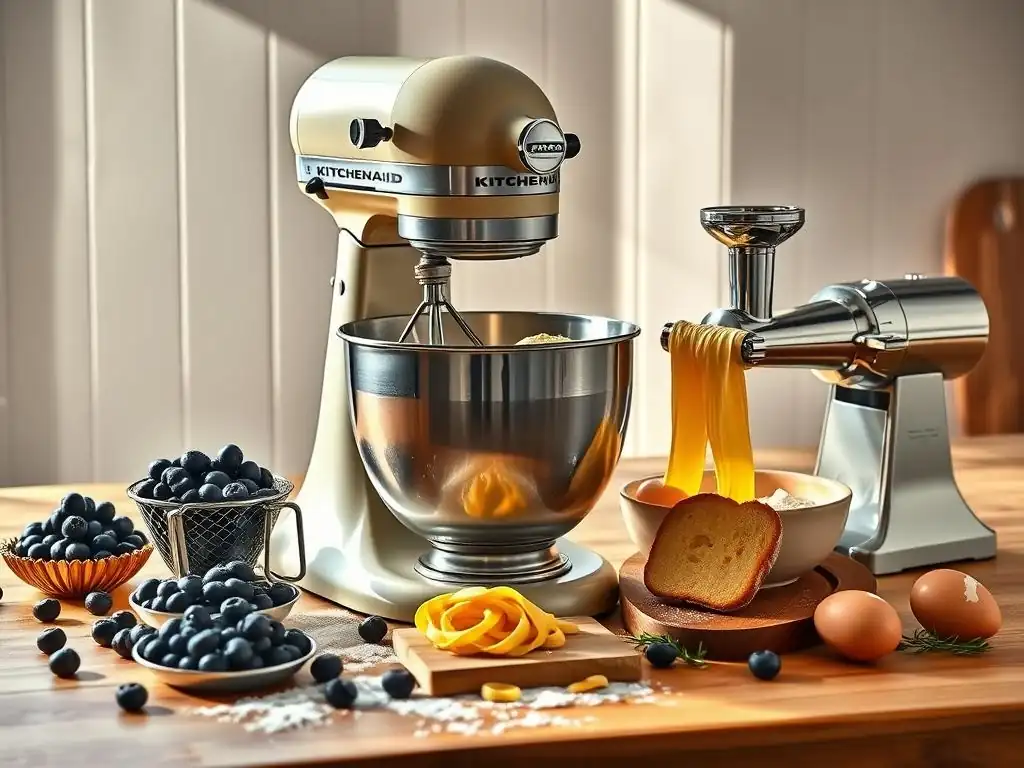
Beyond the three standard attachments, many stand mixer brands, particularly KitchenAid, offer a wide array of optional attachments that connect to a power hub on the front of the mixer. While not essential for basic baking and definitely not required when choosing your best stand mixer for beginners, these attachments can transform your mixer into a multi-purpose kitchen machine.
Examples include pasta makers, meat grinders, vegetable spiralizers, ice cream makers, and juicers. These attachments allow you to explore culinary activities beyond traditional baking, all powered by your stand mixer's motor. While they represent an additional cost, they offer a way to expand the functionality of your investment over time as your skills and interests grow. For a beginner, focusing on mastering the core functions with the standard attachments is the priority, but it's nice to know the potential for expansion exists.
Tips for Using Your Stand Mixer Like a Pro: Beginner-Friendly Advice
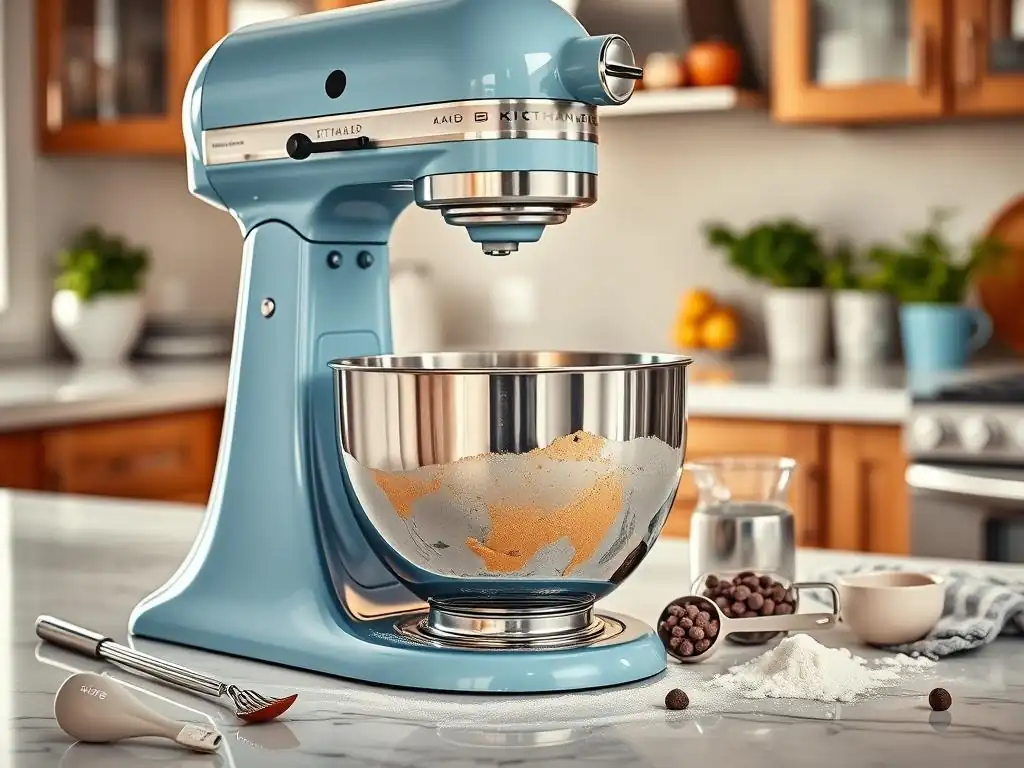
Getting a stand mixer is exciting, but knowing how to use it correctly is key to getting the best results and making your baking experience smooth and enjoyable. Even with the best stand mixer for beginners, a few simple techniques can make a big difference in the outcome of your baked goods and the longevity of your appliance. These tips are easy to follow and will help you feel more confident using your new baking powerhouse from day one.
Developing good habits with your stand mixer early on will save you frustration and ensure your ingredients are mixed perfectly every time. Think of these as fundamental techniques that professional bakers rely on daily.
Start Slow: Preventing Ingredient Splatter
One of the most common mistakes beginners make with a stand mixer is starting the motor on too high a speed, especially when adding dry ingredients like flour. This often results in a "flour cloud" erupting from the bowl, coating your mixer, counter, and even yourself. To avoid this mess, always begin mixing on the lowest speed setting (often labeled "Stir" or speed 1).
Starting slow allows the ingredients to gently combine and moisten before you increase the speed. For instance, when adding flour to a wet batter, mix on speed 1 or 2 just until the flour is mostly incorporated, then you can increase the speed if the recipe requires it. This simple step saves you cleaning time and ensures all your precious ingredients stay in the bowl where they belong. It's a fundamental practice for smooth, mess-free mixing with any stand mixer, including the best stand mixer for beginners.
Scrape the Bowl: Ensuring Even Mixing
Even with the efficient planetary mixing action of many stand mixers, ingredients can sometimes accumulate on the sides and bottom of the mixing bowl, especially thicker batters or doughs. If these unmixed portions aren't incorporated, you can end up with streaks of unmixed ingredients in your final product, like pockets of dry flour in a cake or uncreamed butter in cookie dough.
To ensure everything is evenly mixed, pause your mixer periodically (usually once or twice during the main mixing stage) and use a rubber spatula to scrape down the sides and bottom of the bowl. Gently fold the scraped ingredients back into the center before resuming mixing. This is particularly important when creaming butter and sugar, mixing batters, or incorporating dry ingredients. It ensures that every part of your mixture receives the same amount of beating or kneading, leading to a consistent and uniform texture in your baked goods.
Don't Overmix: Avoiding Tough Baked Goods
While stand mixers are powerful and efficient, it's important not to let them run longer than necessary, especially when mixing batters for cakes, muffins, cookies, or quick breads. Overmixing can lead to tough or dense baked goods because it overdevelops gluten. Gluten development is desirable in yeast breads for structure, but in cakes and cookies, it results in a less tender crumb.
For most batters (excluding yeast doughs), you only need to mix until the ingredients are just combined and no streaks of flour are visible. This usually takes only a minute or two on a medium speed after adding dry ingredients. Stop the mixer, scrape the bowl, and give it one final brief mix if needed.
Pay attention to the texture mentioned in your recipe instructions. For example, cookie dough should be mixed until combined, not beaten endlessly. Learning to recognize the signs of proper mixing comes with practice, but being mindful of overmixing is a key step towards achieving tender, delicious results with your best stand mixer for beginners.
Cleaning and Maintenance: Keeping Your Stand Mixer in Top Condition
Proper cleaning and maintenance are crucial for keeping your stand mixer looking good and functioning correctly for years to come. Fortunately, cleaning a stand mixer is relatively straightforward. For the bowl and attachments (flat beater, dough hook, wire whisk), most are dishwasher safe, but it's always best to check your specific model's manual. Some attachments, particularly older ones or those with a burnished finish, might require hand washing to prevent discoloration or damage.
The mixer base itself should never be submerged in water. To clean the base, unplug the mixer and wipe it down with a damp cloth and mild soap, then dry it thoroughly. Pay special attention to the area where the attachment connects to the shaft, as ingredients can sometimes get lodged there. Periodically check the mixer's vents for dust buildup, as this can affect the motor's cooling. Following these simple cleaning steps after each use will keep your best stand mixer for beginners hygienic and in excellent working order, ready for your next baking project.
Which Stand Mixer is Right for You? Making the Best Choice for Your Baking Journey
Choosing the best stand mixer for beginners isn't a one-size-fits-all decision. It depends on your individual baking habits, budget, and kitchen space. You've seen the benefits a stand mixer brings – less effort, consistent results, and the ability to tackle more complex recipes. You've also considered the different types and key features like power and capacity, as well as looked at a few popular models that cater to varying needs and budgets. Now, it's time to put that knowledge together and decide which mixer is your ideal baking partner.
Think about what you plan to bake most often and how frequently. Are you dreaming of baking multiple loaves of bread weekly, or are you more interested in occasional batches of cookies and cakes? Do you have ample counter space, or will the mixer need to be stored away? Answering these questions will guide your decision.
Considering Your Baking Needs and Budget
Before making your final decision on the best stand mixer for beginners, take a moment to assess your personal baking goals. If you anticipate baking large quantities or frequently working with heavy doughs like sourdough or whole wheat bread, investing in a mixer with a more powerful motor (say, 450W+) and a larger capacity bowl (5.5 quarts or more) like the Cuisinart SM-50 might be a wise choice, even if it costs a bit more. This will prevent the motor from straining and ensure it handles your tasks effectively.
On the other hand, if you plan to bake standard batches of cookies, cakes, and occasional lighter bread doughs, a 4.5 or 5-quart tilt-head mixer with a motor around 300-400W, such as the KitchenAid Artisan or even a more budget-friendly model like the Hamilton Beach Eclectics, will likely meet your needs perfectly. Consider your budget realistically. While a stand mixer is an investment, there are reliable options available across different price points. Don't feel pressured to buy the most expensive model right away; a more affordable option can still be an excellent tool for learning and growing your skills.
Final Recommendations: Our Top Pick for Best Stand Mixer for Beginners
Based on a balance of performance, durability, ease of use, and versatility, the KitchenAid Artisan 5-Quart Tilt-Head Stand Mixer is often considered the best stand mixer for beginners who are looking for a reliable, long-term investment. While it has a higher price point than some alternatives, its robust construction, effective planetary mixing action, user-friendly tilt-head design, and the availability of numerous attachments make it a powerhouse that can grow with your skills. Its 5-quart capacity is ideal for most home baking needs, and its reputation for durability means it's a purchase you likely won't regret years down the line.
However, if budget is a primary concern, the Hamilton Beach Eclectics Stand Mixer offers excellent value. It provides sufficient power and capacity for many beginner tasks at a significantly lower cost, making it a great way to get started with a stand mixer without a major financial commitment.
For those who anticipate needing more power or capacity right away but find the KitchenAid price prohibitive, the Cuisinart SM-50 is a strong mid-range contender with its powerful motor and larger bowl. Ultimately, the best stand mixer for beginners is the one that fits your specific needs, budget, and baking aspirations, helping you turn your kitchen into a place of delicious creation with ease.
Frequently Asked Questions
What features are most important in a stand mixer for beginners?
The most important features for a beginner are a sturdy build, a range of speeds to accommodate different recipes, and easy-to-use attachments.
How much should I expect to spend on a good stand mixer for beginners?
While prices vary, you can find a reliable stand mixer suitable for beginners in the $150-$300 range. Look for models that offer good value for money.
What are some common mistakes beginners make when using a stand mixer?
Overmixing is a frequent issue. Also, not scraping down the bowl regularly can result in unevenly mixed batter or dough. Always follow recipe instructions carefully.
What attachments are essential for a beginner's stand mixer?
The dough hook, flat beater, and wire whisk are the three essential attachments. These will cover the majority of basic baking needs.
How do I maintain my stand mixer to ensure it lasts longer?
Regular cleaning is key! Wipe down the mixer after each use and properly wash the attachments. Also, avoid overloading the motor to prevent damage.
Final Reflection: The Joy of Baking, Powered by the Perfect Machine
Choosing the right stand mixer is more than just selecting an appliance; it's about investing in a journey of culinary creativity. The perfect machine can unlock a world of baking possibilities, transforming even the most intimidated beginner into a confident baker. This journey, as explored in this article's comparison of top stand mixers, highlights the importance of understanding your needs and finding the right tool for your baking aspirations.
The impact of a good stand mixer extends far beyond the kitchen itself. It fosters a sense of accomplishment, encourages experimentation, and strengthens the bonds we share through the act of creating and sharing delicious treats. Baking is at once child's play and adult joy. And love, of course.
This quote perfectly captures the essence of what a well-chosen stand mixer can facilitate – a space for both playful exploration and deeply satisfying creation. The rise in home baking during recent years underscores the importance of this connection, highlighting the therapeutic and communal aspects of baking.
Now, consider your own baking journey. What excites you most about the possibilities a stand mixer offers? Perhaps it's the dream of crafting perfect sourdough loaves, the allure of delicate macarons, or simply the joy of whipping up a batch of cookies with ease. Take a moment to reflect on your baking aspirations and how the right tool can empower you to achieve them. Don't be afraid to embrace the process, to experiment, and to find the perfect stand mixer that will become your trusted companion in the kitchen, fueling your passion for years to come.
Unleash Your Inner Baker: Find the Perfect Stand Mixer!
Thanks for exploring the world of stand mixers with us! We hope you now feel confident in navigating the options and finding the perfect kitchen companion. Ready to take the next step?
- Dive into our recommended models: Use the comparison chart (in the article) to choose the stand mixer that best suits your baking needs and budget. This is your chance to level up your baking game!
- Share your choice: Tell us which stand mixer you've chosen (or plan to choose) in the comments below! Let's build a community of baking enthusiasts.
- Explore inspiring recipes: Head over to the BakeWithEase recipe section for delicious ideas to try out with your new (or soon-to-be-new) stand mixer!
So, what delicious creation will you bake first with your perfect stand mixer?